
Recent Posts
Is Bronze an Alloy?
From Ancient Tools to Precision Engineering: Understanding the Metal That Shaped Civilizations
When you think of bronze, you might picture ancient statues, historic bells, or nautical fittings. At its core, the question “Is bronze an alloy?” has a definitive answer: Yes, bronze is one of humanity’s oldest and most enduring alloys. Primarily composed of copper, its enhanced properties come from the intentional addition of other metals, most traditionally tin.
Today, “bronze” encompasses a broad family of copper-based alloys, each engineered with precise recipes to meet the rigorous demands of global industry. This article dives deep into what bronze is made of, explores its modern variants, deciphers the international standards that define them, and highlights why choosing the right bronze alloy is critical for performance and reliability in applications like bushings and bearings.

Table of Contents
1. The Fundamental Nature of Bronze: A Copper-Based Alloy
By definition, an alloy is a material made by combining two or more metallic elements. Bronze perfectly fits this definition. Its journey began over 5,000 years ago with the simple combination of copper and tin, creating a material that was harder, more durable, and easier to cast than pure copper.
Modern bronze, however, has evolved far beyond just copper and tin. The term now broadly refers to a range of copper alloys where the primary alloying element is not zinc or nickel. While classic tin bronze remains widely used, elements like aluminum, silicon, phosphorus, lead, and manganese are added to create alloys with specialized properties.
A typical modern bronze might consist of about 88% copper and 12% tin, but it can also include other components which enhance characteristics such as strength, corrosion resistance, or machinability. This ability to tailor its composition makes bronze not a single material, but a versatile family of alloys suited for countless applications.

2. The Bronze Family Tree: Key Alloy Types and Their Superpowers
Each type of bronze alloy is designed to excel in specific conditions. International standards, such as those from ASTM International, provide precise “recipes” and specifications to ensure consistency and reliability. Here are some of the most important members of the bronze family:
Tin Bronzes (Classic Bronzes): The original alloy. Excellent wear resistance, good strength, and corrosion resistance. Often used for heavy-duty bushings, gears, and architectural castings.
Aluminum Bronzes: Known for exceptional strength and superior corrosion resistance, especially in seawater and corrosive environments. Standards like ASTM B148 specify alloys like C95400 and C95500 for high-strength sand castings used in marine and industrial applications.
Phosphor Bronzes: Recognized for high fatigue resistance, excellent spring properties, and a low coefficient of friction. ASTM specifications govern phosphor bronze wire (alloys like C51000, C52100) used for springs, electrical contacts, and bellows.
Leaded Bronzes: The added lead particles provide superior machinability and embeddability, making them ideal for bushings and bearings where lubrication might be marginal. They offer good friction properties and conformability.
Silicon Bronzes: Offer high strength, excellent weldability, and good corrosion resistance. Often used in structural and architectural applications.
3. Navigating the Global Language of Bronze: ASTM, UNS, and EN Standards
For engineers and purchasers operating in a global market, simply asking for “bronze” is insufficient. Precision is guaranteed through material standards. Two major systems are prevalent:
The American (ASTM/UNS) System: Predominant in the Americas, this system uses the Unified Numbering System (UNS). Copper alloys are designated with a “C” followed by five digits (e.g., C93200, C95400). These UNS numbers correspond to detailed specifications for chemical composition and mechanical properties in ASTM standards, such as ASTM B505 for cast bronzes.
The European (EN) System: Governed by standards like EN 1982, this system uses a more descriptive chemical notation, such as CuSn12-C for a cast tin bronze with approximately 12% tin.
A reliable manufacturer or supplier will understand and work with these standards to ensure the material you receive is fit for purpose, regardless of the specification system used.
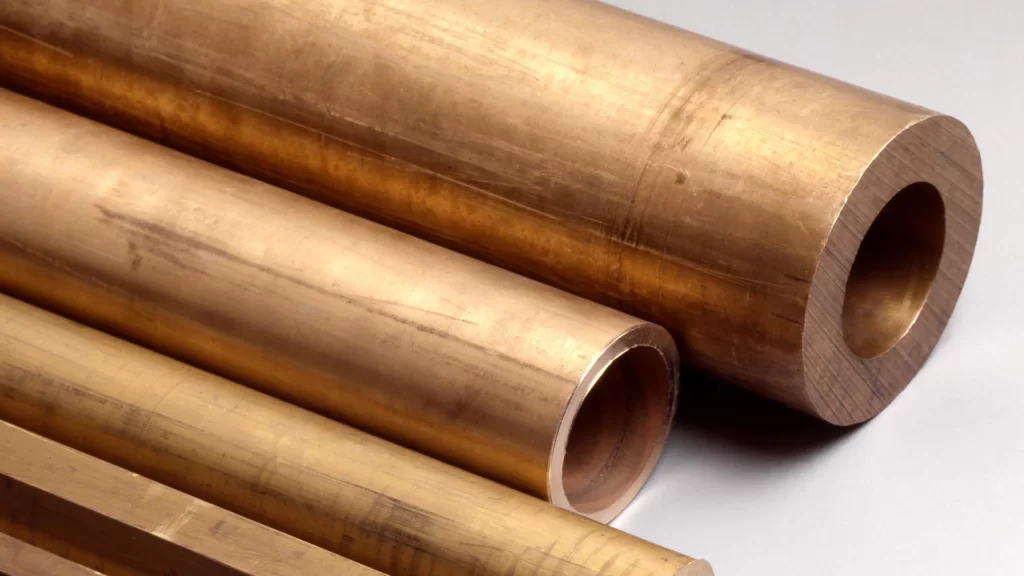
4. The Critical Role of Precision Bronze Alloys in Bushings and Bearings
Nowhere is the precision of bronze alloys more critical than in the world of bushings, bearings, and wear plates. These components are the unsung heroes of machinery, quietly managing friction, load, and wear.
Why is bronze the material of choice for these applications?
Low Friction & Wear Resistance: Bronze naturally has excellent sliding properties against steel shafts.
Embeddability: Soft lead phases in leaded bronzes allow foreign particles to embed, preventing shaft scoring.
Corrosion Resistance: Especially in aluminum and tin bronzes, this ensures longevity in harsh environments.
High Load Capacity: Certain bronze alloys can withstand significant static and dynamic loads.
Machinability: Leaded bronzes can be precision-machined to tight tolerances for a perfect fit.
Selecting the correct bronze grade—whether it’s a high-leaded tin bronze for general-purpose service or a high-strength aluminum bronze for extreme conditions—is paramount to the success and longevity of your equipment.
5. Introducing MYWAY Bronze Bushings: Engineered for Excellence
Understanding the complexity of bronze alloys is our foundation. At MYWAY, we transform this knowledge into reliable, high-performance components. We specialize in the manufacture of precision bronze bushings, bearings, and machined parts that meet and exceed international standards.
Our commitment is built on:
Material Expertise: We don’t just supply parts; we provide solutions. Our team understands the nuances between C93200 (SAE 660), C95400 aluminum bronze, and other grades, ensuring you get the optimal alloy for your specific application—be it for high load, low speed, corrosive environments, or need for excellent machinability.
In-House Control: Like other leading manufacturers, we prioritize quality and traceability. By controlling the process, we guarantee the uniformity and integrity of every bushing we produce.
Global Standard Compliance: Our products are manufactured to meet relevant ASTM, SAE, and MIL specifications, ensuring they perform reliably whether your design is based on American or European standards.
Custom Manufacturing: We provide custom machining services under drawing, delivering finished parts that are ready for installation, saving you time and production hassle.

6. Ready to Specify the Right Bronze?
Choosing the correct bronze bushing is not a guess. It requires expertise. Let MYWAY be your partner in precision.
Contact us today for a consultation. Send us your drawings or application details, and our engineering team will recommend the ideal bronze alloy and deliver a component engineered for durability and performance.
Frequently Asked Questions (FAQ)
Q1: Is bronze purely copper and tin?
A: While the historical definition of bronze is a copper-tin alloy, the modern industrial term is broader. Today, “bronze” includes many copper-based alloys where the main additive is not zinc or nickel. This includes aluminum bronze, silicon bronze, and phosphor bronze.
Q2: What is the difference between bronze and brass?
A: The key difference is in the primary alloying element. Brass is primarily a copper-zinc alloy. Bronze, traditionally copper-tin, now broadly refers to copper alloys with primary elements like tin, aluminum, or silicon, but not primarily zinc.
Q3: Why are there so many different numbering systems for bronze (e.g., C93200, C95400)?
A: These are UNS (Unified Numbering System) numbers, part of a standardized North American system to precisely identify metal alloys. The “C” indicates a copper alloy. Each number corresponds to a specific chemical composition defined in ASTM standards, eliminating confusion.
Q4: What makes bronze a good choice for bushings and bearings?
A: Bronze offers a unique combination of properties crucial for bearing surfaces: good strength, excellent wear resistance, a low coefficient of friction, and often good corrosion resistance. Certain grades have embedded lubricity or high load capacity, making them versatile for many mechanical applications.
Q5: How do I choose the right bronze alloy for my application?
A: Key factors include:
Load and Speed: High loads may require high-strength aluminum bronzes (e.g., C95500), while lower speeds might suit tin bronzes.
Environment: For wet or corrosive conditions, aluminum or phosphor bronzes are superior.
Lubrication: For poorly lubricated scenarios, leaded bronzes are often chosen.
Shaft Material: Compatibility with the mating surface is critical.
When in doubt, consult with a specialist manufacturer like MYWAY who can analyze your specific needs.

100000+ Types of Bushings – Contact Us for Details