
Recent Posts
Beyond the Melting Point: How Bronze Alloy Selection Defines Bushing Performance & Reliability
Introduction: The Unseen Thermal Frontier in Bushing Design
In the world of mechanical engineering, where bearings and bushings are the silent guardians of motion, most discussions focus on load capacity, wear resistance, and lubrication. However, a more fundamental, often overlooked property acts as the ultimate gatekeeper for performance and safety: the melting point of bronze.
Why does a temperature you never intend to reach matter so much? The answer lies in the safety margin it provides. The melting point of bronze for bushing applications isn’t a target; it’s a critical boundary. The distance between your operating temperature and this boundary determines the bushing’s ability to withstand friction-induced heat, prevent thermal softening, and avoid catastrophic failure. This article delves deep into the thermal characteristics of bronze alloys, explaining how smart material selection, guided by melting behavior, leads to superior bushing reliability. We’ll also explore how MYWAY Manufacturing leverages this deep metallurgical understanding to engineer bushings that extend service life and minimize downtime.
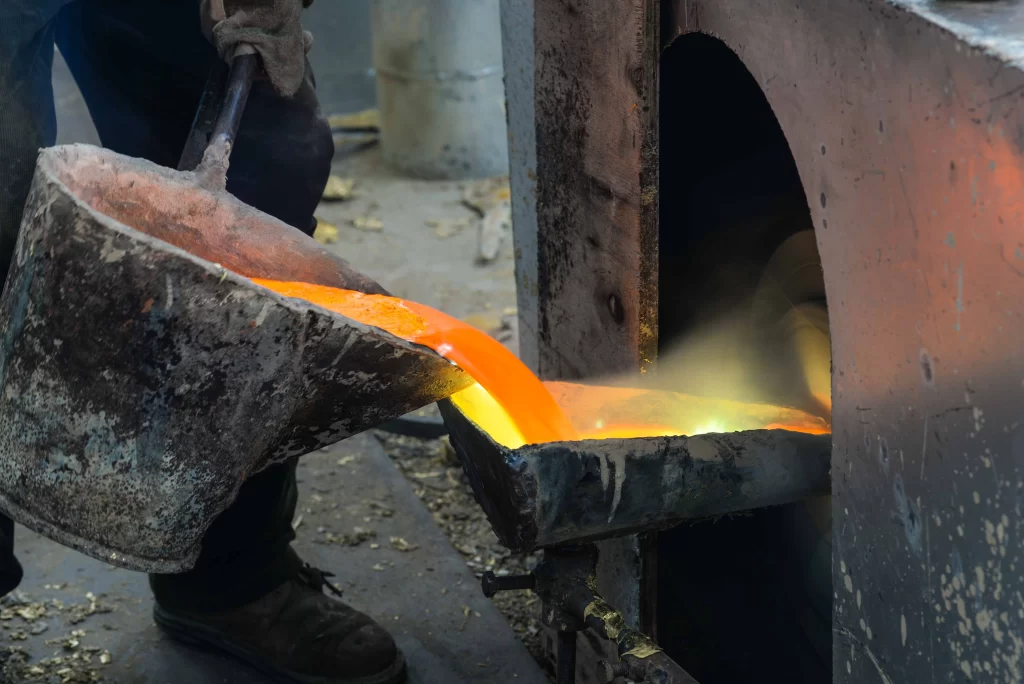
Table of Contents
1. Demystifying the Melting "Range" of Bronze Alloys
First, a crucial clarification: Bronze is not a single metal with a fixed melting point. It is a family of copper-based alloys. The specific blend of elements—primarily tin, but also aluminum, lead, phosphorus, or silicon—creates a unique thermal signature. Unlike pure metals, alloys melt over a range of temperatures.
Solidus Temperature: The point at which the alloy begins to melt. Below this, it is completely solid.
Liquidus Temperature: The point at which the alloy is completely liquid.
The “Mushy Zone”: The critical temperature range between solidus and liquidus. This range is vital for casting processes but also informs us about the alloy’s behavior under extreme thermal stress.
The width and position of this melting range are the first clues to an alloy’s performance ceiling.
2. Alloy Composition – The Master Control for Melting and Performance
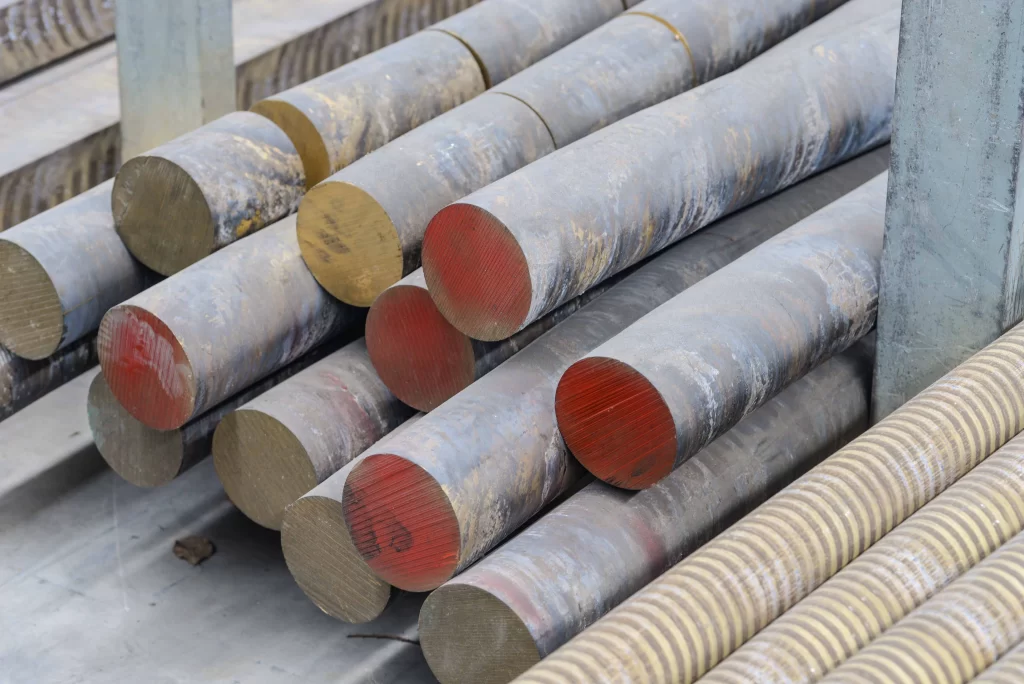
The choice of alloying elements directly dictates the melting range and, consequently, the ideal application for a bronze bushing.
1. Tin Bronzes (e.g., SAE 660 / C93200): The Balanced Workhorse
Melting Range: ~850°C – 1000°C (1562°F – 1832°F).
Why it matters: The addition of tin to copper creates a classic, versatile bearing bronze. It offers an excellent balance of strength, wear resistance, and embeddability (the ability to trap foreign particles). Its moderate melting point makes it castable and suitable for a wide array of general-duty applications where operating temperatures are controlled.
2. Aluminum Bronzes (e.g., C95400): The High-Temperature Champion
Melting Range: ~1030°C – 1080°C (1886°F – 1976°F).
Why it matters: Aluminum significantly raises the melting point of bronze. This translates directly into exceptional high-temperature strength, superior wear resistance, and outstanding corrosion resistance. For bushings in high-load, low-speed, or high-temperature environments (near furnaces, in heavy-duty machinery), the high solidus temperature of aluminum bronze provides a crucial safety buffer against thermal softening.
3. Phosphor Bronzes (e.g., C54400): The Fatigue-Resistant Specialist
Melting Range: ~900°C – 1000°C (1652°F – 1832°F).
Why it matters: Phosphorus acts as a powerful deoxidizer, creating a cleaner, denser alloy with high elastic limit and excellent fatigue resistance. Its melting point is comparable to tin bronze, but its key advantage is resisting failure under repeated impact or cyclic loading. Ideal for precision bushings, thrust washers, and applications demanding long-term dimensional stability.
4. Leaded Bronzes (e.g., C93200, C93800): The Self-Lubricating Performer
Melting Range: ~850°C – 950°C (1562°F – 1742°F).
Why it matters: Lead particles dispersed in the bronze matrix lower the melting point slightly but provide built-in, emergency lubricity. This is critical for applications with intermittent lubrication or where startup wear is a concern. The lead smears under pressure, preventing seizure. The melting point is sufficient for most industrial environments while the alloy delivers unmatched anti-galling properties.
3. From Theory to Reality: How Melting Point Impacts Bushing Life
You don’t operate near the melting point, so how does it affect you?
Thermal Softening Resistance: Friction generates heat. In high-load or high-speed scenarios, or during lubrication breakdown, localized temperatures can spike. A bronze alloy with a higher solidus temperature (like aluminum bronze) will maintain its hardness and structural integrity at these elevated temperatures, where a lower-melting-point alloy might soften, deform, and fail rapidly.
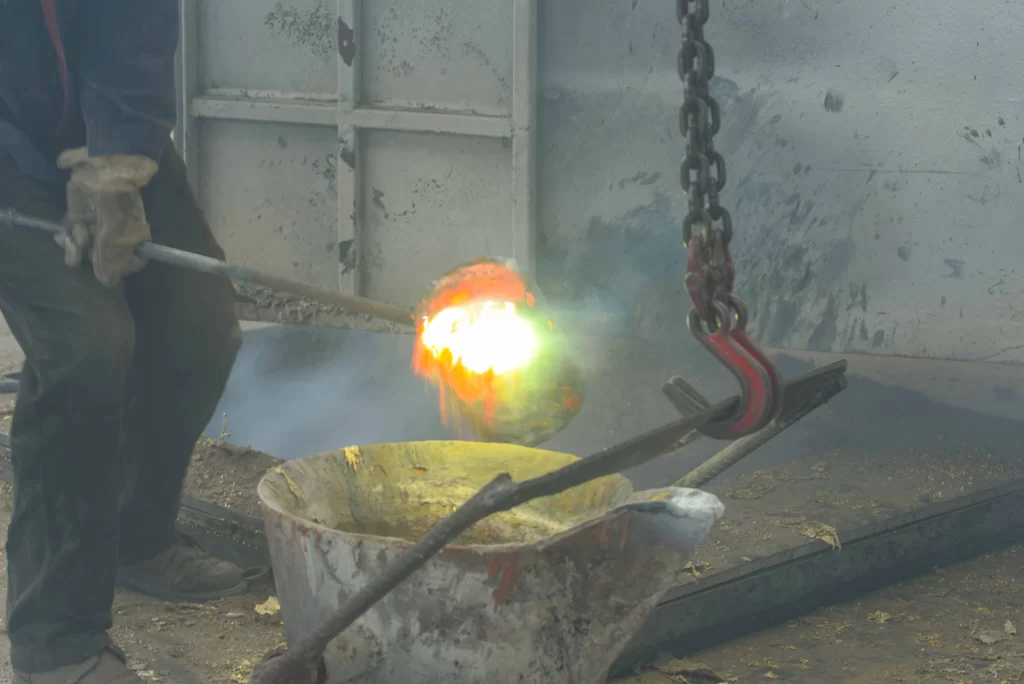
Manufacturing Integrity: The melting range of bronze is crucial during the casting process. Precise control ensures the molten metal fills the mold completely, creating a dense, homogeneous microstructure free of voids or weak spots. A poorly understood or controlled melting process leads to porous castings that fail prematurely under load, regardless of the alloy’s theoretical strength.
Emergency Overload Capacity: The melting point defines the absolute thermal ceiling. In an unexpected overload or severe fault condition, this margin can mean the difference between a damaged bushing requiring replacement and a molten, seized bushing causing catastrophic damage to the entire shaft and housing.
4. The MYWAY Advantage: Engineering with Thermal Intelligence
At MYWAY Manufacturing, we don’t just supply bushings; we provide engineered solutions. Our process begins with a fundamental understanding of metallurgy, including the precise melting point characteristics of bronze alloys.
Precision Alloy Selection: We don’t default to a one-size-fits-all material. Based on your application’s load, speed, lubrication regime, and environmental temperature, our engineers select the bronze alloy whose melting point, strength, and wear characteristics create the optimal performance and safety margin.
Advanced Casting & Sintering: Whether through precision casting for large bushings or powder metallurgy (sintering) for complex, self-lubricating designs, we meticulously control thermal processes. This ensures the final product achieves the full theoretical density and mechanical properties intended by the alloy composition.
Beyond Standard Bushings: Our expertise allows us to offer specialized solutions:
High-Temperature Bushings: Utilizing aluminum bronze and other high-melting-point alloys for demanding environments.
Self-Lubricating Bronze Bushings: Combining the strength of bronze with embedded solid lubricants, ideal for maintenance-free or difficult-to-lubricate points.
Custom-Engineered Bushings: Modifying alloy compositions and geometries to solve unique thermal and mechanical challenges.
Conclusion: Choose the Partner Who Understands the Fundamentals
Selecting a bushing based solely on a catalog dimension is a gamble. The true cost lies in unexpected downtime, premature failure, and collateral damage. By partnering with a manufacturer that grounds its designs in deep material science—starting with understanding the critical role of the melting point of bronze—you invest in predictability, longevity, and total cost of ownership.
Let the thermal margin be your safety net. Let MYWAY’s engineering be your guide.
FAQ: Melting Point & Bronze Bushings
Q1: Why is the melting point range important if my machine never gets that hot?
A: The melting point (solidus) sets the upper limit of your material’s thermal stability. Operating temperatures that are a significant percentage of the solidus can cause softening, reduced hardness, and accelerated wear. A higher melting point provides a larger “safety buffer” against friction-induced heat spikes, especially during startup, overload, or lubrication interruption.
Q2: Which bronze alloy has the highest melting point for the most extreme applications?
A: Aluminum Bronze alloys (like C95400) typically have the highest melting range, around 1030-1080°C. They are the go-to choice for very high-load, low-speed, or high-ambient-temperature applications where maintaining strength and wear resistance at elevated temperatures is critical.
Q3: Is a higher melting point always better for a bronze bushing?
A: Not necessarily. While it offers better high-temperature performance, alloys with very high melting points can be more challenging to cast precisely and may have different friction characteristics. The key is selection for the application. A leaded tin bronze with a lower melting point is often superior for applications prone to intermittent lubrication due to its self-lubricating properties. An engineer must balance thermal needs with tribological (friction/wear) requirements.
Q4: How does MYWAY use this information to make better bushings?
A: We start with the end-use environment. By analyzing load, speed, lubrication, and external heat, we can model the expected thermal load. This informs our selection from a portfolio of bronze alloys—each with a known melting range and property profile—to ensure the chosen bushing material has an appropriate thermal safety margin. This science-led selection is complemented by controlled manufacturing processes to guarantee the alloy delivers its promised performance.
Q5: Can you provide bushings made from custom bronze alloys for unique needs?
A: Yes. MYWAY’s engineering capability includes working with specific alloy formulations. If your application has exceptional thermal, corrosive, or load requirements that standard alloys cannot meet, our metallurgy team can collaborate on developing or sourcing a tailored bronze material to ensure optimal bushing performance and service life.
100000+ Types of Bushings – Contact Us for Details