
Recent Posts
Copper Bushings in Water: Unlock Reliability in Marine, Hydraulic & Submerged Applications
For engineers and procurement specialists across industries—from heavy machinery and marine applications to the precise world of food processing—the quest for reliability is never-ending. When a critical bushing fails under high load in a submerged pump, or a bearing seizes in a remote, grease-free application, the cost extends far beyond the component itself: it’s measured in downtime, lost productivity, and urgent maintenance. For decades, copper alloys have been the trusted backbone for bushings and sleeve bearings, prized for their inherent wear resistance, excellent thermal conductivity, and good corrosion resistance. But as operational demands have intensified and environmental regulations tightened, the evolution from traditional lubricated bronze bushings to advanced self-lubricating copper bushings has become a pivotal engineering decision. This guide explores this critical evolution, delves into the specifics of extreme applications like water immersion, and examines what to look for in a next-generation supplier.
Table of Contents
1. The Evolution: From Traditional Bronze to Self-Lubricating Powerhouses
Traditional copper-alloy bushings, such as those made from tin bronze (Cu-Sn) or aluminum bronze (Cu-Al), have served industry well. Their strength and compatibility with oil lubrication systems made them a standard. However, their limitations in maintenance-free, high-load, or low-speed oscillating applications spurred innovation.
A major driver has been the move toward lead-free materials. Historically, lead was added to copper alloys (like leaded bronze) to improve machinability and provide dry-lubricating properties. Due to environmental and health concerns, the industry has successfully developed high-performance lead-free copper alloys. These often use elements like bismuth to maintain the essential anti-seizure and fatigue resistance properties once provided by lead, proving effective even in severe conditions like fuel injection pumps.
The most significant leap forward has been the development of composite self-lubricating (oilless) bearings. These are engineered materials that integrate solid lubricants directly into their structure, creating a maintenance-free solution. A common and high-performance construction involves three layers:
A steel backing for exceptional mechanical strength and load capacity.
A porous bronze sintered layer bonded to the steel, offering high thermal conductivity and a robust base.
A surface layer of a polymer-based lubricant, typically a mixture of PTFE (polytetrafluoroethylene) and other fillers. This layer provides an extremely low friction coefficient.
This design represents a paradigm shift. The lubricant is not applied externally but is an integral part of the bearing, worn slowly during operation to form a smooth, protective film on the mating shaft.
2. Conquering the Ultimate Challenge: Performance in Water and Marine Environments
Perhaps the most demanding test for any bushing material is prolonged operation in water—be it fresh water, seawater, or abrasive liquid mixtures. Conventional lubricants wash away, and corrosion accelerates. Here, specialized copper-based self-lubricating bushings like the SPBL series come into their own.
These bushings are specifically engineered for water immersion applications. They are typically manufactured from a high-strength brass or bronze base material, into which solid lubricant plugs are inserted. The lubricants are usually based on advanced compounds like PTFE or Molybdenum Disulfide (MoS₂), which maintain a stable, low-friction film even in aqueous environments.
Their key advantages in these settings are transformative:
True Maintenance-Free Operation: Eliminates the impossibility and expense of constantly re-lubricating underwater components.
Superior Wear Resistance in Oscillation: Perfect for the slow, oscillating movements common in hydraulic arc gates, rudder systems, or turbine linkages.
Excellent Corrosion & Water Lubricity: The material combination resists seawater corrosion, and the lubricants perform reliably when wet.
Withstanding Contamination: They can handle environments with silt, sand, or other abrasive particles that would quickly destroy traditional bearings.
Case studies in industries like hydropower show the dramatic impact. Engineers facing frequent failures in vertical turbine pumps submerged in rivers have replaced rubber-backed or standard bronze bushings with specialized graphite-metal or PTFE-metal self-lubricating composites. The result has been extended service life from just months to over five years with only minor wear, drastically reducing the high costs and labor associated with pulling and repairing massive pumps.
3. Beyond Material: The MYWAY Advantage in Precision and Performance
Understanding material science is one thing; consistently manufacturing it to the highest standards is another. This is where a specialist manufacturer like MYWAY Bushings separates itself from generic suppliers. Our expertise lies in not just making a bushing, but in engineering a reliable, high-performance self-lubricating solution.
Take our flagship DU/SF-1 series metal-polymer self-lubricating bushing as an example of our approach to precision. Its layered structure is a masterpiece of functional engineering:
Surface Layer (0.01-0.03mm): A modified PTFE and lead mixture that forms a protective transfer film on the shaft during initial run-in, ensuring low friction from the start.
Intermediate Layer (0.20-0.30mm): A copper powder sintered layer that provides exceptional bonding to the substrate, high load capacity, and excellent thermal conductivity to dissipate heat.
Backing Layer (0.7-2.3mm): A copper alloy substrate that offers outstanding structural strength, corrosion resistance, and further heat dissipation.
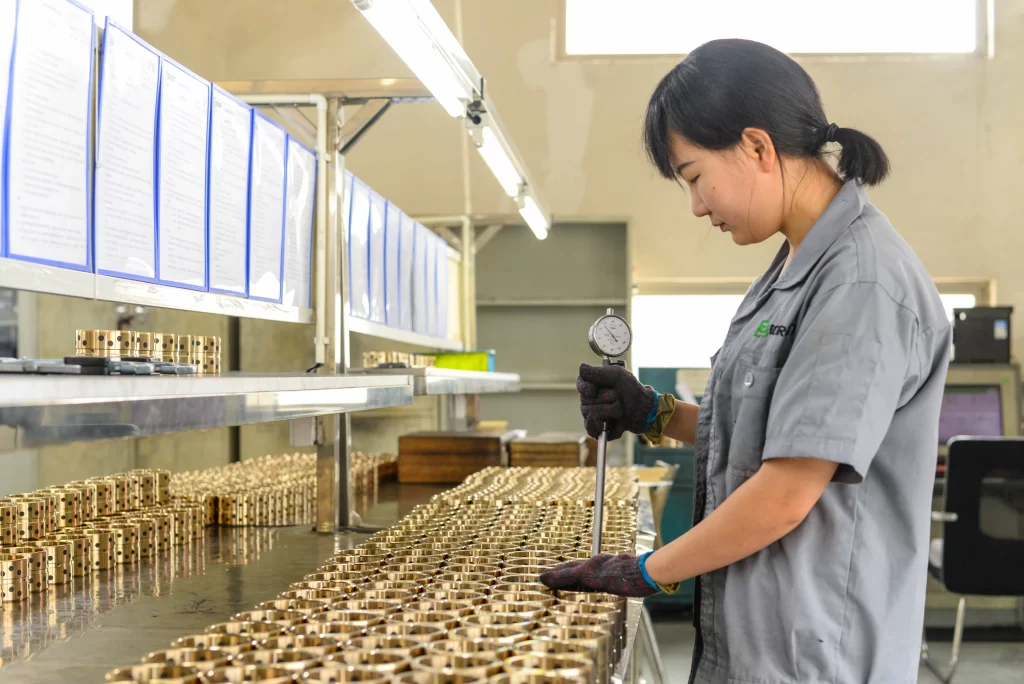
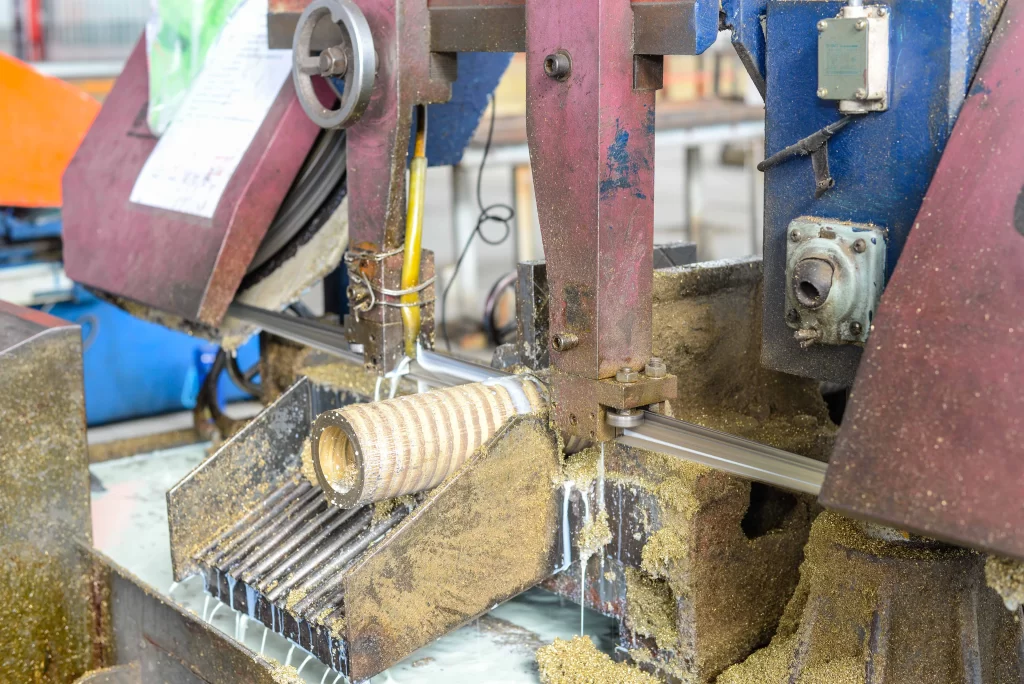
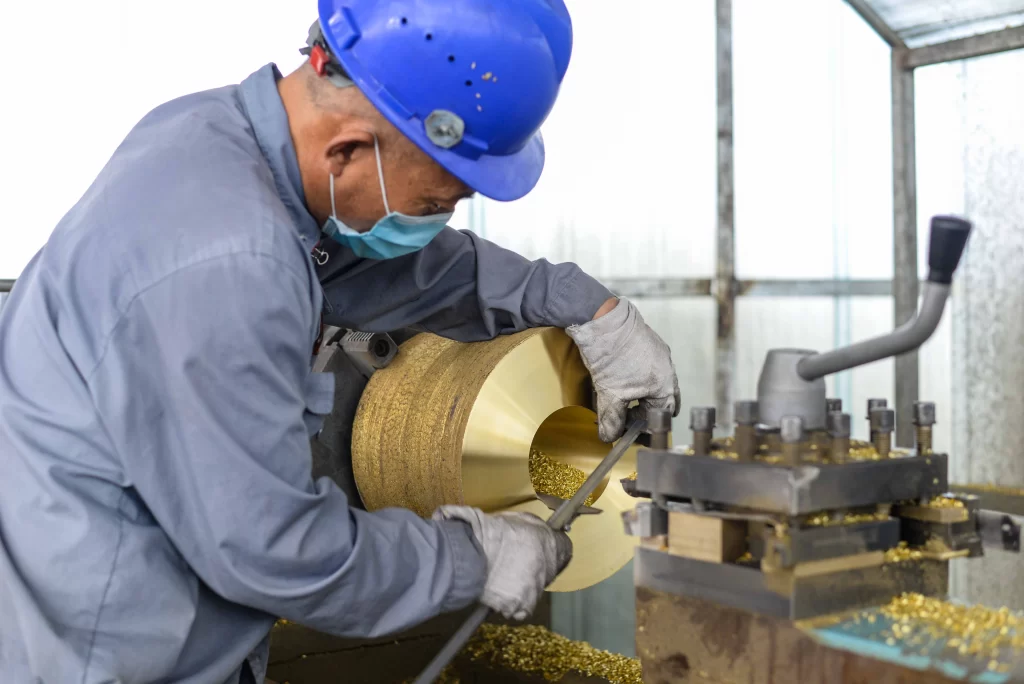
We enforce rigorous control over this process. Using tungsten steel precision molds, we ensure dimensional accuracy and superior surface finish. All material strips are sintered in automatically controlled furnace systems, and finished strips are routinely inspected with laser optical measuring instruments to maintain a thickness tolerance within ±0.01 mm. This level of control guarantees that every bushing delivers predictable, long-lasting performance.
4. Why Partner with MYWAY for Your Next Project?
Choosing MYWAY means moving from a simple component purchase to a value-adding engineering partnership.
Deep Material Expertise: We navigate the complexities of lead-free alloys, high-strength brass, and PTFE composites to recommend the optimal, cost-effective material for your specific load, speed, and environmental conditions.
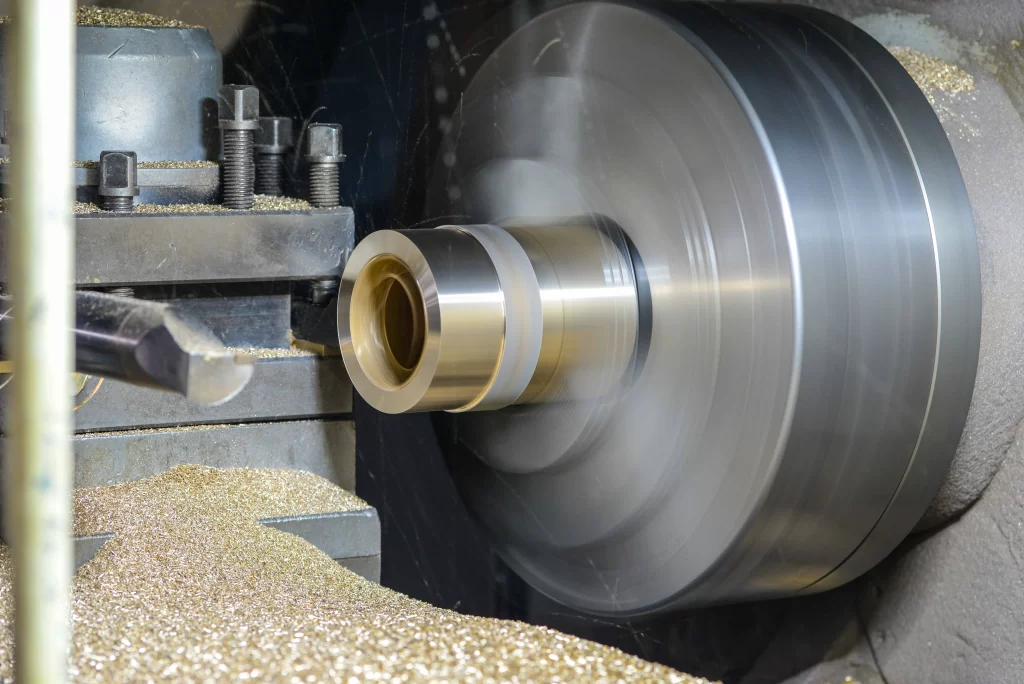
Precision Manufacturing as Standard: Our investment in automated production lines for bushings under 50mm in diameter and advanced quality control ensures you receive parts that fit perfectly and perform reliably, batch after batch.
Solution-Oriented Partnership: We don’t just sell bushings; we help solve problems. Whether you’re battling premature failure in a water turbine, seeking a maintenance-free solution for construction machinery, or need a reliable component for food-grade equipment, our team provides actionable technical support.
Proven Industry Application: Our components are trusted in demanding fields like automotive systems, hydraulic pumps, and agricultural machinery, where failure is not an option.
Frequently Asked Questions (FAQ)
Q1: What’s the main difference between a standard bronze bushing and a self-lubricating copper bushing?
A: A standard bronze bushing requires an external oil or grease lubrication system to function and prevent seizure. A self-lubricating bushing has solid lubricants (like PTFE or graphite) embedded in its structure, providing a constant, maintenance-free lubricating film during operation.
Q2: Are self-lubricating bushings suitable for high-load applications?
A: Yes, particularly the metal-polymer composite type. The steel or copper alloy backing provides very high load capacity, while the PTFE-based surface layer manages friction. They are excellent for low-speed, high-load oscillating movements common in heavy machinery.
Q3: My application involves constant immersion in seawater. What type of bushing should I use?
A: You need a bushing specifically designed for water lubrication. Look for a series like the SPBL, made from corrosion-resistant high-strength brass with solid lubricant plugs (e.g., PTFE/MoS₂ based) that maintain a low friction coefficient in water. Standard self-lubricating bushings may not be optimized for this.
Q4: Can you customize bushings to non-standard sizes or shapes?
A: Absolutely. As a specialized manufacturer, MYWAY offers extensive customization. We can produce flanged, spherical, and cylindrical designs to your exact dimensional drawings, and tailor material specifications to meet unique operational challenges.
Q5: How do I ensure I select the right bushing material for my project?
A: The key parameters are: Load (static and dynamic), speed, motion type (rotation, oscillation), operating temperature, and environmental exposure (water, chemicals, dust). The best approach is to consult with our engineering team. Send us your drawings and application details for a data-driven recommendation and a precise quote.
100000+ Types of Bushings – Contact Us for Details