
Recent Posts
How Self-Lubricating Wear Plates Eliminate Downtime and Drive Profit
Introduction: The Real Cost of Wear and Tear
Is your machinery’s constant battle against friction and impact silently draining your operational budget? In industries like mining, construction, steel processing, and heavy manufacturing, equipment isn’t just an asset; it’s the backbone of productivity. When a critical component fails due to abrasion, the domino effect is costly: unplanned downtime, expensive emergency repairs, premature part replacement, and lost production output.
For decades, the solution has been the wear plate—a sacrificial guardian bolted onto high-impact areas. But what if this guardian could do more than just take a beating? What if it could actively reduce friction, eliminate maintenance cycles, and last significantly longer? This isn’t a futuristic concept; it’s the reality offered by advanced self-lubricating graphite plugged wear plates. This article delves deep into this transformative technology, guiding you from understanding the basics to selecting the optimal solution for maximizing your equipment’s lifespan and your bottom line.
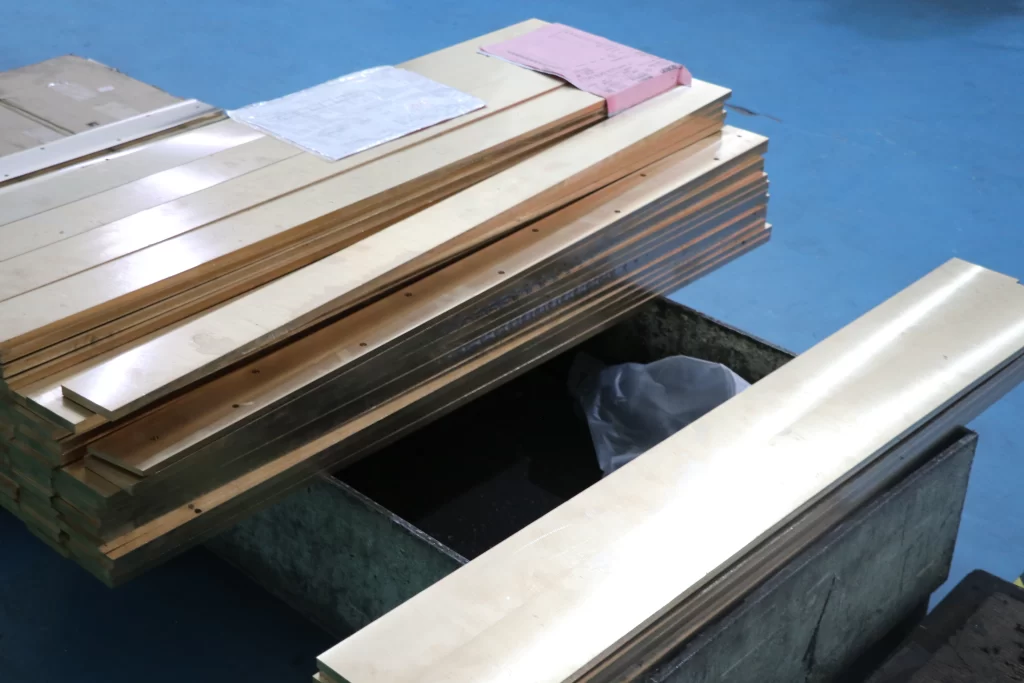
Table of Contents
1. Wear Plates Demystified – Your Equipment's First Line of Defense
At its core, a wear plate is a reinforced plate or liner designed to protect more expensive machinery components from abrasion, impact, and sliding wear. Think of it as a replaceable armor system. By sacrificing itself, it preserves the structural integrity of the parent machine—be it an excavator bucket, a conveyor chute, a press frame, or an injection mold.
Key Materials and Types:
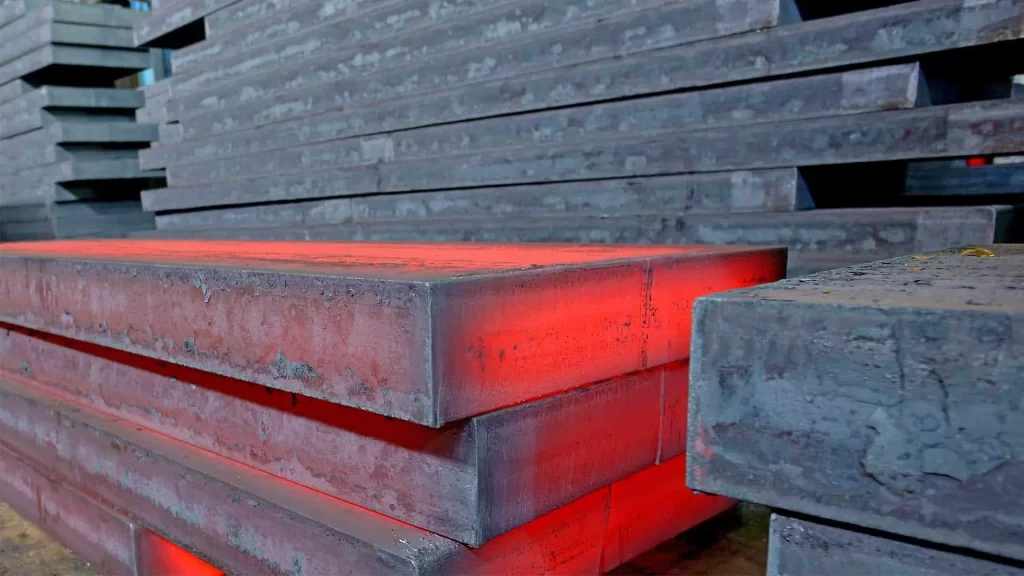
Hardox® and AR Steels: These are quenched and tempered steel plates (e.g., AR400, AR500) known for high surface hardness. They excel in environments with severe impact and sliding abrasion, such as in mining truck beds and crusher liners.
Chromium Carbide Overlay Plates: Featuring a hard, abrasion-resistant alloy layer welded onto a tough steel backing, these plates are ideal for extreme abrasive wear with moderate impact, common in mining and pulp & paper industries.
UHMW Polyethylene Plates: A non-metallic option offering excellent impact resistance, low friction, and corrosion resistance. Perfect for applications where metal-on-metal contact is undesirable, like in food processing or bulk material handling of wet or sticky substances.
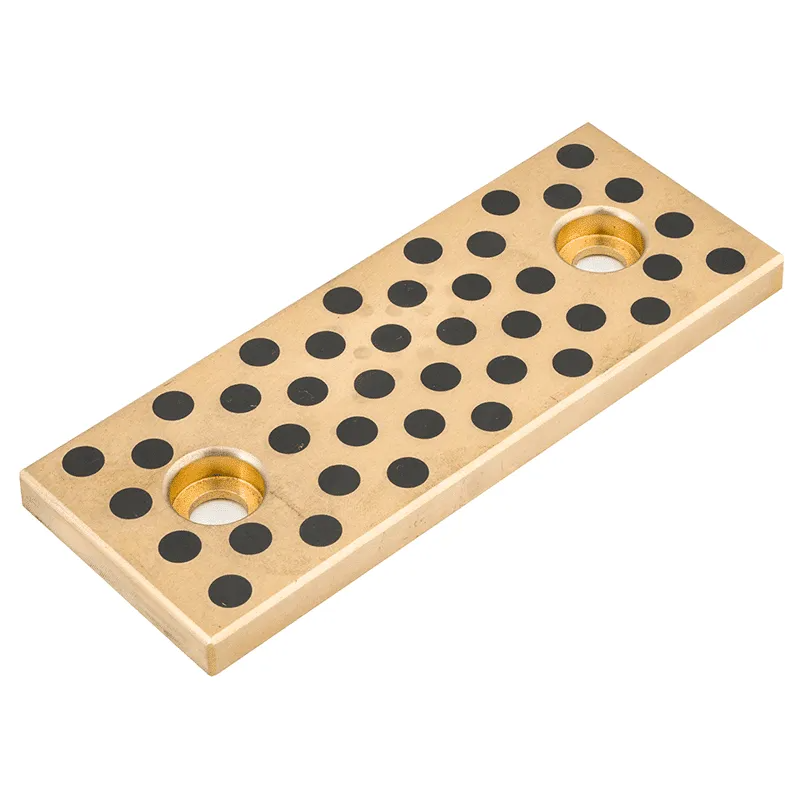
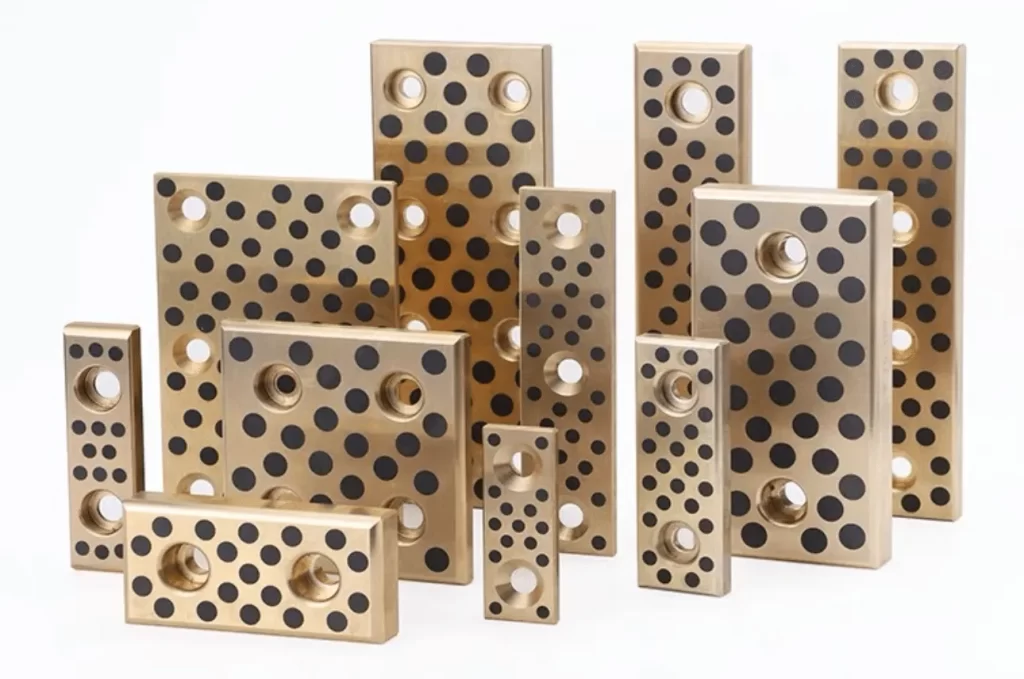
The Game-Changer: Bronze Graphite Plugged Wear Plates: This is where functionality leaps forward. Made from a high-strength copper alloy base (like aluminum bronze CuZn25Al6Fe3Mn3), these plates have a pattern of holes plugged with solid graphite. This ingenious design delivers not just protection, but continuous, oil-free lubrication.
2. The Self-Lubricating Revolution: Graphite Plugged Wear Plates
How Do They Work?
The magic lies in the synergy between the durable bronze matrix and the solid graphite lubricant. As the plate operates under load and motion, microscopic amounts of graphite are transferred to the mating surface, creating a dry, low-friction film. This process happens continuously throughout the plate’s life, providing consistent lubrication without any external grease or oil systems.
Why Choose Graphite Plugged Plates? The Compelling Advantages
Unmatched Durability and Longevity: The copper alloy base provides exceptional strength to withstand high static and dynamic loads. The embedded graphite plugs drastically reduce the coefficient of friction, minimizing wear on both the plate itself and the opposing surface. This dual-action significantly extends the service life of your entire assembly.
The Ultimate in Cost-Effectiveness (Total Cost of Ownership): While the initial unit cost may be higher than a standard steel plate, the long-term savings are substantial. They eliminate recurring lubrication costs, reduce the frequency of maintenance downtime, and prolong the life of other machine components. This translates directly to higher equipment uptime and profitability.
Maintenance-Free and Versatile Operation: These plates are truly “fit and forget” components. They perform reliably in environments where traditional lubrication is impossible—exposed to dust, dirt, extreme temperatures (from -40°C to +300°C), or washdowns. This makes them perfect for food-grade applications, marine environments, and dirty industrial settings.
Engineered for Performance and Precision: Unlike bulky, one-size-fits-all liners, modern graphite plugged plates are precision-engineered. They are available in a broad range of standard inch and metric sizes and can be custom-manufactured to your exact specifications for hole patterns, thickness, and graphite configuration. This ensures optimal performance, easier installation, and a perfect fit for your machinery.
Where Are They Used? (Application Spotlight)
Heavy Engineering & Construction: Bridge expansion joints, hydraulic press guides, crane slew rings.
Industrial Machinery: Mold injection machine platens, stamping die guides, plastic extruder components.
Material Handling: Conveyor system guides, pivot points on loaders, sluice gate bearings.
Transportation: Suspension components, Fifth-wheel plates, and various oil-free sliding applications.
3. Selecting and Implementing the Right Wear Plate
Choosing the correct wear plate is critical. Ask these questions:
Type of Wear: Is it primarily abrasive (sand, ore), adhesive (metal-on-metal sliding), or impact (heavy blows)?
Load & Speed: What are the static and dynamic loads? Is it a high-load, low-speed application (ideal for graphite plugs) or something else?
Operating Environment: Are there extremes of temperature, moisture, chemicals, or contamination?
Installation & Compatibility: Can the component be easily accessed for replacement? Is galvanic corrosion with the base metal a concern?
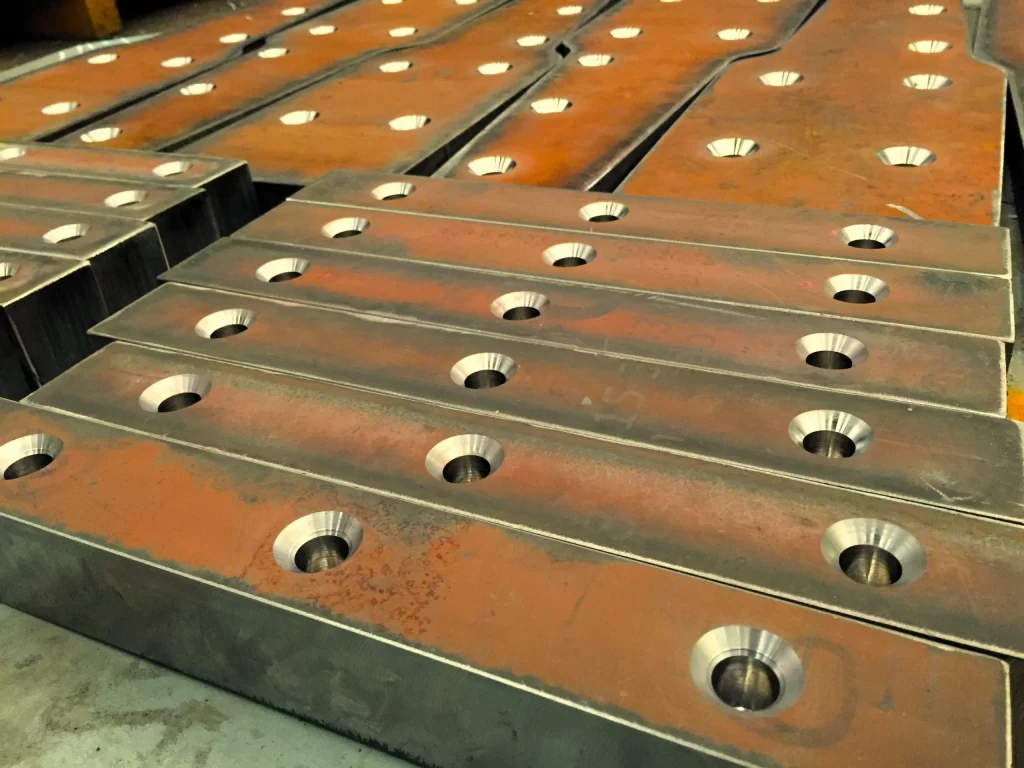
For graphite plugged bronze plates, proper installation is straightforward but vital. Ensure mating surfaces are clean, flat, and properly aligned. They are typically secured with counter-sunk bolts. No special break-in procedure is needed—the graphite begins its self-lubricating action immediately upon operation.
4. Conclusion: Your Next Step Towards Zero-Friction Operations
The evolution from passive protective plates to active, self-lubricating components like graphite plugged wear plates represents a major leap in industrial design and maintenance philosophy. By embracing this technology, you’re not just replacing a part; you’re investing in reliability, efficiency, and long-term cost control.
Speaking of Precision and Reliability…
This same philosophy of engineered performance and friction management is at the heart of MYWAY’s expertise. Just as the right wear plate protects your large-scale machinery, the right bushing is critical for the precision motion within it.
At MYWAY, we specialize in manufacturing high-performance self-lubricating bushings and slide plates. Our vertically integrated process—from precision sintering and PTFE coating to CNC machining and automated rolling—ensures every component, like our renowned DU/SF-1 series bushings, delivers consistent quality, exceptional durability, and the same oil-free operational benefits.
Whether you’re designing new equipment or retrofitting existing machinery to reduce maintenance, the synergy between advanced wear plates and precision bushings creates a powerful solution.
Frequently Asked Questions (FAQ)
Q1: What’s the difference between a standard AR400 steel plate and a graphite plugged bronze plate?
AR400 plate is a hardened steel designed to resist abrasion through sheer hardness. A graphite plugged plate uses a bronze matrix for load capacity and embedded graphite for friction reduction. It’s not just harder; it’s self-lubricating, making it superior for sliding applications where friction, not just abrasion, is the enemy.
Q2: Can these plates really operate without any grease?
Absolutely. The solid graphite provides continuous, dry lubrication. In fact, adding grease or oil can be detrimental, as it may attract dust and grit, forming a grinding paste that accelerates wear.
Q3: Are they worth the higher upfront cost?
Without a doubt. Evaluate cost over the total lifecycle. Factor in eliminated lubrication labor/materials, reduced downtime for maintenance, and extended intervals between replacements. For most sliding applications, the return on investment (ROI) is clear and significant.
Q4: Can I get custom sizes or shapes?
Yes. Reputable manufacturers specialize in custom wear plate solutions. Whether you need a non-standard thickness, a specific graphite plug pattern, or a complex machined shape, customization ensures optimal performance for your unique application.
Q5: How long do they typically last?
Service life varies dramatically based on load, speed, alignment, and environment. However, in comparable applications, a graphite plugged plate can outlast a conventional lubricated steel plate by a factor of 3 to 10 times or more, due to the drastic reduction in friction-based wear.
Q6: What about high-temperature applications?
Graphite’s lubricating properties actually improve at moderately elevated temperatures. High-quality bronze-graphite plates are rated for continuous service up to +300°C (+572°F), making them suitable for applications near engines, furnaces, or hot material processing equipment.
100000+ Types of Bushings – Contact Us for Details