
Recent Posts
Why Bronze Rings Power Modern Industry and How to Choose Them Wisely
If you’re reading this, you’re likely searching for a bronze ring, sleeve, or bushing. On the surface, it seems simple—a ring of metal. But in the world of heavy machinery, automotive systems, and industrial equipment, this unassuming component is often the linchpin of reliability. When a bronze ring fails, it’s rarely an isolated event; it can lead to catastrophic downtime, expensive repairs, and cascading damage. This article cuts through the noise to explore why bronze remains the material of choice for critical sliding and rotating applications, what separates a good ring from a great one, and how the right partnership can transform this component from a spare part into a strategic asset for your operations.
Table of Contents
1. The Unmatched Material: Why Bronze Reigns Supreme
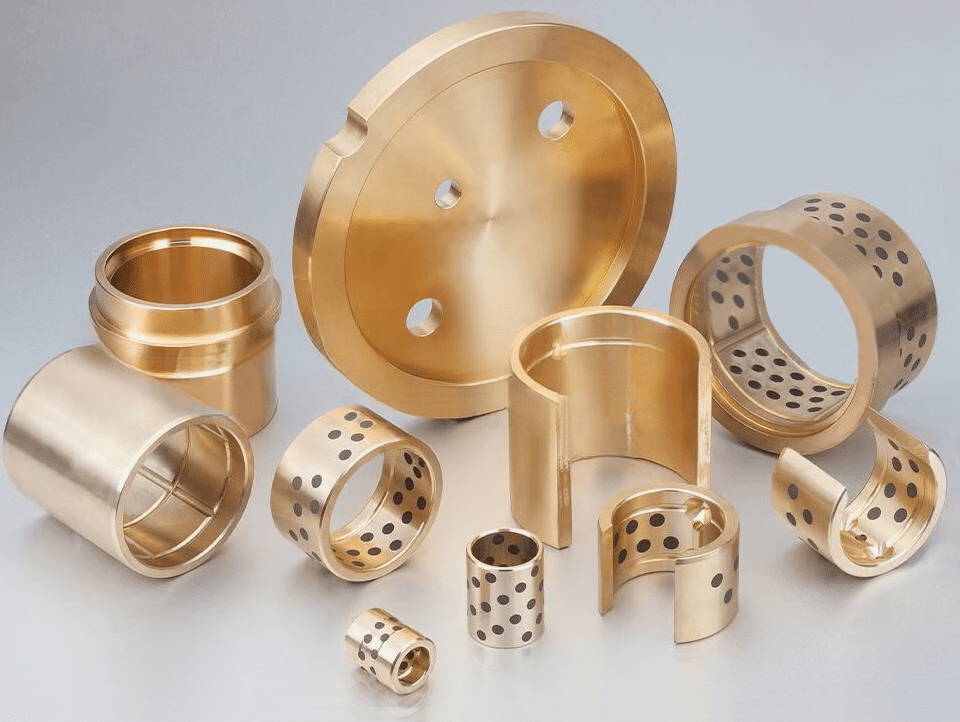
Bronze, a copper-based alloy primarily mixed with tin, has been a cornerstone of engineering for millennia. Its enduring relevance is no accident. In demanding industrial environments, bronze offers a unique combination of properties that synthetic or alternative materials struggle to match.
At its core, bronze is prized for its exceptional wear resistance and strength. Modern advancements have pushed these properties even further. For instance, specialized complex bronze alloys can now achieve strength and wear resistance comparable to steel while maintaining bronze’s signature high toughness and heat tolerance. This makes them ideal for punishing applications like heavy-duty diesel engines and large engineering machinery, where components must withstand significant stress and abrasion.
Furthermore, specific bronze formulations excel in corrosion resistance, particularly in challenging environments. Aluminum bronze alloys (like CuAl10Fe5Ni5-C), for example, are renowned for their performance in marine settings or applications exposed to moisture and chemicals. Perhaps most critically for moving parts, bronze possesses inherent anti-friction properties and excellent machinability. Its naturally low coefficient of friction ensures smoother operation and reduces energy loss, while its ductility allows manufacturers to achieve the precise dimensions and fine tolerances required for high-performance bearings and bushings.
2. Beyond the Material: Critical Applications Driving Demand
The theoretical advantages of bronze materialize in concrete, high-stakes applications across global industries. The bronze ring is far from a generic part; its specifications are meticulously tailored to its function.
A prime example is the synchronizer ring in automotive transmissions. These components, crucial for smooth gear shifting, are a major market segment. Industry reports highlight a significant and growing global market for these rings, with key applications in both commercial trucks and passenger vehicles. Their performance directly impacts driver experience and transmission longevity.
In heavy industry and power generation, bronze bushings are indispensable. They serve as spindle bushings in hot-rolling mills, where they must endure extreme temperatures and loads, and as sturdy bearings in equipment like crushers and pump shafts. Here, alloys like aluminum bronze (e.g., CuAl8Mn13Fe3Ni2) are selected for their high mechanical performance and corrosion resistance.
The renewable energy sector also relies on specialized bronze components. In wind turbines, large-diameter bronze slip rings facilitate the transfer of power and data from the rotating blades to the stationary nacelle, a application demanding supreme reliability and durability.
3. The MYWAY Difference: Engineering Solutions, Not Just Parts
At MYWAY, we understand that supplying a bronze ring is about more than meeting a dimensional drawing. It’s about solving an engineering challenge. We see our role as a partner in enhancing your equipment’s reliability and performance. Our approach is built on several key pillars that set us apart from conventional suppliers.
Precision-Centric Manufacturing and Rigorous Control: We employ advanced centrifugal casting and precision CNC machining to ensure every ring has a uniform, dense microstructure and meets exact tolerances. This process is crucial for achieving the high density and superior mechanical properties that directly translate to longer service life and consistent performance. Our commitment to quality is enforced through stringent inspection protocols, ensuring every component that leaves our facility delivers on its promise.
Material Science Expertise: We don’t just work with bronze; we master its formulations. Whether your application calls for the high strength and corrosion resistance of aluminum bronze (CuAl10Fe5Ni5-C), the excellent wear resistance and machinability of phosphor bronze, or the balanced properties of tin bronze (CuSn11Pb2-C), our experts guide the selection to optimize performance for your specific operating environment—be it high-load, high-temperature, or exposed to the elements.
Designing for Real-World Performance: We engineer our components with the end-use in mind. For applications involving high impact or shock loads, such as in heavy presses or construction equipment, our designs prioritize factors like optimal wall thickness and alloy toughness to prevent cracking and extend service life. We focus on creating solutions that not only fit but also fundamentally improve the reliability of your machinery.
The table below illustrates how our engineered approach tackles common industry pain points:
| Common Failure Mode & Industry Pain Point | Conventional “Off-the-Shelf” Part Outcome | MYWAY’s Engineered Solution & Value |
|---|---|---|
| Rapid wear under high load/abrasion | Frequent replacements, unplanned downtime, rising maintenance costs. | Use of high-strength, wear-resistant bronze alloys (e.g., complex Cu-Al-Fe-Ni systems) for dramatically extended service life. |
| Seizure or failure under shock/impact load | Catastrophic component failure, risk of secondary damage to adjacent systems. | Design-focused on alloy toughness and optimized geometry to absorb and distribute impact energy effectively. |
| Corrosion in harsh environments (marine, chemical) | Premature breakdown, contamination, and loss of function. | Selection of high-corrosion-resistance alloys like aluminum bronze, ensuring durability where standard bronzes fail. |
| Inconsistent quality leading to variable performance | Unreliable machinery performance, difficulty in planning maintenance schedules. | Precision manufacturing and strict QA processes guarantee part-to-part consistency and predictable performance. |
4. Your Next Step Toward Uncompromising Reliability
Choosing the right bronze component supplier is a strategic decision that affects your bottom line through maintenance costs, operational uptime, and overall equipment effectiveness. The market is filled with options, but true partners who invest in material science, precision manufacturing, and application engineering are rare.
We invite you to move beyond the standard catalog part. Contact MYWAY today for a consultation. Let’s discuss your specific application challenges—whether it’s for a synchronizer ring, a critical bushing in a rolling mill, or a custom slip ring assembly. Our team is ready to provide technical data sheets, collaborate on material selection, and deliver a competitive quote for components engineered not just to fit, but to perform and endure.
Ready to specify the superior solution? Reach out to MYWAY and let’s build reliability together.
FAQ: Industrial Bronze Rings and Bushings
Q1: What are the key advantages of bronze over plastic or powder metallurgy for bushings?
Bronze offers superior strength, thermal conductivity, and durability under high-load conditions. Specifically, copper-alloy bushings provide much better impact resistance and anti-shock fatigue performance, as their tough metal matrix can buffer stress without cracking—a critical need in heavy machinery like stamping presses.
Q2: My application involves high impacts and vibrations. Is bronze suitable?
Yes, certain bronze alloys are excellent for shock loads. Their high toughness and good embeddability allow them to withstand sudden impacts and vibratory forces better than many harder but more brittle materials. For such applications, specifying a high-strength aluminum bronze or a specially toughened tin bronze is often recommended.
Q3: Which bronze alloy should I choose for a marine or highly corrosive environment?
Aluminum bronze alloys (such as CuAl10Fe5Ni5-C or CuAl8Mn13Fe3Ni2) are the top choice. They form a stable, protective oxide layer that grants exceptional resistance to corrosion from saltwater, chemicals, and atmospheric exposure, making them ideal for marine hardware, offshore installations, and chemical processing equipment.
Q4: Can bronze bushings operate without external lubrication?
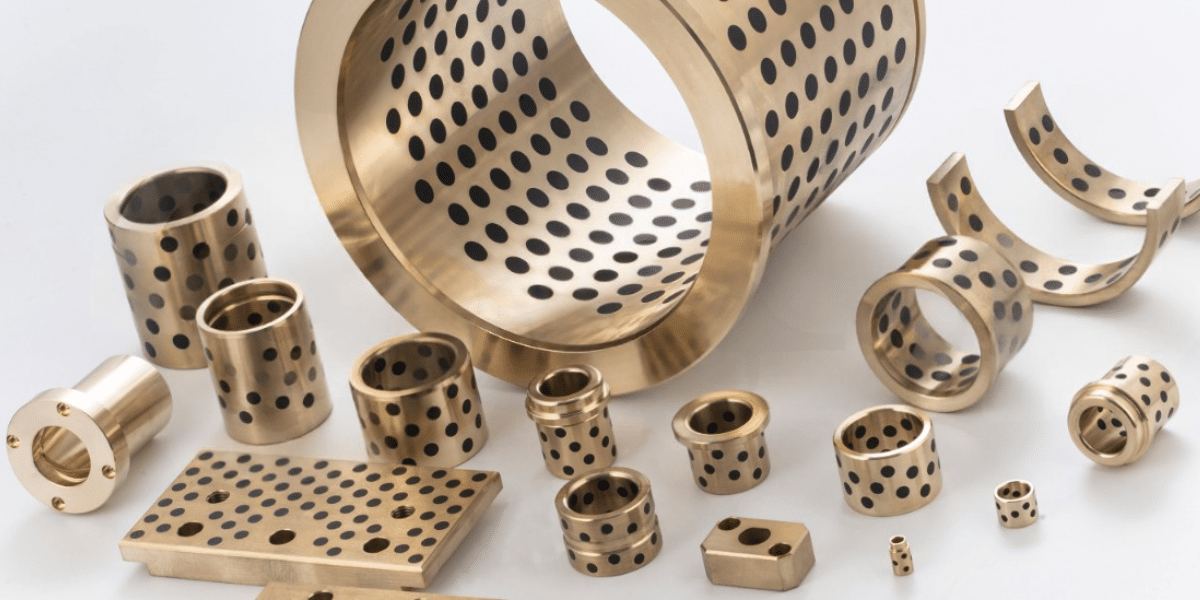
While bronze has good inherent anti-friction properties, for true “no-maintenance” operation, self-lubricating bronze composite bushings are the solution. These feature a bronze matrix with embedded solid lubricants (like graphite or PTFE), providing a consistent lubrication film for the life of the part, perfect for inaccessible or dry-running applications.
Q5: Why might a custom-engineered bronze ring be better than a standard catalog part?
Standard parts are made for general conditions. A custom solution allows optimization of the alloy composition, heat treatment, wall thickness, and lubrication features for your exact load, speed, temperature, and environmental conditions. This translates directly to longer service life, higher reliability, and often reduced total cost by preventing premature failures and downtime.
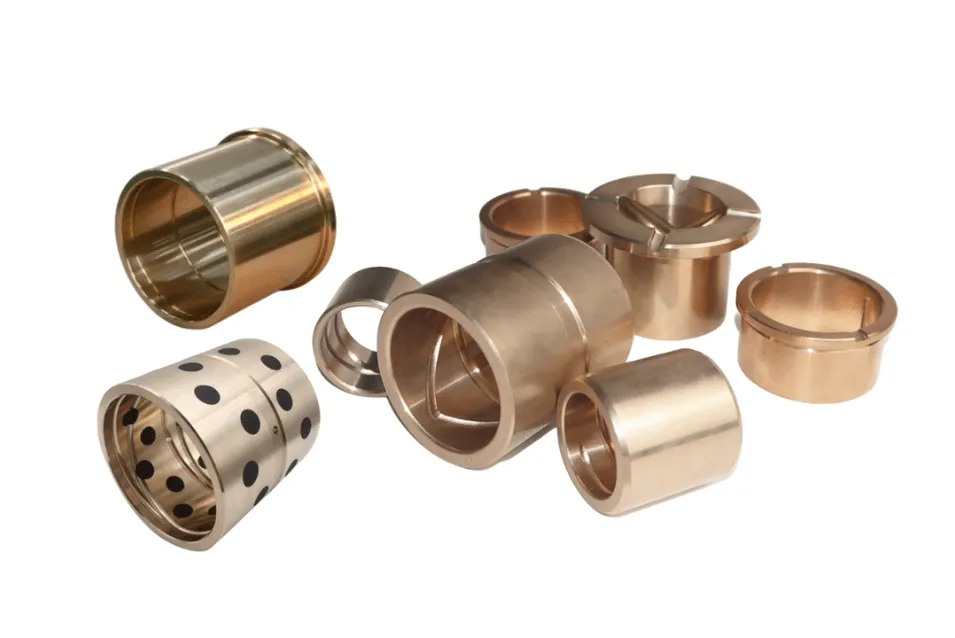
100000+ Types of Bushings – Contact Us for Details