
Recent Posts
How the Right Bearing Cage Drives Machine Reliability and Performance
In the intricate world of rotating machinery, from the hum of a high-speed electric motor to the massive grind of a mining crusher, smooth operation hinges on a component most never see: the bearing cage. This essential yet often overlooked part does far more than just hold balls or rollers; it is the orchestrator of motion, the guardian against friction, and a critical determinant of your machine’s lifespan and efficiency.
Choosing the wrong cage can lead to premature wear, unplanned downtime, and costly failures. This comprehensive guide delves into the science and selection of bearing cages, empowering you to make informed decisions that enhance reliability and performance across your operations.

Table of Contents
1. More Than a Holder: The Critical Functions of a Bearing Cage
A bearing cage, also known as a separator or retainer, is the component within a rolling-element bearing that sits between and spaces apart the balls or rollers. Its primary functions are deceptively simple but vitally important:
Maintains Uniform Spacing: It prevents the rolling elements from clumping together or rubbing against each other, which would cause excessive friction, heat, and rapid wear.
Guides and Stabilizes Motion: The cage ensures the rolling elements follow the correct path within the raceways, promoting smooth and stable rotation, especially during starts, stops, and changes in load direction.
Distributes Lubrication: In many designs, the cage aids in the even distribution of grease or oil to all critical contact surfaces.
Reduces Noise and Vibration: A well-designed, properly fitted cage minimizes metal-to-metal contact and rattling, leading to quieter operation.
As one technical resource aptly notes, “The cage comes in contact with the rolling elements or bearing rings by sliding, and, when a force is applied… the rolling elements exert a force by pushing or pulling on the cage.” This constant interaction makes the cage’s material and design non-negotiable factors for bearing performance.
2. The Material Science: Selecting the Cage for the Challenge
The choice of cage material is a direct response to the operating environment. It’s a balance of strength, weight, friction, and environmental resistance.
1. Metal Cages: The Pillars of Strength and Durability
Steel (Pressed or Stamped): The most common type, offering high strength, good durability, and cost-effectiveness. Ideal for a wide range of general industrial applications, from electric motors to automotive components.
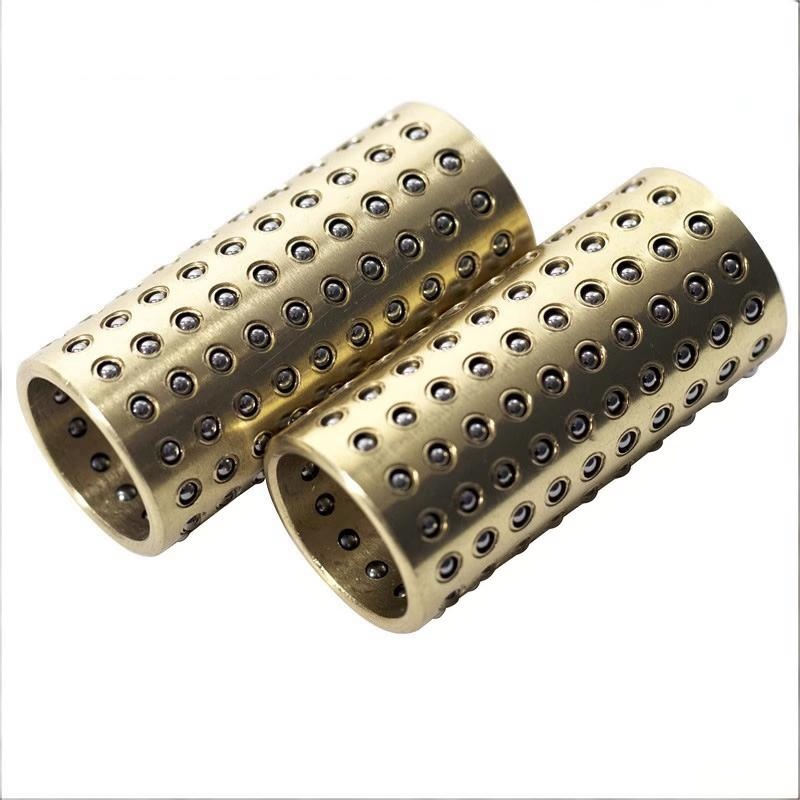
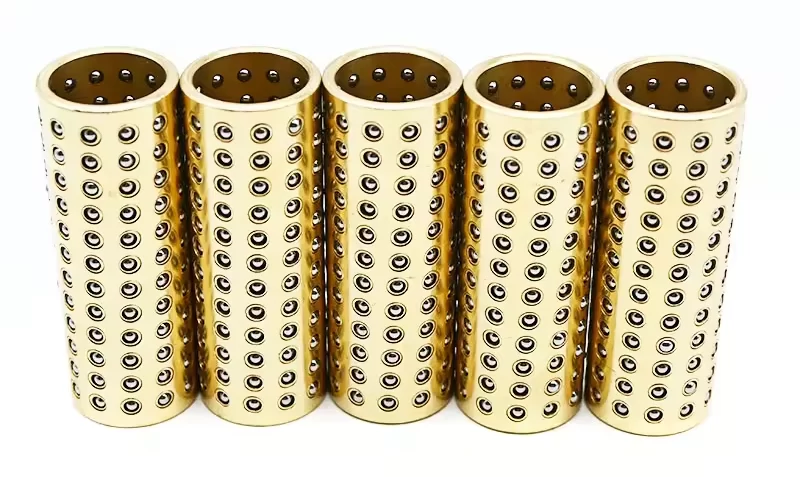
Brass and Bronze Alloys (Machined): Where superior performance is required, machined brass or bronze cages excel. As highlighted in materials science, bronze alloys are chosen for their ability to withstand high loads over long durations, maintain low friction coefficients, and exhibit low wear rates. They offer excellent corrosion resistance, good thermal conductivity to dissipate heat, and inherent lubricity. These are often the choice for demanding applications in heavy machinery, pumps, and marine environments.
2. Polymer Cages: The Modern Solution for Speed and Corrosion
Polyamide (Nylon) with Glass Fiber: These lightweight cages reduce centrifugal force, making them ideal for high-speed applications. They offer quiet operation, inherent lubricity, and resistance to many chemicals and corrosion.
PTFE-Based Polymers: For the most demanding environments where chemical resistance or ultra-low friction is paramount, advanced polymer composites come into play. Innovations in this field show how modern solutions “incorporate a robust, hard outer shell combined with a softer inner coating,” effectively minimizing friction and wear for smooth, maintenance-free operation.
3. Design and Manufacturing: Precision in Form and Function
Cage design varies significantly with bearing type and application needs:
Pressed Cages: Made from sheet metal, they are lightweight and economical, commonly found in deep groove ball bearings.
Machined Cages: Fabricated from solid metal stock (like brass or steel), they provide high strength, precise geometry, and stability for larger or high-precision bearings.
Molded Cages: Formed from polymers, they allow for complex, optimized shapes that are lightweight and offer excellent sliding properties.
The manufacturing precision is paramount. Any deviation in pocket geometry or surface finish can lead to improper ball guidance, increased friction, and ultimately, cage failure.
4. Application Spotlight: Where the Cage Makes or Breaks Performance
High-Speed Machine Tool Spindles: Here, polyamide cages are preferred for their light weight, which reduces stress at extreme RPMs, and their ability to run smoothly with minimal lubrication.
Heavy-Duty and Mining Equipment: Applications like crushers or vibrating screens experience severe shock loads and contamination. Machined bronze or brass cages are favored for their toughness, high load capacity, and wear resistance. Advanced self-lubricating designs, which may feature embedded solid lubricant plugs, can be critical in these harsh, maintenance-challenged environments.
Marine and Offshore Applications: Constant exposure to saltwater demands exceptional corrosion resistance. Bronze alloy cages or specialized polymer cages are essential to prevent premature failure from rust and degradation.
Food & Beverage and Pharmaceutical Processing: Where washdowns and chemical cleaning are routine, stainless steel or polymer cages that resist corrosion and can often run with food-grade lubricants (or dry) are mandatory.
5. Partner with MYWAY for Your Critical Bushing and Cage Solutions
Understanding the pivotal role of bearing cages leads to a clear conclusion: the reliability of your rotating equipment is only as strong as its most precisely engineered component. This philosophy extends beyond cages to the entire bearing system, including plain bushings and sleeve bearings, where material science is equally critical.
At MYWAY, we apply this deep understanding of material performance and tribology to engineer superior solutions. While we specialize in high-performance bushings and wear plates, our expertise in material selection—from advanced bronze alloys to innovative self-lubricating composites—aligns perfectly with the engineering principles that define a top-tier bearing cage.
We help our clients in industries like metallurgy, heavy machinery, and automotive solve their most challenging friction and wear problems. Whether you require a standard component or a custom-engineered solution designed for a specific load, speed, and environmental challenge, MYWAY is equipped to deliver.
Are you looking to optimize performance, reduce unplanned downtime, or solve a persistent wear issue? Let’s discuss how our material and engineering expertise can be applied to your unique application.

FAQ: Bearing Cages
Q: Can a bearing operate without a cage?
A: Yes, such bearings are called “full complement” bearings. They pack in more rolling elements to increase load capacity but sacrifice speed capability and can have higher friction, as the elements contact each other. They are used in slow-rotating, very high-load applications.
Q: What are the first signs of a failing bearing cage?
A: Unusual noise (increasing rattling or grinding), increased vibration, or excessive heat from the bearing housing can indicate cage wear or damage. Ultimately, cage failure often leads to complete bearing seizure.
Q: How does lubrication affect cage life?
A: Proper lubrication is crucial. It reduces friction and wear between the cage and rolling elements. Insufficient lubrication leads to increased metal-to-metal contact, overheating, and accelerated cage wear or fracture.
Q: Is a brass cage always better than a steel cage?
A: Not always. It depends on the application. Brass cages offer excellent corrosion resistance, better dry-running properties, and are often used in precision or corrosive environments. Steel cages are incredibly strong, cost-effective, and perfect for most general-purpose applications. The choice should be based on operational requirements.
Q: Can I replace a polymer cage with a metal one for more strength?
A: It is not recommended without consulting a bearing engineer. A metal cage is heavier, which increases centrifugal force and could make it unsuitable for high-speed applications. It may also have different thermal expansion properties and lubrication requirements, potentially leading to premature failure.
100000+ Types of Bushings – Contact Us for Details