
Recent Posts
Bushing Material PV: Pressure-Velocity Ratings and Bearing Performance
Introduction: Why PV Value Determines Bushing Success
If you’ve ever wondered why some bushings fail prematurely while others run smoothly for years, the answer often lies in one critical factor: PV value. Whether you’re designing heavy machinery, automotive components, or industrial equipment, understanding the relationship between pressure and velocity in bushing materials can mean the difference between optimal performance and catastrophic failure .
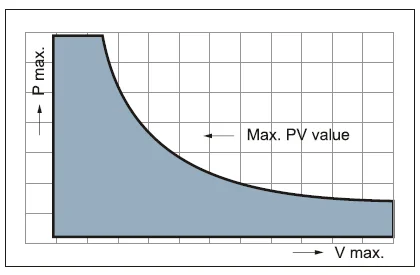
The PV value—short for Pressure-Velocity value—is the single most important parameter when selecting bushings for dynamic applications. It tells you exactly how much mechanical and thermal stress your bushing material can handle before things go wrong .
In this comprehensive guide, we’ll break down everything you need to know about bushing material PV ratings: what they mean, how to calculate them, which materials perform best under different conditions, and—most importantly—how to choose the right self-lubricating bushings for your specific application.
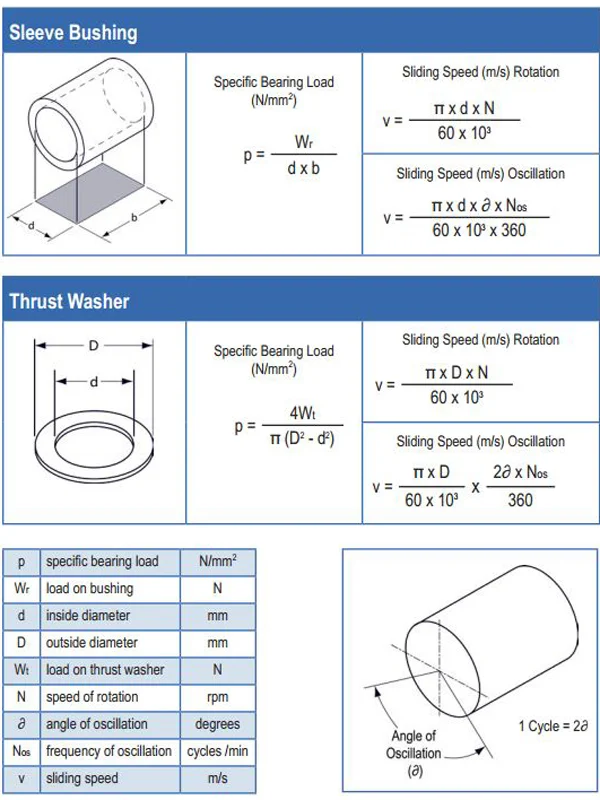
Table of Contents
1. What Exactly Is PV Value in Bushings?
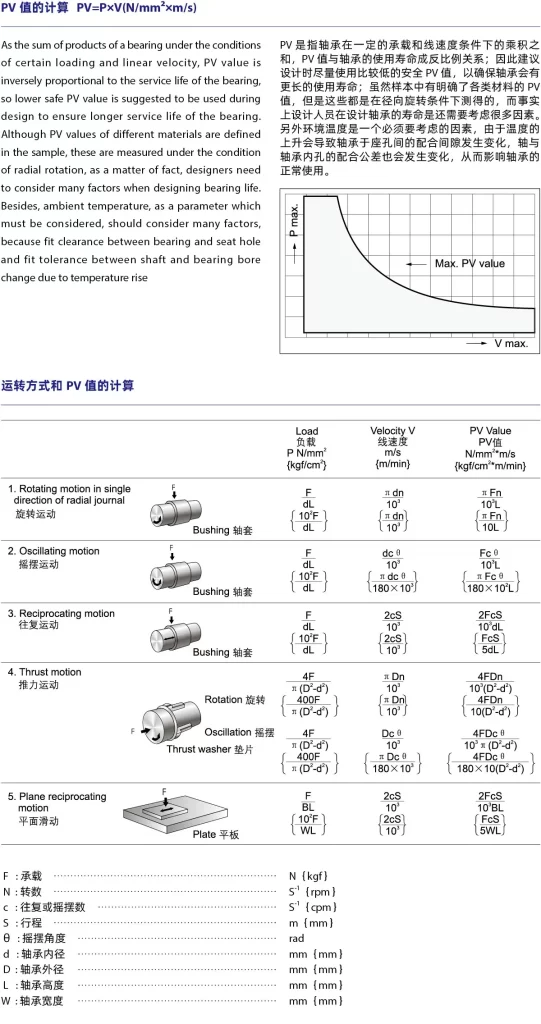
Let’s start with the basics. The PV value is the product of two factors:
P (Pressure) : The load applied to the bearing surface, typically measured in N/mm² or psi
V (Velocity) : The sliding speed of the mating surface, measured in m/s or ft/min
When you multiply these together (P × V), you get the PV value—a number that represents the operating conditions your bushing will face .
Think of it as the “work rate” your bushing has to handle. Higher PV values mean more friction, more heat, and ultimately more stress on the material .
The Heat Connection
Here’s something many engineers overlook: PV value is directly proportional to frictional heat generation. When your shaft rotates inside the bushing, friction creates heat. The amount of heat energy produced per unit area follows this relationship :
Q = μ × P × V ÷ J
Where:
Q = Frictional heat energy
μ = Coefficient of friction
P = Pressure
V = Velocity
J = Unit conversion constant
This means if you double your PV value, you’re potentially doubling the heat your bushing needs to dissipate. And heat is the enemy of bushing life .
2. Bearing PV vs. Maximum PV: Understanding the Critical Difference
This is where many design mistakes happen. Engineers often confuse the actual operating PV with the material’s maximum capability. Let’s clarify:
| Parameter | What It Represents | Design Implication |
|---|---|---|
| Bearing PV | The actual PV value in your specific application | Should be kept as low as possible for longer life |
| Maximum PV (Limiting PV) | The highest PV the material can withstand briefly without failure | The absolute upper limit—never exceed in continuous operation |
The Inverse Relationship
Here’s a rule worth remembering: PV value and bushing life are inversely proportional. In plain terms, if you double the PV value, you’ll likely cut the bushing’s operational life in half .
That’s why smart designers don’t just check if their PV is below the maximum—they aim for a comfortable safety margin. Lower PV equals longer life, plain and simple .
3. How to Calculate PV Value for Bushings
Ready to crunch some numbers? Here’s the step-by-step process for calculating PV value in real-world applications.
Step 1: Calculate Pressure (P)
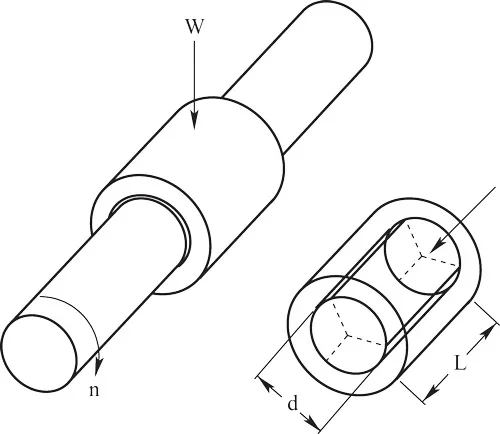
For cylindrical bushings, pressure is calculated using the projected area method :
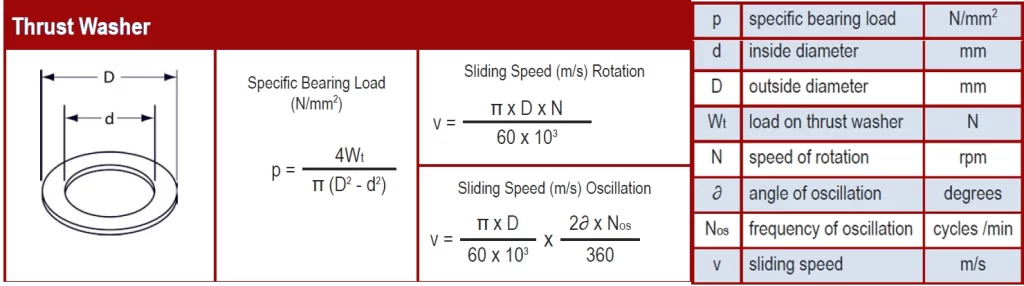
P = Load ÷ Projected Area
Where:
Projected Area = Bearing Length × Shaft Diameter
For example, if you have a load of 500 N, a shaft diameter of 20 mm, and a bearing length of 25 mm:
Projected Area = 20 mm × 25 mm = 500 mm²
Pressure = 500 N ÷ 500 mm² = 1 N/mm²
Step 2: Calculate Velocity (V)
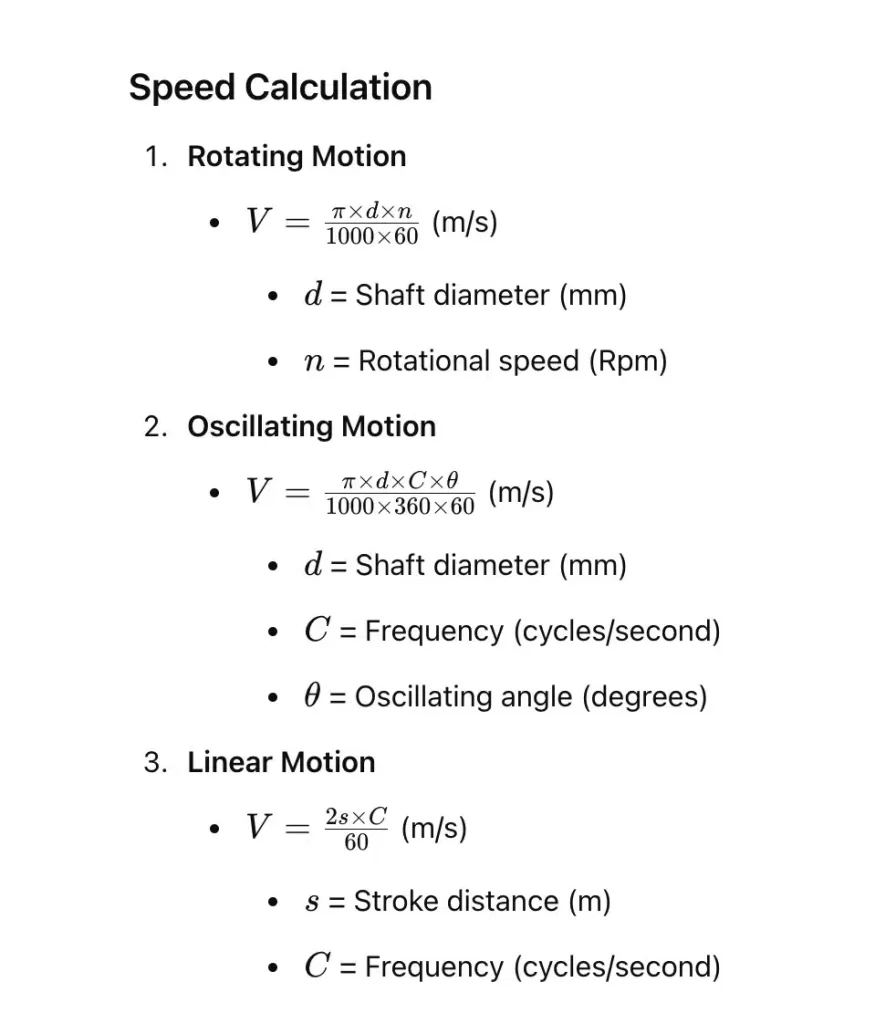
For rotational motion, the sliding velocity formula is :
V = π × Shaft Diameter × RPM
Or use this simplified version for imperial units:
V = Shaft Diameter (inches) × RPM × 0.262
For metric units (m/s):
V = (π × Shaft Diameter (m) × RPM) ÷ 60
Step 3: Calculate PV Value
PV = P × V
Let’s walk through a complete example :
Scenario: A 2-inch shaft rotating at 600 RPM with a 500 lb load. Bearing length is 3 inches.
Step 1 – Calculate P:
Projected Area = 2″ × 3″ = 6 in²
P = 500 lbs ÷ 6 in² = 83.3 psi
Step 2 – Calculate V:
V = 2″ × 600 RPM × 0.262 = 314.4 ft/min
Step 3 – Calculate PV:
PV = 83.3 psi × 314.4 ft/min = 26,180 psi·ft/min
Now you compare this number against the material’s maximum PV rating. If your calculated value exceeds the recommended limit, you’ll need to reconsider the material, reduce the load, or slow things down.
4. Factors That Affect Bushing PV Performance
PV value isn’t just about the numbers you calculate on paper. Several real-world factors can significantly impact how your bushing performs.
1. Direction of Motion
Here’s something many catalogs don’t emphasize enough: PV ratings typically assume continuous rotational motion. Change the motion pattern, and the allowable PV changes dramatically .
Rotational motion: Full PV rating applies
Reciprocating motion: Reduce PV rating by approximately 50%
Oscillating motion: May require even lower PV values
Why? Because oscillating motion creates a zero-velocity point at each reversal, disrupting lubricant film formation and accelerating wear .
2. Shaft Material and Hardness
Your shaft isn’t just a passive partner—it actively affects bushing performance. For optimal results :
Recommended: Carbon steel, case-hardened to Rockwell C60
Surface finish: 16 micro inches Ra or better
Not recommended: Soft materials like aluminum or brass for high-load applications
Hardened shafts with good surface finish can significantly increase the permissible PV rating of your bushing system .
3. Operating Temperature
Heat changes everything. As temperature rises :
Material strength decreases
Thermal expansion affects clearances
Lubricant properties may degrade
For high-temperature applications, you’ll need to limit PV values to smaller numbers. This is especially critical for plastic bushings, which generally have poorer heat resistance than metallic options .
4. Lubrication Conditions
The presence and quality of lubrication can dramatically affect PV performance :
| Lubrication Condition | PV Correction Factor |
|---|---|
| Dry operation | 1.0 (baseline) |
| Initial lubrication only | 1.3 |
| Continuous grease | 2.0 |
| Continuous oil | 5.0 |
| Water lubrication | 4.0 |
Yes, you read that right—proper lubrication can multiply your allowable PV by a factor of five . This is why self-lubricating bushings that provide continuous lubrication are so valuable.
5. Operating Cycles
Intermittent operation offers advantages and challenges :
Advantage: Cooling during pauses allows higher peak loads
Disadvantage: Frequent restarts can disrupt lubrication
For run times under 10 minutes, the permissible PV value may increase because the bearing never reaches maximum temperature . The key factor is the ratio of running time to pause time—longer pauses mean more cooling .
5. Bushing Materials Comparison: PV Ratings and Performance
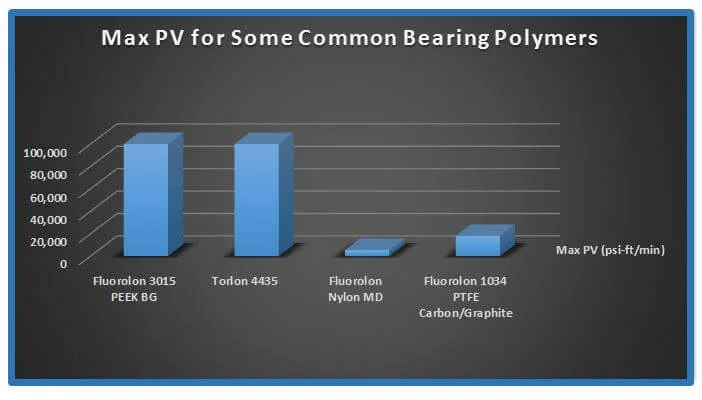
Different bushing materials offer vastly different PV capabilities. Here’s how the most common options compare.
Bronze Bushings
Traditional bronze bushings have been around forever—and for good reason. They offer :
Excellent wear resistance
High load capacity
Good high-temperature performance
Typical PV limits around 50,000 psi·ft/min (with lubrication)
However, standard bronze requires external lubrication. Without it, PV ratings drop significantly.
PTFE-Based Materials
PTFE (Teflon) brings unique advantages to the table :
Extremely low friction coefficient
Excellent chemical resistance
Wide temperature range
Self-lubricating properties
The trade-off? Lower load capacity than bronze, typically around 10,000-20,000 psi·ft/min depending on formulation.
Polymer Composite Bushings
Modern engineered polymers offer compelling benefits :
Self-lubricating capabilities
Good chemical resistance
Quiet operation
Moderate PV ratings (varies widely by formulation)
The key advantage of polymer composites is their ability to run dry while maintaining reasonable PV limits.
Self-Lubricating Metal Composites
This category—where MYWAY specializes—represents the sweet spot for demanding applications. These materials combine:
Metal backing for structural strength
PTFE or other solid lubricants for low friction
Controlled lubricant release for consistent performance
The result? High PV capability without external lubrication.
6. Self-Lubricating Bushings: The Smart Choice for Challenging Applications
Let’s talk about why self-lubricating bushings often outperform traditional options, especially in tough conditions.
How They Work
Self-lubricating bushings contain solid lubricants embedded in the bearing material. As the shaft rotates, microscopic amounts of lubricant transfer to the contact surface, creating a low-friction film .
This built-in lubrication system offers several advantages:
No external oilers or grease fittings needed
Consistent lubrication throughout life
Clean operation—no oil drips or contamination
Maintenance-free after installation
Where They Excel
Self-lubricating bushings are particularly valuable in :
Oscillating motion applications (where conventional lubrication breaks down)
Hard-to-reach locations (where maintenance is difficult)
Clean environments (food processing, medical equipment)
High-temperature conditions (where oil would carbonize)
Submerged or wet environments (where grease washes out)
Real-World Performance
Government testing at the John Day Dam project demonstrated that self-lubricating bushings can outperform traditional oil-lubricated bronze bushings in demanding hydropower applications . Similar testing for the U.S. Corps of Engineers confirmed that properly selected self-lubricating products deliver excellent wear rates and coefficient of friction .
7. PV Value and Bearing Life: Practical Design Considerations
Now let’s connect PV theory to practical design decisions.
The Life Equation
While exact life prediction requires application-specific testing, the general relationship is straightforward :
Higher PV = Shorter Life
This means your design goal shouldn’t be “Can I stay under the maximum PV?” but rather “How low can I reasonably keep my PV value?”
Setting Realistic Limits
Here are practical guidelines for different operating conditions:
| Application Type | Recommended PV Limit (% of max) |
|---|---|
| Continuous operation, well-lubricated | 50-70% |
| Continuous operation, dry | 30-50% |
| Intermittent operation | 60-80% |
| Oscillating motion | 25-40% |
| High-temperature environment | 20-30% |
When to Consider Prototype Testing
For critical applications, calculations alone aren’t enough. Consider prototype testing when :
PV values approach material limits
Operating conditions include oscillation or frequent starts/stops
Environmental factors (temperature, contamination) are severe
Failure would cause significant downtime or safety issues
8. Common PV Calculation Mistakes to Avoid
Learn from others’ errors. Here are the most frequent PV-related mistakes engineers make:
Mistake #1: Using the Wrong Area
Using the full cylindrical surface area instead of projected area gives artificially low pressure values. Always use Length × Diameter .
Mistake #2: Ignoring Motion Type
Applying rotational PV limits to oscillating applications leads to premature failure. Remember: oscillation reduces allowable PV by 50% or more .
Mistake #3: Overlooking Temperature Effects
PV ratings assume certain temperature conditions. If your ambient temperature is high, or heat dissipation is poor, the effective PV limit drops .
Mistake #4: Forgetting About Intermittent Operation
Short runs with cooling pauses allow higher PV values, but frequent starts and stops can disrupt lubrication .
Mistake #5: Neglecting Shaft Effects
A soft shaft or rough finish can cut bushing life dramatically, regardless of PV calculations .
Why Choose MYWAY Self-Lubricating Bushings?
After understanding all the theory behind PV values and material performance, the practical question remains: Which bushing should you choose?
At MYWAY, we’ve engineered our self-lubricating bushings to deliver exceptional PV performance across a wide range of applications.
Our Advantage
Precision-engineered materials optimized for specific load and speed conditions
Consistent lubricant delivery throughout bushing life
Stringent quality control ensuring reliable performance
Comprehensive technical support to help you select the right product
Applications We Serve
MYWAY bushings excel in:
Industrial machinery – conveyors, packaging equipment, machine tools
Automotive components – suspension systems, steering assemblies
Agricultural equipment – harvesters, tractors, implements
Construction machinery – excavators, loaders, cranes
Specialty applications – clean room, food processing, submerged operation
Our Commitment
We don’t just sell bushings—we provide engineering solutions. Our team understands PV calculations, material selection, and application challenges. We’ll work with you to ensure you get the right product for your specific needs.
Conclusion: Making PV Work for You
Understanding bushing material PV isn’t just academic—it’s essential for reliable machine design. By mastering PV calculations and knowing how different materials perform, you can:
Extend equipment life through proper bushing selection
Reduce maintenance costs by avoiding premature failures
Improve reliability with bushings matched to your operating conditions
Simplify designs using self-lubricating solutions where appropriate
The key takeaways:
Calculate PV carefully using projected area and correct velocity formulas
Apply appropriate safety factors for motion type, temperature, and lubrication
Consider self-lubricating options for demanding or maintenance-free applications
Verify with manufacturers when PV values approach material limits
Frequently Asked Questions About Bushing Material PV
Q: What’s the difference between PV value and limiting PV?
A: PV value represents your actual operating conditions (load × speed). Limiting PV is the maximum the material can handle—exceed it and you risk failure .
Q: Can I use the same PV limit for rotation and oscillation?
A: No. Oscillating motion typically requires reducing the PV limit by 50% or more because lubrication breaks down at the reversal points .
Q: How does temperature affect PV limits?
A: Higher temperatures reduce material strength and alter clearances. For high-temperature applications, limit PV values to smaller numbers .
Q: What’s the best material for high PV applications?
A: For the highest PV capability, bronze with continuous oil lubrication offers the best performance. For self-lubricating options, metal-backed PTFE composites provide the best combination of load capacity and low friction .
Q: How do I know if my PV value is safe?
A: Compare your calculated PV with the manufacturer’s maximum rating, then apply safety factors for your specific conditions (motion type, temperature, lubrication). When in doubt, consult with bearing engineers .
Q: Can self-lubricating bushings handle high PV values?
A: Yes, modern self-lubricating materials can handle impressive PV values—often exceeding 50,000 psi·ft/min in continuous operation, depending on the specific formulation .
100000+ Types of Bushings – Contact Us for Details