
Recent Posts
Bushing Types: Understanding Varieties, Materials, and Applications
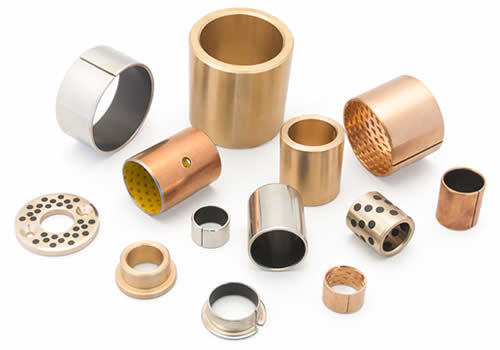
When engineers design machinery that moves, one silent, often-overlooked hero ensures everything runs smoothly and lasts longer: the bushing. Also known as a plain bearing or sleeve bearing, a bushing is the fundamental component that reduces friction, supports loads, and absorbs vibrations between moving parts. From the massive excavator in a mining pit to the precision arm inside a semiconductor robot, the right bushing type is critical for performance, durability, and cost-effectiveness. This guide cuts through the complexity to give you a clear, actionable understanding of bushing types, materials, and how to select the perfect one for your application. We’ll end by showing you how a manufacturer like MYWAY can be your ultimate partner in solving friction-related challenges.
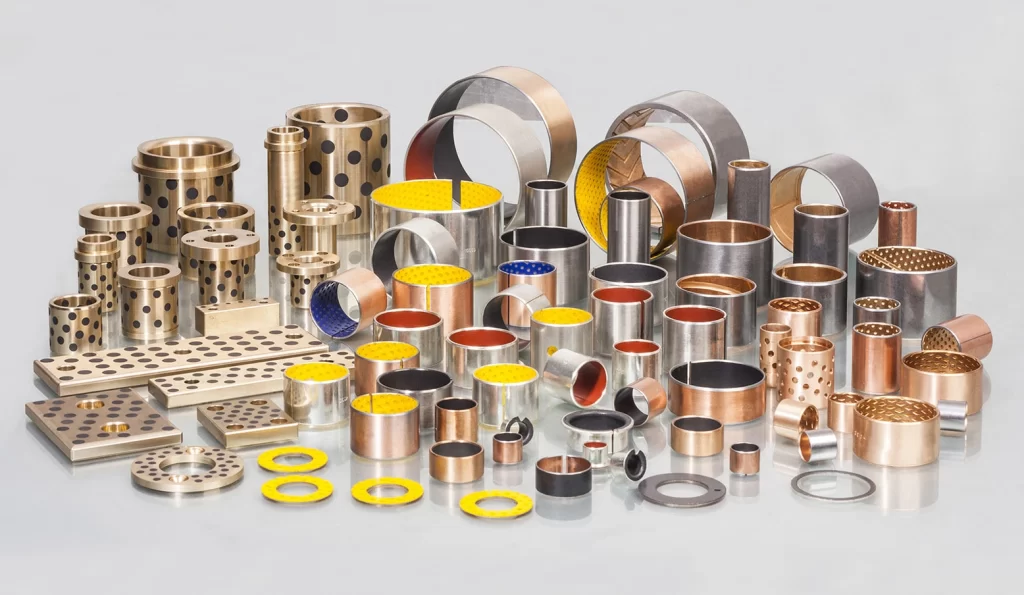
Table of Contents
1. What is a Bushing? The Simple Foundation
Imagine a cylindrical component, often hollow, that fits snugly into a housing. A shaft rotates or slides inside it. That’s a bushing in its simplest form. Its core jobs are to:
Limit Wear: Protect more expensive components (like shafts and housings) from direct contact and degradation.
Reduce Friction & Support Loads: Provide a smooth, low-friction surface that bears radial (and sometimes axial) forces.
Dampen Vibrations: Absorb shocks and noise for smoother, quieter operation.
Ensure Alignment: Guide components precisely for optimal performance.
Unlike rolling-element bearings (ball or roller bearings), bushings operate on a principle of sliding contact. This makes them exceptionally durable, capable of handling high loads in dirty environments, and often simpler and more cost-effective.
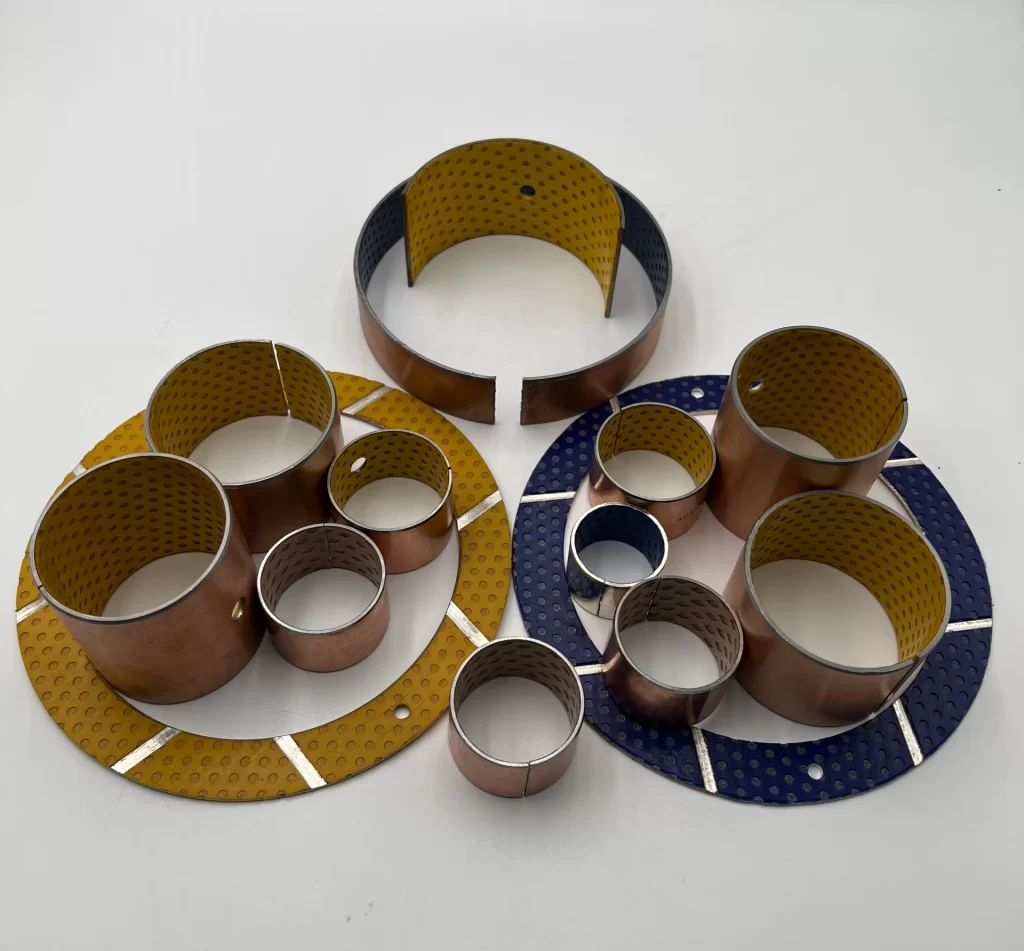
2. Exploring the Major Bushing Types
Choosing the right type starts with understanding the basic geometries. Here’s a breakdown of the most common bushing types you’ll encounter in engineering catalogs and machine designs.
1. Solid/Sleeve Bushings
This is the classic, one-piece cylindrical bushing. It’s robust, provides excellent load distribution, and is ideal for applications with consistent, high radial loads.
Best For: General industrial machinery, agricultural equipment, and applications where simplicity and strength are key.
Variation – Flanged Sleeve Bushings: This type adds a flange (a lip) at one end. The flange provides axial location and can handle light thrust loads, preventing the bushing from being pushed through its housing.
2. Split Bushings
As the name suggests, these bushings are split along their length into two halves. This design is a game-changer for maintenance.
Key Advantage: They can be installed and replaced without disassembling the entire shaft or surrounding components, drastically reducing downtime.
Ideal For: Large crankshafts, connecting rods, and hard-to-reach locations in industrial machinery where regular inspection or replacement is needed.
3. Flanged Bushings
These bushings feature a mounted flange, offering combined radial and axial (thrust) load support. They self-locate within an assembly, simplifying installation and ensuring proper positioning.
Perfect For: Applications like linkages, pivot points, and conveyor rollers where forces come from multiple directions.
4. Thrust Washers
While not always called a “bushing,” a thrust washer serves a similar purpose for managing axial (face) loads. They are flat, disc-shaped components placed between rotating and stationary parts to prevent lateral movement and wear.
Common Use: Gears, pulleys, and assemblies where components need to be kept at a precise axial distance.
5. Self-Lubricating & Composite Bushings
This isn’t a single shape but a revolutionary material technology. These bushings have lubricants (like PTFE, graphite, or oil) embedded within their matrix (e.g., bronze-steel composites).
The Game-Changer: They require little to no external lubrication. This eliminates contamination risks (vital in food, pharma, and packaging) and reduces maintenance.
Key Types:
PTFE-Lined Steel: A steel shell for strength with a PTFE-based liner for ultra-low friction.
POM Composite: Steel-backed with a porous bronze sinter and a POM (acetal) layer, offering excellent wear resistance.
Bronze with Graphite Plugs: Solid bronze bushings with inserted graphite plugs provide consistent, dry lubrication.
3. Material Matters: Choosing the Right Substance
The bushing type defines its shape, but the material defines its soul. The right material pairing with your operating environment is critical.
Bronze (e.g., CuSn8, SAE660): The industry workhorse. Excellent for its combination of strength, wear resistance, and compatibility with steel shafts. Ideal for general industrial, marine, and high-load applications.
Sintered Bronze/Iron: Powdered metal pressed and sintered to create a porous structure. Often oil-impregnated for self-lubrication, making them perfect for applications where re-lubrication is difficult.
Brass: Softer than bronze, easier to machine, and offers good corrosion resistance. Suitable for lighter loads and low-speed applications.
Polymers (POM, Nylon, PTFE): Lightweight, corrosion-proof, and often self-lubricating. PTFE (Teflon) in particular offers the lowest coefficient of friction. Great for wet environments, cleanrooms, and chemical exposure.
Stainless Steel: Used when extreme corrosion resistance or high temperatures are the primary concern, often combined with PTFE liners.
Composite Materials (Metal-Polymer): These offer the best of both worlds: the strength and heat dissipation of a metal backing (steel, bronze) with the low-friction, wear-resistant properties of a polymer or PTFE liner. They represent the high-performance end of the spectrum.
4. Key Industries and Applications: Where Bushings Do the Heavy Lifting
Automotive & Transportation: Suspension arms, steering linkages, gearbox mounts, and landing gear assemblies.
Heavy Machinery & Construction: Excavator pins, hydraulic cylinder mounts, crane sheaves, and conveyor rollers.
Agricultural Machinery: High-load, high-contamination environments in harvesters, tillers, and pivots.
Renewable Energy: Pitch and yaw controls in wind turbines, tracking systems in solar panels.
Material Handling & Packaging: Robotic arms, lift systems, and high-cycle machinery on production lines.
Marine & Offshore: Corrosion-resistant bushings for rudder systems, winches, and deck machinery.
5. Selecting the Right Bushing: A Practical Checklist
Don’t get lost in the options. Ask these questions:
Load: What is the magnitude and direction (radial, axial, or both) of the force?
Speed: What is the rotational or oscillating speed (RPM)?
Environment: Is there exposure to dirt, water, chemicals, or extreme temperatures?
Lubrication: Is the application easy to lubricate regularly, or is a maintenance-free, self-lubricating solution required?
Precision & Play: What are the required tolerances and allowable clearance?
Cost & Lifespan: What is the total cost of ownership, balancing initial price with maintenance costs and expected service life?
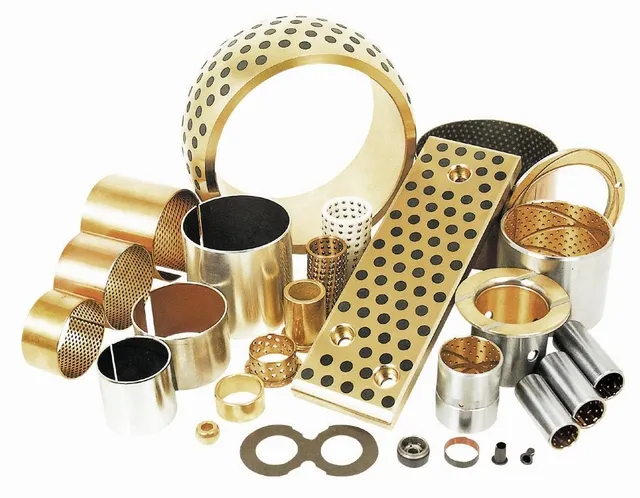
6. Partner with MYWAY for Unmatched Bushing Solutions
Understanding bushing types is the first step. The critical second step is sourcing them from a partner who delivers more than just a part in a box.
At MYWAY Bushings, we transform your understanding into reliable performance. We don’t just supply components; we provide engineered solutions for friction and wear challenges.
Why Global Engineers and Buyers Choose MYWAY:
Precision Across All Types: Whether you need standard sleeve bushings, maintenance-friendly split bushings, or complex flanged composite designs, we manufacture with stringent precision for perfect fit and function.
Material Mastery: From high-wear CuSn8 bronze and self-lubricating graphite-embedded alloys to advanced PTFE-lined steel and POM composites, we offer the full spectrum to match your exact environmental and operational demands.
End-to-End Control: Our integrated process—from in-house centrifugal casting and sintering to CNC machining and finishing—ensures complete quality control, traceability, and competitive pricing.
Custom-Engineered for You: Can’t find a standard solution? Our engineering team collaborates with you to design and prototype custom bushings that solve your specific problem, potentially saving you significant tooling and assembly costs.
Global Supply Reliability: With a strategic 5,000㎡ automated warehouse, we maintain robust inventory for both high-volume orders and urgent, low-quantity needs, ensuring your production line never stops.
FAQ: Your Bushing Questions, Answered
Q: What’s the real difference between a bushing and a bearing?
A: All bushings are bearings, but not all bearings are bushings. “Bearing” is the broad category for any component that reduces friction between moving parts. Bushings are a specific type of bearing that uses a sliding surface. Ball and roller bearings use rolling elements.
Q: Are bronze or plastic bushings better?
A: It’s about application, not which is “better.” Bronze is superior for high-load, high-speed, and high-temperature scenarios where strength and heat dissipation are critical. Plastic/Polymer bushings excel in wet, corrosive, or clean environments where self-lubrication, weight, and chemical resistance are priorities.
Q: My bushing keeps failing. What are the common causes?
A: Premature failure usually points to a mismatch:
Wear & Scoring: Often caused by insufficient lubrication, incorrect hardness pairing with the shaft, or contamination.
Cracking or Deformation: The result of excessive load beyond the bushing’s capacity.
Corrosion or Chemical Attack: Using the wrong material for the operating environment.
Heat Seizing: Caused by excessive friction from poor lubrication, misalignment, or overload.
Q: How do I know when to replace a bushing?
A: Watch for tell-tale signs: increased play or looseness in the assembly, unusual noises (squeaking, grinding), visible wear or cracking on the bushing surface, or excessive heat generation at the bearing point.
Q: Can I get a custom bushing for a unique application?
A: Absolutely. While standard sizes cover many needs, leading manufacturers like MYWAY specialize in custom-engineered solutions. This includes unique dimensions, special material compositions (like specific bronze alloys), integrated features (grooves, holes, flanges), and proprietary surface treatments.
100000+ Types of Bushings – Contact Us for Details