
Recent Posts
Flanged Bushings Explained: The Unsung Hero of Machinery Alignment and Longevity
Why a Simple Flange Makes All the Difference
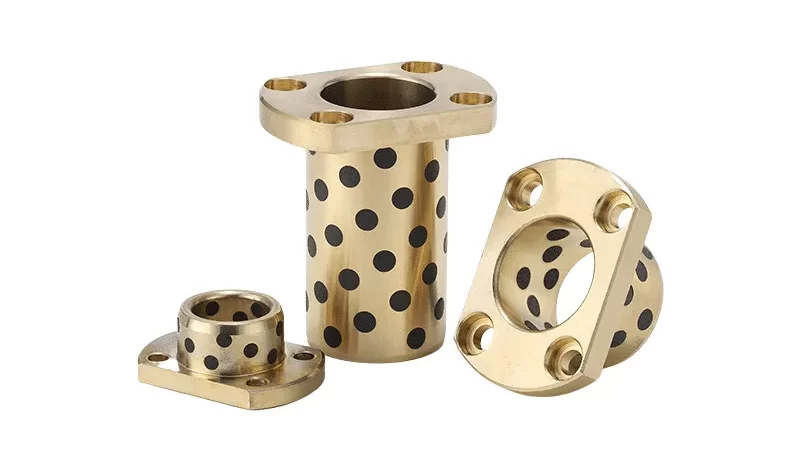
Imagine a critical shaft in your industrial machine starting to shift sideways under heavy load. The misalignment creates friction, wear, and a looming risk of catastrophic failure. This is the exact scenario the flanged bushing is designed to prevent. More than just a simple sleeve, a flanged bushing is a precision-engineered plain bearing that features an integral radial collar, or flange, at one end. This flange acts as a built-in shoulder, providing positive axial location and resisting thrust loads that would otherwise push the shaft out of position. In applications from high-speed packaging lines to rugged off-shore drilling platforms, flanged bushings are the silent guardians of alignment, ensuring smooth operation, reducing maintenance headaches, and extending the lifespan of valuable equipment. This guide will delve into how they work, the advanced materials that power them, and how choosing the right partner for these components can transform your operational reliability.
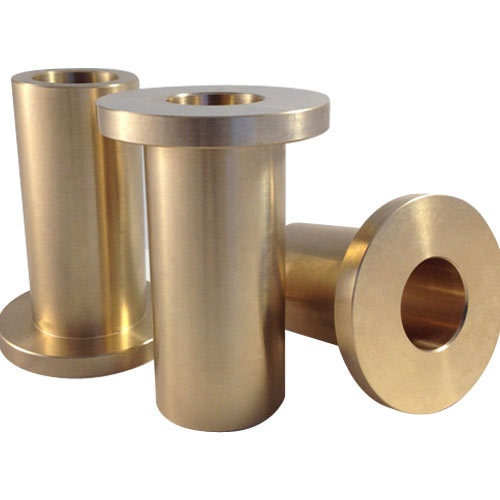
Table of Contents
1. Core Function and Design: More Than Just a Bearing
At its heart, a flanged bushing (often called a flanged bearing) serves a dual purpose that separates it from standard sleeve bushings.
Radial Support: Like any plain bearing, its cylindrical body (the sleeve) supports a rotating or sliding shaft, reducing friction and wear at the contact point.
Axial Control: The defining flange acts as a physical stop. It is typically mounted against a machined surface on the housing, preventing the entire bushing—and by extension, the shaft it supports—from moving laterally under axial or thrust loads.
This combination makes it indispensable in applications where precise shaft location is non-negotiable. Common designs include:
Standard Flanged Bushing: A one-piece sleeve with a flange at one end.
Flanged Split Bushing: The bushing is split into two halves, with the flange also split. This ingenious design allows for installation and replacement without disassembling the surrounding machinery or removing the shaft, a massive advantage for maintenance in paper mills or on marine propeller shafts.
Thrust Washers: A specialized, washer-like variant designed primarily to handle axial loads between rotating components.
Their simplicity is their strength, offering a compact, cost-effective, and highly reliable solution for managing combined loads.
2. The Material Science: Building for Strength and Sliding
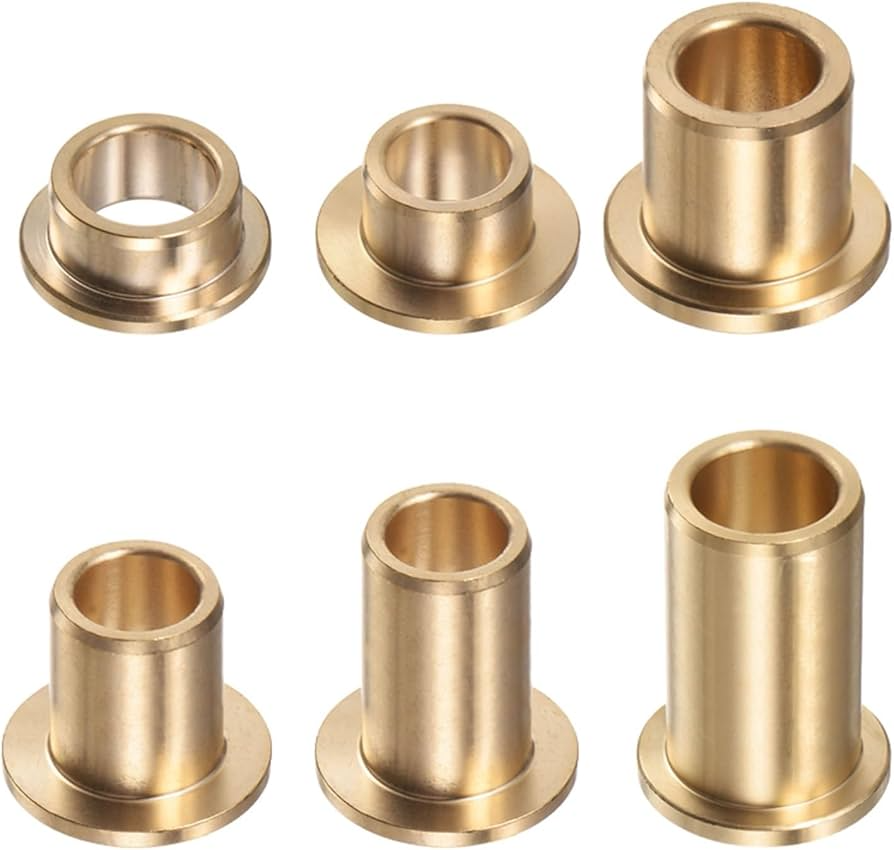
The performance of a flanged bushing is utterly dependent on its material composition. Modern engineering has moved far beyond simple bronze or brass, creating composite materials engineered for specific challenges.
The Gold Standard: Steel-Backed PTFE Composites
For demanding, maintenance-free applications, the layered composite design is often superior. As detailed in industry resources, a high-performance flanged bushing typically features a sophisticated three-layer structure:
Steel Backing Substrate: Provides exceptional structural strength, rigidity, and high load-bearing capacity.
Sintered Bronze Interlayer: A porous layer sintered (fused) onto the steel. This layer ensures excellent heat conductivity to dissipate friction-generated heat and creates a robust mechanical bond for the top layer.
PTFE/Polymer Lining: The working surface. A blend of PTFE (Teflon) and other polymers offers an extremely low coefficient of friction and provides self-lubricating properties. This enables smooth, dry-running operation without external grease.
Material Selection Guide:
| Material Type | Key Properties | Ideal For |
|---|---|---|
| Bronze/ Brass | Good wear resistance, machinability, conducts heat well. Often oil-impregnated. | General industrial uses, moderate loads and speeds where lubrication is possible. |
| PTFE Composites | Self-lubricating, low friction, chemical resistant, wide temp range. | Food & Pharma (cleanliness), dry applications, or where maintenance access is poor. |
| Bimetal (Steel lined with Bronze) | High load capacity, good fatigue strength, cost-effective for volume. | Automotive engines (crankshafts), heavy-duty rotational equipment. |
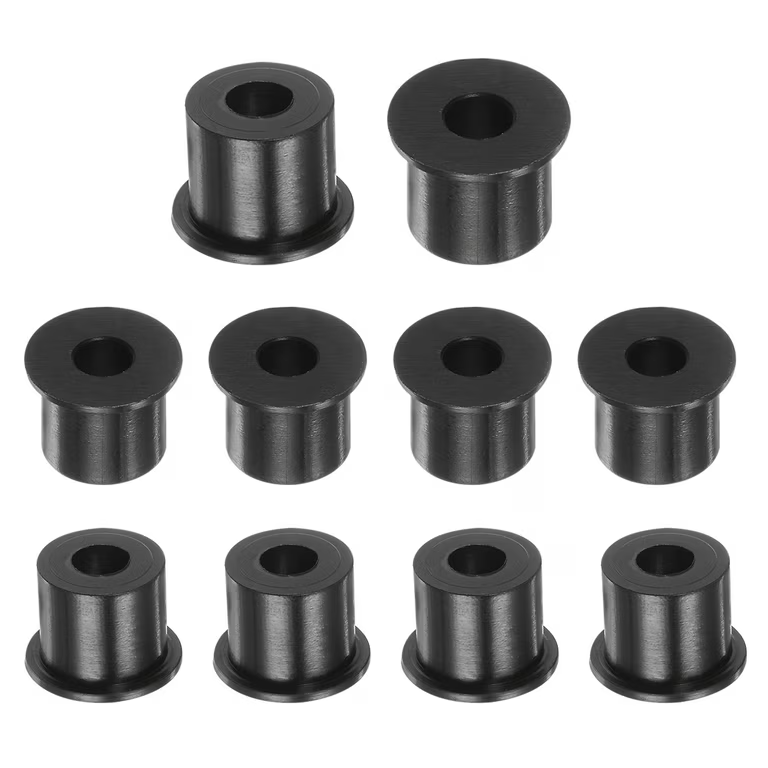
| Polymer (POM, Nylon) | Lightweight, corrosion-resistant, quiet operation, low cost. | Light to medium loads, conveyor systems, agricultural equipment. |
| Stainless Steel + PTFE | Excellent corrosion resistance, can be self-lubricating. | Marine applications, chemical processing, water treatment, offshore platforms. |
3. Key Advantages: Why Engineers Specify Flanged Bushings
Simplified Installation & Assembly: The flange makes positioning straightforward, eliminating the need for complex spacers or locknuts to control axial play.
Space Efficiency: By combining radial bearing and axial location in one compact unit, they save valuable space in machine design, allowing for more compact and efficient layouts.
Maintenance Reduction: Especially with self-lubricating PTFE or oil-impregnated bronze types, they drastically reduce or eliminate the need for re-lubrication, lowering long-term upkeep costs and contamination risks.
Durability in Harsh Environments: Composite and specialty materials allow them to thrive where others fail—resisting corrosion from seawater or chemicals, withstanding high temperatures, and operating effectively in dirty or dusty conditions common in mining and construction.
Cost-Effectiveness: Compared to complex rolling-element bearing assemblies with separate thrust components, flanged bushings often provide a more economical and equally reliable solution.a
4. Industry Applications: Where Flanged Bushings Prove Their Worth
The versatility of flanged bushings sees them deployed across the industrial spectrum:
Marine & Offshore: In propeller shaft struts, rudder fittings, and deck crane winches. Stainless steel bushings with PTFE liners are critical here for resisting saltwater corrosion while providing maintenance-free operation.
Heavy Machinery & Construction: Excavator pivot points, conveyor system rollers, and hydraulic cylinder mounts. They handle high shock loads and contamination.
Metallurgical & Mining: Within crushers, rolling mills, and vibrating screens. They are selected for extreme pressure capabilities and durability against abrasive grit.
Automotive & Transportation: In steering column supports, suspension linkages, and gearbox components, where precise alignment and durability are paramount.
Food & Pharmaceutical Processing: On mixers, fillers, and packaging machines. Self-lubricating, FDA-compliant PTFE composites prevent grease contamination and meet strict hygiene standards.
Renewable Energy: In wind turbine pitch and yaw drives, where reliable, low-maintenance rotation in exposed conditions is essential.
5. Installation and Maintenance: Ensuring Optimal Life
Proper handling maximizes performance:
Press-Fit Installation: The outer diameter is typically designed for a tight press-fit into a housing bore (common tolerance H7). The flange face must sit flush against the housing shoulder.
Shaft Requirements: A hardened and ground shaft with a fine surface finish (e.g., Ra 0.2 – 0.6 µm) is recommended to minimize wear on the bushing lining.
Maintenance: For self-lubricating types, maintenance is minimal—primarily keeping the area free of excessive debris. For lubricated types, following the correct re-greasing schedule is key. Always check for signs of excessive wear, scoring, or cracking during routine inspections.
6. The MYWAY Advantage: Your Partner in Precision and Performance
At MYWAY, we understand that a flanged bushing is not just a commodity part; it’s a critical component affecting your machine’s uptime, safety, and productivity. We go beyond standard supply to offer engineered solutions.
Our Expertise in Advanced Materials:
We specialize in high-performance composite flanged bushings. Our products leverage the proven steel-backed, bronze-sintered, PTFE-lined technology, but we focus on material science to enhance it. We optimize the PTFE blend for specific applications—whether for ultra-low friction, extended wear life under high PV (Pressure-Velocity) values, or exceptional chemical resistance.
Customization and Precision Manufacturing:
We recognize that standard sizes don’t always fit. MYWAY offers:
Custom Dimensions: Tailored bore, outer diameter, flange diameter, and width to your exact prints.
Material Variations: Not just PTFE composites. We supply flanged bushings in bimetal, high-performance bronze alloys, and specialty polymers to match your operational environment.
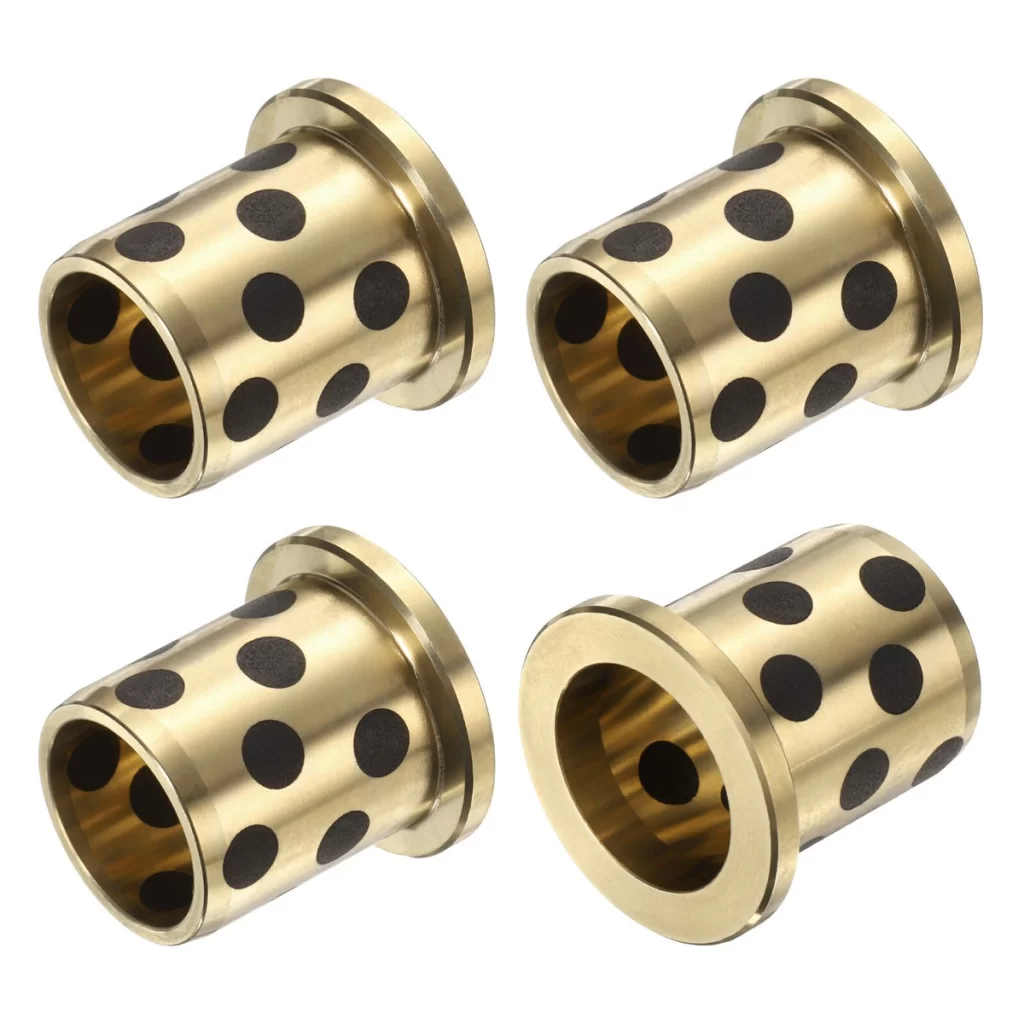
Special Features: Integrated lubrication grooves, custom flange hole patterns, or unique sealing arrangements.
Focus on Total Cost of Ownership:
A MYWAY flanged bushing is an investment in reliability. By providing a component with superior wear life and maintenance-free operation, we help you slash downtime, reduce lubricant costs, and avoid the cascade of failures that a worn bushing can cause. Our technical support team works with you to select or design the optimal bushing, ensuring it delivers maximum value over its entire service life.
Frequently Asked Questions (FAQ)
Q1: When should I choose a flanged bushing over a standard sleeve bushing and a separate thrust washer?
Choose a flanged bushing when you need a compact, integrated, and easy-to-install solution for managing both radial and light-to-moderate axial loads. It simplifies the bill of materials and assembly process. Use a standard bushing with a separate thrust washer for very high axial loads or when the axial load needs to be managed independently from the radial support location.
Q2: Can flanged bushings handle high-speed applications?
Yes, but with careful material selection. PTFE-based composite bushings are excellent for moderate speeds due to their low friction and dry-running capability. For very high rotational speeds, the heat dissipation properties of the material (like the bronze interlayer in composites) are crucial. Always consult the manufacturer’s specifications for maximum recommended PV values and sliding speeds.
Q3: Are self-lubricating flanged bushings truly maintenance-free?
High-quality self-lubricating bushings with PTFE or graphite linings are designed for the entire service life of the component without additional lubrication. This makes them “maintenance-free” in terms of re-greasing. However, periodic visual inspection for contamination or extreme wear is still considered good practice.
Q4: My application is in a highly corrosive environment (e.g., seawater, chemical plant). What are my options?
For severe corrosion resistance, specify a stainless steel backing (such as 316 stainless) combined with a PTFE-based lining. This combination, as noted in industry guides, is ideal for marine applications, desalination pumps, and chemical processing equipment. MYWAY can engineer bushings specifically for these challenging conditions.
Q5: How do I properly size and specify a flanged bushing for my project?
You will need to determine:
Shaft Diameter (defines the bore size).
Radial Load and Axial (Thrust) Load.
Operating Speed and Temperature.
Environmental Factors (presence of water, chemicals, dirt).
Housing Bore Dimensions and Space for Flange.
With this information, a specialist like MYWAY can recommend the ideal material, dimensions, and tolerance grade for reliable performance.
100000+ Types of Bushings – Contact Us for Details