
Recent Posts
Friction Washers: Types, Benefits, and Custom Solutions for Modern Industry
Introduction
In the world of mechanical engineering, small components often make the biggest difference. Among them, the friction washer stands out as a critical part in managing load, reducing wear, and ensuring smooth operation in everything from automotive systems to heavy industrial machinery. But what exactly are friction washers? How do they work, and why should you care about their design and material? In this comprehensive guide, we’ll dive deep into the world of friction washers—exploring their types, applications, and key benefits. We’ll also show you why MYWAY Bushings is your go-to partner for high-performance, custom-made solutions that keep your machinery running longer and more efficiently.
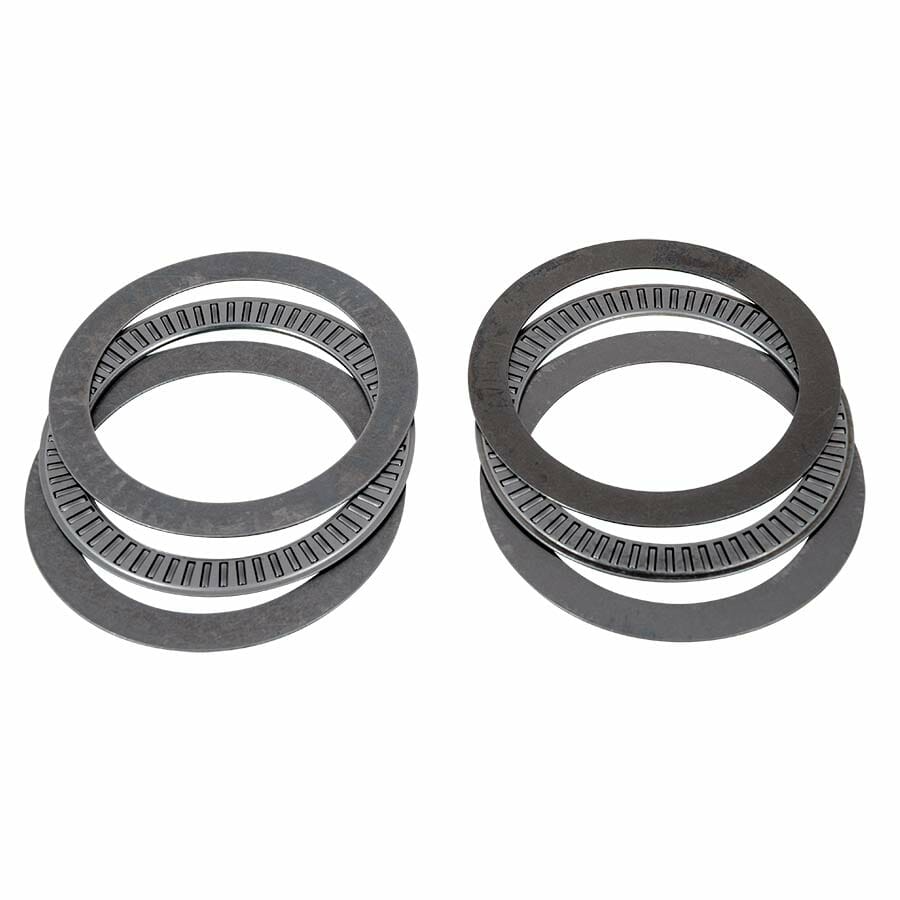
Table of Contents
1. What is a Friction Washer?
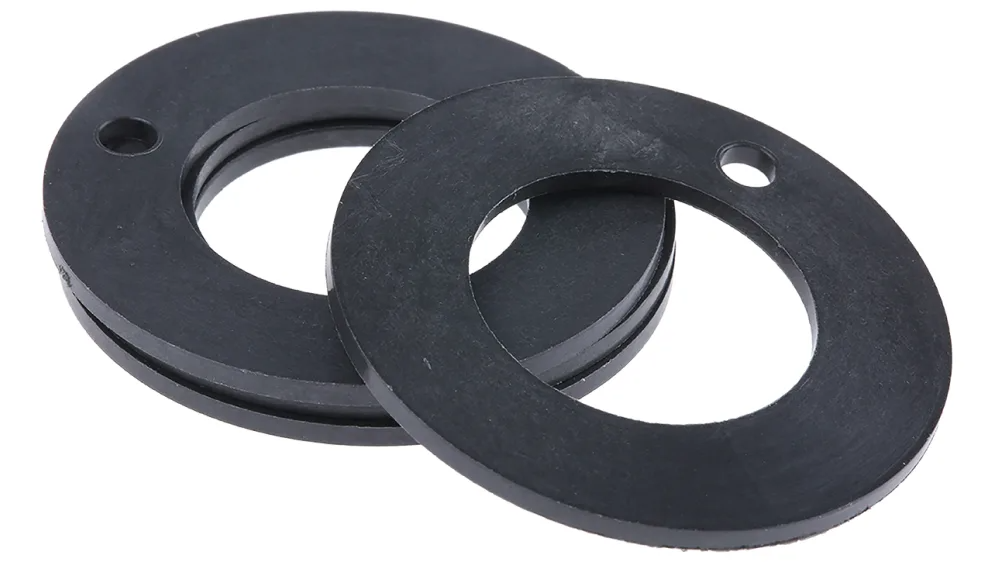
A friction washer is a thin, disc-shaped component placed between moving parts to control motion, absorb energy, and reduce wear. Unlike standard washers that merely distribute load, friction washers are engineered to provide specific friction characteristics—whether that means minimizing friction for smooth sliding or increasing it to prevent loosening under vibration. They are commonly used in applications involving rotation, oscillation, or linear movement, and they play a vital role in extending equipment lifespan and reducing maintenance costs.
2. Key Types of Friction Washers and Their Applications
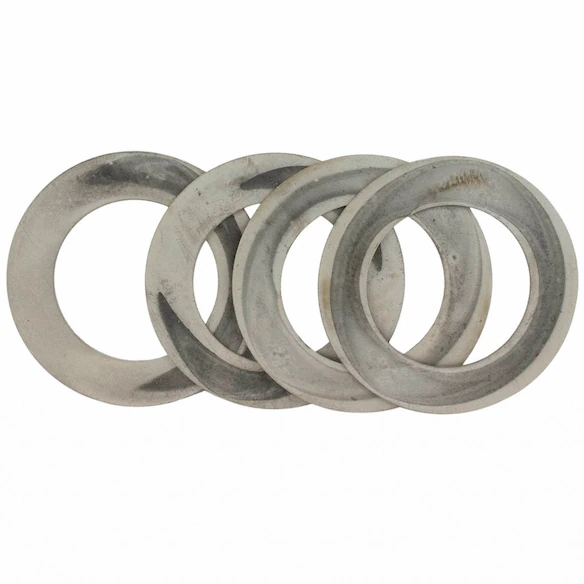
Friction washers come in various designs, each tailored to specific operational needs. Here are the most common types you should know:
Function: Designed to handle axial loads (parallel to the shaft), thrust washers prevent metal-to-metal contact in rotating assemblies.
Common Uses: Gearboxes, pumps, automotive transmissions, and marine propulsion systems.
Materials: Bronze, stainless steel, or composite materials with PTFE layers for self-lubrication.
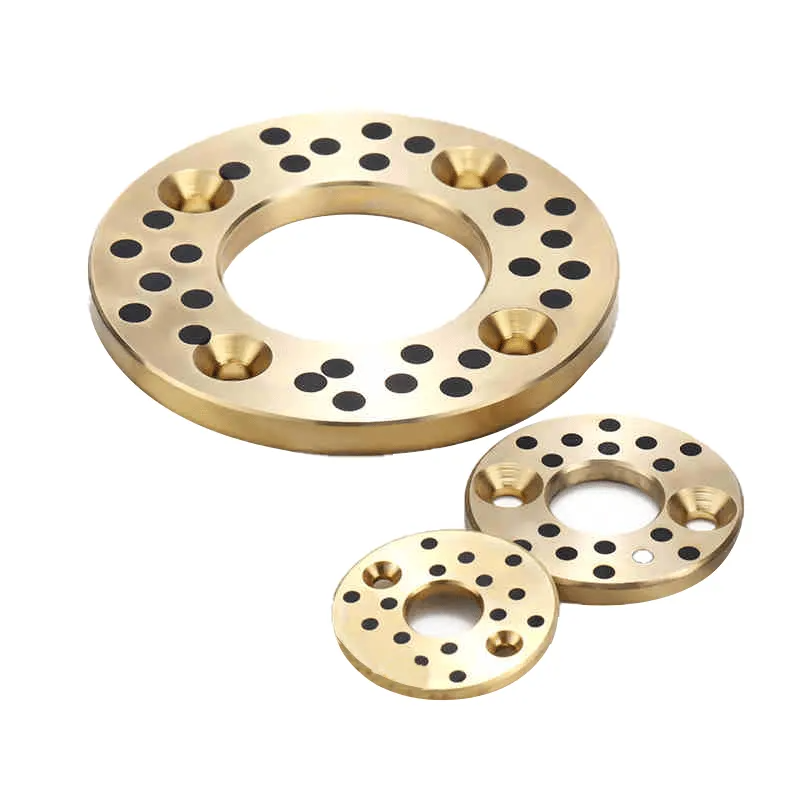
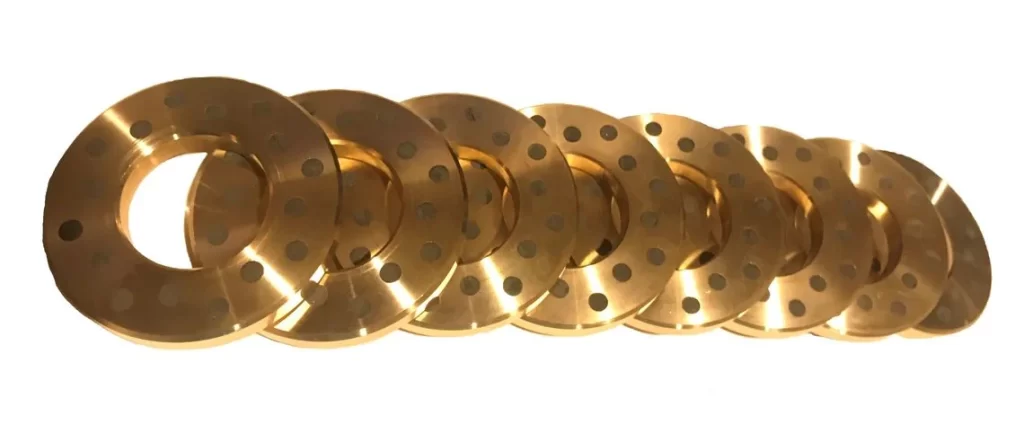
Function: These washers contain embedded lubricants (e.g., oil-impregnated bronze or PTFE) to reduce friction without external greasing.
Benefits: Ideal for maintenance-free applications, harsh environments, or high-speed operations where traditional lubrication is impractical.
Materials: Sintered bronze with PTFE, graphite composites, or polymer-based liners.
PTFE Slide Layer Washers
Function: Featuring a Polytetrafluoroethylene (PTFE) coating or liner, these washers offer an extremely low coefficient of friction and high chemical resistance.
Applications: Food processing, chemical plants, and medical equipment where cleanliness and corrosion resistance are critical.
Custom-Made Friction Washers
Why Customize? Standard sizes don’t always fit unique engineering challenges. Custom washers allow for tailored inner/outer diameters, thickness, special shapes (e.g., grooves or lubrication holes), and material combinations.
Typical Industries: Aerospace, renewable energy, robotics, and heavy machinery.
3. Why Material Choice Matters
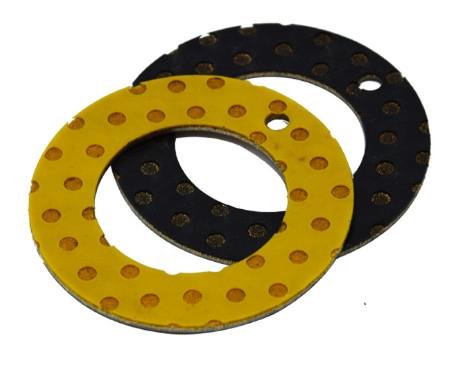
The performance of a friction washer hinges on its material composition. Here’s a breakdown of popular options:
Stainless Steel Backing: Offers high corrosion resistance and structural strength, perfect for marine, chemical, or food-grade environments.
Sintered Bronze Layer: Acts as a porous reservoir for lubricants, enhancing heat dissipation and wear resistance.
PTFE/Fiber Surface: Provides a low-friction, self-lubricating layer (coefficient as low as 0.02–0.25) that also protects mating surfaces from wear.
Carbon Steel: Cost-effective and strong, often used with coatings or platings for improved durability.
For extreme conditions—such as temperatures from -200°C to +280°C or high-load scenarios (up to 250 N/mm² static load)—composite materials like steel-backed bronze-PTFE washers are often the best choice.
4. Industries That Rely on Friction Washers
From everyday vehicles to giant industrial machines, friction washers are everywhere:
Automotive: Steering systems, brake calipers, clutch assemblies, and transmission parts.
Industrial Machinery: Pumps, valves, conveyor systems, hydraulic cylinders, and printing presses.
Marine & Offshore: Propulsion units, rudder systems, and equipment exposed to saltwater.
Aerospace: Landing gear, flight control systems, and engine components.
Renewable Energy: Wind turbine pitch controls and solar tracking mechanisms.
5. Common Challenges and How to Overcome Them
Even the best-designed systems face issues. Here are typical friction washer problems and their solutions:
Premature Wear: Caused by misalignment, overload, or poor lubrication. Solution: Use self-lubricating washers and ensure proper installation.
Corrosion in Wet Environments: Water exposure can rust standard steel washers. Solution: Opt for stainless steel-backed or coated washers.
High-Temperature Failures: Extreme heat degrades materials. Solution: Select PTFE-based or high-temp composites rated for your operating range.
Custom Sizing Needs: Off-the-shelf washers don’t fit. Solution: Partner with a manufacturer that offers custom machining and prototyping.
6. Why Choose MYWAY Bushings for Your Friction Washer Needs?
At MYWAY Bushings, we don’t just sell parts—we provide engineered solutions. Here’s what sets us apart:
- Deep Industry Expertise: With years of experience in bushing and washer manufacturing, we understand the nuances of load, friction, and material science.
- Full Customization: Need a specific size, shape, or material combo? We can produce metric or imperial washers with custom IDs, ODs, thicknesses, and special features (e.g., grooves, holes, or non-standard shapes).
- Premium Materials: We use high-grade stainless steel, sintered bronze, PTFE composites, and other advanced alloys to ensure durability and performance.
- Quality Assurance: Every washer undergoes strict inspection for dimensions, surface finish, and performance criteria.
- Fast Turnaround: From prototyping to bulk production, we deliver on time—even for urgent orders.
- Competitive Pricing: We offer fair pricing and discounts for large or recurring orders.
Whether you need thrust washers for heavy machinery, self-lubricating washers for maintenance-free operations, or custom-designed solutions for unique applications, MYWAY has you covered.
7. Conclusion
Friction washers might be small, but their impact on machine performance and longevity is huge. Choosing the right type, material, and supplier can mean the difference between seamless operation and costly downtime.
At MYWAY Bushings, we combine technical expertise with a customer-first approach to deliver washers that meet your exact needs—whether standard or custom. Don’t let friction hold your projects back. Contact us today for a consultation, quote, or sample request. Let’s build something reliable together.
Frequently Asked Questions (FAQ)
Q1: Can friction washers be used in wet or corrosive environments?
Yes! Choosing the right material is key. Stainless steel-backed washers or PTFE-coated versions excel in wet, salty, or chemically aggressive settings.
Q2: How do I know if I need a custom friction washer?
If standard sizes don’t match your specs—or if you have unique load, temperature, or design requirements—custom is the way to go. Send us your drawings, and we’ll advise.
Q3: Are self-lubricating washers really maintenance-free?
They significantly reduce maintenance since they don’t require external grease. However, periodic inspection for wear is still recommended, especially in high-load applications.
Q4: What’s the lead time for custom orders?
It depends on complexity and quantity. Typically, prototypes take 1–2 weeks, and production runs 3–5 weeks. We also expedite urgent requests.
Q5: Can you provide material certifications?
Absolutely. We supply certificates for materials (e.g., SUS304/440 stainless steel, sintered bronze) upon request, ensuring compliance with industry standards.
Q6: What’s the minimum order quantity (MOQ)?
We keep MOQs flexible, especially for custom projects. Small batches are welcome—contact us with your needs.
Q7: How do I get a quote or technical support?
Just reach out! Email us your drawings or specs, and our engineering team will respond promptly with a competitive quote and design recommendations.

100000+ Types of Bushings – Contact Us for Details