
Recent Posts
How Steel Sleeve Bushings Power Modern Machinery and How to Choose the Right One
In the heart of every excavator’s swing, within the pivot of a heavy-duty robotic arm, or inside the precise motion of a packaging line, a critical yet often overlooked component ensures smooth operation: the steel sleeve bushing. This simple cylindrical sleeve is a cornerstone of mechanical design, acting as a durable, low-friction interface between moving parts. For engineers, maintenance managers, and procurement specialists, selecting the optimal bushing is a direct investment in equipment longevity, performance, and total cost of ownership.
This guide delves into the engineering behind steel sleeve bushings, explores the critical decision points in material and design, and highlights why a partnership with a specialized manufacturer like MYWAY Bushing is crucial for demanding applications.
Table of Contents
1. What is a Steel Sleeve Bushing?
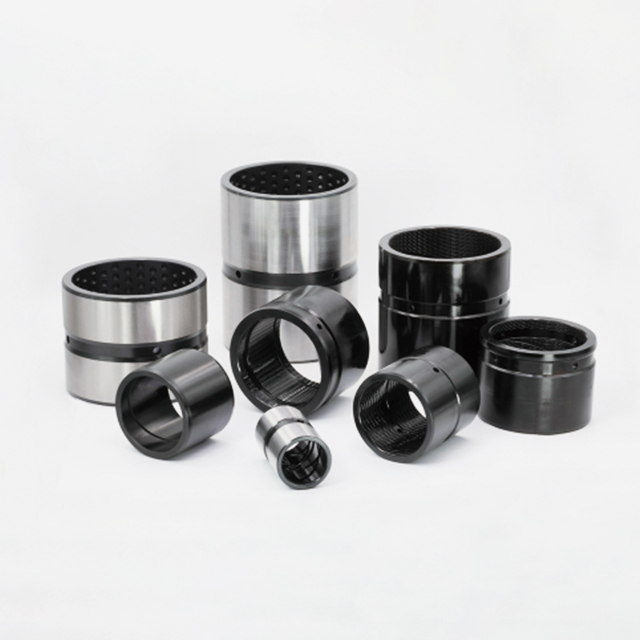
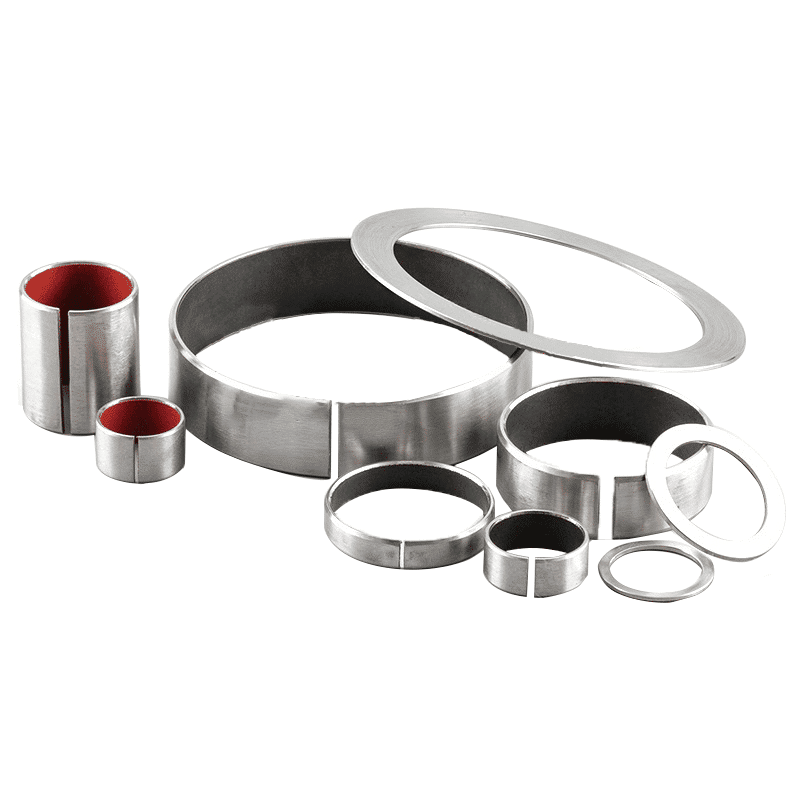
A steel sleeve bushing, also known as a plain bearing or journal bearing, is a cylindrical liner designed to support a rotating or sliding shaft. Unlike ball or roller bearings, it operates on a principle of sliding contact. Its core function is to reduce friction, absorb shock, and minimize wear between two components, thereby protecting more expensive parts and ensuring precise alignment over time.
These components are indispensable in applications where high load capacity, durability, and resistance to shock loads are paramount. From the relentless cycles of construction equipment to the high-pressure environments of hydraulic systems, steel bushings provide a robust and reliable solution.
2. Core Advantages: Why Steel Is a Superior Choice
Choosing a steel bushing over alternatives made from bronze, brass, or plastic is often a decision driven by specific performance needs. Here are the key advantages:
Exceptional Strength & Durability: Steel bushings, particularly those made from alloy or hardened steels, offer superior mechanical strength. They resist plastic deformation and crushing under extreme pressures, maintaining a stable fit in high-load scenarios.
Superior Wear Resistance: Through material selection and heat treatment processes like quenching, steel bushings achieve a hard surface layer that dramatically extends service life in abrasive environments.
Excellent Load-Bearing Capacity: Designed to handle significant radial loads, they are the go-to choice for heavy machinery such as excavators, crushers, and forestry equipment.
Cost-Effectiveness for Demanding Duties: While the initial cost may be higher than some materials, the extended service life and reduced downtime in heavy-duty applications make steel bushings a more economical choice over the total lifecycle of the machinery.
Design and Customization Flexibility: Steel is highly adaptable. Bushings can be customized not just in size, but in form—including flanged, split, or grooved designs—to meet exact application requirements.
3. Material Science: Selecting the Right Grade for the Job
The performance of a steel bushing is fundamentally defined by its material. Understanding the common grades is essential for specification.
| Material Grade | Key Characteristics & Process | Ideal Application Scenarios |
|---|---|---|
| Carbon Steel (e.g., 45#) | A versatile, cost-effective grade. Often quenched and surface-hardened to improve wear resistance while retaining a tough core. | General heavy machinery, industrial equipment, hydraulic cylinder pins, and applications requiring a good balance of strength and value. |
| Bearing Steel (GCr15) | A high-chromium alloy steel known for exceptional uniformity, high wear resistance, and stable performance. Hardened to HRC 58-62. | High-precision bearings, demanding pivot points in excavators and earth-moving machines, and applications where low friction and high durability are critical. |
| Hardened Alloy Steel | Steel (like chromium or molybdenum alloys) heat-treated to high hardness (e.g., Rockwell C 45-50 or higher) for maximum resistance to deformation and abrasion. | Extremely high-stress environments: excavator pin connections, crusher jaws, and heavy-duty mining equipment under shock loads. |
| Stainless Steel (e.g., 304, 316) | Offers excellent corrosion resistance in wet, saline, or chemical environments. Sacrifices some ultimate hardness for anti-corrosion properties. | Food processing machinery, marine applications, chemical industry equipment, and any environment where rust is a primary concern. |
4. Critical Design Features: Beyond the Basic Cylinder
A bushing’s design directly impacts its functionality and ease of maintenance. Key features to consider include:
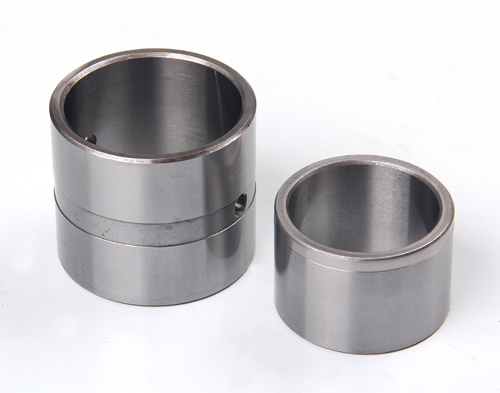
Lubrication Grooves & Holes: Perhaps the most critical custom feature. Grooves (straight, spiral, or dotted) channel grease or oil across the bearing surface, ensuring even lubrication, reducing heat buildup, and helping to flush out contaminants. This is vital for extending service intervals and preventing premature failure.
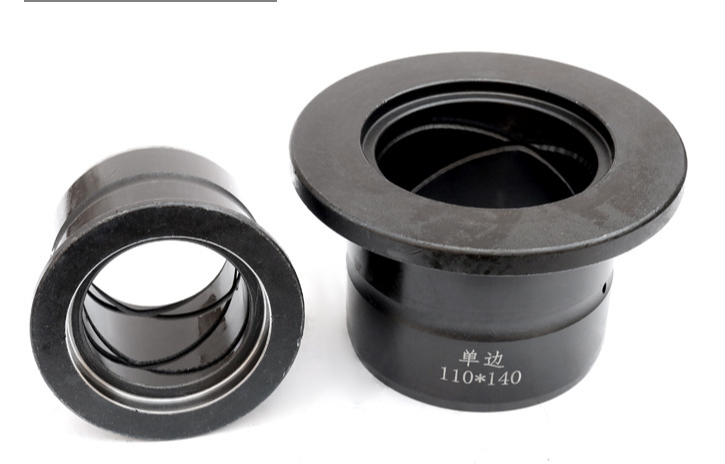
Flanges: An integrated flange provides axial location, preventing the bushing from moving sideways within its housing. This simplifies assembly and increases stability under thrust loads.
Split Design: Two-piece or split bushings allow for installation and replacement without the need to disassemble entire assemblies or remove other components, drastically reducing maintenance time and cost.
5. Where Steel Sleeve Bushings Are Essential: Industry Applications
The robustness of steel sleeve bushings makes them irreplaceable across a broad spectrum of industries:
Construction & Earthmoving: The backbone of excavators, bulldozers, and cranes, used in boom arms, bucket linkages, and slewing rings.
Agricultural Machinery: Withstands shock loads and dirty environments in tractor linkages, harvester joints, and plow mechanisms.
Material Handling: Essential for the smooth operation of forklift masts, conveyor system rollers, and crane sheaves.
Industrial Manufacturing: Found in the robust joints of stamping presses, mining crushers, and steel mill equipment.
Automotive & Transportation: Used in heavy vehicle suspensions, braking systems, and various chassis pivots.
6. Partner with MYWAY Bushing: Engineering Your Solution
Specifying a standard bushing can solve a problem, but partnering with an expert manufacturer like MYWAY Bushing unlocks a solution engineered for peak performance and value. Here’s what sets us apart:
Deep Material Expertise: We don’t just supply bushings; we guide material selection. Whether your challenge is extreme wear (GCr15), impact resistance (hardened 45# steel), or corrosion (stainless steel), our engineers help you select the optimal grade.
Precision Custom Manufacturing: Your equipment has unique demands. We specialize in manufacturing bushings to your exact specifications—precise IDs, ODs, lengths, and most importantly, custom lubrication groove patterns to ensure optimal oil or grease distribution for your specific motion and load profile.
Advanced Heat Treatment In-House: Our control over quenching and tempering processes ensures consistent, deep hardness penetration that meets the most demanding specifications for surface hardness and core toughness.
From Prototype to Production Run: We support your development cycle with rapid prototyping and scale seamlessly to high-volume production, ensuring consistency and reliable supply.
Global Quality Standards: Our production adheres to stringent international quality management systems, giving you confidence in every component that bears our name.
Don’t let an underspecified bushing become the weak link in your machinery. A correctly engineered steel sleeve bushing is a small component that delivers outsized returns in reliability and cost savings.
Ready to specify the right bushing for your critical application? Contact MYWAY Bushing today for a technical consultation and a competitive quote. Send us your drawings or specifications, and let our engineering team provide a solution built to last.
7. Frequently Asked Questions (FAQ)
Q1: What’s the difference between a bushing and a ball bearing?
A: Bushings (plain bearings) use a sliding surface between the shaft and housing, ideal for high loads, lower speeds, and shock resistance. Ball bearings use rolling elements, excelling at higher speeds with lower friction but often at a higher cost and with lower shock load capacity.
Q2: How do I know if my steel bushing needs to be replaced?
A: Key signs include increased vibration or audible knocking from the joint, visible looseness or “play” in the linkage, excessive wear or scoring on the shaft, and leakage or inability to hold lubricant.
Q3: Can you make bushings with custom lubrication features?
A: Absolutely. Custom oil grooves (straight, spiral, cross-hatched) and grease holes are a core part of our service. Proper lubrication design is critical for performance, and we engineer these features based on your application’s load, speed, and motion type.
Q4: What information do you need to provide a quote?
A: To provide an accurate and fast quote, please provide: 1) A detailed drawing (preferably CAD); 2) Critical dimensions (Inner Diameter, Outer Diameter, Length); 3) Material specification or required hardness (e.g., HRC); 4) Application details (load, motion, environment); and 5) Annual volume requirements.
Q5: Why is the hardness of a steel bushing so important?
A: Hardness directly correlates to wear resistance. A harder surface (e.g., HRC 58-62 for GCr15) will resist abrasion and deformation far longer than a softer material, dramatically extending the life of both the bushing and the mating shaft. The right hardness is a balance between wear resistance and the material’s ability to withstand impact without cracking.
100000+ Types of Bushings – Contact Us for Details