
Recent Posts
Needle Bearing Sizes: How to Measure, Match, and Choose the Right Bearing for Your Application
Introduction: Why Size Matters in Needle Bearings
Let’s be real—nobody wants to deal with a bearing that doesn’t fit. Whether you’re maintaining heavy machinery, repairing an automotive transmission, or designing new equipment, getting the needle bearing sizes right can make the difference between smooth operation and costly downtime.
Needle roller bearings are the unsung heroes of the mechanical world. These compact powerhouses use long, thin cylindrical rollers that distribute loads evenly while taking up minimal space . But here’s the thing—their small size means precision matters even more. A fraction of a millimeter off and you’re looking at premature wear, overheating, or complete failure.
According to the American Bearing Manufacturers Association, about 40% of bearing failures come down to inadequate lubrication and contamination . But right up there is improper sizing and installation. That’s why understanding needle bearing dimensions isn’t just technical jargon—it’s the foundation of reliable machinery.
In this guide, we’ll walk you through everything you need to know about needle bearing sizes: how to measure them correctly, how to read size charts, what all those codes mean, and most importantly, how to pick the perfect bearing for your specific application. And yes, we’ll also tell you how MYWAY Bushing can help you get exactly what you need—no guesswork required.
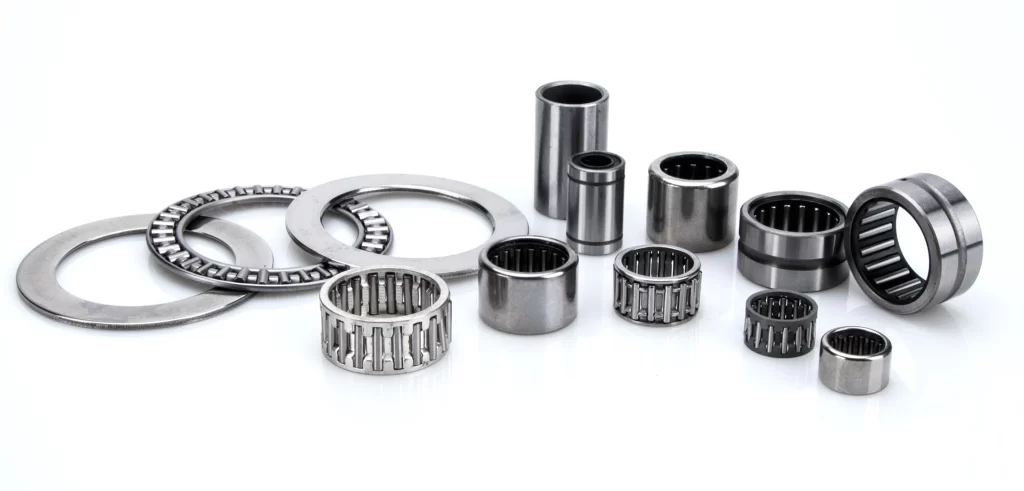
Table of Contents
1. Understanding Needle Bearing Dimensions: The Big Three
When we talk about needle bearing sizes, we’re really talking about three critical measurements. Get these right, and you’re 90% of the way there.
Inner Diameter (ID): The Shaft Connection
The inner diameter is the hole in the center of the bearing that fits onto your shaft. This measurement needs to be spot-on because it determines how the bearing interfaces with rotating or stationary components.
If your shaft rotates, you’ll want a tight fit to prevent slippage. If the shaft stays still, a slight clearance might be acceptable. The industry standard tolerance grades range from ABEC-1 to ABEC-9, with higher numbers meaning tighter precision. For most industrial applications, ABEC-3 or ABEC-5 does the job just fine.
Pro tip: Always measure your shaft at several points along its length. Shafts aren’t always perfectly round, especially after some wear. Take the smallest measurement you find—that’s your working number.
Outer Diameter (OD): The Housing Fit
The outer diameter is the outside edge of the bearing that sits in your housing bore. This fit keeps everything in place and helps the bearing handle loads properly.
Here’s something many people overlook—housing material matters. Softer materials like aluminum can deform if the fit is too tight, while harder materials like steel can handle more interference.
Standard tolerance grades for outer diameters:
| Bearing Size Range (OD in mm) | ABEC-3 Tolerance (μm) | ABEC-5 Tolerance (μm) | ABEC-7 Tolerance (μm) |
|---|---|---|---|
| 2.5 to 6 | 0 to -3 | 0 to -2 | 0 to -5 |
| 6 to 18 | 0 to -3 | 0 to -2 | 0 to -5 |
| 18 to 30 | 0 to -4 | 0 to -2.5 | 0 to -6 |
| 30 to 50 | 0 to -4 | 0 to -3 | 0 to -6 to -9 |
Width (W): The Space Factor
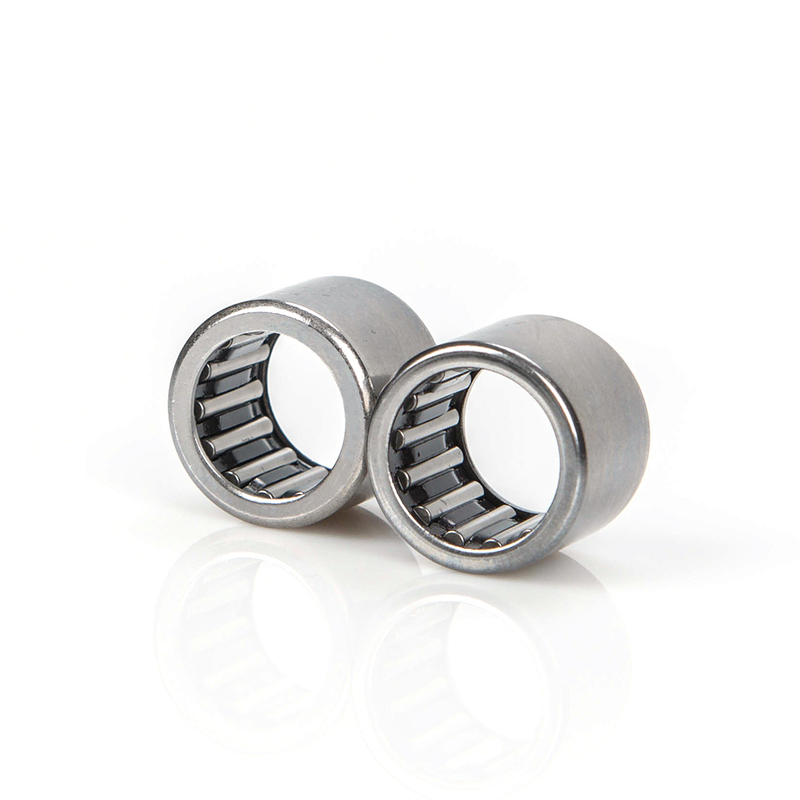
Width is the thickness of the bearing, and it affects both load capacity and how much axial space you need. Pick a bearing that’s too narrow, and it won’t support the load. Too wide, and it simply won’t fit.
Common widths vary by series. For drawn cup needle bearings (TA/HK series), widths typically range from 8mm to 20mm or more, depending on the application.
2. How to Measure Needle Bearings Like a Pro
Alright, time to get practical. Here’s how to measure needle bearing sizes accurately.
Tools You’ll Need
Digital caliper or micrometer (digital is better—easier to read)
Bore gauge for measuring housings
Clean cloth for wiping surfaces
Good lighting (seriously, don’t skimp on this)
Step-by-Step Measurement Process
Step 1: Clean everything first
Dirt and grease throw off measurements. Wipe down the shaft, housing, and any existing bearing surfaces.
Step 2: Measure the shaft diameter
Use your caliper at multiple points along the shaft. Record the smallest measurement. If you’re replacing an old bearing, check for wear patterns—they tell you a lot about what went wrong with the previous setup.
Step 3: Measure the housing bore
This is trickier. Use a bore gauge or inside micrometer. Take readings in several directions—bores can go out-of-round under load.
Step 4: Check the width
If you have an existing bearing, measure its width. But don’t assume it’s the right size—someone before you might have used the wrong part.
Step 5: Match to size charts
Once you have your numbers, compare them to standard needle bearing size charts. Look for bearings with inner diameters that match your shaft, outer diameters that fit your housing, and widths that work with your available space.
Common Measurement Mistakes
Measuring only one spot on the shaft
Forgetting to account for wear on used equipment
Mixing up metric and imperial units (this happens way more than you’d think)
Not checking the housing bore depth
3. Decoding Needle Bearing Size Charts and Designations
Here’s where things get interesting. Bearing manufacturers use a standardized numbering system, but it can look like alphabet soup if you don’t know what you’re looking at.
How Bearing Numbers Work
A typical bearing designation like HK1012 breaks down like this:
HK = The series (in this case, a drawn cup needle roller bearing with open ends)
10 = The inner diameter in millimeters (10mm)
12 = The width in millimeters (12mm)
Common prefixes you’ll encounter:
| Prefix | Meaning |
|---|---|
| HK | Metric drawn cup, open ends |
| BK | Metric drawn cup, closed end |
| TA | Metric drawn cup with cage |
| SCE | Inch series, caged |
| HF | One-way clutch bearing |
| NK | Solid bearing without inner ring |
| NA | Solid bearing with inner ring |
| AXK | Thrust needle roller bearing |
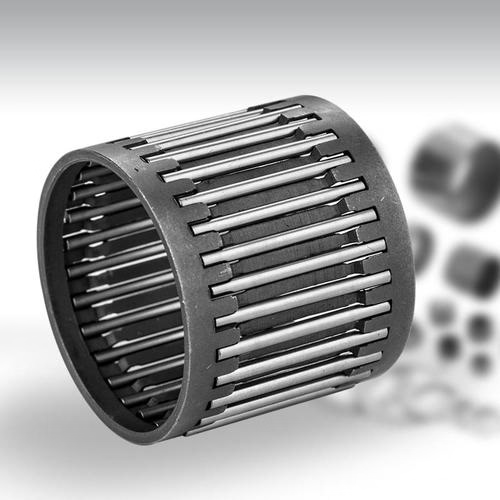
| KT | Needle roller and cage assembly |
Reading Size Charts
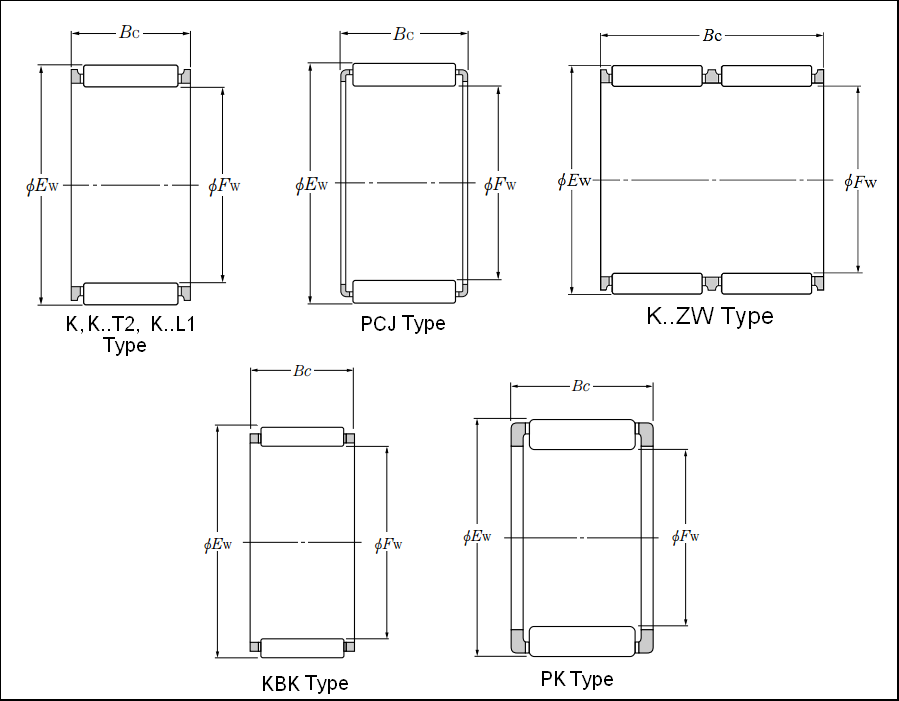
A proper needle bearing size chart includes:
Bearing designation – The model number
Bore diameter (Fw or d) – The inner diameter in mm
Outer diameter (D) – The outside dimension
Width (C or B) – The thickness
Dynamic load rating – Maximum load during rotation
Static load rating – Maximum load at rest
Limiting speed – Maximum RPM before problems start
Sample HF series chart (one-way bearings):
| Designation | Shaft Dia (mm) | Outer Dia (mm) | Width (mm) | Transmitting Torque (Nm) |
|---|---|---|---|---|
| HF0612 | 6 | 10 | 12 | 1.76 |
| HF0812 | 8 | 12 | 12 | 3.15 |
| HF1012 | 10 | 14 | 12 | 5.3 |
| HF1216 | 12 | 18 | 16 | 12.2 |
| HF1416 | 14 | 20 | 16 | 17.3 |
| HF1616 | 16 | 22 | 16 | 20.5 |
| HF1816 | 18 | 24 | 16 | 24.1 |
| HF2016 | 20 | 26 | 16 | 28.5 |
| HF2520 | 25 | 32 | 20 | 66 |
| HF3020 | 30 | 37 | 20 | 90 |
| HF3520 | 35 | 42 | 20 | 121 |
Understanding Suffixes
The letters after the numbers tell you about special features:
2RS = Two rubber seals (contact seals)
TN = Polyamide cage (plastic)
P5/P4 = Higher precision classes
C3 = Greater than normal internal clearance
C2 = Less than normal internal clearance
R = Stainless steel spring plate (for HF series)
4. Types of Needle Bearings and Their Typical Sizes
Different applications call for different bearing types. Here’s a rundown of common needle bearing families and where they shine.
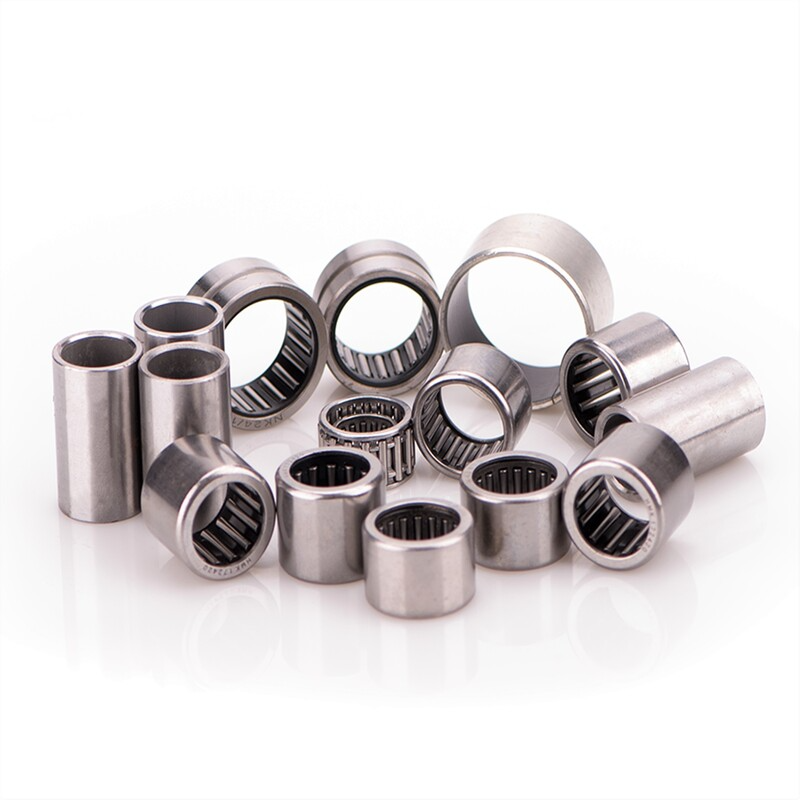
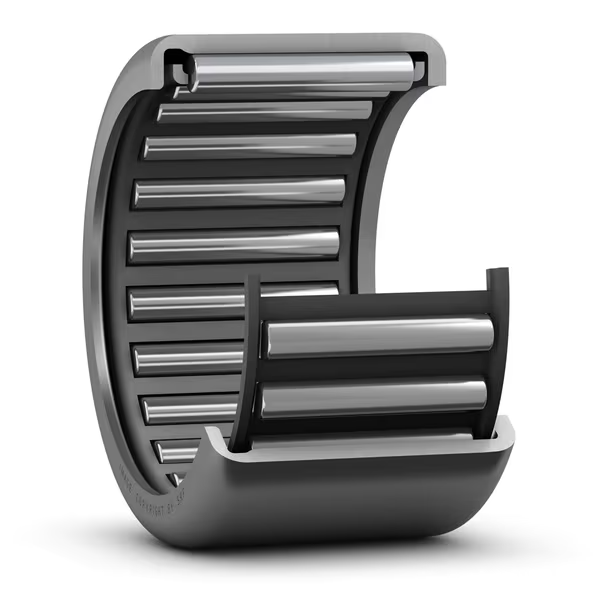
Drawn Cup Needle Roller Bearings (TA, HK, BK Series)
These are your go-to for compact installations where radial space is tight. They feature thin-walled outer rings drawn from steel sheet and offer high load capacity in a small package.
Typical applications: Gearboxes, pumps, compressors, automotive transmissions
Size ranges:
TA series: Bore from 5mm to 50mm+, widths from 8mm to 35mm
HK series: Bore from 3mm to 50mm+, widths from 6mm to 30mm
One-Way Clutch Bearings (HF Series)
These clever bearings allow rotation in one direction only—perfect for conveyor systems, indexing mechanisms, and packaging equipment. They use needle rollers as a clamping unit with spring-loaded retainers.
Typical applications: Conveyors, textile machinery, exercise equipment, automotive starters
Size ranges: Bore from 4mm to 35mm+, widths from 6mm to 20mm
Common models include HF0406 (4x8x6), HF0612 (6x10x12), HF1216 (12x18x16), and HF3520 (35x42x20).
Solid Needle Bearings (NK, NA, RNA Series)
These have machined outer rings and offer higher rigidity. NK series runs without inner rings (using the shaft as the raceway), while NA series includes inner rings.
Typical applications: High-speed operations, cam followers, crankshafts
Size ranges: Bore from 5mm to 70mm+
Thrust Needle Bearings (AXK Series)
Designed specifically for axial loads, these bearings use a cage and roller assembly with washer plates. They’re incredibly compact for the load they handle.
Typical applications: Automotive transmissions, machine tools, steering systems
Size ranges: Shaft diameters from 5mm to 100mm+
Inch-Series Bearings
Don’t forget about imperial sizes—they’re still common in North American equipment and some specialized machinery.
Typical sizes:
B-24: 1/8″ bore x 1/4″ OD x 1/4″ width
B-44: 1/4″ bore x 7/16″ OD x 1/4″ width
B-66: 3/8″ bore x 9/16″ OD x 3/8″ width
5. How to Match Bearings to Your Shaft and Housing
Getting the right size is one thing. Getting the right fit is another.
Understanding Fits
The fit between your bearing and shaft (or housing) depends on several factors:
Rotation: Does the shaft rotate or the housing?
Load: Light, normal, or heavy?
Material: What are your components made of?
Temperature: Will things heat up during operation?
Shaft tolerance quick reference:
| Shaft Diameter | Load Condition | Recommended Tolerance |
|---|---|---|
| Up to 50mm | Light loads | k6 |
| Up to 50mm | Normal/heavy loads | m6 |
| 50-120mm | Light loads | m6 |
| 50-120mm | Normal/heavy loads | n6 |
| 120-250mm | Light loads | n6 |
| 120-250mm | Normal/heavy loads | p6 |
Clearance Matters
Internal clearance—the space between rollers and raceways—affects how the bearing performs under load and temperature changes.
C2: Less than standard clearance (for precise positioning)
CN: Normal clearance (standard, no marking)
C3: Greater than standard (for high temperatures or interference fits)
C4: Even greater clearance
Pick C3 if your bearing runs hot or you’re using a heavy press fit. The extra space accommodates thermal expansion.
6. Load Ratings and Performance Considerations
Size isn’t just about dimensions—it’s also about what the bearing can handle.
Dynamic vs. Static Load Ratings
Dynamic load rating (C): The load a bearing can handle during rotation for a rated life of 1 million revolutions
Static load rating (C0): The maximum load a stationary bearing can handle without permanent deformation
For most applications, you’ll want to apply a safety factor of 1.5 to 2.0 when selecting based on load requirements.
Speed Limits
Every bearing has a maximum speed, usually listed in RPM. Exceed it, and you’re asking for trouble—heat buildup, lubricant breakdown, and premature failure.
Speed limits depend on:
Bearing type and size
Lubrication method (grease vs. oil)
Cage design
Precision class
7. Material Choices: What's Your Bearing Made Of?
The material affects everything—load capacity, speed capability, corrosion resistance, and operating temperature range.
Common Materials
| Material | Properties | Best For |
|---|---|---|
| High-carbon chromium steel (52100) | High hardness, excellent wear resistance | General industrial use |
| Stainless steel (440C) | Corrosion resistant | Food processing, marine, washdown areas |
| Case-hardened steel | Tough core, hard surface | Impact loads, heavy duty |
| Ceramic (silicon nitride) | Low friction, high temperature | High-speed, extreme environments |
| Polymer composites | Lightweight, corrosion resistant | Chemical exposure, specialty applications |
Cage Materials
Cages keep rollers spaced properly. Common options include:
Steel: Strong, high temperature capability
Brass: Good strength, runs well against steel
Polyamide (plastic): Lightweight, quiet, runs without additional lubrication
8. Maintenance Tips for Longer Bearing Life
Even the best-sized bearing won’t last without proper care.
Lubrication Is Critical
About 40% of bearing failures trace back to lubrication issues. Here’s what to watch:
Use the right lubricant for your speed and temperature
Don’t over-grease—it causes heat buildup
Don’t under-grease—it causes metal-to-metal contact
Follow manufacturer intervals for re-lubrication
Watch Operating Temperatures
Keep temperatures below 70°C (158°F) when possible. Every 15°C above that cuts grease life in half.
Regular Inspections
Look for:
Unusual noise or vibration
Discoloration (indicates overheating)
Rough rotation
Visible wear or damage
9. Why Choose MYWAY Bushing for Your Needle Bearing Needs?
Here’s where we get personal. At MYWAY Bushing, we’re not just another bearing supplier—we’re your partner in keeping machinery running smoothly.
Our Manufacturing Capability
We operate a sprawling manufacturing facility spanning over 35,000 square meters at No. 822 Taiji Road, Economic Development Zone, Guangde, Xuancheng City, Anhui Province, China. That’s a lot of space dedicated to making sure you get quality components.
What does that mean for you? It means we control quality from start to finish—raw material casting, sintering, and finished production all under one roof. We’re equipped with more than 2,000 precision molds, advanced sintering lines, and the latest automated machinery and inspection systems.
Our Product Range
We specialize in:
Drawn cup needle roller bearings (HK, TA series)
One-way clutch bearings (HF series)
Solid needle bearings (NK, NA, RNA series)
Thrust needle bearings (AXK series)
Custom bushing materials for special applications
Our HF series one-way bearings are built tough—wear-resistant, maintenance-free options, and designed to handle dirt, dust, and corrosion. Popular models include HF1216 (12*18*16), HF1416 (14*20*16), HF1616 (16*22*16), HF1816 (18*24*16), HF2016 (20*26*16), HF2520 (25*32*20), HF3020 (30*37*20), and HF3520 (35*42*20).
Our Service Commitment
We’re strategically positioned with our foreign trade sales and operations center at Building 10, Greenland Central Plaza, Gongshu District, Hangzhou City, Zhejiang Province, 310011 China. Hangzhou gives us excellent access to major international ports, which means faster shipping for you.
But location is just geography. What really matters is how we treat you:
We listen to your requirements
We help you select the right bearing sizes
We offer competitive pricing without cutting corners
We ship when we say we’ll ship
End-to-End Solutions
We provide true end-to-end manufacturing capabilities—from raw material to finished product. Our precision molds and automated systems ensure consistency. Our inspection protocols catch problems before they become your problems.
Whether you need standard sizes or custom solutions, we’re ready to help.
Frequently Asked Questions About Needle Bearing Sizes
Q: How do I know what size needle bearing I need?
A: Start by measuring your shaft diameter, housing bore, and available width space. Then match these measurements to a standard needle bearing size chart. If you’re replacing an existing bearing, the part number is your quickest answer.
Q: What’s the difference between HK and TA series bearings?
A: Both are drawn cup needle bearings, but HK series typically have open ends while TA series use a cage design. The main difference is in the retaining mechanism and specific dimensional standards.
Q: Can needle bearings handle axial loads?
A: Standard radial needle bearings are designed primarily for radial loads. For axial (thrust) loads, you need dedicated thrust needle bearings like the AXK series. Some combination bearings can handle both directions.
Q: What does “C3” mean in bearing specifications?
A: C3 indicates greater than normal internal clearance. It’s used when the bearing will experience temperature changes or when you’re using interference fits that reduce internal clearance during installation.
Q: Are inch and metric needle bearings interchangeable?
A: Generally, no. Mixing systems leads to improper fits. Always verify whether your equipment uses metric or imperial dimensions before ordering replacements.
Q: How do I measure a one-way bearing correctly?
A: The same way you measure any bearing—inner diameter, outer diameter, and width. But also check the direction of rotation. HF series bearings have an arrow indicating the locking direction.
Q: What’s the typical lifespan of a needle bearing?
A: It depends on load, speed, lubrication, and maintenance. With proper sizing and care, quality needle bearings can last thousands of operating hours. Regular inspection and re-lubrication extend service life significantly.
Q: Do you offer custom sizes?
A: Yes! We work with clients to develop custom solutions for unique applications. Contact us with your requirements and we’ll figure out what works best.
100000+ Types of Bushings – Contact Us for Details