
Recent Posts
Plastic Bearings: The Smart Alternative Your Design May Be Missing
In a world where machines must run cleaner, quieter, and longer than ever, one component’s evolution is quietly revolutionizing engineering design: the plastic bearing.
For decades, the choice of bearing material seemed straightforward: metal for strength and durability. However, modern applications—from food-grade conveyor belts to sensitive laboratory equipment and offshore wind turbines—are pushing materials to their limits, demanding corrosion resistance, quiet operation, and maintenance-free life cycles. This is where plastic bearings are shifting from a niche alternative to a mainstream engineering solution.
The global pivot towards more sustainable and efficient manufacturing has accelerated this change. A notable trend is the industry’s move away from Per- and Polyfluoroalkyl Substances (PFAS), a family of chemicals that includes PTFE (Teflon), a common lubricant in bearings. As regulations evolve, plastic bearings engineered for the future are gaining critical importance.
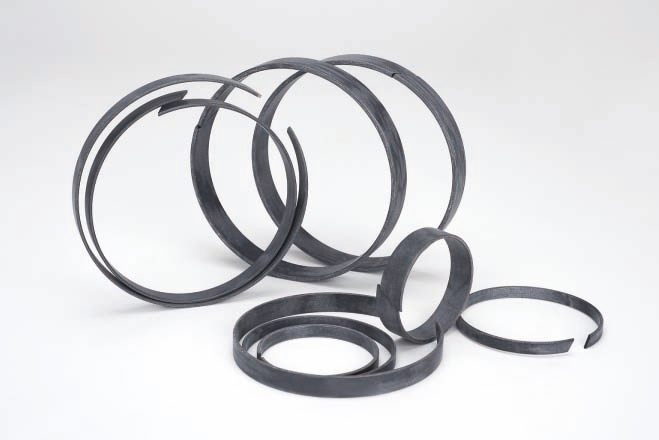
Table of Contents
1. Core Advantages of Plastic Bearings
Why are engineers across industries re-evaluating their bearing choices? The advantages of plastic bearings address some of the most persistent pain points in design and maintenance:
Corrosion and Chemical Resistance: Unlike metal, plastics like PP (polypropylene) and PEEK are inherently resistant to rust and a wide range of aggressive chemicals. This makes them indispensable in the chemical industry, food processing (where cleaning agents are used), and marine applications.
Maintenance-Free and Self-Lubricating: Perhaps the most significant benefit. Many high-performance plastic bearings are designed with solid lubricants like graphite or innovative polymer alloys embedded directly into their structure. They release these lubricants during operation, creating a permanent dry-running layer that eliminates the need for oil or grease. This translates to lower maintenance costs and prevents contamination in clean environments.
Lightweight and Cost-Effective: Plastic bearings are significantly lighter than their metal counterparts, contributing to overall weight reduction in moving parts. Furthermore, their suitability for high-volume injection molding manufacturing makes them very cost-competitive, especially for complex shapes.
Quiet Operation and Vibration Damping: The inherent damping properties of plastics reduce noise and vibration, a critical factor in consumer appliances, automotive interiors, and office machinery. This contrasts with the audible “rattle” that can occur in precision metal assemblies under clearance.
Cleanliness and Compliance: For industries like medical technology and food and beverage, material compliance is non-negotiable. Plastic bearings made from FDA-approved or EU 10/2011 compliant materials are safe for incidental food contact and can withstand repeated sterilization cycles.
2. Understanding Key Plastic Bearing Materials
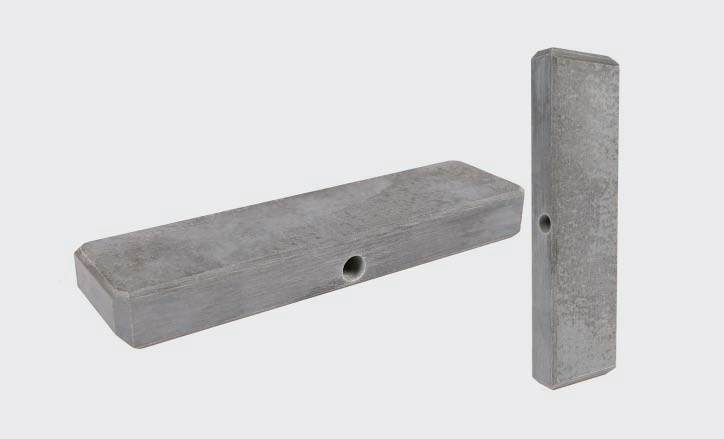
Choosing the right plastic is not about finding a single “best” material, but selecting the optimal one for your specific environment. Performance varies dramatically across polymer families.
Common Polymer Families and Their Best Uses
| Material Family | Key Characteristics | Typical Applications |
|---|---|---|
| POM (Acetal / Delrin) | Excellent stiffness, low friction, good wear resistance, cost-effective. | Light to medium-duty gears, rollers, conveyor systems, automotive interior parts. |
| PA (Nylon / Polyamide) | Good toughness, moderate temperature resistance, can be filled for lubrication. | Textile machinery, light industrial applications, bushings requiring some flexibility. |
| High-Performance Polymers (PEEK, PI) | Exceptional mechanical strength, dimensional stability, high temperature resistance (up to 260-300°C), excellent chemical resistance. | Aerospace, semiconductor manufacturing, chemical pumps, high-performance automotive. |
| Polyolefins (PP, HDPE, UPE) | Excellent chemical resistance, low moisture absorption, suitable for low temperatures. | Chemical handling equipment, washdown areas in food processing, aqueous environments. |
| PTFE & Advanced Compounds | Lowest coefficient of friction, high temperature range, used as a base or filler. Often combined with other materials for optimal performance. | High-speed, low-load applications; as a filler to enhance lubricity in other polymers. |
3. The PFAS/PTFE Shift and What It Means for You
It’s important to address PTFE specifically. Long valued for its superb slipperiness, PTFE is a member of the PFAS family, which faces increasing global regulatory scrutiny due to environmental persistence. Forward-thinking manufacturers like igus have already developed high-performance, PTFE-free alternatives for their most popular bearing series, ensuring future-proof compliance without sacrificing performance. When sourcing, it’s wise to inquire about a supplier’s roadmap for regulatory-compliant materials.
4. When to Choose Plastic Over Metal or Ceramic
The “best” bearing material doesn’t exist in a vacuum. Here’s a quick guide to material selection:
Choose Metal Bearings When: Your application involves very high rotational speeds (exceeding 5,000 RPM consistently), extremely high static/dynamic loads, and operates in a stable, lubricated environment. They are the workhorse for classic, heavy-duty mechanical engineering.
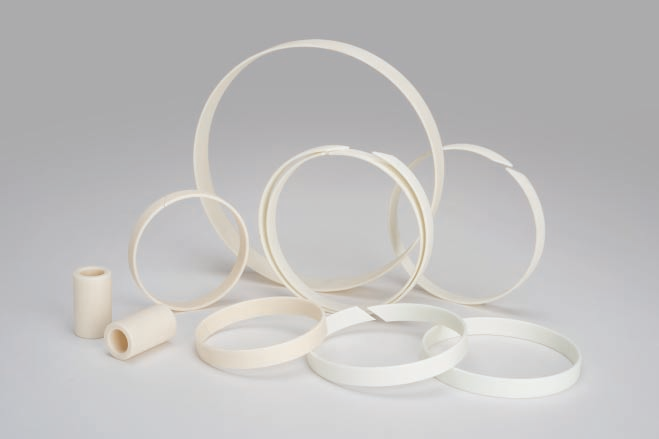
Consider Ceramic Bearings For: Applications involving extreme temperatures (beyond high-performance plastics) where corrosion is a major issue, and electrical insulation is needed. Their brittleness and cost often limit them to very specific niches.
Plastic Bearings Excel When: Your priorities include maintenance-free operation, exposure to corrosion or chemicals, requirements for cleanliness (food/medical), weight reduction, noise damping, or cost-effective customization.
Plastic bearings do have limits in extreme load-speed combinations, but for a vast majority of industrial, automotive, and consumer applications, they offer a superior balance of performance and total cost of ownership.
5. Spotlight on a Leader: The MYWAY Bushing Advantage
At MYWAY, we don’t just sell bearings; we engineer solutions. We understand that the theoretical benefits of plastic bearings are only realized through precision manufacturing and deep application knowledge.
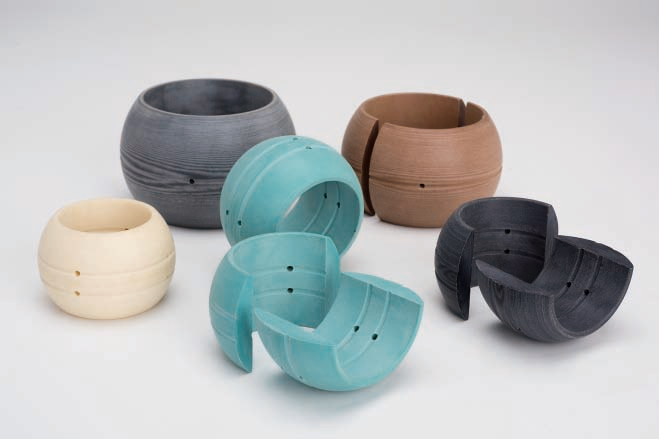
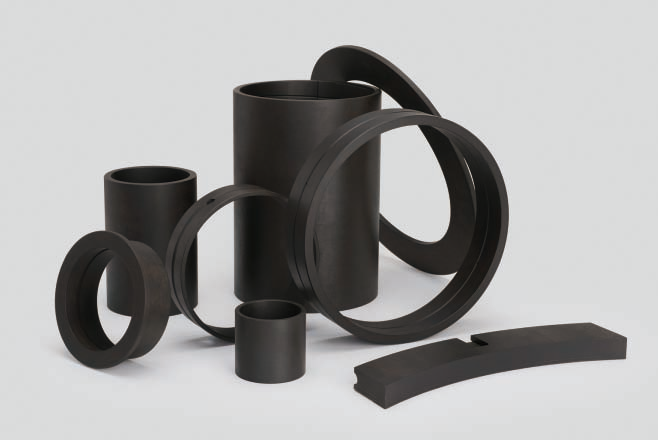
Our MYWAY Brand Plastic Bushings are the culmination of this philosophy. We specialize in custom-engineered polymer solutions where standard offerings fall short. Whether you need a flange bearing that resists specific agro-chemicals, a sleeve bushing for a high-cycle packaging machine, or a thrust washer that operates silently in medical diagnostics, our engineering team partners with you from the design phase.
Why engineers trust MYWAY for their critical applications:
Application-First Design: We start with your operating environment—load, speed, temperature, media exposure—and recommend the material and design that will deliver reliability.
Advanced Polymer Expertise: We work with a full spectrum of engineering plastics, from reliable POM and PA to cutting-edge, high-temperature, and chemically resistant polymers. We guide you through the PFAS/PTFE landscape to ensure a compliant, high-performance choice.
Precision for Performance: We ensure precise dimensional tolerances and excellent surface finishes, which are critical for minimizing friction, preventing noise, and achieving long service life—directly addressing common pitfalls of poorly made plastic bearings.
Cost-Effective Customization: Leveraging efficient manufacturing processes, we provide custom geometries and material formulations without the cost penalty of traditional metal machining, making optimized solutions accessible even for mid-volume runs.
Let us help you move beyond the limitations of standard components.
Get a Custom Solution Quote: Have a challenging application? Send us your drawings or specifications. Our engineers will perform a free initial analysis and recommend the optimal MYWAY bushing material and design for your needs. Visit our website or contact our technical sales team to start the conversation.
6. Ready to Experience the Difference?
The shift to plastic bearings is more than a material substitution; it’s a strategic upgrade toward more reliable, efficient, and sustainable machinery. Don’t let outdated assumptions limit your designs.
Contact MYWAY today for a free, no-obligation application review. Let our experts show you how a custom-engineered plastic bushing can solve your unique challenge, reduce your total cost of ownership, and future-proof your product.
Visit our website or email us directly to start a conversation with our technical team.
Frequently Asked Questions (FAQ)
Q: Are plastic bearings really strong enough for industrial use?
A: Absolutely. While traditional plastics have limits, today’s engineering plastics like POM, PEEK, and fiber-reinforced polymers offer outstanding mechanical strength and wear resistance. For very high loads, metal-backed composite bearings (with a plastic sliding layer) provide an excellent hybrid solution, combining the strength of steel with the lubricity of polymers.
Q: What is the maximum temperature a plastic bearing can handle?
A: It varies dramatically by material. Standard POM handles up to ~100°C, while advanced polymers like PEEK and PI (Polyimide) can operate continuously at 260°C to 300°C. Always consult the specific datasheet for the polymer you are considering.
Q: Can I directly replace a metal bearing with a plastic one of the same size?
A: Not always. Due to differences in thermal expansion, creep behavior, and load capacity, a direct “drop-in” replacement may not perform optimally. It is strongly recommended to consult with an application engineer (like ours at MYWAY) for a proper redesign or material selection to ensure success.
Q: My application is in a wet or dirty environment. Is that a problem?
A: This is a key strength of plastic bearings. They are impervious to water-induced corrosion, and many materials are naturally resistant to dirt adhesion. Their maintenance-free, self-lubricating nature means they perform well where grease would wash away or attract abrasive particles, making them ideal for agricultural, food, and packaging machinery.
Q: With the talk about PFAS/PTFE regulations, are my current plastic bearings going to be obsolete?
A: Not necessarily, but it’s a critical consideration. Leading suppliers are proactively developing high-performance, PTFE-free alternatives that match or exceed the performance of traditional materials. When sourcing new components or redesigning, it is prudent to select a supplier who is ahead of this regulatory curve.
Q: How do I get started with a custom plastic bearing for my project?
A: The easiest way is to reach out with as much information as possible: a drawing or sketch, details on the operating environment (loads, speeds, temperatures, exposure to chemicals), and the performance issues you’re facing with your current solution. At MYWAY, our engineering team will work with you to analyze these factors and propose a tailored solution.
100000+ Types of Bushings – Contact Us for Details