
Recent Posts
Pump Bushings: Selection, Materials, and Failure Prevention
In the world of fluid handling and hydraulic systems, the humble pump bushing is a silent workhorse. While small in size relative to the pump casing or impeller, these cylindrical components are critical for maintaining efficiency, reducing vibration, and ensuring long-term reliability. Whether you are maintaining a centrifugal pump, rebuilding a gear pump, or specifying parts for a high-pressure hydraulic system, understanding pump bushings is essential for minimizing downtime.
This guide dives deep into the types of pump bearing bushings, the best materials for specific environments (from bronze to advanced composites), and how to troubleshoot common failure modes. We will also explore why self-lubricating bronze bushings are becoming the go-to solution for modern engineers.
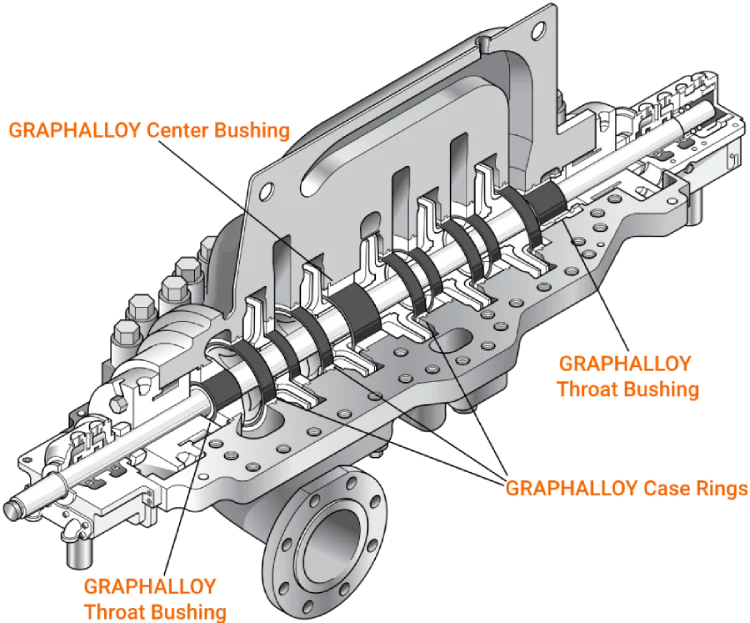
Table of Contents
1. What is a Pump Bushing and Why Does It Matter?
A pump bushing, often referred to as a pump sleeve bearing, is a type of plain bearing. Unlike rolling-element bearings that use balls or rollers, bushings provide a sliding surface for rotating shafts . Their primary jobs are to reduce friction, support the radial load of the shaft, and maintain proper alignment within the pump housing.
In applications ranging from automotive water pumps to industrial slurry pumps, the bushing acts as a sacrificial interface. It is designed to wear over time to protect the more expensive shaft and housing. However, when a bushing fails prematurely, it can lead to shaft damage, loss of hydraulic efficiency, and catastrophic pump seizure.
2. Material Science: Choosing the Right Bushing for Your Application
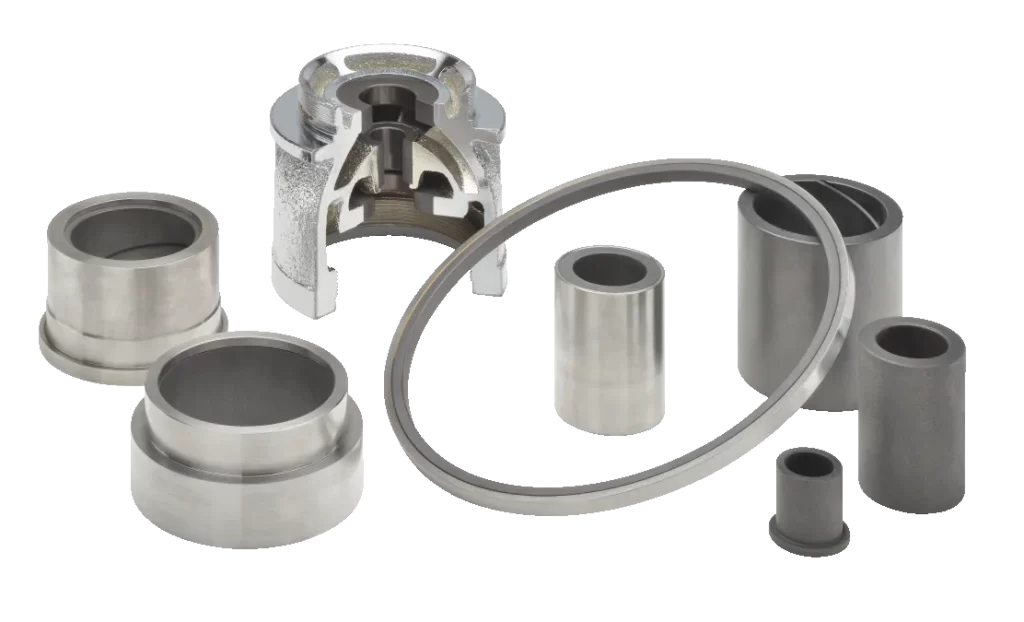
The choice of material is the most critical factor in pump bushing selection. The operating environment—whether it involves abrasive solids, corrosive chemicals, or low-lubricity fluids like LNG—dictates the optimal material .
1. Bronze and Self-Lubricating Bronze Bushings
Bronze is the traditional workhorse of the industry. It offers excellent wear resistance, high load capacity, and good thermal conductivity. However, modern engineering increasingly demands self-lubricating bronze bushings.
How they work: These bushings often feature a sintered bronze structure impregnated with PTFE or graphite. As the shaft rotates, microscopic particles of the lubricant are released, providing a consistent low-friction film .
Best for: Gear pumps, piston pumps, and applications where maintenance access is difficult. The self-lubricating feature significantly extends service life and reduces downtime .
2. Graphite (GRAPHALLOY®) Bushings
For extreme conditions, particularly those involving high temperatures or cryogenic fluids, graphite-based materials like GRAPHALLOY® are unmatched.
The Advantage: Graphite is non-galling and maintains its lubricity even when running dry. In applications like LNG pumps or boiler feed water systems where fluids have low viscosity and cannot support a hydrodynamic film, graphite prevents metal-on-metal contact .
Longevity: Case studies show that retrofitting pumps with graphite bushings can extend service life by years, even in demanding cryogenic or high-speed environments .
3. Fiber-Embedded Polymers (Advanced Composites)
In dirty-service applications (like slurry handling), traditional soft materials wear out quickly. However, rigid materials can be damaged by impact.
Innovation: Fiber-embedded polymeric materials combine the self-lubricity of polymers with the abrasion resistance of reinforcing fibers. These materials allow pumps to run with tighter clearances (meeting API standards) even when handling entrained solids, improving both efficiency and rotor stability .
4. Tungsten Carbide: The Abrasion Champion
When dealing with highly abrasive slurries (sand, scale, hard particulate), tungsten carbide bushings often outlast bronze by a significant margin.
The Trade-off: While carbide offers extreme hardness and wear resistance, it is less forgiving of misalignment and impact. It requires precise engineering regarding fit and clearance to prevent chipping .
5. PTFE and Polymer Composites
For corrosion resistance and low-friction requirements in clean environments, PTFE and polymer composites are ideal. They require no external lubrication and are lightweight, making them perfect for vane pumps and chemical processing applications .
3. Pump-Specific Applications: Matching the Bushing to the Pump Type
Different pump designs impose unique stresses on bushings. Here is how to match them:
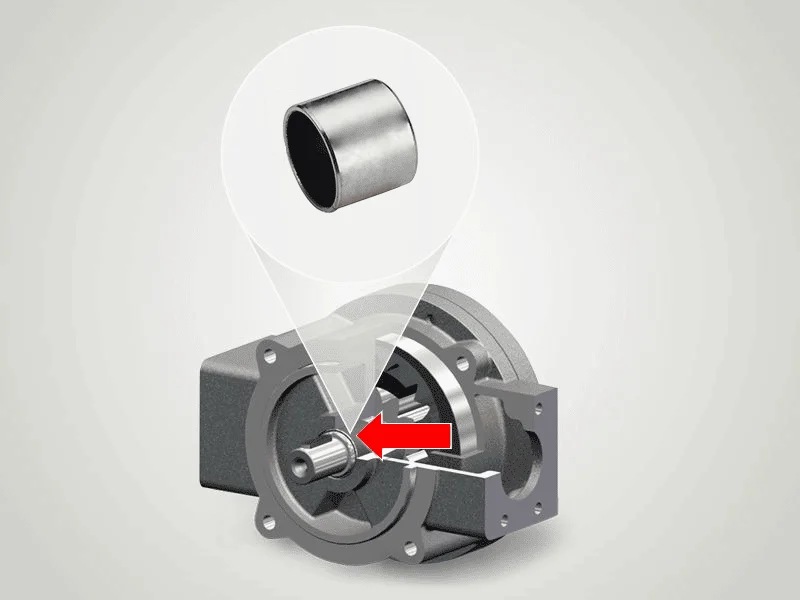
Gear Pump Bushings: In external gear pumps, bushings support the shafts against high hydraulic pressures. Bimetal bushings (steel-backed with a bronze lining) or self-lubricating bronze are preferred here to handle heavy loads while maintaining efficiency .
Centrifugal Pump Bushings: These often act as line bearings between stages or as throttle bushings. They manage vibration and leakage. Upgrading to composite materials here can eliminate the risk of seizure during “slow roll” or start-up .
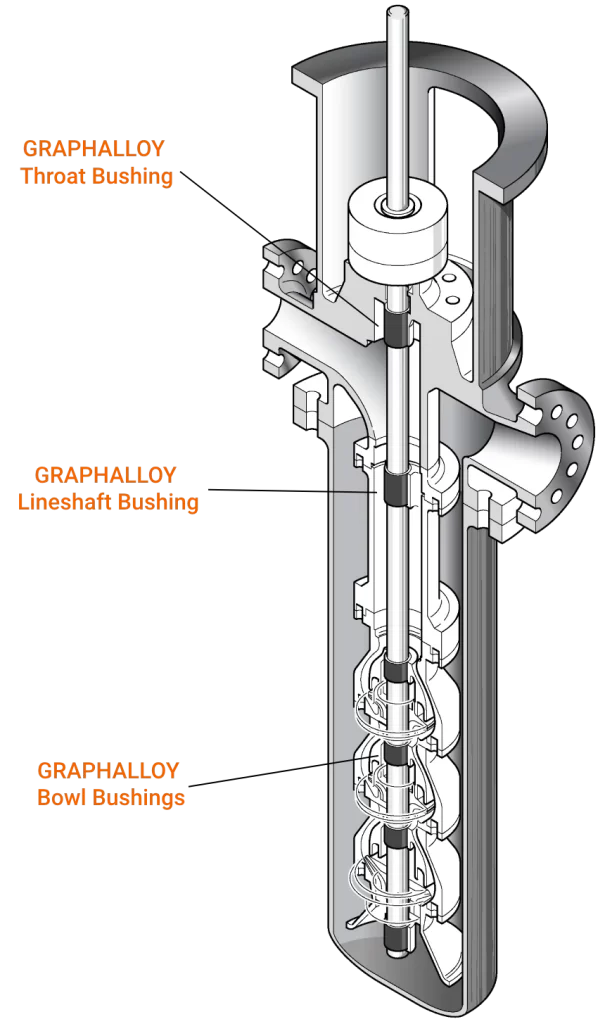
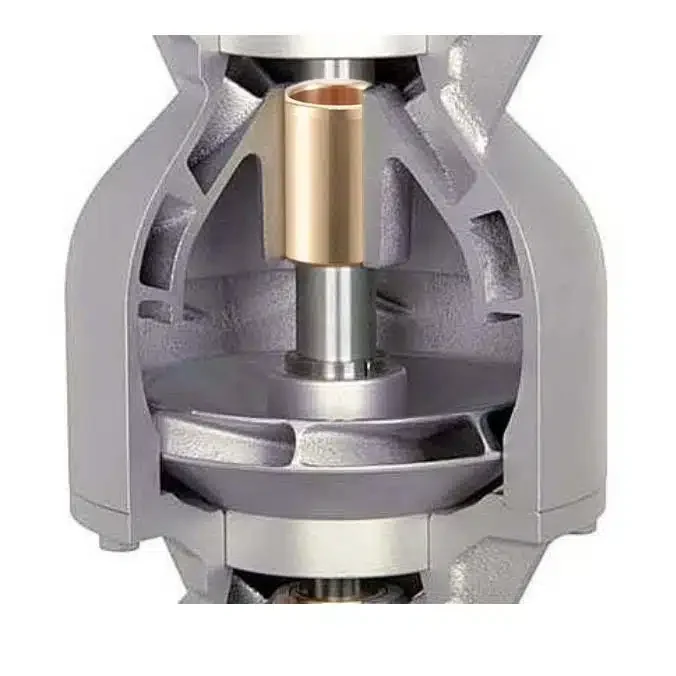
Vertical Turbine Pumps: In long, vertical shafts, bushings are essential for stability. Flanged bushings are often used to provide axial support and prevent whipping.
Car Wash Pumps: These operate in humid, start-stop conditions. Synthetic or bronze bushings with excellent shock resistance are required to withstand frequent reversing and severe operating conditions .
4. Failure Analysis: Why Do Pump Bushings Fail?
Understanding how bushings fail helps in selecting the right upgrade. Here are common symptoms and root causes :
1. Rapid Bore Wear / Clearance Growth
Cause: Abrasive solids trapped between the shaft and bushing.
Solution: Improve filtration or switch to a harder material like carbide or a fiber-embedded composite.
2. Scoring and Seizure
Cause: Boundary lubrication conditions or rough shaft finish. If a converter hub or shaft is too rough, it acts like a file against the bushing .
Solution: Ensure the shaft has a “mirror finish.” In transmission pumps, hubs must be smooth as glass to maximize bushing life . Consider self-lubricating materials that provide a transfer film.
3. Bell-Mouthing (Erosion)
Cause: High-velocity flow and turbulence at the edges of the bushing.
Solution: Modify edge geometry (add chamfers) or use erosion-resistant materials.
4. Cracking (in Carbide)
Cause: Excessive interference fit or point loading during installation.
Solution: Recalculate fit tolerances and ensure proper installation tooling is used .
Installation Best Practices
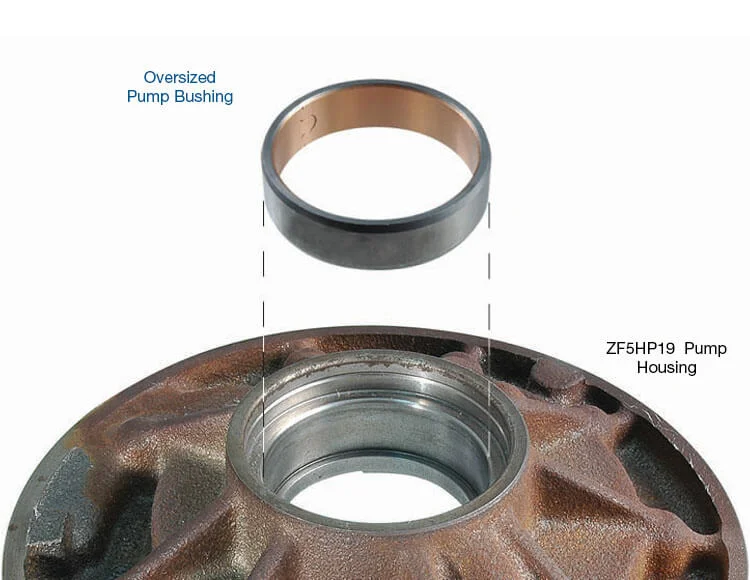
Proper installation is just as important as material selection. For example, in transmission oil pump service, technicians use specific driver tools to ensure the bushing is flush and then stake it in place to prevent spinning .
Cleanliness: Always clean components thoroughly with solvent before assembly.
Lubrication: During installation, lubricate the gears and bushings with the appropriate fluid to prevent initial dry start-up wear.
Alignment: Misalignment is a leading cause of one-sided wear bands. Always verify rotor concentricity during overhaul .
5. Conclusion: Optimize Your Pump Performance with MYWAY
The selection of a pump bushing is a decision that impacts every aspect of your operation—from energy consumption to maintenance intervals. Whether you require the conformability of bronze, the dry-run capabilities of graphite, or the abrasion resistance of carbide, the correct engineering choice will save you time and money.
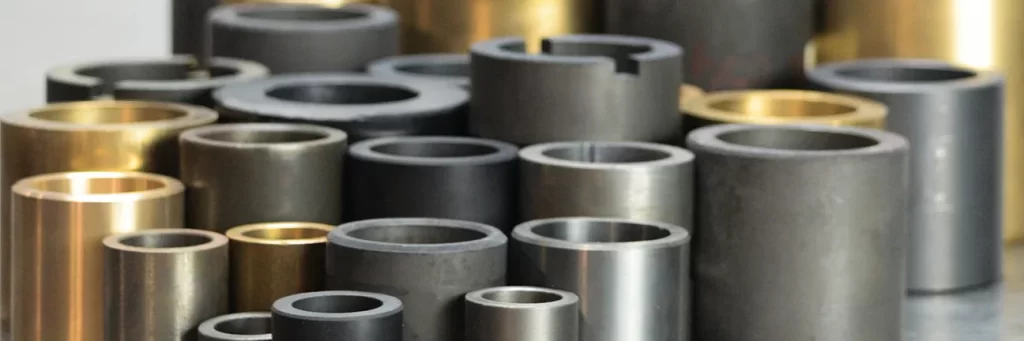
At MYWAY, we understand the complexities of modern pumping systems. We offer a comprehensive range of high-performance pump bushings, including custom-engineered solutions for gear pumps, centrifugal pumps, and hydraulic motors. Our inventory features:
Self-Lubricating Bronze Bushings for extended life and reduced maintenance.
Bimetal and PTFE Composites for high-pressure and corrosive environments.
Custom Sizes to match your exact shaft and housing dimensions.
Don’t let a small component cause big downtime. Contact MYWAY today for a consultation or request a quote. Let us help you find the perfect bushing solution to keep your operations running smoothly.
FAQ: Pump Bushing Questions Answered
Q: What is the difference between a lubricated bushing and a self-lubricating bushing?
A: Lubricated bushings (like standard bronze) require a continuous oil film to function. Self-lubricating bushings (containing PTFE or graphite) have embedded lubricants that release during operation, making them ideal for maintenance-free or “run-dry” scenarios .
Q: Can I replace a bronze bushing with a carbide one using the same specifications?
A: Not usually. Carbide is stiffer and less forgiving. You may need to adjust the fit strategy, edge geometry, and clearance specifications to accommodate the material properties and prevent cracking .
Q: How do I know if my pump bushing is worn out?
A: Symptoms include increased vibration, loss of pump efficiency (pressure drop), visible scoring on the shaft, or excessive noise. In automotive transmissions, a rough hub finish is a direct indicator that the bushing will wear rapidly .
Q: What is a throttle bushing?
A: Found in centrifugal pumps, throttle bushings control leakage between high-pressure and low-pressure stages. Upgrading these to composite materials can improve efficiency and prevent seizure during off-design operations .
Q: Are polymer bushings strong enough for industrial pumps?
A: Yes, modern fiber-embedded polymeric materials are specifically designed for abrasive services and offer a balance of strength, chemical resistance, and self-lubricity that rivals metals in many applications .
100000+ Types of Bushings – Contact Us for Details