
Recent Posts
Sintered Bearings: Self-Lubricating Technology That Outlasts Conventional Metals
Introduction: Why Sintered Bearings Are Everywhere (But Often Overlooked)
If you’ve ever used a power tool, driven a car, or opened a refrigerator, you’ve relied on a sintered bearing. These unassuming components are the unsung heroes of modern machinery—quietly rotating millions of times without maintenance, surviving in dusty environments where precision bearings would seize, and doing it all at a fraction of the cost of traditional alternatives.
Sintered bearings, also known as oil-impregnated bearings, self-lubricating bearings, or porous bearings, represent one of powder metallurgy’s greatest success stories. Unlike conventional bearings that require external lubrication systems, sintered bearings carry their own oil supply within millions of microscopic pores, releasing lubricant precisely when and where it’s needed .
But here’s what most catalogs won’t tell you: not all sintered bearings perform equally. The difference between a bearing that lasts a decade and one that fails in months comes down to manufacturing precision, material composition, and oil retention technology. In this comprehensive guide, we’ll explore how sintered bearings work, why they outperform alternatives in specific applications, and what specifications actually matter when you’re sourcing for production.
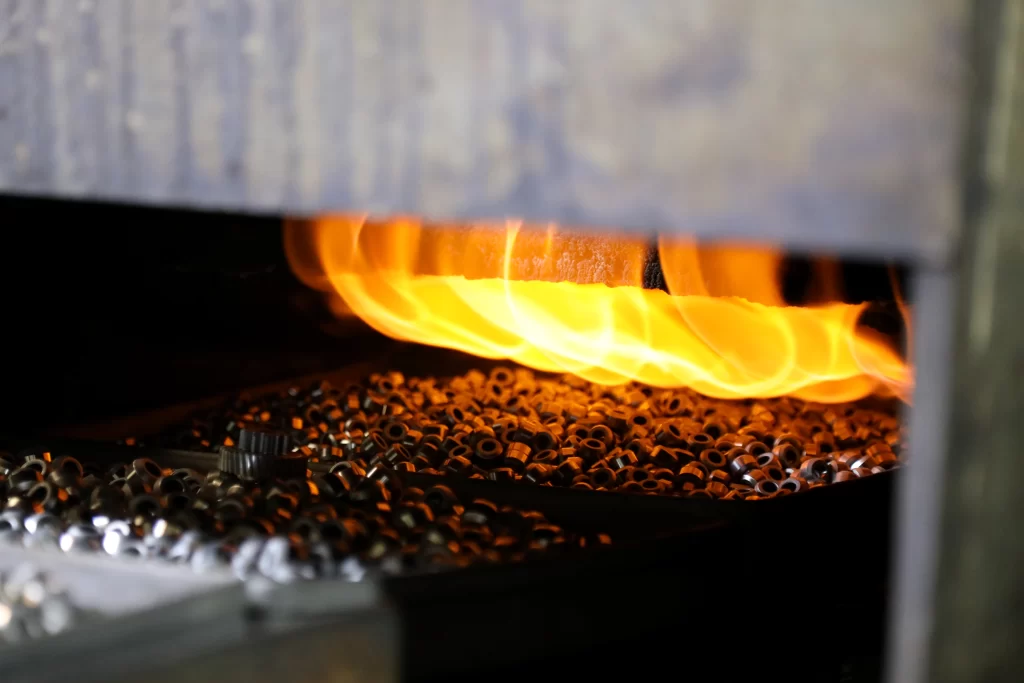
Table of Contents
1. The Magic of Powder Metallurgy – How Sintered Bearings Are Made
From Metal Powder to Precision Component
The journey of a sintered bearing begins not as molten metal, but as fine powder—typically bronze, iron, or iron-copper alloys. This fundamental difference in manufacturing creates a material with properties impossible to achieve through traditional casting .
The process follows four critical stages:
1. Powder Blending
Manufacturers start with metal powders of specific particle sizes. For sintered bronze bearings, the classic formulation is 90% copper and 10% tin—the same ratio that’s been proven optimal for over a century. However, modern formulations may include graphite, iron, or other additives to enhance specific properties like load capacity or corrosion resistance .
2. Compacting
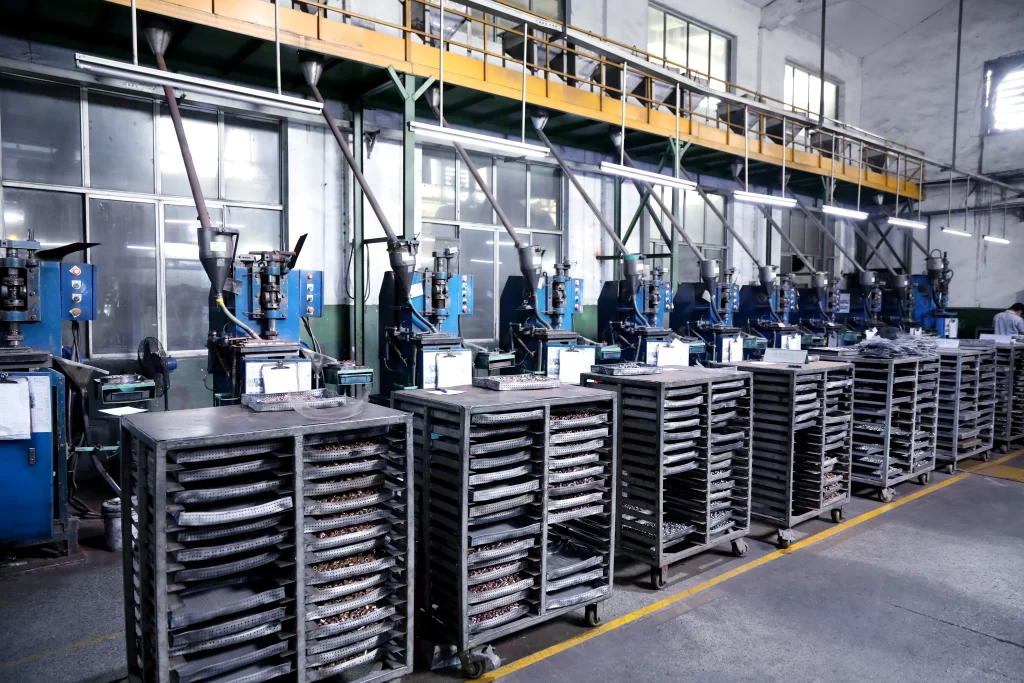
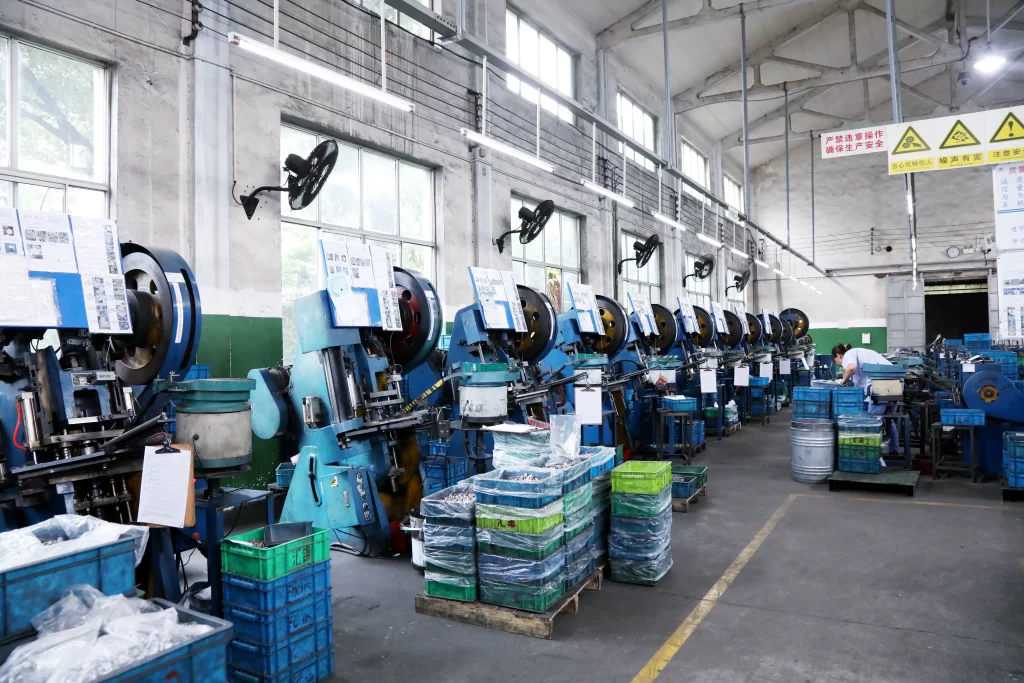
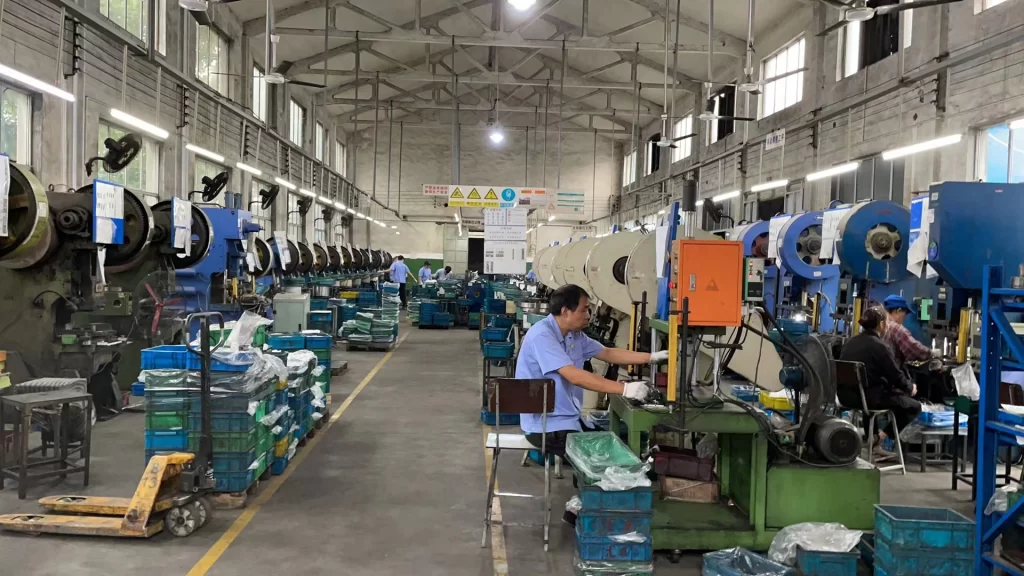
The powder mixture is fed into precision dies and compressed under enormous pressure—often 200 to 400 MPa. This pressure fuses the particles into a “green compact” that holds its shape but hasn’t achieved final strength. The key here is that the compacting process creates controlled porosity: typically 15-30% of the bearing’s volume will remain as empty space after pressing .
3. Sintering
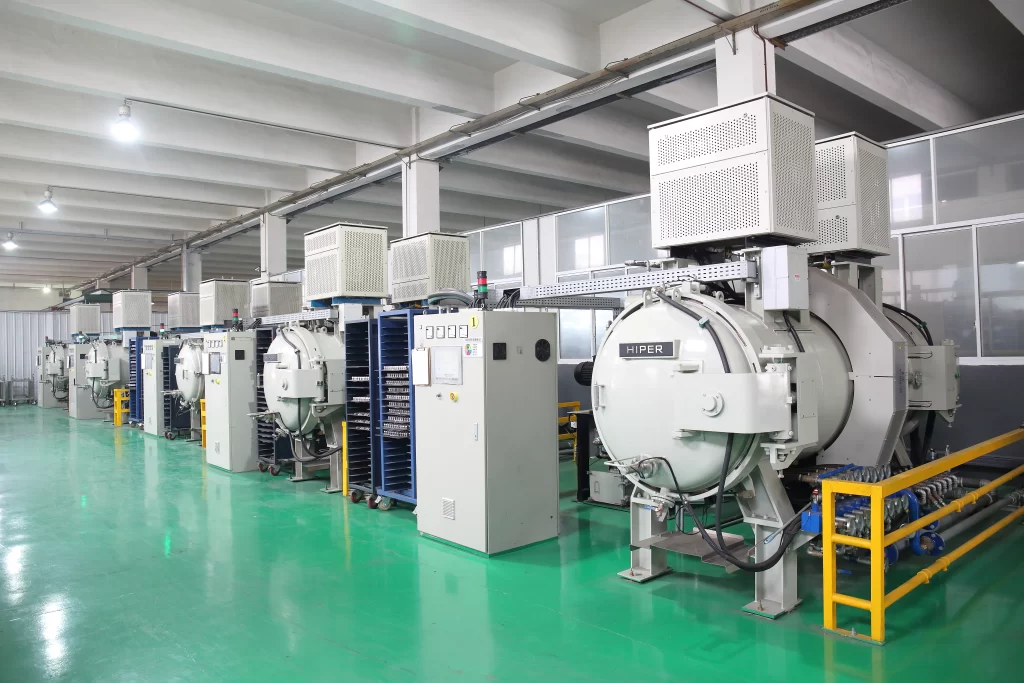
The green compacts enter a furnace with a controlled atmosphere, heated to temperatures just below the melting point of the base metal—around 750-850°C for bronze. At these temperatures, atomic diffusion occurs at particle boundaries, creating metallurgical bonds that give the bearing its strength. Crucially, the interconnected pore network remains intact during sintering. This isn’t a defect—it’s the feature that makes self-lubrication possible .
4. Oil Impregnation
The sintered bearings are immersed in lubricating oil under vacuum. As air is drawn from the pores, oil rushes in to fill every available void. Quality bearings achieve oil content of 18-30% by volume . When you hold a finished sintered bearing, nearly one-third of its volume is actually liquid oil, waiting inside the metal matrix.
2. Why Porosity Matters: The Physics of Self-Lubrication
The porous structure of sintered bearings isn’t just a passive oil reservoir—it’s an active lubrication delivery system. Here’s what happens during operation:
When the shaft begins rotating, friction generates heat at the bearing-shaft interface. This heat causes the oil within nearby pores to expand and migrate to the surface through capillary action. A thin oil film forms between bearing and shaft, creating hydrodynamic lift that separates the surfaces .
When operation stops and the bearing cools, capillary forces draw the oil back into the pores. The bearing “breathes” oil in and out throughout its service life, maintaining lubrication without pumps, wicks, or external oilers .
This self-regulating system explains why sintered bearings excel in applications where conventional bearings would fail—they automatically deliver more lubricant when conditions become severe, and conserve oil when running lightly.
3. Sintered Bearing Types – Matching Design to Application
Sleeve Bushings: The Workhorses
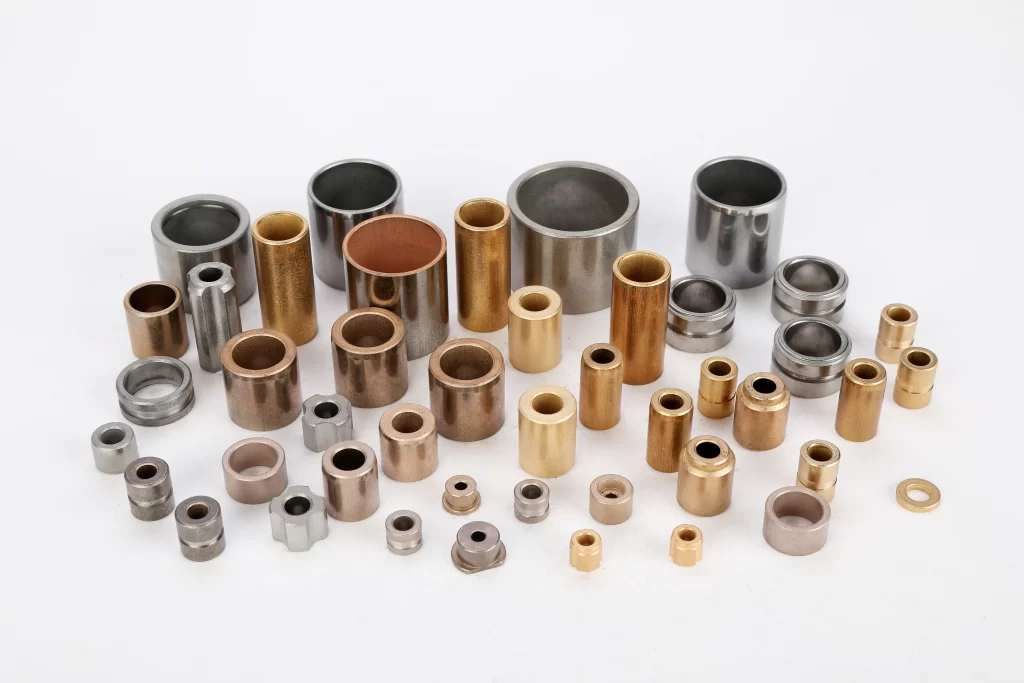
Sleeve bronze bearings represent the most common configuration—simple cylinders with straight inner and outer diameters. They’re designed primarily for radial loads (perpendicular to the shaft) and work well in continuous rotation applications.
Typical applications include:
Electric motor bearings
Small appliance motors
Automotive accessories like cooling fans and windshield wiper motors
Industrial conveyor systems
Flanged Bushings: Handling Two Directions
Flanged bronze bearings add a thrust face at one end, allowing them to accommodate axial loads in one direction while supporting radial loads. The flange acts as a thrust surface, eliminating the need for separate thrust washers in many designs .
You’ll find flanged bushings in:
Gearboxes where shafts experience end-thrust
Small automotive transmissions
Power tools with axial loading
Pump applications
Thrust Washers: For Pure Axial Loading
When applications require only axial load support, sintered bronze thrust washers provide a thin, flat bearing surface. Their porous structure delivers lubrication exactly where the rotating face contacts the stationary surface.
Custom Configurations
Because sintered bearings are formed in dies rather than machined from stock, complex shapes cost surprisingly little to produce. Features like:
Oil grooves and pockets
Flanges on both ends
Non-circular outer diameters
Step diameters
Blind or through holes
…can be incorporated directly into the pressed shape, often at minimal additional cost compared to machining equivalent features .
4. Sintered Bearings vs. The Competition
Sintered Bronze vs. Ball Bearings
Ball bearings excel at high speeds and precision applications, but they come with trade-offs. Here’s how sintered bearings compare :
| Criteria | Sintered Sleeve Bearings | Ball Bearings |
|---|---|---|
| Noise | Quieter operation due to oil film damping | Louder due to rolling element contact |
| Lubrication | Self-contained, no external system needed | Requires grease or oil maintenance |
| Cost | Lower (especially in volume) | Higher |
| Speed Capability | Good for moderate to high speeds | Excellent for all speeds |
| Start-Stop Operation | Reduced life in frequent starts | Well suited |
| Contamination Tolerance | Good (oil film traps some debris) | Poor (debris damages raceways) |
| Space Requirements | Compact, no housing for lubrication needed | May require seals and lubrication paths |
For applications under about 500 RPM, sintered bearings often outperform ball bearings in both cost and longevity. In continuous high-speed operation, ball bearings typically maintain their advantage—though modern sintered materials continue to close this gap .
Sintered vs. Polymer Bearings
Polymer bearings have gained popularity for their low friction and corrosion resistance, but sintered metal offers compelling advantages :
Heat Resistance: Polymer bearings soften and deform at elevated temperatures. Sintered metal bearings maintain their strength up to 150°C and beyond—they’re impervious to heat in the ranges that destroy plastics .
Load Capacity: The metal matrix of sintered bearings supports high-impact loading without permanent deformation. Polymer bearings creep under sustained load, especially at temperature.
Longevity: Lifecycle testing shows sintered bearings can last 3 times longer than polymer and 10 times longer than milled metal bearings .
Serviceability: Sintered bearings in serviceable components can be re-lubricated with standard grease. Polymer bearings in sealed units must be replaced when lubrication fails .
The trade-off? Polymer bearings often have slightly lower initial friction and cost less—but total lifecycle cost favors sintered metal in demanding applications.
Sintered vs. Solid Bronze (Machined) Bearings
Before powder metallurgy, bronze bearings were machined from cast bar stock. This approach is still used for low volumes, but sintered technology offers decisive advantages :
Oil retention: Solid bronze has no porosity—it requires external lubrication systems or frequent re-oiling.
Cost at volume: Sintering produces near-net shapes with minimal waste; machining cuts away up to 50% of expensive material.
Consistency: Powder metallurgy ensures uniform properties throughout; castings can have segregated regions.
Complex features: Holes, grooves, and flanges are formed, not machined—faster and cheaper.
5. Material Science – What's Really in Your Bearing?
Bronze Base: The Classic Choice
Sintered bronze bearings (typically 90% Cu, 10% Sn) dominate general-purpose applications for good reason. Bronze offers :
Excellent compatibility with steel shafts
Good corrosion resistance
Moderate strength with conformability
Reliable oil retention
The porous bronze structure provides an ideal matrix for oil impregnation, with pore sizes and distribution that optimize the balance between oil storage and mechanical strength.
Iron-Based Bearings: Higher Loads, Lower Cost
For applications requiring greater strength, sintered iron bearings deliver higher load capacity at lower material cost. The trade-off is reduced corrosion resistance and slightly different wear characteristics.
Iron-based bearings often include copper (1-5%) to improve strength and lubricity. They’re common in automotive and heavy equipment where loads exceed bronze’s capability .
Hybrid Materials: Tailored Properties
Modern powder metallurgy allows precise tailoring of bearing properties. Manufacturers can incorporate :
Graphite for solid lubrication in marginal conditions
PTFE for extremely low friction
Copper to improve iron-based bearing performance
Phosphorus to enhance strength
Lead (in some regions) for improved conformability
The beauty of powder metallurgy is that these additives can be distributed uniformly throughout the bearing—not just coated on the surface .
6. Design Considerations – Getting It Right
Shaft Selection Matters More Than You Think
Recent research reveals a surprising factor in sintered bearing performance: shaft wettability. Bearings running on low-wettability shafts (like PTFE-coated surfaces) retain larger oil droplets in the clearance space and maintain better lubrication than those on highly-wettable shafts .
For standard applications, hardened and ground steel shafts (HRC 45-60) with surface finishes of 0.2-0.4 μm Ra provide the best combination of wear resistance and oil retention .
Clearance: Not Too Tight, Not Too Loose
Unlike ball bearings that require precise fits, sintered bearings operate with measurable clearance—typically 0.01 to 0.05 mm per 25 mm of shaft diameter. This clearance allows oil film formation and accommodates thermal expansion.
Running a sintered bearing with too little clearance squeezes out the oil film, causing metal-to-metal contact. Too much clearance reduces load capacity and can cause vibration.
Load and Speed Limits
Sintered bearings perform best under moderate loads and continuous rotation. Maximum PV (pressure-velocity) values depend on material, oil viscosity, and operating temperature.
For sintered bronze, typical limits are:
Maximum load: 35-50 MPa (static), 5-15 MPa (dynamic)
Maximum speed: 2-5 m/s sliding velocity
Maximum PV: 1-3 MPa·m/s for continuous operation
Exceeding these limits depletes oil faster than capillary action can replenish it, leading to premature failure.
Temperature Effects
Operating temperature dramatically affects sintered bearing life. At higher temperatures:
Oil viscosity decreases (thinner film)
Oil oxidation accelerates
Oil loss through evaporation increases
Most sintered bearings use oils rated for continuous operation to 85-120°C. Above these temperatures, special high-temperature oils or solid lubricants become necessary .
7. Installation and Handling – Avoiding Early Failure
Common Mistakes That Kill Bearings
Even the finest sintered bearing will fail prematurely if mishandled. Porite Corporation, a leading manufacturer, identifies these critical handling requirements :
Don’t:
Drop or impact bearings—this closes surface pores and damages the structure
Expose to high temperatures before installation—oil loss begins surprisingly early
Allow moisture contact—rust can form in the pore structure
Accumulate dust or dirt—contamination accelerates wear
Wash with solvents—this removes impregnated oil
Store on absorbent materials (paper or cloth)—oil wicks out by capillary action
Do:
Store in original packaging until installation
Maintain clean assembly areas
Use proper pressing tools (never hammer directly on bearings)
Lubricate shafts during initial assembly
Follow break-in procedures when specified
Press Fitting Considerations
Sintered bearings are typically press-fit into housings. The interference fit compresses the bearing slightly, which:
Reduces bore diameter (expect 60-80% of housing interference to transfer to the bore)
May close surface pores in high-interference areas
Requires reaming or sizing for precise final dimensions
For critical applications, many manufacturers size (compress) bearings after installation to achieve final dimensions and restore consistent porosity .
8. When Sintered Bearings Fail – Diagnosis and Prevention
Recognizing Failure Modes
Wear beyond limits is the most common failure mode, but the cause matters:
Oil depletion failure: The bearing runs dry, friction increases, temperature rises, and wear accelerates rapidly. This typically appears as uniform wear with evidence of overheating (discoloration, varnish).
Abrasive wear: Contaminated oil or dirty assembly leaves scoring in the direction of motion. The porous structure may be clogged with debris.
Fatigue: Under high cyclic loads, the sintered structure may develop subsurface cracks that propagate to the surface—more common in iron-based materials under severe service.
Corrosion: Rust or chemical attack degrades the metal matrix, releasing oil and destroying bearing integrity.
Extending Bearing Life
Maximum sintered bearing life requires :
Proper initial oil volume (aim for 20-25% by volume)
Correct oil viscosity for operating temperature and speed
Clean operation to prevent pore clogging
Reasonable PV limits—don’t push the envelope
Temperature control—every 10°C reduction doubles oil life
When a bearing reaches approximately 60% of its initial oil volume, it’s approaching end-of-life and should be replaced .
9. The MYWAY Advantage – Precision Sintered Bearings You Can Trust
After decades of supplying sintered bearings to demanding industries worldwide, MYWAY has refined the manufacturing process to deliver bearings that consistently outperform specifications.
What Sets MYWAY Sintered Bearings Apart?
Controlled Porosity Distribution
Not all pores are created equal. MYWAY’s precision powder blending and compacting processes ensure uniform pore size distribution throughout the bearing structure. This means predictable oil flow, consistent lubrication, and reliable performance bearing-to-bearing.
Premium Oil Impregnation
The oil inside a bearing matters as much as the metal surrounding it. MYWAY uses carefully selected lubricants matched to each application’s temperature and speed requirements. Standard bearings receive high-viscosity-index oils that maintain film strength across wide temperature ranges.
Material Flexibility
Need bronze for general purpose? Iron for higher loads? Custom alloys for special applications? MYWAY produces the full range of sintered bearing materials, with technical support to help you select the optimal composition for your specific requirements.
Complex Geometries Without Compromise
That flange, groove, or oil pocket you need? It’s formed directly in the pressing stage, not machined afterward. MYWAY’s tooling expertise delivers complex features with the precision of powder metallurgy and the economy of high-volume production.
Quality Assurance
Every batch undergoes rigorous testing for:
Density and porosity
Oil content
Dimensional accuracy
Crush strength
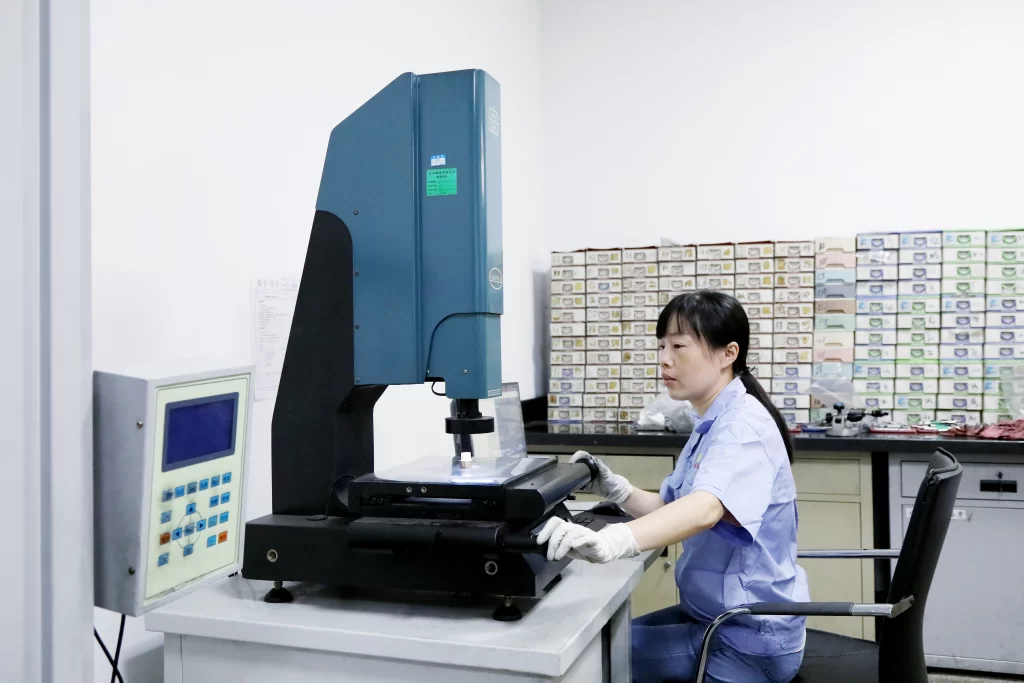
Visual inspection
The MYWAY Product Range
Sleeve Bronze Bearings: Standard and heavy-duty, inch and metric sizes
Flanged Bronze Bearings: Single-flange designs for combined radial/axial loads
Iron-Based Bearings: Higher strength for demanding industrial applications
Thrust Washers: Flat bearings for axial load support
Custom Engineered Bearings: Your design, optimized for powder metallurgy production
Why Customers Choose MYWAY
“Reliability” is the word we hear most often from long-term customers. In applications where bearing failure means production downtime and expensive repairs, MYWAY’s consistent quality provides peace of mind.
Our technical team understands that bearing selection involves trade-offs—load vs. speed, cost vs. life, standard vs. custom. We work with customers to find the optimal balance for each application, not just the easiest off-the-shelf solution.
Ready to Upgrade Your Bearings?
Whether you’re designing a new product or sourcing bearings for existing production, MYWAY offers:
Competitive pricing on volume orders
Technical support for material selection
Custom engineering for special requirements
Reliable delivery you can schedule around
Contact MYWAY today with your specifications, and discover why engineers worldwide specify MYWAY sintered bearings for applications where failure is not an option.
Frequently Asked Questions About Sintered Bearings
Q: How long do sintered bearings last?
A: Service life depends on operating conditions, but properly selected sintered bearings typically last thousands of hours. The end of life occurs when oil content drops to about 60% of initial volume—usually a gradual process with warning signs like increased noise or temperature .
Q: Can sintered bearings be relubricated?
A: Yes—many sintered bearings in serviceable applications include grease fittings. Standard GC-LB grease can be used without damaging the bearing structure. The porous matrix accepts new lubricant readily .
Q: Do sintered bearings need break-in?
A: Most benefit from a break-in period at reduced load and speed. During break-in, the bearing and shaft establish their running clearance, and oil distribution stabilizes. Some initial wear is normal and expected—this is the bearing “making its footprint” .
Q: What shaft material works best?
A: Hardened steel (HRC 45-60) with ground finish (0.2-0.4 μm Ra) provides optimal performance. Softer shafts wear rapidly; rougher shafts increase bearing wear. Shaft surface properties affect oil retention—recent research suggests low-wettability surfaces may improve lubrication .
Q: Can sintered bearings run dry?
A: They contain oil, so they’re never truly “dry.” However, if the impregnated oil is depleted, the bearing will run metal-on-metal and fail rapidly. Some sintered materials include solid lubricants (graphite, PTFE) for marginal lubrication conditions .
Q: Are sintered bearings suitable for vacuum environments?
A: Standard oil-impregnated bearings are not recommended for vacuum due to oil evaporation. Special bearings with low-vapor-pressure oils or solid lubrication are available for vacuum service .
Q: How should sintered bearings be stored?
A: In original packaging, in clean dry areas, away from temperature extremes. Never store on absorbent surfaces—oil will wick out through capillary action. Avoid contact with solvents or chemicals that could extract oil .
Q: What’s the cost advantage of sintered vs. machined bearings?
A: At production volumes, sintered bearings typically cost 50-70% less than machined equivalents, with the advantage increasing for complex shapes. Even at low volumes, standard sintered sizes are highly economical .
100000+ Types of Bushings – Contact Us for Details