
Recent Posts
Stainless Steel Bushings: Your Solution for Harsh and Maintenance-Free Applications
Introduction: Why the Right Bushing Material is a Multi-Million Dollar Decision
In the intricate world of industrial machinery, a single failed component can halt an entire production line, incurring costs that spiral into thousands of dollars per hour of downtime. At the heart of countless motion systems—from the rotating arms of a packaging robot to the oscillating shafts in a marine pump—lies a critical, yet often underestimated component: the bushing.
While often small, the choice of bushing material is a pivotal engineering decision. It’s the difference between a system that runs smoothly for years and one that requires constant, costly attention. Among the array of options, stainless steel bushings have emerged as a premier solution for the most demanding modern applications. The market demand confirms this trend: in key industrial regions, stainless steel bushings have shown extraordinary growth in buyer interest, highlighting their critical role in global manufacturing and engineering.
This guide cuts through the technical jargon to explore why stainless steel, particularly when engineered into advanced self-lubricating composites, is becoming the material of choice for engineers who value longevity, reliability, and total cost savings.
Table of Contents
1. Understanding the Core: What is a Bushing?
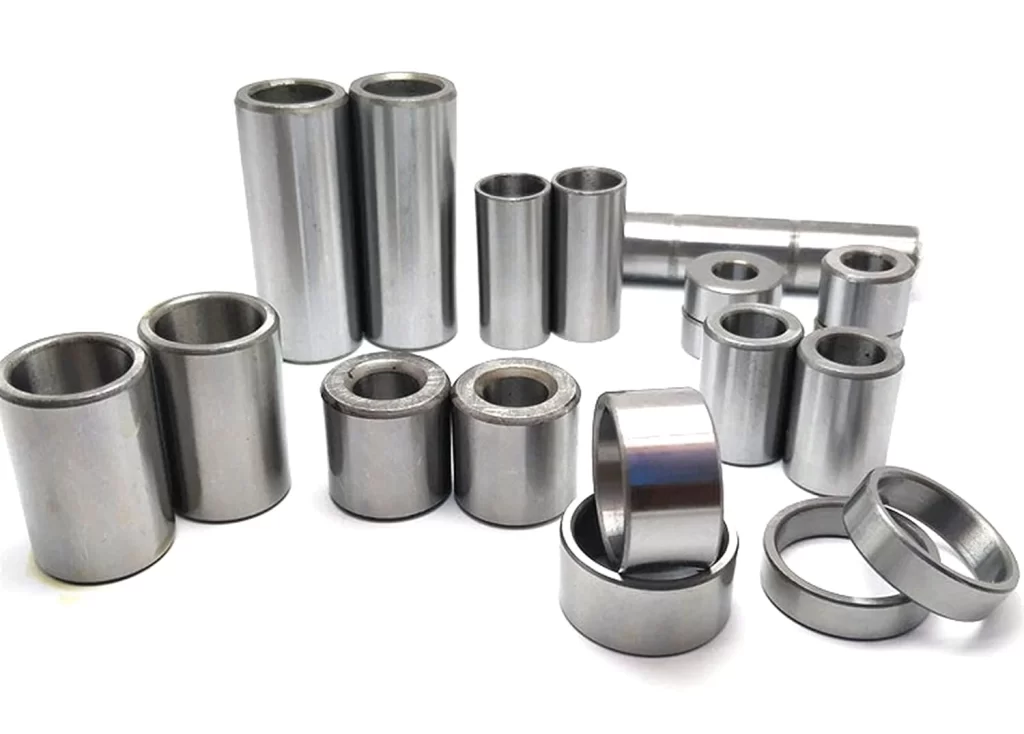
A bushing, also known as a plain bearing or sleeve bearing, is a cylindrical lining designed to provide a precise, low-friction sliding or rotating surface between two components, typically a shaft and its housing. Its fundamental purposes are to:
Reduce friction and wear on more expensive components (like shafts).
Absorb vibration and dampen noise.
Provide corrosion protection for the assembly.
Simplify maintenance and repair, as the bushing is designed as a replaceable wear item.
Traditionally, bushings were simple sleeves of bronze, brass, or carbon steel, often requiring continuous external lubrication. The evolution to stainless steel and, further, to self-lubricating composite structures, represents a significant leap in addressing the core challenges of modern machinery: operating in harsh conditions with minimal maintenance.
2. The Stainless Steel Advantage: More Than Just Rust Resistance
Choosing stainless steel as a bushing material is a strategic decision driven by environmental and performance demands. Its primary benefit is the exceptional corrosion resistance imparted by a minimum of 10.5% chromium, which forms a passive, self-repairing oxide layer on the surface.
However, the term “stainless steel” encompasses a family of alloys, each with distinct properties for specific challenges:
| Grade | Key Characteristics | Ideal Application Environment |
|---|---|---|
| 304 / 1.4301 | Excellent general corrosion resistance, good formability and weldability. The most common “food-grade” stainless. | Food & beverage processing, chemical plants, general outdoor equipment where high chlorides are not present. |
| 316 / 1.4401 | Superior to 304 due to added Molybdenum (Mo), offering much higher resistance to pitting and crevice corrosion, especially from chlorides. | Marine and offshore applications, pharmaceutical processing, coastal industrial facilities, chemical exposure. |
| 420 / 440 | Martensitic grades that can be heat-treated to achieve high hardness and wear resistance. Good corrosion resistance in mild environments. | High-load, low-speed applications like valve stems, where wear resistance is critical alongside some corrosion protection. |
| 316Ti | A stabilized version of 316 with Titanium, offering enhanced performance in high-temperature, corrosive-wear (tribocorrosion) scenarios. | Aggressive environments where friction and corrosion act simultaneously, such as in certain pump and valve components. |
Recent tribological studies underscore the importance of precise material selection. For instance, research comparing AISI 316Ti and AISI 430 in saline (0.9% NaCl) environments found that while both are effective, their performance under combined friction and corrosion (tribocorrosion) varies, influencing long-term stability and wear rates.
3. The Evolution: From Solid Metal to Self-Lubricating Composite Bushings
While a solid stainless steel bushing solves corrosion problems, it may still face challenges with friction, wear, and the need for lubrication. This is where engineered composite bushings represent a revolutionary step forward.
A modern high-performance bushing is a marvel of material science, typically constructed in three synergistic layers:
Stainless Steel Backing (0.7–2.3mm): Provides structural rigidity, high load capacity, and critical corrosion resistance from the outside environment. It ensures the bushing maintains its press-fit in the housing.
Porous Sintered Bronze Interlayer (0.2–0.3mm): Metallurgically bonded to the steel backing. This layer acts as a robust substrate for the top layer, enhances heat dissipation (thanks to copper’s excellent thermal conductivity), and in some designs, stores lubricant.
PTFE-Based Polymer Sliding Layer (0.01–0.03mm): The working surface. A mixture of PTFE (Polytetrafluoroethylene) and other fillers like lead creates an exceptionally low-friction interface. During operation, a tiny amount of this material transfers to the shaft, forming a protective, self-replenishing film that minimizes wear on both the bushing and the shaft.
This “DU” or “SF-1” type construction delivers the best of both worlds: the environmental resistance of stainless steel and the maintenance-free, low-friction operation of advanced polymers.
4. Key Application Industries: Where Stainless Steel Bushings Are Non-Negotiable
Food, Beverage & Pharmaceutical Processing: Mandated by hygiene regulations (e.g., FDA, USDA). Equipment must withstand frequent high-pressure, high-temperature washdowns with caustic cleaning agents. Type 304 or 316 stainless steel bushings prevent rust contamination and meet sanitary requirements.
Marine & Offshore: Constant exposure to saltwater spray, humidity, and corrosive atmospheres. Grade 316/316L or 316Ti bushings are essential for deck machinery, winches, steering systems, and pump components to prevent rapid corrosive failure.
Chemical Processing: Pumps, valves, and mixers handle acids, alkalis, and solvents. The corrosion resistance of 316 or specialty stainless grades protects critical pivoting and sliding points from aggressive chemicals.
Water & Wastewater Treatment: Aeration equipment, mixers, and sludge scrapers operate in humid, chemically active environments. Projects explicitly specify components like 304 stainless steel baffles and brackets for corrosion resistance, underscoring the need for similar protection in moving parts.
Outdoor & Construction Machinery: Excavators, agricultural equipment, and forestry machinery face mud, moisture, and abrasive dust. Stainless steel-backed bushings prevent seizing and reduce maintenance intervals.
5. Critical Design Considerations: Ensuring Your Bushing Success
Selecting the right bushing is only half the battle. Proper application ensures it delivers its promised service life.
Shaft Compatibility: The shaft is the bushing’s partner. For optimal life, the shaft surface should be hard (≥ HRC 45 is recommended for high loads), smooth (a surface roughness Ra of 0.2–0.4 µm is ideal), and clean.
Material Pairing: Avoid galvanic corrosion. A stainless steel bushing is often best paired with a stainless or properly coated shaft. Using a carbon steel shaft in a wet environment can lead to accelerated corrosion of the shaft.
Installation & Maintenance: Press-fit the bushing correctly into a clean, properly sized housing. While self-lubricating, a small amount of grease during installation can enhance initial run-in. For non-self-lubricating solid stainless bushings, a consistent re-lubrication schedule is vital.
6. Spotlight on Innovation: The MYWAY MW-1 Self-Lubricating Bushing
In a market filled with claims, Zhejiang MYWAY Co., Ltd. has developed a proven solution that embodies the advanced composite technology discussed throughout this guide: the MYWAY DU/SF-1 series self-lubricating bushing.
Built on the robust three-layer principle, the DU/SF-1 bushing is engineered for performance:
Modified PTFE & Lead Sliding Layer: Ensures an ultra-low coefficient of friction and forms the protective transfer film that safeguards your valuable shaft.
High-Density Copper Powder Interlayer: Provides exceptional bonding strength, load-bearing capacity, and rapid heat dissipation away from the critical sliding interface.
Stainless Steel Backing (Customizable): Available in various grades, including 304 and 316, to match the specific corrosion demands of your application, ensuring the structural integrity of the bearing in harsh conditions.
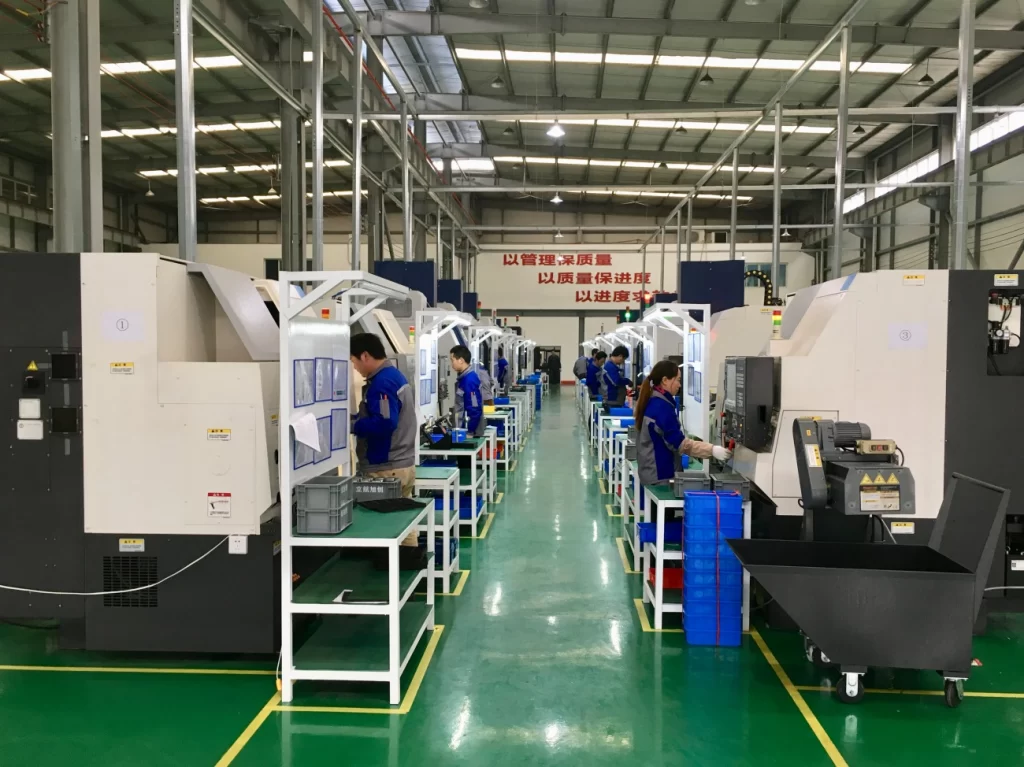
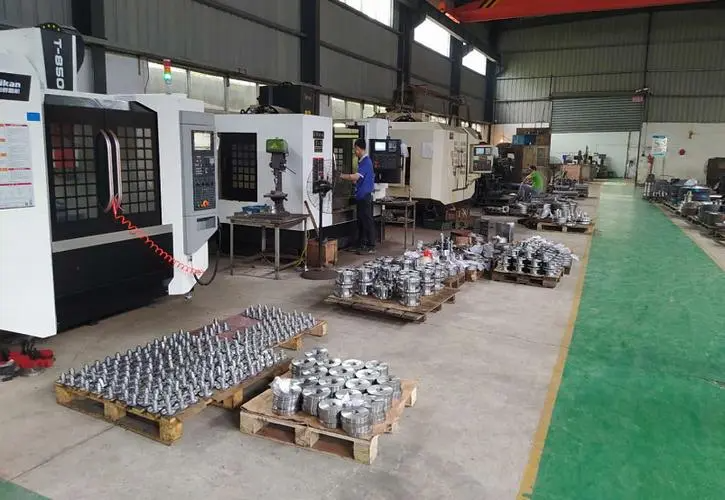
MYWAY combines this advanced product design with precision manufacturing. Utilizing automated production lines for high volumes and tungsten steel precision molds, they guarantee consistent, high dimensional accuracy and excellent surface finish for every bushing.
7. Conclusion: Make the Strategic Choice for Long-Term Reliability
The journey from a simple metal sleeve to today’s engineered stainless steel composite bushing reflects the evolving demands of industry: longer life, less maintenance, and operation in ever more challenging environments.
Choosing a bushing is no longer just a procurement task; it’s a strategic engineering decision that impacts total cost of ownership, machine uptime, and operational safety. By selecting a high-performance self-lubricating bushing with a corrosion-resistant stainless steel backing, you are not just buying a component—you are investing in peace of mind and predictable performance.
Frequently Asked Questions (FAQ)
Q1: When should I absolutely choose a stainless steel bushing over a carbon steel one?
A: Choose stainless steel when your application involves moisture, chemicals, outdoor weathering, saltwater, frequent washdowns, or strict hygiene standards. If corrosion is a potential failure mode, stainless steel is a necessary investment to prevent unplanned downtime and costly shaft/housing damage.
Q2: What’s the main benefit of a “self-lubricating” composite bushing versus a solid bronze or stainless bushing?
A: The primary benefit is drastically reduced maintenance and higher reliability. Solid bushings typically require regular greasing. A PTFE-lined composite bushing runs dry or with initial lubrication, eliminating lubrication schedules, preventing contamination (critical in food/pharma), and ensuring consistent performance where lubrication is impossible.
Q3: My application is in seawater. Which stainless steel grade should I choose for the bushing backing?
A: For full immersion or severe salt spray exposure, Grade 316/316L (or its variants like 316Ti) is the minimum recommendation. The added molybdenum content provides essential resistance to chloride-induced pitting and crevice corrosion, which would rapidly destroy a 304-grade bushing in such an environment.
Q4: Can I use a stainless steel bushing with any shaft material?
A: Not ideally. For the best service life, pair it with a shaft of equal or greater hardness and compatible material. In corrosive environments, a hardened stainless steel shaft (e.g., 420, 440C) or a hardened steel shaft with a corrosion-resistant coating (like chrome plating) is recommended to prevent shaft wear and galvanic corrosion.
Q5: Are these high-performance bushings only for large-scale industrial use?
A: Absolutely not. The technology scales down effectively. MYWAY and other manufacturers produce precision bushings for applications from massive hydraulic cylinder pins to delicate medical device articulations, proving their versatility across all sizes and sectors.
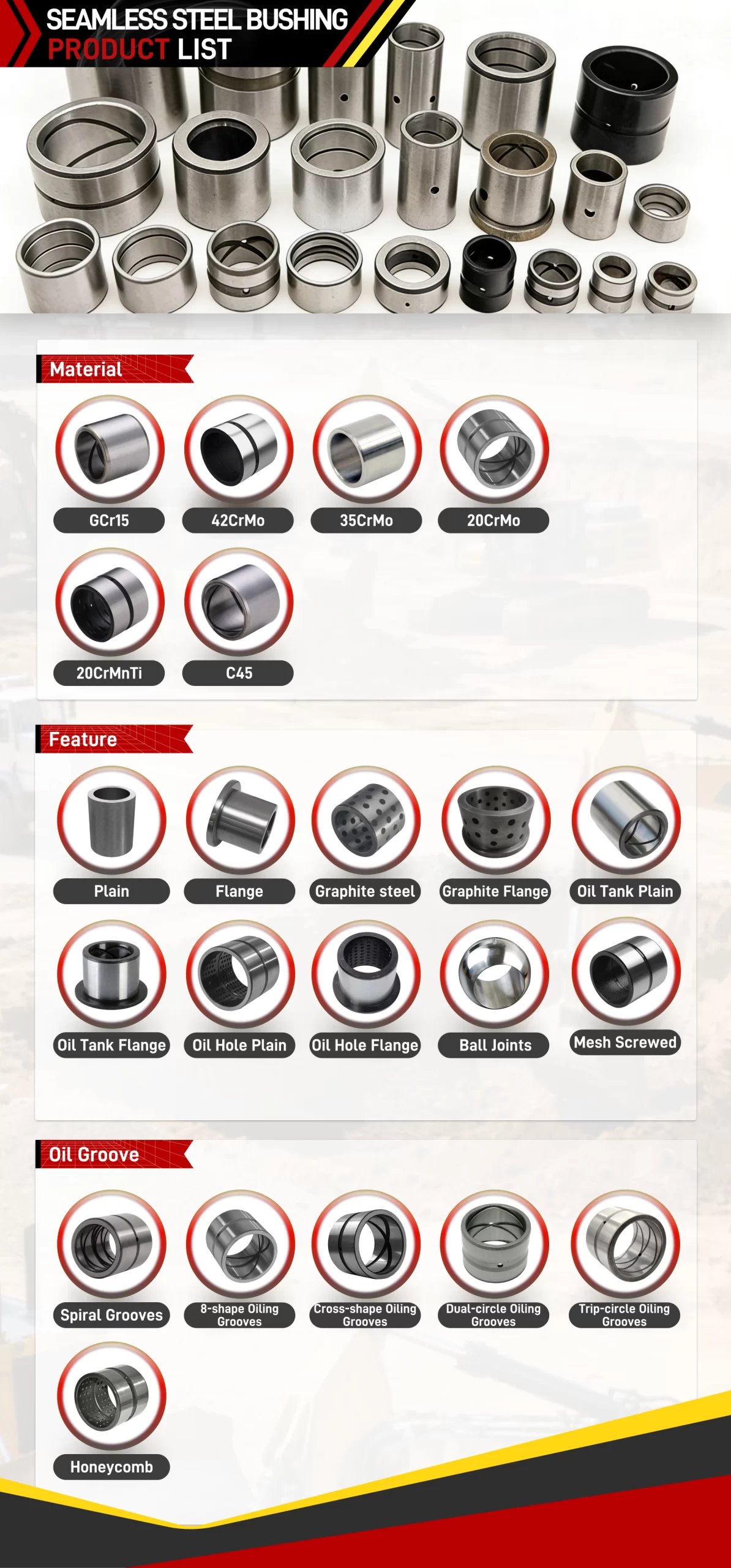
100000+ Types of Bushings – Contact Us for Details