
Recent Posts
Steel Bushings: Durable, High-Performance Bearing Solutions
For a major construction equipment manufacturer, switching to custom-hardened steel bushings resulted in a 40% reduction in unplanned downtime and extended service intervals by 300%.
In the world of heavy machinery and precision engineering, few components are as fundamental yet critical as the humble bushing. While many materials have their place, steel bushings stand apart as the undisputed champions of durability and strength. Imagine a component that can withstand the punishing loads of an excavator’s swing circle, resist the abrasive grit in mining operations, and still maintain precise tolerances in high-speed industrial applications.
This isn’t about replacing all bearings with steel—it’s about understanding where steel’s unique properties make it the only logical choice. From case-hardened surfaces that shrug off wear to innovative self-lubricating designs that eliminate maintenance headaches, modern steel bushings represent a sophisticated fusion of metallurgical science and practical engineering.
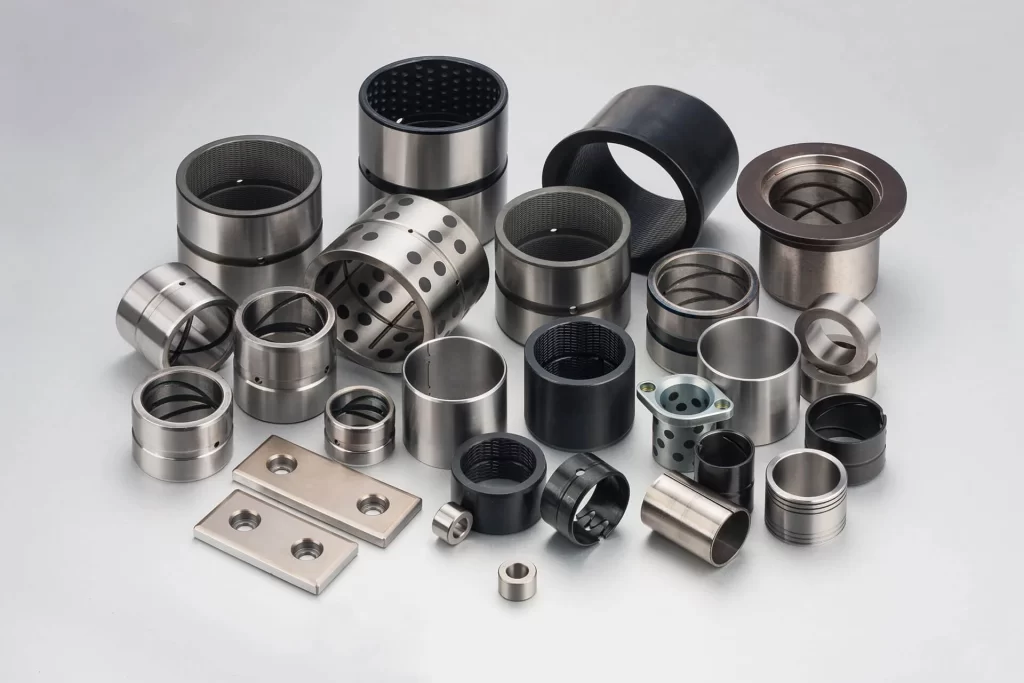
Table of Contents
1. The Steel Advantage: Why Material Matters
Let’s start with the obvious question: why steel? In an era of advanced polymers and composites, steel continues to dominate specific applications for reasons that go beyond mere tradition. The fundamental advantage lies in steel’s exceptional strength-to-weight ratio and unbeatable load-bearing capacity.
Unlike polymer-based alternatives that might deform under extreme pressure, properly engineered steel bushings maintain their structural integrity when supporting the multi-ton forces in construction equipment or the constant impacts in mining machinery. This isn’t just about hardness—it’s about resilience and fatigue resistance over millions of cycles that would cause other materials to fail prematurely.
The thermal properties of steel further cement its position in demanding applications. Steel efficiently conducts heat away from friction points, preventing the localized overheating that can lead to sudden failure. This characteristic proves invaluable in applications where heat buildup is inevitable, such as in hydraulic systems or high-speed rotational equipment.
Perhaps most importantly, steel offers unmatched versatility in customization. Through various hardening processes and surface treatments, engineers can tailor steel bushings to specific challenges—creating hardened surfaces that resist wear while maintaining tougher, more ductile cores that absorb shock and prevent catastrophic failure.
2. The Hard Truth About Hardening: Processes That Transform Performance
Not all steel bushings are created equal. Their performance hinges critically on the hardening processes employed, each creating distinct characteristics suited to particular challenges. Understanding these processes is key to specifying the right component for your application.
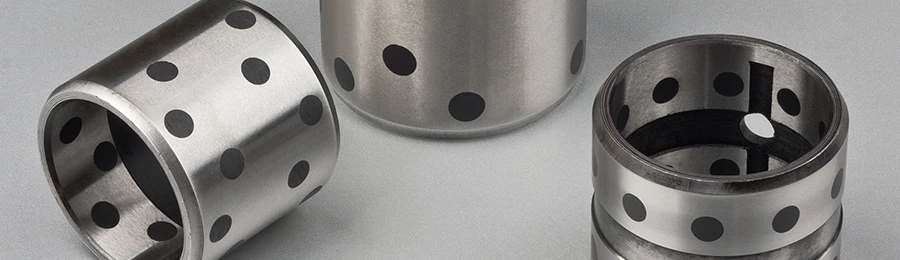
Case hardening, particularly carburizing, creates what might be called the “armored” bushing. This process infuses carbon into the steel’s surface layer, creating an exceptionally hard, wear-resistant exterior—often reaching 58-64 HRC—while preserving a softer, more ductile core. This combination proves ideal for applications experiencing both surface wear and structural stresses, like those in gearboxes or drivetrain components.
For applications demanding uniform hardness throughout, through hardening (quenching and tempering) transforms the entire component. This process is particularly valuable for bushings subjected to heavy, uniform loading where surface hardness alone wouldn’t prevent deformation. Mining equipment and heavy press machinery frequently utilize through-hardened bushings for their consistent performance under extreme conditions.
Induction hardening offers a middle path, localizing hardness precisely where it’s needed. By using electromagnetic induction to heat specific areas before quenching, manufacturers can create bushings with hardened wear surfaces while leaving other areas soft for machining or to maintain flexibility. This targeted approach optimizes both performance and manufacturability.
The choice of base material further refines these characteristics. Alloys like 42CrMo and 20CrMnTi offer different balances of hardness, toughness, and response to heat treatment, allowing engineers to fine-tune bushings for specific environmental and operational challenges.
3. Design Evolution: Beyond the Basic Cylinder
The classic cylindrical sleeve represents just the starting point for modern steel bushing design. Today’s engineers have developed specialized geometries that solve specific problems, turning simple components into sophisticated performance-enhancing elements.
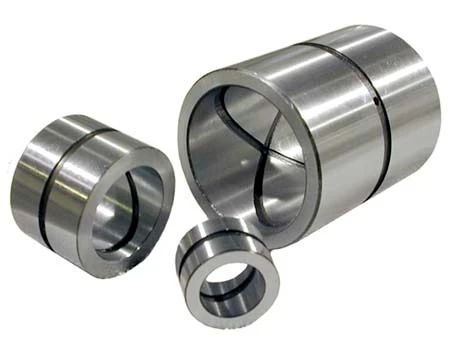
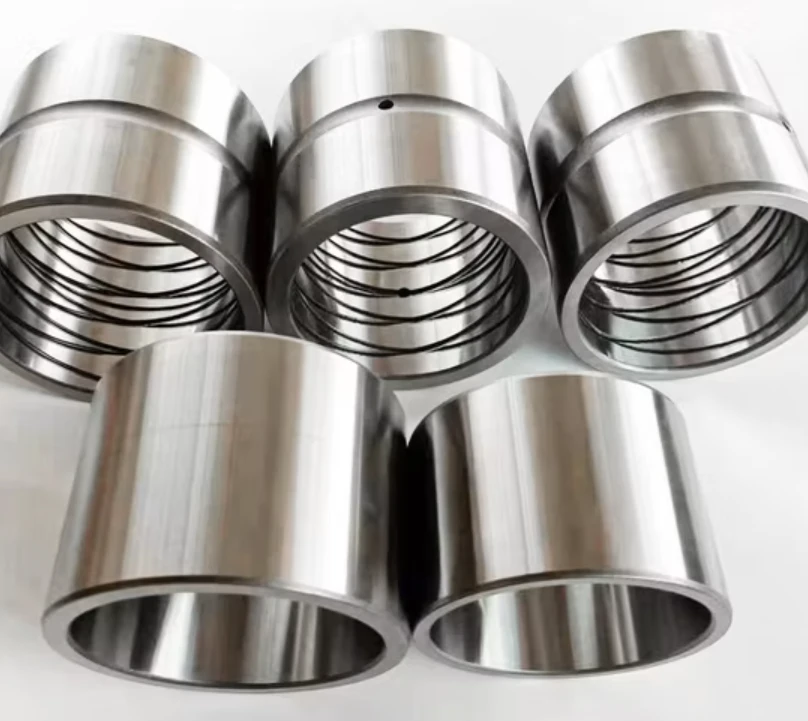
Grooved bushings represent a significant advancement in lubrication management. Whether featuring simple linear channels, helical spirals, or complex customized patterns, these grooves serve as distribution networks for lubricants. They ensure even coverage across the entire bearing surface, prevent dry spots that lead to accelerated wear, and can even act as reservoirs in intermittent lubrication systems. In earth-moving equipment where contamination is constant, specific groove designs can also help expel abrasive particles.
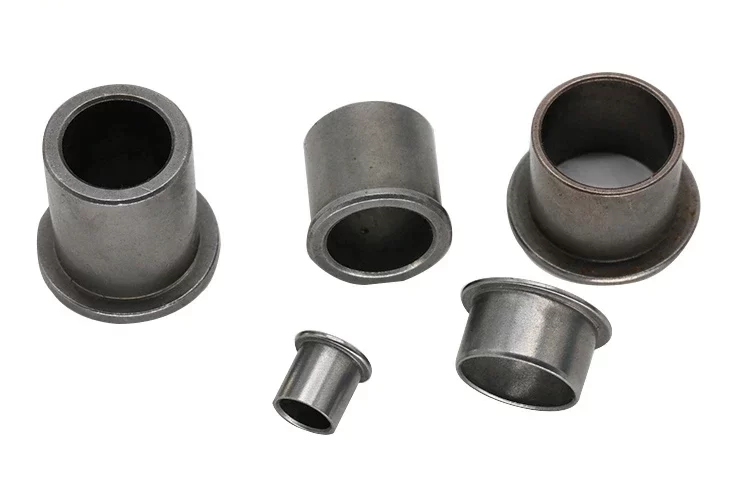
When axial loads join radial forces, flanged (collar) bushings provide the necessary restraint without requiring additional components. The integrated flange acts as a built-in thrust face, simplifying assembly and reducing part counts in complex machinery. For particularly challenging applications, flanged bushings can combine with groove patterns, creating multifunctional components that address multiple engineering challenges simultaneously.
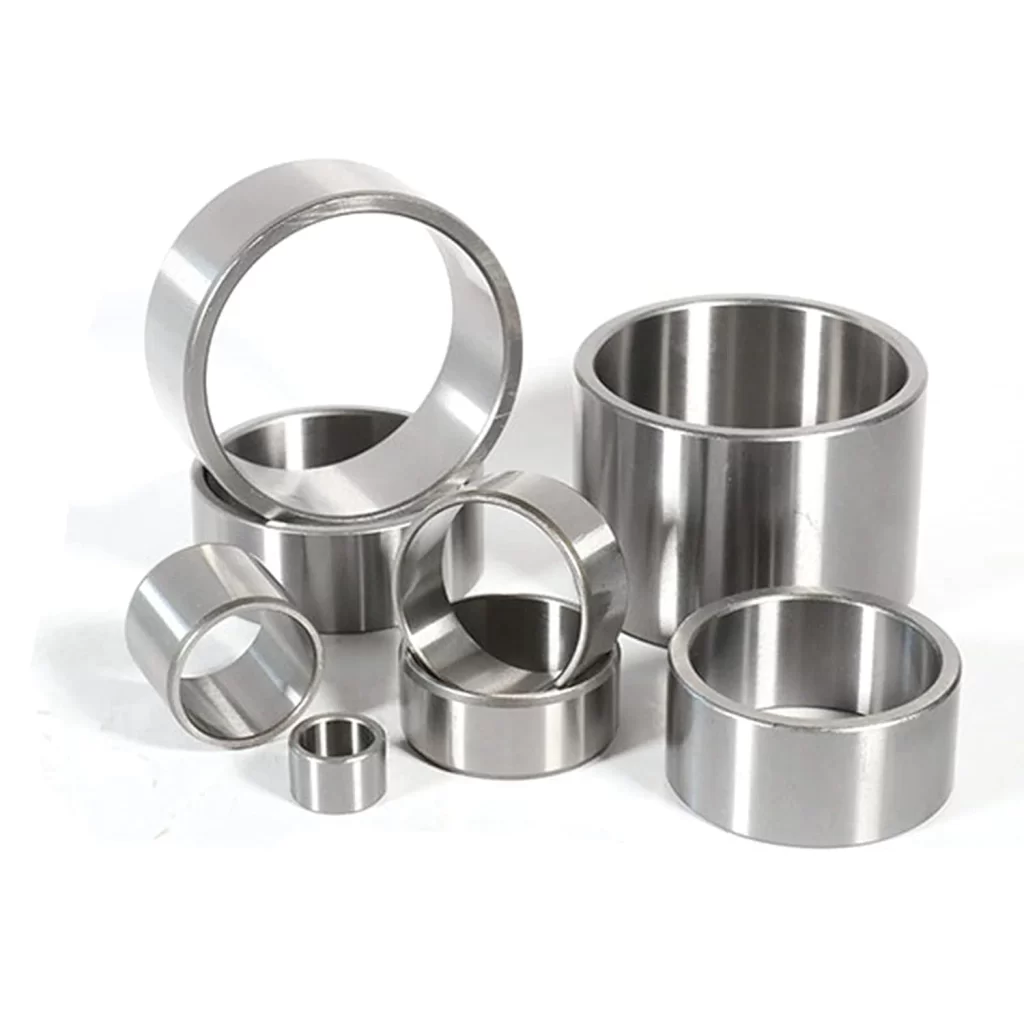
For maintenance and repair scenarios, oversized bushings offer economical solutions for worn equipment. With their externally softened surfaces for easy machining and standardized oversized dimensions, these “repair” or “Jolly” bushings extend equipment life without complete overhaul, saving both time and substantial cost in industrial settings.
Truly custom designs push boundaries further, with integrated lubrication channels, unconventional mounting features, or hybrid compositions that merge steel with other materials. These bespoke solutions address challenges standard components cannot, particularly in pioneering applications like renewable energy systems or advanced automation.
4. The Self-Lubricating Revolution: Steel That Maintains Itself
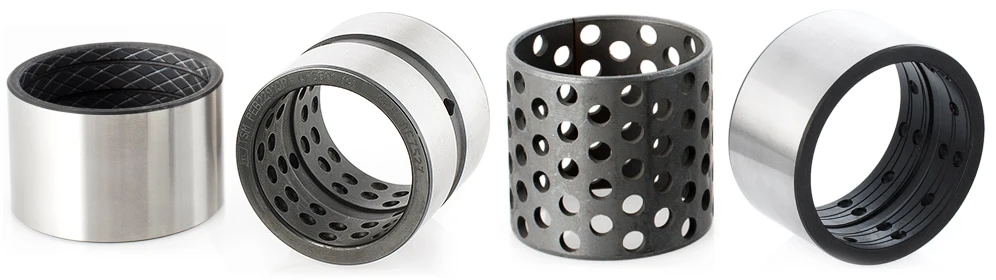
Perhaps the most significant advancement in steel bushing technology is the development of reliable self-lubricating systems. These innovative components eliminate dependency on external lubrication schedules, addressing one of the most persistent maintenance challenges in industrial operations.
Modern self-lubricating steel bushings typically employ a multi-layer composite structure. A sturdy steel backing provides structural strength and load capacity. Bonded to this is a porous sintered bronze interlayer—this metallic sponge serves as the reservoir for solid lubricants like PTFE, graphite, or molybdenum disulfide. During operation, friction-generated heat gently draws these lubricants to the surface, creating a consistent, replenishing film between moving parts.
The benefits extend beyond mere maintenance reduction. In contamination-sensitive environments like food processing or pharmaceutical manufacturing, these bushings eliminate any risk of lubricant leakage contaminating products. In remote or inaccessible installations—think offshore wind turbines or underground mining equipment—they eliminate the logistical challenges and costs of regular lubrication visits.
Applications experiencing oscillating or slow rotational movements particularly benefit from this technology. In such conditions, traditional fluid lubricants often fail to maintain a protective film, leading to metal-on-metal contact and rapid wear. Self-lubricating bushings ensure consistent performance regardless of motion patterns, making them ideal for hydraulic cylinder mounts, pivot points, and linkage arms.
5. Where Steel Bushings Dominate: Industry-Specific Applications
The true test of any component lies in its real-world performance. Steel bushings prove their worth daily across industries where failure is not an option and downtime costs thousands per hour.
In earth-moving and construction equipment, every joint—from excavator booms to loader linkages—relies on hardened steel bushings. Here, they withstand not just enormous static loads but impact shocks, vibration, and constant exposure to abrasive dirt and moisture. Specific groove patterns ensure grease reaches and protects these critical points despite the challenging environment.
The mining sector presents perhaps the harshest conditions, with extreme loads, particulate contamination, and often minimal maintenance access. Steel bushings in crushers, conveyors, and drilling apparatus are engineered to survive where other materials would quickly degrade, with special attention to sealing and lubrication systems that extend service life despite omnipresent abrasive particles.
Agricultural machinery operates in a different but equally demanding environment. Bushings in plows, harvesters, and tractors must resist the corrosive effects of fertilizers, variable weather conditions, and cyclical seasonal loads. Manufacturers often opt for case-hardened steels here, providing the surface durability needed for wear resistance while maintaining the core toughness to handle unexpected impacts from rocks or roots.
Even in more controlled settings like industrial automation and precision machinery, steel bushings play crucial roles. In high-speed packaging lines or robotic assembly arms, specially finished and lubricated steel bushings provide the exactitude, rigidity, and longevity needed for precision movements, often outlasting polymer alternatives that might deform or wear over time, affecting accuracy.
6. The Selection Blueprint: Matching Bushings to Your Challenge
Choosing the right steel bushing requires moving beyond catalog specifications to a deeper understanding of your application’s unique demands. This decision-making framework can guide you toward optimal performance and longevity.
Begin by quantifying the load characteristics—not just maximum weight but the nature of forces involved. Is the loading constant or intermittent? Are there shock loads or vibration? For predominantly radial loads with occasional shocks, a case-hardened bushing might be ideal. For heavy, constant bi-directional loads, a through-hardened design could be necessary. Don’t forget axial loads; if present, they immediately narrow choices to flanged designs.
Environmental factors dramatically influence material and design choices. In wet or chemically aggressive environments, corrosion-resistant alloys or specialized platings become essential. For dusty or sandy conditions, consider bushings with effective sealing mechanisms or self-lubricating designs that aren’t compromised by particulate ingress. Temperature extremes—both high and low—require careful consideration of how steel properties and lubricants behave at operational ranges.
Motion profiles are frequently overlooked yet critically important. Continuous rotation, oscillation, and linear movement each create different lubrication and wear patterns. Self-lubricating bushings excel in oscillating applications where maintaining a fluid lubricant film is challenging. High-speed rotation might demand specific groove designs or lubricant types to prevent overheating.
Finally, honestly assess your maintenance reality. Can you adhere to regular lubrication schedules? Is the component accessible? If maintenance access is difficult or schedules are unreliable, investing in self-lubricating technology from the start often proves more economical than addressing premature failures later.
7. Installation and Longevity: Maximizing Your Investment
Even the best-designed bushing can underperform if improperly installed or maintained. Adhering to a few key practices ensures you realize the full potential of your investment in quality steel bushings.
Precise installation begins long before the bushing reaches the shaft. Verify housing bore and shaft dimensions against specifications, ensuring they match the bushing’s tolerances (commonly H7/H8 for housing and f7/h8 for shafts). For press-fit bushings, use proper mandrels or plates to apply force evenly across the face, never hammering directly on the bushing edge, which can deform it or damage the delicate surface finish.
Lubrication, even for self-lubricating varieties during initial installation, is critical. For grease-lubricated types, completely fill all cavities and grooves during assembly. For oil systems, ensure proper flow to the bushing interface before startup. The first moments of operation establish wear patterns that will persist throughout the component’s life.
Implement a simple but consistent monitoring protocol. Regularly check for unusual noise, heat, or play. For critical applications, consider periodic measurement of internal diameter to track wear rates quantitatively. This data allows for predictive replacement, preventing unexpected failures. Pay special attention to lubricant condition in conventional systems; discolored or gritty grease indicates contamination and requires immediate attention.
When wear eventually occurs, remember that many steel bushings offer second-chance opportunities through re-lubrication or adjustment. Some flanged designs allow for taking up axial play. Oversized repair bushings can restore worn housings. Explore these options before assuming complete component replacement is necessary.
8. Future Perspectives: The Next Generation of Steel Bushings
The evolution of steel bushing technology continues, driven by material science advancements and increasingly demanding application requirements. Several emerging trends point toward the future of this fundamental component.
Smart bushings with embedded sensor technology represent one frontier. Imagine bushings that monitor their own temperature, wear, and load in real-time, communicating this data to maintenance systems. This enables truly predictive maintenance, replacing parts at optimal times before failure impacts operations but after maximizing service life. Early implementations in critical infrastructure and high-value equipment show promising results.
Material science is pushing boundaries with nanostructured steels and advanced surface coatings. These technologies aim to further reduce friction coefficients and increase hardness without compromising toughness. Some experimental coatings even offer adaptive lubrication properties, changing characteristics in response to temperature or load variations.
Environmental sustainability is increasingly influencing design and manufacturing. The development of lead-free and environmentally neutral formulations for adjacent materials (like sintered layers) responds to global regulatory trends. Simultaneously, manufacturing processes are becoming more efficient, reducing energy consumption and material waste in production.
Perhaps most intriguing is the growing convergence with additive manufacturing (3D printing). While currently limited for mass production of steel bushings, 3D printing allows for unprecedented design complexity in prototypes or low-volume specialty parts. Integrated cooling channels, optimized lattice structures for weight reduction, or customized groove patterns impossible to machine traditionally are now within reach for specific applications.
9. Why MYWAY Should Be Your Steel Bushing Partner
Navigating the complexities of steel bushing selection and procurement highlights a crucial truth: component quality is inseparable from manufacturer expertise. At MYWAY, we’ve built our reputation not just on supplying bushings, but on solving the unique friction and wear challenges our clients face across industries.
Our approach begins with collaborative engineering. Before quoting, we invest time understanding your application’s specific loads, motions, environment, and constraints. This allows us to recommend not just a standard part, but often a customized or optimized solution—whether that’s a special groove pattern for better lubrication in dusty conditions, a tailored hardness profile for mixed load scenarios, or a cost-effective alternative material that meets your performance needs.
Manufacturing integrity forms the foundation of our process. We control quality from raw material certification—offering grades like GCr15, 42CrMo, and 20CrMnTi—through precise heat treatment and finishing. Our proprietary processes ensure consistent case depth in hardened bushings and perfect bonding in our self-lubricating composites, eliminating the delamination issues that plague inferior products.
We recognize that global industries operate on different scales and timelines. That’s why we maintain flexibility in our operations, supporting everything from prototype development for new machinery to high-volume production runs for OEM manufacturers. Our inventory includes commonly requested standard sizes, while our engineering team stands ready to produce fully custom dimensions, special grooves, or unique configurations to match your exact drawings.
Ready to experience the MYWAY difference? Stop compromising with off-the-shelf solutions that almost fit your needs. Contact our technical team today for a consultation. Share your application challenges or specifications, and we’ll provide detailed recommendations and a competitive quote tailored to your requirements.
Frequently Asked Questions
What’s the difference between case-hardened and through-hardened steel bushings?
Case hardening (like carburizing) creates a hard, wear-resistant surface layer over a tougher, more ductile core—ideal for applications with both surface wear and impact loads. Through hardening (quenching and tempering) hardens the entire component uniformly, better suited for applications with heavy, consistent pressure throughout the material.
Can steel bushings operate without any lubrication?
While some specially designed self-lubricating steel bushings can operate with minimal or no external lubrication, most traditional steel bushings require lubrication to prevent rapid wear and overheating. The choice depends on the specific bushing design, material composite, and application conditions.
How do I choose between grease and oil lubrication for steel bushings?
Grease is better for applications with slow speeds, intermittent operation, or where sealing is challenging, as it stays in place. Oil is superior for high-speed applications, as it creates a thinner film with less friction and can carry away heat more effectively. Some systems use grease for initial installation and oil for continuous operation.
Are steel bushings suitable for corrosive environments like marine applications?
Yes, but material selection is crucial. Standard carbon steel bushings will corrode quickly. For corrosive environments, specify bushings made from stainless steels (like 316 grade) or carbon steels with appropriate corrosion-resistant platings or coatings.
What are the typical tolerance standards for steel bushings?
A common standard for press-fit steel bushings is u6 tolerance for the outer diameter (ensuring a tight fit in the housing) and C8 or similar for the inner diameter (providing appropriate clearance for the shaft). These are designed to work with H7/H8 housing bores and f7/h8 shaft tolerances, but always consult the manufacturer’s specifications for your application.
100000+ Types of Bushings – Contact Us for Details