
Recent Posts
Surface Finishes for Slide Bearing Plain Bushings: Achieving Optimal Performance and Longevity
Introduction: Why Surface Finish Deserves Your Attention
Let’s be honest—when you’re designing a mechanical system, the humble bushing doesn’t always get the spotlight. But here’s the thing: the difference between a machine that runs smoothly for years and one that fails prematurely often comes down to what’s happening at the microscopic level. Specifically, the surface finish of your slide bearing plain bushings.
Think of surface finish as the handshake between your bushing and the shaft. Too rough, and you’ve got an abrasive file wearing down your components. Too smooth, and you’ll struggle to retain lubrication, leading to adhesion and that annoying stick-slip phenomenon that makes precision motion impossible .
In this guide, we’re going to walk through everything you need to know about surface finishes for plain bushings—from the basic terminology to advanced coating technologies. And along the way, we’ll show you how MYWAY delivers surface solutions that actually perform in the real world.
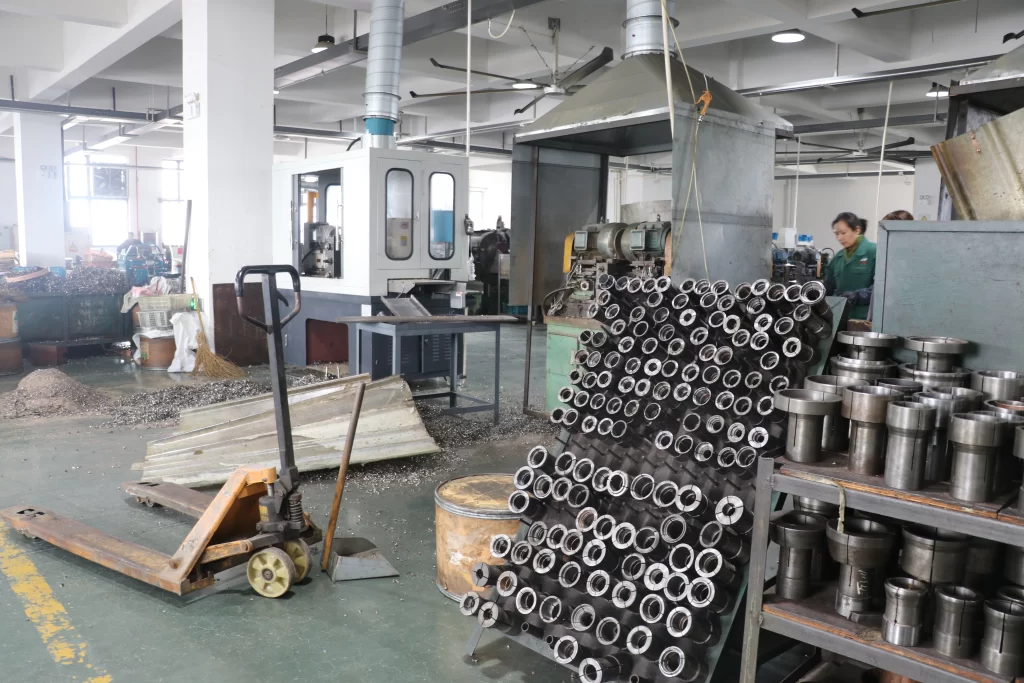
Table of Contents
1. What Exactly Is Surface Finish? Breaking Down the Basics
When engineers talk about surface finish, they’re actually referring to three distinct characteristics:
Surface Roughness
This is the one everyone focuses on—the fine irregularities left by manufacturing processes like machining or grinding. It’s quantified by height deviations across the surface, with lower numbers indicating smoother finishes . Think of it as the “texture” you’d feel if you ran your fingernail across the surface.
Waviness
Waviness is the broader pattern of surface variation, often caused by machine vibration, heat treatment distortion, or material stress. It’s like the rolling hills compared to the tiny pebbles of roughness.
Lay
This describes the directionality of the surface pattern. Is it perpendicular to motion? Parallel? Random? The lay直接影响 how lubricant flows and how surfaces interact during movement.
Understanding all three is crucial because they work together to determine how your bushing will perform under real operating conditions.
2. Why Surface Roughness Can Make or Break Your Application
Here’s where things get interesting. The relationship between bushing surface roughness and performance isn’t linear—it’s a Goldilocks scenario where you need to get it just right.
When Surfaces Are Too Smooth
Counterintuitive as it sounds, a mirror-polished surface isn’t always ideal. If the surface is excessively smooth, it may not retain sufficient lubrication. The lubricant gets squeezed out, leading to increased friction from adhesion. This can trigger stick-slip behavior—that jerky, unstable motion that wreaks havoc on precision applications and accelerates wear on both the bushing and shaft .
When Surfaces Are Too Rough
On the flip side, a rough surface acts like a file, aggressively abrading the softer bushing material. This generates heat, increases friction, and dramatically shortens the lifespan of your bearing system. It’s essentially running sandpaper against metal.
The Sweet Spot: Recommended Roughness Values
So what numbers should you actually target? Based on industry research and practical experience, here are the guidelines :
| Application Type | Recommended Roughness (RMS) | Recommended Roughness (Ra) |
|---|---|---|
| Oscillating/Pivoting | 16 – 64 RMS | 0.8 – 1.6 µm |
| Linear Motion | 8 – 16 RMS | 1.6 – 3.2 µm |
For oscillating or pivoting applications, the slightly rougher range (16-64 RMS) actually helps with material transfer during the break-in period. This transfer optimizes the running surface and stabilizes wear rates over time.
For linear applications, you’ll want the smoother end (8-16 RMS) to minimize friction and wear from continuous sliding motion.
As a general rule of thumb, smaller bearings typically perform well with Ra values around 0.8 to 1.6 micrometers, while larger bearings can tolerate 1.6 to 3.2 micrometers .
3. Measuring Surface Roughness: From RA to RZ
If you’re specifying bushings, you need to speak the language of surface measurement. Here are the key metrics you’ll encounter:
RA (Average Surface Roughness)
This is the most common metric—the arithmetic average of all surface height deviations from the centerline. It’s a solid general indicator of surface texture .
RZ (Average Maximum Height)
RZ averages the five highest peaks and five lowest valleys over a sampling length, giving you a more detailed picture of surface extremes .
RMAX (Peak to Valley)
This measures the single largest peak-to-valley height in the assessment length—useful for identifying significant defects like scratches or pits .
How It’s Measured
Modern measurement techniques fall into three categories :
Contact Methods: Stylus probes physically trace the surface, providing direct mechanical measurement
Non-Contact Methods: Optical, laser, or ultrasonic sensors measure without touching, avoiding potential damage
Comparison Methods: Visual or tactile comparison against known roughness standards
Advanced manufacturing facilities like MYWAY use precision profilometers and coordinate measuring machines to verify surface characteristics, ensuring every bushing meets specified requirements .
4. Surface Coating Technologies: Taking Performance to the Next Level
While base material and machining determine initial surface characteristics, surface coatings can transform bushing performance entirely. Think of coatings as giving your bushing superpowers—reducing friction, preventing wear, resisting corrosion, and enabling self-lubrication.
Why Coat a Bushing Surface?
The functional benefits are substantial :
Drastic Friction Reduction: Specialized coatings like PTFE create ultra-low friction surfaces
Enhanced Wear Resistance: Harder coatings protect softer substrates from abrasion
Corrosion Protection: Coatings act as barriers against moisture and chemicals
Self-Lubrication: Many coatings eliminate the need for external grease or oil
Improved Performance Under Marginal Lubrication: Coatings provide a safety layer during start-up or if lubrication fails
Common Coating Types Compared
Let’s break down the main coating families and when to use them :
| Coating Type | Friction Coefficient | Temperature Range | Best For |
|---|---|---|---|
| PTFE-Based | 0.02 – 0.10 | -200°C to 280°C | Low-friction, self-lubricating applications |
| Graphite-Embedded Bronze | 0.05 – 0.15 | Up to 300°C | High-load, high-temperature environments |
| Molybdenum Disulfide (MoS₂) | 0.05 – 0.20 | Up to 350°C | Extreme pressure, vacuum conditions |
| PEEK (Polyetheretherketone) | 0.15 – 0.25 | Up to 250°C | High-strength, chemical-resistant applications |
| Thermoplastic Polymers | 0.15 – 0.25 | Up to 100°C | Light-duty, corrosion-resistant uses |
PTFE Coatings: The Gold Standard for Low Friction
PTFE (polytetrafluoroethylene) is legendary for its low friction properties. When applied to bushings, it creates a surface where the coefficient of friction can drop as low as 0.02—that’s almost friction-free .
During operation, a thin transfer film of PTFE forms on the mating shaft, resulting in PTFE-on-PTFE sliding that’s incredibly smooth. This makes PTFE-coated bushings ideal for:
Food processing equipment where lubrication contamination is unacceptable
Medical devices requiring clean, maintenance-free operation
Applications with oscillating motion where grease would squeeze out
The downside? Pure PTFE is relatively soft, so it’s often combined with fillers or used as part of a composite structure for better wear resistance .
Graphite-Embedded Bronze: The Heavy-Duty Workhorse
For applications involving high loads, elevated temperatures, or harsh environments, graphite-embedded bronze bushings are hard to beat. The bronze matrix provides structural strength and thermal conductivity, while the graphite plugs deliver continuous lubrication .
Here’s the clever part: when the shaft rotates, frictional heat causes the graphite to expand and spread across the surface, forming a lubricating film. This self-renewing mechanism means these bushings can operate maintenance-free for years, even under extreme conditions .
Temperature capability up to 300°C and load capacities reaching 250 N/mm² make these the go-to choice for heavy machinery, mining equipment, and steel mills .
Multi-Layer Composite Solutions
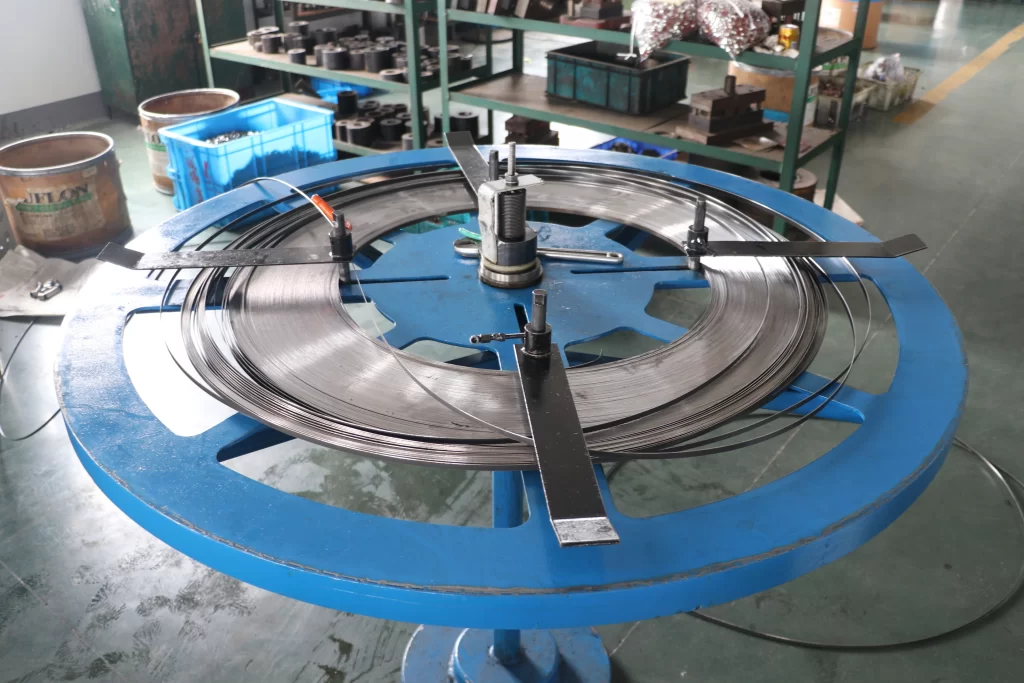
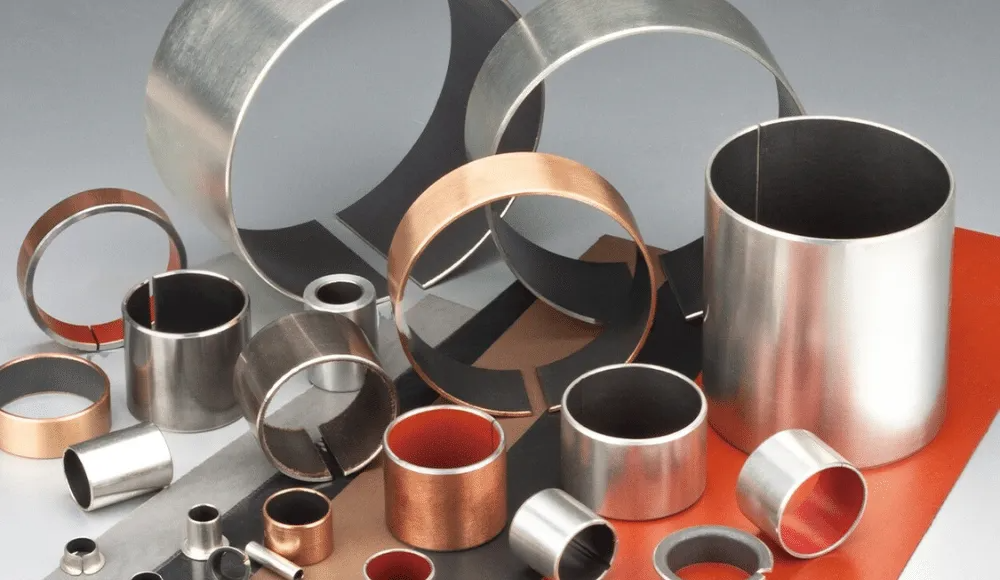
Modern bushing design often combines multiple materials in sophisticated layer structures. A typical high-performance composite might include :
Steel backing: Provides structural strength and press-fit retention
Sintered bronze layer: Creates a porous matrix for mechanical interlocking
PEEK transition layer: Ensures strong adhesion between materials
PTFE sliding layer: Delivers the low-friction running surface
This layered approach lets engineers optimize for multiple requirements simultaneously—strength, adhesion, and tribological performance—in a single component .
5. Matching Surface Finish to Application Requirements
The “right” surface finish depends entirely on what you’re asking the bushing to do. Here’s how to think through the decision:
Load Considerations
High static loads require sufficient surface smoothness to prevent stress concentrations, but also need enough “tooth” to retain lubricant film. Graphite-embedded bronze with controlled roughness (Ra 1.6–3.2 μm) often works well here .
Dynamic loads demand smoother finishes (Ra 0.8–1.6 μm) to minimize friction-generated heat and wear .
Speed Factors
High-speed rotation benefits from smoother surfaces that reduce shear stress in the lubricant. PTFE-coated bushings with Ra values below 0.8 μm can run at impressive speeds with minimal heat buildup.
Oscillating or slow-speed motion actually prefers slightly rougher surfaces (16-64 RMS) that promote transfer film formation and stable break-in .
Environmental Conditions
Corrosive environments call for either inherently corrosion-resistant materials (like specific bronze alloys or stainless steel) or protective coatings. PTFE and PEEK offer excellent chemical resistance, while epoxy or ceramic coatings can protect metal substrates .
Wet or submerged operation is actually fine for many self-lubricating materials—some are specifically designed to use water as a supplementary coolant and lubricant without degrading .
High-temperature applications (above 150°C) typically require graphite-based solutions since standard greases oxidize and fail .
Contamination Concerns
In dirty environments, self-lubricating bushings have a huge advantage over greased alternatives. Grease traps abrasive particles like flypaper, creating a grinding paste that accelerates wear. Dry-running self-lubricating surfaces don’t have this problem .
6. MYWAY: Precision Surface Engineering for Demanding Applications
At MYWAY, we’ve spent years mastering the relationship between surface finish and bushing performance. Our approach combines advanced manufacturing technology with deep materials expertise to deliver components that simply work better, longer.
Our Manufacturing Philosophy
We don’t believe in one-size-fits-all solutions. Every bushing we produce starts with a thorough understanding of your application requirements—load, speed, environment, and expected service life.
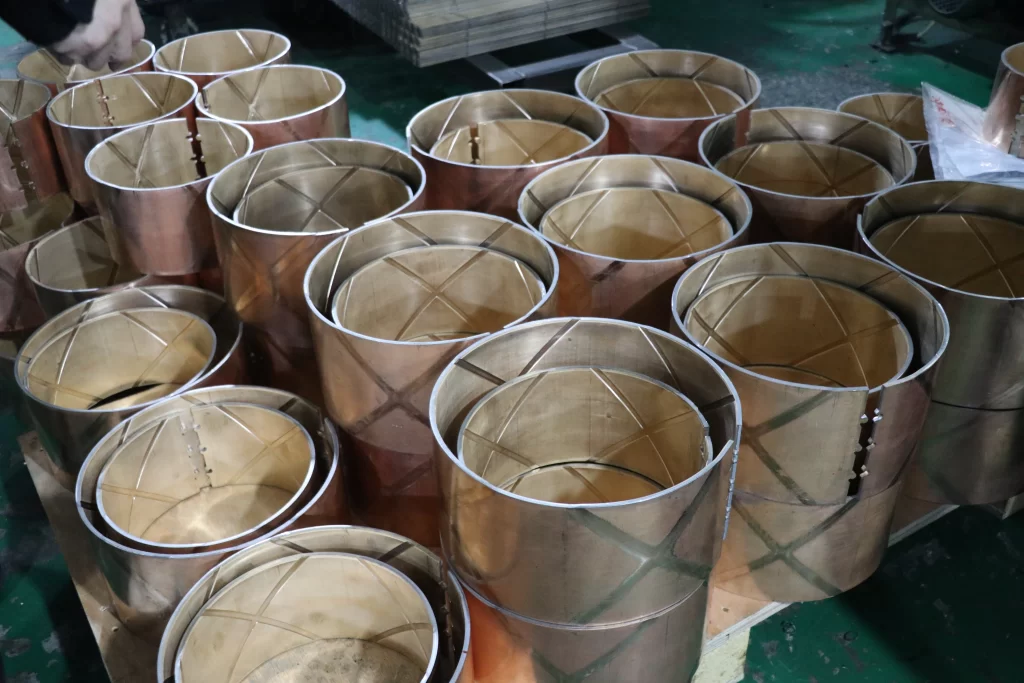
Our CNC machining capabilities enable us to achieve precise surface finishes with exceptional dimensional accuracy. Using multi-axis CNC mills and lathes, we maintain tight tolerances (±0.01″) while optimizing surface characteristics for your specific needs .
For bronze components, we leverage alloys like C954 Aluminum Bronze for heavy-duty applications and C932 Bearing Bronze where superior self-lubrication matters. Each material is selected to align with your operational demands .
Surface Coating Expertise
We offer a comprehensive range of surface treatment options:
PTFE-based coatings for ultra-low friction applications
Graphite-embedded solutions for high-load, high-temperature environments
Multi-layer composites combining strength with tribological performance
Custom formulations for specialized requirements
Our coatings undergo rigorous testing to ensure adhesion, thickness uniformity, and consistent performance. We know that a coating is only as good as its bond to the substrate, so we carefully control surface preparation and application parameters .
Quality Assurance You Can Trust
Every MYWAY bushing is inspected using coordinate measuring machines and surface roughness testers, ensuring compliance with international standards including ISO 3547, DIN 1494, and ASTM specifications .
Our ISO9001 certification isn’t just a plaque on the wall—it’s the framework for everything we do, from material selection through final packaging.
Real-World Performance
The proof is in the performance. MYWAY bushings are trusted across industries :
Heavy Machinery: Excavator track rollers, pivot joints, hydraulic cylinders
Automotive: Engine components, transmission parts, suspension systems
Marine: Propeller shafts, rudder bearings, seawater pump components
Aerospace: Landing gear bearings, hydraulic manifold blocks
Industrial Equipment: Conveyor systems, packaging machinery, material handling
7. Practical Design Considerations
Shaft Hardness Matters
For optimal performance with self-lubricating bushings, shaft hardness should typically be HRC 50 or higher. This prevents scoring and ensures the transfer film forms correctly on the shaft surface rather than just wearing away .
Installation Best Practices
How to install self-lubricating bushings properly:
Always use a mounting mandrel and hydraulic press
Avoid hammer blows directly to the bushing face (this can crack coatings or distort circularity)
Ensure proper housing bore preparation and dimensional accuracy
Verify concentricity after installation
When to Replace
Watch for these indicators that it’s time for replacement :
Increased operational noise
Measurable increase in radial play (typically 0.2–0.5mm beyond design tolerance)
Significant increase in friction torque during operation
Visible wear through the lubricating layer
Bronze vs. Steel: Making the Right Choice
Both materials have their place :
Choose bronze bushings when:
Self-lubricating properties are important
Corrosion resistance matters
You want maintenance-free operation
Moderate loads with excellent wear characteristics
Choose steel bushings when:
Budget is constrained
Extreme hardness is required (hardened steel up to HRC 55)
High-load applications (pressure ≥30MPa) demand maximum strength
Short-term, high-precision requirements need quick delivery
At MYWAY, we offer both—and we’re happy to help you navigate the trade-offs based on your specific application.
8. Conclusion: The Surface Is Just the Beginning
We’ve covered a lot of ground—from the basics of surface roughness measurement to advanced coating technologies and application-specific recommendations. If there’s one takeaway, it’s this: surface finish isn’t just a specification on a drawing; it’s a performance parameter that deserves careful consideration.
The right surface finish, combined with appropriate materials and coatings, can:
Extend bushing life by years
Reduce maintenance costs dramatically
Improve energy efficiency through lower friction
Enable operation in environments where lubricated systems fail
At MYWAY, we’re passionate about helping engineers get these details right. Whether you need standard bushings off the shelf or custom-engineered solutions for demanding applications, we’re here to help.
Frequently Asked Questions
1. What’s the difference between RA and RZ in surface finish measurement?
RA (average roughness) is the arithmetic average of all surface height deviations—it gives you a good general sense of surface texture. RZ (average maximum height) averages the five highest peaks and five lowest valleys, providing more detail about surface extremes. For critical applications, checking both parameters gives a complete picture .
2. Can self-lubricating bushings operate in submerged conditions?
Absolutely. Many self-lubricating materials—particularly specific polymers and corrosion-resistant bronze alloys—are designed to use water as a supplementary coolant and lubricant without degrading. In fact, some applications actually benefit from the cooling effect of water immersion .
3. What’s the maximum load capacity for self-lubricating bushings?
It depends entirely on the material. Graphite-plugged bronze can handle static loads up to 250 N/mm², making it suitable for extreme heavy-duty applications. Composite PTFE-lined bushes are typically rated for around 140 N/mm², depending on the backing material. Always check manufacturer P-V (pressure-velocity) limits for your specific operating conditions .
4. How do I choose between self-lubricating and greased bushings?
Consider your maintenance capabilities, contamination risk, and operating environment. Self-lubricating bushings excel where maintenance access is difficult, where grease contamination would be problematic (food processing, clean rooms), or in dirty environments where grease would trap abrasives. Greased bushings can be more cost-effective upfront but require ongoing maintenance and have higher lifetime costs .
5. Can MYWAY produce custom-sized bushings with specific surface finishes?
Yes—customization is one of our core strengths. We can tailor dimensions, material grades, lubrication features (graphite plugs, oil grooves), and surface treatments to your exact requirements. Our engineering team works with you to optimize the design for your application .
6. What surface finish do you recommend for high-temperature applications?
For sustained temperatures above 150°C, graphite-embedded bronze is typically your best choice. Standard greases oxidize and fail at high temperatures, but graphite’s lubricating properties actually improve as temperature increases. The bronze matrix provides structural integrity and helps dissipate heat .
7. How does CNC machining improve bushing surface finish?
Precision CNC machining enables controlled material removal with optimized tool paths, specialized tool coatings (like TiAlN), and adaptive machining strategies. This results in consistent surface finishes with micron-level precision, eliminating the variations that plague less controlled manufacturing processes .
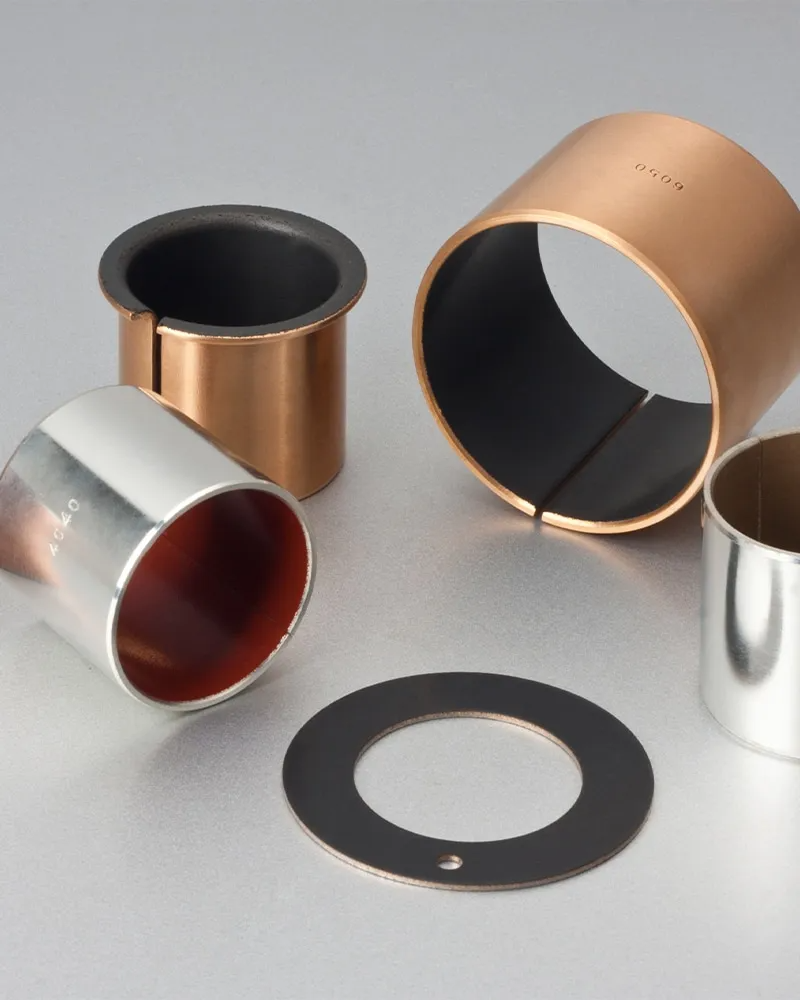
100000+ Types of Bushings – Contact Us for Details