
Recent Posts
What is the Difference Between Bushing & Bearing?
Introduction: Why the Right Choice Matters
In the world of mechanical engineering, few choices are as fundamental as selecting the right component to manage motion and reduce friction between moving parts. While the terms “bushing” and “bearing” are often used interchangeably in casual conversation, confusing them in a design specification can lead to catastrophic failures, increased maintenance costs, and compromised system performance. This confusion is not just academic—it sits at the heart of efficiency, durability, and cost-effectiveness in everything from automotive suspensions to heavy industrial machinery.
The core distinction is elegantly simple yet profoundly important in application: a bushing facilitates motion through sliding contact, while a bearing uses rolling elements to achieve movement. Understanding this difference is the first step toward optimizing your mechanical systems. This guide will not only demystify these critical components but also introduce you to how MYWAY Bushings are engineered to solve modern industry’s most pressing challenges, offering a smarter path to reliability and performance.
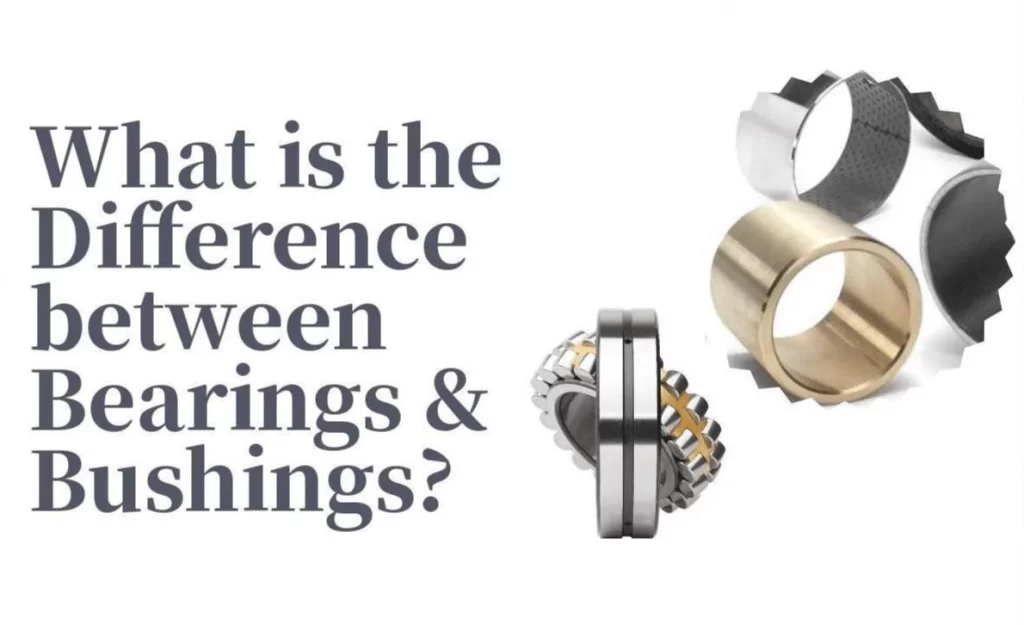
Table of Contents
1. The Fundamental Divide: Sliding vs. Rolling
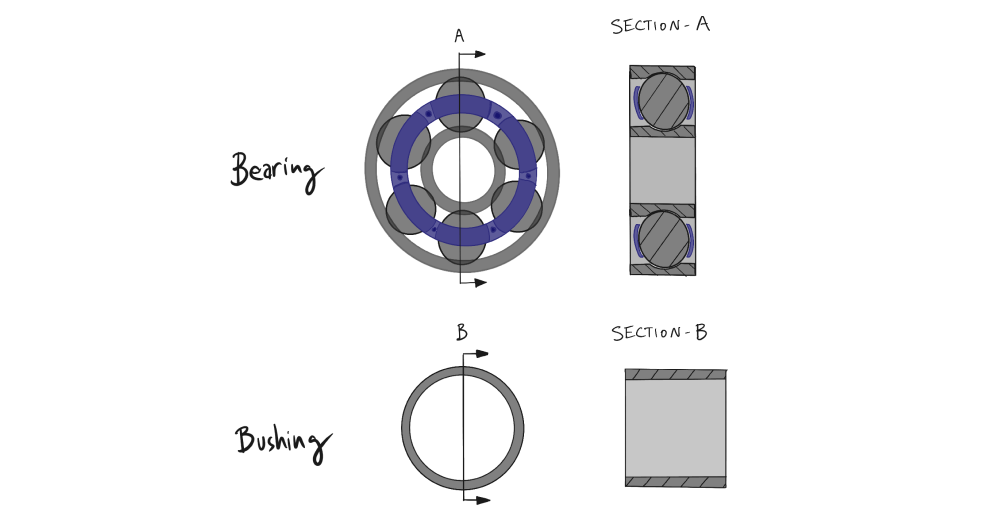
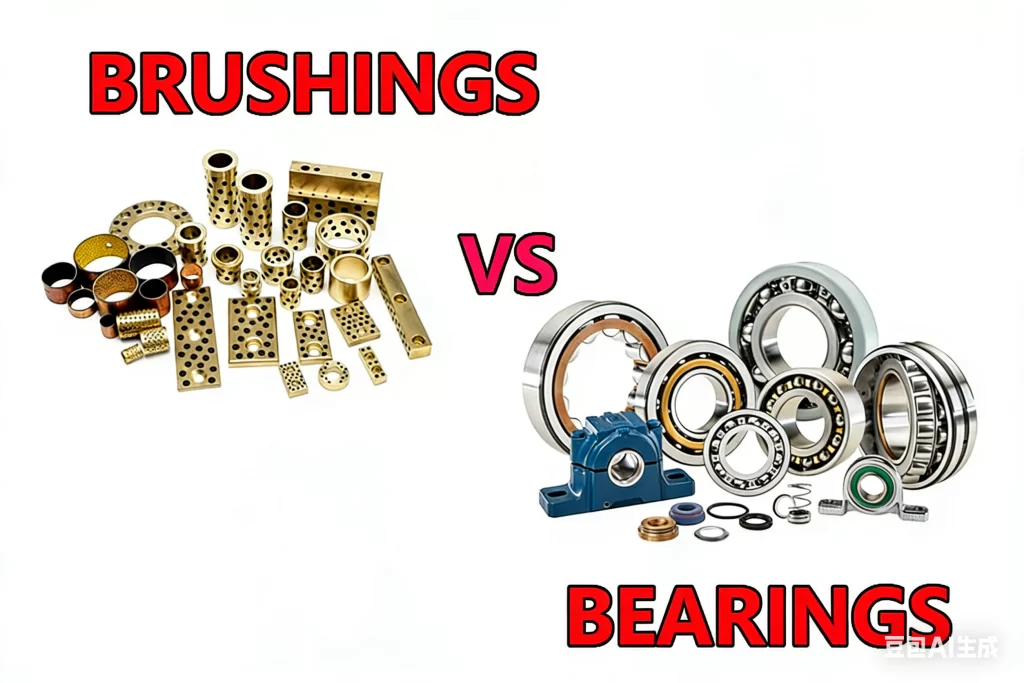
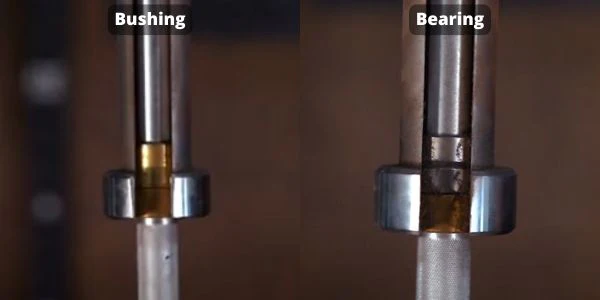
At their most basic, both components serve the same primary function: to support moving parts and reduce damaging friction. However, their methods are diametrically opposed, leading to distinct performance profiles.
2. What is a Bushing? The Power of Sliding Contact
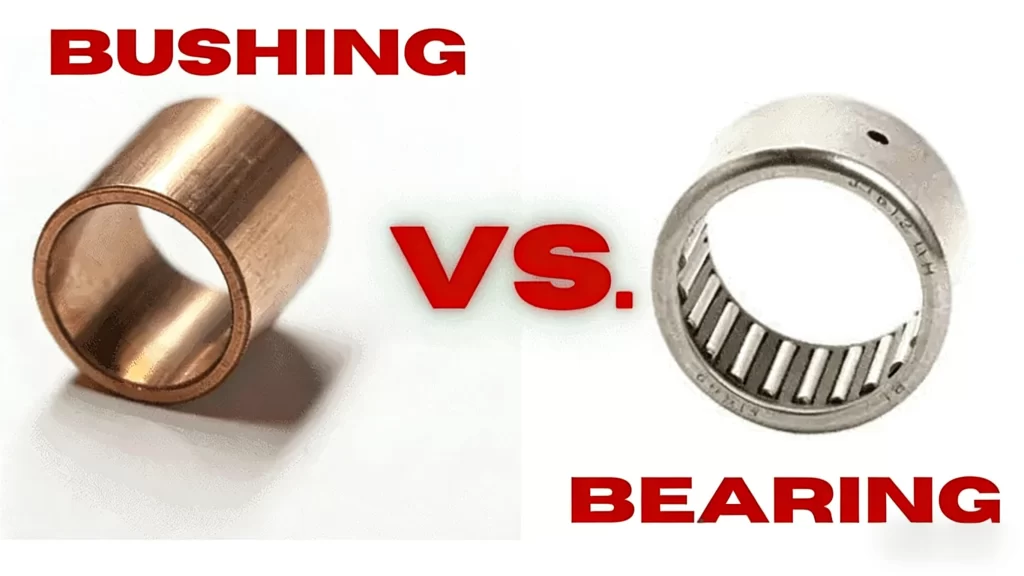
A bushing (also known as a plain bearing, sleeve bearing, or journal bearing) is typically a single-piece, cylindrical component. It is designed to be installed into a housing, creating a smooth surface for a shaft to rotate or slide against. Motion is achieved through sliding contact between the shaft and the bushing’s inner surface.
Key Principle: Sliding friction.
Typical Construction: Often a single piece, though it can be composite (e.g., a steel backing with a PTFE or bronze layer).
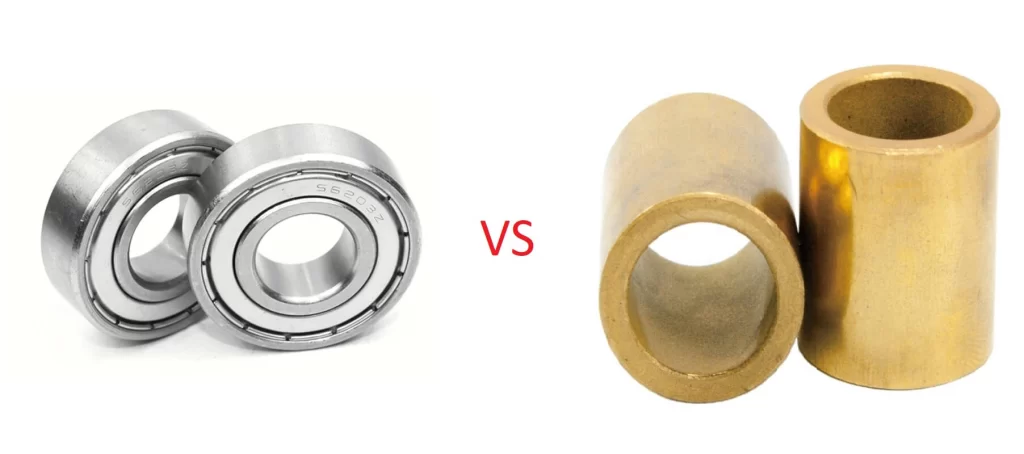
Common Materials: Bronze, brass, plastic polymers (like Nylon or POM), rubber, or self-lubricating composites infused with PTFE or graphite.
3. What is a Bearing? The Efficiency of Rolling Motion
A bearing is generally a more complex assembly. It employs rolling elements—such as balls, cylindrical rollers, tapered rollers, or needles—that are contained between inner and outer rings (races). These elements roll along the raceways, minimizing the contact area and thus the friction.
Key Principle: Rolling friction.
Typical Construction: Multi-part assembly (inner race, outer race, rolling elements, and a cage/retainer).
Common Materials: High-hardness steel, ceramic, or advanced alloys.
4. Head-to-Head: Bushing vs. Bearing in Key Applications
The choice between a bushing and a bearing is rarely arbitrary. It is dictated by the specific demands of the application. The table below summarizes the critical differences that guide this decision.
| Feature | Bushing (Sliding Contact) | Bearing (Rolling Contact) |
|---|---|---|
| Friction & Motion | Higher friction; Sliding motion. | Lower friction; Rolling motion. |
| Load Capacity | Excellent for high static/ shock loads. Distributes load over a larger surface area. | Excellent for high dynamic/radial loads. Better for high-speed rotation. |
| Speed & Precision | Best for low to moderate speeds. Less precise, tolerates some misalignment. | Ideal for high speeds and high precision. Requires good alignment. |
| Maintenance | Often low or maintenance-free (especially self-lubricating types). May require occasional lubrication. | Often requires regular lubrication and sealing to protect rolling elements from contamination. |
| Noise & Damping | Generally quieter; excellent at damping vibration and absorbing shock. | Can be noisier; less effective at damping vibration. |
| Space & Cost | Compact, simple design. Generally lower initial cost and easy to replace. | More complex design, often requiring more radial space. Higher initial cost. |
| Typical Applications | Linkages, suspension arms, pivot points, hinges, low-speed gears, agricultural equipment, construction machinery. | Electric motors, gearboxes, wheel hubs, machine tool spindles, high-speed conveyors, precision equipment. |
5. The MYWAY Solution: Engineered for Today's Challenges
Understanding this technical landscape is only half the battle. The real-world challenges faced by industries from automotive to robotics demand more than just an off-the-shelf component. They require engineered solutions. This is where MYWAY Bushings redefine what a bushing can be.
Addressing Modern Industry Pain Points
The Demand for Maintenance-Free Operation: In today’s automated and often inaccessible systems, the need for components that last is paramount. Traditional bearings with regular lubrication schedules are a liability. MYWAY’s advanced self-lubricating composite bushings are impregnated with lubricants like PTFE or graphite, creating a consistent, low-friction film that lasts the lifetime of the component.
Handling Contamination and Harsh Environments: Rolling bearings are vulnerable to failure from dust, dirt, and moisture. MYWAY Bushings, with their solid, often polymer-based or sealed composite construction, are inherently more resistant to contamination and can operate reliably in dirty, wet, or chemically aggressive environments where standard bearings would fail.
Cost and Complexity Reduction: Simplifying design and assembly lowers costs. A single MYWAY bushing can often replace a more expensive bearing assembly, eliminating the need for complex housings, seals, and lubrication systems. Their ease of installation translates directly to lower assembly time and cost.
6. The MYWAY Bushing Portfolio
MYWAY doesn’t offer a one-size-fits-all product. We provide a portfolio of bushing solutions tailored to specific challenges:
MYWAY PTFE-Composite Bushings: Featuring a steel backing for strength and a PTFE-based sintered bronze interlayer, these bushings offer an extremely low coefficient of friction, high load capacity, and are completely maintenance-free. Ideal for oscillating movements and rotary applications.
MYWAY POM-Composite Bushings: Combining the high rigidity and low moisture absorption of POM plastic with a bronze backing, this series excels in applications requiring high dynamic load support and dimensional stability.
MYWAY Solid Polymer Bushings: Made from engineered plastics like Nylon or UHMW, these lightweight, corrosion-proof bushings are perfect for food-grade, marine, or highly corrosive chemical environments.
MYWAY Bimetal & Wrapped Bushings: For the most demanding high-load, low-speed applications, our range of bronze and bimetallic bushings provides traditional strength with modern manufacturing consistency.
7. Spotlight: The Automotive & Smart Technology Revolution
The automotive industry perfectly illustrates the bushing’s evolution. The global automotive bushing market, valued at hundreds of billions of dollars, is a testament to their critical role. From isolating engine vibration to providing precise control in suspension arms, bushings are everywhere.
The trend is moving beyond passive components. The rise of Electric Vehicles (EVs) and autonomous driving is creating a demand for “smart” bushings. Future-focused manufacturers are integrating sensor technology into bushing systems to monitor load, wear, and vibration in real-time, enabling predictive maintenance and adaptive vehicle dynamics. At MYWAY, our R&D is aligned with this shift, exploring next-generation materials and integrated sensing solutions to meet the needs of tomorrow’s mobility.
8. How to Choose: Your Decision Matrix
Still unsure which path is right for your project? Ask these key questions:
Speed: Is the application high-speed (>1000 RPM) or low-speed/oscillating?
Load: Is the load heavy, static, or shock-oriented, or is it a lighter, dynamic, rotational load?
Environment: Is it dirty, wet, or require corrosion resistance?
Maintenance: Can the component be easily accessed for lubrication, or is it sealed for life?
Cost & Space: Is there a need to minimize part count, assembly complexity, and overall cost?
If your answers lean toward low-to-moderate speed, high load, harsh environments, and maintenance-free operation, a high-performance bushing from MYWAY is almost certainly your optimal solution.
9. Conclusion: Partner with Precision, Choose MYWAY
The choice between a bushing and a bearing is a critical design decision with far-reaching implications for performance, cost, and reliability. By understanding the core principle of sliding versus rolling contact, you empower yourself to make the optimal choice.
In an era demanding efficiency, durability, and smart design, the humble bushing, when engineered to MYWAY’s standards, becomes a powerhouse of performance. We don’t just manufacture components; we provide engineered motion solutions that solve real problems.
Frequently Asked Questions (FAQ)
Q1: Is a bushing just a cheap bearing?
A: Absolutely not. A bushing is a different engineering solution, not an inferior one. For applications involving shock loads, vibration damping, or where simplicity and cost are critical, a well-engineered bushing like those from MYWAY is often the superior—and more sophisticated—choice.
Q2: Don’t bushings wear out faster than bearings?
A: Not necessarily. With modern self-lubricating composite materials (like those used in MYWAY products), bushings can achieve service lives that rival or exceed bearings in their suitable applications, especially where contamination is a factor. Their wear is predictable and gradual.
Q3: Can MYWAY provide custom bushing solutions?
A: Yes. Customization is a cornerstone of our service. We regularly work with clients to adjust materials, dimensions, lubricants, and even integrate special features like flanges, grooves, or specific coatings to meet unique application requirements.
Q4: My design currently uses a bearing. Can I switch to a bushing?
A: Often, yes. Converting can lead to significant savings and performance improvements in the right context. Our engineering team can review your application to advise on feasibility and potential benefits.
100000+ Types of Bushings – Contact Us for Details