
Recent Posts
Bronze Flanged Bushings: Copper-Alloy Metallurgy, Radial Support, Thrust Control, and Reliable Procurement
Introduction
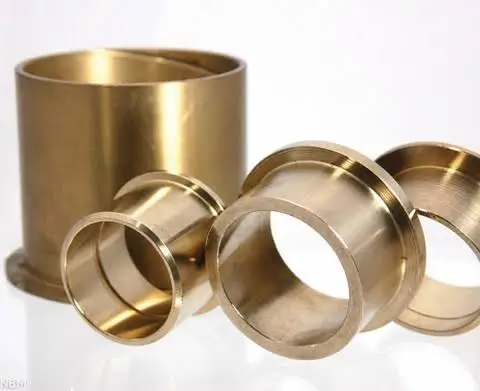
A bronze flanged bushing is a sleeve bearing with an integral radial flange. The sleeve supports radial load around a shaft or pin, while the flange locates the bushing axially or carries a defined thrust load. Bronze flanged bushings are used in machinery, pumps, valves, agricultural equipment, construction equipment, marine systems, dies, conveyors, and industrial automation. The metallurgy, casting route, flange geometry, interference fit, running clearance, counterface, lubrication, sealing and inspection plan must be selected as one engineering system.
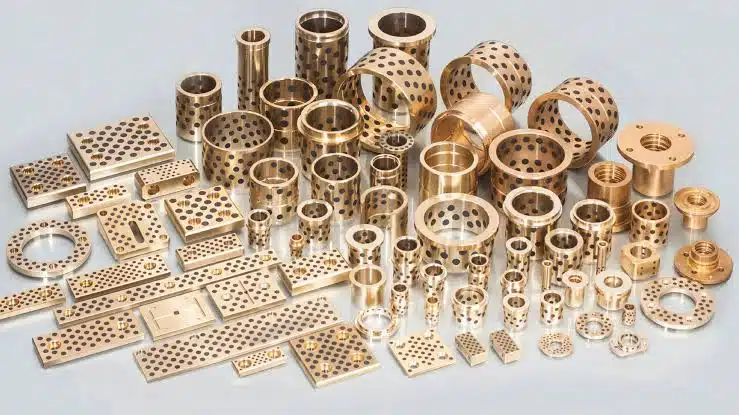
Table of Contents
1. Function, Flange Geometry, and Product Scope
The sleeve portion of a bronze flanged bushing carries radial load through a sliding interface. The flange provides positive axial location and may act as a thrust surface when the load, speed, lubrication and surface pressure are within the design limit. It is not automatically a replacement for a separate thrust washer. Specify shaft or pin motion, radial load, axial load, oscillation, speed, temperature and installation orientation before choosing the flange diameter and thickness. Use the approved drawing and application data as the acceptance basis.
The sleeve portion of a bronze flanged bushing carries radial load through a sliding interface. The flange provides positive axial location and may act as a thrust surface when the load, speed, lubrication and surface pressure are within the design limit. It is not automatically a replacement for a separate thrust washer. Specify shaft or pin motion, radial load, axial load, oscillation, speed, temperature and installation orientation before choosing the flange diameter and thickness. Representative samples and traceable process records improve repeatability.
The sleeve portion of a bronze flanged bushing carries radial load through a sliding interface. The flange provides positive axial location and may act as a thrust surface when the load, speed, lubrication and surface pressure are within the design limit. It is not automatically a replacement for a separate thrust washer. Specify shaft or pin motion, radial load, axial load, oscillation, speed, temperature and installation orientation before choosing the flange diameter and thickness. This prevents a nominally similar sleeve from being quoted for the wrong duty.
The sleeve portion of a bronze flanged bushing carries radial load through a sliding interface. The flange provides positive axial location and may act as a thrust surface when the load, speed, lubrication and surface pressure are within the design limit. It is not automatically a replacement for a separate thrust washer. Specify shaft or pin motion, radial load, axial load, oscillation, speed, temperature and installation orientation before choosing the flange diameter and thickness. The supplier should disclose deviations before machining or shipment.
2. Bronze Alloy Families and Material Selection
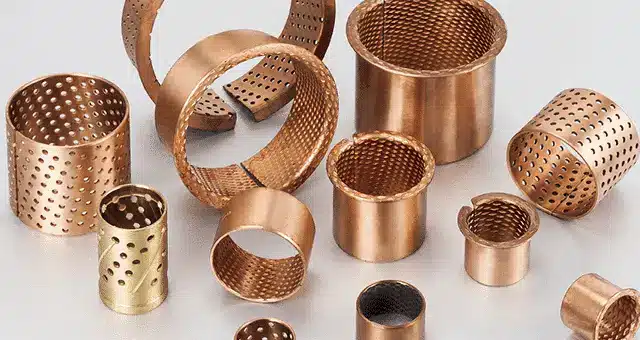
Tin bronze, leaded bearing bronze, aluminum bronze, manganese bronze, silicon bronze and phosphor bronze offer different strength, wear, corrosion, machinability and seizure behavior. C93600 and other bearing-bronze grades may be supplied as cast or centrifugal cast products when covered by the applicable specification. ASTM B271/B271M establishes requirements for copper-base alloy centrifugal castings. The purchase order should identify the UNS alloy or equivalent grade, heat-treatment condition, chemistry limits and any restrictions on lead or residual elements. Use the approved drawing and application data as the acceptance basis.
Tin bronze, leaded bearing bronze, aluminum bronze, manganese bronze, silicon bronze and phosphor bronze offer different strength, wear, corrosion, machinability and seizure behavior. C93600 and other bearing-bronze grades may be supplied as cast or centrifugal cast products when covered by the applicable specification. ASTM B271/B271M establishes requirements for copper-base alloy centrifugal castings. The purchase order should identify the UNS alloy or equivalent grade, heat-treatment condition, chemistry limits and any restrictions on lead or residual elements. Representative samples and traceable process records improve repeatability.
Tin bronze, leaded bearing bronze, aluminum bronze, manganese bronze, silicon bronze and phosphor bronze offer different strength, wear, corrosion, machinability and seizure behavior. C93600 and other bearing-bronze grades may be supplied as cast or centrifugal cast products when covered by the applicable specification. ASTM B271/B271M establishes requirements for copper-base alloy centrifugal castings. The purchase order should identify the UNS alloy or equivalent grade, heat-treatment condition, chemistry limits and any restrictions on lead or residual elements. This prevents a nominally similar sleeve from being quoted for the wrong duty.
Tin bronze, leaded bearing bronze, aluminum bronze, manganese bronze, silicon bronze and phosphor bronze offer different strength, wear, corrosion, machinability and seizure behavior. C93600 and other bearing-bronze grades may be supplied as cast or centrifugal cast products when covered by the applicable specification. ASTM B271/B271M establishes requirements for copper-base alloy centrifugal castings. The purchase order should identify the UNS alloy or equivalent grade, heat-treatment condition, chemistry limits and any restrictions on lead or residual elements. The supplier should disclose deviations before machining or shipment.
Control | Why it matters | RFQ input |
Alloy and chemistry | Strength, wear and compatibility | UNS grade and limits |
Flange geometry | Axial location and thrust | OD, thickness, face and load |
Fit and clearance | Heat, friction and life | Housing, shaft and temperature |
3. Casting Metallurgy, Grain Structure, and Density
Casting route controls structure. Centrifugal casting is useful for tubular or thick-walled blanks and can support a dense wall with machining allowance. Continuous cast bar and tube can provide consistent stock for standard dimensions, while machining from wrought or cast stock may suit smaller quantities. Mould temperature, pouring temperature, cooling, melt cleanliness and section thickness affect porosity, inclusions, segregation, grain size and hardness. A glossy surface is not proof of sound internal structure. Use the approved drawing and application data as the acceptance basis.
Casting route controls structure. Centrifugal casting is useful for tubular or thick-walled blanks and can support a dense wall with machining allowance. Continuous cast bar and tube can provide consistent stock for standard dimensions, while machining from wrought or cast stock may suit smaller quantities. Mould temperature, pouring temperature, cooling, melt cleanliness and section thickness affect porosity, inclusions, segregation, grain size and hardness. A glossy surface is not proof of sound internal structure. Representative samples and traceable process records improve repeatability.
Casting route controls structure. Centrifugal casting is useful for tubular or thick-walled blanks and can support a dense wall with machining allowance. Continuous cast bar and tube can provide consistent stock for standard dimensions, while machining from wrought or cast stock may suit smaller quantities. Mould temperature, pouring temperature, cooling, melt cleanliness and section thickness affect porosity, inclusions, segregation, grain size and hardness. A glossy surface is not proof of sound internal structure. This prevents a nominally similar sleeve from being quoted for the wrong duty.
Casting route controls structure. Centrifugal casting is useful for tubular or thick-walled blanks and can support a dense wall with machining allowance. Continuous cast bar and tube can provide consistent stock for standard dimensions, while machining from wrought or cast stock may suit smaller quantities. Mould temperature, pouring temperature, cooling, melt cleanliness and section thickness affect porosity, inclusions, segregation, grain size and hardness. A glossy surface is not proof of sound internal structure. The supplier should disclose deviations before machining or shipment.
4. Radial Fit, Axial Thrust, and Bearing Clearance
The outside diameter normally uses an interference fit in the housing; the bore uses running clearance to the shaft. Too little interference can allow creep and fretting. Excessive interference can close the bore or distort the flange. Low running clearance can cause heat and seizure, while excessive clearance produces impact, vibration and edge loading. The flange must be square to the bore and supported by a suitable housing face. Define dimensions before and after installation. Use the approved drawing and application data as the acceptance basis.
The outside diameter normally uses an interference fit in the housing; the bore uses running clearance to the shaft. Too little interference can allow creep and fretting. Excessive interference can close the bore or distort the flange. Low running clearance can cause heat and seizure, while excessive clearance produces impact, vibration and edge loading. The flange must be square to the bore and supported by a suitable housing face. Define dimensions before and after installation. Representative samples and traceable process records improve repeatability.
The outside diameter normally uses an interference fit in the housing; the bore uses running clearance to the shaft. Too little interference can allow creep and fretting. Excessive interference can close the bore or distort the flange. Low running clearance can cause heat and seizure, while excessive clearance produces impact, vibration and edge loading. The flange must be square to the bore and supported by a suitable housing face. Define dimensions before and after installation. This prevents a nominally similar sleeve from being quoted for the wrong duty.
The outside diameter normally uses an interference fit in the housing; the bore uses running clearance to the shaft. Too little interference can allow creep and fretting. Excessive interference can close the bore or distort the flange. Low running clearance can cause heat and seizure, while excessive clearance produces impact, vibration and edge loading. The flange must be square to the bore and supported by a suitable housing face. Define dimensions before and after installation. The supplier should disclose deviations before machining or shipment.
Control | Why it matters | RFQ input |
Alloy and chemistry | Strength, wear and compatibility | UNS grade and limits |
Flange geometry | Axial location and thrust | OD, thickness, face and load |
Fit and clearance | Heat, friction and life | Housing, shaft and temperature |
5. Lubrication, Seals, Grooves, and Counterface Finish
Bronze flanged bushings may use grease, oil, water-compatible lubricant, solid lubricant plugs or a composite sliding layer. Grooves and holes must deliver lubricant without cutting through the highest loaded land or weakening the flange root. Seals protect against dust and water, but seal friction and heat must be included in the design. Shaft hardness, roughness, roundness, taper and runout are part of the bearing system. Use the approved drawing and application data as the acceptance basis.
Bronze flanged bushings may use grease, oil, water-compatible lubricant, solid lubricant plugs or a composite sliding layer. Grooves and holes must deliver lubricant without cutting through the highest loaded land or weakening the flange root. Seals protect against dust and water, but seal friction and heat must be included in the design. Shaft hardness, roughness, roundness, taper and runout are part of the bearing system. Representative samples and traceable process records improve repeatability.
Bronze flanged bushings may use grease, oil, water-compatible lubricant, solid lubricant plugs or a composite sliding layer. Grooves and holes must deliver lubricant without cutting through the highest loaded land or weakening the flange root. Seals protect against dust and water, but seal friction and heat must be included in the design. Shaft hardness, roughness, roundness, taper and runout are part of the bearing system. This prevents a nominally similar sleeve from being quoted for the wrong duty.
Bronze flanged bushings may use grease, oil, water-compatible lubricant, solid lubricant plugs or a composite sliding layer. Grooves and holes must deliver lubricant without cutting through the highest loaded land or weakening the flange root. Seals protect against dust and water, but seal friction and heat must be included in the design. Shaft hardness, roughness, roundness, taper and runout are part of the bearing system. The supplier should disclose deviations before machining or shipment.
6. Manufacturing Routes: Centrifugal Cast, Continuous Cast, and Machined
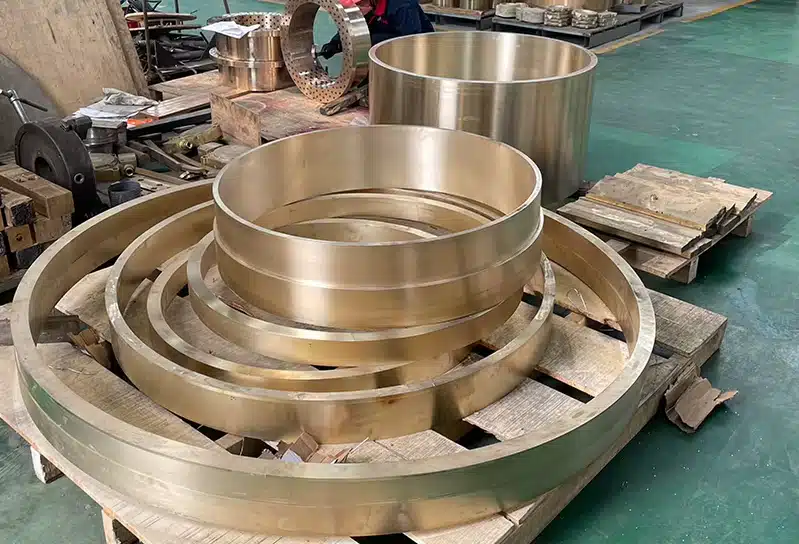
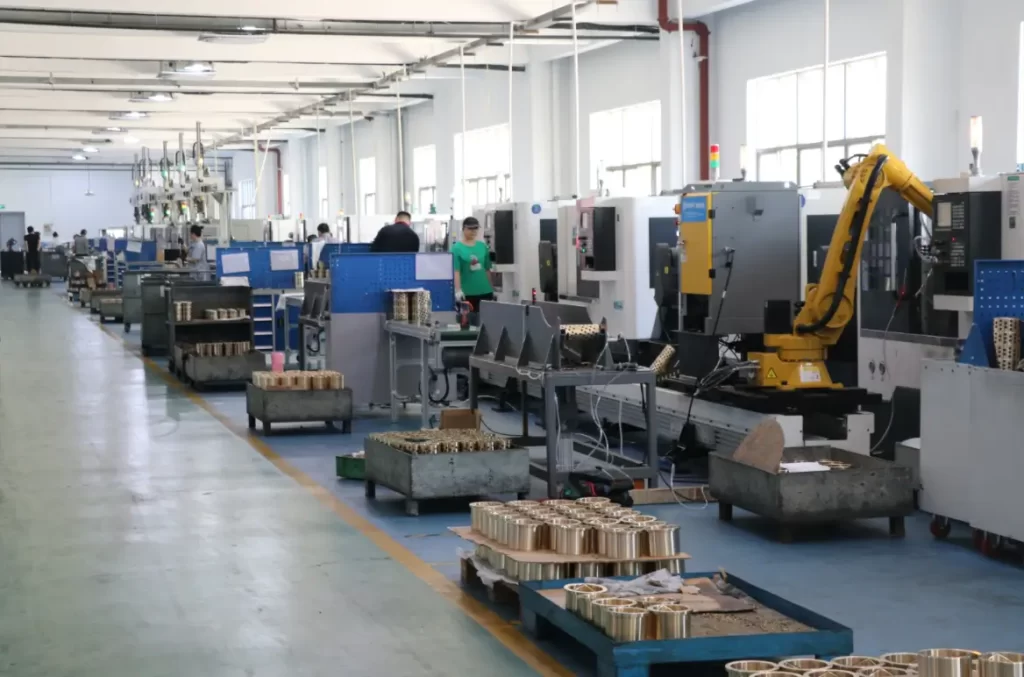
A flanged bushing can be produced by centrifugal casting, continuous casting followed by machining, sand or investment casting for suitable shapes, powder metallurgy for sintered bronze, or a composite manufacturing route. Turning, boring, reaming, honing, groove milling, drilling, chamfering and deburring establish final geometry. The supplier should state whether the bore is rough, semi-finished or finished, and how flange runout, perpendicularity, concentricity and wall thickness are measured. Use the approved drawing and application data as the acceptance basis.
A flanged bushing can be produced by centrifugal casting, continuous casting followed by machining, sand or investment casting for suitable shapes, powder metallurgy for sintered bronze, or a composite manufacturing route. Turning, boring, reaming, honing, groove milling, drilling, chamfering and deburring establish final geometry. The supplier should state whether the bore is rough, semi-finished or finished, and how flange runout, perpendicularity, concentricity and wall thickness are measured. Representative samples and traceable process records improve repeatability.
A flanged bushing can be produced by centrifugal casting, continuous casting followed by machining, sand or investment casting for suitable shapes, powder metallurgy for sintered bronze, or a composite manufacturing route. Turning, boring, reaming, honing, groove milling, drilling, chamfering and deburring establish final geometry. The supplier should state whether the bore is rough, semi-finished or finished, and how flange runout, perpendicularity, concentricity and wall thickness are measured. This prevents a nominally similar sleeve from being quoted for the wrong duty.
A flanged bushing can be produced by centrifugal casting, continuous casting followed by machining, sand or investment casting for suitable shapes, powder metallurgy for sintered bronze, or a composite manufacturing route. Turning, boring, reaming, honing, groove milling, drilling, chamfering and deburring establish final geometry. The supplier should state whether the bore is rough, semi-finished or finished, and how flange runout, perpendicularity, concentricity and wall thickness are measured. The supplier should disclose deviations before machining or shipment.
7. Wear, Fretting, Seizure, and Failure Analysis
Failure may appear as bore scoring, smearing, seizure, flange face wear, fretting at the OD, cracking at the flange root, corrosion, cavitation or excessive clearance. Root cause can be poor lubrication, contaminated grease, water ingress, a damaged shaft, incorrect fit, misalignment, overload, thermal distortion or unsuitable alloy. Preserve the failed part, shaft and housing evidence before cleaning. A replacement bushing alone may not correct the initiating problem. Use the approved drawing and application data as the acceptance basis.
Failure may appear as bore scoring, smearing, seizure, flange face wear, fretting at the OD, cracking at the flange root, corrosion, cavitation or excessive clearance. Root cause can be poor lubrication, contaminated grease, water ingress, a damaged shaft, incorrect fit, misalignment, overload, thermal distortion or unsuitable alloy. Preserve the failed part, shaft and housing evidence before cleaning. A replacement bushing alone may not correct the initiating problem. Representative samples and traceable process records improve repeatability.
Failure may appear as bore scoring, smearing, seizure, flange face wear, fretting at the OD, cracking at the flange root, corrosion, cavitation or excessive clearance. Root cause can be poor lubrication, contaminated grease, water ingress, a damaged shaft, incorrect fit, misalignment, overload, thermal distortion or unsuitable alloy. Preserve the failed part, shaft and housing evidence before cleaning. A replacement bushing alone may not correct the initiating problem. This prevents a nominally similar sleeve from being quoted for the wrong duty.
Failure may appear as bore scoring, smearing, seizure, flange face wear, fretting at the OD, cracking at the flange root, corrosion, cavitation or excessive clearance. Root cause can be poor lubrication, contaminated grease, water ingress, a damaged shaft, incorrect fit, misalignment, overload, thermal distortion or unsuitable alloy. Preserve the failed part, shaft and housing evidence before cleaning. A replacement bushing alone may not correct the initiating problem. The supplier should disclose deviations before machining or shipment.
8. Inspection, Standards, and Quality Documentation
Inspection should cover alloy chemistry, hardness where relevant, dimensions, bore finish, flange thickness, perpendicularity, concentricity, surface condition, grooves, holes and packaging. For centrifugal castings, agreed NDT or metallographic examination may be required. ASTM B271/B271M includes ordering information and copper-alloy centrifugal casting requirements; the final drawing and customer acceptance plan remain controlling documents. Use the approved drawing and application data as the acceptance basis.
Inspection should cover alloy chemistry, hardness where relevant, dimensions, bore finish, flange thickness, perpendicularity, concentricity, surface condition, grooves, holes and packaging. For centrifugal castings, agreed NDT or metallographic examination may be required. ASTM B271/B271M includes ordering information and copper-alloy centrifugal casting requirements; the final drawing and customer acceptance plan remain controlling documents. Representative samples and traceable process records improve repeatability.
Inspection should cover alloy chemistry, hardness where relevant, dimensions, bore finish, flange thickness, perpendicularity, concentricity, surface condition, grooves, holes and packaging. For centrifugal castings, agreed NDT or metallographic examination may be required. ASTM B271/B271M includes ordering information and copper-alloy centrifugal casting requirements; the final drawing and customer acceptance plan remain controlling documents. This prevents a nominally similar sleeve from being quoted for the wrong duty.
Inspection should cover alloy chemistry, hardness where relevant, dimensions, bore finish, flange thickness, perpendicularity, concentricity, surface condition, grooves, holes and packaging. For centrifugal castings, agreed NDT or metallographic examination may be required. ASTM B271/B271M includes ordering information and copper-alloy centrifugal casting requirements; the final drawing and customer acceptance plan remain controlling documents. The supplier should disclose deviations before machining or shipment.
Control | Why it matters | RFQ input |
Alloy and chemistry | Strength, wear and compatibility | UNS grade and limits |
Flange geometry | Axial location and thrust | OD, thickness, face and load |
Fit and clearance | Heat, friction and life | Housing, shaft and temperature |
9. Turning a Bronze Flanged Bushing RFQ into a Quote-Ready Specification
A complete RFQ states shaft or pin diameter, housing bore, finished length, flange OD and thickness, alloy, manufacturing route, fit, clearance, load, speed, motion, temperature, lubricant, seal, environment, quantity, inspection, certificate, packaging and destination. Request a technical proposal for high-value or safety-critical parts. The supplier should confirm grade, process, tolerances, inspection, lead time, deviations and any missing assumptions before production. Use the approved drawing and application data as the acceptance basis.
A complete RFQ states shaft or pin diameter, housing bore, finished length, flange OD and thickness, alloy, manufacturing route, fit, clearance, load, speed, motion, temperature, lubricant, seal, environment, quantity, inspection, certificate, packaging and destination. Request a technical proposal for high-value or safety-critical parts. The supplier should confirm grade, process, tolerances, inspection, lead time, deviations and any missing assumptions before production. Representative samples and traceable process records improve repeatability.
A complete RFQ states shaft or pin diameter, housing bore, finished length, flange OD and thickness, alloy, manufacturing route, fit, clearance, load, speed, motion, temperature, lubricant, seal, environment, quantity, inspection, certificate, packaging and destination. Request a technical proposal for high-value or safety-critical parts. The supplier should confirm grade, process, tolerances, inspection, lead time, deviations and any missing assumptions before production. This prevents a nominally similar sleeve from being quoted for the wrong duty.
A complete RFQ states shaft or pin diameter, housing bore, finished length, flange OD and thickness, alloy, manufacturing route, fit, clearance, load, speed, motion, temperature, lubricant, seal, environment, quantity, inspection, certificate, packaging and destination. Request a technical proposal for high-value or safety-critical parts. The supplier should confirm grade, process, tolerances, inspection, lead time, deviations and any missing assumptions before production. The supplier should disclose deviations before machining or shipment.
FAQ: Bronze Flanged Bushings
1. What is a bronze flanged bushing?
A sleeve bearing with an integral radial flange.
2. What does the flange do?
It locates the sleeve and may carry defined axial thrust.
3. Can a flange replace a thrust washer?
Only when the flange is designed and rated for that thrust.
4. Which bronze alloy is best?
Select from load, speed, lubricant, corrosion, shaft and temperature.
5. What is C93600 bronze?
A bearing-bronze alloy designation that may be supplied as cast material.
6. What does ASTM B271 cover?
Copper-base alloy centrifugal casting requirements.
7. Can the bushing be centrifugal cast?
Yes, centrifugal casting is common for tubular bronze blanks.
8. What causes flange cracking?
Edge loading, stress concentration, overload, poor support or misalignment.
9. What causes bush rotation?
Low interference, housing damage, vibration or incorrect installation.
10. Why is running clearance important?
It permits lubricant film, heat movement and stable sliding.
11. What interference fit is required?
It depends on diameter, wall, housing, temperature and material.
12. Does a flanged bush need grease?
Most conventional bronze bushings require their specified lubricant.
13. Can it be oil lubricated?
Yes, if groove, clearance, oil supply and sealing are designed for oil.
14. What shaft finish is needed?
The drawing should define hardness, roughness, roundness and runout.
15. Can bronze bushes run in water?
Some alloys are suitable, but corrosion, lubrication and water chemistry must be checked.
16. How are flanged bushings inspected?
Use chemistry, hardness, dimensions, flange geometry, surface and agreed NDT.
17. Can the bore be machined after pressing?
Many custom parts are finish-bored after installation.
18. What causes seizure?
Low clearance, lack of lubricant, contamination, overload or a damaged shaft.
19. How should the part be packed?
Protect bore, flange face, grooves and machined surfaces from impact and moisture.
20. What information is needed for a quote?
Send drawing, alloy, dimensions, loads, motion, lubricant, tests, quantity and destination.
100000+ Types of Bushings – Contact Us for Details