
Recent Posts
Self-Lubricating Bushing: Bearing Metallurgy, Solid Lubricants, PV Control, and Reliable Industrial Selection
Introduction
A self-lubricating bushing is a plain bearing designed to reduce friction and wear without continuous external grease or oil supply. The term covers several different material systems: oil-impregnated sintered bronze, steel-backed metal-polymer composites, cast bronze with graphite inserts, solid-lubricant-dispersed metal, engineered polymer, and fiber-reinforced composite bearings. These products do not have identical operating limits. The correct choice requires load, sliding speed, PV factor, temperature, oscillation, counterface, contamination, water or chemical exposure, fit, clearance and expected maintenance interval.
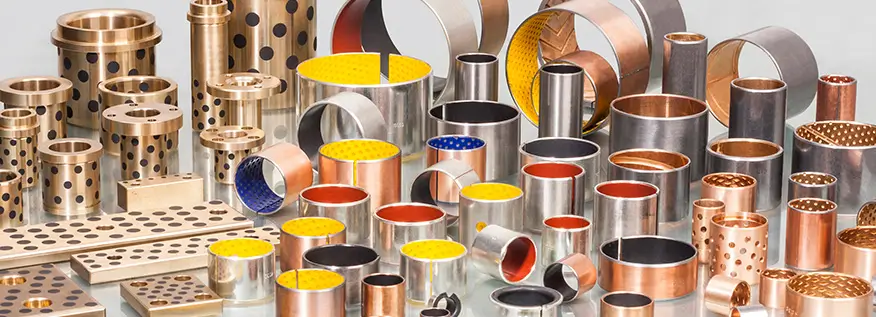
Table of Contents
1. Self-Lubricating Bushing Definition and Product Families
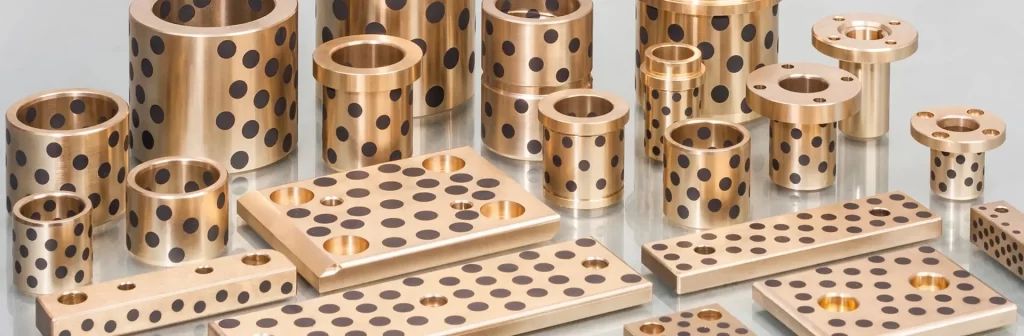
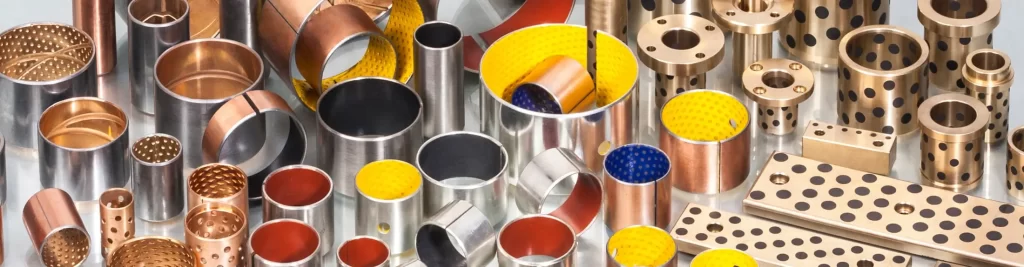
Self-lubricating bushing describes a mechanism, not one universal alloy. In oil-impregnated powder-metallurgy bronze, connected pores store lubricant and feed the contact interface during operation. In graphite-plugged bronze, patterned solid-lubricant inserts transfer a film to the shaft. Metal-polymer bearings combine a rigid backing with a porous interlayer and a low-friction overlay. Engineered polymer and fiber-reinforced bearings use resin, reinforcement and solid lubricants. The supplier must identify the actual material architecture before any load or speed claim is accepted. The final requirement must use approved application data and the selected product data sheet.
Self-lubricating bushing describes a mechanism, not one universal alloy. In oil-impregnated powder-metallurgy bronze, connected pores store lubricant and feed the contact interface during operation. In graphite-plugged bronze, patterned solid-lubricant inserts transfer a film to the shaft. Metal-polymer bearings combine a rigid backing with a porous interlayer and a low-friction overlay. Engineered polymer and fiber-reinforced bearings use resin, reinforcement and solid lubricants. The supplier must identify the actual material architecture before any load or speed claim is accepted. This converts a generic oil-free bearing request into an auditable technical requirement.
Self-lubricating bushing describes a mechanism, not one universal alloy. In oil-impregnated powder-metallurgy bronze, connected pores store lubricant and feed the contact interface during operation. In graphite-plugged bronze, patterned solid-lubricant inserts transfer a film to the shaft. Metal-polymer bearings combine a rigid backing with a porous interlayer and a low-friction overlay. Engineered polymer and fiber-reinforced bearings use resin, reinforcement and solid lubricants. The supplier must identify the actual material architecture before any load or speed claim is accepted. Representative testing and traceability improve service consistency.
2. Oil-Impregnated Sintered Bronze and Porosity Control
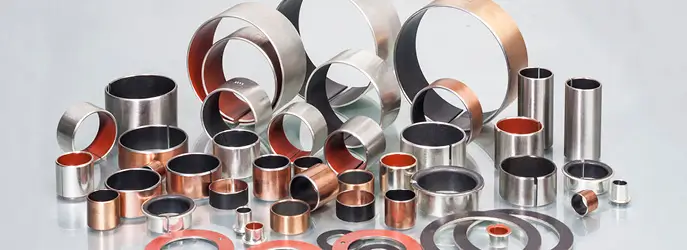
ASTM B438 covers bronze-base powder-metallurgy oil-impregnated bearings made primarily from copper, tin, lead and graphite powders, and specifies chemical, physical and mechanical requirements for standardized self-lubricating bearings. Sintered bronze depends on controlled porosity; excessive machining, plugging pores, wrong cleaning method or unsuitable lubricant can reduce oil retention. ISO 2795 covers dimensions and tolerances for sintered bushes. A sintered bushing is not a solid cast bronze sleeve and should not be treated as one during installation or machining. The final requirement must use approved application data and the selected product data sheet.
ASTM B438 covers bronze-base powder-metallurgy oil-impregnated bearings made primarily from copper, tin, lead and graphite powders, and specifies chemical, physical and mechanical requirements for standardized self-lubricating bearings. Sintered bronze depends on controlled porosity; excessive machining, plugging pores, wrong cleaning method or unsuitable lubricant can reduce oil retention. ISO 2795 covers dimensions and tolerances for sintered bushes. A sintered bushing is not a solid cast bronze sleeve and should not be treated as one during installation or machining. This converts a generic oil-free bearing request into an auditable technical requirement.
ASTM B438 covers bronze-base powder-metallurgy oil-impregnated bearings made primarily from copper, tin, lead and graphite powders, and specifies chemical, physical and mechanical requirements for standardized self-lubricating bearings. Sintered bronze depends on controlled porosity; excessive machining, plugging pores, wrong cleaning method or unsuitable lubricant can reduce oil retention. ISO 2795 covers dimensions and tolerances for sintered bushes. A sintered bushing is not a solid cast bronze sleeve and should not be treated as one during installation or machining. Representative testing and traceability improve service consistency.
Material system | Primary mechanism | Key controls |
Sintered bronze | Oil in connected pores | Porosity, oil content, installation |
Metal-polymer | Low-friction overlay | PV, shaft finish, heat |
Graphite bronze | Solid-lubricant transfer | Plug layout, load, counterface |
3. Metal-Polymer, Graphite-Plugged Bronze, and Composite Materials
Metal-polymer systems may use steel or bronze backing, a sintered bronze interlayer and PTFE-based or thermoplastic sliding layer. Graphite-plugged bronze uses a cast bronze matrix with solid graphite or graphite-containing plugs. Composite bearings use a reinforced polymer matrix with solid lubricants. Each system has different thermal conductivity, thickness, compressive behavior, allowable shaft finish, edge-load tolerance, chemical compatibility and dry-running capacity. Material selection must use the selected product data, not an assumed property for all oil-free bushings. The final requirement must use approved application data and the selected product data sheet.
Metal-polymer systems may use steel or bronze backing, a sintered bronze interlayer and PTFE-based or thermoplastic sliding layer. Graphite-plugged bronze uses a cast bronze matrix with solid graphite or graphite-containing plugs. Composite bearings use a reinforced polymer matrix with solid lubricants. Each system has different thermal conductivity, thickness, compressive behavior, allowable shaft finish, edge-load tolerance, chemical compatibility and dry-running capacity. Material selection must use the selected product data, not an assumed property for all oil-free bushings. This converts a generic oil-free bearing request into an auditable technical requirement.
Metal-polymer systems may use steel or bronze backing, a sintered bronze interlayer and PTFE-based or thermoplastic sliding layer. Graphite-plugged bronze uses a cast bronze matrix with solid graphite or graphite-containing plugs. Composite bearings use a reinforced polymer matrix with solid lubricants. Each system has different thermal conductivity, thickness, compressive behavior, allowable shaft finish, edge-load tolerance, chemical compatibility and dry-running capacity. Material selection must use the selected product data, not an assumed property for all oil-free bushings. Representative testing and traceability improve service consistency.
4. PV Factor, Temperature, Speed, and Load Selection
PV factor is the product of bearing pressure and sliding velocity and is a useful screening value for frictional heating, but it is not a design certificate. Actual performance also depends on duty cycle, oscillation angle, start-stop behavior, temperature, lubrication state, shaft roughness, heat removal, alignment, contamination and contact area. A bush can be within a published PV number and still fail under edge loading, poor fit, inadequate thermal path or a rough counterface. Quote requests should state both normal and maximum duty. The final requirement must use approved application data and the selected product data sheet.
PV factor is the product of bearing pressure and sliding velocity and is a useful screening value for frictional heating, but it is not a design certificate. Actual performance also depends on duty cycle, oscillation angle, start-stop behavior, temperature, lubrication state, shaft roughness, heat removal, alignment, contamination and contact area. A bush can be within a published PV number and still fail under edge loading, poor fit, inadequate thermal path or a rough counterface. Quote requests should state both normal and maximum duty. This converts a generic oil-free bearing request into an auditable technical requirement.
PV factor is the product of bearing pressure and sliding velocity and is a useful screening value for frictional heating, but it is not a design certificate. Actual performance also depends on duty cycle, oscillation angle, start-stop behavior, temperature, lubrication state, shaft roughness, heat removal, alignment, contamination and contact area. A bush can be within a published PV number and still fail under edge loading, poor fit, inadequate thermal path or a rough counterface. Quote requests should state both normal and maximum duty. Representative testing and traceability improve service consistency.
Material system | Primary mechanism | Key controls |
Sintered bronze | Oil in connected pores | Porosity, oil content, installation |
Metal-polymer | Low-friction overlay | PV, shaft finish, heat |
Graphite bronze | Solid-lubricant transfer | Plug layout, load, counterface |
5. Shaft Finish, Fit, Clearance, and Installation
The shaft is part of the bearing system. Hardness, roughness, roundness, taper, coating, runout and cleanliness affect transfer-film formation and wear. A shaft that is too rough can abrade an overlay; an unsuitable soft shaft can gall or deform; a scored shaft can destroy a new bearing. Outside diameter interference retains the bushing in the housing, while running clearance controls movement and heat. Some thin-wall products need installation tools and post-fit sizing methods specific to the grade. The final requirement must use approved application data and the selected product data sheet.
The shaft is part of the bearing system. Hardness, roughness, roundness, taper, coating, runout and cleanliness affect transfer-film formation and wear. A shaft that is too rough can abrade an overlay; an unsuitable soft shaft can gall or deform; a scored shaft can destroy a new bearing. Outside diameter interference retains the bushing in the housing, while running clearance controls movement and heat. Some thin-wall products need installation tools and post-fit sizing methods specific to the grade. This converts a generic oil-free bearing request into an auditable technical requirement.
The shaft is part of the bearing system. Hardness, roughness, roundness, taper, coating, runout and cleanliness affect transfer-film formation and wear. A shaft that is too rough can abrade an overlay; an unsuitable soft shaft can gall or deform; a scored shaft can destroy a new bearing. Outside diameter interference retains the bushing in the housing, while running clearance controls movement and heat. Some thin-wall products need installation tools and post-fit sizing methods specific to the grade. Representative testing and traceability improve service consistency.
6. Water, Dirt, Chemicals, and Lubrication-Free Duty
Self-lubricating does not mean maintenance-free under every environment. Mud, dust, metal fines, water, chemicals, heat, steam and misalignment can exceed the ability of the material system. Graphite-plugged bronze can suit high-load, intermittent or inaccessible locations; metal-polymer may be useful where a low-friction overlay is appropriate; sintered bronze suits controlled oil-retaining duties; engineered polymers may provide corrosion resistance. Seals, wipers, drainage, alignment and a clean shaft are still important. The final requirement must use approved application data and the selected product data sheet.
Self-lubricating does not mean maintenance-free under every environment. Mud, dust, metal fines, water, chemicals, heat, steam and misalignment can exceed the ability of the material system. Graphite-plugged bronze can suit high-load, intermittent or inaccessible locations; metal-polymer may be useful where a low-friction overlay is appropriate; sintered bronze suits controlled oil-retaining duties; engineered polymers may provide corrosion resistance. Seals, wipers, drainage, alignment and a clean shaft are still important. This converts a generic oil-free bearing request into an auditable technical requirement.
Self-lubricating does not mean maintenance-free under every environment. Mud, dust, metal fines, water, chemicals, heat, steam and misalignment can exceed the ability of the material system. Graphite-plugged bronze can suit high-load, intermittent or inaccessible locations; metal-polymer may be useful where a low-friction overlay is appropriate; sintered bronze suits controlled oil-retaining duties; engineered polymers may provide corrosion resistance. Seals, wipers, drainage, alignment and a clean shaft are still important. Representative testing and traceability improve service consistency.
7. Wear, Failure Analysis, and Quality Inspection
Failure modes include transfer-film loss, overlay wear, scoring, seizure, porosity contamination, plug damage, cracking, creep, outer-diameter rotation, chemical attack and heat distortion. Diagnose the entire assembly before replacement. Preserve the shaft, bearing orientation, debris, process fluid, temperature history, load event, housing dimensions and installation method. The root cause may be wrong material, but it may also be a damaged counterface, insufficient clearance, overload, water ingress, contaminants or an unapproved lubricant. The final requirement must use approved application data and the selected product data sheet.
Failure modes include transfer-film loss, overlay wear, scoring, seizure, porosity contamination, plug damage, cracking, creep, outer-diameter rotation, chemical attack and heat distortion. Diagnose the entire assembly before replacement. Preserve the shaft, bearing orientation, debris, process fluid, temperature history, load event, housing dimensions and installation method. The root cause may be wrong material, but it may also be a damaged counterface, insufficient clearance, overload, water ingress, contaminants or an unapproved lubricant. This converts a generic oil-free bearing request into an auditable technical requirement.
Failure modes include transfer-film loss, overlay wear, scoring, seizure, porosity contamination, plug damage, cracking, creep, outer-diameter rotation, chemical attack and heat distortion. Diagnose the entire assembly before replacement. Preserve the shaft, bearing orientation, debris, process fluid, temperature history, load event, housing dimensions and installation method. The root cause may be wrong material, but it may also be a damaged counterface, insufficient clearance, overload, water ingress, contaminants or an unapproved lubricant. Representative testing and traceability improve service consistency.
Material system | Primary mechanism | Key controls |
Sintered bronze | Oil in connected pores | Porosity, oil content, installation |
Metal-polymer | Low-friction overlay | PV, shaft finish, heat |
Graphite bronze | Solid-lubricant transfer | Plug layout, load, counterface |
8. Quote-Ready Self-Lubricating Bushing RFQ and Lifecycle Value
A complete RFQ identifies the bushing type, material system, dimensions, flange or thrust features, shaft and housing materials, target fit and clearance, radial and axial load, speed, oscillation, duty cycle, PV estimate, temperature, lubrication policy, water or chemical exposure, contamination, quantity, certificates, test method, packing and destination. A technical supplier should confirm material architecture, recommended shaft condition, processing restrictions, available sizes, test data, lead time and deviations before production. The final requirement must use approved application data and the selected product data sheet.
A complete RFQ identifies the bushing type, material system, dimensions, flange or thrust features, shaft and housing materials, target fit and clearance, radial and axial load, speed, oscillation, duty cycle, PV estimate, temperature, lubrication policy, water or chemical exposure, contamination, quantity, certificates, test method, packing and destination. A technical supplier should confirm material architecture, recommended shaft condition, processing restrictions, available sizes, test data, lead time and deviations before production. This converts a generic oil-free bearing request into an auditable technical requirement.
A complete RFQ identifies the bushing type, material system, dimensions, flange or thrust features, shaft and housing materials, target fit and clearance, radial and axial load, speed, oscillation, duty cycle, PV estimate, temperature, lubrication policy, water or chemical exposure, contamination, quantity, certificates, test method, packing and destination. A technical supplier should confirm material architecture, recommended shaft condition, processing restrictions, available sizes, test data, lead time and deviations before production. Representative testing and traceability improve service consistency.
FAQ: Self-Lubricating Bushing
1. What is a self-lubricating bushing?
A plain bearing with an internal lubricant source or low-friction sliding layer.
2. Does it need grease?
Some are designed without routine lubrication; confirm the selected material specification.
3. What is an oil-impregnated bronze bush?
A porous powder-metallurgy bronze bearing filled with oil.
4. What does ASTM B438 cover?
Requirements for bronze-base oil-impregnated PM bearings.
5. What is a graphite-plugged bronze bushing?
Cast bronze containing patterned solid-lubricant inserts.
6. What is a metal-polymer bearing?
A backed bearing with a low-friction polymer sliding layer.
7. What is PV factor?
Pressure multiplied by sliding velocity, used as a screening value.
8. Can self-lubricating bushes run dry?
Only within the rated conditions of the selected material system.
9. What shaft finish is needed?
Specify hardness, roughness, roundness, taper and runout.
10. Can a sintered bush be machined?
Only with the approved process; machining can damage pores or the bearing layer.
11. What causes early wear?
Wrong material, rough shaft, edge load, dirt, heat, fit or water ingress.
12. Can these bearings operate in water?
Some materials can; evaluate chemistry, water quality, load and corrosion.
13. Can they handle high temperature?
Each system has a different limit; use its data sheet.
14. What is the difference from a bronze sleeve?
Solid bronze normally needs external lubricant; self-lubricating designs have an internal mechanism.
15. What causes seizure?
Low clearance, overload, contamination, heat or a damaged shaft.
16. How are they installed?
Use grade-specific tools, fit and sizing instructions.
17. What quality checks are needed?
Dimensions, material, layer or porosity, surface, fit and certificates.
18. Can they carry thrust load?
Some flanged or thrust designs can, within their rating.
19. How should they be stored?
Keep dry, clean, identified by lot and protected from impact.
20. What is needed for a quote?
State material, dimensions, duty, environment, shaft, tests, quantity and destination.
100000+ Types of Bushings – Contact Us for Details