
Recent Posts
MYWAY Graphite Bearings: The Self-Lubricating Solution for Extreme Environments Where Ordinary Bearings Fail
Introduction
This article explores MYWAY graphite bearings and graphite bushings as self-lubricating solutions for extreme environments where oil, grease, and conventional metal bearings fail. It explains the difference between plain carbon graphite and graphite-metal alloy materials, highlights key performance advantages such as high-temperature resistance, chemical inertness, submerged operation, and maintenance-free performance, and outlines major applications across pumps, food processing, chemicals, and high-temperature equipment. A practical specification checklist, installation guidance, and 10 FAQs help engineers select the right bearing. The article concludes by promoting MYWAY’s ISO/IATF-certified graphite bushings, custom engineering support, and global supply capability, inviting customers to request a quote.
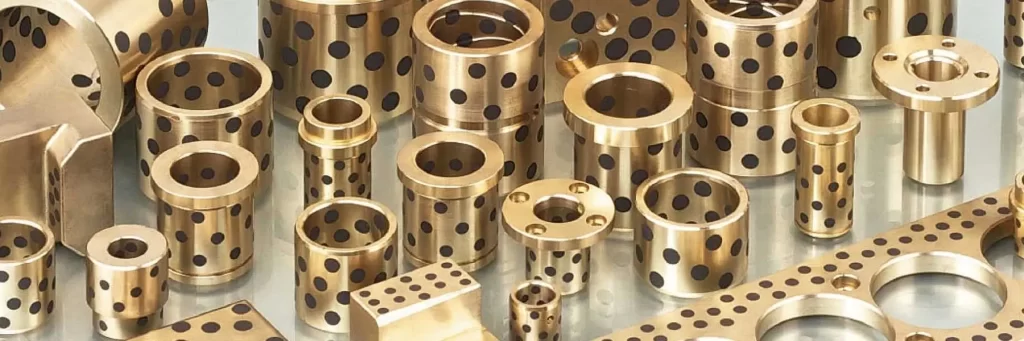
Table of Contents
1. Introduction: When Lubrication Isn't an Option
Here’s a scenario that plays out in factories, processing plants, and pump stations every day: a bearing fails because the grease dried up. Or the oil washed out. Or the temperature got so high that the lubricant carbonized into a sticky mess.
If you’ve ever dealt with this, you already know the frustration. Downtime, replacement costs, and the headache of figuring out which bearing to try next.
This is exactly where graphite bearings earn their keep. Unlike conventional metal bearings that depend on oil or grease to function, graphite bearings are self-lubricating by nature. The graphite structure itself provides the lubricity — no external lubricant required.
But here’s the thing: not all graphite bearings are created equal. There’s a significant difference between plain carbon graphite and the enhanced graphite-metal alloy materials that deliver real-world performance in the toughest applications.
This article will walk you through what makes graphite bearings work, where they’re used, what to look for when specifying them, and why MYWAY has become a trusted name for engineers who need reliable self-lubricating bearing solutions.
2. What Makes Graphite Bearings Different?
2.1 The Self-Lubricating Mechanism
Graphite has a layered crystalline structure. Think of it like a deck of cards — individual layers can slide off each other with very little resistance. This inherent slipperiness is what gives graphite its self-lubricating properties. No oil film required. No grease reservoir needed. The material lubricates itself.
For bearing applications, this translates to a coefficient of friction that remains remarkably constant over time. Unlike grease-lubricated bearings that can experience friction spikes when the lubricant breaks down or gets displaced, graphite bearings maintain steady performance throughout their service life.
2.2 Temperature Resistance That Metals Can’t Match
Most bearing lubricants begin to carbonize at temperatures above 200°C. Once that happens, the lubricant stops lubricating and starts causing problems.
Graphite, by contrast, maintains its structure and properties at temperatures that would destroy conventional lubricants. Plain graphite can withstand temperatures up to 5000°F (2760°C) in inert atmospheres. Even in oxidizing environments, properly formulated graphite-metal alloy bearings operate continuously at temperatures up to 1000°F (535°C).
This temperature capability isn’t just about surviving heat. It’s about maintaining dimensional stability and load-bearing capacity when other materials are softening, oxidizing, or seizing.
2.3 Chemical Resistance and Submerged Operation
Graphite is chemically inert in most industrial environments. It doesn’t dissolve in acids, alkalies, hydrocarbons, or most other liquids that would destroy metal bearings or wash away conventional lubricants.
This makes graphite bearings ideal for submerged applications. Whether it’s a pump handling process water, a mixer operating in a chemical bath, or equipment exposed to seawater, graphite bearings keep working without the corrosion issues that plague metal bearings.
3. The Critical Difference: Plain Graphite vs. Graphite-Metal Alloy
This is where things get important. When engineers talk about “graphite bearings,” they’re often referring to two very different material categories:
Plain carbon graphite bearings are made from graphite powder that’s been molded or extruded and then impregnated with resins, oils, or waxes to reduce porosity. These work fine for moderate applications — lower loads, lower temperatures, less demanding conditions.
Graphite-metal alloy bearings (sometimes called metal-impregnated graphite) take the concept several steps further. The graphite structure is impregnated with metals like bronze, copper, antimony, or nickel alloys. The result is a material that combines graphite’s self-lubrication with metal’s strength, wear resistance, and dimensional stability.
The metal impregnation process also reduces oxidation at very high temperatures and prevents the swelling that can occur when plain graphite absorbs moisture.
For demanding applications — high loads, extreme temperatures, submerged service, chemical exposure — the graphite-metal alloy approach delivers performance that plain graphite simply can’t match.
4. Key Performance Characteristics of Quality Graphite Bearings
Based on industry specifications and field experience, here are the properties that matter most when specifying graphite bearings:
| Property | Typical Range | What It Means |
|---|---|---|
| Density | 1.6 – 2.6 g/cm³ | Higher density generally means better strength and lower porosity |
| Porosity | 1% – 7% | Lower porosity reduces liquid absorption and wear |
| Compressive Strength | 70 – 230 MPa | Determines load-carrying capacity |
| Flexural Strength | 40 – 80 MPa | Indicates resistance to bending and shock loads |
| Max Working Temperature | 200°C – 550°C | Depends on impregnation type |
| Coefficient of Friction | 0.1 – 0.2 (typical) | Consistently low without external lubrication |
5. Where Graphite Bearings Are Used: Real Applications
5.1 Food, Beverage, and Pharmaceutical Processing
In these industries, contamination is the enemy. Oil and grease lubricants pose a risk of leaking into product streams. Graphite bearings eliminate that risk entirely — there’s no lubricant to leak because none is needed.
Graphite bearings are found in mixers, conveyors, filling equipment, and pumps throughout food and pharmaceutical facilities. FDA-accepted grades are available for direct food contact applications.
5.2 Pumps of All Types
Centrifugal pumps, submersible pumps, vertical turbine pumps, and chemical process pumps all benefit from graphite bearings. The material handles the submerged conditions, tolerates dry-running events during priming or upset conditions, and resists the corrosive effects of the pumped media.
In nuclear facilities, graphite-metal alloy bearings are specified for reactor coolant pumps, spent fuel pool systems, and emergency cooling equipment — applications where failure is simply not acceptable.
5.3 High-Temperature Industrial Equipment
Ovens, furnaces, kilns, and heat treatment equipment operate at temperatures that destroy conventional lubricants. Graphite bearings keep these systems running without the need for complex lubrication systems or frequent bearing replacement.
Flue valve regulating mechanisms, high-temperature material handling equipment, and drying oven conveyor systems are common applications.
5.4 Chemical and Petrochemical Processing
The chemical resistance of graphite makes it suitable for equipment handling acids, alkalies, solvents, and other aggressive media. Graphite bearings operate in chemical pumps, agitators, and valves where metal bearings would corrode rapidly.
5.5 Textile and Paper Industries
Dyeing equipment, washing tanks, rotary filters, and paper pulp processing equipment all use graphite bearings. The steam cleaning that’s common in these industries doesn’t affect graphite bearings — there’s no lubricant to wash away.
5.6 Water and Wastewater Treatment
Municipal well pumps, water treatment plant equipment, and stormwater pumps use graphite bearings that are certified for potable water contact. NSF/ANSI Standard 61 and WRAS certifications ensure these bearings meet health and safety requirements for drinking water applications.
6. Why MYWAY Graphite Bushings Stand Out
6.1 Manufacturing Depth and Experience
MYWAY (Zhejiang Myway Co., Ltd.) has been manufacturing bushings and bearings since 2005. That’s two decades of focused experience in self-lubricating bearing technology.
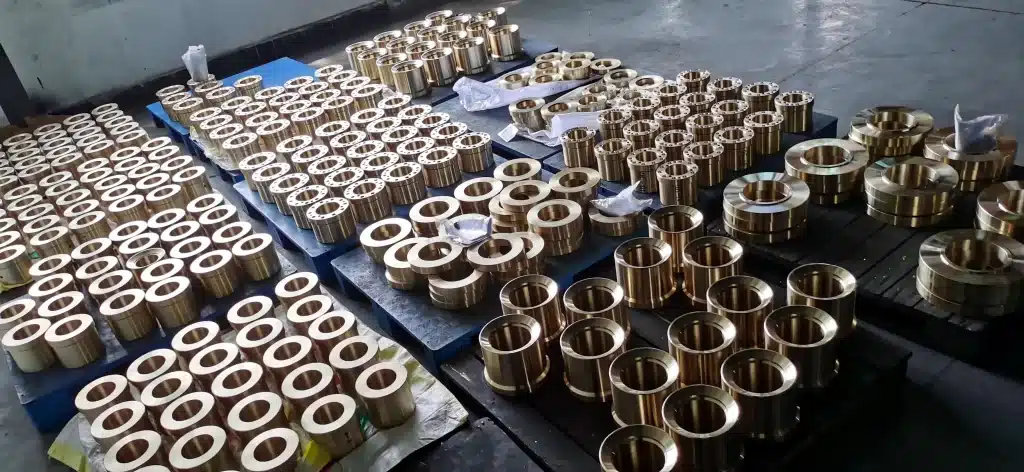
The company operates a 35,000+ square meter manufacturing facility with complete in-house capabilities — from raw material casting and sintering through precision machining and final inspection. This vertical integration means consistent quality control at every production stage.
6.2 Certified Quality Systems
MYWAY holds ISO 9001:2015, IATF 16949:2016, and ISO 14001:2015 certifications. For customers in automotive, industrial, and regulated industries, these certifications provide assurance that quality management systems meet international standards.
The IATF 16949 certification is particularly significant — it’s the automotive industry’s most rigorous quality standard, requiring demonstrated process control, traceability, and continuous improvement.
6.3 Comprehensive Product Range
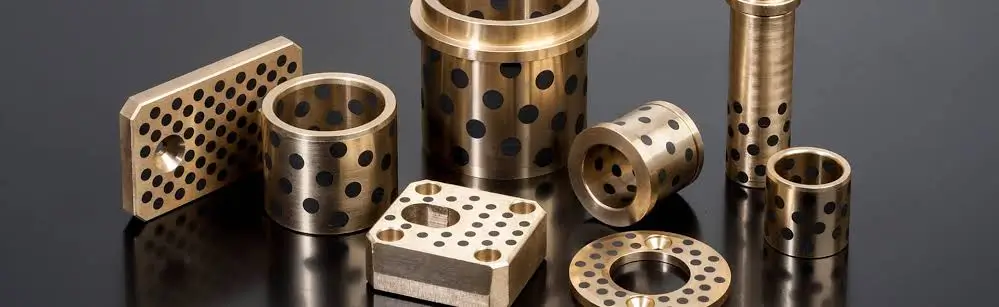
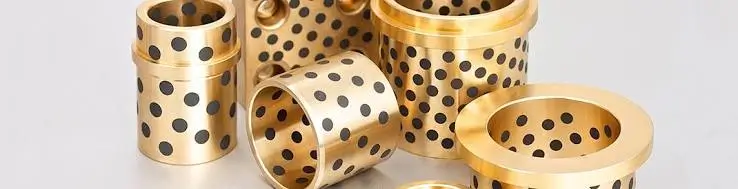
MYWAY offers graphite bushings and solid lubricating bushings in a wide range of configurations:
Plain cylindrical bushings in standard metric sizes
Flanged bushings for axial location
Thrust washers for axial load applications
Custom designs machined to specific dimensions and tolerances
The company maintains over 2,000 precision molds and can produce both standard catalog items and fully custom parts based on application requirements.
6.4 Material Options for Every Application
MYWAY’s graphite bushing product line includes multiple material grades to match different operating conditions:
Copper-graphite materials offer excellent thermal conductivity and load capacity. Suitable for moderate to high-temperature applications in pumps, mixers, and general industrial equipment.
Resin-impregnated graphite provides good mechanical strength and is well-suited for food processing, textile machinery, and other applications where cleanliness matters.
Specialty impregnations including antimony and other metal alloys are available for extreme temperature or chemical exposure requirements.
6.5 Global Supply Capability
MYWAY products are exported to over 40 countries, including Germany, Italy, Japan, the USA, Canada, and South Korea. The company’s foreign trade center in Hangzhou provides responsive support for international customers, with English-speaking technical staff available to assist with application questions and material selection.
7. How to Specify Graphite Bearings: A Practical Checklist
When working with a bearing supplier to specify graphite bushings, having the right information ready speeds up the process and ensures you get the right part:
Operating Conditions:
Shaft diameter and tolerance
Housing bore diameter and tolerance
Bearing length required
Load type (radial, axial, or combined) and magnitude
Speed range (RPM)
Continuous or intermittent operation
Environmental Factors:
Operating temperature range
Exposure to moisture, chemicals, or process fluids
Submerged or dry operation
Vacuum or pressure conditions
Cleanliness requirements (food, medical, etc.)
Performance Requirements:
Expected service life
Maintenance interval expectations
Any regulatory or certification requirements (FDA, NSF, WRAS, etc.)
Special Considerations:
Shaft material and hardness
Shaft surface finish
Misalignment potential
Shock or vibration loads
Startup conditions (dry start, high load, etc.)
Providing this information allows the supplier’s engineering team to recommend the optimal material grade, impregnation type, and geometry for your specific application.
8. Installation and Maintenance Best Practices
8.1 Installation Guidelines
Graphite bearings are installed using standard press-fit techniques. The bearing is pressed into the housing with an interference fit that ensures it stays in place during operation. Care should be taken to avoid damaging the bearing surface during installation — a proper installation tool that contacts the bearing face (not the bore) is essential.
For flanged bushings, the flange provides axial location. Thrust washers are typically installed between the rotating and stationary components to handle axial loads.
8.2 Running-In Period
New graphite bearings benefit from a brief running-in period. During the first few hours of operation, the bearing surface conforms slightly to the shaft surface, establishing optimal contact. Some manufacturers recommend a light initial load to facilitate this process.
8.3 Maintenance
One of the primary advantages of graphite bearings is that they require virtually no maintenance. There’s no lubricant to replenish, no grease fittings to service, and no oil levels to monitor. Periodic inspection for wear is recommended, but in many applications, graphite bearings operate for years without attention.
9. Frequently Asked Questions About Graphite Bearings
Q1: Can graphite bearings really operate without any lubrication?
Yes. The graphite structure itself provides the necessary lubricity. During operation, graphite particles transfer to the shaft surface, creating a thin, low-friction film that protects both surfaces. This mechanism is fundamentally different from conventional lubrication, which requires an external lubricant supply. Graphite-metal alloy bearings combine this self-lubricating property with enhanced strength and wear resistance from the metal impregnation.
Q2: What happens if a graphite bearing runs dry?
Graphite bearings are designed to run dry. Unlike metal bearings that can seize and gall when lubrication fails, graphite bearings continue to function. The material’s non-galling properties allow it to survive dry-running events without catastrophic damage. In pump applications, this means a graphite bearing can survive priming cycles, temporary loss of process fluid, or other upset conditions that would destroy a conventionally lubricated bearing.
Q3: How do graphite bearings handle high temperatures?
Graphite-metal alloy bearings operate continuously at temperatures up to 1000°F (535°C) in air. In inert atmospheres or vacuum, the temperature limit is even higher. The material maintains its dimensional stability and mechanical properties at these temperatures, unlike polymer bearings that soften or metal bearings that may experience accelerated wear or oxidation.
Q4: Are graphite bearings suitable for submerged applications?
Absolutely. Graphite bearings are commonly used in pumps, mixers, and other equipment that operates submerged in water, process fluids, or chemicals. The material is not soluble in most liquids and does not corrode. In fact, some manufacturers report that graphite-metal alloy bearings perform better in submerged conditions than in dry operation because the liquid helps with heat dissipation.
Q5: What chemicals are incompatible with graphite bearings?
Graphite is resistant to most acids, alkalies, solvents, and hydrocarbons. However, strong oxidizing agents (such as concentrated nitric acid or hot chromic acid) can attack graphite over time. For applications involving these chemicals, consultation with the bearing manufacturer is recommended to ensure material compatibility.
Q6: How long do graphite bearings last?
Service life varies widely depending on operating conditions. In benign environments with proper installation, graphite bearings can last for many years — some reports document installations running for 20 years without maintenance. In more demanding applications (higher loads, faster speeds, abrasive media), replacement intervals will be shorter. The key advantage is that graphite bearings often outlast conventionally lubricated bearings in challenging environments.
Q7: Can graphite bearings handle shock loads?
Graphite-metal alloy bearings have good compressive strength and can handle moderate shock loads. However, they are not as forgiving of severe impact loads as some other bearing types. For applications with significant shock or vibration, the bearing design and material grade should be selected carefully, possibly with higher safety factors.
Q8: Do graphite bearings require special shaft materials?
Graphite bearings work well with a range of shaft materials, including carbon steel, stainless steel, and various alloys. The shaft surface should be smooth (typically 0.4 – 0.8 μm Ra) and reasonably hard. For best performance, shaft hardness in the range of 45-55 HRC is often recommended, though softer shafts work in less demanding applications.
Q9: What’s the difference between graphite bushings and graphite bearings?
The terms are often used interchangeably. Technically, a “bushing” is a specific type of plain bearing — typically a cylindrical sleeve. “Bearing” is a broader term that includes bushings, thrust washers, flange blocks, pillow blocks, and other configurations. When someone refers to a “graphite bearing,” they’re usually talking about a plain cylindrical bearing, which could also be called a graphite bushing.
Q10: Can MYWAY produce custom graphite bushings?
Yes. MYWAY specializes in custom-engineered solutions. The company’s engineering team can work with specific dimensional requirements, material specifications, and performance criteria to design graphite bushings that meet application needs. With in-house machining capabilities and a large inventory of molds, MYWAY can produce both standard and custom parts efficiently.
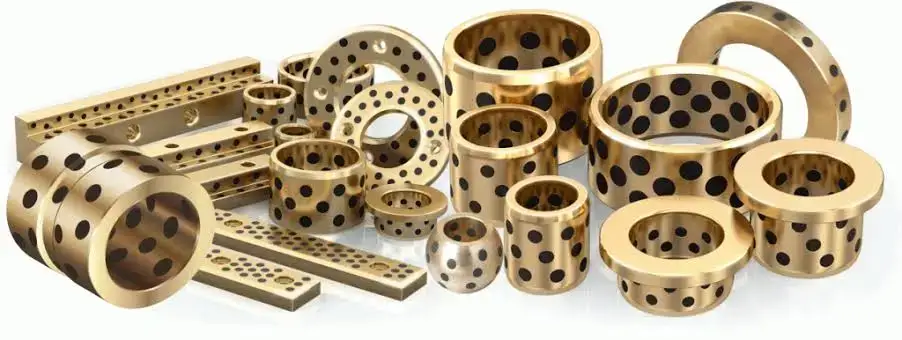
100000+ Types of Bushings – Contact Us for Details
If you’re dealing with a bearing application where conventional lubrication isn’t working — or simply isn’t practical — graphite bearings deserve serious consideration. The self-lubricating properties, temperature resistance, and chemical stability of quality graphite bearings can solve problems that oil and grease simply cannot.
MYWAY has been helping customers solve these problems for over 20 years. Whether your application involves high temperatures, submerged operation, chemical exposure, or simply the desire to eliminate lubrication maintenance, we can help you find the right graphite bushing solution.
Ready to discuss your application? Contact MYWAY today for a quote or technical consultation. Our engineering team will work with you to specify the right graphite bearing for your needs.
Email: [ivan@mybushing.com]
Website: mybushing.com
Request a Quote: [Contact Us – MYWAY Bushing]
MYWAY — Your partner for self-lubricating bearing solutions.