
Recent Posts
Bushings for Agricultural Machinery: How the Right Bushing Keeps Your Equipment Running Season After Season
Introduction
Every farmer knows the feeling: it’s the middle of harvest, and something starts knocking, squeaking, or worse — seizing up. More often than not, the culprit is a worn bushing. These small, cylindrical components sit at the heart of almost every pivot point, steering joint, and drive mechanism on modern agricultural equipment, yet they rarely get the attention they deserve until they fail. This article breaks down what agricultural machinery bushings actually do, which materials work best for different field conditions, how to spot wear before it turns into a breakdown, and what to look for when sourcing replacements. Whether you’re running tractors, combine harvesters, planters, or balers, understanding bushings can save you serious downtime and money.
Table of Contents
1. What Exactly Is a Bushing — and Why Does It Matter So Much in Agriculture?
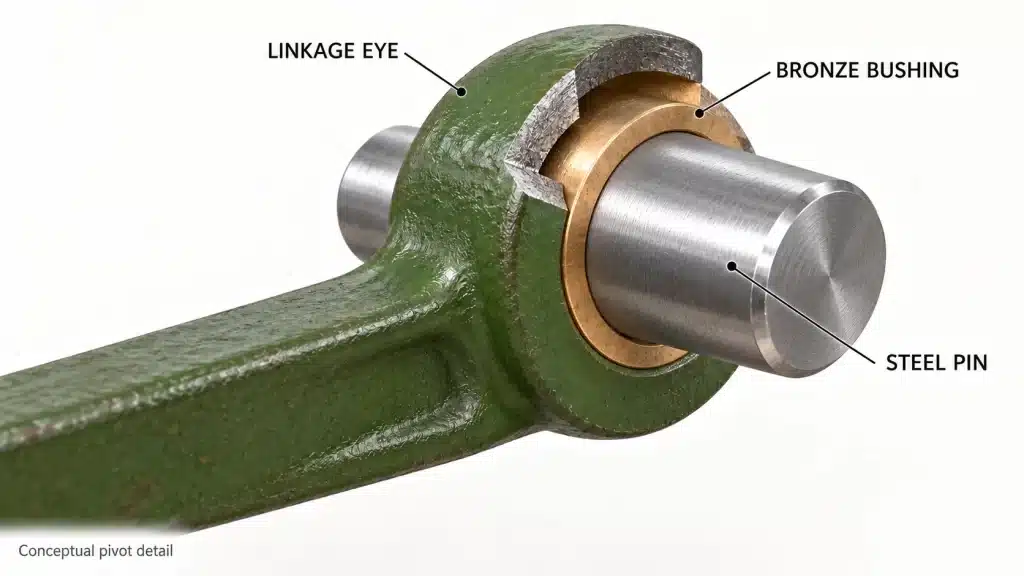
A bushing, sometimes called a plain bearing or sleeve bearing, is a cylindrical component that sits between two moving surfaces to reduce friction, absorb shock, and guide motion. Unlike roller or ball bearings that use rolling elements, bushings rely on a sliding contact surface. In agricultural machinery, this distinction matters more than you might think.
Why? Because farm equipment operates in some of the harshest conditions imaginable — grit, mud, moisture, chemical fertilizers, and temperature swings from freezing mornings to blistering afternoons. Rolling bearings tend to struggle in these environments because contaminants can jam the rolling elements. Bushings, on the other hand, handle dirty, oscillating, and slow-speed motion far more gracefully.
You’ll find bushings in a surprising number of places on a single machine:
Steering kingpins on tractors and combines
Pivot points on planters and seed drills
Front loader arm joints on tractors and telehandlers
Wobble box and sickle head assemblies on haybines and mowers
Threshing drum drive shafts on combine harvesters
Articulation joints on sprayers and trailers
Bale trip mechanisms on balers
Vesconite, a company that has been making polymer bushings for agriculture for decades, lists combine harvester steering shafts, planter pivot points, borehole pump bushings, front-loader bushings, and sprayer articulating arms as some of their most common applications.
2. Bushing Materials: Matching the Right Compound to the Right Job
One of the biggest mistakes farmers and maintenance crews make is assuming all bushings are interchangeable. They’re not. The material you choose directly affects how long the part lasts, how often you need to grease it, and whether it damages the shaft it’s supposed to protect.
Here’s a practical breakdown of the most common materials used in agricultural bushings:
Bronze and Bronze Alloys
Bronze bushings have been used in tractors since the early days of mechanization. They’re known as a sacrificial component — meaning they’re designed to wear out before the more expensive shaft or housing does.– Wrapped bronze bushings made from CuSn8 or CuSn6 alloys are particularly popular in agricultural machinery because their surface can be fitted with lubrication pockets that hold grease even in dirty conditions.
Best for: Heavy-load pivot points, high-temperature areas near engines or exhaust systems, and applications where shock loads are common.
Trade-off: They require regular greasing, and in abrasive soil conditions — think volcanic ash or fine sand — bronze can wear faster than expected.
Steel and Bimetal Bushings
Low-carbon steel bushings are the workhorses of the industry. They’re inexpensive, widely available in standard sizes, and can be plated (zinc, nickel, or chrome) for corrosion resistance.Bimetal bushings combine a steel backing with a bronze alloy layer, giving you the structural strength of steel with the bearing properties of bronze.
Best for: Moderate-load applications, spacer bushings, and situations where cost is a primary concern.
Trade-off: Steel-on-steel contact requires consistent lubrication. Skip the grease, and you’ll get galling and premature seizure.
Steel-Backed PTFE and POM Composite Bushings
These are multilayer bushings: a steel shell, a sintered bronze powder layer, and a top layer of PTFE or POM plastic. The AST20 series from AST Bearings, for example, uses POM (0.30–0.50 mm), sintered bronze powder (0.20–0.35 mm), and a steel backing — the POM surface even has circular indents that hold grease during assembly.
Best for: Applications where continuous lubrication isn’t practical — remote pivot points, hard-to-reach linkages, and equipment that runs intermittent cycles.
Trade-off: Higher upfront cost than plain steel bushings, and they don’t handle extreme edge loading as well as solid bronze.
Polymer and Engineered Plastic Bushings
This is where things get interesting. Companies like Vesconite and igus have developed advanced engineering thermopolymers that are specifically formulated for dirty, wet, and unlubricated conditions. Vesconite’s friction coefficient (0.12–0.20) is roughly half that of bronze and nylon, and their bushings can last 3 to 10 times longer than metal bushings in poorly-lubricated field conditions.
A potato planter manufacturer switched from oil-impregnated bronze bushings to iglide J plastic bushings and saw service life increase by 500–600% while cutting costs by up to 80%.On the West Coast, the bronze bushings were failing because of abrasive volcanic ash in the soil. On the East Coast, salt in the air was causing corrosion and seizure. The plastic bushings solved both problems.
Best for: Dirty, wet, corrosive, or poorly-lubricated environments. Also excellent for applications where you want to protect the shaft from wear — Vesconite claims it can reduce shaft wear by up to 90%.
Trade-off: Not ideal for very high-temperature applications (most polymer bushings top out around 130°C) or extremely high dynamic loads.
3. Where Bushings Fail: Common Wear Patterns and Root Causes
Understanding why bushings fail is the first step toward preventing it. After talking to mechanics and reviewing field reports, a few patterns come up again and again:
Edge Loading from Lateral Forces
This is the number one killer of agricultural bushings. When a shank, arm, or linkage experiences side-to-side force — which happens constantly with tillage equipment, planters, and harvesters — the load concentrates on the edge of the bushing instead of being distributed evenly. The result is rapid, uneven wear that can destroy a bushing in a fraction of its expected life.–
Corrosion from Lost Lubrication
Here’s a counterintuitive one: when you stop greasing a pivot, you don’t just lose lubrication — you also lose corrosion protection. Grease forms a barrier that keeps moisture away from the housing bore and the pin surface. Remove that barrier, and corrosion starts almost immediately. The corrosion flakes off, creating an abrasive paste that accelerates wear on both the bushing and the pin.
Loose Hardware and Bolt Fatigue
A worn bushing is often a symptom, not the disease. On New Holland haybines, for example, mechanics have found that loose bolts on the wobble box or sickle head will knock out bushings repeatedly — sometimes after just 50 acres of cutting. The fix isn’t a better bushing; it’s tightening the cap screws and bottom plate bolts to spec.
Contaminated Lubrication
Grease attracts dirt. In agricultural environments, that means every time you lubricate a bushing, you’re potentially introducing abrasive particles into the contact surface. This is why maintenance-free polymer bushings have gained so much traction — they eliminate the grease entirely, along with the dirt it attracts.
Incorrect Installation
Pressing a bushing in at an angle, failing to align grease holes, or using the wrong interference fit can all cause premature failure. On John Deere field cultivators, for instance, the manual specifies that when side-to-side movement of the shank reaches 38–51 mm at the sweep, the split-tension bushings need to be replaced — but the spring must be compressed and tension removed from the pivot bolt before you can even check properly.
4. How to Tell When Bushings Need Replacing (Before Something Breaks)
You don’t need to wait for a catastrophic failure. Here are the warning signs that experienced mechanics watch for:
Visible play or wobble. Grab the component and try to move it side to side. A new shank assembly on a Deere cultivator has 0–6 mm of lateral movement. Once it exceeds 38 mm, it’s time for new bushings.
Unusual noises. Knocking, squealing, or grinding sounds during operation usually mean metal-on-metal contact. On a combine harvester, a worn threshing drum bushing allows radial shaft play, which leads to vibration, uneven drum speed, and accelerated wear on adjacent seals and bearings.–
Grease leaking out or not going in. If grease squeezes out around the edges of a bushing instead of flowing through the grease channel, the bushing may be worn or the grease passage may be blocked.
Discoloration or heat marks. Overheating from friction will leave blue or dark marks on the bushing surface — a clear sign that lubrication has failed.
Irregular wear patterns. If you pull a bushing and see uneven wear — more material gone from one side than the other — you’re dealing with edge loading or misalignment, not just normal wear.
For combine harvesters specifically, Deere recommends inspecting arm and connecting rod rubber bushings after every harvest and replacing them every 500 hours of operation.– That’s a good baseline for any high-vibration application.
5. Choosing the Right Bushing for Your Application: A Practical Framework
With so many options on the market, how do you actually decide? Here’s a simple decision framework that works for most agricultural applications:
Step 1: Identify the motion type
Rotating continuously? (e.g., drive shafts, idler pulleys) → Consider bimetal or steel-backed PTFE bushings
Oscillating or pivoting? (e.g., steering kingpins, planter arms, loader pivots) → Bronze, polymer, or composite bushings work well
Static spacer? (e.g., wheel spacers, linkage shims) → Plain carbon steel is fine
Step 2: Assess the environment
Clean and dry? → Bronze or steel bushings with regular greasing
Dirty, wet, or corrosive? → Polymer bushings (Vesconite, iglide) or sealed composite bushings
High temperature (>150°C)? → Bronze or specialized metallic bushings
Heavy shock loads? → Bronze or bimetal bushings with hardened shafts
Step 3: Consider your maintenance reality
Be honest here. If you know you won’t grease every 50 hours, don’t buy a bushing that requires it. A more expensive polymer bushing that runs maintenance-free for years will cost less in the long run than a cheap bronze bushing that fails because it was never lubricated.
Step 4: Match the shaft
This is critical and often overlooked. PEL bushings from HEF, for example, require a mating shaft with surface roughness below Ra 0.8 μm and hardness above 56 HRC for optimal performance.If your shaft is worn, pitted, or too soft, even the best bushing will fail quickly. In some cases, it’s worth machining the shaft or installing a wear sleeve before fitting new bushings.
6. Bushing vs. Bearing: When to Use Which
This is a question that comes up constantly in agricultural maintenance circles, and the answer isn’t always straightforward.
The fundamental difference: bearings use rolling elements (balls or rollers) to reduce friction, while bushings rely on a sliding contact surface. Bearings offer lower friction and higher speed capability, but they’re more sensitive to contamination. Bushings handle dirty environments and shock loads better, but they generate more friction and are generally limited to lower speeds.
In agriculture, the choice often comes down to practicality:
| Factor | Bushings | Bearings |
|---|---|---|
| Upfront cost | Lower | Higher |
| Load capacity | Moderate to high | High |
| Speed range | Low to moderate | High |
| Contamination tolerance | Excellent | Poor |
| Maintenance | Can be self-lubricating | Usually requires grease |
| Lifespan in dirty conditions | Often longer | Often shorter |
Hustler Equipment, a manufacturer of livestock feedout machinery, made a deliberate choice to use sealed ball bearings over bushings in their feedout equipment. Their reasoning: bearings last virtually the entire life of the machine, while bushings would need replacing several times.But that decision makes sense for their specific application — high-speed rotating components in a relatively controlled environment.
For ground-engaging tools, steering systems, and pivot points exposed to soil and moisture, bushings remain the smarter choice.
7. Sourcing and Customization: What to Look for in a Supplier
Not every bushing needs to be custom-made, but in agriculture, off-the-shelf sizes rarely cover everything. Many equipment manufacturers use proprietary dimensions, and older machines often have worn housings that require oversized bushings.
Here’s what to evaluate when choosing a bushing supplier:
Material range. A good supplier should offer bronze, steel, bimetal, polymer, and composite options — not just one material. You need choices because one material won’t fit every application.
Custom manufacturing capability. Look for suppliers who can work from drawings, STEP files, or even samples. Companies like Pattberg MBT in Germany supply agricultural machinery manufacturers with custom bushings and bearings made from bronze, stainless steel, and special materials for high loads, working from batch size 1 up to 5,000 units.
Quality certification. ISO 9001 is the minimum. For safety-critical applications, look for IATF 16949 or similar automotive-grade certifications. Material certificates to EN 10204 (2.1, 2.2, or 3.1) provide traceability, which matters for warranty and liability purposes.
Size range and standard stock. Some suppliers, like Willie Washer, stock machinery bushings in a wide range of narrow and wide rim sizes, with inside diameters from small to large, and offer plating options (zinc, chrome) for corrosion resistance.
Technical support. The best suppliers don’t just sell parts — they help you select the right one. They’ll ask about load, speed, temperature, contamination, and maintenance intervals before making a recommendation.
Lead time and availability. In agriculture, downtime during planting or harvest can cost thousands per day. A supplier who can ship standard sizes same-day or next-day is worth a premium over one who saves you 10% but takes three weeks.
8. Maintenance Best Practices That Actually Extend Bushing Life
Good maintenance isn’t complicated, but it does require discipline. Here are the practices that make the biggest difference:
Lubricate on schedule — but don’t over-grease. Over-greasing can blow out seals and attract more dirt. Follow the manufacturer’s interval, and use the specified lubricant. New Holland recommends SAE 10 weight oil or a quality spray lubricant for many bushing applications.
Check torque on all fasteners. A loose bolt is a bushing killer. On Kinze planters, for example, the manual specifies checking each bolt for proper torque and inspecting the bushing for cracks and wear if the bolt is loose. Only hardened flat washers should be used, torqued to 130 ft-lbs.
Inspect during seasonal maintenance, not just when something breaks. Pull the machine into the shop at the end of each season and check every pivot point, steering joint, and linkage for play. Catching a worn bushing early prevents shaft damage and costly repairs.
Replace in sets. If one bushing in a pair or set is worn, replace them all. Uneven wear on one side will accelerate wear on the other.
Clean before you grease. Wipe off the grease fitting and surrounding area before pumping new grease in. This prevents pushing dirt into the bearing surface.
Consider upgrading to maintenance-free bushings on problem joints. If you’re replacing the same bushing every season, it’s not a maintenance problem — it’s a design problem. A polymer bushing from Vesconite or igus may cost more upfront but could eliminate the recurring failure entirely.
Frequently Asked Questions
Q: How do I know if my bushing is worn or if the problem is something else?
A: Check for play first. If the component moves more than the manufacturer’s specified tolerance, the bushing is likely worn. But also check the bolt torque, the shaft surface, and the housing bore. A worn housing bore or a damaged shaft will cause new bushings to fail quickly, no matter how good the bushing itself is.
Q: Can I replace a bronze bushing with a plastic one?
A: In many cases, yes — and it can be an upgrade. Plastic bushings like iglide J or Vesconite work well in dirty, wet, or poorly-lubricated conditions where bronze would fail. However, check the temperature and load ratings first. If your application runs above 130°C or carries very high dynamic loads, bronze may still be the better choice.
Q: How often should I grease my agricultural machinery bushings?
A: It depends on the application. Some bushings need daily greasing during heavy use; others can go 50 hours or more between services. PEL bushings from HEF, for instance, offer lubrication intervals up to 50 hours depending on working conditions.-3 Always follow your equipment manufacturer’s recommendation, and increase frequency in dusty or wet conditions.
Q: Why do my bushings keep failing on the same joint?
A: If you’re replacing the same bushing repeatedly, the bushing isn’t the problem. Common causes include a worn or bent shaft, a misaligned housing, loose fasteners, or edge loading from lateral forces. Inspect the entire joint assembly, not just the bushing.
Q: What’s the difference between a bushing and a bearing in farm equipment?
A: A bushing is a type of plain bearing that uses a sliding contact surface. A bearing (in the common sense) uses rolling elements. Bushings are better for dirty, slow-speed, oscillating applications; bearings are better for high-speed, clean, continuously rotating applications. In agriculture, you’ll often find both on the same machine.
Q: Do I need custom bushings or can I use standard sizes?
A: Start with standard sizes if they fit. But if your machine has proprietary dimensions, or if the housing bore is worn beyond standard tolerances, custom bushings are the better option. Many suppliers can manufacture to your exact specifications from a drawing or sample.
Q: How do I measure a bushing for replacement?
A: You need three dimensions: inner diameter (ID), outer diameter (OD), and length. For flanged bushings, you also need flange diameter and flange thickness. Measure the shaft diameter for ID and the housing bore for OD. If the housing is worn, measure at multiple points to check for ovality.
Q: Are maintenance-free bushings really maintenance-free?
A: In most agricultural applications, yes. Self-lubricating polymer bushings don’t require external grease. However, they still need periodic inspection for wear, and in extremely abrasive conditions, they may eventually need replacement. The key advantage is that you eliminate the routine greasing schedule and the dirt attraction that comes with it.
Q: What’s the typical lifespan of an agricultural bushing?
A: It varies widely. A bronze bushing in a clean, well-lubricated application might last thousands of hours. The same bushing in abrasive soil with irregular greasing might fail in a few hundred hours. Polymer bushings in dirty conditions often outlast metal bushings by 3–10 times.
Q: Can I install bushings myself, or do I need a machine shop?
A: Many bushings can be installed with basic tools — a drift punch, hammer, and an arbor press. But for precision fits, especially in steering and drivetrain components, a machine shop with proper pressing equipment is recommended. Always lubricate the bushing inside and outside before installation, and make sure it seats flush with the housing bore.–
Q: What’s driving innovation in agricultural bushings right now?
A: Two things: the shift toward maintenance-free solutions and the push for lead-free materials. The global plain bearing market is projected to grow from USD 11.6 billion in 2025 to USD 16.8 billion by 2032, driven in part by demand for self-lubricating and solid-lubricant bearings that reduce or eliminate grease points.– Environmental regulations are also pushing manufacturers toward lead-free bronze alloys and RoHS-compliant materials without sacrificing performance.
Q: Where can I buy high-quality agricultural machinery bushings?
A: You have several options depending on your needs. OEM dealers (John Deere, CNH, AGCO) offer genuine parts with guaranteed fit, but they’re often the most expensive. Aftermarket suppliers can offer equivalent quality at lower prices, but quality varies — look for ISO 9001 certified manufacturers. For custom or hard-to-find sizes, specialized manufacturers who work directly with agricultural equipment builders are often the best source. When evaluating any supplier, ask for material certificates, check their quality certifications, and request samples before committing to a large order.
100000+ Types of Bushings – Contact Us for Details