
Recent Posts
Babbitt Bearings: Material Characteristics, Working Mechanism, Classification and Industrial Application Solutions
Introduction
Rolling bearings occupy dominant market share in general machinery, yet heavy-duty rotating equipment such as turbines, large generators, industrial pumps and blowers still rely heavily on fluid film sliding bearings lined with Babbitt metal. Babbitt bearings, also known as white metal bearings, represent a core type of plain bearing defined by lining material rather than structural form. Since Isaac Babbitt invented Babbitt alloy in 1839, this soft bearing alloy has been widely adopted in heavy industry for its outstanding conformability, embeddability and anti-galling performance.
Table of Contents
1. Definition & Metallurgical Structure of Babbitt Bearing
A Babbitt bearing is not an independent bearing structural category. Essentially, it refers to plain sliding bearings whose inner working surface is bonded with a thin layer of Babbitt metal. The substrate backing usually adopts steel, bronze or CuCr alloy to provide mechanical strength, while the thin Babbitt lining directly contacts the shaft journal.
Metallurgically, Babbitt metal belongs to metal matrix composite materials. Its microstructure consists of soft base matrix uniformly distributed with hard intermetallic crystal particles. Two mainstream alloy systems are widely used in industry:
*Tin-based Babbitt: Soft tin matrix with hard SnSb and Cu-Sn alloy particles
*Lead-based Babbitt: Lead base with antimony alloy hard particles
The soft matrix can slightly deform during operation to achieve good running-in effect and embed tiny abrasive impurities. Hard particles undertake main load support and resist wear. Such unique microstructure makes Babbitt an ideal sacrificial friction surface. When abnormal metal contact occurs due to lubrication failure, only the low-cost Babbitt lining wears preferentially, protecting expensive shaft journals and bearing base body from severe scratching.
| ASTM Grade | Main Composition | Alloy Type | Typical Working Temp | Core Application Scenarios |
|---|---|---|---|---|
| Grade 1 | Sn 90–92%, Sb4–5%, Cu4–5% | Tin-based | ≤130℃ | Steam turbine, generator, boiler feed pump |
| Grade 2 | Sn 88–90%, Sb7–8%, Cu3–4% | Tin-based | ≤130℃ | High-speed compressor, marine propulsion bearing |
| Grade 7 | Pb72.5–76.5%, Sb14–16%, Sn9.3–10.7% | Lead-based | ≤110℃ | Low-speed light-load fan, general industrial pump |
| Grade 8 | Pb77.9–81.2%, Sb14–16%, Sn4.5–5.5% | Lead-based | ≤110℃ | Mining machinery, low-speed reducer bearing |
2. Working Principle of Babbitt Bearing (Hydrodynamic Oil Film Lubrication)
Babbitt bearings operate based on sliding contact and hydrodynamic fluid film lubrication, completely different from rolling contact roller bearings.
1.During stable rotation, the relative movement between shaft journal and bearing lining drives lubricating oil into the convergent wedge gap; oil pressure rises to form a continuous thin oil film.
2.Under normal operating conditions, the oil film separates the shaft and Babbitt lining thoroughly. No direct metal contact exists, friction loss mainly comes from internal shearing of lubricant.
3.During startup, shutdown or unstable lubrication, boundary lubrication or mixed friction appears. At this stage, the soft Babbitt layer plays protection.
4.If pollutants invade or long-term fatigue happens, abrasion emerges. The sacrificial Babbitt lining absorbs damage to avoid shaft scoring.
Critical reminder: Most Babbitt bearings cannot work under dry friction continuously. Reliable pressurized oil supply is required for high-speed heavy-load equipment.
3. Difference Between Babbitt Bearing, Journal Bearing and Roller Bearing
Many industrial buyers confuse these three concepts. Clear logical distinction helps equipment design and component selection.
3.1 Babbitt Bearing VS Journal Bearing
Journal bearing: Defined by structure & load function, radial plain bearing supporting shaft radial load. It is a broad category of sliding bearings.
Babbitt bearing: Defined by lining material. It is a material description, not a structural classification.
Logical relationship: Many journal bearings adopt Babbitt lining (Babbitt-lined journal bearing). Meanwhile, Babbitt thrust bearings used for axial load do not belong to journal bearings. Therefore, part of Babbitt bearings are journal bearings, not all.
3.2 Babbitt Bearing VS Roller Bearing
Performance Comparison – Babbitt Bearing vs Roller Bearing
| Comparison Item | Babbitt Bearing (Sliding Type) | Roller Bearing (Rolling Element) |
|---|---|---|
| Friction Mode | Sliding contact, rely on oil film | Rolling contact via rollers/balls |
| Vibration Damping | Excellent, good shock absorption | Weak, sensitive to impact load |
| High-speed Stability | Tilt pad type avoids oil whirl, fit ultra-high speed | Limited by rolling element centrifugal force |
| Lubrication Demand | Require continuous oil supply for fluid film | Can operate with grease lubrication simply |
| Repair Mode | Rebabbitting: replace alloy lining, reuse base shell | Whole set replacement generally |
| Cost for Large Size | Economical for oversized shaft specification | High cost for large-diameter customized models |
| Typical Defect Risk | Oil whip, insufficient oil film thickness | Rolling element fatigue peeling, noise |
4. Classification of Babbitt Bearings Based on Load Direction
4.1 Babbitt Journal Bearings (Radial Load)
4.2 Babbitt Thrust Bearings (Axial Load)
5. Classification of Babbitt Bearings Based on Structural Design
Tilting Pad Babbitt Bearings
Independent bearing pads can tilt automatically during operation, optimize oil film formation under variable load and speed. Effectively restrain oil whirl and oil whip, improve rotor stability. Preferred for critical high-speed rotating machinery such as gas turbines, high-speed compressors.
Fixed Profile Babbitt Bearings
Integral fixed inner bore surface without movable pads. Simple structure, low manufacturing cost. Suitable for equipment with stable speed, constant load and good alignment conditions: general motors, fans, conventional pumps, industrial gearboxes.
Sleeve Babbitt Bearings
Integral cylindrical bushing with Babbitt cladding. Provide continuous radial support for shafts. Widely used in medium-large motors, industrial blowers and marine shaft systems.
Split Babbitt Bearings
Separated into upper and lower halves. No need to disassemble the whole shaft during on-site maintenance, greatly shorten equipment downtime. Common in ball mills, cement mills, large turbines and paper-making machinery.
6. Operational Characteristics
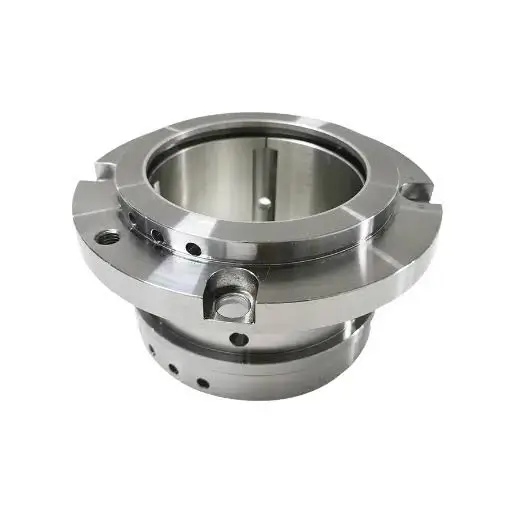
One remarkable advantage of Babbitt bearings is reusability of bearing shells. After long-term operation, worn Babbitt alloy layer can be completely removed, the substrate cleaned, and new molten Babbitt poured and machined to recover original dimensions. This process is called rebabbitting.
For large customized bearing shells, rebabbitting brings obvious cost advantages compared with purchasing brand-new bearings. However, if the steel or CuCr backing suffers deformation, crack or excessive corrosion, the base shell cannot be reused.
7. Advantages & Limitations of Babbitt Bearings
Core Advantages
1.Superior conformability: Automatically adapt to minor shaft misalignment
2.Embeddability: Capture tiny abrasive particles to prevent shaft damage
3.Anti-seizure property: Low tendency of metal galling under temporary poor lubrication
4.Great damping capacity: Reduce vibration of high-speed rotors
5.Repairable via rebabbitting for heavy large-size bearing housings
Main Limitations
1.Limited maximum operating temperature (~130°C), strength drops sharply at high temperature
2.Low fatigue strength, unsuitable for long-period severe dynamic alternating load
3.Require continuous and stable liquid lubrication system
4.Tin-based Babbitt raw material price is relatively high
5.Lead-based Babbitt involves environmental restrictions in many regions
8. Industrial Application Range of Babbitt Bearings
Heavy rotating equipment relying on fluid film bearings remains the core application market:
✅ Power industry: Steam turbines, gas turbines, turbo generators, hydroelectric generators
✅ Petrochemical industry: Process pumps, multistage centrifugal compressors
✅ Marine industry: Main propulsion shafts, marine gearboxes, ship pumps
✅ Metallurgy & building materials: Ball mills, rotary kiln supporting bearings, fan equipment
✅ General machinery: Large industrial motors, blowers, wastewater pumps
At the same time, many medium-low speed, light-medium load working conditions do not need high-cost Babbitt bearings. Self-lubricating sliding bushings become cost-effective alternatives.
9. Alternative Sliding Bearing Solution: MYWAY DU & SF-1 Composite Bushings
Although Babbitt bearings perform excellently for high-speed heavy-load turbine equipment, many medium-speed, intermittent operating, limited-lubrication scenarios face pain points: complex oil supply system, high casting and machining cost, long delivery cycle of customized Babbitt bearings.
MYWAY supplies high-performance DU (SF-1) and SF-2 self-lubricating composite bushings as mature substitutes.
*DU Bushing: Steel backing + sintered bronze powder + PTFE lead-free surface layer. Can work under dry friction or boundary lubrication. No complex oil circulation system required.
*SF-2 Bushing: Steel base + bronze layer + porous oil storage polymer layer, optimized for continuous oil-lubricated medium load conditions.
Advantages of MYWAY Bushings compared with conventional Babbitt bearings
1.Lower overall procurement cost, no casting process
2.Short lead time, abundant standard sizes, support non-standard customization
3.Wide temperature adaptability, no risk of alloy softening like Babbitt metal
4.Light weight, compact structure, easy installation
5.Lead-free environmental formula, meets global environmental protection standards
MYWAY specializes in industrial sliding bearings, composite bushings, DU/SF-1 liners, bronze bushings. We provide drawing-based customization, dimension verification and working condition matching solutions. If you are looking for sliding bearing alternatives to replace traditional Babbitt bearings, send your shaft size, load data, speed and lubrication parameters to our team for technical proposal and quotation.
FAQ: 20 Frequently Asked Questions about Babbitt Bearings
Q1. What is the difference between Babbitt metal and white metal?
A: Babbitt metal is a type of white metal bearing alloy. The term white metal covers multiple low-melting alloys, so we avoid general “white metal” naming to prevent confusion with zinc die-casting alloys.
Q2. Can Babbitt bearings run without lubricating oil?
A: Long-term dry running is forbidden. Short boundary friction during startup is acceptable, continuous dry friction will lead to rapid melting and failure of Babbitt lining.
Q3. What maximum temperature can Babbitt bearings withstand?
A: Standard tin-based Babbitt recommended continuous operating temperature ≤130°C. Exceeding this value will cause permanent reduction of fatigue strength.
Q4. What is rebabbitting?
A: The maintenance process of removing worn alloy layer, re-pouring new Babbitt metal and finish machining on original bearing backing.
Q5. Are journal bearings always Babbitt bearings?
A: No. Journal bearings can adopt bronze, aluminum-tin alloy, polymer lining; only those lined with Babbitt metal are Babbitt journal bearings.
Q6. Which is better: tin-based Babbitt or lead-based Babbitt?
A: Tin-based has better corrosion resistance, fatigue resistance and thermal conductivity for high-speed heavy load; lead-based is cheaper for low-speed light load, limited by environmental regulations.
Q7. Why is Babbitt made as thin lining instead of solid bearing?
A: Babbitt metal has low mechanical strength. Thin lining bonded on rigid steel/bronze substrate balances friction performance and structural strength, saving expensive tin raw materials.
Q8. Can Babbitt bearings replace roller bearings directly?
A: Not universal. Need to evaluate lubrication system, installation space, load type and rotating speed comprehensively.
Q9. What causes Babbitt bearing melting failure?
A: Insufficient oil supply, oil contamination, shaft misalignment, excessive overload, oil film rupture.
Q10. Do all turbines use Babbitt bearings?
A: Most large steam/gas turbines adopt Babbitt tilting pad bearings; small turbines may use alternative aluminum-tin bearings.
Q11. How to select Babbitt alloy grade?
A: Main reference parameters: shaft surface speed, bearing unit load, lubrication medium, continuous working temperature.
Q12. What is oil whirl and oil whip on Babbitt bearings?
A: Unstable oil film vibration phenomena. Tilting pad Babbitt bearing design can effectively suppress these faults
Q13. Can MYWAY DU bushings replace Babbitt bearings?
A: Suitable for medium-low speed, medium load, intermittent operation; not recommended for ultra-high speed heavy turbine main bearings. Send working parameters for technical evaluation.
Q14. What surface treatment is required before pouring Babbitt alloy?
A: Bearing shell cleaning, tinning pretreatment and preheating are required to guarantee bonding strength between Babbitt and substrate.
Q15. How long is the service life of Babbitt bearings?
A: Closely related to lubrication cleanliness and load; normally reach 3–8 years under well-maintained power equipment.
Q16. Are split Babbitt bearings better than sleeve type?
A: Split type gains advantage in maintenance convenience; integral sleeve type has higher rigidity under the same size.
Q17. Can Babbitt thrust bearing bear radial load?
A: Mainly designed for axial thrust; it cannot undertake large radial load independently. Matched radial journal bearing is required.
Q18. What alternative materials exist for Babbitt lining?
A: Aluminum-tin alloy, engineered polymer, cermet composite materials for higher temperature and fatigue working conditions.
Q19. Did automobile engines stop using poured Babbitt bearings?
A: Since the 1950s, automotive crankshaft bearings gradually adopted bimetallic strip bearings instead of cast Babbitt bearings.
Q20. How to inquire customized sliding bearings from MYWAY?
A: Provide drawing, inner/outer diameter, length, working speed, load, lubrication mode and medium. Our engineers offer matching bushing solution and formal quotation.
100000+ Types of Bushings – Contact Us for Details