
Recent Posts
Beyond the Shaft: Bronze Bushing Uses in Modern Machinery
If you work with rotating shafts, pivot points, or sliding mechanisms, you rely on bronze bushings—even if you don’t see them. These cylindrical components are the unsung heroes of the mechanical world, quietly reducing friction, absorbing shock, and preventing metal-to-metal contact that would otherwise destroy your equipment.
But where are bronze bushings actually used? And why does industry after industry keep coming back to this ancient alloy?
Let’s break down the most common bronze bushing uses across industries, and explore why this material remains the gold standard for heavy-duty applications.
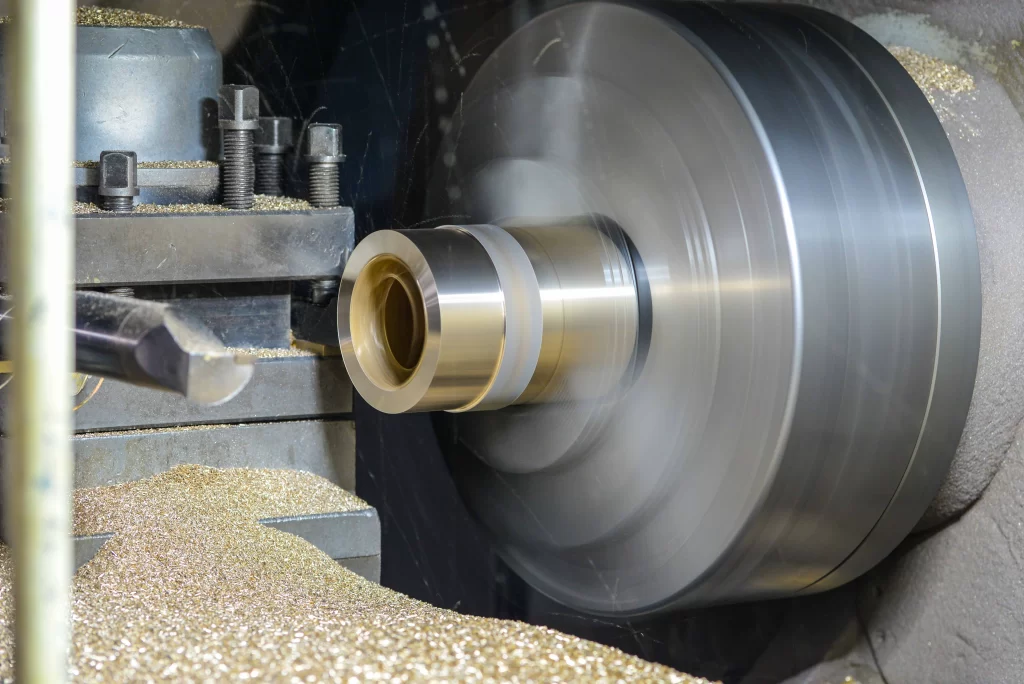
Table of Contents
1. What Exactly is a Bronze Bushing?
Before diving into applications, let’s quickly define the component. A bronze bushing (also called a plain bearing or sleeve bearing) is a cylindrical component designed to provide a low-friction surface between a rotating shaft and its housing .
Unlike ball bearings, which use rolling elements, bushings rely on sliding contact. This is where bronze shines. Depending on the alloy, bronze bushings can be:
Cast Bronze: Solid, dense, and incredibly strong for heavy shock loads .
Sintered Bronze: Porous, acting like a sponge to hold oil for true self-lubrication .
2. The "Why" Behind Bronze: A Quick Material Science Breakdown
Engineers don’t choose bronze by accident. They choose it because of tribology—the science of interacting surfaces in motion.
When you have a steel shaft spinning inside a housing, something has to give. If you put steel against steel, they can “gall” or weld themselves together under pressure. Bronze solves this by acting as a sacrificial material. It is softer than the shaft, meaning it wears down first . It is far cheaper and easier to replace a bronze bushing than a precision-ground hydraulic shaft.
Key properties that make bronze ideal for bushings:
Embeddability: Hard dirt or debris particles get embedded into the soft bronze, rather than scoring the shaft .
Corrosion Resistance: Unlike steel, bronze doesn’t rust. In marine environments, this is a lifesaver .
Thermal Conductivity: Bronze draws heat away from the bearing surface, preventing oil from breaking down .
3. Common Bronze Bushing Uses by Industry
Here is where you will find these components doing the heavy lifting.
1. Heavy Industrial Machinery & Manufacturing
This is the home of the bronze bushing. In plants full of dust, debris, and constant motion, maintenance access is often limited.
Applications: Conveyor systems, pulp and paper machines, steel rolling mills, and printing presses .
Why Bronze? In these dirty environments, the abrasion resistance of bronze prevents grit from destroying the shaft. Sintered bronze bushings are particularly useful here because their oil-impregnated pores provide continuous lubrication without external grease fittings .
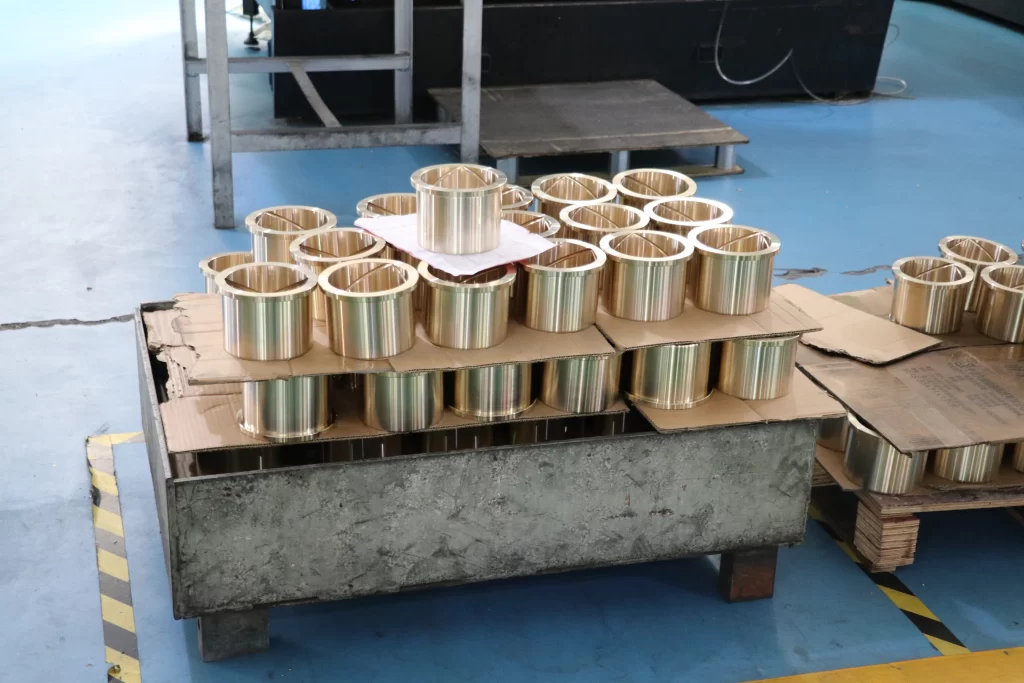
The Part: You will often find flanged bronze bushings used here to handle both radial loads (supporting the shaft) and thrust loads (positioning the shaft) at the same time .
2. Automotive and Heavy Trucking
Modern vehicles are full of bronze. If you want a smooth ride and reliable steering, you need these bearings.
Applications:
Suspension Systems: Control arms, sway bars, and leaf spring shackles .
Engines: Rocker arms and camshaft bearings.
Transmissions: Gearbox components where high load and sliding motion occur .
Why Bronze? Automotive environments involve high vibration and temperature swings. Bronze bushings dampen vibration and noise far better than hard steel bearings, contributing to a quieter cabin .
Expert Tip: In classic car restoration, sintered bronze bushings are often soaked in oil before installation to ensure they are fully saturated and last for decades .
3. Marine and Offshore Applications
Saltwater is the enemy of metal. Rust can eat a steel component in months. This is where bronze proves its worth.
Applications: Propeller shafts, rudder pintles, stern tubes, deck winches, and offshore platform equipment .
Why Bronze? Aluminum bronze (like C95400 or C95500) forms a protective oxide layer that makes it virtually immune to saltwater corrosion . It can operate submerged indefinitely.
The Challenge: These applications often face “boundary lubrication” conditions (where the shaft stops and starts). Cast bronze with grease grooves is often used to hold grease in place during static periods .
4. Aerospace and Defense
When a failure is not an option, engineers spec bronze.
Applications: Landing gear assemblies, flight control surfaces, and actuation systems .
Why Bronze? The high strength-to-weight ratio of specific bronze alloys and their ability to perform consistently across extreme temperature ranges (-65°F to 400°F) make them indispensable .
The Spec: Often, these bushings are graphite-plugged (oilless) to provide lubrication even in the vacuum of space or at high altitudes where grease would evaporate .
5. Construction and Earthmoving
Excavators, bulldozers, and cranes operate under massive shock loads.
Applications: Bucket pin joints, hydraulic cylinder pivots, and undercarriage rollers .
Why Bronze? The impact resistance of manganese bronze (C86300) is legendary. It can handle bearing pressures exceeding 4,000 psi and the constant pounding of digging rock .
Design Note: Look for thin-walled bronze bushings in hydraulic cylinders—they save space while allowing maximum power transfer .
6. Food Processing and Packaging
Hygiene and reliability go hand-in-hand here.
Applications: Mixing equipment, filling machines, and conveyor belts in ovens or freezers .
Why Bronze? Stainless steel bushings (sintered 304 or 316) are used in wash-down areas to resist corrosion from caustic cleaning agents. They meet FDA standards to ensure no contamination .
4. Cast vs. Sintered: Choosing the Right Manufacturing Method
When searching for bronze bushing uses, you must understand how the bushing is made. It drastically changes where it can be used.
Cast Bronze Bushings
Process: Molten bronze is poured into a mold or drawn continuously to create a dense bar stock, which is then machined .
Pros: Highest strength. Can withstand shock loads and impact. Ideal for excavators, presses, and marine winches .
Cons: Requires external lubrication (grease fittings or oil holes) unless graphite plugs are added.
Sintered Bronze Bushings (Powder Metallurgy)
Process: Bronze powder is compressed in a die and heated to fuse the particles, creating a porous structure. It is then vacuum-impregnated with oil .
Pros: Self-lubricating. The pores hold 15-30% oil by volume. As the shaft spins and heats up, the oil expands and lubricates the surface .
Cons: Lower load capacity than cast. Not suitable for heavy shock loads. Perfect for small electric motors, appliances, and automotive accessories .
5. How to Identify the Right Bronze Alloy
You cannot just ask for a “bronze bushing.” You need the right grade. Here is a quick cheat sheet based on bronze bushing uses:
C93200 (SAE 660): The workhorse. High-leaded tin bronze. Great for general machinery, medium speeds, and medium loads. Excellent machinability .
C95400 (Aluminum Bronze): The tough guy. High strength, excellent corrosion resistance. Use this for marine hydraulics and heavy-duty pumps .
C86300 (Manganese Bronze): The brute. Extremely high tensile strength (over 100,000 psi). Use for bridge pins and trunnions .
SAE 841 (Sintered Bronze): The self-lubricator. Standard for oil-impregnated bearings in motors and small appliances .
FAQ: Common Questions About Bronze Bushing Uses
Q: Do bronze bushings need grease?
A: It depends on the type. Cast bronze bushings almost always need grease or oil and often feature oil grooves to distribute the lubricant . Sintered bronze bushings are designed to be maintenance-free because they are impregnated with oil during manufacturing .
Q: What is the difference between a bushing and a bearing?
A: In industrial slang, a “bushing” is a type of plain bearing. It is a single, one-piece element. A “bearing” often refers to anti-friction bearings (like ball bearings) that have moving parts inside. Bushings are simpler and cheaper .
Q: Can you use a bronze bushing without a hardened shaft?
A: For light loads, yes. But for heavy loads, the shaft should be hardened (around 400 Brinell or more) to prevent the shaft itself from wearing down. The bronze is meant to wear, not the shaft .
Q: Why is sintered bronze so noisy if it runs dry?
A: If a sintered bushing runs out of oil, it can start to “chatter” or squeak . This is a sign that the oil reservoir in the pores has depleted, and it’s time for replacement or re-oiling.
Conclusion: Why Precision Matters
From the landing gear of an aircraft to the motor of a toy car, bronze bushings provide the silent, reliable support that keeps the world moving. They handle the heat, shrug off the corrosion, and take the hit so your expensive shafts don’t have to.
But not all bronze bushings are created equal. The difference between a bushing that lasts ten years and one that fails in ten months often comes down to material quality, manufacturing precision, and the right alloy selection.
Tailor-Made Excellence with MYWAY Bushing
At MYWAY Bushing, we don’t just make bushings—we engineer solutions. With over 20 years of experience and IATF/ISO certifications, we deliver custom and standard bronze bushings to clients in over 40 countries .
Whether you need:
High-strength cast bronze for your hydraulic excavators,
Self-lubricating sintered bronze for maintenance-free motors,
Or custom-machined flanged bushings to your exact drawings,
We have the technology and expertise to deliver.
Our Process:
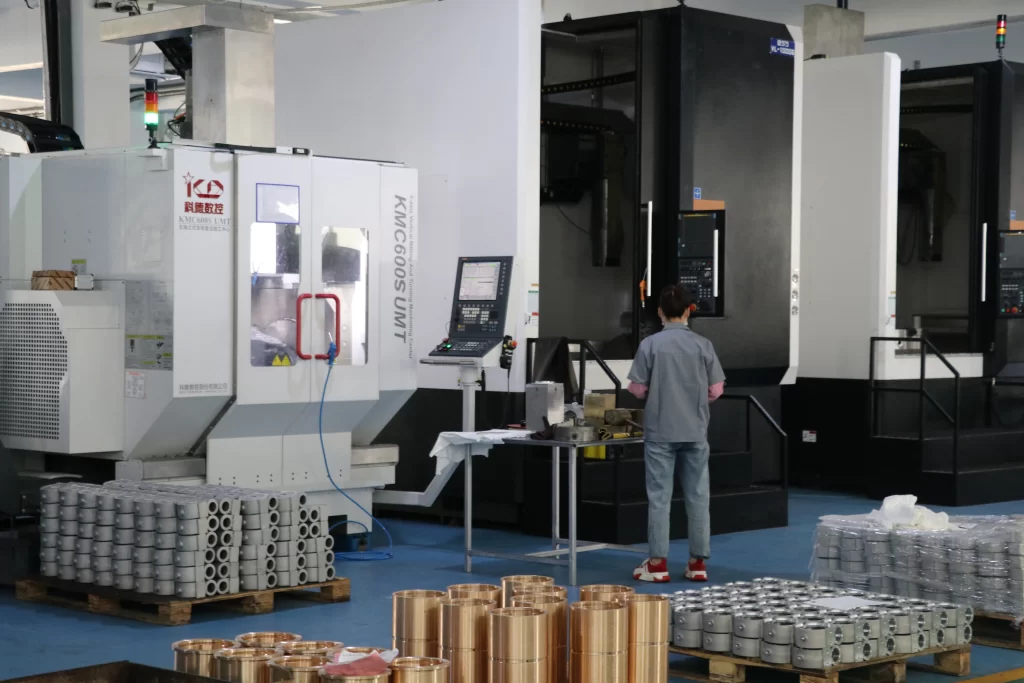
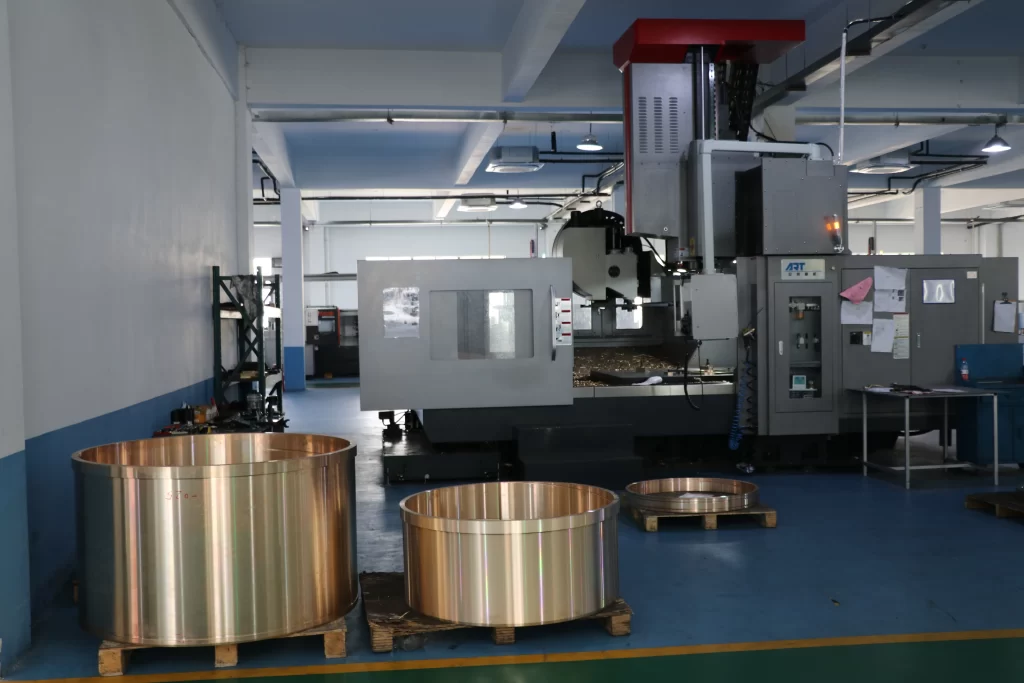
Precision: Continuous centrifugal casting and CNC machining ensure uniform structure and tight tolerances .
Quality: Every bushing is tested—from chemical composition (Mill Test Reports) to oil content and dimensional accuracy .
Logistics: We ship globally, ensuring your downtime is minimized and your supply chain stays moving.
Don’t settle for a “close enough” fit.
If you are looking for bronze bushings that offer durability, precision, and value, contact MYWAY Bushing today. Get a free quote and let our experts help you select the perfect alloy for your application.
100000+ Types of Bushings – Contact Us for Details