
Recent Posts
Bronze vs. Brass vs. Copper for Bushings: Which One Keeps Your Machines Running?
When a critical piece of equipment fails, the culprit is often hiding in plain sight: a worn-out bushing. For engineers, procurement specialists, and maintenance managers, the choice between copper, brass, and bronze isn’t just metallurgy—it’s about uptime, repair costs, and whether you’ll be taking that emergency call at 2 a.m.
Here’s the reality: not all copper alloys are created equal. Pick the wrong one, and you’ll be replacing it in months. Pick the right one, and it might outlast the machine itself.
Let’s cut through the technical noise and look at what actually matters when choosing bushing materials.
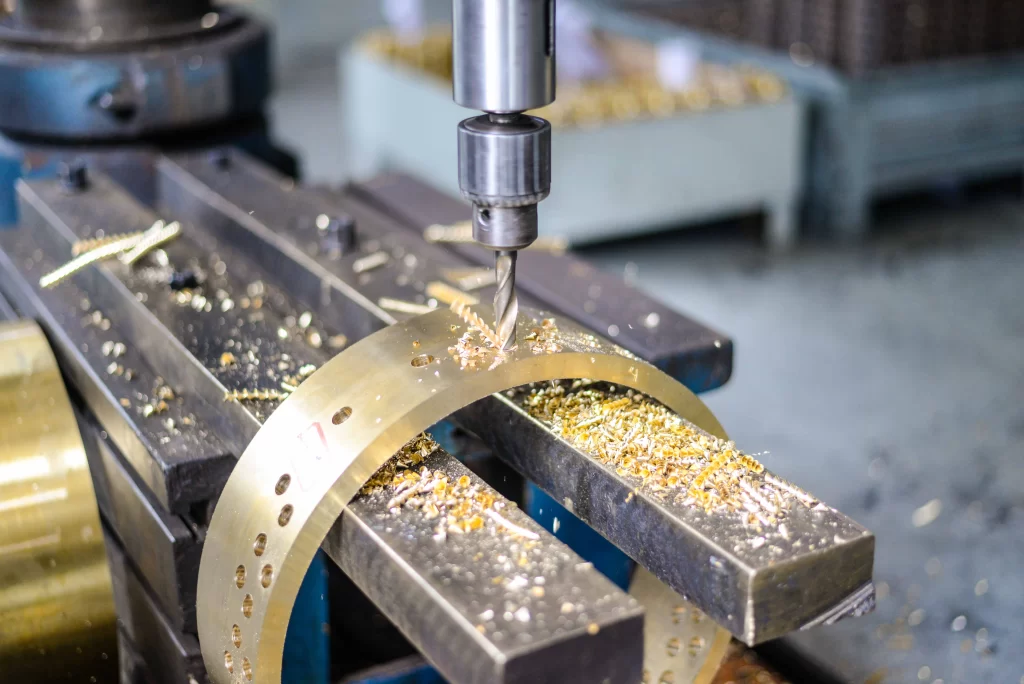
Table of Contents
1. The Short Answer (For Those Who Just Need to Know)
| If You Need… | Choose… | Why |
|---|---|---|
| High load capacity, wear resistance, and corrosion protection | Bronze | It’s the workhorse—stronger than both copper and brass, handles heavy loads, and survives in harsh environments . |
| Good machinability and moderate performance at lower cost | Brass | Easier to machine, cheaper than bronze, but less durable under heavy loads . |
| Electrical conductivity (not mechanical strength) | Copper | Great for wires and electrical contacts. For bushings? Almost never the right choice—it’s too soft . |
Still with me? Good. Because the real story is in the details—and those details can save you thousands in downtime and replacement costs.
2. What’s Actually Inside: Composition Matters
Let’s get metallurgical for a moment—but I promise to keep it painless.
Pure Copper
This is the base metal. Soft, ductile, and an excellent conductor of electricity and heat. But in a bushing application? It wears out faster than a cheap tire on a race track . Unless you’re building something that needs to conduct electricity while sliding (rare), copper should stay in your wiring, not your bearings.
Brass: Copper + Zinc
Brass is copper’s more affordable cousin. By adding zinc (typically 20–40%), you get a material that’s stronger than pure copper and machines beautifully—which is why you see it in decorative hardware, fittings, and light-duty bushings .
But here’s the catch: brass doesn’t like heavy loads or harsh environments. In high-pressure applications or corrosive settings, it can fail prematurely. If your machine works hard, brass probably isn’t your answer.
Bronze: Copper + Tin (and friends)
Bronze is what happens when you add tin to copper. The result? A material that’s significantly harder, stronger, and more wear-resistant than either copper or brass . This is the alloy family that engineers turn to when they need a bushing that won’t let them down.
Different bronze alloys add different “secret ingredients”:
Tin bronzes (like SAE 660): The all-rounders—great strength, good wear resistance, and reasonable cost .
Aluminum bronzes (like C95400): The heavyweights—handle high loads and high temperatures exceptionally well .
Phosphor bronzes: The springy ones—excellent fatigue resistance for dynamic applications.
Leaded bronzes: The self-lubricating helpers—the lead acts as an emergency lubricant if oil supply fails .
3. Real-World Performance: Where Bronze Earns Its Keep
Let’s talk about what actually happens inside your equipment.
Load Capacity: Bronze Wins, Hands Down
If your bushing supports heavy machinery, construction equipment, or anything with “heavy-duty” in the description, bronze is your material. Aluminum bronze, for example, can handle compressive strengths that make brass look like butter .
Real-world example: Cone crushers in mining operations use bronze countershaft bushings because they need to withstand both high loads and constant rotation at 500–1500 rpm. Bronze alloys like ZCuSn10Pb1 are standard here for a reason—they’re tough enough to survive where other materials would fail .
Wear Resistance: The Self-Lubricating Advantage
This is where bronze really shines. Certain bronze alloys—especially those with embedded graphite or PTFE—can operate with minimal or even zero external lubrication .
Here’s how it works: Solid lubricants like graphite are pressed into grooves or holes drilled into the bronze bushing. As the bushing rotates, the graphite transfers to the shaft surface, creating a low-friction film that protects both components .
Why does this matter to you?
Less maintenance—no grease fittings to forget
Cleaner operation—no oil drips in food processing or cleanroom environments
Reliability—the bushing keeps working even if the lubrication system fails
Corrosion Resistance: Marine and Beyond
Bronze has been used for centuries in ship propellers and underwater fittings because it doesn’t rust. In marine environments, saltwater will eat steel for breakfast—but bronze just keeps going .
Aluminum bronze, in particular, offers exceptional corrosion resistance even in acidic or chemically aggressive environments. If your equipment lives near water, chemicals, or just high humidity, bronze is your safest bet.
4. The Economics: Upfront Cost vs. Total Cost of Ownership
Here’s where the “cheaper is better” mindset can backfire spectacularly.
| Material | Upfront Cost | Maintenance Cost | Lifespan | Total Cost Over 5 Years |
|---|---|---|---|---|
| Copper | Low | High (frequent replacement) | Short | High |
| Brass | Medium | Medium | Medium | Medium |
| Bronze | Higher | Low | Long | Lowest |
Yes, bronze costs more upfront. But in demanding applications, a bronze bushing can outlast three or four brass replacements. When you factor in labor costs, downtime, and lost production, bronze is often the most economical choice .
And with copper prices rising—driven by demand from electric vehicles and renewable energy—the cost gap between bronze and other materials may actually narrow .
5. Manufacturing Methods: How Bronze Bushings Are Made
If you’re ordering custom bushings, understanding how they’re made helps you know what you’re paying for.
Centrifugal Casting
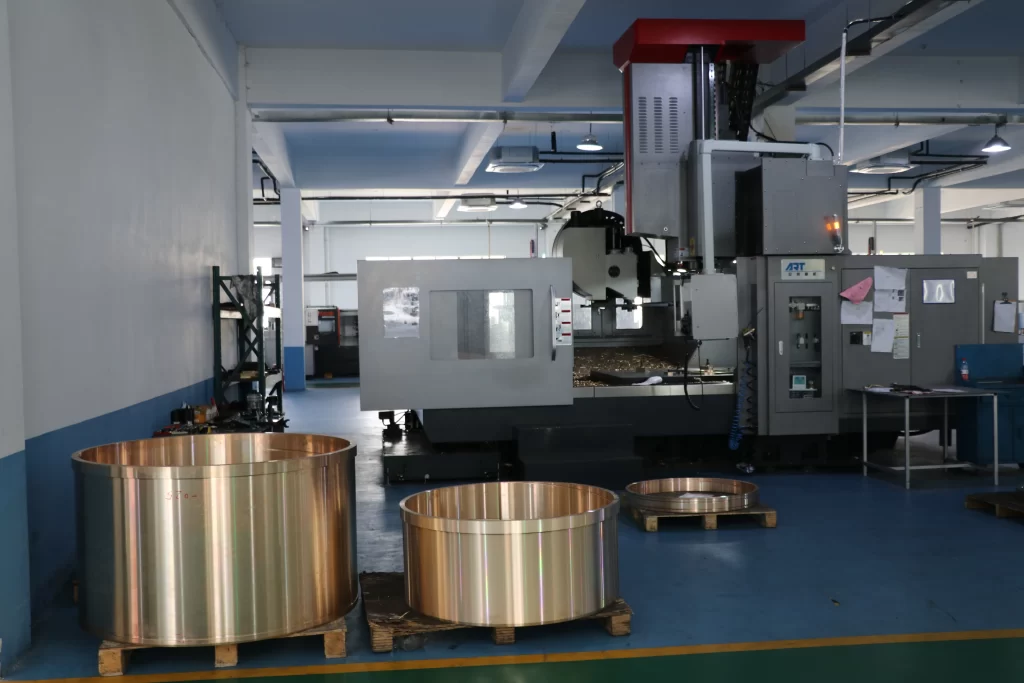
Molten bronze is poured into a rotating mold. The centrifugal force pushes impurities to the center (where they’re later machined away), creating a dense, uniform structure with excellent mechanical properties . This is the gold standard for cylindrical bushings.
Sand Casting
For complex shapes—like flanged bushings or components with intricate features—sand casting is the go-to method . It’s more flexible but may have slightly lower density than centrifugal casting.
Sintering (Powder Metallurgy)
SAE 841 bronze bushings are made by compacting bronze powder into shape, then sintering (heating without melting) to bond the particles. The result is a porous structure that can be impregnated with oil—creating a self-lubricating bushing that needs no external grease .
Machining + Graphite Plugging
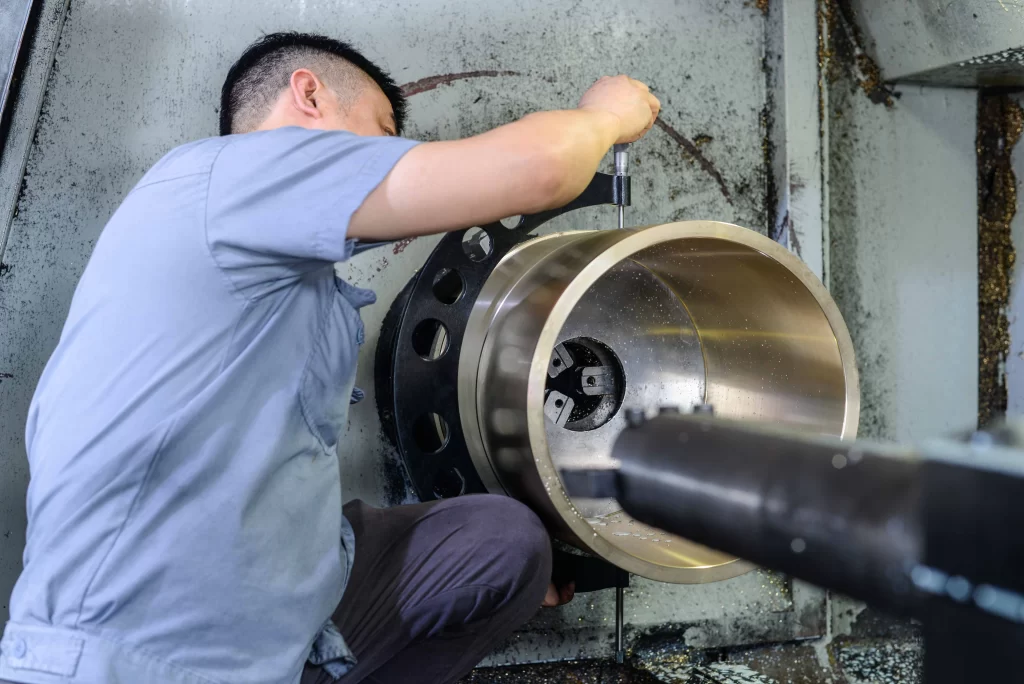
For high-end self-lubricating bushings, manufacturers start with a solid bronze casting, machine it to precise dimensions, drill a pattern of holes, and press solid graphite plugs into them . The result? A bushing that combines bronze’s strength with permanent, maintenance-free lubrication.
6. Application Deep Dive: Where Each Material Belongs
Heavy Machinery & Construction
Winner: Bronze (Aluminum or Tin)
Excavators, crushers, presses, and hydraulic equipment demand materials that can handle shock loads, contamination, and continuous operation. Bronze delivers the compressive strength and wear resistance these applications require .
Automotive & Suspension Systems
Winner: Bronze (sometimes brass)
Control arm bushings, sway bar links, and steering components need materials that can absorb vibration and handle both radial and axial loads. Bronze is common here, though lighter-duty applications may use brass to save cost .
Aerospace
Winner: Bronze (specialized alloys)
Flight control systems, landing gear, and actuation mechanisms require materials that perform reliably under extreme conditions—temperature swings, high vibration, and mechanical stress. Bronze alloys with good fatigue resistance are preferred .
Marine & Offshore
Winner: Bronze (Aluminum bronze)
Saltwater is brutal on most metals. Bronze’s natural corrosion resistance—especially aluminum bronze—makes it the standard for propeller shafts, rudder systems, and deck machinery .
Food Processing & Clean Environments
Winner: Self-lubricating Bronze
Where lubricants can’t contaminate products, graphite-plugged or PTFE-lined bronze bushings provide maintenance-free operation without oil or grease .
7. Maintenance-Free Technology: The Graphite Plug Innovation
Let’s talk about one of the most significant advances in bushing technology: graphite-plugged bronze bushings.
Instead of relying on external oil or grease, these bushings have solid graphite inserts pressed into the bronze body. As the bushing operates, the graphite transfers to the shaft, creating a low-friction film that lasts for the life of the component .
Why this matters for your operation:
No lubrication schedule to forget
No contamination risk from grease or oil
No grease fittings to break or maintain
Cleaner equipment and work environment
Applications where this technology shines include food processing machinery, textile equipment, packaging lines, and any hard-to-access location where regular lubrication is impractical .
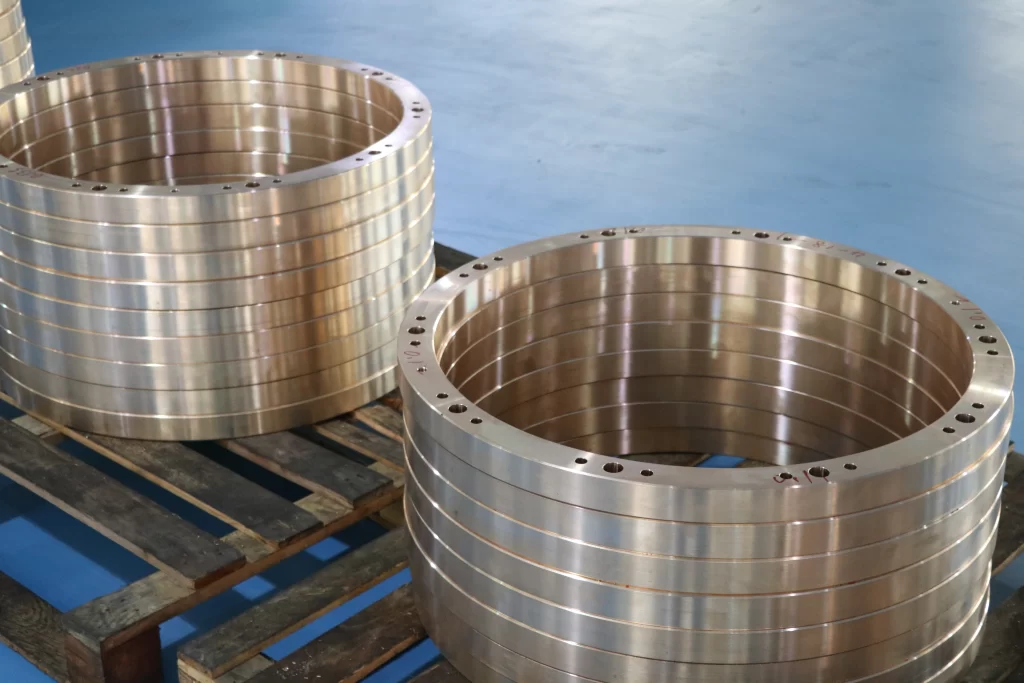
8. Tolerance and Fit: Getting It Right
Even the best material will fail if the fit isn’t correct.
For bronze bushings, typical running clearance is about 0.001 inches per inch of shaft diameter. A 2-inch shaft? Aim for roughly 0.002 inches of clearance .
The rule of thumb for shaft finishes: Rz 3–6.3 µm (ground finish) provides optimal performance with bronze bushings . Too rough, and you’ll accelerate wear. Too smooth, and the lubricant film may not form properly.
The MYWAY Difference: Engineered Solutions, Not Just Parts
At MYWAY Manufacturing, we’ve been making plain bearings since 2005. But what sets us apart isn’t just experience—it’s how we approach every customer’s problem.
We don’t sell off-the-shelf solutions and hope they work.
Instead, our engineers start by understanding your specific application: loads, speeds, temperatures, environmental conditions, maintenance constraints. Then we help you select the right bronze alloy—whether that’s a standard tin bronze, a high-strength aluminum bronze, or a self-lubricating graphite-plugged design.
Our capabilities include:
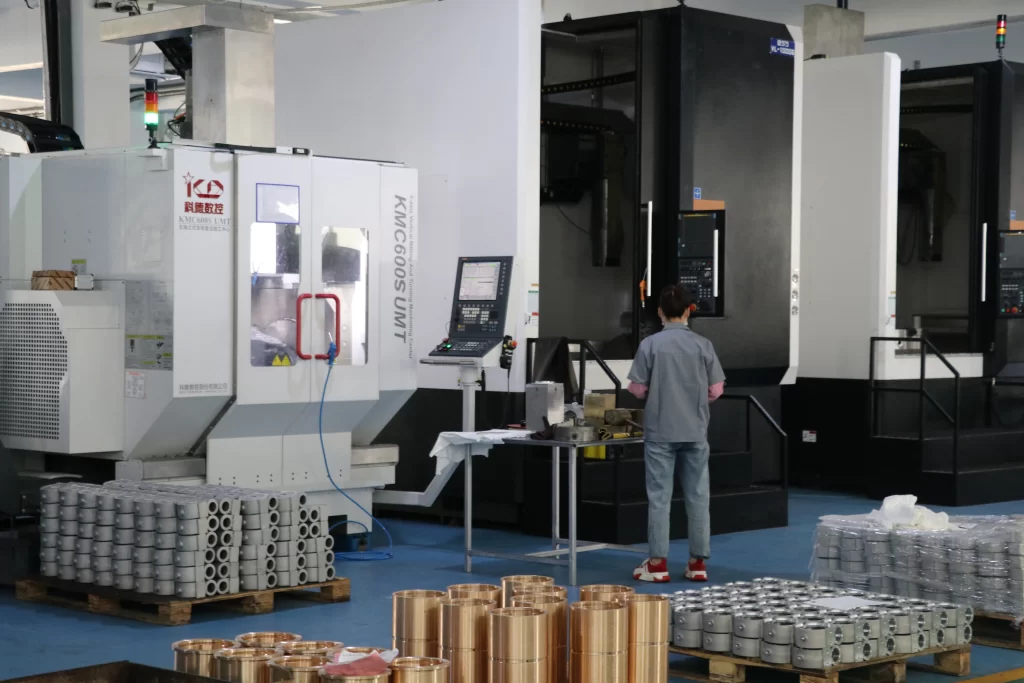
Full in-house manufacturing from raw material to finished part
Centrifugal, sand, and sintered casting methods
Precision CNC machining with tolerances down to ±0.01mm
Graphite plugging and PTFE lining for maintenance-free applications
Custom alloys and geometries for unique requirements
We’ve supplied bushings to industry leaders including XCMG, SANY, and Great Wall Motors—companies that don’t compromise on quality because they can’t afford downtime.
Frequently Asked Questions (FAQ)
Q1: Is bronze really that much better than brass for bushings?
A: For demanding applications—yes, significantly. Bronze has higher strength, better wear resistance, and superior corrosion resistance. The higher upfront cost is almost always recovered through longer service life and reduced maintenance .
Q2: Can bronze bushings run without lubrication?
A: Standard bronze bushings need lubrication. However, graphite-plugged or oil-impregnated (sintered) bronze bushings can operate with little or no external lubrication. The graphite or oil is embedded in the material and provides continuous self-lubrication .
Q3: What’s the maximum temperature for bronze bushings?
A: It depends on the alloy. Standard tin bronzes handle up to about 250°F (120°C) continuously. Aluminum bronzes can operate at higher temperatures, and graphite-plugged designs maintain lubrication even when traditional oils would break down .
Q4: How do I know what clearance my bronze bushing needs?
A: General rule: 0.001 inch per inch of shaft diameter, plus a little extra for larger sizes. For a 3-inch shaft, you’d typically want 0.003–0.004 inches of clearance. Always consult manufacturer specs for your specific application .
Q5: Can you make custom-sized bronze bushings?
A: Yes. Customization is one of our core strengths at MYWAY. Whether you need non-standard dimensions, specific alloys, or unique features like flanges or oil grooves, we can manufacture exactly what your application requires.
Q6: What’s the lead time for custom bronze bushings?
A: Typical lead times range from 2–4 weeks depending on complexity and quantity. For urgent needs, we can often expedite—contact us with your deadline and we’ll let you know what’s possible.
Q7: How do I choose between tin bronze, aluminum bronze, and leaded bronze?
A:
Tin bronze (SAE 660): General-purpose, good balance of properties
Aluminum bronze (C95400): High strength, high temperature, marine environments
Leaded bronze: Better machinability, emergency dry-running capability
Still not sure? Our engineering team can help match the alloy to your application.
Q8: Why is copper not used for bushings?
A: Pure copper is too soft. Under load, it deforms and wears rapidly. While it has excellent electrical conductivity, it lacks the mechanical strength needed for bearing applications .
Q9: Are bronze bushings environmentally friendly?
A: Bronze is recyclable, and graphite-plugged bushings eliminate the need for petroleum-based lubricants. For applications moving away from leaded bronzes, we offer lead-free alternatives that meet environmental regulations .
Q10: What information do you need to provide a quote?
A: To give you an accurate price, we need:
Dimensions (inner diameter, outer diameter, length)
Quantity
Material specification (alloy)
Any special features (flange, grooves, holes, graphite plugs)
Tolerance requirements
Desired delivery date
Send your drawing or specifications to us, and we’ll respond with a detailed quote.
Ready to Stop Worrying About Bushing Failures?
You’ve got equipment to run, deadlines to meet, and problems to solve. The last thing you need is a failed bushing bringing your operation to a halt.
Whether you need standard bronze bushings, custom-engineered components, or maintenance-free graphite-plugged solutions, MYWAY has the expertise and manufacturing capability to deliver.
Tell us about your application. We’ll help you choose the right material, design the optimal bushing, and deliver a solution that keeps your machines running.
Because the best bushing is the one you never have to think about.
100000+ Types of Bushings – Contact Us for Details