
Recent Posts
Copper vs Bronze: Key Differences & Why MYWAY Bushings Are Your Best Choice
Introduction:
When it comes to industrial components such as bushings, bearings, sleeves, and structural parts, copper and bronze are two of the most widely used non-ferrous metals. Many buyers and engineers often confuse them because both have a reddish color and are based on copper. However, their composition, hardness, wear resistance, load capacity, and service life are completely different. Choosing the wrong material can lead to rapid wear, frequent breakdowns, higher maintenance costs, and even equipment failure. In this article, we explain in detail the differences between copper and bronze, their suitable applications, and why MYWAY bronze bushings are the most reliable solution for heavy-duty working conditions.
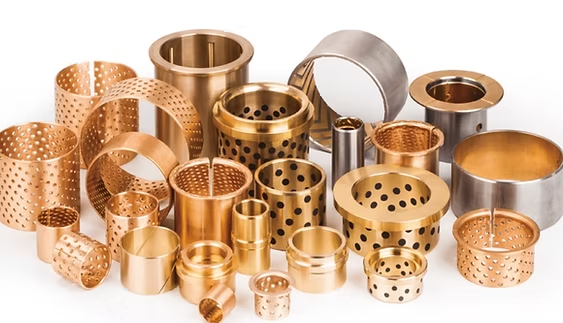
Table of Contents
1.What Is Copper?
Copper is a pure elemental metal with excellent electrical and thermal conductivity. It is soft, malleable, and easy to process. Pure copper has almost no other metal elements added, so its mechanical strength is relatively low. It performs well in electrical systems, heat exchangers, plumbing, and decorative parts, but it is not suitable for working conditions that require high wear resistance or heavy load bearing. Because copper is soft, it deforms easily under pressure and experiences serious metal-to-metal wear in sliding motion.
2. What Is Bronze?
3. Copper vs Bronze: Main Differences in Material Properties
- Hardness: Bronze is much harder than pure copper. Copper deforms easily, while bronze maintains shape under heavy load.
- Wear Resistance: Bronze has excellent wear resistance; copper wears quickly in sliding applications.
- Load Capacity: Bronze supports heavy pressure, shock, and continuous friction; copper is only for light loads.
- Corrosion Resistance: Bronze performs much better in seawater, moisture, and chemical environments; copper corrodes faster.
- Friction Performance: Bronze has a low friction coefficient and is not easy to seize; copper has high friction and requires frequent lubrication.
- Service Life: Bronze bushings can last for years; copper parts may need replacement within months under heavy use.
4. Application Scenarios: When to Use Copper, When to Use Bronze
- Electrical wires, cables, busbars, and connectors
- Heat exchangers, radiators, and cooling systems
- Plumbing pipes and decorative hardware
- Low-load, non-sliding mechanical parts
- Products that require high electrical or thermal conductivity
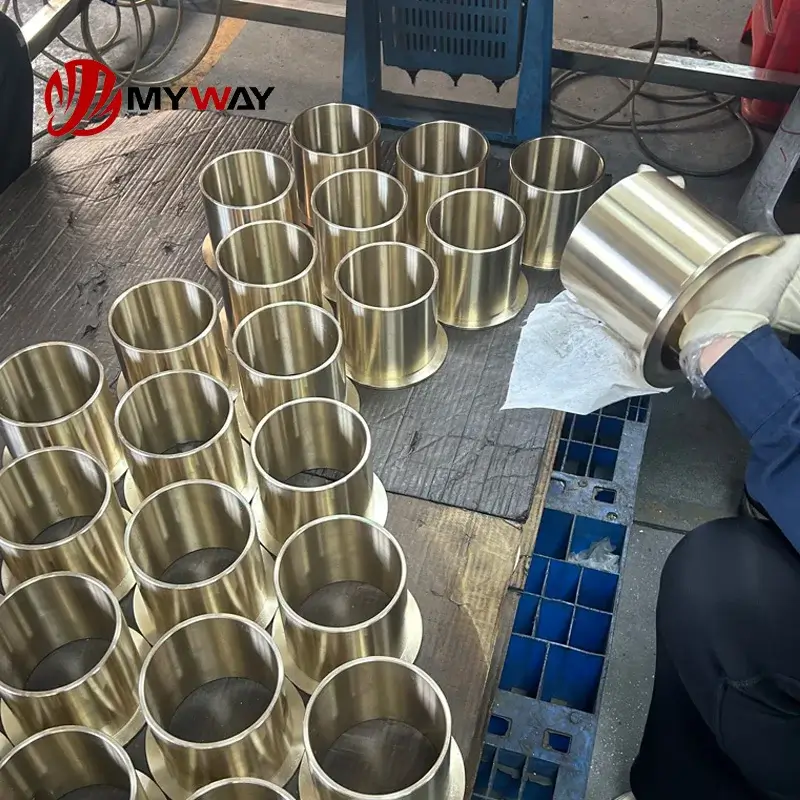
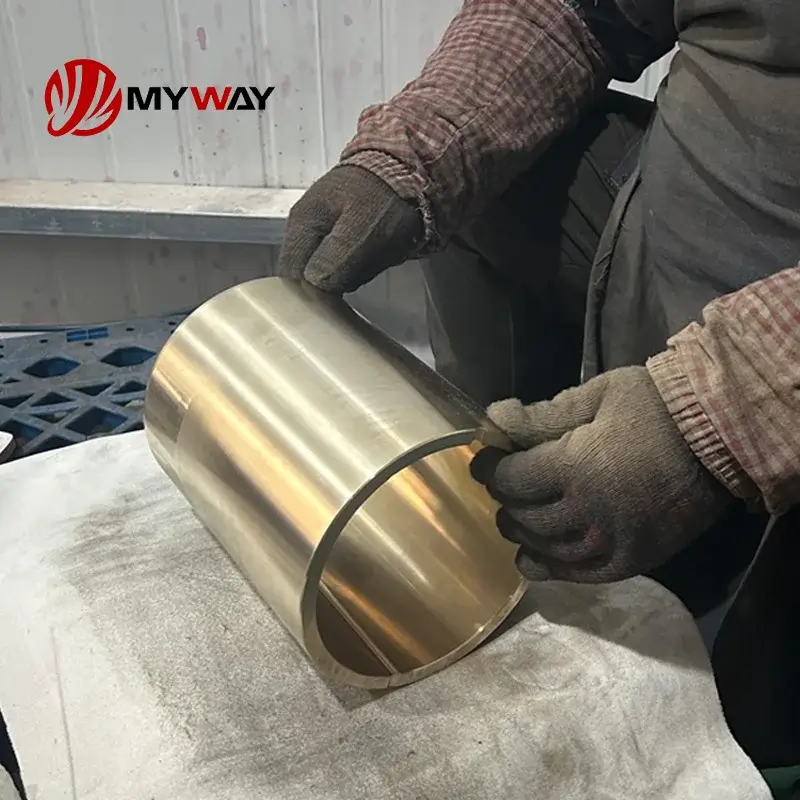
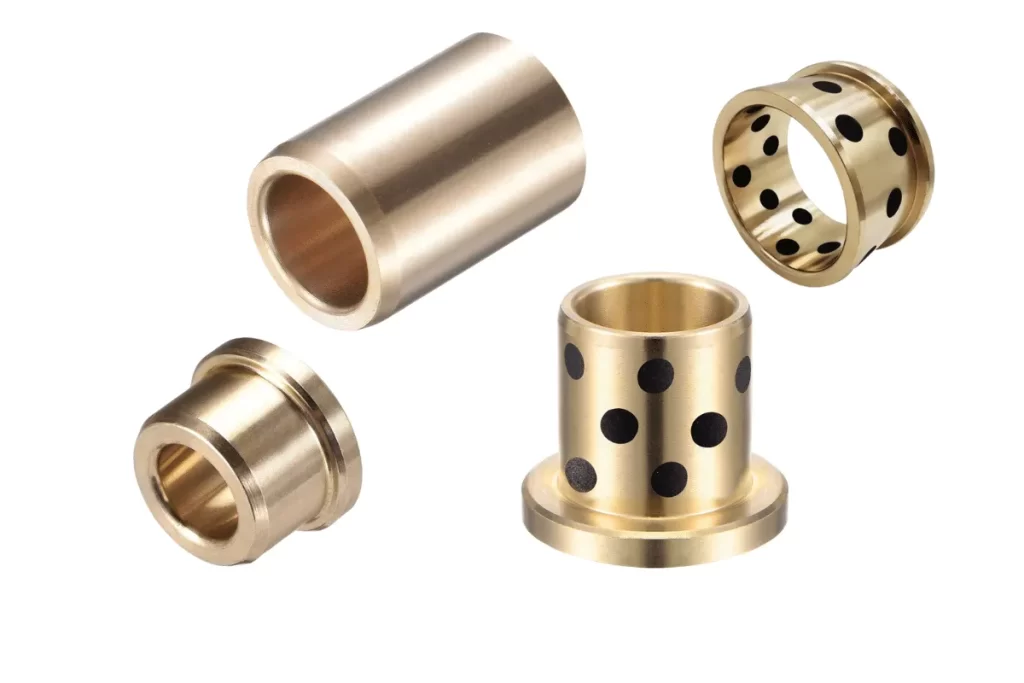
- Industrial bushings, sleeve bearings, and flanged bearings
- Heavy machinery parts for construction, mining, and agriculture
- Marine components such as ship propellers, valves, and seawater fittings
- Automotive engine parts, gear components, and chassis bushings
- Parts that work under high friction, heavy load, or corrosive environments
5. Why Bronze Is Better Than Copper for Bushings and Bearings
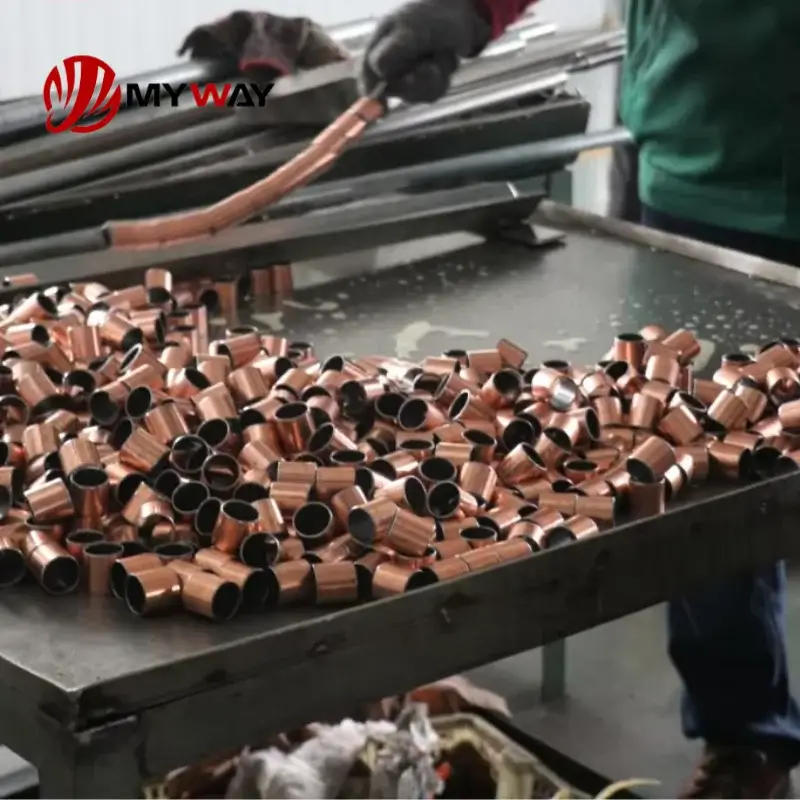
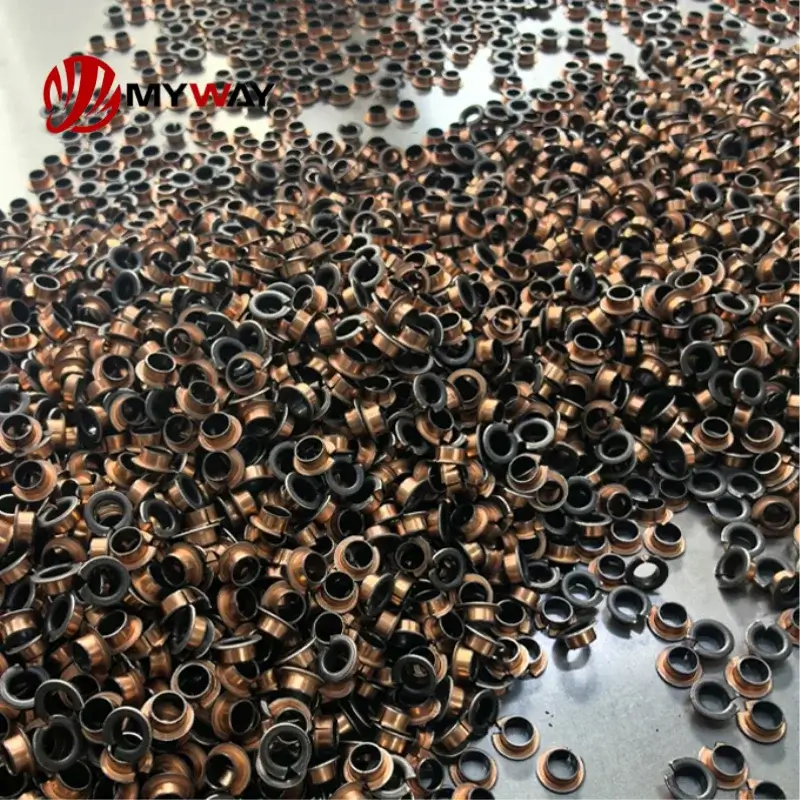
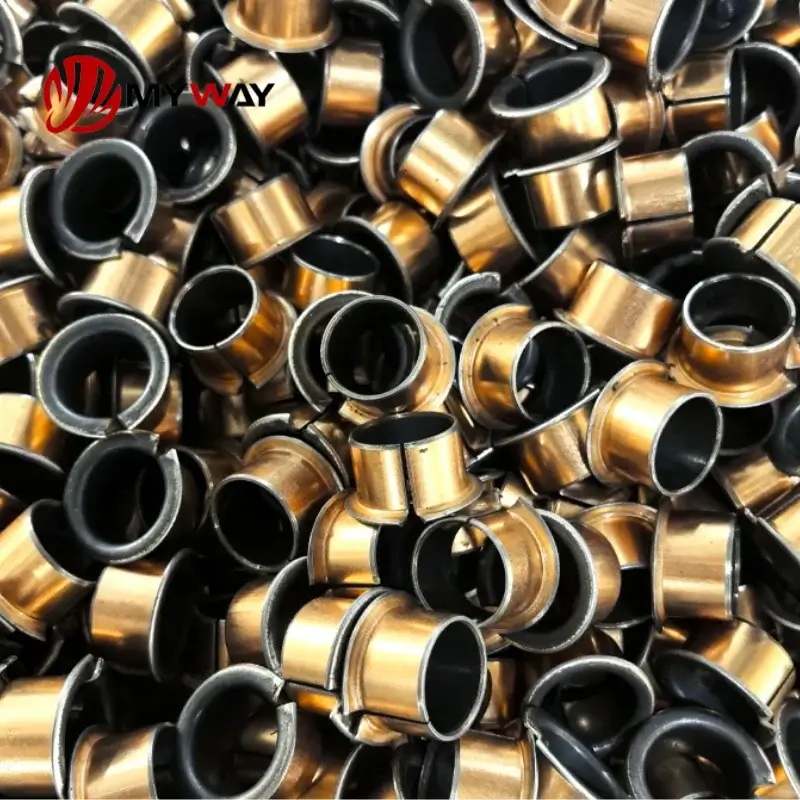
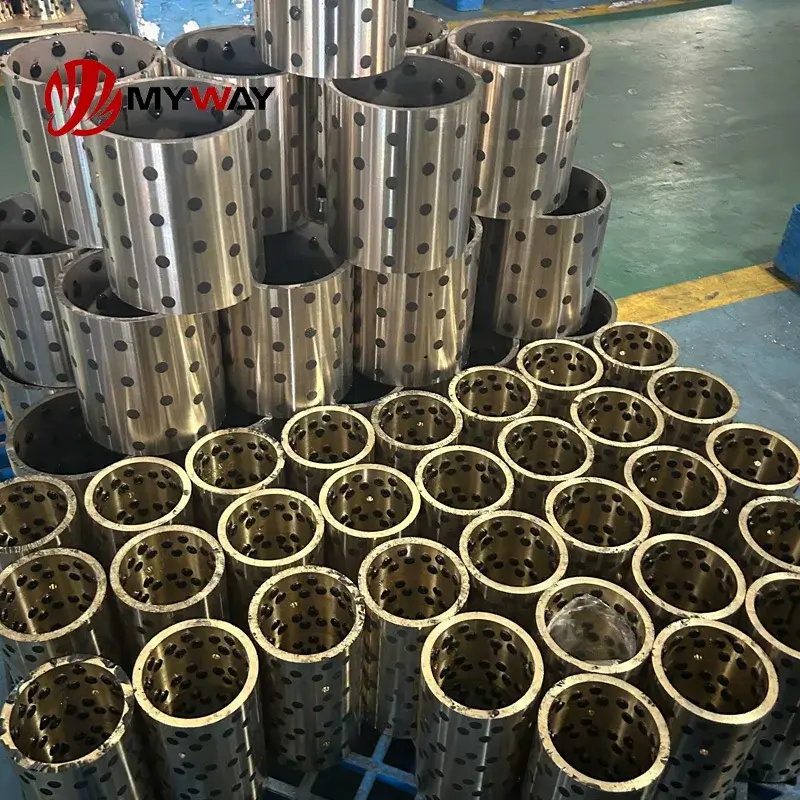
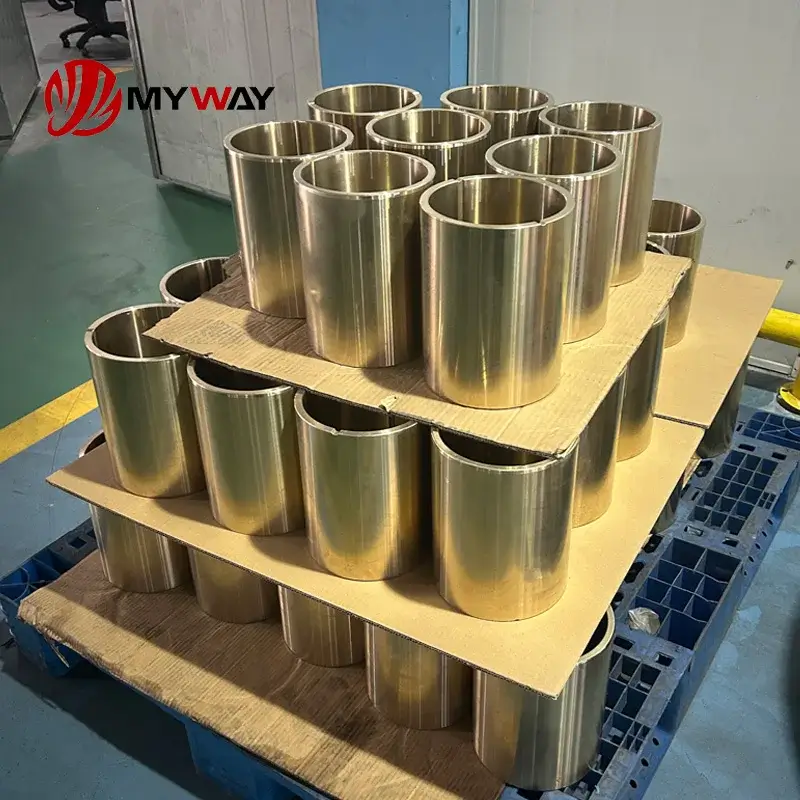
6. Introduction to MYWAY Bronze Bushings
7. Advantages of MYWAY Bronze Bushings vs. Traditional Copper Parts
- Higher hardness and wear resistance, service life increased by 3–10 times
- Excellent load-bearing capacity, suitable for heavy-duty and high-impact working conditions
- Low friction coefficient, reducing equipment energy consumption and wear
- Good corrosion resistance, stable in seawater, moisture, and chemical environments
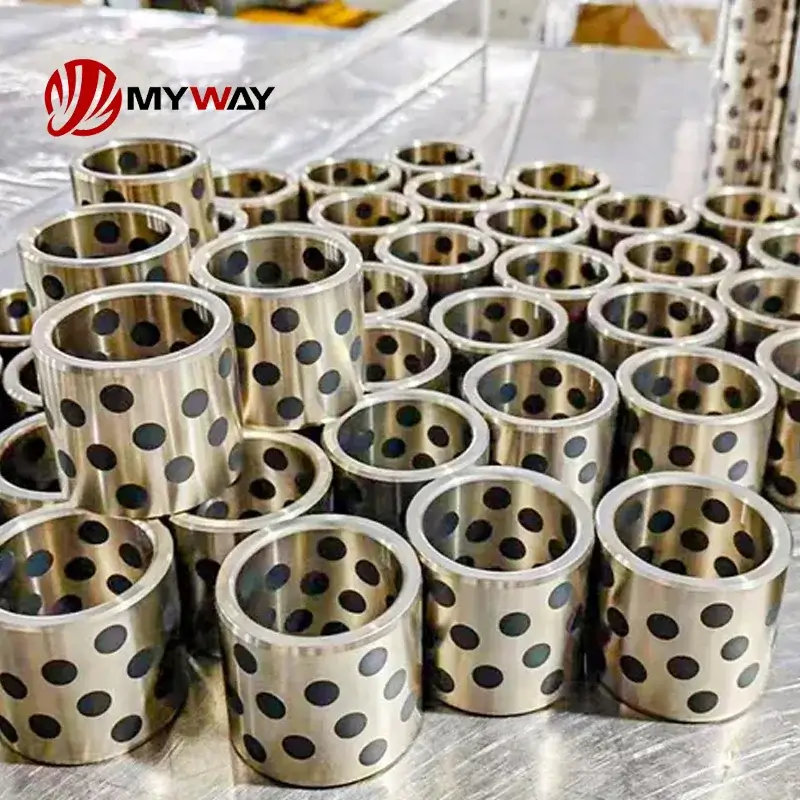
- Self-lubricating options available, maintenance-free or low-maintenance
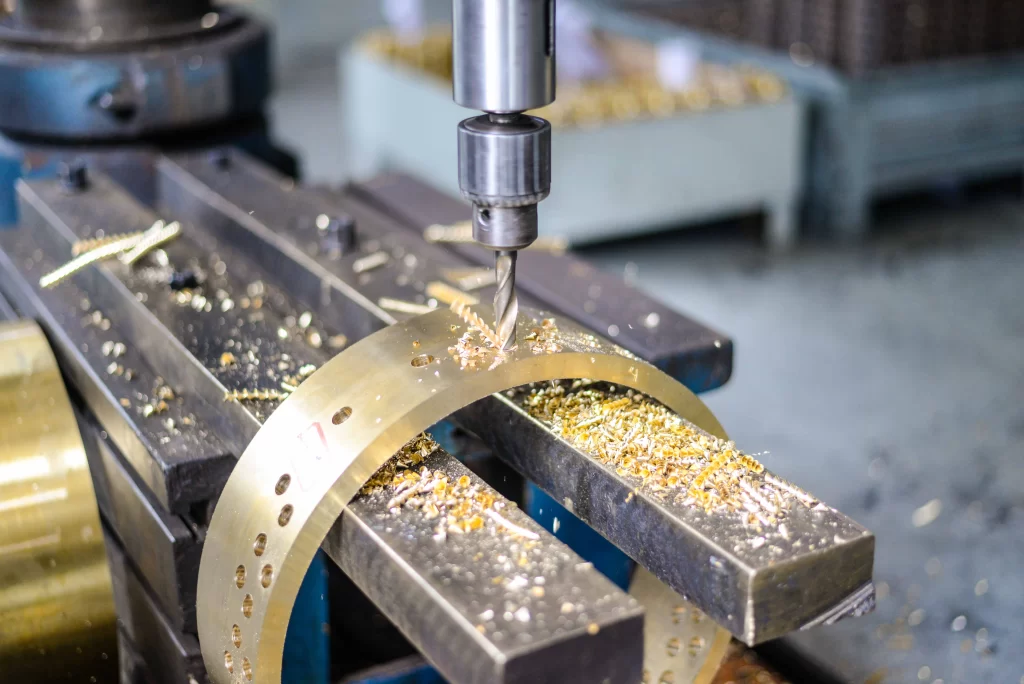
- Customizable materials and sizes to meet different equipment needs
- Strict quality inspection to ensure consistency and stability
8. Industries Served by MYWAY Bronze Bushings
MYWAY bronze bushings are widely used in many key industries around the world:
- Construction machinery: excavators, loaders, bulldozers, cranes
- Agricultural machinery: tractors, harvesters, planters
- Marine and shipbuilding: propeller bushings, rudder bearings, seawater components
- Automotive and commercial vehicles: chassis bushings, suspension parts, engine bearings
- Hydraulic systems: cylinders, pumps, valves, hydraulic motors
- Mining and steel industry: crushers, conveyors, rolling mill parts
- Food, medical, and chemical equipment: corrosion-resistant, clean components
FAQ: Copper vs. Bronze & MYWAY Bushings
Q1: Is bronze stronger than copper?
A: Yes. Bronze is an alloy with much higher strength, hardness, and wear resistance than pure copper.
Q2: Can I use copper bushings instead of bronze?
A: Only in very light-load, low-speed, non-friction situations. For industrial machinery, copper bushings wear out quickly.
Q3: Are bronze bushings better for marine use?
A: Yes. Bronze has excellent seawater corrosion resistance; copper corrodes much faster in marine environments.
Q4: Does MYWAY provide custom bronze bushings?
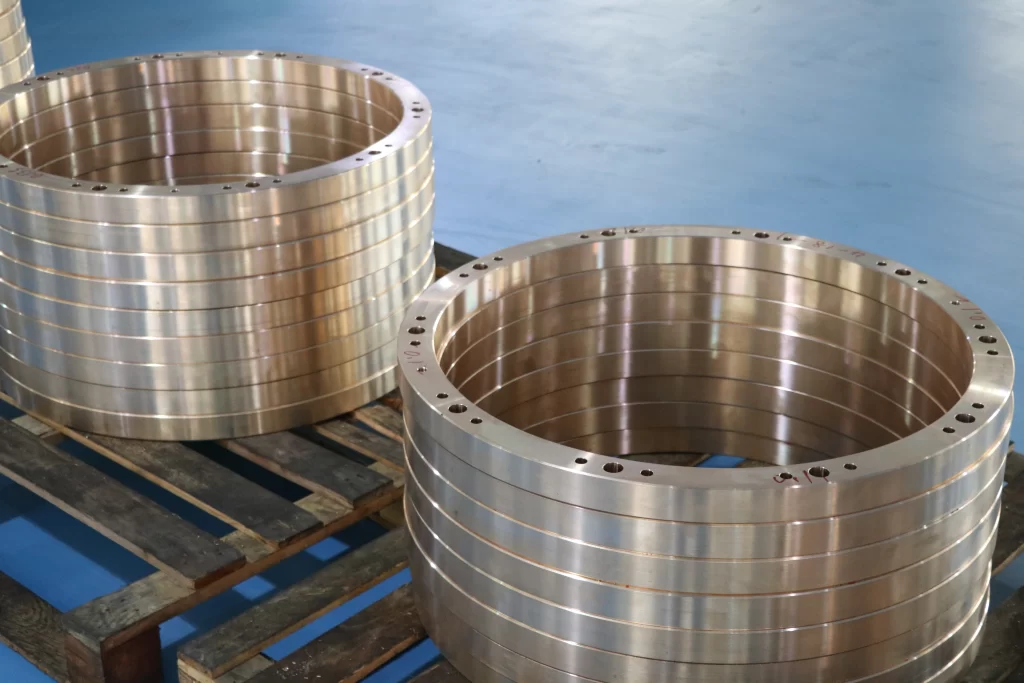
A: Yes. We support custom materials, inner diameter, outer diameter, length, flanges, and grooves.
A: Standard parts have fast delivery; customized parts usually take 7–15 working days depending on quantity.
Q6: Can MYWAY provide samples for testing?
A: Yes. We offer sample services so you can test performance before bulk orders.
Q7: Are MYWAY bushings cheaper in the long run?
A: Yes. Although the unit price is slightly higher, their longer life reduces replacement and maintenance costs greatly.
Q8: What bronze materials does MYWAY use?
A: We mainly use CuSn6, CuSn8, SAE660, C93200, C86300, C95400, aluminum bronze, and self-lubricating graphite bronze.
Conclusion & Contact MYWAY for Inquiry
100000+ Types of Bushings – Contact Us for Details