
Recent Posts
Centrifugal Cast Bronze Bushing: Copper-Alloy Metallurgy, Dense Casting Structure, Precision Machining, and Reliable Supply
Introduction
A centrifugal cast bronze bushing is a copper-alloy plain bearing made in a rotating mould, where molten bronze is distributed against the mould wall before solidification. The process is used for sleeves, flanged bushes, large bearing bushes, worm-shaft bushes, crusher parts, marine components, pumps, valves and high-load wear parts. A reliable bushing depends on alloy grade, melt cleanliness, pouring temperature, rotation speed, cooling, segregation control, machining allowance, shaft finish, lubrication design, fit and inspection. ASTM B271/B271M establishes requirements for copper-base alloy centrifugal castings.
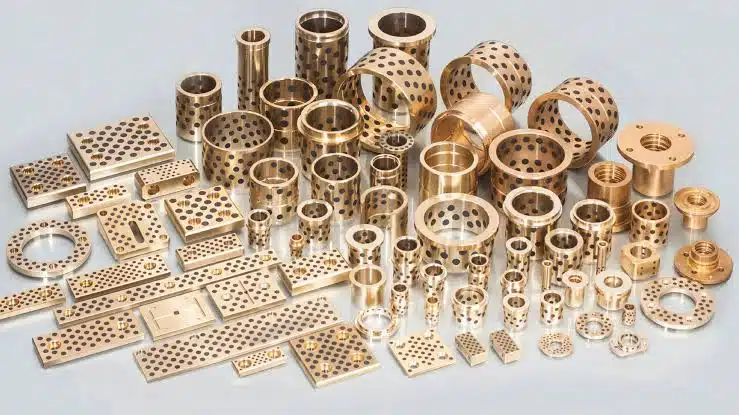
Table of Contents
1. Product Function and Application Scope
Centrifugal cast bronze bushings separate a rotating or oscillating shaft from a housing with a replaceable copper-alloy bearing surface. The rotating mould creates a tubular casting that is later machined to the required bore, outside diameter, length, flange, groove and oil-hole geometry. Compared with a generic sand-cast sleeve, this route can be attractive for cylindrical parts that need a dense wall and controlled machining stock. The actual benefit depends on qualified process control, not on the word centrifugal alone. Use the approved drawing and operating data as the final acceptance basis.
Centrifugal cast bronze bushings separate a rotating or oscillating shaft from a housing with a replaceable copper-alloy bearing surface. The rotating mould creates a tubular casting that is later machined to the required bore, outside diameter, length, flange, groove and oil-hole geometry. Compared with a generic sand-cast sleeve, this route can be attractive for cylindrical parts that need a dense wall and controlled machining stock. The actual benefit depends on qualified process control, not on the word centrifugal alone. Representative samples and process records are required for confident decisions.
Centrifugal cast bronze bushings separate a rotating or oscillating shaft from a housing with a replaceable copper-alloy bearing surface. The rotating mould creates a tubular casting that is later machined to the required bore, outside diameter, length, flange, groove and oil-hole geometry. Compared with a generic sand-cast sleeve, this route can be attractive for cylindrical parts that need a dense wall and controlled machining stock. The actual benefit depends on qualified process control, not on the word centrifugal alone. This converts a general bronze-bush enquiry into a manufacturable requirement.
Centrifugal cast bronze bushings separate a rotating or oscillating shaft from a housing with a replaceable copper-alloy bearing surface. The rotating mould creates a tubular casting that is later machined to the required bore, outside diameter, length, flange, groove and oil-hole geometry. Compared with a generic sand-cast sleeve, this route can be attractive for cylindrical parts that need a dense wall and controlled machining stock. The actual benefit depends on qualified process control, not on the word centrifugal alone. The supplier should identify any deviation before production starts.
2. Bronze Alloy Families and Material Selection
Copper alloy selection begins with the duty. Tin bronzes, leaded tin bronzes, aluminum bronzes, manganese bronzes and nickel aluminum bronzes differ in strength, corrosion resistance, bearing compatibility, seizure resistance, machinability and lubricant behavior. ASTM B271/B271M covers copper-base alloy centrifugal castings; C93600 is one common bearing-bronze designation, but it is not a universal answer. State the UNS alloy, condition, application, counterface and restrictions on lead or residual elements. Use the approved drawing and operating data as the final acceptance basis.
Copper alloy selection begins with the duty. Tin bronzes, leaded tin bronzes, aluminum bronzes, manganese bronzes and nickel aluminum bronzes differ in strength, corrosion resistance, bearing compatibility, seizure resistance, machinability and lubricant behavior. ASTM B271/B271M covers copper-base alloy centrifugal castings; C93600 is one common bearing-bronze designation, but it is not a universal answer. State the UNS alloy, condition, application, counterface and restrictions on lead or residual elements. Representative samples and process records are required for confident decisions.
Copper alloy selection begins with the duty. Tin bronzes, leaded tin bronzes, aluminum bronzes, manganese bronzes and nickel aluminum bronzes differ in strength, corrosion resistance, bearing compatibility, seizure resistance, machinability and lubricant behavior. ASTM B271/B271M covers copper-base alloy centrifugal castings; C93600 is one common bearing-bronze designation, but it is not a universal answer. State the UNS alloy, condition, application, counterface and restrictions on lead or residual elements. This converts a general bronze-bush enquiry into a manufacturable requirement.
Copper alloy selection begins with the duty. Tin bronzes, leaded tin bronzes, aluminum bronzes, manganese bronzes and nickel aluminum bronzes differ in strength, corrosion resistance, bearing compatibility, seizure resistance, machinability and lubricant behavior. ASTM B271/B271M covers copper-base alloy centrifugal castings; C93600 is one common bearing-bronze designation, but it is not a universal answer. State the UNS alloy, condition, application, counterface and restrictions on lead or residual elements. The supplier should identify any deviation before production starts.
Control | Why it matters | RFQ input |
Alloy and chemistry | Strength and bearing behavior | UNS grade and limits |
Rotation and cooling | Density and segregation | Process qualification |
Bore and fit | Wear and seizure risk | Shaft, housing, clearance |
3. Centrifugal Solidification, Density, and Segregation
During centrifugal solidification, rotation distributes liquid metal against the mould wall while heat extraction and alloy freezing create the casting structure. Pouring temperature, mould preheat, rotation speed, cooling rate, wall thickness and charge cleanliness influence grain size, shrinkage, inclusions and segregation. Leaded bronzes require particular care because constituent phases can segregate if processing is poorly controlled. The finished bore and OD should include sufficient machining allowance to remove surface-scale and any nonrepresentative inner surface. Use the approved drawing and operating data as the final acceptance basis.
During centrifugal solidification, rotation distributes liquid metal against the mould wall while heat extraction and alloy freezing create the casting structure. Pouring temperature, mould preheat, rotation speed, cooling rate, wall thickness and charge cleanliness influence grain size, shrinkage, inclusions and segregation. Leaded bronzes require particular care because constituent phases can segregate if processing is poorly controlled. The finished bore and OD should include sufficient machining allowance to remove surface-scale and any nonrepresentative inner surface. Representative samples and process records are required for confident decisions.
During centrifugal solidification, rotation distributes liquid metal against the mould wall while heat extraction and alloy freezing create the casting structure. Pouring temperature, mould preheat, rotation speed, cooling rate, wall thickness and charge cleanliness influence grain size, shrinkage, inclusions and segregation. Leaded bronzes require particular care because constituent phases can segregate if processing is poorly controlled. The finished bore and OD should include sufficient machining allowance to remove surface-scale and any nonrepresentative inner surface. This converts a general bronze-bush enquiry into a manufacturable requirement.
During centrifugal solidification, rotation distributes liquid metal against the mould wall while heat extraction and alloy freezing create the casting structure. Pouring temperature, mould preheat, rotation speed, cooling rate, wall thickness and charge cleanliness influence grain size, shrinkage, inclusions and segregation. Leaded bronzes require particular care because constituent phases can segregate if processing is poorly controlled. The finished bore and OD should include sufficient machining allowance to remove surface-scale and any nonrepresentative inner surface. The supplier should identify any deviation before production starts.
4. Shaft Fit, Clearance, and Lubrication Geometry
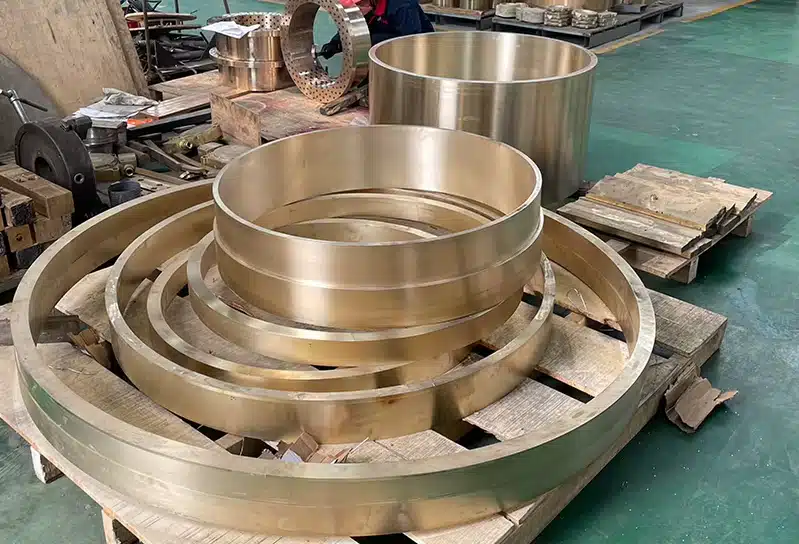
The shaft and bronze bushing form one tribological system. A press fit retains the bushing in the housing, while running clearance permits grease or oil distribution, thermal movement and stable sliding. Excessive interference can distort the bore; low interference can cause fretting and bush rotation. Low running clearance risks heat and seizure; excessive clearance causes impact, vibration and edge loading. Pin or shaft diameter, hardness, roughness, runout, taper and coating must be specified with the bushing. Use the approved drawing and operating data as the final acceptance basis.
The shaft and bronze bushing form one tribological system. A press fit retains the bushing in the housing, while running clearance permits grease or oil distribution, thermal movement and stable sliding. Excessive interference can distort the bore; low interference can cause fretting and bush rotation. Low running clearance risks heat and seizure; excessive clearance causes impact, vibration and edge loading. Pin or shaft diameter, hardness, roughness, runout, taper and coating must be specified with the bushing. Representative samples and process records are required for confident decisions.
The shaft and bronze bushing form one tribological system. A press fit retains the bushing in the housing, while running clearance permits grease or oil distribution, thermal movement and stable sliding. Excessive interference can distort the bore; low interference can cause fretting and bush rotation. Low running clearance risks heat and seizure; excessive clearance causes impact, vibration and edge loading. Pin or shaft diameter, hardness, roughness, runout, taper and coating must be specified with the bushing. This converts a general bronze-bush enquiry into a manufacturable requirement.
The shaft and bronze bushing form one tribological system. A press fit retains the bushing in the housing, while running clearance permits grease or oil distribution, thermal movement and stable sliding. Excessive interference can distort the bore; low interference can cause fretting and bush rotation. Low running clearance risks heat and seizure; excessive clearance causes impact, vibration and edge loading. Pin or shaft diameter, hardness, roughness, runout, taper and coating must be specified with the bushing. The supplier should identify any deviation before production starts.
Control | Why it matters | RFQ input |
Alloy and chemistry | Strength and bearing behavior | UNS grade and limits |
Rotation and cooling | Density and segregation | Process qualification |
Bore and fit | Wear and seizure risk | Shaft, housing, clearance |
5. Mould Rotation, Pouring, Cooling, and Machining
Centrifugal casting is followed by turning, boring, grooving, drilling, chamfering, deburring and inspection. The supplier should define whether the bore is delivered rough, semi-finished or finished, and whether final boring occurs after press fitting. Lubrication grooves must feed the interface without removing too much loaded area. Mould speed and pouring practice must suit the alloy and wall thickness. A controlled route records charge lot, melt treatment, mould condition, casting parameters, machining datum and inspection result. Use the approved drawing and operating data as the final acceptance basis.
Centrifugal casting is followed by turning, boring, grooving, drilling, chamfering, deburring and inspection. The supplier should define whether the bore is delivered rough, semi-finished or finished, and whether final boring occurs after press fitting. Lubrication grooves must feed the interface without removing too much loaded area. Mould speed and pouring practice must suit the alloy and wall thickness. A controlled route records charge lot, melt treatment, mould condition, casting parameters, machining datum and inspection result. Representative samples and process records are required for confident decisions.
Centrifugal casting is followed by turning, boring, grooving, drilling, chamfering, deburring and inspection. The supplier should define whether the bore is delivered rough, semi-finished or finished, and whether final boring occurs after press fitting. Lubrication grooves must feed the interface without removing too much loaded area. Mould speed and pouring practice must suit the alloy and wall thickness. A controlled route records charge lot, melt treatment, mould condition, casting parameters, machining datum and inspection result. This converts a general bronze-bush enquiry into a manufacturable requirement.
Centrifugal casting is followed by turning, boring, grooving, drilling, chamfering, deburring and inspection. The supplier should define whether the bore is delivered rough, semi-finished or finished, and whether final boring occurs after press fitting. Lubrication grooves must feed the interface without removing too much loaded area. Mould speed and pouring practice must suit the alloy and wall thickness. A controlled route records charge lot, melt treatment, mould condition, casting parameters, machining datum and inspection result. The supplier should identify any deviation before production starts.
6. Porosity, Wear, Seizure, and Failure Analysis
Common defects include gas or shrinkage porosity, inclusions, hot tears, cold shuts, dimensional distortion, segregation, bore tearing, scoring, galling, corrosion and seizure. A defect label alone is not root cause. Preserve the part, identify the loaded zone, inspect the shaft and housing, analyze lubricant or debris, and compare fit, temperature, load, contamination and installation method. A sound bronze bush can fail quickly when it runs against a damaged shaft or without its intended lubricant. Use the approved drawing and operating data as the final acceptance basis.
Common defects include gas or shrinkage porosity, inclusions, hot tears, cold shuts, dimensional distortion, segregation, bore tearing, scoring, galling, corrosion and seizure. A defect label alone is not root cause. Preserve the part, identify the loaded zone, inspect the shaft and housing, analyze lubricant or debris, and compare fit, temperature, load, contamination and installation method. A sound bronze bush can fail quickly when it runs against a damaged shaft or without its intended lubricant. Representative samples and process records are required for confident decisions.
Common defects include gas or shrinkage porosity, inclusions, hot tears, cold shuts, dimensional distortion, segregation, bore tearing, scoring, galling, corrosion and seizure. A defect label alone is not root cause. Preserve the part, identify the loaded zone, inspect the shaft and housing, analyze lubricant or debris, and compare fit, temperature, load, contamination and installation method. A sound bronze bush can fail quickly when it runs against a damaged shaft or without its intended lubricant. This converts a general bronze-bush enquiry into a manufacturable requirement.
Common defects include gas or shrinkage porosity, inclusions, hot tears, cold shuts, dimensional distortion, segregation, bore tearing, scoring, galling, corrosion and seizure. A defect label alone is not root cause. Preserve the part, identify the loaded zone, inspect the shaft and housing, analyze lubricant or debris, and compare fit, temperature, load, contamination and installation method. A sound bronze bush can fail quickly when it runs against a damaged shaft or without its intended lubricant. The supplier should identify any deviation before production starts.
7. Chemistry, Hardness, NDT, and Quality Inspection
Quality documentation should link chemistry, mechanical properties where specified, hardness, dimensions, surface finish, NDT or metallography where required, and lot traceability. ASTM B271/B271M notes that mechanical properties are determined from test-bar castings and that welding repair requires customer approval. The purchase order should state the drawing revision, alloy, heat-treatment condition where relevant, test methods, sampling, allowed repairs, certificate format and packaging. Dimensional checks should state measurement temperature and datums. Use the approved drawing and operating data as the final acceptance basis.
Quality documentation should link chemistry, mechanical properties where specified, hardness, dimensions, surface finish, NDT or metallography where required, and lot traceability. ASTM B271/B271M notes that mechanical properties are determined from test-bar castings and that welding repair requires customer approval. The purchase order should state the drawing revision, alloy, heat-treatment condition where relevant, test methods, sampling, allowed repairs, certificate format and packaging. Dimensional checks should state measurement temperature and datums. Representative samples and process records are required for confident decisions.
Quality documentation should link chemistry, mechanical properties where specified, hardness, dimensions, surface finish, NDT or metallography where required, and lot traceability. ASTM B271/B271M notes that mechanical properties are determined from test-bar castings and that welding repair requires customer approval. The purchase order should state the drawing revision, alloy, heat-treatment condition where relevant, test methods, sampling, allowed repairs, certificate format and packaging. Dimensional checks should state measurement temperature and datums. This converts a general bronze-bush enquiry into a manufacturable requirement.
Quality documentation should link chemistry, mechanical properties where specified, hardness, dimensions, surface finish, NDT or metallography where required, and lot traceability. ASTM B271/B271M notes that mechanical properties are determined from test-bar castings and that welding repair requires customer approval. The purchase order should state the drawing revision, alloy, heat-treatment condition where relevant, test methods, sampling, allowed repairs, certificate format and packaging. Dimensional checks should state measurement temperature and datums. The supplier should identify any deviation before production starts.
Control | Why it matters | RFQ input |
Alloy and chemistry | Strength and bearing behavior | UNS grade and limits |
Rotation and cooling | Density and segregation | Process qualification |
Bore and fit | Wear and seizure risk | Shaft, housing, clearance |
8. Applications, Alternatives, and Lifecycle Value
Centrifugal cast bronze bushings serve mining crushers, rolling mills, marine propulsion, pumps, valves, turbines, gearboxes, steel mills, construction equipment and general machinery. Alternatives include continuous-cast bronze, steel-backed bimetal, polymer composite, graphite-plugged bronze, sintered bronze and rolling bearings. The right option follows load, speed, oscillation, temperature, lubricant, water, dirt, shaft material, repair strategy and cost of downtime. Unit price alone does not capture shaft damage or outage risk. Use the approved drawing and operating data as the final acceptance basis.
Centrifugal cast bronze bushings serve mining crushers, rolling mills, marine propulsion, pumps, valves, turbines, gearboxes, steel mills, construction equipment and general machinery. Alternatives include continuous-cast bronze, steel-backed bimetal, polymer composite, graphite-plugged bronze, sintered bronze and rolling bearings. The right option follows load, speed, oscillation, temperature, lubricant, water, dirt, shaft material, repair strategy and cost of downtime. Unit price alone does not capture shaft damage or outage risk. Representative samples and process records are required for confident decisions.
Centrifugal cast bronze bushings serve mining crushers, rolling mills, marine propulsion, pumps, valves, turbines, gearboxes, steel mills, construction equipment and general machinery. Alternatives include continuous-cast bronze, steel-backed bimetal, polymer composite, graphite-plugged bronze, sintered bronze and rolling bearings. The right option follows load, speed, oscillation, temperature, lubricant, water, dirt, shaft material, repair strategy and cost of downtime. Unit price alone does not capture shaft damage or outage risk. This converts a general bronze-bush enquiry into a manufacturable requirement.
Centrifugal cast bronze bushings serve mining crushers, rolling mills, marine propulsion, pumps, valves, turbines, gearboxes, steel mills, construction equipment and general machinery. Alternatives include continuous-cast bronze, steel-backed bimetal, polymer composite, graphite-plugged bronze, sintered bronze and rolling bearings. The right option follows load, speed, oscillation, temperature, lubricant, water, dirt, shaft material, repair strategy and cost of downtime. Unit price alone does not capture shaft damage or outage risk. The supplier should identify any deviation before production starts.
9. Quote-Ready RFQ for Centrifugal Cast Bronze Bushings
A complete RFQ includes drawing or sample, alloy grade, OD, ID, length, flange dimensions, machining condition, housing and shaft dimensions, target interference and clearance, grooves and oil holes, load, speed, oscillation, temperature, lubricant, environment, quantity, quality certificates, NDT, packing and destination. Request a technical proposal for critical parts. The supplier should state offered alloy, casting route, chemical range, machining tolerances, inspection plan, lead time, exclusions and any data needed before release. Use the approved drawing and operating data as the final acceptance basis.
A complete RFQ includes drawing or sample, alloy grade, OD, ID, length, flange dimensions, machining condition, housing and shaft dimensions, target interference and clearance, grooves and oil holes, load, speed, oscillation, temperature, lubricant, environment, quantity, quality certificates, NDT, packing and destination. Request a technical proposal for critical parts. The supplier should state offered alloy, casting route, chemical range, machining tolerances, inspection plan, lead time, exclusions and any data needed before release. Representative samples and process records are required for confident decisions.
A complete RFQ includes drawing or sample, alloy grade, OD, ID, length, flange dimensions, machining condition, housing and shaft dimensions, target interference and clearance, grooves and oil holes, load, speed, oscillation, temperature, lubricant, environment, quantity, quality certificates, NDT, packing and destination. Request a technical proposal for critical parts. The supplier should state offered alloy, casting route, chemical range, machining tolerances, inspection plan, lead time, exclusions and any data needed before release. This converts a general bronze-bush enquiry into a manufacturable requirement.
A complete RFQ includes drawing or sample, alloy grade, OD, ID, length, flange dimensions, machining condition, housing and shaft dimensions, target interference and clearance, grooves and oil holes, load, speed, oscillation, temperature, lubricant, environment, quantity, quality certificates, NDT, packing and destination. Request a technical proposal for critical parts. The supplier should state offered alloy, casting route, chemical range, machining tolerances, inspection plan, lead time, exclusions and any data needed before release. The supplier should identify any deviation before production starts.
FAQ: Centrifugal Cast Bronze Bushing
1. What is a centrifugal cast bronze bushing?
A copper-alloy sleeve made in a rotating mould for plain-bearing duty.
2. Why use centrifugal casting?
It is suited to tubular castings and controlled machining stock.
3. Which bronze grade should I choose?
Select from load, lubrication, corrosion, speed, shaft and specification.
4. What does ASTM B271 cover?
Copper-base alloy centrifugal casting requirements.
5. Can C93600 be centrifugally cast?
Yes, when specified and processed to the applicable requirements.
6. What causes bronze segregation?
Alloy chemistry, temperature, rotation and cooling can cause it.
7. What causes porosity?
Gas, shrinkage, inclusions or poor process control can create it.
8. Does rotation speed matter?
Yes; it affects distribution, structure and defect risk.
9. Should the bore be finished after pressing?
Many custom bushes are finish-bored after installation.
10. What is a flanged bronze bushing?
A bush with an integral thrust or locating flange.
11. Do bronze bushes need grease?
Most metal bronze bushes need their intended grease or oil supply.
12. What shaft finish is needed?
The drawing should define size, hardness, roughness and runout.
13. What is bush interference fit?
The controlled OD-to-housing fit that prevents creep.
14. What is running clearance?
The controlled bore-to-shaft gap for lubrication and thermal movement.
15. How are grooves designed?
They must supply lubricant without weakening the loaded land.
16. Can a bronze bush be repaired?
Some can be remachined if wall thickness and structure remain adequate.
17. How is casting quality inspected?
Use chemistry, hardness, dimensions, surface, NDT and metallography as required.
18. What causes seizure?
Low clearance, poor lubrication, overload, dirt or a damaged shaft are common causes.
19. How should bushes be packed?
Protect machined surfaces from impact, moisture and contamination.
20. What data is needed for a quote?
Send drawing, alloy, dimensions, duty, lubrication, tests, quantity and destination.
100000+ Types of Bushings – Contact Us for Details