
Recent Posts
Electric Arc Furnace Steelmaking: Controlling Scrap, Energy, Foamy Slag, and Melt-Shop Performance
Introduction
An electric arc furnace, commonly called an EAF, melts and refines steel through electrical arcs while combining a recyclable metallic charge with chemical energy, engineered slag practice, and downstream secondary metallurgy. It is the central melting unit of many mini-mills and scrap-based steel plants, yet the phrase “electric arc furnace steelmaking” describes much more than a furnace shell and graphite electrodes. The commercial result depends on scrap preparation, direct reduced iron (DRI) or hot-briquetted iron (HBI) strategy, transformer capacity, oxygen and carbon injection, foamy slag stability, water-cooled equipment, refractory life, fume capture, tapping practice, and the discipline of turning heat data into repeatable decisions.
For a buyer or operating team, the relevant question is not simply whether an EAF can melt steel. The better question is whether the complete melt shop can deliver the specified steel grade, yield, tap-to-tap time, electrical consumption, electrode consumption, environmental performance, and cost per liquid tonne. The sections below connect those variables in the order they are controlled in a real production route.
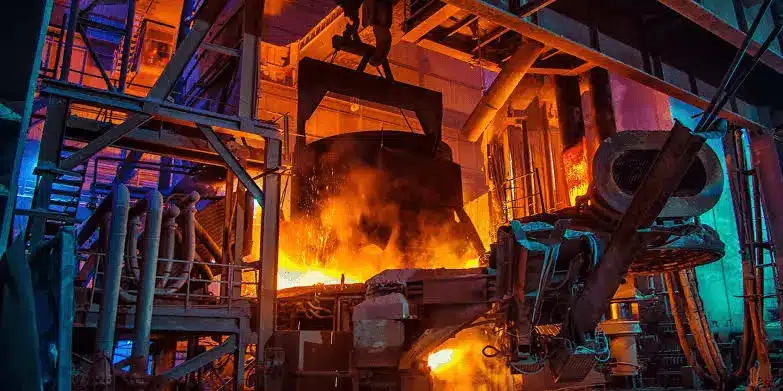
Table of Contents
1.What an Electric Arc Furnace Does in Modern Steelmaking
The EAF is a refractory-lined batch reactor in which an arc transfers intense electrical energy to a metallic charge. In a conventional AC electric arc furnace, three graphite electrodes create three arcs above the charge. A DC EAF normally uses a central top electrode and a bottom electrode arrangement. Both concepts can use electrical power together with oxy-fuel burners, oxygen lances, carbon injection, and post-combustion practice. The charge is melted, the slag is conditioned, selected impurities are managed, and liquid steel is tapped to a ladle for alloy trimming and secondary refining when required.
Its most visible industrial role is scrap steel recycling. A scrap-based EAF route remelts obsolete and prompt scrap into new steel, giving the process an important circular-material function. The furnace can also consume DRI, HBI, pig iron, and in some installations hot metal. This feed flexibility is strategically valuable when scrap availability, residual-element control, energy price, carbon policy, or grade mix changes. It does not remove the metallurgical consequences of the inputs: residual copper, tin, chromium, nickel, zinc-bearing coatings, gangue, moisture, and density differences must still be managed deliberately.
EAF and basic oxygen furnace (BOF) steelmaking serve different raw-material systems. A BOF refines hot metal from an integrated ironmaking route, whereas the EAF is commonly associated with a scrap or DRI-based route. The distinction matters for carbon footprint accounting, raw-material contracts, emissions controls, and product planning. It should not be reduced to a generic claim that one process is always “green.” The emissions profile of an EAF depends strongly on the electricity source, charge mix, transport, electrode and carbon consumption, yield, and the use of DRI or hot metal.
2.Charge Mix Design: Scrap, DRI, HBI, and Hot Metal
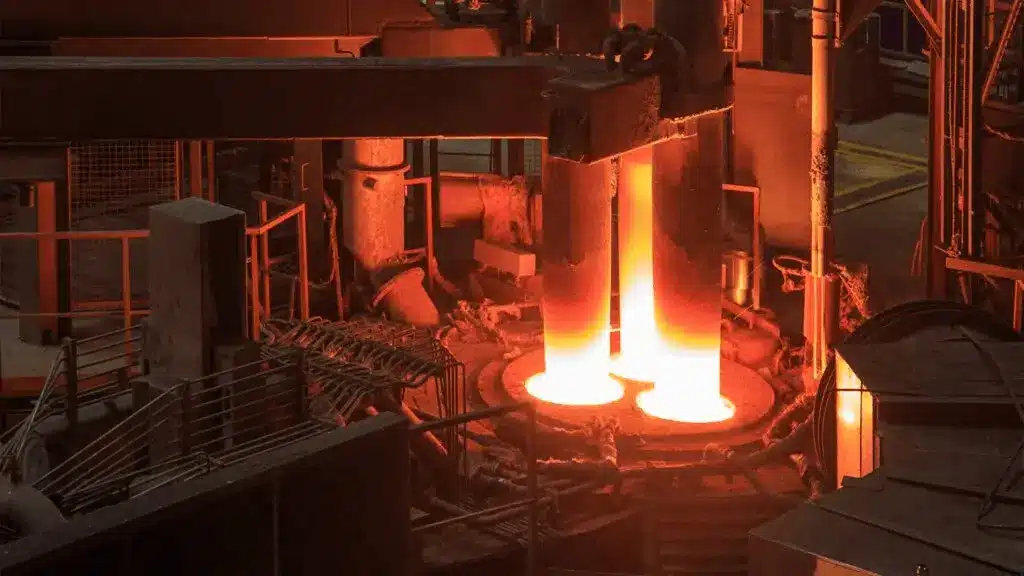
Charge design begins in the scrap yard rather than at the furnace. Heavy melting scrap, shredded scrap, bundles, turnings, cast returns, and industrial offcuts differ in bulk density, tramp-element content, organic contamination, surface coatings, moisture, and melting behavior. A low-density charge can create a long melting period and unstable power delivery. Wet or sealed scrap creates a serious safety risk. Coated scrap can add zinc and other volatiles to EAF dust. Copper and tin are especially important because they are difficult to remove once they enter liquid steel; their control belongs upstream in procurement, sorting, and scrap specifications.
DRI and HBI bring a more predictable metallic chemistry and can dilute residuals in scrap-based production. They also introduce gangue and iron oxide that change slag volume, carbon demand, energy balance, and refractory exposure. Continuous DRI charging can smooth furnace operation when an appropriate charging system, power profile, and slag practice are present. Hot metal can supply chemical energy and reduce some electrical demand, but it changes carbon, silicon, phosphorus, off-gas, and vessel thermal conditions. The correct mix is therefore grade-specific and cost-specific, not a fixed recipe.
Charge material | Strength in an EAF mix | Main metallurgical or operating risk | Control point |
Heavy melting scrap | Dense metallic yield; useful base charge | Residuals, variable thickness, occasional sealed pieces | Supplier specification, radiation check, size and density control |
Shredded scrap | Fast charging and broad availability | Copper/tin residuals, coatings, zinc dust load | Sorting quality, chemistry history, dust-management capacity |
Bundles and industrial offcuts | Potentially clean and predictable | Poor bundle opening or dimensional mismatch | Charge-bucket layout and supplier-grade segregation |
DRI / HBI | Residual dilution and stable iron units | Gangue, FeO, slag volume, reoxidation, energy demand | Metallization, gangue analysis, controlled feed rate |
Hot metal / pig iron | Chemical energy and liquid yield | Carbon/silicon load, thermal stress, process redesign | Defined proportion, oxygen balance, fume and refractory review |
A robust charge model combines scale weights, chemical analysis, metallic yield, moisture checks, density, price, transport cost, and expected slag carryover. It should calculate not only the purchase cost per tonne but the expected cost per liquid tonne after yield and process effects. For high-quality bar, bearing, wire, automotive, or special-steel programs, residual management often carries more value than a small apparent discount on a mixed scrap grade. The lowest-priced scrap can become the highest-cost charge if it extends tap-to-tap time, raises electrode loss, creates downgrades, or overloads the baghouse.
3.AC and DC EAF Equipment: Electrodes, Transformer, Shell, Roof, and EBT
The electrical system is the furnace’s production engine. AC EAFs use three graphite electrodes and a three-phase arc system; their configuration is widely used and supported by mature equipment and operating experience. DC EAFs use a different circuit, typically with one central graphite electrode and a bottom anode system. DC operation can offer lower flicker and a different arc behavior in suitable installations, while bottom-electrode maintenance and vessel design become critical. The appropriate selection depends on capacity, local grid characteristics, power-supply strategy, maintenance competence, target productivity, and project economics.
A complete EAF includes more than the transformer and electrodes. Essential systems can include the furnace shell, tilting mechanism, roof, electrode columns and arms, water-cooled panels, delta or roof sections, slag door, burners, oxygen lances, carbon injectors, shell cooling, hydraulic system, fourth-hole or direct-shell-extraction ducting, primary and secondary fume systems, and an eccentric bottom tapping (EBT) arrangement. The EBT reduces slag carryover potential compared with a conventional spout in many designs, but it still requires disciplined tapping, maintenance, and refractory management.
Design element | AC EAF | DC EAF | Procurement implication |
Electrical circuit | Three graphite electrodes; three-phase arcs | Top electrode plus bottom-electrode/anode system | Compare grid impact, power supply, maintenance, and local experience |
Arc behavior | Established operating practice and broad supplier base | Different arc distribution; can be attractive for specific power-quality cases | Validate with heat profile, scrap mix, and productivity target |
Electrode system | Three columns, arms, holders, and regulation loops | Top electrode plus bottom-system condition management | Include electrode consumption and spare-parts philosophy in lifecycle cost |
Furnace hardware | Water-cooled roof/walls, shell, slag door, EBT options | Similar core auxiliaries with DC-specific bottom design | Specify water quality, leak detection, refractory interfaces, and service access |
Graphite electrodes deserve a dedicated control plan. Electrode consumption reflects power-on time, arc stability, scrap cave-in events, oxidation, breakage, joint quality, electrode grade, current density, water-cooled-panel condition, and operator practice. Procurement should specify diameter, nipple system, bulk density, electrical resistivity, flexural strength, thermal-expansion behavior, oxidation performance, and traceability. A quoted electrode price without a consumption model is incomplete. The commercial metric is delivered electrode cost per liquid tonne, together with availability and breakage risk.
4.The EAF Heat Cycle: Charging, Melting, Foamy Slag, Refining, and Tapping
A heat normally proceeds through charge preparation, bucket charging, roof closure, boring-in or initial melting, power-on melting, oxygen and carbon injection, slag conditioning, flat-bath refining, temperature and chemistry confirmation, tapping, and turnaround for the next charge. Actual sequencing varies with furnace size, continuous charging, DRI feed, grade requirements, and automation. The process is batch-oriented, but it should be managed as a continuously measured energy-and-material balance.
Early melting must protect equipment while establishing a stable arc. The electrode regulation system, transformer tap plan, scrap profile, burner position, and roof-off time influence this stage. As the bath forms, oxygen reacts with carbon and iron-bearing species, while carbon injection and lime or dololime additions help develop a foamy slag. A stable foamy slag can cover the arc, improve energy transfer, reduce radiative load on water-cooled panels and refractories, lower noise, and support productive electrical operation. Too little foam exposes the arc; excessive or poorly controlled foaming can create slopping, yield loss, fume-system load, and safety issues.
Heat stage | Primary objective | Core controls | Warning indicators |
Charging and roof-off | Place a safe, meltable charge | Scrap geometry, bucket sequence, moisture exclusion, rapid roof closure | Long roof-off time, poor bucket seating, unsafe sealed or wet scrap |
Boring-in / initial melt | Create a protected arc cavity | Low-voltage start practice, electrode regulation, burner placement | Arc instability, electrode breakage, panel radiation |
Power-on melt | Melt efficiently and form a liquid bath | Transformer program, arc current, burner/lance balance, off-gas signal | High kWh/t, long power-on, excess electrode use |
Foamy slag and refining | Shield arc and control slag-metal reactions | Carbon injection, oxygen flow, lime/dololime, slag height and FeO | Open arc, slopping, high FeO, poor phosphorus control |
Tapping and turnaround | Transfer steel with low slag carryover | Temperature, composition, EBT/tap practice, ladle readiness | Carryover, reoxidation, delayed turnaround, temperature loss |
Tapping transfers the heat to the ladle, not necessarily to the final customer specification. Deoxidation, alloying, inclusion control, temperature trimming, argon stirring, ladle-furnace treatment, vacuum degassing, and continuous-casting preparation may follow. The dividing line between EAF and secondary metallurgy should be operationally clear: trying to perform all refining tasks in the EAF can sacrifice productivity, while insufficient EAF control can overload downstream equipment. The route must be matched to steel grade and cleanliness demand.
5.Power, Chemical Energy, and Electrode Practice
EAF energy performance is a balance, not a single kWh-per-tonne target. Electrical energy is supplied through the transformer and arc; chemical energy is supplied through burners, oxygen lancing, carbon reactions, and post-combustion. Input conditions determine how efficiently that energy becomes liquid steel. Dense, dry scrap may melt differently from light shred. DRI can require a different balance because of its metallization and gangue. Long roof-open periods, delays in charging, poor foamy slag, off-gas losses, water leaks, and arc exposure can all erode the energy result.
Off-gas analysis is valuable because it reveals reactions that are otherwise inferred too late. Carbon monoxide, carbon dioxide, oxygen, temperature, pressure, and flow trends can support post-combustion control, combustion safety, and energy optimization. The objective is not merely to increase oxygen or carbon flow. Excess oxygen can increase FeO and refractory attack; excessive carbon injection can worsen slopping, dust, or yield loss. The correct practice is a closed-loop balance between bath carbon, oxygen potential, slag condition, off-gas, and thermal requirement.
Operational dashboards should separate leading indicators from final results. Leading indicators include charge density, roof-off time, power-on time, electrode current, transformer tap usage, oxygen Nm3/t, carbon kg/t, lime and dololime additions, off-gas response, slag-door events, and cooling-water alarms. Final results include tap-to-tap time, kWh/t, electrode kg/t, yield, slag carryover, refractory wear, dust generation, and first-pass grade acceptance. A plant that records only final KPIs often cannot identify why a heat moved off target.
6.Slag Engineering, Metallurgy, and Steel Quality
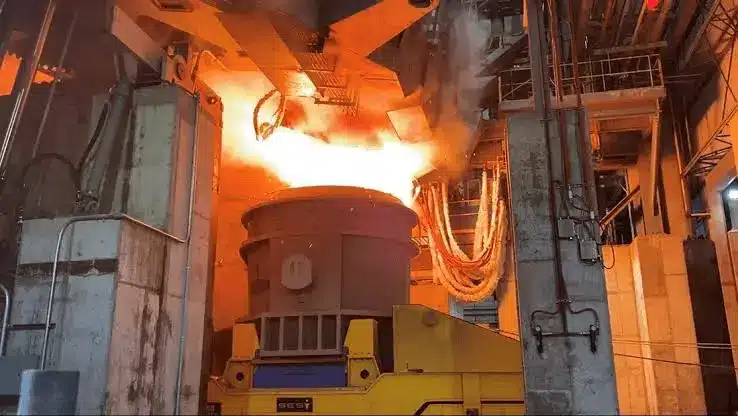
EAF slag is an operating medium, not a waste layer. Lime and dololime are commonly added to create a basic, workable slag; iron oxide and gangue from the charge also affect its composition. Basicity, FeO level, MgO saturation, viscosity, temperature, and volume influence phosphorus removal, foaming behavior, metal yield, refractory wear, and carryover risk. The target slag differs by furnace design, charge mix, steel grade, and refining strategy. A generic lime addition target is less useful than a controlled slag model with measured inputs and heat-level feedback.
Phosphorus removal benefits from suitable basic, oxidizing slag conditions, whereas sulfur control is often supported downstream under reducing conditions and carefully controlled slag practice. Residual copper and tin cannot be economically “blown away” in the EAF; they must be controlled through scrap selection and dilution strategy. Nitrogen, hydrogen, oxygen, and non-metallic inclusions require route-specific control across melting, tapping, ladle treatment, and casting. For critical grades, specify the cleanliness objective first, then assign each metallurgical task to the furnace, ladle furnace, vacuum unit, tundish, and caster.
Slag carryover at tapping deserves attention because it can reoxidize steel, consume alloys, change ladle slag chemistry, and complicate inclusion control. EBT design, tap detection, furnace tilt practice, slag-stopping systems, and ladle readiness all affect the result. When a customer requests clean-steel, bearing-steel, low-carbon, high-alloy, or demanding structural grades, describe the entire melt-shop route in the inquiry. An EAF supplier, electrode supplier, refractory producer, or engineering partner cannot give a credible recommendation from tonnage alone.
7.Refractories, Water Cooling, Fume Capture, and Maintenance
The EAF operates inside a controlled contradiction: the shell, roof, and panels must survive extreme heat while cooling water removes heat from protected equipment. Water-cooled panels, roof sections, ducting, and electrode arms require reliable water quality, flow monitoring, leak detection, inspection, and emergency discipline. Water entering a hot furnace can create a severe hazard. Cooling-system instrumentation therefore belongs in the furnace safety architecture, not solely in a maintenance checklist.
Refractory selection is zone-specific. The hearth, bottom, slag line, sidewall, taphole or EBT zone, roof delta, and impact regions see different combinations of arc radiation, thermal cycling, mechanical abrasion, slag corrosion, oxygen lancing, and scrap impact. Magnesia-carbon bricks are widely used in basic steelmaking applications because carbon helps thermal-shock resistance and slag non-wetting, but their oxidation and slag-chemistry sensitivity must be managed. Gunning, fettling, patching, and measured wear maps can extend campaign life when paired with stable operating practice. They cannot fully compensate for an aggressive FeO-rich slag, chronic open-arc operation, or damaged cooling equipment.
EAF dust and off-gas require engineered collection and treatment. Charging, melting, refining, slag removal, and tapping can generate particulate and gas emissions. Canopy hoods, direct-shell or fourth-hole extraction, ductwork, cooling, spark control, baghouses, and dust-handling systems must be matched to the furnace’s operating events and capture demand. Scrap coatings and volatile metals can influence dust composition; the resulting dust requires appropriate characterization, compliance handling, and recovery or disposal planning. Environmental performance is therefore linked to scrap procurement as well as fume-system design.
8.EAF Productivity, Cost, Digital Control, and Decarbonization
Productivity is usually expressed through tap-to-tap time, power-on time, tonnes per hour, availability, and schedule reliability. Cost is broader: it includes scrap or DRI, electricity, natural gas, oxygen, carbon, fluxes, graphite electrodes, refractories, labor, alloy losses, dust treatment, maintenance, downtime, and yield. A lower kWh/t figure is not automatically a better business outcome if it is achieved with unacceptable electrode wear, refractory damage, lower metallic yield, or grade deviations. Decision-makers should use a cost-per-liquid-tonne model and then validate it against quality and safety constraints.
Digital EAF control converts high-frequency process signals into usable action. Level 1 systems regulate electrode movement and electrical operation. Level 2 and production systems can combine heat records, charge data, energy, oxygen/carbon additions, off-gas, slag practice, maintenance observations, and laboratory chemistry. The useful objective is traceable learning: identify which combinations of charge mix, power profile, injection practice, and turnaround discipline produce the desired result. A black-box prediction is less valuable than an operator-trusted system that explains its recommended action and preserves metallurgical accountability.
The EAF also sits at the center of low-emissions steel discussions. Scrap recycling is fundamental, while hydrogen-based DRI feeding an EAF is a developing route for lower-emissions primary iron units in regions with suitable electricity and hydrogen. The final environmental result remains location- and route-specific. A credible green-steel claim should state the boundary, electricity sourcing, scrap/DRI proportion, direct and indirect emissions treatment, and verification method. Buyers increasingly require this level of evidence, especially where automotive, construction, energy, and machinery supply chains have reported-carbon requirements.
9.From Furnace Data to a Technical RFQ and Productive Inquiry
A technical inquiry attracts a useful engineering response when it identifies the actual operating problem. State the furnace type (AC EAF or DC EAF), nominal capacity, transformer rating, annual tonnage, steel grades, current charge mix, DRI/HBI proportion, tap-to-tap target, power-on time, electrical consumption, oxygen and carbon practice, fluxes, refractory map, electrode dimensions, fume-extraction arrangement, and the measured pain point. The pain point may be unstable foamy slag, excessive electrode consumption, high kWh/t, high dust load, EBT wear, panel overheating, refractory loss, residuals, low yield, or inconsistent grade acceptance.
For equipment, consumables, and technical services, request a proposal that makes its assumptions visible. A credible supplier should define the proposed scope, operating window, data basis, expected trade-offs, inspection points, spares, installation needs, commissioning support, safety interfaces, delivery lead time, and commercial exclusions. Avoid comparing only the unit price of an electrode, refractory brick, oxygen lance, cooling panel, baghouse component, DRI charging system, or EAF furnace package. Compare the supported lifecycle result: availability, consumption, heat stability, maintainability, compliance, and quality risk.
Inquiry area | Minimum information to provide | What a qualified supplier should return |
Furnace and production | AC/DC type, capacity, transformer, annual tonnes, grade range | Compatible equipment or consumable design and stated operating assumptions |
Charge and metallurgy | Scrap classes, DRI/HBI/hot-metal ratio, chemistry, slag history | Charge, slag, and process recommendations with known limitations |
Energy and productivity | Power-on, kWh/t, oxygen/carbon, tap-to-tap, downtime | Consumption model, capacity basis, KPIs, and commissioning/optimization plan |
Reliability and EHS | Refractory wear, cooling alarms, dust capture, maintenance history | Inspection scope, safety interfaces, service plan, and compliance boundaries |
Technical inquiry: Inquiry prompt: For an electric arc furnace project, replacement program, or process-improvement request, send your furnace data sheet, annual production target, steel-grade mix, charge chemistry, current KPIs, photographs or drawings of the relevant zone, and the failure or cost issue to be solved. This enables a supplier to propose an EAF solution tied to metallurgy and operating conditions rather than a generic catalogue item.
FAQ: Electric Arc Furnace Steelmaking
1. What is an electric arc furnace?
An electric arc furnace is a refractory-lined steelmaking vessel that melts metallic feed using electrical arcs, usually supported by oxygen, carbon injection, burners, fluxes, and controlled slag practice.
2. What does EAF mean in steel?
EAF means electric arc furnace. It may refer to the furnace itself or to the scrap- and DRI-capable steelmaking route centered on that furnace.
3. What raw materials can an EAF use?
Common inputs are steel scrap, DRI, HBI, pig iron, and sometimes hot metal, plus lime, dololime, carbon, alloys, and other process materials.
4. What is the difference between EAF and BOF steelmaking?
A BOF primarily refines hot metal from ironmaking, while an EAF commonly melts scrap and may use DRI/HBI or hot metal. Their raw-material systems and emissions profiles differ.
5. Why are graphite electrodes used in an EAF?
They conduct electrical current and create the high-temperature arc that melts the metallic charge. Electrode quality and operating practice affect consumption and furnace stability.
6. What is an AC electric arc furnace?
An AC EAF normally uses three graphite electrodes and a three-phase electrical circuit. It is a widely used furnace configuration in modern steelmaking.
7. What is a DC electric arc furnace?
A DC EAF normally uses one top graphite electrode with a bottom electrode/anode system. It has a different electrical circuit and maintenance requirement from an AC furnace.
8. What is foamy slag in an EAF?
Foamy slag is gas-containing slag that covers the arc. Stable foam can improve energy transfer and protect furnace equipment, while unstable foam can lead to open-arc damage or slopping.
9. Why is carbon injected into an EAF?
Carbon injection supports slag foaming and chemical energy. The injection rate must be balanced with oxygen, slag chemistry, yield, dust load, and safety.
10. Why is oxygen lanced into an EAF?
Oxygen supports melting, decarburization, and chemical energy. Excessive oxygen can raise FeO, metal loss, refractory wear, and off-gas load.
11. What is EBT in an EAF?
EBT means eccentric bottom tapping. It is a tapping arrangement designed to help reduce slag carryover when operated and maintained correctly.
12. How is EAF steel quality controlled?
Quality is controlled through charge selection, melting practice, slag chemistry, tapping, alloying, ladle treatment, vacuum refining where needed, and continuous-casting control.
13. Can an EAF make high-quality steel?
Yes. With suitable charge materials, process control, secondary metallurgy, and casting practice, EAF routes can produce demanding grades. The route must match the specification.
14. What drives EAF energy consumption?
Charge density and chemistry, DRI proportion, power profile, arc stability, foamy slag, roof-off time, oxygen/carbon practice, heat losses, and downtime all influence kWh per tonne.
15. What is the main EAF safety concern for scrap?
Wet, sealed, or contaminated scrap can create serious hazards. Scrap inspection, supplier control, moisture exclusion, and safe charging procedures are essential.
16. How is EAF dust collected?
Capture systems may use canopy hoods and direct-shell or fourth-hole extraction, followed by ductwork, cooling, baghouse filtration, and controlled dust handling.
17. Why are refractories important in an EAF?
Refractories contain molten steel and slag while resisting thermal cycling, arc radiation, abrasion, and corrosion. Zone-specific design and maintenance affect availability and cost.
18. Is EAF steel low carbon?
Its emissions can be lower than some routes, particularly with recycled scrap and low-carbon electricity, but actual results depend on electricity, metallic inputs, transport, and process efficiency.
19. What data should be included in an EAF RFQ?
Provide furnace type and capacity, transformer, charge mix, grades, energy and productivity KPIs, oxygen/carbon practice, drawings, maintenance history, and the objective to be improved.
20. How should suppliers be compared for an EAF project?
Compare technical assumptions, lifecycle cost, consumption, safety interfaces, service capability, delivery, quality control, and verifiable performance evidence, not only unit price.
100000+ Types of Bushings – Contact Us for Details