Recent Posts
Link Bush: Metallurgical Materials, Precision Fits, Wear Control, and Reliable Linkage Performance
Introduction
A link bush, also called a link bushing, linkage bush, suspension bushing, connecting-link bush, or clevis bushing, is a plain-bearing sleeve installed between a pin and a moving link. It controls clearance, carries oscillating load, protects the parent link, and provides a replaceable wear surface. Its performance depends on metallurgy, hardness, counterface finish, grease, fit, geometry, contamination control, and inspection evidence.
Table of Contents
1. What a Link Bush Metal Bush Is and Why It Remains Relevant
Link Bush metal is the long-established commercial name for plain-bearing bearing alloys. ASTM B23 covers eight typical plain-bearing bearing alloys in bar or ingot form, including tin-based and lead-based families. In a Link Bush bush, the alloy is normally cast, centrifugally lined, bonded, or otherwise applied to a steel, cast-iron, bronze, or bimetal shell. The backing gives stiffness and geometry; the thin working layer provides conformability, compatibility with a lubricated shaft, and a sacrificial surface that is more practical to renew than a hardened journal.
A journal bearing carries load over an oil film rather than rolling elements. Once speed and lubricant supply establish full-film operation, the rotating journal rides on a hydrodynamic wedge and the Link Bush should have little direct rubbing contact. Start-stop cycles, low speed, oil starvation, contamination, misalignment, vibration, and overload are the conditions that challenge the lining. This is why bearing alloy selection must be joined to rotor dynamics, lubrication engineering, housing geometry, and maintenance practice.
Link Bush-lined bushes are not interchangeable with solid bronze bushes, oil-impregnated bearings, polymer composite bearings, or rolling bearings. Their value is most visible in large, repairable equipment where a soft, renewable lining, good emergency behavior, and condition monitoring are commercially important. A technical enquiry should state whether the customer requires a new bush, a finished bearing shell, centrifugal Link Bush lining, bearing relining, machining only, or failure investigation.
In SEO terms, Link Bush metal bush, Link Bush bearing bush, plain-bearing bush, Link Bush-lined bush, and journal bearing liner are related search expressions. They should be used accurately. A split turbine bearing, a solid pump bush, and a lined compressor shell may share plain-bearing metallurgy while having very different geometry, oil feed, quality checks, and repair routes. Clear terminology attracts technically qualified enquiries and prevents a supplier from quoting the wrong construction.
2. Metallurgical Material Families for Link Bushes
Tin-based Link Bush commonly uses tin as the matrix with antimony and copper additions. The microstructure is engineered to provide a soft matrix around harder phases, creating a bearing surface that can conform during running-in while maintaining local load support. A frequently cited historical genuine Link Bush composition is approximately 89% tin, 7% antimony, and 3% copper; actual procurement must use the requested grade and certified analysis, not a generic nominal composition.
Lead-based Link Bush alloys use a lead-rich matrix and may be selected for cost, legacy equipment, or particular duty conditions. They require careful environmental, occupational, recycling, and customer compliance review. Lead-based and tin-based plain-bearings have different melting ranges, mechanical response, corrosion compatibility, and operating boundaries. Neither family should be selected merely from price or a historic shop term such as high-tin Link Bush or hard Link Bush.
Alloy chemistry is only one layer of performance. The bonding system, lining thickness, backing stiffness, journal material, lubricant additives, clearance, and service temperature determine how the alloy behaves in the actual bearing. Material certificates should identify the applicable standard or grade, heat or lot traceability, composition test method, and any customer-specific impurity limits. For safety-critical rotating equipment, a verified sample from the poured or lined component is preferable to relying only on ingot certification.
Alloy family | Typical commercial intent | Procurement control |
Tin-based white metal | High-quality Babbitt-lined journal bearings; repairable rotating equipment | Specify grade, Sn-Sb-Cu analysis, lining route, bond test |
Lead-based white metal | Legacy or cost-sensitive service where permitted | Confirm regulatory acceptance, Pb controls, compatibility |
Generic “Babbitt” | Insufficient technical description | Do not quote without standard/grade and duty data |
Antimony and copper contribute to the phase structure of common tin-based Link Bush alloys, but composition limits should never be guessed from a website description. ASTM B23 identifies the commercial alloy families, while the purchase order should identify the requested alloy number or UNS designation where applicable. Include restrictions on residual elements when the equipment owner, insurance requirement, or OEM specification demands them. The supplier should identify whether the certificate represents ingot chemistry, poured lining chemistry, or a test coupon.
3. Microstructure, Hardness, and Counterface Compatibility
The classical Link Bush concept deliberately combines a relatively compliant matrix with dispersed harder constituents. Under good hydrodynamic lubrication, this structure contributes to conformability and controlled embedment of fine particles. Those attributes are not permission to operate with dirty oil: large debris, abrasive contamination, or repeated boundary contact can tear, score, fatigue, or locally melt a lining regardless of alloy family.
Bond integrity is a primary acceptance issue. A high-quality lining must be continuous, clean, and metallurgically or mechanically bonded to its backing as specified. Poor preparation, oxidation, wrong pouring temperature, inadequate tinning, trapped gas, shrinkage, contamination, or thermal mismatch can produce voids, delamination, blisters, and edge lifting. The first visual inspection may not reveal all defects, so qualified suppliers use suitable inspection methods such as ultrasonic examination, dye penetrant where appropriate, bond testing, metallography, and dimensional verification.
Lining thickness is an engineered variable, not an indicator that more is always better. A lining that is too thin may not permit machining, repair allowance, or heat management; a lining that is too thick can change stiffness and fatigue behavior. Drawings should state the finished thickness, allowed variation, bond area, oil grooves, reliefs, parting-line requirements, chamfers, and any areas that must remain unlined. These details also determine tooling, fixturing, machining sequence, and quote accuracy.
The interface between the plain-bearing and backing is a system. Backing geometry must be stable, clean, and compatible with the proposed process. When a repaired bearing has an unknown history, inspect for old solder, cracks, corrosion, distortion, fretting, damaged locating faces, and previous weld repair before accepting it for relining. A low-cost re-pour is not economical if the original shell cannot hold concentricity or transmit heat as designed.
4. Hydrodynamic Lubrication, Clearance, and Journal Surface
The preferred operating state for a Link Bush journal bearing is hydrodynamic lubrication. Journal rotation entrains oil into a converging clearance and develops pressure that separates the surfaces. The operating film depends on viscosity at temperature, journal speed, load, geometry, clearance, bearing length-to-diameter ratio, oil supply, and alignment. A material data sheet cannot replace a bearing calculation or validation on a critical machine.
Clearance controls film formation, heat removal, and stability. Excessive clearance can reduce film stiffness, increase vibration, oil leakage, and edge loading; insufficient clearance can limit oil flow, raise temperature, and create seizure risk. A rebuilt Link Bush bush must therefore be machined from the actual journal diameter and service specification, with measurement conditions defined. Clearance should not be copied from an unrelated machine solely because the shaft diameter is similar.
Journal finish and hardness matter because the shaft is part of the tribological pair. A rough, scored, out-of-round, tapered, or contaminated journal can destroy a new lining quickly. Before relining, inspect the shaft for runout, surface finish, hardness where relevant, cracks, electrical damage, and geometry. Oil grooves must be designed to distribute lubricant without unnecessarily shrinking the loaded land; groove geometry should follow the engineered bearing design rather than a generic shop pattern.
Parameter | Why it matters | Information for supplier |
Journal diameter and tolerance | Sets finished bore and clearance | Measured shaft size and temperature basis |
Load, speed, oil viscosity | Determines film and heat balance | Normal/max duty; start-stop profile |
Journal condition | Controls scoring and running-in | Finish, runout, taper, repair history |
Lubricant selection includes more than ISO viscosity grade. Oil cleanliness, water content, oxidation stability, additive compatibility, delivery pressure, supply temperature, flow path, filtration rating, and tank condition all influence the bearing. During commissioning, establish normal metal temperature, oil outlet temperature, vibration, and shaft position trends. These baselines make it easier to separate a harmless running-in change from an emerging lubrication or alignment problem.
5. Manufacturing Routes and Surface Engineering
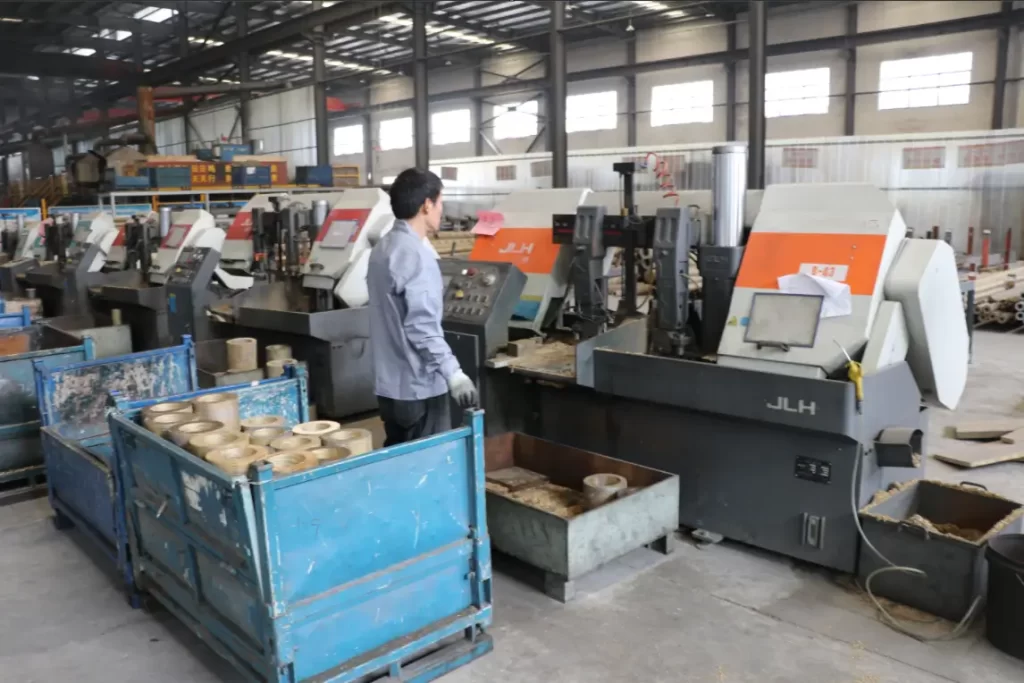
New Link Bush bushes are commonly made by static casting, centrifugal casting, or controlled lining of a prepared shell, followed by machining and inspection. Relining begins with removal of old plain-bearing, inspection of the backing, cleaning, preparation of the bond surface, application of the specified bonding method, controlled pouring or centrifuging, cooling, rough machining, finish boring, oil-groove machining, and final testing. Each step influences bond quality and dimensional stability.
Temperature control is essential because plain-bearing melts at much lower temperatures than steel or bronze backings. Overheating can promote oxidation, composition change, poor bond behavior, or excessive intermetallic growth; inadequate temperature can prevent sound flow and bonding. A reliable supplier records alloy charge identity, melt treatment, backing preparation, pouring conditions, cooling practice, machining datum, inspection results, and repair authorization. This record is especially valuable for turbine, compressor, hydroelectric, and marine bearing jobs.
Centrifugal Link Bush lining is often selected when a cylindrical shell requires a uniform, dense lining. It is not automatically superior for every geometry: machine capacity, shell diameter, wall thickness, end features, lining length, alloy, and bonding method matter. Ask the supplier how they control lining distribution, eccentricity, porosity, bond quality, finished bore, and groove placement. The right process is the one qualified for the part, not simply the one with the most impressive name.
Machining is the bridge between sound metallurgy and usable bearing geometry. Bore size, roundness, taper, split-line closure, crush or fit in housing, thrust faces, reliefs, oil holes, and groove transitions require controlled datums. For a split bearing, specify whether final boring occurs assembled and torqued. For a solid bush, specify the interference or housing fit. These choices affect heat transfer, shell distortion, and the final running clearance.
6. Lubrication, Contamination, and Oscillating Motion
Wiping is a smeared or displaced bearing surface associated with excessive temperature, inadequate film, overload, or contact. Scoring and abrasion usually point to debris, dirty oil, a damaged journal, or poor assembly cleanliness. Fatigue cracking, flaking, and lining separation can be driven by cyclic stress, misalignment, vibration, inadequate backing support, a defective bond, or operating outside the original design window. The failure mode should be documented before the lining is removed.
Electrical discharge damage can create localized pits or frosting on bearing and journal surfaces. Water contamination can reduce lubricant film strength and contribute to corrosion. Cavitation or oil-film instability may cause distinctive damage patterns in high-speed machinery. These mechanisms can coexist, so a single visual label such as Link Bush failure is not a root-cause analysis. Record oil samples, vibration trends, temperatures, load events, alignment readings, journal photographs, and bearing orientation.
A successful repair closes the loop. Replacing only the bush without correcting oil filtration, shaft defects, housing distortion, rotor balance, grounding, alignment, or startup procedure risks repeating the event. Root-cause analysis should distinguish the initiating cause from resulting damage. It should also define release criteria: acceptable journal condition, oil cleanliness, clearance, contact pattern, temperature baseline, vibration baseline, and inspection interval after restart.
Observed condition | Likely contributors | Recommended response |
Wiping / smear | Oil starvation, low clearance, overload, heat | Inspect oil system, journal, clearance, load history |
Scoring | Particles, rough journal, dirty assembly | Analyze debris, repair journal, improve filtration |
Delamination | Bond defect, overheating, cyclic stress | Map bond; inspect backing and process records |
Failure analysis benefits from preserving evidence. Do not polish away the wiped area or wash all debris from the oil system before photographs, sampling, and orientation marks are taken. Compare damage at the loaded zone, unloaded zone, axial ends, and oil-feed region. A clear chronology of alarms, trips, maintenance activity, and lubricant changes can be more useful than a final photograph alone, especially after a high-value outage.
7. Failure Analysis and Quality Inspection
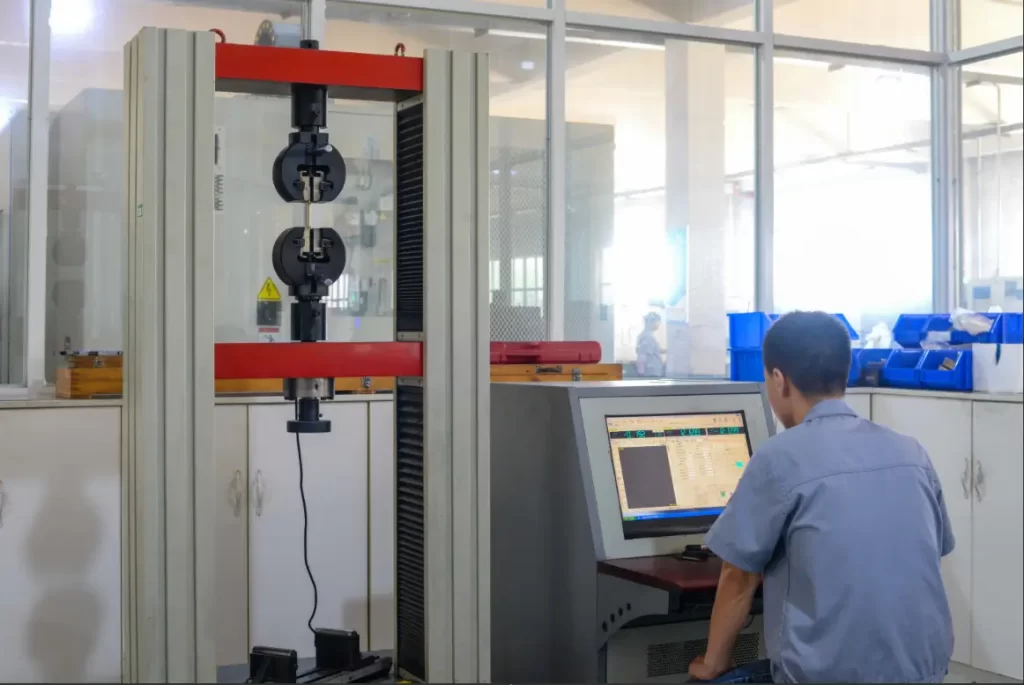
A good Link Bush metal bush inspection plan begins with traceability. It identifies the bearing number, drawing revision, alloy grade, backing material, process route, inspector, measuring equipment, and acceptance standard. Visual inspection checks surface continuity, groove quality, edges, contamination, and visible defects; dimensional inspection verifies bore, width, concentricity, reliefs, and features against the drawing.
For lined bearings, quality assurance should address both lining and bond. Depending on the design, suitable controls can include chemical analysis, macro-etch or metallographic review, ultrasonic testing, bond testing, penetrant inspection, hardness checks where meaningful, and balance or runout measurement. The method and acceptance threshold must be agreed before production. Generic statements such as 100% bond are not meaningful unless the inspection method, coverage, calibration, and rejection criteria are stated.
ASTM B23 is a useful reference for plain-bearing bearing alloy composition, but it does not replace the finished-bearing drawing, machinery OEM requirements, or customer acceptance plan. International customers may also specify ISO, DIN, BS, JIS, API, or internal turbine and compressor standards. The quotation should list which documents control composition, dimensions, bonding, inspection, packaging, and certification so that the delivered part matches the intended application.
Quality documentation should be proportionate to risk. A small utility bush may require dimensional verification and material identification; a critical generator or turbine bearing may require a customer-approved ITP, witness points, alloy certificates, NDT reports, traceable calibration, and release documentation. Define the language, units, drawing revision, report format, and retention period in advance. This prevents delays when parts are ready but their evidence package is not.
Table 5: Performance Specifications by Material Type
| Performance Characteristic | Bearing Steel | Stainless Steel | Ceramic Hybrid |
|---|---|---|---|
| Maximum Speed (rpm) | 32,000 | 28,000 | 45,000 |
| Operating Temperature | -30°C to +120°C | -30°C to +150°C | -60°C to +300°C |
| Corrosion Resistance | Low | High | Excellent |
| Electrical Conductivity | Conductive | Conductive | Non-conductive |
| Cost Factor | 1x | 1.5-2x | 5-10x |
8. Applications, Alternatives, and Lifecycle Value
Link Bush-lined bushes are used where large journals, continuous operation, repairability, and stable oil-film behavior favor plain bearings. Typical sectors include steam and gas turbines, hydro generators, centrifugal compressors, large pumps, electric motors, diesel engines, marine propulsion, rolling mills, paper machinery, mining equipment, and process plant. The duty cycle and consequence of failure vary widely; the same alloy name cannot define an acceptable design across all sectors.
Selection is bounded by temperature, speed, pressure, lubricant type, contamination risk, shaft material, corrosion exposure, electrical environment, maintenance capability, and regulations. A soft plain-bearing lining may be advantageous for embedment and emergency behavior, yet it is not the preferred answer for every dry-running, chemically aggressive, very high-temperature, or poorly lubricated condition. Alternatives such as bronze, aluminum-tin, copper-lead, polymer composite, or rolling bearings may be more appropriate after engineering review.
The commercial decision should balance total lifecycle cost rather than only purchase price. A qualified Link Bush relining can extend the life of an expensive machine housing and reduce outage risk, while an incorrectly specified low-cost lining can produce repeat disassembly, shaft damage, and lost production. Supplier capability, inspection evidence, machining accuracy, repair lead time, and technical communication are therefore part of the product value.
When comparing alternatives, consider repair time and field capability. A Link Bush-lined shell can often be restored without replacing a large housing or redesigning the rotor support. Conversely, changing to a different bearing material may require new clearance, oil, shaft, or housing assumptions. An engineering review should make these changes explicit. Material substitution based only on a generic cross-reference can transfer risk from the purchasing department to the operating machine.
9. Converting a Link Bush RFQ into a Quote-Ready Specification
A complete request for quotation should identify the equipment and bearing function, drawing or sample, new manufacture or relining requirement, bearing type, backing material, Link Bush grade or standard, finished dimensions, shaft size, clearance target, oil-groove design, load, speed, temperature, lubricant, environment, and quantity. Add photographs and failure evidence when the work is a repair rather than a new design.
State the required quality evidence: chemical certificate, lining thickness report, bond inspection method, dimensional report, NDT requirement, balancing or runout requirement, sample approval, packaging, marking, and delivery destination. Clarify whether the supplier must remove old Link Bush, inspect the housing, reverse-engineer a part, supply a mating journal repair, or provide installation support. Each choice changes turnaround time and commercial risk.
For high-value rotating equipment, request a technical proposal alongside the price. The proposal should explain the proposed alloy, lining route, quality plan, machining tolerances, exclusions, lead time, warranty basis, and information still required. This creates a defensible comparison between quotations and gives the supplier the data needed to provide a Link Bush metal bush that supports reliable operation rather than only a nominally similar replacement.
RFQ field | Minimum buyer input | Why it changes the quote |
Part definition | Drawing/sample; new or relining | Defines tooling, backing and machining |
Duty and lubrication | Load, speed, temperature, oil | Sets alloy/design review and inspection |
Acceptance package | Certificates, bond/NDT, dimensions | Defines quality time and commercial scope |
For global supply, packaging and logistics protect the soft lining as much as machining does. Use corrosion protection compatible with the final cleaning procedure, rigid support to prevent impact, separators to avoid groove-edge damage, moisture barriers where needed, and clear part identification. For repair projects, agree who owns the return shell, who documents as-received condition, and how deviations from the drawing or sample are approved. These commercial details keep a Link Bush metal bush project moving after the technical selection is complete.
FAQ: Link Bush Metal Bush
1. What is a link bush?
A link bush is a plain sleeve between a pin and a moving linkage.
2. What is the difference between link bush and link bushing?
The terms are commercial variants; the drawing defines construction.
3. Which metal is best for a link bush?
Bronze, steel-backed bronze, sintered and composite materials may all be suitable.
4. Are bronze bushes better than steel bushes?
Bronze offers compatibility while steel offers strength; counterface and grease decide.
5. What is a flanged link bush?
It has an integral flange for thrust or location.
6. What is a clevis bush?
It is a plain bush in a clevis and pin joint.
7. Why does a link bush wear quickly?
Worn pins, dirt, water, low grease, shock and wrong fit are common causes.
8. Should the pin be replaced with the bush?
Replace it when scored, undersize, tapered, out of round or beyond finish limits.
9. What is the correct interference fit?
Fit depends on diameter, wall, housing, temperature and material.
10. Can a link bush be machined after pressing?
Many custom bushes are finish-bored after pressing.
11. Do link bushes need grease?
Most heavy-duty metal bushes do unless designed for self-lubrication.
12. What is a wrapped bush?
It is a cylindrical or flanged bush formed from bearing material.
13. What is a steel-backed bronze bush?
It uses a steel structural backing and bronze sliding layer.
14. Is sintered bronze suitable for excavators?
Only after reviewing shock, dirt, load, sealing and lubrication.
15. How are link bushes inspected?
Use chemistry, hardness, dimensions, surface, fit and layer checks.
16. What is a pin and bush kit?
It may include bushes, pins, seals, thrust washers and installation data.
17. Can link bushes be customized?
Bore, OD, length, flange, groove, hole, material and tolerance can be customized.
18. How do I prevent bush rotation?
Use specified interference, anti-rotation features and correct installation.
19. What information is needed for a quote?
Send drawing or sample, pin and housing sizes, duty, lubrication, quantity and quality needs.
20. Why choose a metallurgical supplier?
Controlled alloy, machining, fit and inspection improve repeatability and wear life.
100000+ Types of Bushings – Contact Us for Details