
Recent Posts
Metallurgical Equipment Parts: The Complete Buyer’s Guide to Wear Parts, Bushings, and Components That Keep Steel Mills Running
Introduction
Metallurgical equipment parts are the unsung heroes of steel production, mineral processing, and metal casting. From wear liners in sinter plants to self-lubricating bushings in rolling mills, these components determine how long your equipment runs before it needs maintenance—and how much that downtime costs you. This guide covers the most critical categories of metallurgical equipment parts, explains material selection trade-offs, and offers practical advice on sourcing from a technical buyer’s perspective. Whether you operate a blast furnace, a mineral processing plant, or a foundry, understanding what makes these parts fail (and what makes them last) directly impacts your bottom line.
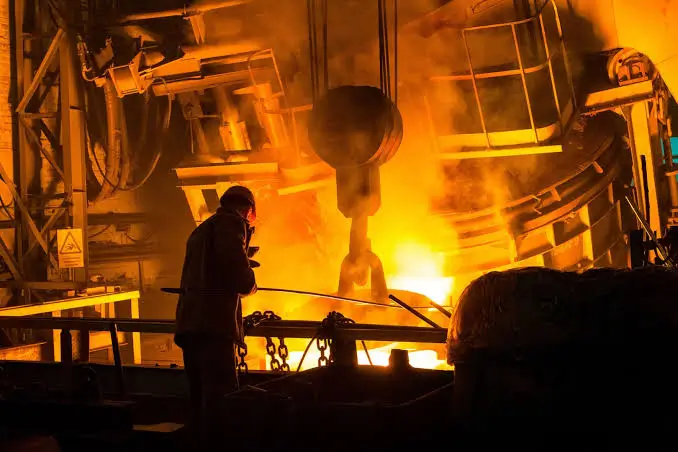
Table of Contents
1. What Are Metallurgical Equipment Parts and Why They Matter
Let’s cut through the jargon. When we talk about metallurgical equipment parts, we’re talking about the components that keep heavy industrial equipment alive in environments that destroy ordinary machine parts. Think sinter plant wear plates, crusher liners, rolling mill bushings, conveyor chute linings, and furnace components.
The global market for machinery used in metallurgy—classified under ISIC 2923—covers a wide range of equipment and parts, from smelting and refining machinery to rolling mill equipment and foundry machinery. Research firms track this market because it’s a reliable indicator of industrial activity: when steel production is strong, parts consumption follows.
Here’s the thing most procurement people learn the hard way: the cost of a metallurgical equipment part is almost never just the purchase price. It’s the cost of the part plus the cost of installing it plus the opportunity cost of the downtime required to replace it. A $200 wear plate that lasts 18 months is worth far more than a $100 plate that fails every three months—especially when you factor in labor, safety risks, and production losses.
The key insight from industries that consume these parts is that wear is not inevitable. It’s a design variable. Choose the right material, the right supplier, and the right replacement cycle, and you can turn a constant maintenance headache into a predictable, manageable cost.
2. The Main Categories of Metallurgical Equipment Parts
Metallurgical equipment parts fall into several broad categories based on where they’re used and what they do. Let’s walk through the most important ones.
Wear Liners and Plates
Wear liners protect the equipment that moves material. They’re sacrificial by design—they wear out so your expensive chutes, hoppers, and crusher housings don’t have to.
In sinter plants and steel belt sintering furnaces, sliding beam castings and wear liners made from nodular cast iron (GGG-50, QT500-7) are standard. These parts face constant abrasion from hot sinter and ore pellets. A typical sliding beam plate might measure 30×170×1682mm and weigh around 62kg, with tensile strength above 500 MPa and Brinell hardness in the 170-230 range.
The material science here matters. Ordinary cast iron would deform under the heat and impact. Nodular cast iron—with its spherical graphite structure—offers a combination of hardness and toughness that keeps parts dimensionally stable while resisting abrasion.
Bushings and Bearings
Bushings are everywhere in metallurgical equipment, and they’re easy to overlook until they fail. A failed bushing in a rolling mill can seize an entire line. A worn bushing in a sinter plant’s conveyor system can cause misalignment, vibration, and eventually catastrophic damage to surrounding components.
Self-lubricating bushings (often called DU bushings, SF-1 bushings, or dry bushings) have become the default choice in many metallurgical applications because they don’t require grease. In steel mills, where grease lines can be impractical to maintain and contamination risks are high, this matters enormously.
A quality DU bushing is a three-layer composite: a steel backing for structural strength, a porous bronze interlayer that holds the lubricant, and a PTFE-based surface that transfers a solid lubricant film onto the shaft. This construction delivers friction coefficients as low as 0.08 dry, with operating temperatures from -200°C to +280°C and dynamic load capacity up to 140 N/mm².
For metallurgical equipment specifically—coke oven equipment, rolling mills, leveling machines, aluminum extrusion presses—PTFE-coated and self-lubricating bushings withstand extreme pressures and continuous operation without the maintenance burden of traditional lubricated bearings.
Crusher and Sinter Plant Components
Crushers and sinter plants are where metallurgical equipment parts face the most brutal conditions. Rock, sinter, coke, and ore all have one thing in common: they abrade steel rapidly.
Ceramic composite wear liners have become a benchmark for high-wear applications. Sandvik’s HX900, for example, is a cast-in-carbide composite that metallurgically bonds cemented carbides with nodular cast iron. In real-world applications, HX900 has lasted up to five times longer than white iron and carbide overlay plates, and 10-20 times longer than quenched steels. At an iron ore site in South America, a transfer chute that previously failed every few weeks ran for over a year with HX900.
FLS’s FerroCer panels—ceramic inserts embedded in a malleable steel matrix—tell a similar story. At Hindustan Zinc’s Rampura Agucha mine, manganese steel liners lasted only 23-25 days. FerroCer panels were still going strong after 480 days. That’s a 20x improvement in wear life, and it eliminated the safety risks of frequent confined-space replacements at elevated chute locations.
Machined and Cast Components
Not every metallurgical equipment part is a wear item. Precision components—heat treatment fixtures, furnace rolls, radiant tubes, tube sheets, and machined parts—keep processes running smoothly. These are often produced as OEM or ODM castings and forgings in heat-resistant stainless steels with high nickel and chromium content.
For aluminum extrusion presses, calendering equipment, and leveling machines, the precision of these components directly affects product quality. A bushing with excessive clearance will cause vibration. A worn guide roll will mark the finished product. In these applications, dimensional tolerance matters—reputable manufacturers hold tolerances within 0.2mm on bushings, for example.
Surface-Engineered Parts
Sometimes the base material is adequate, but the surface needs enhancement. Plasma surfacing under nitrogen atmosphere is one approach used to strengthen metallurgical equipment parts. Research comparing 3Kh2V8, 4Kh4V10Yu, and R18Yu steel wires found that R18Yu-based wire products produced the lowest residual stresses in multilayer plasma surfacing.
The takeaway for buyers: when a supplier says their part is “surface-treated,” ask what the treatment actually does for residual stress, hardness depth, and bond strength. Not all surface treatments are equal.
3. How to Choose the Right Parts for Your Application
Choosing metallurgical equipment parts isn’t about finding the cheapest option. It’s about matching material properties to the specific failure mechanisms your equipment faces. Here’s a practical framework.
Identify the Wear Mechanism First
Before you look at any supplier catalog, answer these questions:
Is it abrasion or impact? High-stress grinding abrasion (like in a ball mill) calls for different materials than low-stress sliding abrasion (like in a chute). Impact wear requires toughness—a material that’s too hard will crack.
What’s the temperature? Sinter plant components see elevated temperatures. Furnace rolls see extreme heat. Standard materials that work fine at ambient temperature may creep or oxidize at 600°C.
Is lubrication possible? In many metallurgical environments, grease lines clog, contaminants enter the bearing, and maintenance access is dangerous. Self-lubricating bushings eliminate this variable entirely.
Material Selection Trade-Offs
Nodular cast iron (GGG-50, QT500-7) offers a good balance of hardness (170-230 HB) and toughness for sinter plant wear liners and sliding beams. It machines well and handles thermal cycling better than some steels.
Ceramic composites deliver exceptional wear life—but they come at a higher initial cost and are less forgiving of severe impact. They’re the right choice when downtime is extremely expensive and you can guarantee the application won’t subject them to cracking forces.
Bronze and bimetallic bushings remain workhorses for medium-load applications. They handle shock loads well and provide good thermal conductivity. For dusty agricultural and mining equipment, they’re often paired with self-lubricating designs.
PTFE composite bushings (DU type) are the go-to for applications where lubrication is impossible or impractical. They’re not magic—they have PV limits—but within those limits, they deliver maintenance-free performance that’s hard to beat.
The Downtime Calculation
Here’s a simple way to evaluate whether a premium part is worth the price:
Cost per hour of downtime × Expected reduction in downtime hours = Justifiable premium
If your sinter plant produces $10,000 of product per hour, and a premium wear liner reduces replacement downtime from 12 hours to 3 hours per year, that liner justifies a premium of $90,000 annually. Most premium parts cost far less than that.
4. Sourcing Metallurgical Equipment Parts: A Practical Guide
Sourcing industrial components from global suppliers can be frustrating. The gap between what’s advertised and what arrives is real. Here’s how to reduce your risk.
What to Look for in a Supplier
Certifications matter, but understand what they cover. ISO 9001 covers quality management systems. IATF 16949 is automotive-focused but indicates tight process control. SGS/BV audits verify that the supplier actually operates the systems they claim.
Ask for material certifications, not just product photos. A supplier who can’t provide mill certificates or third-party test reports for their raw materials is a risk. For cast iron parts, you want to see chemical composition and mechanical properties (tensile strength, hardness) documented for the actual production batch.
Check dimensional capability. For bushings and machined parts, ask about tolerance capability. A supplier using fully automated equipment to hold 0.2mm tolerance is operating at a different level than one doing manual machining.
Look for application experience. A supplier who has supplied bushings to rolling mills, sinter plants, or coke oven equipment understands the operating conditions. They can suggest material modifications or design changes that improve life.
Understanding the Global Supply Landscape
China remains the dominant source for many metallurgical equipment parts, particularly castings and bushings. The price competitiveness is real, but quality varies enormously. The best approach is to work with suppliers who have export experience and established quality systems.
For ceramic wear liners and advanced composites, European and Australian manufacturers (Sandvik, FLS, REMA TIP TOP) lead in technology but at significantly higher price points. For many applications, the performance gap doesn’t justify the price difference—but for critical, high-downtime-cost applications, it often does.
Total Cost of Ownership Thinking
The procurement mindset that works for office supplies doesn’t work for metallurgical equipment parts. The cheapest part is rarely the lowest-cost solution.
Consider a wear liner that costs 40% less but lasts half as long. You’re paying 20% more per unit of service life, plus you’re incurring double the installation labor and double the downtime. The “cheap” part is actually expensive.
The same logic applies to bushings. A self-lubricating bushing that eliminates grease lines and reduces maintenance intervals pays back its premium within months in most industrial settings.
5. MYWAY Bushings: Engineered for the Metallurgy Industry
At MYWAY Bushing Factory, we understand that metallurgical equipment parts aren’t commodity items. They’re critical components in processes where failure isn’t an option and downtime is measured in real money.
We manufacture high-performance bushings and wear plates specifically for the metallurgy industry, including:
Cold rolling mills and hot rolling mills — where precision and load capacity determine product quality
Calendering equipment — where smooth operation prevents surface defects
Coke oven equipment — where heat and abrasion combine to destroy ordinary components
Leveling and straightening machines — where alignment precision affects every downstream process
Aluminum profile extrusion presses — where high loads and continuous operation demand reliability
Our PTFE-coated and self-lubricating bushings are engineered to withstand extreme pressures, high loads, and continuous operation. They reduce friction, minimize wear, and extend maintenance intervals—so your equipment runs longer between stoppages.
We’re proud to have earned the trust of major industrial enterprises in China, including China First Heavy Industries Group (CFHI), China National Erzhong Group, Taiyuan Heavy Industry (TYHI), and Ma’anshan Taier Group. These partnerships aren’t marketing claims—they’re proof that our components perform in the most demanding metallurgical environments.
What sets MYWAY apart:
ISO9001, CE, IATF, and UL certifications — documented quality systems, not just claims
Over 2,000 existing moulds — standard metric and imperial sizes available without tooling costs
Custom manufacturing to your drawings — including split bushings, flanged bushings, thrust washers, and non-standard shapes
Dimensional tolerance within 0.2mm — automated production ensures batch-to-batch consistency
Friction coefficient as low as 0.06-0.12μ — verified performance, not optimistic marketing
Whether you need replacement bushings for an existing rolling mill or wear plates for a sinter plant, MYWAY can supply components that fit your application and your budget.
Ready to reduce downtime and extend equipment life? Contact MYWAY today with your specifications. Send us your drawings, your operating conditions, and your wear problems. We’ll recommend the right material and design—and quote you a price that reflects the total cost of ownership, not just the unit cost.
FAQ: Comprehensive 608 Bearing Guide
Q: What are the most common metallurgical equipment parts that need frequent replacement?
The highest-consumption items are typically wear liners in material handling systems (chutes, hoppers, transfer points), crusher wear parts, sinter plant sliding beams and grates, and bushings in rolling mills and continuous casting equipment. Anywhere that abrasive material flows or two surfaces rub under load, you’ll find parts that wear.
Q: How do I know if I need a ceramic wear liner or a steel one?
If your current steel liner lasts less than 3-6 months, a ceramic composite is worth evaluating. If it lasts a year or more, the economics of ceramic may not work unless downtime costs are exceptionally high. Also consider impact: ceramic liners can crack under severe impact, while steel liners deform but keep protecting.
Q: What’s the difference between a DU bushing and a bronze bushing?
A DU bushing is a composite: steel backing, bronze interlayer, PTFE surface. It’s self-lubricating and maintenance-free. A solid bronze bushing requires external lubrication and is generally better suited to higher-temperature applications where PTFE would degrade. For metallurgical equipment, DU bushings are often preferred where grease access is difficult or contamination is a concern.
Q: Can I replace a branded bushing with an aftermarket one?
In many cases, yes. If the dimensions match and the material properties meet or exceed the original specification, an aftermarket bushing can perform identically. The key is working with a supplier who provides full dimensional and material documentation. MYWAY manufactures bushings compatible with Caterpillar, Komatsu, Volvo CE, Sandvik, Metso, and other major brands.
Q: How do I calculate the PV value for my bushing application?
PV is pressure (N/mm²) times velocity (m/s). For a DU bushing, you need both the load and the sliding speed. If your PV exceeds the bushing’s rating, you’ll need lubrication or a different material. MYWAY DU bushings handle continuous PV up to 1.8 N/mm²·m/s dry, with short peaks to 3.6 N/mm²·m/s.
Q: What lead time should I expect for custom metallurgical equipment parts?
For standard bushings and wear plates from existing moulds, 2-4 weeks is typical. Custom castings and machined parts usually run 4-8 weeks depending on complexity and tooling requirements. Emergency orders can sometimes be expedited—ask your supplier.
Q: How do I verify that a supplier’s material certifications are legitimate?
Request mill certificates or third-party test reports for the specific production batch, not just generic material datasheets. Reputable suppliers will provide these without hesitation. You can also request a sample for independent testing before placing a production order.
100000+ Types of Bushings – Contact Us for Details