
Recent Posts
Stainless Steel Bushings: The Ultimate Corrosion-Resistant Sleeve Bearings for Harsh Industrial Environments
Introduction
If you work with industrial machinery, heavy equipment, or mechanical systems, you’ve likely heard of stainless steel bushings—also called stainless steel bushes or sleeve bearings. These small but mighty components are replaceable metal linings or sleeves inserted into equipment openings, paired with pins or shafts to reduce friction, resist wear, and guide movement. Unlike standard carbon steel bushings that rust and degrade quickly in tough conditions, stainless steel bushings stand out for their unmatched corrosion resistance, long service life, and reliable performance in wet, salty, chemical-rich, or high-humidity environments.
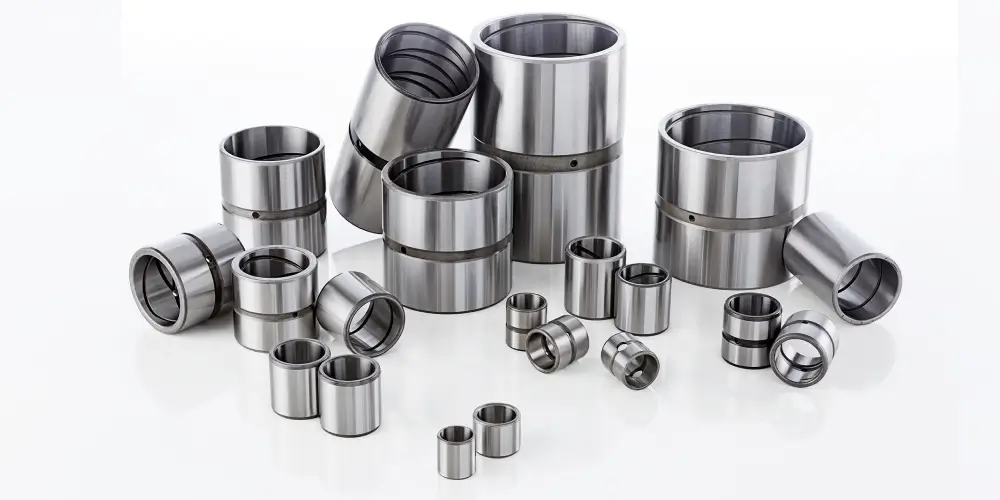
Table of Contents
1. What Are Stainless Steel Bushings?
A stainless steel bushing is a precision-machined sleeve bearing made from stainless steel alloys (typically 304, 316, or 42CrMo). As a subset of plain bearings, they fit into housing bores and support rotating or sliding shafts, acting as a buffer between moving parts. The core difference between stainless steel bushings and regular steel bushings lies in their material composition: stainless steel contains at least 10.5% chromium, which forms a thin, self-repairing oxide layer on the surface. This layer blocks rust and corrosion, making stainless steel bushings ideal for environments where carbon steel would fail in weeks or months.
Stainless steel bushings serve four critical functions in machinery:
- Friction Reduction: Minimize metal-on-metal contact to lower wear and energy consumption.
- Wear Resistance: Protect shafts and housings from abrasion, extending equipment life.
- Corrosion Protection: Resist rust, oxidation, and chemical damage in harsh settings.
- Precision Guidance: Ensure smooth, stable movement for rotating or linear components.
2. Key Types of Stainless Steel Bushings (By Design & Application)
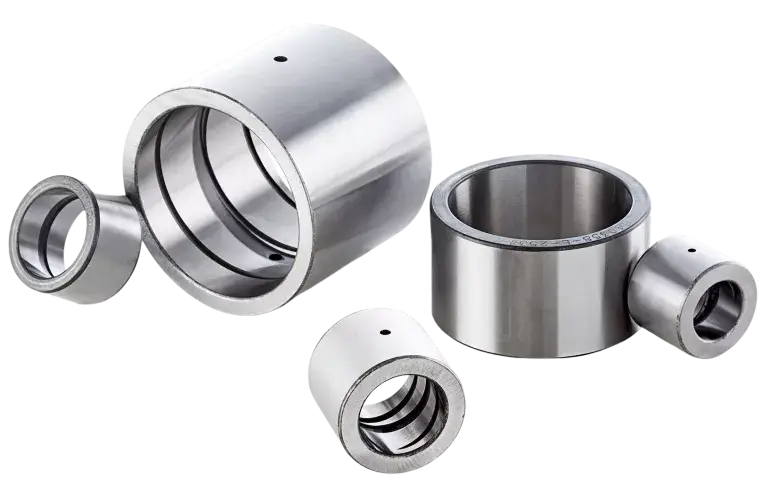
Stainless steel bushings come in multiple designs, each tailored to specific load, lubrication, and installation needs. The most common types include:
1. Plain Stainless Steel Bushings (Sleeve Bushings)
The simplest and most widely used type—hollow cylindrical sleeves with no grooves or flanges. Plain bushings are easy to install, cost-effective, and suitable for general-purpose applications where corrosion resistance is the top priority. They work well in low-to-moderate load scenarios, such as conveyor systems, light machinery, and household equipment.
2. Grooved Stainless Steel Bushings
Featuring internal spiral, linear, or custom grooves, these bushings are designed to collect and distribute grease evenly across the bearing surface. The grooves prevent lubricant starvation, reduce friction, and minimize heat buildup—critical for high-load or continuous-operation machinery in corrosive environments (e.g., marine cranes, chemical pumps). Grooved bushings extend maintenance intervals and prevent unexpected breakdowns.
3. Flanged Stainless Steel Bushings
Equipped with a collar (flange) at one end, flanged bushings can withstand both radial and axial loads in one direction. The flange acts as a stop, simplifying installation and preventing the bushing from sliding out of the housing. They’re available in plain or grooved designs and are ideal for heavy-duty applications like offshore platform equipment, construction machinery, and hydraulic cylinders.
4. Specialized Stainless Steel Bushings
Beyond the three main types, specialized designs meet unique industry needs:
- PTFE Composite Stainless Steel Bushings: Steel-backed with a PTFE inner layer for self-lubrication—no grease needed, perfect for food processing or cleanroom environments.
- Hex Stainless Steel Bushings: Hexagonal outer shape for easy installation with wrenches, common in automotive and agricultural equipment.
- Spherical Stainless Steel Bushings: Allow multi-plane oscillating motion, used in suspension systems and robotics.
3. Material Advantages: Why Stainless Steel Beats Carbon Steel & Bronze
The performance of stainless steel bushings hinges on their material properties. Let’s compare stainless steel to carbon steel and bronze—two common bushing materials—and highlight the key benefits:
1. Superior Corrosion Resistance (Non-Negotiable for Harsh Environments)
Stainless steel’s chromium content (10.5%+) forms a passive oxide layer that repels water, salt, chemicals, and atmospheric moisture.
- 304 Stainless Steel: Ideal for general corrosion resistance (humid air, fresh water, mild chemicals)—cost-effective for most industrial uses.
- 316 Stainless Steel: Contains molybdenum, offering 5x better resistance to saltwater and chloride corrosion than 304—perfect for marine and coastal applications.
- 42CrMo Stainless Steel: High-strength alloy with excellent wear resistance, suitable for heavy-load, high-stress environments.
In contrast, carbon steel rusts rapidly in wet or salty conditions, while bronze suffers from “dezincification” in saltwater, leading to holes and leaks within months.
2. Exceptional Durability & Wear Resistance
Stainless steel has high hardness and tensile strength, maintaining structural integrity under heavy loads, vibration, and shock. It resists abrasion from dirt, debris, and metal contact, ensuring a longer service life than carbon steel or bronze bushings. For example, a 316 stainless steel bushing in a seawater pump can last 5,000 hours, while a carbon steel bushing fails in just 1 month.
3. High-Temperature & Dimensional Stability
Stainless steel retains its mechanical properties across a wide temperature range (-270°C to +850°C), making it suitable for cryogenic and high-temperature applications. It also maintains tight tolerances under thermal and mechanical stress, preventing deformation and ensuring consistent performance.
4. Hygienic & Recyclable
Stainless steel is non-porous, easy to clean, and FDA-compliant—critical for food, beverage, and pharmaceutical processing where hygiene is mandatory. It’s also 100% recyclable, making it an eco-friendly choice with high scrap value at the end of life.
4.Sizes & Tolerances: Precision Machining for Perfect Fit
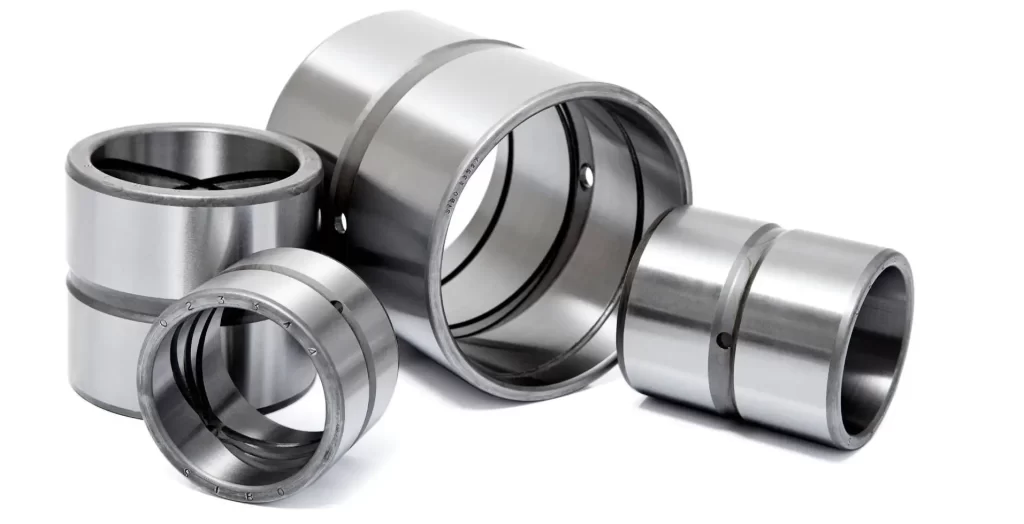
Stainless steel bushings are manufactured to strict industry standards, ensuring compatibility with global machinery. At MYWAY, we offer metric and imperial sizes with tight tolerances for a precise fit:
- Metric Sizes: 16 mm to 300 mm (inner diameter, outer diameter, length customizable).
- Imperial Sizes: 0.63 inches to 11.81 inches.
- Standard Tolerances: Outer diameter (u6), inner diameter (C8)—precision up to ±0.01 mm, ensuring minimal vibration, noise, and energy loss during operation.
Custom sizes and special tolerances are available upon request—we can machine bushings to match your exact equipment specifications, no matter how unique.
5. Top Industrial Applications of Stainless Steel Bushings
Stainless steel bushings are indispensable in industries where corrosion, hygiene, or durability is critical. Below are the most common applications:
1. Marine & Offshore Industry
Exposed to constant saltwater and humidity, marine equipment relies on 316 stainless steel bushings for deck winches, crane pivots, rudder systems, and offshore platform machinery. They prevent rust and ensure reliable performance in harsh coastal and deep-sea conditions.
2. Food & Beverage Processing
Hygiene is non-negotiable here. Stainless steel bushings (304/316, PTFE composite) are used in conveyor systems, mixer shafts, bottling equipment, and meat processing machinery—easy to clean, FDA-compliant, and resistant to food acids and cleaning chemicals.
3. Chemical & Pharmaceutical Industry
Chemical processing equipment (pumps, valves, agitators, filter presses) uses stainless steel bushings to resist corrosion from acids, alkalis, and solvents. In pharmaceuticals, they’re used in bioreactors, CIP pumps, and aseptic valves—meeting strict ASME BPE standards.
4. Water Treatment & Wastewater Management
Water treatment plants use stainless steel bushings in pumps, gate valves, aeration equipment, and clarifier drives—exposed to treated/untreated water and chemicals, they resist rust and bacterial growth.
5. Heavy Machinery & Construction
Construction equipment (cranes, excavators, bulldozers) and hydraulic systems use grooved or flanged stainless steel bushings for high-load, continuous operation in muddy, wet, or corrosive job sites.
6. Agricultural Machinery
Farm equipment (augers, swamp machines, harvesters) operates in humid, acidic soil conditions. Stainless steel bushings resist corrosion from moisture and fertilizers, extending equipment life in high-humidity regions.
6. Why Choose MYWAY Stainless Steel Bushings?
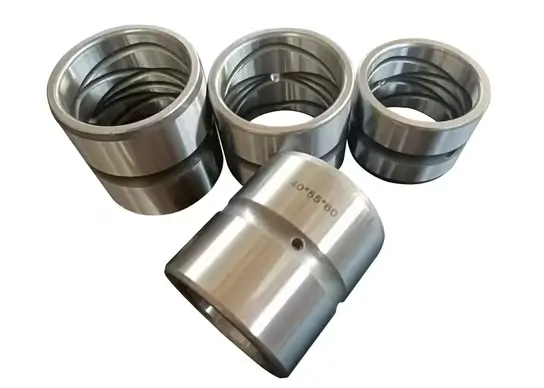
When it comes to sourcing high-quality stainless steel bushings, MYWAY stands out as a trusted global manufacturer and supplier. Here’s why industrial buyers worldwide choose us:
1. Premium Material & Unmatched Quality
We use only high-grade stainless steel alloys (304, 316, 42CrMo) and perform strict quality control at every stage—from raw material inspection to CNC machining and heat treatment. Our stainless steel bushings pass the 500-hour salt spray test, ensuring superior corrosion resistance for harsh environments. All products comply with ISO9001, ASME, IATF 16949, and API 6A international standards.
2. Advanced Manufacturing & Precision
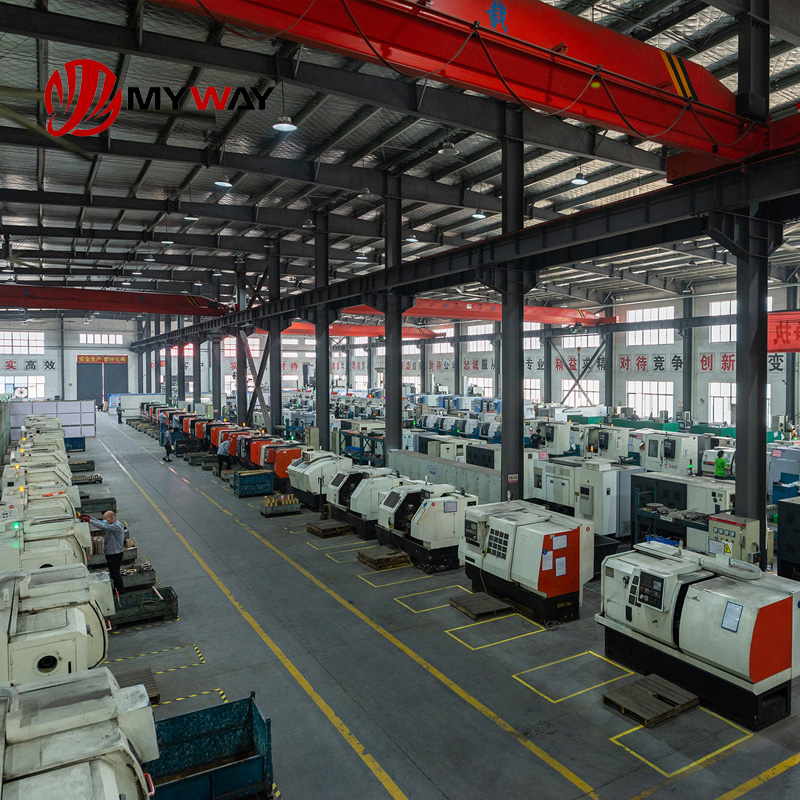
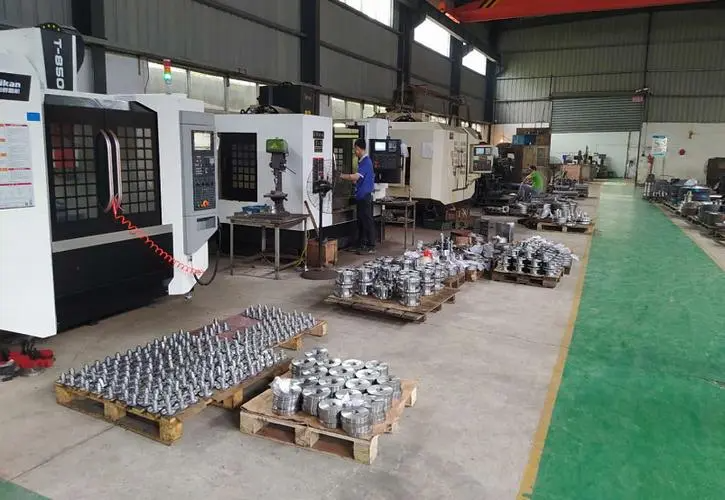
Equipped with fully automatic CNC lathes, production lines, and heat treatment facilities, we deliver stainless steel bushings with precision tolerances (±0.01 mm) and consistent quality. Our seamless steel bushings (a specialty product) are machined from a single piece of material—no seams or welds, offering superior strength, impact resistance, and load distribution compared to seamed alternatives.
3. Custom Solutions & Wide Product Range
We offer a full range of stainless steel bushings—plain, grooved, flanged, PTFE composite, hex, and spherical. Custom sizes, materials, and designs are available to meet your unique equipment needs. Whether you need a small 16 mm plain bushing or a large 300 mm flanged bushing, we’ve got you covered.
4. Cost-Effective & Fast Delivery
As a factory integrating design, production, and testing, we eliminate middlemen and offer competitive prices without compromising quality. We guarantee 7-day delivery for standard orders and support global logistics, ensuring your bushings reach you on time, anywhere in the world.
5. Self-Lubricating Options & Low Maintenance
Our self-lubricating stainless steel bushings (PTFE composite) reduce maintenance frequency by 90%, cutting your maintenance costs significantly. No need for regular greasing—perfect for hard-to-reach or continuous-operation machinery.
7. FAQ About Stainless Steel Bushings
Q1: What’s the difference between 304 and 316 stainless steel bushings?
A1: 304 stainless steel is cost-effective with good general corrosion resistance (fresh water, mild chemicals). 316 contains molybdenum, offering 5x better saltwater/chloride corrosion resistance—ideal for marine and coastal applications.
Q2: Are stainless steel bushings self-lubricating?
A2: Standard stainless steel bushings require grease lubrication, but PTFE composite stainless steel bushings are self-lubricating (no grease needed).
Q3: What tolerances do MYWAY stainless steel bushings offer?
A3: Standard tolerances: outer diameter (u6), inner diameter (C8), precision up to ±0.01 mm. Custom tolerances available upon request.
Q4: Can MYWAY make custom-sized stainless steel bushings?
A4: Yes! We offer fully custom solutions—custom inner/outer diameter, length, material, and design (grooves, flanges, etc.) to match your equipment drawings.
Q5: How long do stainless steel bushings last compared to carbon steel?
A5: In corrosive environments, stainless steel bushings last 5–10x longer than carbon steel. For example, a 316 bushing in saltwater lasts 5,000 hours, while carbon steel fails in 1 month.
Q6: Do MYWAY stainless steel bushings meet international standards?
A6: Yes! All products comply with ISO9001, ASME, IATF 16949, and API 6A certifications, ensuring global quality and reliability.
8. Conclusion & Call to Action
Stainless steel bushings are the unsung heroes of industrial machinery—providing corrosion resistance, durability, and precision that standard steel bushings can’t match. Whether you’re in marine engineering, food processing, chemical manufacturing, or agriculture, investing in high-quality stainless steel bushings reduces downtime, cuts maintenance costs, and extends equipment life.
As a leading manufacturer of stainless steel bushings and seamless steel bushings, MYWAY is your trusted partner for premium-quality, cost-effective, and custom solutions. Our advanced manufacturing, strict quality control, and fast global delivery make us the top choice for industrial buyers worldwide.
Ready to upgrade your equipment with MYWAY stainless steel bushings? Contact our engineering team today to discuss your requirements, request a quote, or get expert advice on selecting the right bushing for your application. Don’t let corroded bushings slow down your machinery—choose MYWAY for reliable, long-lasting performance in every environment.
100000+ Types of Bushings – Contact Us for Details