
Recent Posts
Steel-Backed Bushings: Self-Lubricating Composite Bearings for High-Load Applications
Introduction: The Engineering Behind Modern Plain Bearings
In the world of mechanical engineering, few components are as critical—yet as overlooked—as the humble bushing. These cylindrical workhorses reduce friction between moving parts, support radial and axial loads, and determine the lifespan of everything from hydraulic cylinders to automotive suspension systems.
Traditional bronze bushings have served industry well for decades, but they come with inherent limitations: they require regular lubrication, suffer from corrosion in harsh environments, and demand frequent maintenance. Enter the steel-backed bushing—a composite bearing solution that combines the strength of steel with the self-lubricating properties of advanced polymers like PTFE (polytetrafluoroethylene).
This comprehensive guide explores the technology, applications, and selection criteria for steel-backed bushings, with a focus on how these engineered components are transforming industrial reliability and reducing total cost of ownership.
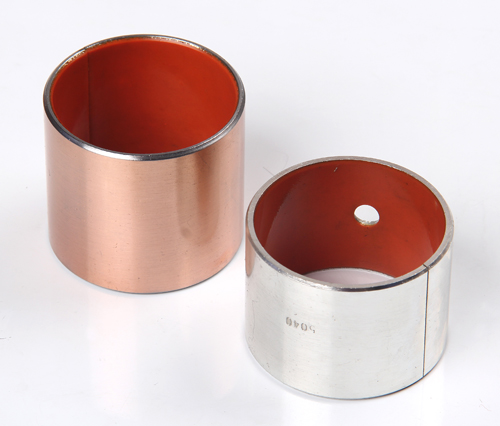
Table of Contents
1. What Is a Steel-Backed Bushing?
A steel-backed bushing is a multi-layer composite bearing consisting of three bonded layers working in synergy :
The Three-Layer Structure
1. Steel Backing (Support Layer)
The outermost layer consists of low-carbon steel (typically St12, SAE 1010, or stainless steel 304/316). This provides exceptional structural support capable of withstanding static loads up to 140 MPa and dynamic loads up to 100 MPa . The steel backing serves multiple functions:
High load-carrying capacity
Excellent heat dissipation
Dimensional stability during press-fit installation
Corrosion resistance (especially with stainless steel grades)
2. Sintered Bronze Interlayer (The “Reservoir”)
A porous bronze matrix (typically 0.20–0.35 mm thick) is sintered onto the steel backing . This layer:
Roughens the steel surface for superior bonding
Provides approximately 30% porosity to anchor the PTFE mixture
Facilitates efficient heat transfer from the bearing surface to the machine wall via the copper component
Acts as a thermal conductor, preventing localized overheating
3. PTFE-Based Sliding Layer (The Performance Layer)
The innermost layer consists of PTFE combined with fillers such as carbon, glass fiber, MoS₂, or other polymer fibers (0.01–0.03 mm thick) . During operation, a thin transfer film forms on the mating surface, creating a solid lubricant film that:
Reduces friction coefficient to 0.05–0.15 (static/dynamic)
Eliminates the stick-slip effect common in boundary lubrication
Provides true dry-running capability
Protects the shaft surface from wear
The Science Behind Self-Lubrication
What makes steel-backed PTFE bushings truly remarkable is their self-lubricating mechanism. PTFE’s long (CF₂-CF₂)ₙ molecular chains have inherently low shear strength, resulting in a low coefficient of friction during sliding . During the brief running-in phase, part of the PTFE covering layer transfers to the mating surface, establishing a durable lubricating film .
For applications requiring enhanced wear resistance, carbon-filled PTFE composites demonstrate up to 15-fold improvement in wear resistance compared to unfilled PTFE . This is because harder carbon particles act as barriers, preventing PTFE fragmentation and progressive wear .
2. Key Advantages Over Traditional Bearing Materials
1. True Maintenance-Free Operation
Unlike bronze bushings that demand regular lubrication, steel-backed PTFE bushings operate completely dry. This eliminates:
Maintenance downtime and labor costs
Lubricant purchase and disposal expenses
Risk of lubricant contamination in food processing or clean room environments
Environmental compliance concerns
2. Superior Load Capacity
The steel backing provides exceptional load-carrying capability:
Static load rating: Up to 140 MPa
Dynamic load rating: Up to 100 MPa
Continuous PV limit: ~1.8 N/mm² × m/s
3. Extended Service Life
In hydraulic cylinder rod guide applications, steel-backed PTFE bushings consistently achieve over 2 million cycles while reducing startup friction by up to 80% compared to bronze alternatives . Seal life improves 3–5× due to smoother rod guidance and reduced side loading.
4. Corrosion Resistance
Stainless steel backed variants (304 or 316 grades) provide exceptional resistance to:
Saltwater and marine environments
Chemical processing fluids
Food-grade cleaning agents
Outdoor exposure and humidity
5. Wide Temperature Range
Steel-backed PTFE bushings operate reliably from -200°C to +260°C, making them suitable for cryogenic applications and high-temperature industrial processes alike .
6. Chemical Compatibility
PTFE is highly resistant to a broad spectrum of chemicals, including:
Mineral oils and hydraulic fluids (HLP, HFD)
Water-glycol mixtures
Strong acids and bases
Industrial solvents
7. Vibration Dampening and Noise Reduction
The composite structure provides inherent vibration absorption and noise reduction compared to metal-on-metal contacts, particularly valuable in precision machinery and residential applications .
3. Common Applications Across Industries
Hydraulic Cylinders and Fluid Power
Steel-backed PTFE bushings have become the industry standard for hydraulic cylinder components :
Rod Guide/Gland Bushings: Installed in the cylinder head to guide the piston rod, absorb radial and side loads, and prevent seal extrusion. These bushings are critical for preventing premature seal wear in construction machinery, mining equipment, and offshore systems.
Piston Guide Rings: Mounted on the piston to maintain concentric alignment with the cylinder barrel—essential in long-stroke or heavy-duty cylinders.
Intermediate Guide Bands: Used in telescopic or extra-long cylinders to prevent rod deflection, side-loading, and potential buckling under extreme conditions.
Performance Data:
Startup friction reduction vs. bronze: up to 80% lower torque
Service life: >2 million cycles in typical rod-guide operation
Seal life improvement: 3–5× longer due to smoother rod guidance
Automotive Applications
Self-lubricating steel-backed bushings are widely deployed throughout modern vehicles :
Suspension Systems: Control arm bushings, stabilizer bar links, and strut mounts benefit from maintenance-free operation and resistance to road contaminants.
Steering Components: Column bushings and rack-and-pinion guides require the low friction and precise clearances that steel-backed PTFE provides.
Engine Compartment: Accessory drive tensioners, belt idlers, and throttle linkages operate reliably under hood temperatures without lubrication.
Transmission Elements: Shift linkages and selector mechanisms benefit from consistent friction characteristics throughout their service life.
Industrial Machinery and Equipment
The versatility of steel-backed bushings makes them ideal for diverse industrial applications :
Construction Equipment: Excavator boom pivots, loader linkage points, and dozer blade guides endure high shock loads and contaminated environments.
Agricultural Machinery: Tractor hitches, implement connections, and baler mechanisms operate in dusty, wet conditions where conventional bushings fail prematurely.
Material Handling: Conveyor systems, palletizers, and packaging equipment benefit from maintenance-free operation and resistance to washdown procedures.
Food Processing Equipment: Lead-free PTFE formulations comply with food contact regulations while withstanding aggressive cleaning chemicals .
Valve and Pump Applications
Steel-backed PTFE bushings excel in fluid control applications :
Butterfly Valves: Stem bushings must accommodate rotational and oscillating motion while resisting corrosion from process fluids. Stainless steel backed PTFE bushings provide the ideal combination of low friction and chemical resistance.
Ball Valves: Seat support bushings and stem guides benefit from PTFE’s compatibility with diverse media.
Globe Valves: Guide bushings maintain stem alignment while withstanding high temperatures and pressures.
Pumps: Wear plates, thrust washers, and shaft guides in centrifugal and positive displacement pumps.
Marine and Offshore Applications
The exceptional corrosion resistance of stainless steel backed bushings makes them indispensable in marine environments :
Stern tube bearings
Rudder carrier bearings
Hatch cover pivot points
Deck machinery linkages
Offshore platform equipment
Aerospace and Defense
Weight reduction and reliability drive adoption in critical applications :
Control surface hinges and linkages
Landing gear components
Access panel latches
Weapon system mounts
Satellite deployment mechanisms
4. Engineering Standards and Material Specifications
Industry Standards
Steel-backed bushings are manufactured according to recognized international standards :
| Standard | Description | Application |
|---|---|---|
| ISO 3547 | Dimensions and material requirements for wrapped bushings | Plain bearing design |
| ISO 1494 | Sliding bearings—thermoplastic bushings | Dimensional tolerances |
| ASTM B505 | Bronze castings for bushings | Bronze alloy specifications |
| ASTM A276 | Stainless steel bars and shapes | High-strength sleeves |
| DIN 1494 | German standard for composite bushings | European applications |
Material Property Comparison
Understanding material properties helps engineers select the optimal bushing for specific applications :
| Property | Steel-Backed PTFE | Bronze (C93200) | Polymer (POM) |
|---|---|---|---|
| Load Capacity (Static) | 140 MPa | 70 MPa | 30 MPa |
| Temperature Range | -200°C to +260°C | -150°C to +230°C | -40°C to +100°C |
| Friction Coefficient | 0.05–0.15 | 0.15–0.35 (lubricated) | 0.20–0.35 |
| Corrosion Resistance | Excellent (316SS) | Moderate | Excellent |
| Maintenance | None | Regular lubrication | None |
| Wear Resistance | Excellent | Good | Moderate |
| Cost | Medium | Medium | Low |
Common Failure Modes and Solutions
Understanding potential failure modes helps engineers design more reliable systems :
| Failure Mode | Root Cause | Solution |
|---|---|---|
| Excessive PTFE wear | Contamination, overload | Add <10 μm filtration, use filled PTFE materials |
| Delamination | Low bonding strength, thermal shock | Ensure peel strength >5 N/mm, limit temperature spikes |
| Overheating | High-speed dry running | Add lubrication grooves or switch to lubricated type |
| Installation damage | Misalignment, hammer insertion | Use proper press tooling and alignment fixtures |
| Steel-back corrosion | Water ingress, aggressive fluids | Specify stainless steel backing or protective coating |
5. Engineering Design Guidelines
Recommended Tolerances and Fits
Proper installation is critical for optimal performance :
Housing Tolerance: H7 recommended for proper press-fit (interference fit of 0.01–0.03 mm)
Shaft Tolerance: h6 or f7 depending on clearance requirements
Surface Finish: Shaft surface finish of Ra 0.2–0.4 μm recommended for optimal transfer film formation
Hardness: Shaft hardness should be at least HRC 45 for high-load applications
Design Parameters
Wall Thickness: Typically 1.0–2.5 mm total (steel backing 0.7–1.5 mm + sintered bronze + PTFE surface)
L/D Ratio: 1.0–1.5 recommended for stable guiding performance
Edge Chamfer: 0.5–1.0 mm × 20° to prevent PTFE scuffing during installation
Installation Method: Pressing tools or dry-ice cooling advised for interference fits
Environmental Considerations
Temperature: Verify continuous operating temperature stays within material limits
Chemical Exposure: Confirm compatibility with all process fluids and cleaning agents
Contamination: Assess particulate levels and specify appropriate filtration or sealing
Moisture: Consider stainless steel backing for wet environments
6. Why Choose MYWAY for Steel-Backed Bushings?
With over 20 years of manufacturing expertise, MYWAY has established itself as a leading provider of high-performance bushing solutions .
Comprehensive Manufacturing Capabilities
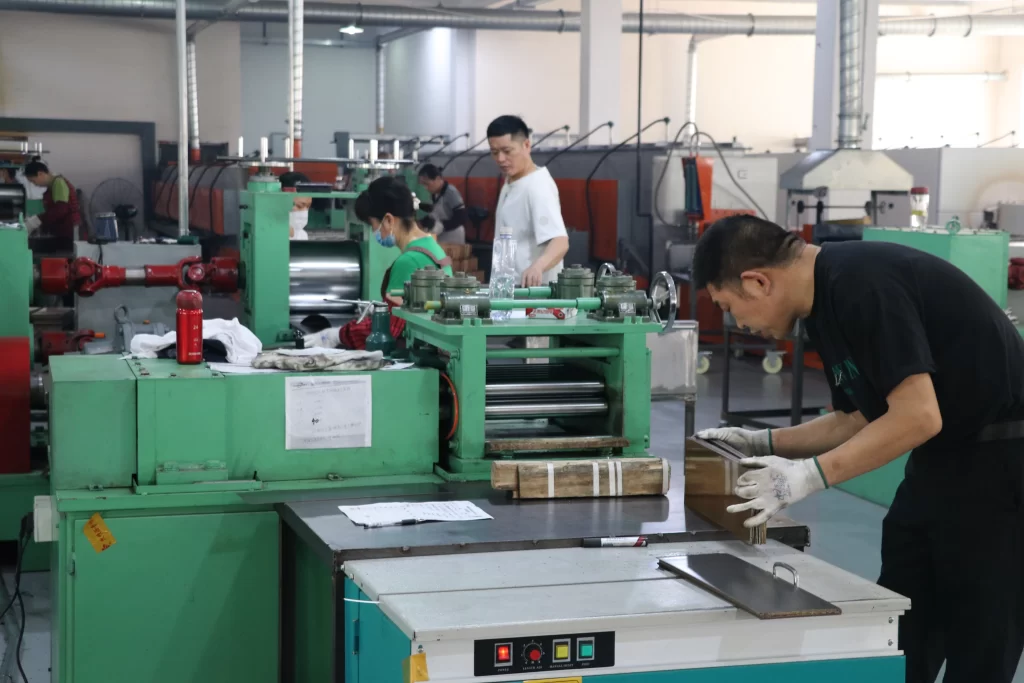
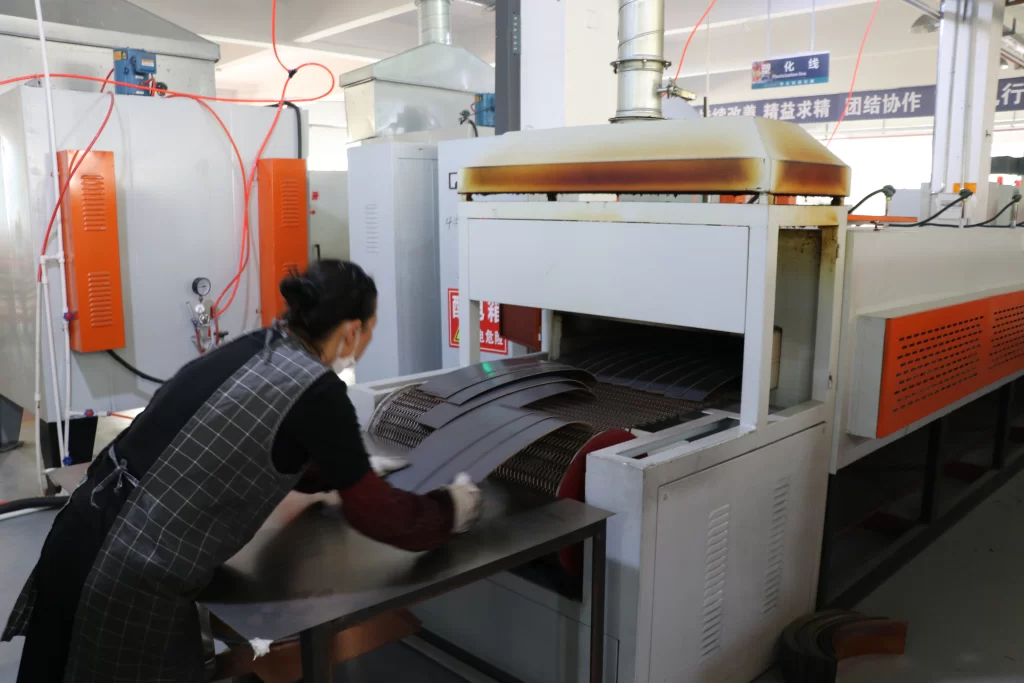
MYWAY operates a state-of-the-art manufacturing facility spanning 35,000+ square meters, with end-to-end capabilities from raw material casting to finished products :
Casting Workshop: 20,000-ton annual production capacity with continuous casting lines
Processing Workshop: 200+ advanced finishing machines with CNC capabilities
Inspection Workshop: Full quality control suite including spectrometers, tensile testers, and CMM equipment
Finished Goods Warehouse: 1,900 m² with 500–600 ton inventory for rapid fulfillment
Quality Certifications
MYWAY maintains rigorous quality standards :
IATF 16949:2016 (Automotive)
ISO 9001:2015 (Quality Management)
ISO 14001:2015 (Environmental Management)
GB/T 29490-2013 (Intellectual Property)
Comprehensive Product Range
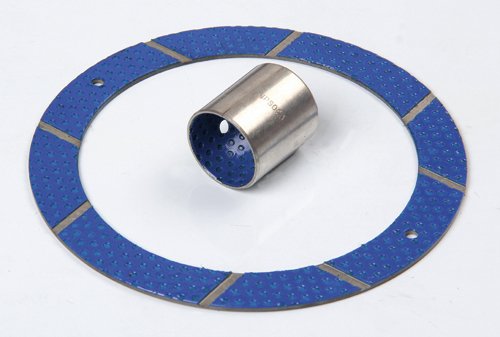
Steel-Backed PTFE Bushings (SF-1 Series):
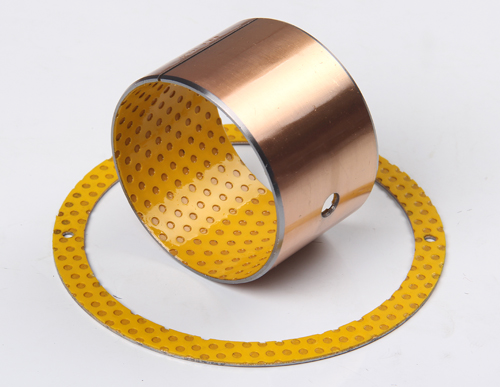
Straight bushings (metric and inch)
Flanged bushings
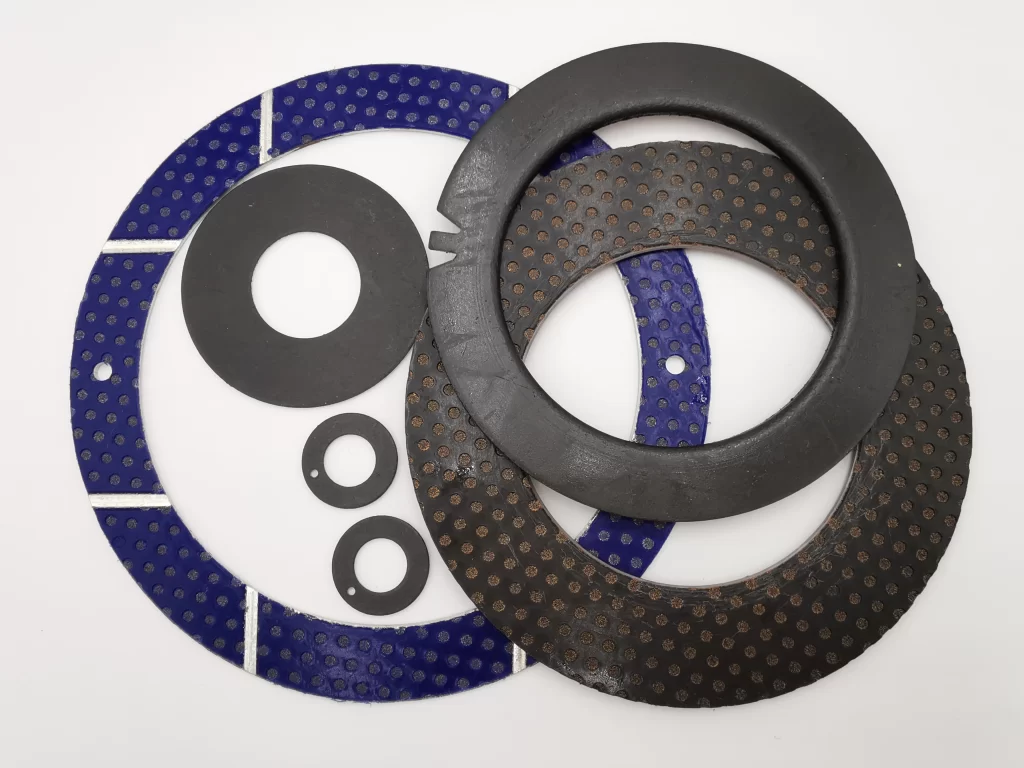
Thrust washers
Sliding plates
Custom configurations
Stainless Steel Backed Variants:
304 stainless steel for general corrosion resistance
316 stainless steel for marine and chemical applications
Material Options:
PTFE + lead (standard)
PTFE + fiber (lead-free)
PTFE + MoS₂ (high-load)
Custom formulations available
Engineering Support
MYWAY’s technical team provides comprehensive support :
Application analysis and material selection
Custom design and prototyping
Load calculations and PV analysis
Installation guidance
Troubleshooting and optimization
Global Reach
Products exported to over 40 countries including Germany, Italy, Japan, the USA, Canada, and South Korea . Strategic location in Hangzhou provides excellent access to international shipping ports.
Frequently Asked Questions
Q: What is the difference between steel-backed bushings and solid bronze bushings?
A: Steel-backed bushings combine a steel backing for structural strength with a sintered bronze matrix impregnated with PTFE for self-lubrication. Solid bronze bushings require external lubrication and regular maintenance. Steel-backed versions typically offer higher load capacity, lower friction, and maintenance-free operation .
Q: Can steel-backed PTFE bushings operate without any lubrication?
A: Yes, that’s their primary advantage. The PTFE sliding layer forms a transfer film on the mating surface during initial operation, providing continuous lubrication throughout the bushing’s service life .
Q: What loads can steel-backed bushings handle?
A: Static loads up to 140 MPa and dynamic loads up to 100 MPa are achievable with proper design. Continuous operation follows PV limits of approximately 1.8 N/mm² × m/s .
Q: Are steel-backed bushings suitable for underwater applications?
A: Yes, particularly stainless steel backed versions (304/316). The PTFE sliding layer is unaffected by water, and the stainless steel backing provides excellent corrosion resistance in submerged or marine environments .
Q: How do I select the right steel-backed bushing for my application?
A: Consider operating conditions: load magnitude and direction, speed, temperature range, environmental exposure (chemicals, moisture, contaminants), and motion type (rotary, oscillating, linear). MYWAY’s engineering team can assist with application-specific recommendations .
Q: What shaft hardness is recommended for steel-backed PTFE bushings?
A: For optimal performance and minimal shaft wear, shaft hardness of HRC 45 or higher is recommended for high-load applications. Standard applications may use lower hardness with appropriate material selection .
Q: Can steel-backed bushings be used in food processing equipment?
A: Yes, lead-free PTFE formulations are available that comply with food contact regulations. These provide excellent resistance to cleaning chemicals and operate without lubricants that could contaminate products .
Q: What is the temperature range for steel-backed PTFE bushings?
A: Standard steel-backed PTFE bushings operate from -200°C to +260°C, making them suitable for cryogenic applications and high-temperature industrial processes .
Q: How do I install steel-backed bushings correctly?
A: Use proper press-fit tooling with alignment fixtures. Housing tolerance should be H7 with interference fit of 0.01–0.03 mm. Edge chamfers (0.5–1.0 mm × 20°) prevent PTFE scuffing during insertion. Cooling the bushing with dry ice can facilitate installation .
Q: Are steel-backed bushings available in metric and inch sizes?
A: Yes, MYWAY offers comprehensive ranges in both metric and inch dimensions, including straight bushings, flanged bushings, thrust washers, and custom configurations .
Conclusion: The Future of Bearing Technology
Steel-backed bushings represent a significant advancement in plain bearing technology, offering engineers the ability to design systems with higher reliability, reduced maintenance, and longer service life. By combining the strength of steel with the self-lubricating properties of advanced polymers, these composite bearings solve the fundamental limitations of traditional bronze bushings.
For applications ranging from heavy construction equipment to precision medical devices, steel-backed PTFE bushings provide the performance characteristics that modern engineering demands: high load capacity, corrosion resistance, wide temperature range, and true maintenance-free operation.
When you choose MYWAY as your steel-backed bushing partner, you gain access to two decades of manufacturing expertise, comprehensive engineering support, and a commitment to quality that ensures your applications perform reliably for years to come.
100000+ Types of Bushings – Contact Us for Details