
Recent Posts
Truck Chassis Bushings: The Complete Buyer's Guide to Choosing the Right Components for Heavy-Duty Fleets
Introduction
This guide walks fleet managers, parts distributors, and maintenance buyers through the critical factors in selecting truck chassis bushings — from rubber vs. polyurethane vs. composite material choices to hands-on inspection protocols, supplier qualification standards, and installation best practices. Whether you manage a 50-truck fleet or source bushings for the aftermarket trade, this article gives you a practical framework for making smarter purchasing decisions.
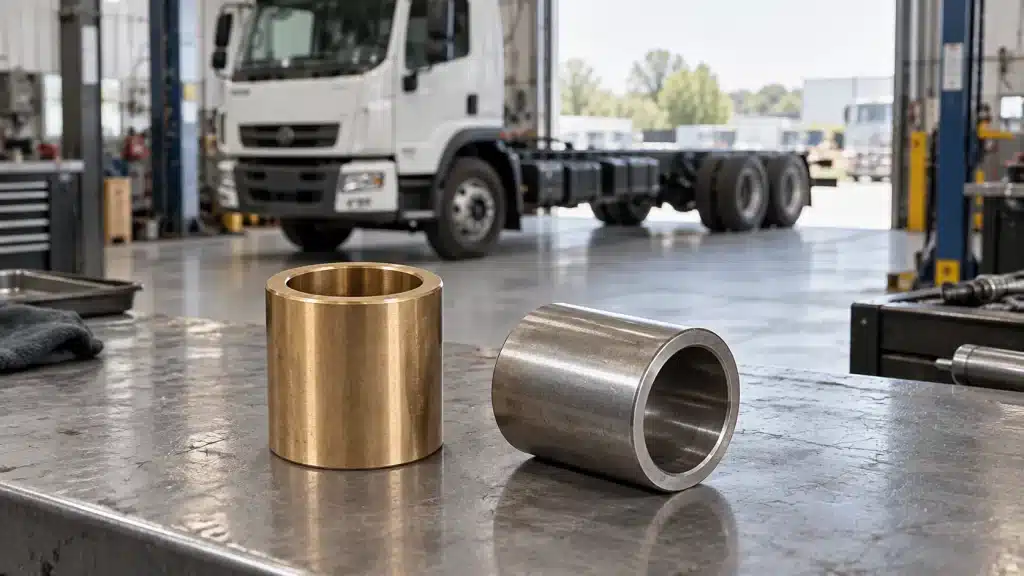
Table of Contents
1. Why Chassis Bushings Matter More Than Most Buyers Realize
Ask any veteran truck mechanic what gets overlooked during routine PM checks, and bushings are almost always near the top of the list. These small, unassuming components sit at the connection points between suspension arms, torque rods, brackets, and the chassis frame — but when they fail, the domino effect hits hard.
The core functions of a chassis bushing are straightforward: vibration damping, wear prevention, freedom of motion, noise reduction, and position fixing. When a bushing wears out, you’re not just looking at a $15 part replacement. You’re potentially looking at:
Uneven tire wear that eats through a set of drive tires prematurely
Axle misalignment that throws off the entire suspension geometry
Metal-to-metal contact that can oval out bracket bores — a condition that bushing replacement alone cannot fix
Increased driver fatigue from cab vibration and road noise
Fatigue cracks at chassis weld points over time
A study on Hino 500 dump trucks found that rear left and rear right torque rod bushings showed severe damage in 70% of the units surveyed, with a strong positive correlation between operational hours and damage severity. The researchers recommended preventive replacement at 6,000–7,000 operational hours — particularly for rear axle positions. That’s not a component you want to leave to chance.
The global automotive bushing market is projected to grow from roughly USD 167 billion in 2025 to over USD 348 billion by 2032, driven by stricter durability expectations, rising SUV and light-truck penetration, and the shift toward electric vehicles. Chassis bushings specifically are expected to see a notable CAGR of 7.5% from 2026 to 2032–. The demand is growing — and so is the pressure on buyers to get it right.
2. Rubber vs. Polyurethane vs. Composite: Material Selection That Actually Fits Your Application
This is where most buying decisions go sideways. Buyers often default to whatever the OEM used, or swing the other direction and spec polyurethane because someone in the shop said “it lasts longer.” Both approaches have merit — but neither is universally correct.
Rubber bushings remain the go-to for OEM applications and situations where NVH (noise, vibration, harshness) isolation is the priority. Rubber is softer, damps road noise more effectively, and requires zero maintenance. The downside? It degrades over time from heat, oil exposure, and road chemicals. It also has a lower load-bearing capacity compared to polyurethane.
Polyurethane bushings are firmer, more durable, and highly resistant to chemical attack — oil, hydraulic fluid, brake fluid, antifreeze, and de-icing compounds won’t touch them. Industry sources suggest a properly maintained urethane bushing can last up to 10 times longer than its rubber counterpart. However, poly transfers more noise into the cabin and requires periodic re-greasing to prevent squeaking and binding.
Composite bushings (metal-polymer self-lubricating designs) represent the newer wave. These are particularly relevant for heavy-duty applications where you need consistent performance across a wide temperature range without relying on grease. MYWAY’s composite bushing line, for instance, operates effectively far beyond the temperature limits of traditional rubber–.
Here’s a quick decision framework:
| Factor | Rubber | Polyurethane | Composite |
|---|---|---|---|
| NVH isolation | ★★★★★ | ★★★ | ★★★★ |
| Load capacity | ★★★ | ★★★★★ | ★★★★★ |
| Chemical resistance | ★★ | ★★★★★ | ★★★★★ |
| Maintenance need | None | Regular greasing | None |
| Service life (typical) | Baseline | 3–10x rubber | Long-life |
| Best for | OEM ride quality | Heavy loads, off-road | Fleet efficiency |
The key takeaway: don’t buy by material name alone. Match the bushing to the application — load profile, operating environment, maintenance capability, and desired ride characteristics.
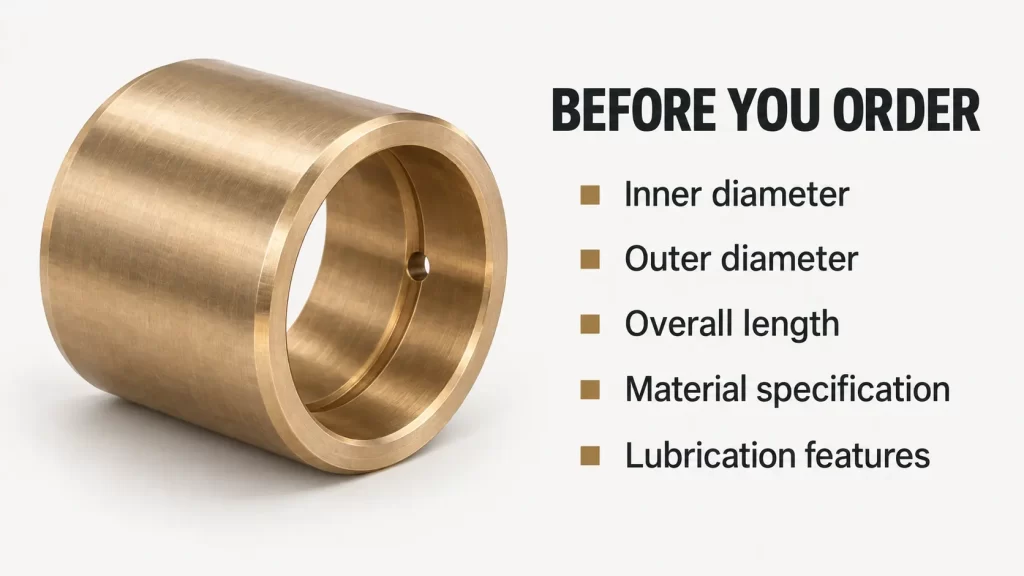
3. What to Inspect Before You Buy: A Buyer's Due Diligence Checklist
You wouldn’t buy a used truck without popping the hood. Same logic applies to bushings. Whether you’re evaluating a sample from a new supplier or checking inventory before a fleet-wide replacement, here’s what to look at.
Visual Inspection
Start with the rubber flange. If the rubber flanges are intact and there’s no metal-to-metal contact, the bushing likely doesn’t need replacement. But if you see torn, separated, or detached rubber — or if the bushing isn’t centered in the support beam end hub — that’s a red flag.
For polyurethane bushings, look for deep cracking that extends from the inner metal sleeve through the voids. Excessive vertical movement of the arm pivot sleeve is another indicator that the bushing has passed its service life.
Pry-Bar Check
Raise the vehicle with the suspension unloaded, then apply hand pressure or a pry bar to the bracket area to check for movement. The clearance between bushing and pin can be assessed visually with a flashlight and measured with calipers if needed. For pivot bushings, a free play exceeding 0.05 inches at the pivot point is grounds for rejection.
Symmetry Check
Always inspect the corresponding bushing on the opposite side of the vehicle. Both sides typically see similar load and aging conditions, so wear on one side often predicts imminent failure on the other. This is a simple habit that prevents the classic “replace one, come back next month for the other” cycle.
Bore Condition
Check whether the bracket bore has become oval. If it has, bushing replacement alone won’t solve the problem — you’re looking at bracket repair or replacement. Catching this early saves significant downtime and cost.
Oil Contamination
Rubber bushings that have been soaked in oil or hydraulic fluid degrade much faster. If you see swelling, softening, or a shiny residue on the rubber surface, the bushing is compromised. This is especially common around engine mounts and areas near hydraulic lines.
4. Supplier Qualification: How to Vet a Bushing Manufacturer
The aftermarket bushing space is crowded. Alibaba alone lists thousands of suppliers, and the quality range is enormous. Here’s how to separate the serious manufacturers from the trading companies and fly-by-night operations.
Certifications and Documentation
Look for ISO/TS 16949 certification at minimum. Request documentation on inspection protocols, including dimensional accuracy reports and material test certificates–. A supplier that can’t produce a Shore hardness test report on demand is not one you want to rely on for fleet-critical components.
Batch Consistency
This is where volume buyers get burned. A single sample bushing might perform beautifully, but if Shore hardness varies across a 10,000-unit order, you’ll have premature failures scattered across your fleet–. Ask for batch consistency data — not just a single test report.
Dimensional Tolerances
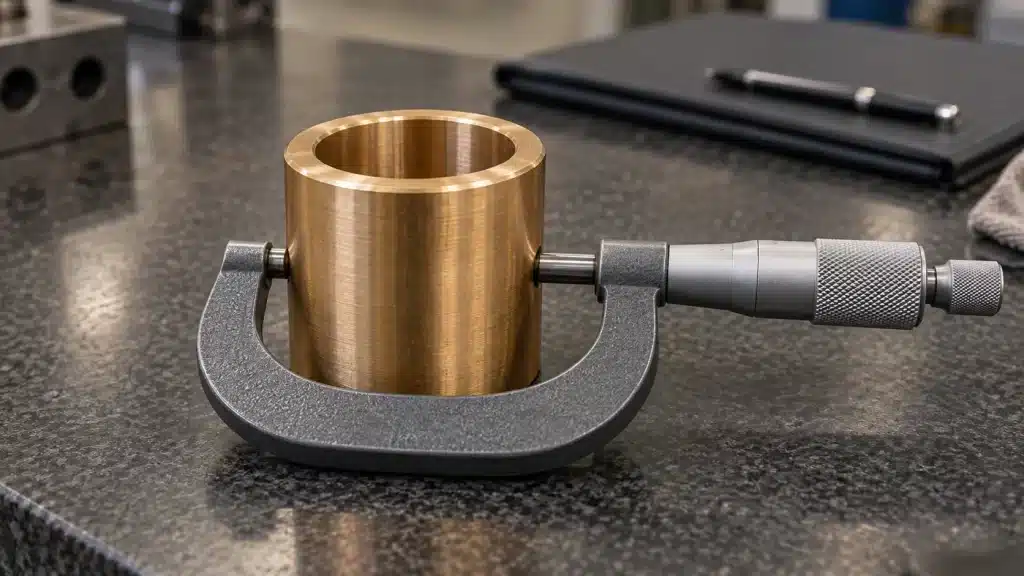
CNC-machined outer shells must match OEM specifications for proper press-fit–. A bushing that’s slightly undersized will loosen over time; one that’s oversized won’t seat properly. Request the supplier’s tolerance range and compare it against your OEM requirements.
Production Capacity and Lead Time
Assess factory size, staffing levels, and equipment automation–. A supplier that can’t handle your peak-season volume will leave you scrambling. For distributors, this is especially critical — you don’t want to be explaining backorders to your customers.
Warranty and After-Sales Support
Warranty terms vary widely in this space. Some manufacturers offer one-year aftermarket coverage, while others extend to seven years for approved on-highway applications–. Bushings are often classified as “wear items” and excluded from broad warranties — so clarify coverage upfront–.
Technical Support
Does the supplier provide installation guides, torque specifications, and application-specific recommendations? A manufacturer that understands the end-use environment will be a much better partner than one that just ships boxes.
5. Installation and Torque: Where Good Parts Go Wrong
You can buy the best bushing in the world and still get terrible service life if installation goes sideways. Here are the critical points.
Ride height matters. Pivot connections must only be tightened when the suspension is at the correct ride height. Tightening at the wrong position locks in a twisted bushing that will fail prematurely–.
Bushing orientation. For pivot bushings with voids, the voids must be positioned at top and bottom to allow proper suspension flex. Getting this wrong changes the effective spring rate and can cause handling issues.
Lubrication. Never use petroleum or soap-based lubricants on rubber or polyurethane pivot bushings — these can cause material deterioration–. Use the manufacturer-specified assembly lubricant. For polyurethane, proper greasing is essential to prevent squeaking and binding.
Torque specifications. Don’t guess. For example, on Kenworth PRIMAAX EX suspensions, the U-beam to QUIK-ALIGN bushing bolt requires 1,760 Nm (1,300 ft-lbs) for the 47mm bolt, while the standard 1″ bolt needs 750 Nm (550 ft-lbs). Under-torquing causes movement and wear; over-torquing crushes the bushing and distorts the bracket.
Press-fit, not hammer-fit. Use a proper press or bushing removal tool. Forcing a bushing in with a hammer deforms the bracket bore and the bushing itself. The bushing must seat fully and axially — an angled fit causes premature wear
6. Common Failure Signs Buyers Should Recognize
Knowing the symptoms helps you diagnose problems before they cascade. Here’s what to watch for:
Knocking or squeaking at low speed. This is usually the first symptom — heard during turns or on rough ground. Drivers often report it before the shop notices anything during a PM inspection.
Vibration in the steering wheel or cab floor. A slight increase in vibration is an early warning. Left unchecked, it progresses to noticeable shaking and driver fatigue.
Vehicle leaning to one side under load. A worn bushing shifts suspension geometry, causing uneven weight distribution and, eventually, uneven tire wear.
Uneven tire wear patterns. This is often the most expensive symptom because by the time you notice it, you’ve already burned through tire life.
Metal-to-metal contact marks. Visible wear marks on the outer metal of the bushing or on the bracket bore indicate the rubber or polyurethane has completely broken down. Replacement is mandatory at this point.
Steering wander or shimmy after hitting a bump. If the truck feels loose or wanders, kingpin bushings may be involved–.
The difference between catching a bushing at the “slight vibration” stage versus the “metal-to-metal contact” stage can be thousands of dollars in associated repairs — tires, brackets, alignment, and downtime.
7. Industry Trends Every Bushing Buyer Should Track
The bushing landscape is shifting, and buyers who understand these trends will make better long-term sourcing decisions.
The EV effect. Battery-electric and hybrid trucks change bushing requirements. Battery mass increases static load, instant torque puts more stress on torque rod bushings, and the absence of engine noise means chassis vibration becomes more noticeable to drivers. OEMs are accelerating development of advanced composite and hydro bushings optimized for these new conditions.
Material innovation. Polyurethane and specialty elastomers are gaining ground in applications that demand abrasion resistance and longer service life. Natural and synthetic rubber remain widely used for cost-performance balance, but the trend is clearly toward engineered solutions.
AI-driven quality control. Machine vision and anomaly detection are being used in bushing manufacturing to identify molding defects, dimensional variation, and bonding inconsistencies earlier in the process. For buyers, this means the gap between top-tier and mid-tier suppliers is widening.
Predictive maintenance. AI-enabled analytics can combine vibration, mileage, load, and road-condition data to support predictive replacement planning. Fleets that adopt this approach can schedule bushing replacement during planned downtime instead of dealing with roadside failures.
Sustainability pressure. End-of-life vehicle rules and carbon-accounting requirements are pushing suppliers to evaluate lower-carbon materials, recycled content, and production processes that reduce scrap and energy consumption
8. Why MYWAY Bushings Belong on Your Shortlist
Let’s get practical about what this means for your purchasing decision.
MYWAY manufactures truck chassis bushings across multiple material platforms — rubberized metal, polyurethane, bimetal, and composite — covering control arms, sway bars, torque rods, and kingpins–. The product range serves light, medium, and heavy-duty truck applications, with a self-lubrication design that reduces maintenance intervals and extends service life–.
What sets MYWAY apart for buyers:
Application-matched engineering. Rather than pushing a single material, MYWAY offers the right bushing type for each position — composite for high-temperature, high-load chassis points; polyurethane for chemical-exposed areas; rubber for NVH-sensitive cab and suspension mounts.
Temperature range. MYWAY composite bushings operate far beyond the limits of traditional rubber, making them suitable for both extreme cold and high-heat environments–.
Cost-per-mile focus. The real metric isn’t the unit price — it’s the cost per 100,000 miles. MYWAY’s self-lubricating composite bushings reduce grease labor, extend replacement intervals, and minimize downtime. For fleet managers, that’s the number that matters.
Aftermarket and OEM supply. MYWAY serves both OEM production lines and the aftermarket channel, which means the same quality standards apply whether you’re ordering for a dealer network or a fleet maintenance program.
Technical support. Installation guides, torque specifications, and application consultation are available — because a bushing is only as good as its installation.
If you’re sourcing chassis bushings for a fleet, a dealership, or a distribution business, MYWAY’s product range and engineering support deserve a serious look. Request a sample kit or technical datasheet to evaluate fit and performance against your current supplier
FAQ: Truck Chassis Bushings
Q1: How often should chassis bushings be inspected?
A: Most manufacturers recommend a visual inspection at every major service interval — typically every 15,000 km or 12 months–. For heavy-duty or off-road applications, shorten that interval. A pry-bar check for excessive play should be standard practice at every brake or suspension service.
Q2: Can I mix rubber and polyurethane bushings on the same truck?
A: Technically yes, but it’s not recommended unless you understand the handling implications. Different materials have different deflection characteristics, which can create inconsistent suspension behavior. If you’re upgrading, do it as a matched set per axle or per suspension system.
Q3: How do I know if my bushing needs replacement or if it’s still within spec?
A: Visual inspection is the first step. If the rubber flange is intact and there’s no metal-to-metal contact, it’s likely still serviceable. The definitive check is a pry-bar test — if free play exceeds 0.05 inches at the pivot point, replacement is needed–. For pivot bushings, a measurement from the trailing arm to the hanger of more than 3/4 inch indicates the bushing needs closer inspection.
Q4: Do polyurethane bushings really last longer than rubber?
A: In most heavy-duty applications, yes. Polyurethane resists oil, chemicals, and abrasion far better than rubber. Industry sources suggest up to 10x service life with proper maintenance. However, “longer” depends on the application — in high-vibration, NVH-sensitive positions, rubber may still be the better choice.
Q5: What’s the most common installation mistake?
A: Tightening pivot bushings at the wrong ride height. This pre-loads the bushing in a twisted position and dramatically shortens its life–. The second most common mistake is using the wrong lubricant — petroleum-based grease can destroy rubber and polyurethane bushings.
Q6: Can worn bushings cause tire wear?
A: Absolutely. Uneven tire wear is one of the most common symptoms of bushing failure. When a bushing wears, it shifts suspension geometry, changing camber and toe angles dynamically as the vehicle moves. By the time uneven wear is visible, the bushings have likely been failing for thousands of miles.
Q7: What torque should I use for chassis bushing bolts?
A: Torque values are application-specific. For example, a Kenworth PRIMAAX EX U-beam to QUIK-ALIGN bushing with a 1″ bolt requires 750 Nm (550 ft-lbs), while the 1-1/4″ version needs 1,760 Nm (1,300 ft-lbs). Always consult the vehicle manufacturer’s current service manual — don’t rely on generic tables.
Q8: How does MYWAY handle quality control across large orders?
A: MYWAY maintains batch-level Shore hardness testing, dimensional verification, and material traceability. For volume buyers, batch consistency reports are available on request. The company’s composite and polyurethane lines are produced under ISO-aligned quality management systems.
100000+ Types of Bushings – Contact Us for Details