
Recent Posts
Copper vs. Brass vs. Bronze: The Alloy Guide for Bearing Selection
In the world of bearings and bushings, material selection isn’t just a choice—it’s the foundation of performance, longevity, and cost-efficiency. Among the most trusted families of materials are the copper alloys: Copper, Brass, and Bronze. While often grouped for their reddish hues, these alloys possess distinct “personalities” that make them uniquely suited for specific challenges. Understanding these differences is critical for engineers and buyers aiming to eliminate downtime and optimize total cost of ownership. This guide cuts through the confusion, directly comparing these three essential materials, and introduces how modern engineering, exemplified by MYWAY’s self-lubricating bronze bushings, leverages their strengths for superior solutions.
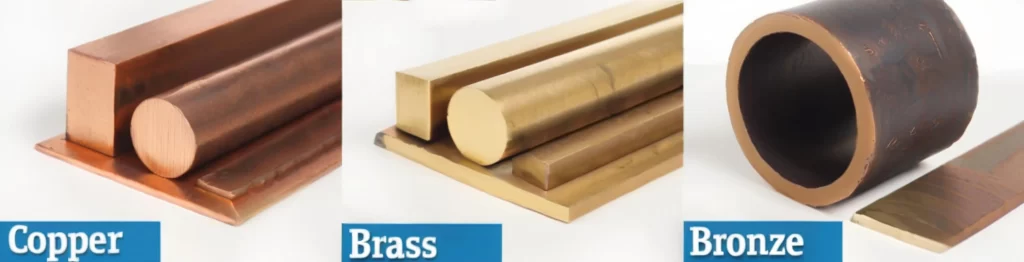
Table of Contents
1. The Core Trio: Composition, Characteristics, and Typical Roles
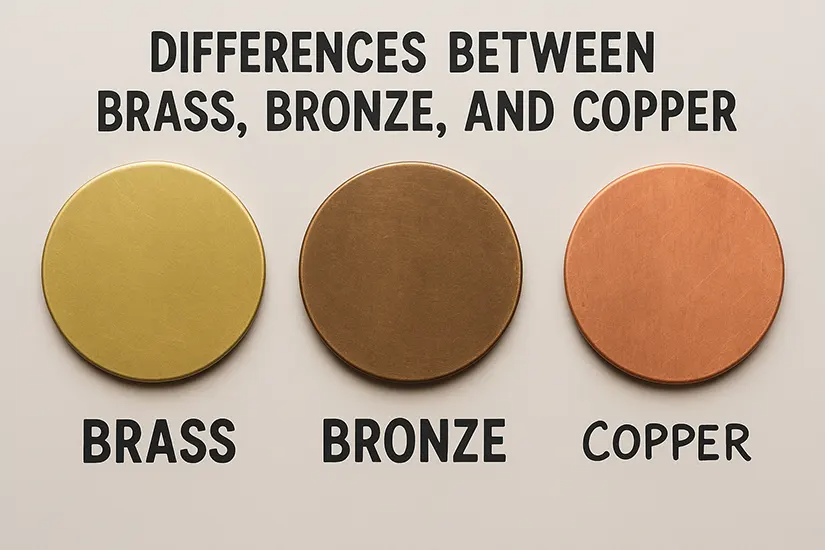
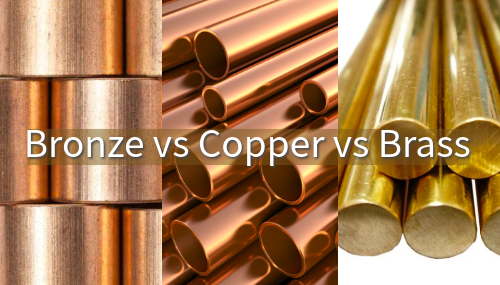
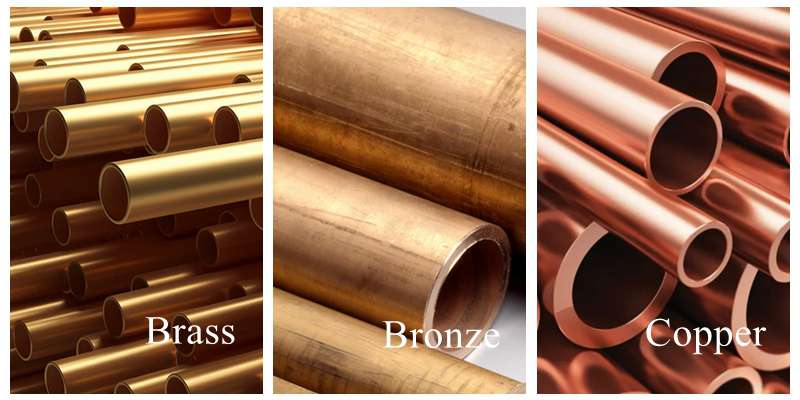
At first glance, Copper, Brass, and Bronze might seem similar, but their internal composition tells a different story, leading to vastly different properties.
| Feature | Copper (The Pure Conductor) | Brass (The Machinable Performer) | Bronze (The Durable Workhorse) |
|---|---|---|---|
| Primary Composition | Pure elemental metal (≥99.3% Cu) | Alloy of Copper and Zinc (Cu + Zn) | Alloy of Copper and Tin (Cu + Sn), with other elements like Aluminum or Phosphorus |
| Key Properties | Excellent electrical & thermal conductivity, high ductility, good corrosion resistance. | Excellent machinability, good strength, attractive gold-like appearance, moderate conductivity. | High strength, superior wear resistance, excellent corrosion resistance, good fatigue strength. |
| Typical Bushing/Bearing Role | Less common for structural bearings due to softness; used in electrical components or as a base for specialized composites. | Used for low-load bushings, decorative fittings, and applications where easy machining is prioritized over extreme wear resistance. | The industry standard for high-performance sliding bearings and bushings. Its balance of strength, wear, and corrosion resistance is unmatched by other copper alloys. |
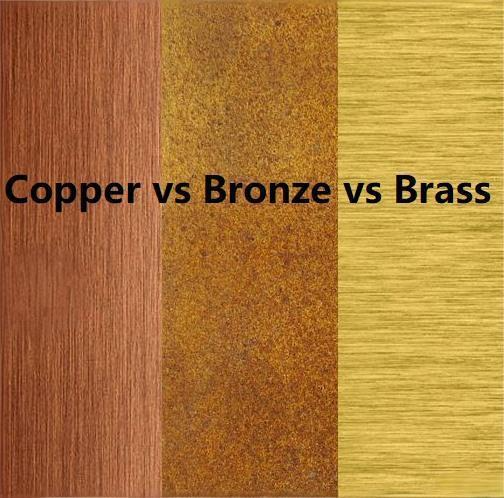
The data clearly shows that while all three are valuable, Bronze stands out as the preeminent material for demanding bearing applications. Its alloying fundamentally enhances mechanical properties; for instance, bronze can achieve yield strengths over 200 MPa, significantly higher than pure copper’s ~75 MPa.
2. Beyond the Basics: How Bronze Alloy Choice Dictates Performance
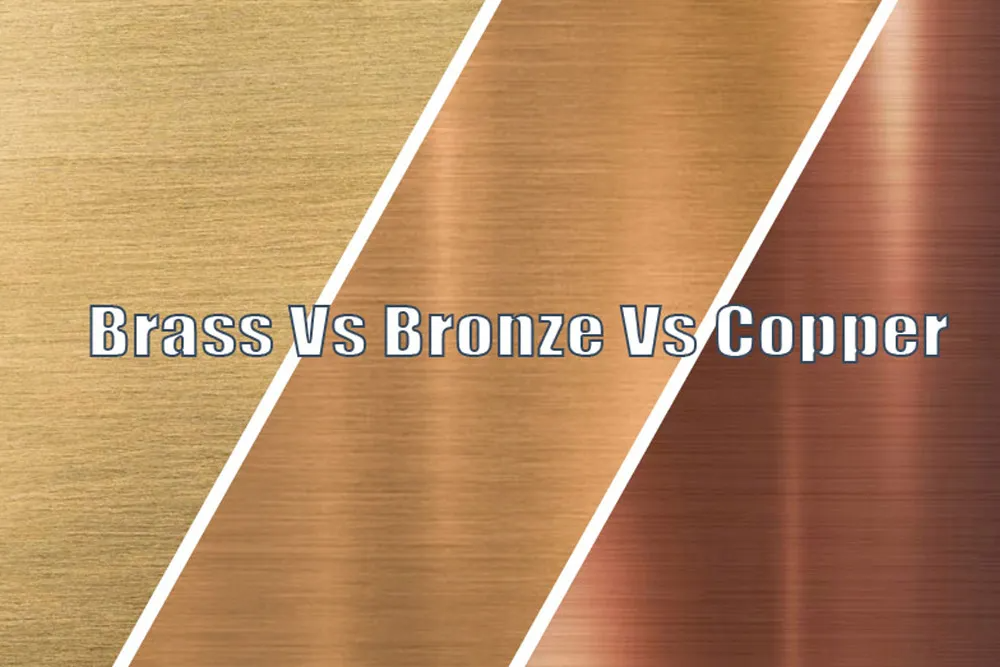
Not all bronze is created equal. The specific alloying elements move the needle on key performance metrics, making selection critical for application success. A fundamental yet often overlooked property guiding this choice is the melting point range—it sets the ultimate thermal safety margin for a bushing.
Here’s how the main bronze families stack up:
Tin Bronzes (e.g., SAE 660 / C93200): The versatile all-rounders. They offer a great balance of strength, wear resistance, and “embeddability” (the ability to trap foreign particles). With a melting range around 850°C – 1000°C, they are suitable for a vast array of general-duty applications.
Aluminum Bronzes (e.g., C95400): The high-strength champions. Aluminum additions raise the melting range to 1030°C – 1080°C, providing a robust buffer against thermal softening. They excel in high-load, low-speed, or high-ambient-temperature environments and offer outstanding corrosion resistance.
Phosphor Bronzes (e.g., C54400): The fatigue-resistant specialists. Phosphorus creates a dense, resilient alloy with a high elastic limit, ideal for parts under repeated shock or cyclic loading.
Leaded Bronzes (e.g., C93200): The self-lubricating improvers. Dispersed lead particles provide emergency lubricity, preventing seizure during startup or lubrication breakdown, making them forgiving in intermittent lube scenarios.
3. The Modern Evolution: Self-Lubricating Bronze Bushings
Traditional bronze bushings require consistent external lubrication. The innovation that has revolutionized the industry is the self-lubricating bronze bushing. This technology ingeniously combines bronze’s inherent strength with built-in lubrication, eliminating dependency on external oil or grease systems.
The principle is elegant: solid lubricants like graphite or PTFE (Polytetrafluoroethylene) are integrated into the bronze matrix. During operation, a thin, protective film of this lubricant transfers to the mating shaft, dramatically reducing friction and wear, even in “dry” conditions. This is especially valuable for:
Maintenance-free or difficult-to-access applications.
Environments where lubricants would attract contaminants (food, textile, packaging machinery).
Extreme temperatures where traditional oils would degrade.
General Electric’s patent for a bushing with a porous bronze layer impregnated with PTFE and a topical PTFE layer highlights the advanced material engineering behind such products, aiming for increased load capacity and service life.
4. The MYWAY Advantage: Engineered Solutions Beyond the Catalog
At MYWAY Manufacturing, we don’t just sell bushings; we provide engineered solutions based on deep material science. Our approach starts with the fundamental understanding that the right bronze alloy is the first and most critical design decision.
Our Technical Edge:
Precision Alloy Selection: We don’t have a one-size-fits-all approach. Our engineers analyze your specific load, speed, temperature, and lubrication conditions to select the bronze grade (be it aluminum bronze for high heat or leaded bronze for dry starts) that offers the optimal performance and safety margin.
Advanced Composite Structure: Our flagship self-lubricating bushings, like the SF-1 series, feature a sophisticated multi-layer architecture:
A steel or copper backing for maximum structural strength and heat dissipation.
A porous sintered bronze interlayer that provides a robust substrate and enhances thermal conductivity.
A PTFE-based surface liner containing premium fillers like lead or other polymers. This layer ensures a consistently low friction coefficient and forms a protective transfer film on the shaft.
Controlled Manufacturing: We employ automated production lines and precision sintering furnaces to ensure every bushing delivers consistent, high-dimensional accuracy and the full theoretical properties of the chosen alloy.
5. Applications Where We Excel:
Heavy-Duty & Agricultural Machinery: Where high shock loads and contamination are challenges.
Automation & Robotics: Demanding precision, low maintenance, and long life in compact spaces.
Food & Beverage Processing: Requiring clean, corrosion-resistant, and washdown-safe components.
Alternative to Roller Bearings: In applications with oscillating movements, low speeds, or where bearing seats are impractical.
Frequently Asked Questions (FAQ)
Q1: Bronze is more expensive than brass. Is it worth the cost for my application?
A: Absolutely, if performance and longevity are priorities. The higher initial cost of bronze is offset by its significantly longer service life, especially under load or in corrosive environments. It prevents costly unplanned downtime and replacement labor. For critical or high-wear applications, bronze is almost always the most cost-effective choice in the long run.
Q2: When should I consider a self-lubricating bushing over a standard bronze bushing?
A: Consider self-lubricating bushings when: maintenance is difficult or undesirable; the operating environment is dirty or dry; the application involves boundary lubrication (frequent starts/stops, slow oscillation); or you need to eliminate lubricant contamination (e.g., in cleanrooms or food processing).
Q3: Can self-lubricating bushings handle high speeds?
A: They are best suited for low to moderate rotational speeds or oscillating movements. For very high-speed rotary applications, fluid-film hydrodynamic bearings are typically more appropriate. Always consult the manufacturer’s PV (Pressure x Velocity) limits.
Q4: How does MYWAY ensure the quality of its bronze material?
A: Our process begins with certified alloy powders or castings. We control the entire manufacturing chain, from sintering to final sizing, in automated, temperature-controlled furnaces. Every batch undergoes stringent checks for density, hardness, and dimensional accuracy to ensure the material performs as specified.
Q5: Can you provide custom bushings for a unique application?
A: Yes. Customization is a core strength at MYWAY. We can work with you on custom alloys, unique geometries (flanged, spherical, etc.), special sizes, and tailored lubricant combinations to solve specific thermal, corrosive, or load challenges that off-the-shelf solutions cannot address.
100000+ Types of Bushings – Contact Us for Details