
Recent Posts
How to Choose the Best Self-Lubricating Bushing Material: The Ultimate Guide for Engineers
Choosing the right bushing material isn’t just about picking something off a shelf. It’s about understanding how your machinery works, what it demands, and where it’s most likely to fail. The wrong material choice leads to unplanned downtime, costly repairs, and frustrated maintenance teams. The right one? It keeps things running smoothly for years with barely any attention at all.
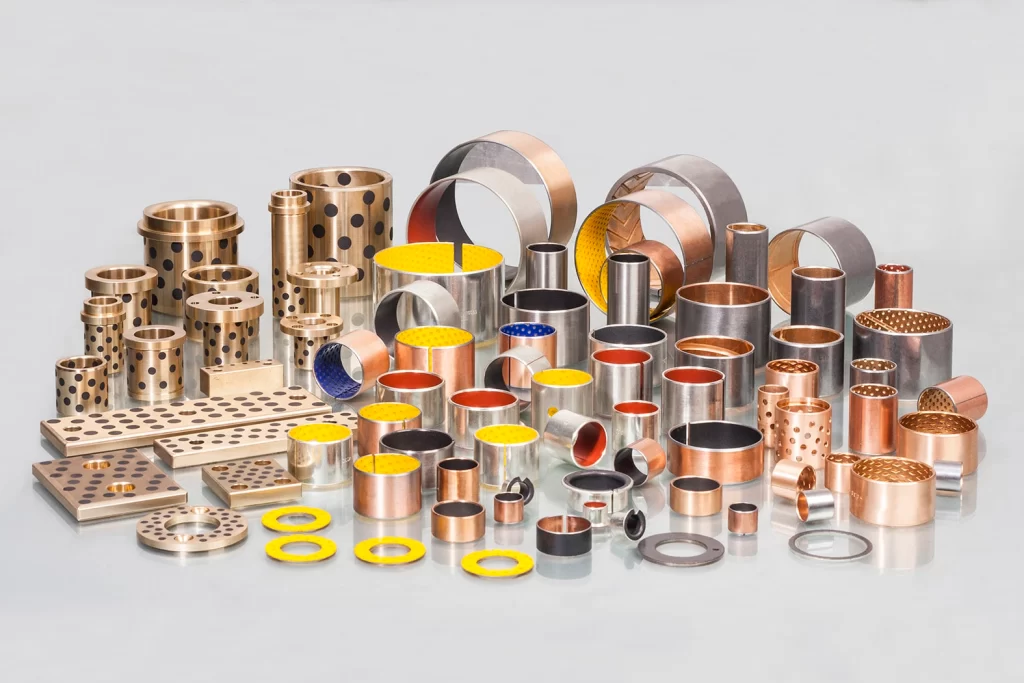
Table of Contents
1. What Exactly Is a Self-Lubricating Bushing?
A self-lubricating bushing is exactly what it sounds like—a bearing component that doesn’t need you to keep adding grease or oil. It’s designed to reduce friction between moving parts without external lubrication. These components are widely used in industrial machinery, automotive systems, aerospace applications, and any environment where regular maintenance is either difficult or simply not an option.
The way they work is pretty clever. Instead of relying on oil from outside, self-lubricating bushings either have solid lubricants (like graphite or PTFE) embedded right into the material, or they’re made from naturally slippery polymers. As the bushing moves, a thin lubricating film forms between the shaft and the bushing surface, keeping everything sliding nicely without any added grease
2. Why Engineers Are Moving Away from Traditional Lubricated Bearings
Traditional bronze bearings need regular oiling. Their friction coefficient typically sits around 0.08 to 0.12. That might not sound like much, but over time, it adds up to significant energy loss, heat generation, and wear. Plus, you’ve got the ongoing cost of lubricants, the labor to apply them, and the risk of contamination if oil or grease ends up where it shouldn’t be.
Self-lubricating bushings drop that friction coefficient down to 0.02 to 0.05. Less friction means less heat, less wear, and less energy wasted. They eliminate periodic relubrication schedules, reduce downtime, and completely remove the risk of lubricant contamination
3. The Main Types of Self-Lubricating Bushing Materials
Sintered Bronze Bushings
These are made through powder metallurgy—compressing bronze powder into a mold and heating it below the melting point to fuse the particles together. The result is a strong, porous metal structure that holds lubricant in its microscopic pores like a sponge. As the bushing runs, it slowly releases that lubricant onto the shaft–.
Best for: Medium-load applications, gearboxes, pumps, agricultural equipment, and household appliances
Temperature range: -50°C to 250°C
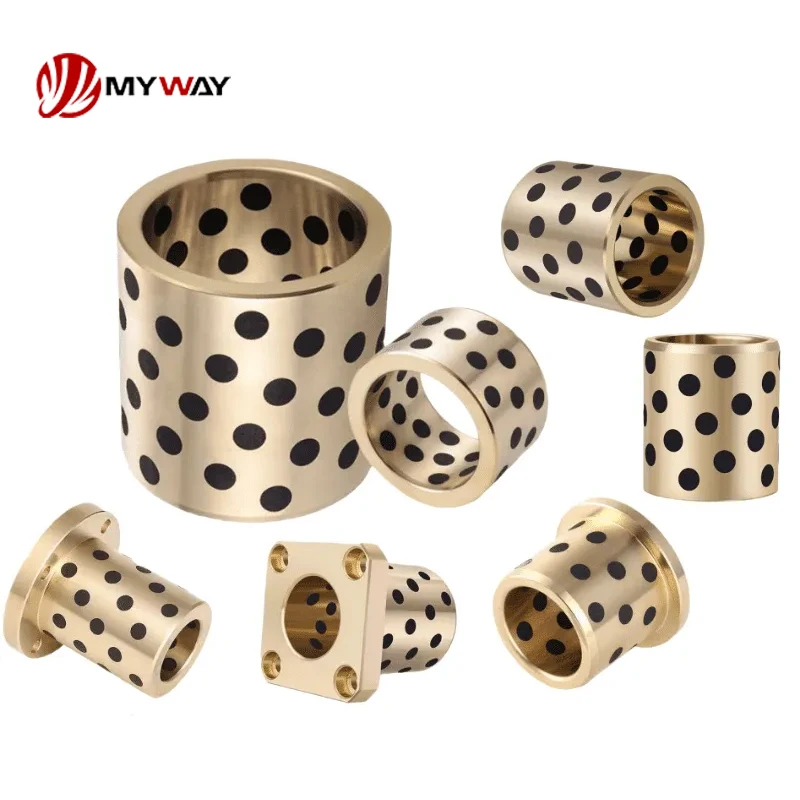
Graphite Plugged Bronze Bushings
These start with a solid bronze bushing, then have graphite plugs embedded into the bearing surface. The graphite acts as a permanent lubricant. When things heat up during operation, the graphite naturally migrates to the bearing surface and forms that protective low-friction film.
These are tough. They can handle temperatures up to 400°C and carry very high loads. They’re perfect for applications where oil or grease would just burn off or wash away.
Best for: Steel plants, automotive stamping, die machinery, furnaces, heavy-duty industrial applications
Temperature range: Up to 400°C
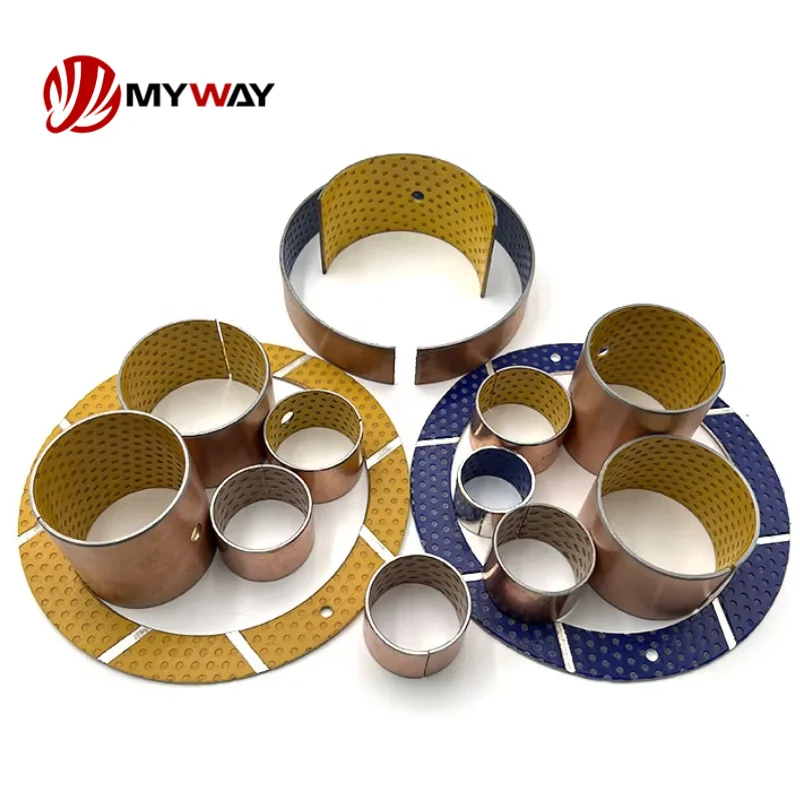
PTFE Composite Bushings
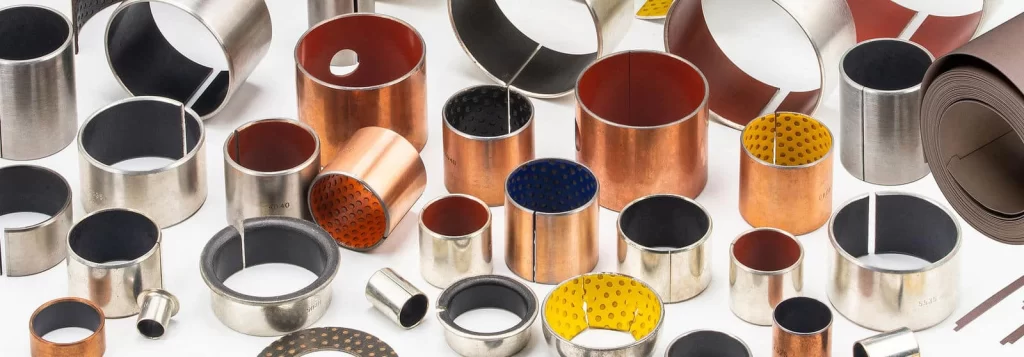
These multi-layered bushings combine a steel backing (for strength) with a porous bronze sintered layer (for bonding) and a PTFE-based bearing lining (for that ultra-slick surface) The PTFE layer gives you an incredibly low friction coefficient—often below 0.05—and the whole thing runs completely dry with no external lubrication needed.
Best for: Automotive suspension joints, construction machinery, conveyor systems, precision industrial equipment
Temperature range: -195°C to 280°C
Polymer Bushings (POM, Nylon, PEEK, UHMWPE)
Engineers often lump these together as “plastic bushings,” but that’s like calling a Ferrari and a golf cart both “vehicles.” The specific polymer completely changes what the bushing can do.
| Material | Friction/Wear | Chemical Resistance | Max Temp | Best For |
|---|---|---|---|---|
| PTFE | Very low / poor (creep) | Excellent | ~280°C | Chemical pumps, high temp |
| Nylon (PA6/66) | Good / excellent | Fair | ~90°C | Heavy loads, cost-sensitive |
| Acetal (POM) | Low / good | Good | ~100°C | Wet environments, precision parts |
| PEEK | Good / excellent | Excellent | ~250°C | Extreme aerospace/oil & gas |
| UHMW-PE | Low / excellent impact | Good | ~80°C | Abrasive media, chutes |
Source: Rapidaccu Engineering Guide
The thing to remember about polymer bushings is that thermal expansion is real. Plastics expand about ten times more than metals when heated. If you’re designing for an application with temperature swings, you need to account for that clearance.
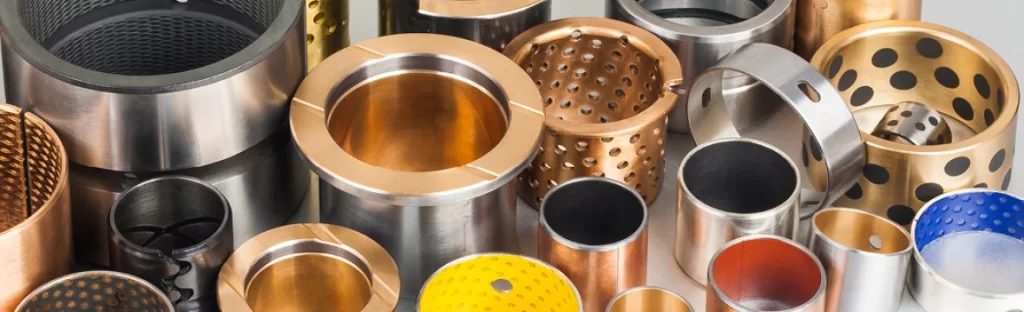
Bimetal Composite Bushings
These combine a steel backing with a bronze alloy sliding layer sintered onto it–. The steel provides excellent dimensional stability and heat dissipation. The bronze layer gives you good bearing properties. They’re often designed with oil pockets or grooves for lubricated applications, which improves the PV value–.
4. Key Factors for Choosing the Right Bushing Material
Load and Speed (The PV Rating)
The Pressure-Velocity rating is probably the most critical number you’ll look at when selecting a bushing material. It represents the relationship between the bearing surface pressure and the sliding speed. Exceed the manufacturer’s maximum PV rating, and you’ll get rapid wear and overheating.
Different materials handle PV differently. PTFE-lined bushings can operate up to 50,000 psi·ft/min—far surpassing nylon (10,000) and UHMWPE (5,000).
Temperature
High temperatures are the enemy of many bushing materials. Standard nylon starts struggling around 90°C. PEEK, on the other hand, can handle continuous operation up to 250°C and withstand 300°C for short periods–. Graphite bronze bushings go even further—up to 400°C.
Environmental Conditions
Is your application wet? Exposed to chemicals? Operating in dusty conditions? This matters more than most engineers realize.
For high-moisture environments, standard nylon can absorb water and swell, potentially seizing the shaft. Acetal (POM) or PET-P absorbs negligible moisture (less than 0.2%) and maintains dimensional stability.
For chemical exposure, PTFE or PEEK are your go-to options. PTFE is chemically inert—it resists acids, bases, and solvents exceptionally well. Always check compatibility charts against your specific fluids.
For dirty environments with dust and debris, graphite bushings actually perform well because they don’t attract contaminants the way oiled bushings do.
Wear Rate
Different materials wear at different rates. PTFE has an incredibly low friction coefficient but can creep (deform permanently) under constant load. UHMWPE offers excellent impact resistance but has a lower PV limit. Graphite bronze provides outstanding load-carrying capacity but can be brittle
5.MYWAY: Your Partner for High-Performance Bushing Solutions
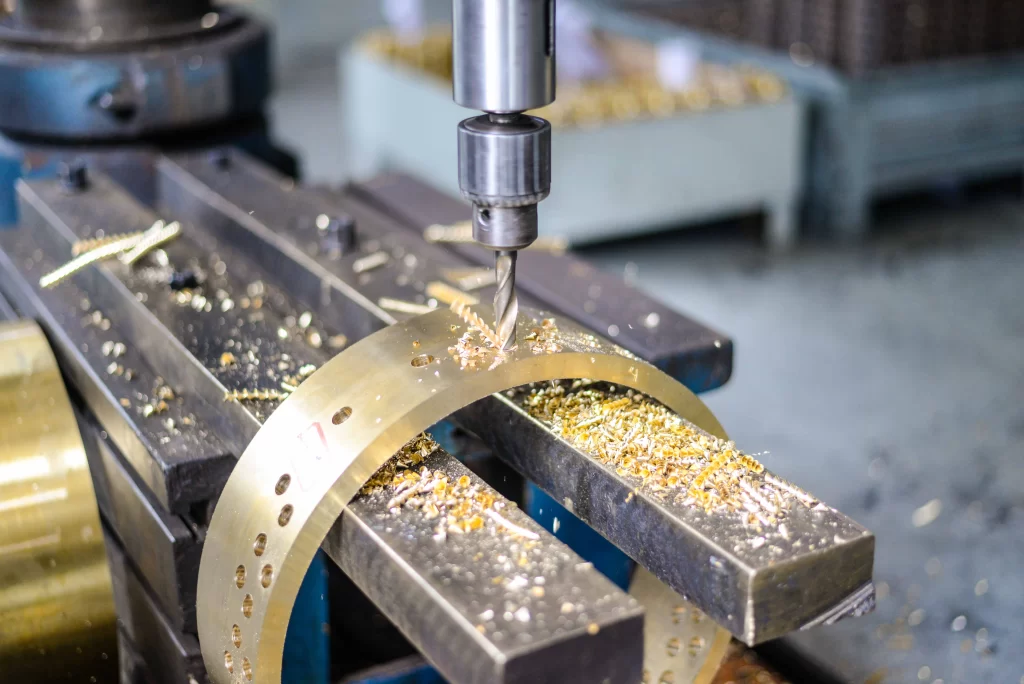
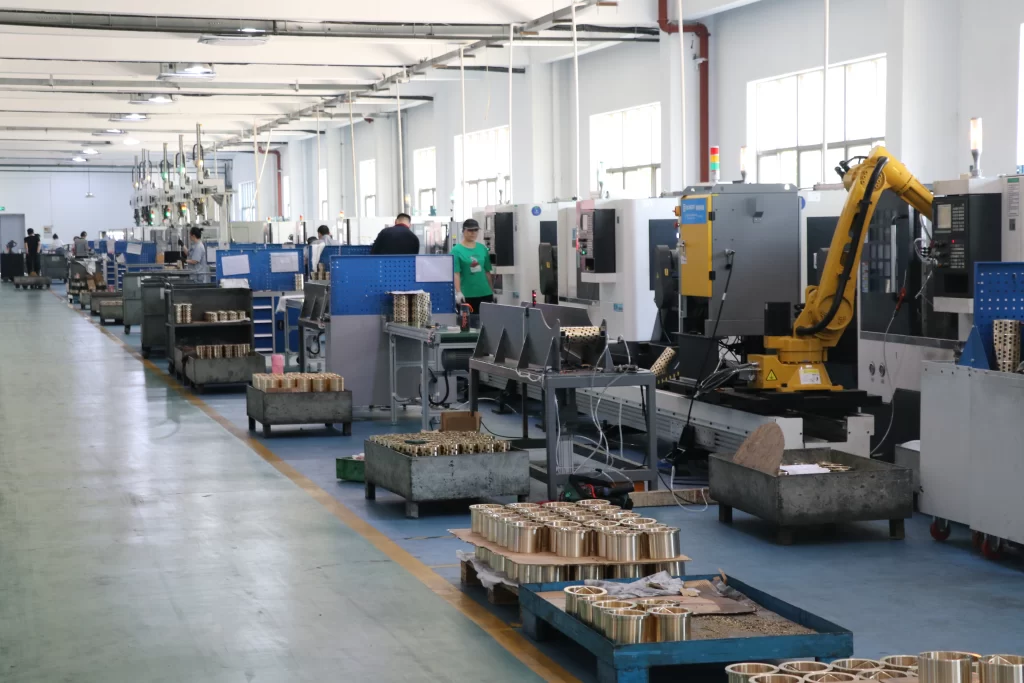
MYWAY specializes in precisely the kinds of bushing solutions we’ve been discussing. Whether you need PTFE composite bushings for dry-running applications, graphite plugged bronze bushings for high-temperature environments, or custom polymer bushings for unique specifications, MYWAY has the engineering expertise and manufacturing capability to deliver.Here’s what sets MYWAY apart:
Full Material Range
MYWAY offers a comprehensive selection of bushing materials—sintered bronze, graphite embedded bronze, PTFE composite, bimetal, and engineering polymers including POM, Nylon, PEEK, and UHMWPE. Whatever your application demands, MYWAY has a material solution.
Custom Engineering
Standard off-the-shelf bushings don’t always fit your specific needs. MYWAY specializes in custom bushings designed precisely for your equipment’s load requirements, speed parameters, temperature conditions, and environmental challenges. Custom geometries? Flanged, split, grooved, or complex turn-mill configurations? MYWAY delivers.
Quality You Can Count On
MYWAY doesn’t cut corners on quality. Every bushing is manufactured to tight tolerances with rigorous inspection protocols. You get dimensional reports, material certifications, and full traceability from raw material to finished part. No cheap substitutes. No surprises.
Cost-Effective Solutions
Self-lubricating bushings from MYWAY can cut your operational costs significantly—sometimes by up to 50% compared to traditional lubricated bearings. You save on lubricants, save on maintenance labor, and save on downtime. And because they last longer, you’re replacing them less often.
6. Real-World Performance: What Makes Self-Lubricating Bushings Work So Well
I mentioned earlier that self-lubricating bushings work by forming a lubricating film between the shaft and bearing surface. But let me explain what actually happens in practice.
During the initial run-in period of a self-lubricating bearing, a small amount of material from the bearing layer transfers to the shaft surface. This creates a solid lubricating film. Once that film is established, it directly contacts the moving parts, protecting both the bearing and the shaft. The mating components are lubricated and protected, and the service life extends significantly.
For PTFE composite bushings, that transfer film is exceptionally smooth. PTFE has one of the lowest friction coefficients of any solid material. For graphite bronze bushings, the graphite flakes shear easily under motion, continuously refreshing the lubricating film–. For oil-impregnated sintered bronze, the porous structure slowly distributes its stored oil over time–.
The result is the same across all these technologies: maintenance-free operation, reduced wear, and extended equipment life.
7. The Advantages of Going Self-Lubricating
Let me summarize why engineers are making the switch:
Elimination of oil holes and grooves — You don’t need to machine oil holes or grooves anymore. That’s cost savings right there.
Reduction in machinery running costs — With maintenance-free operation, lubricant costs drop dramatically. Your overall running costs go down.
Maintenance-free operation — No more oiling schedules. No more grease fittings. No more forgotten lubrication leading to premature failure.
Simplified mechanical design — Self-lubricating bearings often have thinner wall sections, handle higher loads, and offer excellent wear resistance. That simplifies your overall design and manufacturing.
Environmental protection — Self-lubricating materials operate without oil and meet RoHS directives. No risk of lubricant contamination in sensitive environments like food processing or cleanrooms.
FAQ: Frequently Asked Questions
Q1: Do self-lubricating bushings really need no maintenance at all?
Under standard operating conditions, yes—they’re truly maintenance-free. However, for extreme high-load or high-temperature applications, periodic visual inspection every 6 to 12 months is recommended to check for wear or thermal degradation.
Q2: How long do self-lubricating bushings last compared to traditional bearings?
Service life depends on your specific operating conditions—load, speed, temperature, and environment all play a role. But self-lubricating bushings consistently outlast traditional lubricated bearings because they eliminate the risk of lubrication failure. Many MYWAY customers report extended service life of two to three times what they experienced with conventional bearings.
Q3: Can self-lubricating bushings handle high speeds?
It depends on the material. PTFE composite bushings work well at moderate speeds. For high-speed applications, you generally need a material with a higher PV rating. PEEK and graphite bronze handle higher speeds better than standard PTFE. Contact MYWAY with your specific speed requirements for a tailored recommendation.
Q4: Are graphite bronze bushings safe for food processing applications?
Yes, graphite is non-toxic and food-grade safe. However, you should always verify compliance with relevant food safety regulations for your specific jurisdiction and application.
Q5: What’s the maximum temperature for MYWAY self-lucibrating bushings?
MYWAY offers solutions across the full temperature spectrum. Standard PTFE composite bushings handle up to 280°C. Graphite plugged bronze bushings go to 400°C. For cryogenic applications, PTFE composites operate down to -195°C. Tell MYWAY your temperature range, and they’ll recommend the optimal material.
Q6: How do I choose between PTFE composite and graphite bronze?
Here’s a quick rule of thumb: PTFE composite gives you the lowest friction coefficient and is ideal for dry-running applications where you need absolute minimal resistance. Graphite bronze gives you higher load capacity and higher temperature tolerance but with slightly higher friction. If you’re operating in extreme heat (above 280°C) or need maximum load capacity, go with graphite bronze. If ultra-low friction is your priority, PTFE composite is your answer.
Q7: Does MYWAY offer custom bushing sizes and geometries?
Absolutely. MYWAY specializes in custom solutions. Need a flanged bushing? Split bushing? Grooved bushing for lubrication distribution? Complex turn-mill geometry with keyways or mounting holes? MYWAY can manufacture it. Tolerances down to ±0.01 mm are achievable.
Ready to Upgrade Your Bushing Performance?
Tired of frequent maintenance, unplanned downtime, and bushing failures that cost you time and money? It’s time to switch to MYWAY.
Contact MYWAY today for a free consultation and instant quote. Tell them about your application, and their experts will recommend the best self-lubricating bushing material for your specific needs. Custom solutions available. Worldwide delivery. Competitive pricing.
Stop guessing. Start engineering. Choose MYWAY.
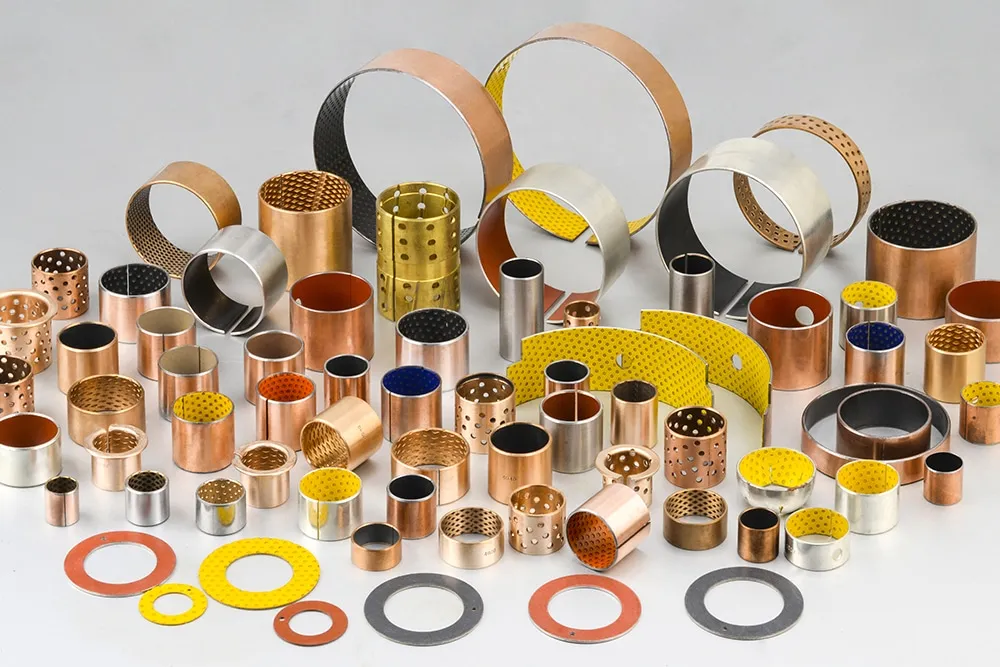
100000+ Types of Bushings – Contact Us for Details