
Recent Posts
Precision Gear Manufacturers: Functions, Applications, and the Critical Role of High-Quality Bushings
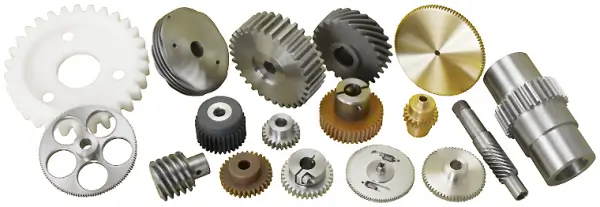
Table of Contents
1. Introduction: The Unsung Heroes of Modern Machinery
Precision gears are fundamental to virtually every mechanical system that transmits power or motion. From the smallest surgical robot to the largest wind turbine, precision gears convert raw rotational energy into controlled, reliable, and efficient mechanical output. While often hidden inside housings and casings, these precisely engineered components determine the performance, accuracy, and longevity of countless industrial and consumer products.
This article explores the essential functions of precision gears, their diverse applications across major industries, and the supporting components—particularly bushings—that ensure optimal gear system performance. For engineers and procurement specialists seeking reliable precision gear solutions, understanding these fundamentals is the first step toward making informed sourcing decisions.
2. The Core Functions of Precision Gears
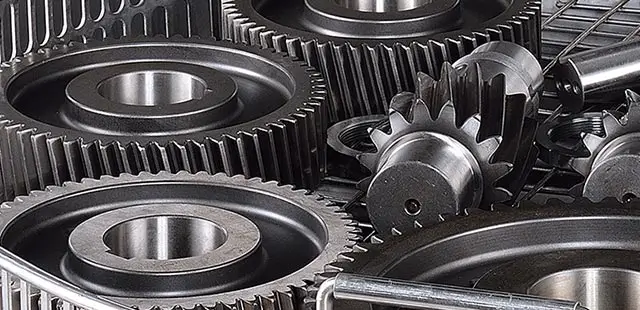
At their most basic level, gears are mechanical devices with teeth that mesh with corresponding teeth on another gear or rack to transmit motion and power. However, precision gears go far beyond simple transmission. They perform several critical functions in mechanical systems:
2.1 Power Transmission and Torque Conversion
The primary function of any gear system is to transmit mechanical power from a driving source (such as an electric motor or combustion engine) to a driven load. Precision gears accomplish this with high efficiency, typically achieving 95–99% energy transfer in well-designed systems. By varying the ratio of teeth between driving and driven gears, they can increase or decrease torque while inversely adjusting rotational speed. This torque-speed trade-off is fundamental to almost every powered machine.
2.2 Speed Reduction or Multiplication
Gear pairs with different tooth counts create mechanical advantage. A small gear driving a larger gear reduces output speed while multiplying torque—essential for applications requiring high force at low RPM, such as conveyor drives, winches, and heavy machinery. Conversely, a large gear driving a smaller one increases speed for applications like high-speed spindles or turbine generators.
2.3 Change of Rotational Direction
Gears can reverse the direction of rotation simply by introducing an intermediate gear (idler) between two shafts. This capability is vital in automotive transmissions, where forward and reverse motion must be selectable, and in many industrial mechanisms where spatial constraints dictate specific shaft orientations.
2.4 Alteration of Axis of Rotation
Different gear types allow power to be transmitted between non-parallel or intersecting shafts. Bevel gears, for example, transmit motion between shafts at right angles, while worm gears transfer power between perpendicular, non-intersecting shafts. This versatility enables compact machine designs where space is limited.
2.5 Motion Distribution and Synchronization
Gear trains can distribute power from a single input to multiple outputs, synchronizing the motion of different machine elements. In printing presses, packaging lines, and robotics, precision gears ensure that multiple axes move in perfect harmony, maintaining timing and positional accuracy.
2.6 Positional Accuracy and Backlash Control
In precision applications such as CNC machine tools, robotics, and semiconductor manufacturing, gears are not just power transmitters—they are position encoders. The angular relationship between input and output must be predictable with minimal lost motion. Precision gears are manufactured to extremely tight tolerances to minimize backlash (the angular play between meshing teeth), enabling accurate positioning and repeatability.
3. Types of Precision Gears and Their Applications
Different gear geometries suit different functional requirements. Understanding these types helps engineers select the optimal solution for each application.
3.1 Spur Gears
Spur gears have straight teeth parallel to the shaft axis. They are the simplest and most common gear type, offering high efficiency and ease of manufacture. However, they produce significant noise and vibration at high speeds due to sudden tooth engagement.
Typical Applications: Low-speed, high-torque industrial machinery, conveyor systems, washing machines, mechanical clocks, and simple automotive components.
3.2 Helical Gears
Helical gears feature teeth cut at an angle to the shaft axis. This angled geometry allows gradual tooth engagement, resulting in smoother, quieter operation and higher load-carrying capacity than spur gears. The helix angle generates axial thrust, necessitating thrust bearings or paired helical (herringbone) designs to cancel this force.
Typical Applications: Automotive transmissions, industrial gearboxes, elevators, conveyors, and any application requiring quiet operation at moderate to high speeds.
3.3 Bevel Gears
Bevel gears have conical-shaped teeth and transmit motion between intersecting shafts, typically at 90 degrees. Straight bevel gears are simpler but noisier, while spiral bevel gears offer smoother engagement and higher strength.
Typical Applications: Automotive differentials, right-angle drives, hand drills, marine propulsion systems, and aircraft actuation mechanisms.
3.4 Worm Gears
Worm gears consist of a worm (screw-like thread) and a worm wheel (gear with helical teeth). They provide very high reduction ratios in a compact space and are inherently self-locking—meaning the worm can drive the wheel but the wheel cannot drive the worm. This feature is useful for safety-critical lifts and hoists.
Typical Applications: Elevators, conveyor systems, tuning mechanisms, valve actuators, and steering systems.
3.5 Planetary (Epicyclic) Gears
Planetary gear trains feature a central sun gear, planet gears, and an outer ring gear. They offer high torque density, compactness, and multiple input/output configurations. They also distribute load among several planets, reducing stress and extending life.
Typical Applications: Robotic joints, electric vehicle transmissions, wind turbine gearboxes, and automatic transmissions.
3.6 Harmonic (Strain Wave) Gears
Harmonic drives use a flexible spline deformed by a wave generator to produce motion with zero backlash and very high reduction ratios. They are exceptionally precise and compact.
Typical Applications: Robotics (especially collaborative robots), medical imaging equipment, semiconductor manufacturing, and aerospace optical systems.
4. Industry Applications of Precision Gears
Precision gears touch virtually every sector of modern industry. Below are the most significant application areas:
4.1 Automotive and Electric Vehicles
In conventional internal combustion vehicles, gears are central to transmissions, differentials, and starter motors. With the shift toward electric vehicles (EVs), precision gears have become even more critical. EV drivetrains require high-speed, low-noise gears that can handle instant torque delivery. Gear designs must optimize efficiency to maximize battery range, while also providing the quiet operation expected of premium EVs.
Specific uses: Single-speed gearboxes, two-speed transmissions, differential gears, and reduction gears for auxiliary systems such as water pumps and air conditioning compressors.
4.2 Aerospace and Defense
Aerospace applications demand the highest precision and reliability. Gears must operate under extreme temperatures, high altitudes, and vibration environments while meeting stringent weight and safety regulations. Actuation systems for flight controls, landing gear, wing flaps, and satellite positioning rely on precision gears.
Specific uses: Flight control servomotors, actuation systems for variable geometry, helicopter rotor drives, radar positioning, and gimbals for optical sensors.
4.3 Robotics and Automation
The rapid growth of industrial robotics, collaborative robots (cobots), mobile robots, and humanoid robots has placed unprecedented demands on precision gears. Robot joints require high torque-to-weight ratios, minimal backlash, and exceptional repeatability. Harmonic drives and planetary gearboxes are the go-to solutions for robotic arms and end-effectors.
Specific uses: Joint actuators, gripper mechanisms, turntables, linear actuators, and robotic welding or assembly cells.
4.4 Medical Equipment
Surgical robots, diagnostic imaging systems (CT scanners, MRI machines), and prosthetic devices rely on precision gears for smooth, accurate, and safe motion. In medical applications, gears must also be biocompatible, sterilizable, and virtually silent.
Specific uses: Robotic surgical instruments, patient positioning tables, infusion pumps, and orthotic devices.
4.5 Industrial Machinery and Manufacturing
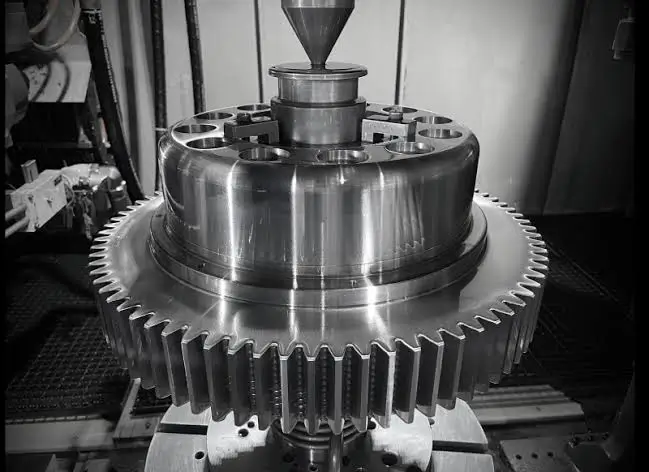
From CNC machine tools to material handling equipment, precision gears are embedded in every factory. They drive spindles, feed mechanisms, indexing tables, and conveyor systems. Heavy-duty gears are also found in mining, steel mills, and construction equipment, where reliability under extreme loads is paramount.
Specific uses: Gearboxes for extruders, rolling mills, press drives, and packaging machinery.
4.6 Renewable Energy
Wind turbines use massive gearboxes to convert the low-speed rotation of blades into high-speed rotation for electricity generation. Solar tracking systems use precision gears to orient photovoltaic panels throughout the day. Marine and hydrokinetic energy systems also rely on rugged gearing.
Specific uses: Wind turbine main gearboxes, yaw drives, pitch drives, and solar panel actuation systems.
4.7 Semiconductor and Electronics Manufacturing
Chip fabrication demands ultra-precise positioning stages that move in nanometer increments. Precision gears with near-zero backlash, combined with linear guides and feedback systems, enable the high throughput and accuracy required for wafer inspection and lithography.
Specific uses: Wafer handling robots, reticle stage positioning, and inspection equipment.
5. The Crucial Role of Bushings in Precision Gear Systems
While gears themselves often receive the lion’s share of engineering attention, the performance and longevity of any gear train depend heavily on the supporting components—shafts, bearings, housings, and, critically, bushings.
5.1 What Do Bushings Do in a Gearbox?
Bushings, also known as plain bearings or sleeve bearings, are cylindrical components that provide a low-friction interface between rotating shafts and stationary housings. In gear systems, they serve several essential functions:
Radial and Axial Support: Bushings support the shaft carrying the gear, maintaining its position within the housing and preventing excessive deflection that could misalign tooth contact.
Load Distribution: They distribute radial loads evenly over a large surface area, reducing contact stresses and preventing premature wear of both shaft and housing.
Friction Reduction: High-quality bushing materials (e.g., bronze, PTFE composites, or sintered metals) provide a low coefficient of friction, minimizing energy losses and heat generation.
Vibration Damping: Bushings absorb vibrations from gear mesh excitation, reducing noise and protecting sensitive bearings and seals.
Wear Protection: By providing a replaceable wearing surface, bushings protect expensive shafts and gear housings from abrasive damage, extending overall system life.
Heat Dissipation: Certain bushing materials and designs aid in conducting heat away from the shaft, helping to maintain stable operating temperatures.
5.2 Why Bushing Quality Matters
In high-precision gear applications, even minor bushing imperfections can cause significant performance degradation. Excessive clearance leads to shaft wobble, uneven tooth contact, and increased backlash. Insufficient hardness or poor lubricity results in rapid wear, which releases debris into the oil, damaging gears and bearings. Thermal expansion mismatches between bushing and shaft can cause seizure or excessive play.
Therefore, choosing the right bushing—both material and manufacturing quality—is as important as selecting the gear itself. This is where specialized bushing manufacturers like MYWAY bring substantial value.
6. MYWAY Bushings: Precision-Engineered Solutions for Demanding Gear Applications
MYWAY Bushings is a recognized manufacturer of high-precision bushings, bearings, and custom mechanical components, serving industries worldwide for over two decades. With ISO/TS 16949 certification and a commitment to continuous improvement, MYWAY delivers bushings that match the exacting standards of today’s precision gear systems.
6.1 MYWAY’s Manufacturing Expertise
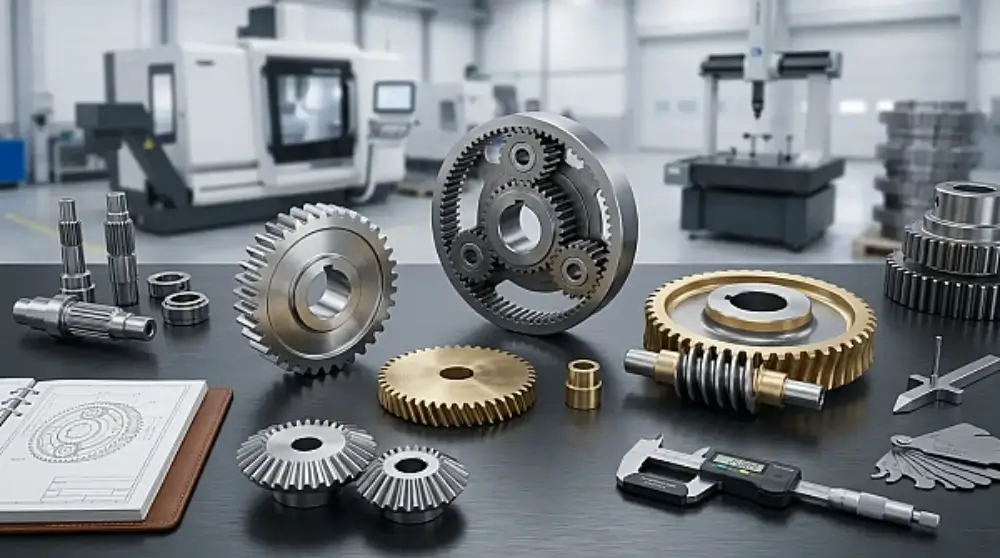
MYWAY employs advanced CNC machining capabilities, including turning, milling, and grinding, to produce bushings with tight tolerances and exceptional surface finishes. Their production facilities incorporate:
Precision CNC Turning and Milling: Capable of producing complex geometries with diameters ranging from small instrument sizes to large industrial components.
Sintered Bronze Technology: Manufacturing self-lubricating bushings using powder metallurgy, impregnated with oil or solid lubricants for maintenance-free operation.
Composite Material Engineering: Developing proprietary composites that combine polymers, fibers, and solid lubricants to optimize wear resistance, load capacity, and friction performance.
Copper-Based Alloys: Specializing in premium bronze and brass alloys known for their excellent anti-friction properties, corrosion resistance, and machinability.
6.2 Product Portfolio for Gear Systems
MYWAY offers a range of bushing types specifically suited for gearbox and powertrain applications:
DU / SF-1 Self-Lubricating Bushings: Steel-backed with a sintered bronze interlayer and a PTFE/lead overlay. These bushings run dry or with minimal lubrication, ideal for applications where oil or grease cannot reach.
Sintered Bronze Bushings: Porous bronze impregnated with lubricating oil, providing long-lasting, quiet operation in moderate load and speed conditions.
Solid Lubricant-Embedded Bushings: Metal matrix materials with graphite or molybdenum disulfide inclusions, offering low friction even under boundary lubrication or intermittent motion.
Custom Special-Shape Bushings: Flanged, grooved, slotted, or threaded bushings engineered to meet unique application requirements, where a standard off-the-shelf part would compromise performance.
6.3 Quality Assurance and Reliability
MYWAY operates under a stringent quality management system certified to ISO/TS 16949 (automotive sector standard), which imposes rigorous control over processes, measurement, and traceability. Every batch undergoes dimensional inspections using coordinate measuring machines, surface roughness testers, and material property verification. This commitment ensures that each bushing meets or exceeds the specified tolerance and performance criteria.
6.4 Why Choose MYWAY for Your Gear Applications?
Engineering Support: MYWAY provides technical consultation to help customers select the optimal bushing material and geometry for their specific load, speed, temperature, and lubrication conditions.
Customization Capability: Unlike many standard bushing suppliers, MYWAY engineers custom solutions for unconventional sizes, shapes, and material combinations, ensuring a perfect fit for your gearbox design.
Cost-Effective Excellence: By combining efficient production processes with vertical integration, MYWAY offers competitive pricing without sacrificing quality.
Global Trust: MYWAY bushings are used by OEMs and aftermarket suppliers across the United States, Europe, Japan, Australia, and Southeast Asia, attesting to their reliability and consistent quality.
7. Integrating Bushings into Gear System Maintenance and Design
For engineers designing or maintaining gear systems, considering bushing selection early in the design process can yield substantial benefits:
Reduced Downtime: Proper bushing choice minimizes wear and extends overhaul intervals.
Improved Efficiency: Lower friction bushings reduce power losses, saving energy and lowering operating costs.
Enhanced Precision: Tight bushing tolerances maintain shaft concentricity, ensuring gears mesh correctly and preserve positional accuracy.
Quieter Operation: Vibration-damping bushing materials contribute to overall noise reduction, which is especially critical in consumer-facing products like electric vehicles and medical equipment.
MYWAY’s engineering team can assist in calculating life expectancy, clearance requirements, and lubrication needs to ensure that your bushings perform reliably throughout the intended service life.
8. Frequently Asked Questions
Q1: What is the primary function of a gear?
A gear transmits mechanical power and motion from one rotating shaft to another. It can change speed, torque, direction, or axis of rotation, depending on the gear type and tooth configuration.
Q2: What is the difference between spur gears and helical gears?
Spur gears have straight teeth parallel to the shaft, providing high efficiency but generating more noise. Helical gears have angled teeth, which engage gradually for quieter operation and higher load capacity, but they produce axial thrust that requires additional bearing support.
Q3: Why is backlash critical in precision gear systems?
Backlash is the rotational play between meshing teeth. In precision applications (robotics, CNC, semiconductor equipment), excessive backlash causes positioning errors. Precision gears are manufactured to minimize backlash, ensuring accurate and repeatable motion.
Q4: What industries rely most heavily on precision gears?
Automotive (especially EVs), robotics, aerospace, medical devices, industrial machinery, renewable energy (wind turbines), and semiconductor manufacturing all depend on precision gears for their core functions.
Q5: What role does a bushing play in a gearbox?
A bushing supports the rotating shaft, reduces friction, dampens vibration, protects the shaft and housing from wear, and helps maintain proper gear alignment. It is a critical component for gearbox longevity and performance.
Q6: What materials are commonly used for precision gear bushings?
Common materials include bronze, brass, sintered bronze (oil-impregnated), PTFE composite, and metal-polymer combinations. The choice depends on load, speed, temperature, and lubrication availability.
Q7: How do I choose the right bushing for my gear application?
Consider operating loads, rotational speed, temperature range, lubrication method, and required clearance. Consulting with an experienced manufacturer like MYWAY ensures you select the optimal material and design for your specific conditions.
Q8: Can MYWAY produce custom bushing designs?
Yes. MYWAY specializes in custom-engineered bushings—including flanged, grooved, and special-profile shapes—to meet unique gearbox requirements. They work closely with customers to develop tailored solutions.
Q9: How does bushing wear affect gear performance?
Worn bushings increase clearance, causing shaft misalignment, uneven gear tooth contact, increased backlash, and vibration. This accelerates gear wear and can lead to catastrophic failure. Regular inspection and timely replacement are essential.
Q10: Is MYWAY certified for quality management?
Yes. MYWAY holds ISO/TS 16949 certification, ensuring robust process controls, traceability, and continuous improvement. This certification is widely recognized in the automotive and heavy industry sectors.
Q11: What is the typical service life of a MYWAY bushing?
Service life depends on application conditions. MYWAY engineers can provide life estimates based on your operating parameters. Their self-lubricating and sintered bronze bushings are designed for extended durability in demanding environments.
Q12: Why should I choose MYWAY over other bushing suppliers?
MYWAY offers a unique combination of custom engineering, advanced manufacturing, stringent quality control, and competitive pricing. Their technical support and global track record make them a reliable partner for both prototyping and high-volume production.
Conclusion
Precision gears are the driving force behind modern industrial progress—they convert, control, and deliver mechanical power with ever-increasing accuracy and efficiency. Understanding their functions, types, and applications is essential for any engineer or procurement professional involved in motion system design. Yet, the performance of any gear train ultimately depends not only on the gears themselves but also on the supporting ecosystem of shafts, bearings, housings, and bushings.
High-quality bushings, such as those manufactured by MYWAY, ensure that gears remain aligned, operate smoothly, and achieve their intended service life. By selecting the right bushing materials and designs, manufacturers can reduce maintenance costs, improve energy efficiency, and enhance the reliability of their products.
Whether you are designing a next-generation robotic arm, a compact EV drivetrain, or a heavy-duty industrial gearbox, MYWAY’s engineering team stands ready to provide bushing solutions that meet your most demanding specifications.
100000+ Types of Bushings – Contact Us for Details