
Recent Posts
Brass Gears in Precision Engineering: Material Advantages, Functional Applications, and Selection Guide
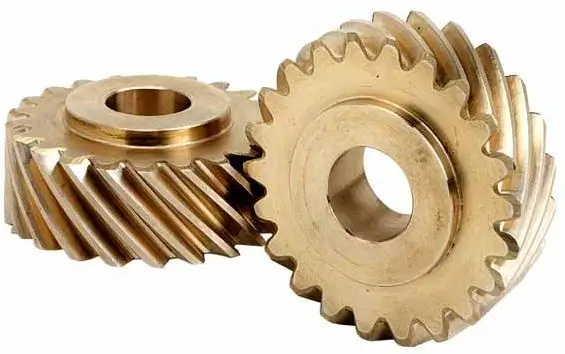
Table of Contents
1. Introduction: The Enduring Relevance of Brass in Gear Technology
Brass gears have maintained their position as a preferred transmission component across numerous industrial sectors, from precision instrumentation to heavy machinery. As a copper-zinc alloy, brass offers a distinctive combination of mechanical properties that distinguishes it from steel, bronze, and polymer alternatives. The material’s natural corrosion resistance, excellent machinability, and inherently low friction coefficient make brass gears particularly suitable for applications where reliability, quiet operation, and longevity are paramount.
The selection of gear material represents a critical engineering decision that directly impacts system performance, maintenance intervals, and total cost of ownership. Brass gears excel in environments where moisture exposure, space constraints, or noise sensitivity preclude the use of conventional steel gearing. Understanding the functional attributes and application domains of brass gears enables engineers to make informed component selections that optimize both performance and economic outcomes.
2. Material Properties That Define Brass Gear Performance
2.1 Corrosion Resistance and Environmental Durability
The corrosion resistance of brass stems from the protective oxide layer that forms naturally on its surface, eliminating the need for supplementary coatings or surface treatments. This inherent property renders brass gears particularly valuable in marine environments, chemical processing facilities, and outdoor equipment where exposure to moisture, salt spray, or mild chemicals would rapidly degrade carbon steel alternatives. In marine applications, brass gears demonstrate lifespans three to four times longer than untreated steel equivalent. The material also exhibits low magnetic permeability, making it suitable for applications near sensitive electronic equipment or MRI systems–.
2.2 Friction Characteristics and Operational Efficiency
Brass exhibits a naturally low coefficient of friction when paired with steel or other brass components, typically ranging from 0.2 to 0.35. This characteristic reduces heat generation during operation, minimizes power loss through frictional resistance, and extends the service life of both the gear and its mating components. The self-lubricating qualities of brass further contribute to reduced maintenance requirements and sustained performance over extended operational periods.
2.3 Acoustic Performance and Noise Reduction
One of the most significant advantages of brass gears is their inherently quiet operation. The material’s damping characteristics absorb vibration and reduce transmitted noise, achieving noise levels 10 to 15 decibels lower than comparable steel gear systems operating at identical speeds. This acoustic advantage makes brass gears indispensable in precision instruments, medical devices, consumer electronics, and any application where noise pollution must be minimized.
2.4 Machinability and Manufacturing Precision
Brass is among the most machinable metals available, enabling the production of gears with exceptionally tight dimensional tolerances. Precision machining processes such as CNC turning, hobbing, and gear shaping can achieve operational tolerances of ±0.02 millimeters, ensuring perfect meshing and vibration-free operation. The material’s ease of machining also facilitates rapid customization of non-standard tooth profiles, bore sizes, and hub configurations, accommodating specialized engineering requirements without prohibitive tooling costs
3. Brass Gear Types and Their Functional Distinctions
3.1 Spur Gears
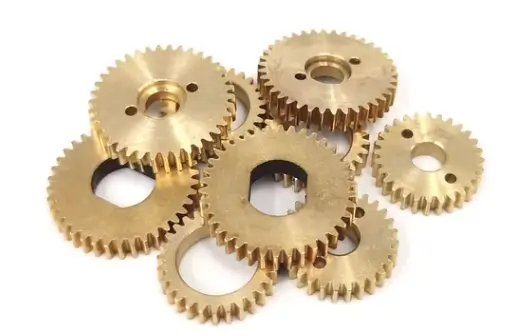
Spur gears represent the most common and straightforward gear configuration, featuring straight teeth cut parallel to the axis of rotation. Brass spur gears find extensive application in precision instruments, timing mechanisms, and light-to-medium duty transmission systems where simplicity and reliability are prioritized. Their straightforward geometry facilitates economical manufacturing while maintaining adequate performance characteristics for moderate load conditions.
3.2 Helical Gears
Helical gears feature teeth cut at an angle to the gear face, enabling gradual tooth engagement that produces smoother and quieter operation compared to spur gears. The angled tooth design increases the number of teeth in contact at any given moment, enhancing load-carrying capacity. Brass helical gears are frequently specified for automotive transmissions, precision instruments requiring noise reduction, and industrial machinery demanding high load capacity and durability. Engineers must account for the axial thrust generated by helical gear operation, which requires appropriate thrust bearings to prevent misalignment.
3.3 Worm Gears
Worm gears consist of a screw-like worm shaft meshing with a toothed worm wheel, enabling high-ratio speed reduction in compact right-angle configurations. Brass worm gears are frequently paired with hardened steel worm shafts—a dissimilar material combination deliberately chosen to minimize adhesive wear and protect the more expensive steel component. Common applications include speed reducers, power steering systems, elevators, chain blocks, and fishing reels. The brass worm gear’s low friction against steel, combined with the material’s thermal conductivity for heat dissipation, makes this pairing exceptionally durable in continuous operation.
3.4 Bevel Gears
Bevel gears transmit motion between intersecting shafts, typically at right angles. Brass bevel gears are employed in applications requiring directional changes in power transmission where corrosion resistance and smooth operation are essential
4. Core Functions of Brass Gears in Mechanical Systems
4.1 Torque Transmission and Power Transfer
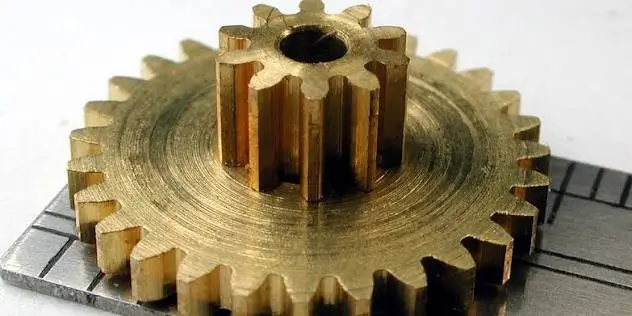
The fundamental function of any gear system is the transmission of torque and power between rotating shafts. Brass gears accomplish this through the meshing engagement of tooth profiles, converting input rotational motion into controlled output with specified speed and torque characteristics. While brass exhibits lower torque capacity than hardened steel—typically suited for applications under 100 Newton-meters—this limitation is offset by the material’s other advantageous properties. In light-to-medium duty applications, brass gears provide reliable power transmission without the weight, cost, or corrosion vulnerabilities of steel alternatives.
4.2 Speed Reduction and Amplification
Gear systems fundamentally alter rotational speed through the ratio of tooth counts between meshing gears. Brass worm gears, in particular, excel at achieving high reduction ratios within confined spaces, making them indispensable in applications where space optimization is paramount. The compactness of worm gear arrangements enables engineers to incorporate them into devices where conventional parallel-shaft or belt drive systems would be impractical.
4.3 Motion Direction Control
Brass gears enable precise control over motion direction, converting rotational input into linear motion through rack-and-pinion arrangements, or redirecting power transmission across intersecting or non-intersecting shafts through bevel and worm gear configurations. This directional flexibility makes brass gears versatile components in complex mechanical assemblies.
4.4 Precision Motion Control
In precision instruments, timing mechanisms, and measurement devices, brass gears provide the smooth, backlash-free motion essential for accurate operation. The material’s low friction and dimensional stability ensure consistent performance over extended periods, maintaining the positional accuracy required in clocks, measuring instruments, and optical equipment
5. Critical Application Domains
5.1 Automotive Industry
The automotive sector represents a significant application domain for brass gears, particularly in precision components such as speedometer drives, window regulators, and power steering systems. Brass’s corrosion resistance ensures reliable performance in underhood environments exposed to temperature extremes, moisture, and road chemicals. The material’s quiet operation also contributes to cabin comfort in passenger vehicles.
5.2 Marine and Offshore Equipment
Marine environments present exceptionally demanding conditions for mechanical components, with constant exposure to saltwater, humidity, and corrosive atmospheres. Brass gears demonstrate superior performance in these settings, with documented operational tolerance of ±0.025 millimeters after 2,000 hours of saltwater exposure. Applications include steering systems, pumps, deck hardware, offshore energy pitch control systems, and commercial vessel propulsion mechanisms.
5.3 Precision Instruments and Timekeeping
The low friction and smooth operation of brass gears make them ideal for finely tuned instruments where accuracy is critical. Clocks, timers, measuring devices, and optical equipment rely on brass gears to maintain precise movement with minimal noise and backlash. The material’s dimensional stability ensures that calibration remains consistent over the instrument’s service life.
5.4 Food Processing and Pharmaceutical Equipment
Brass gears are specified in food processing, beverage, and pharmaceutical machinery where hygiene, material purity, and washdown compatibility are essential. The material’s natural antimicrobial properties provide an additional layer of protection in sanitary environments. Brass gears in these applications must meet stringent regulatory requirements while maintaining reliable performance through frequent cleaning cycles.
5.5 Medical Devices
The medical device industry employs brass gears in diagnostic equipment, surgical instruments, and imaging systems where precision and reliability are non-negotiable. Brass’s low coefficient of friction makes it suitable for bearings and gears requiring smooth, consistent motion. The material’s antimicrobial properties and corrosion resistance to medical cleaning agents further enhance its suitability for healthcare applications.
5.6 Industrial Machinery and Automation
Brass gears serve in a wide spectrum of industrial applications, including construction equipment, conveyors, packaging machinery, material handling systems, and automation equipment. Their corrosion resistance and ease of customization make them particularly valuable in environments where steel gears would require protective coatings or frequent replacement.
5.7 Valve and Actuator Systems
Low-load, high-cycle applications such as valve controls and actuator systems benefit from brass gears’ wear resistance and low friction coefficient. The material’s resistance to galling ensures smooth operation through repeated cycling, reducing maintenance requirements and extending service intervals
6. Complementary Components: The Role of Bushings and Bearings
The performance and longevity of brass gear systems depend not only on the gear itself but also on the quality of supporting components, particularly bushings and bearings. These elements provide critical shaft support, reduce friction at rotational interfaces, and maintain proper gear alignment.
Brass bushings and bearings offer complementary advantages to brass gear systems. Self-lubricating brass bushings maintain high sliding velocity even in high-temperature and corrosive environments. The use of brass for bearing surfaces creates a consistent material interface that minimizes galvanic corrosion between dissimilar metals and ensures predictable wear characteristics. Bushings with customizable lubrication options—including carbon, dry, and oilless configurations—accommodate varying load capacities and environmental conditions.
Proper bushing selection is essential for maintaining the shaft alignment and positional accuracy that brass gears require for optimal performance. When gears and bushings are engineered as an integrated system, the result is reduced maintenance intervals, extended component life, and more reliable overall equipment operation.
7. Material Selection Considerations
7.1 Brass vs. Steel
Steel gears offer superior strength and wear resistance, making them appropriate for high-load, high-speed applications. However, steel requires protective coatings or oil-based corrosion protection, adding to manufacturing and maintenance costs. Steel gears also operate more audibly than brass equivalents. Brass gears, while less robust under extreme loads, provide corrosion resistance without coatings, quieter operation, and easier machinability for custom configurations.
7.2 Brass vs. Stainless Steel
Stainless steel provides superior corrosion resistance to brass but is significantly more difficult to machine and substantially more expensive. For applications where corrosion resistance is the primary concern and extreme strength is not required, brass often represents a more cost-effective solution.
7.3 Brass vs. Bronze
Bronze generally offers better corrosion resistance, particularly in seawater, and superior wear resistance in high-load worm gear applications. However, brass exhibits superior workability, machinability, and malleability. The choice between brass and bronze depends on the specific balance of properties required: bronze for maximum durability in demanding conditions, brass for ease of manufacturing and customization.
7.4 Brass vs. Nylon and Plastics
Polymer gears such as nylon offer lightweight construction and quiet operation but have significantly lower load capacity and temperature limits than brass. Brass provides superior strength, thermal stability, and dimensional precision for applications where plastic gears would deform or fail under operational loads.
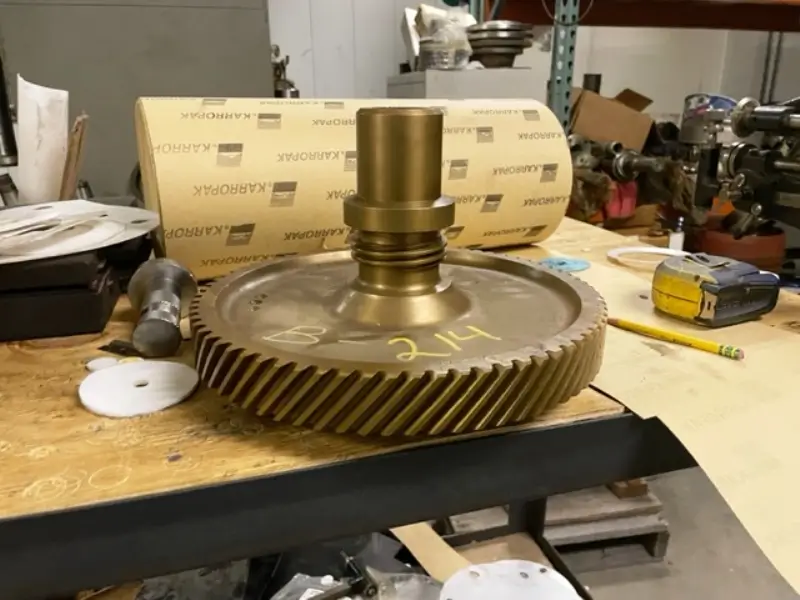
8. Manufacturing Processes for Brass Gears
The production of precision brass gears employs several established manufacturing methodologies:
CAD/CAM Design and Programming: The manufacturing process begins with computer-aided design modeling, establishing critical parameters including module, tooth count, pressure angle, and tooth profile.
CNC Turning: Brass rods are machined on CNC lathes to form gear blanks with precise dimensional characteristics.
Hobbing: This core process uses a rotating hob to progressively cut gear teeth through simulated meshing motion, representing the preferred method for high-efficiency, high-precision mass production.
Gear Shaping: Suitable for internal gears or gears with specialized geometries, offering high precision at lower production efficiency.
Quality Inspection: Advanced coordinate measuring machines and gear inspection equipment verify that finished products meet required specifications
9. The MYWAY Advantage: Precision Bushings for Brass Gear Systems
When specifying brass gears for demanding applications, the selection of complementary components is equally critical to system performance. MYWAY specializes in the manufacture of high-precision bushings and bearings engineered specifically for brass gear applications. Our products are designed to maintain proper shaft alignment, reduce friction at rotational interfaces, and extend the operational life of your gear systems.
MYWAY bushings are manufactured to exacting tolerances, ensuring perfect fit and optimal performance in automotive, industrial, marine, and precision instrument applications. Our self-lubricating brass bushings provide reliable operation in high-temperature and corrosive environments, while our customizable options accommodate diverse load capacities and installation requirements.
By choosing MYWAY bushings for your brass gear systems, you benefit from:
Reduced maintenance intervals and lower total cost of ownership
Enhanced shaft support and maintained gear alignment
Consistent performance across varying operational conditions
Engineering support for custom applications and specialized requirements
Contact MYWAY today to discuss your bushing and bearing requirements. Our engineering team is ready to assist with product selection, custom configurations, and technical guidance to ensure your brass gear systems achieve optimal performance and longevity.
Frequently Asked Questions (FAQ)
Q1: What are the primary advantages of brass gears over steel gears?
Brass gears offer superior corrosion resistance without requiring protective coatings, operate significantly more quietly (10-15 dB lower than steel), and are easier to machine for custom configurations. While steel provides higher strength for heavy-load applications, brass is the preferred choice where moisture exposure, noise sensitivity, or customization requirements exist
Q2: In which industries are brass gears most commonly used?
Brass gears find extensive application in automotive components, marine equipment, precision instruments (clocks, measuring devices), food processing machinery, medical devices, valve and actuator systems, and general industrial machinery.
Q3: Can brass gears be used in high-temperature environments?
Brass gears typically operate effectively within a temperature range of -40°C to 150°C in most applications. For extreme temperature conditions, material selection should be evaluated based on specific operational requirements.
Q4: What maintenance do brass gears require?
Brass gears generally require less maintenance than steel alternatives due to their corrosion resistance and self-lubricating properties. Regular inspection for wear, proper lubrication according to manufacturer specifications, and alignment checks are recommended to ensure optimal performance and longevity.
Q5: Are brass gears suitable for food processing applications?
Yes. Brass gears are commonly used in food processing, beverage, and pharmaceutical machinery where hygiene, material purity, and washdown compatibility are essential. Brass also exhibits natural antimicrobial properties beneficial in sanitary environments.
Q6: How do brass gears compare to bronze gears?
Bronze offers superior corrosion resistance in seawater and better wear resistance in high-load worm gear applications–. Brass provides better machinability, workability, and is generally more cost-effective for precision applications. The choice depends on the specific balance of properties required for the application.
Q7: What types of brass gears are available?
Common brass gear types include spur gears (straight teeth), helical gears (angled teeth for quieter operation), worm gears (for high-ratio speed reduction), bevel gears (for intersecting shafts), and gear racks (for converting rotary to linear motion).
Q8: Why should I choose MYWAY bushings for my brass gear systems?
MYWAY bushings are precision-engineered to maintain proper shaft alignment, reduce friction at rotational interfaces, and extend gear system operational life. Our products are manufactured to exacting tolerances with customizable options for diverse load capacities and environmental conditions, backed by engineering support for custom applications.
100000+ Types of Bushings – Contact Us for Details