
Recent Posts
Precision Gears: The Backbone of Modern Power Transmission and Motion Control
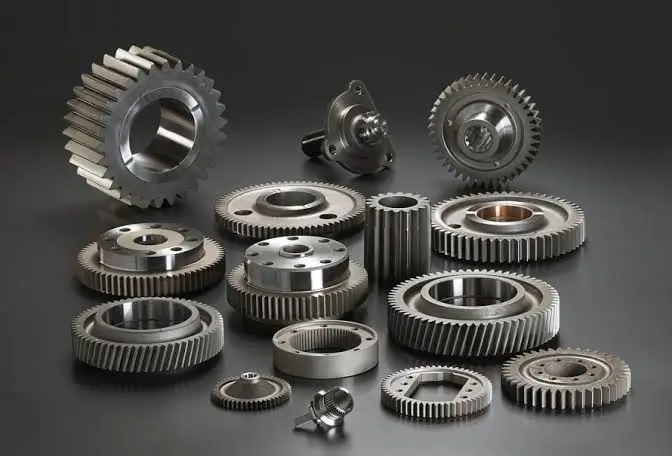
Table of Contents
1. Definition and Core Functions of Precision Gears
Precision gears are high-accuracy mechanical components engineered to transmit power, regulate speed, and control motion with exceptional dimensional accuracy and minimal backlash–. Unlike standard gears, precision gears maintain tolerances up to ten times tighter—a precision gear typically achieves a tooth profile error of less than 0.005 mm, whereas a standard gear may permit up to 0.05 mm. This level of accuracy directly translates into reduced vibration, lower noise levels, extended service life, and enhanced overall system efficiency.
The fundamental functions of precision gears encompass:
Power Transmission: Efficiently transferring mechanical energy from a driving source to driven components
Speed Regulation: Increasing or decreasing rotational speed through gear ratio configurations
Motion Control: Precisely governing the position, velocity, and acceleration of mechanical systems
Torque Conversion: Modifying torque output to match application requirements
Direction Change: Altering the axis of rotation through bevel and other specialized gear configurations
Load Distribution: Evenly distributing mechanical loads across tooth contact surfaces to minimize stress concentration and prevent premature failure
Precision gears are distinguished by their adherence to rigorous international accuracy standards, including AGMA (American Gear Manufacturers Association), DIN (German Institute for Standardization), ISO (International Organization for Standardization), and JIS (Japanese Industrial Standards). These standards define allowable deviations in tooth profile, pitch, runout, lead error, and surface finish
2. Major Types of Precision Gears and Their Distinctive Characteristics
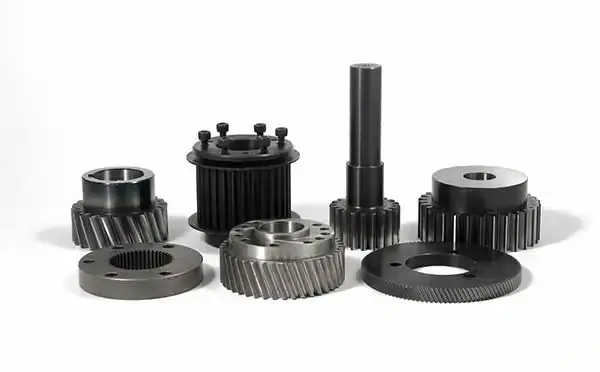
Precision gears are available in numerous configurations, each offering specific advantages for particular applications and shaft orientations.
2.1 Spur Gears
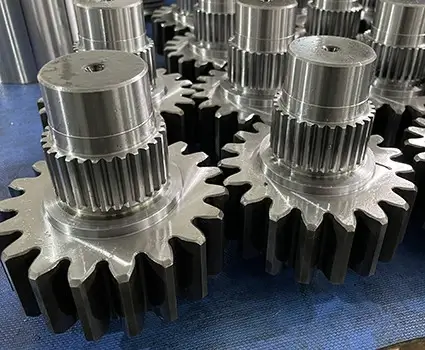
Spur gears feature straight teeth cut parallel to the gear axis and are the most widely used gear type. They transfer torque between parallel shafts through direct tooth engagement. Their simple geometry enables relatively easy production while achieving high accuracy. Spur gears generate no axial thrust load, simplifying bearing and housing design. However, their teeth engage suddenly along their full width, which can produce higher noise levels compared to helical gears.
2.2 Helical Gears
Helical gears incorporate teeth cut at an angle to the gear axis, creating a helix pattern around the gear body. This angled geometry enables progressive tooth engagement rather than sudden contact, resulting in superior quietness, smoother operation, and higher load-carrying capacity. Helical gears are particularly suitable for high-speed applications. The angled tooth design does introduce axial thrust forces, necessitating the use of thrust bearings.
2.3 Double Helical and Herringbone Gears
Double helical gears and herringbone gears feature two opposing helix angles on the same gear body. This design effectively cancels axial thrust forces while retaining the smooth engagement characteristics of helical gears. These geometries present trade-offs between load distribution and manufacturing complexity.
2.4 Bevel Gears
Bevel gears feature conical geometry with teeth cut along a tapered surface. They transmit motion between intersecting shafts, typically at a 90-degree angle. Bevel gears are essential when power must be redirected from a horizontal shaft to a vertical one. Advanced manufacturing methods such as precision forging and cold closed-die forging are increasingly adopted to achieve net-shape production, reducing material waste and improving dimensional accuracy.
2.5 Worm Gears
Worm gears consist of a threaded worm (screw-like shaft) that meshes with a gear wheel. This configuration enables compact right-angle layouts and large reduction ratios in a single stage. The motion relies more heavily on sliding interaction between surfaces, which can affect efficiency.
2.6 Planetary Gears
Planetary gear systems consist of a central sun gear, planet gears, and an outer ring gear. They offer high torque density, compact form factors, and multiple reduction ratios within a single housing. These gearboxes are widely used in robotics, automotive transmissions, and aerospace actuation systems.
2.7 Cycloidal Gears and Harmonic Drive® Gearboxes
Cycloidal drives and Harmonic Drive® gearboxes are characterized by their precise transmission of motion, zero backlash, high transmission ratios, and compact size. These are frequently employed in robotics and automation applications where extreme precision is required. Cycloidal gears demand exceptional dimensional stability, excellent surface quality, and high profile and pitch quality. Harmonic Drive® gearboxes present manufacturing challenges due to extremely small modules—in some cases, teeth are so tiny they are barely visible to the naked eye.
2.8 Other Specialized Types
Additional precision gear types include gear racks, pinions, splines, ratchets, serrations, shafts, sprockets, cams, couplings, and cranks. Each serves specific functions in mechanical transmission systems.
3. Key Manufacturing Processes and Precision Control
The manufacturing processes employed to achieve precision gear tolerances are critical to final performance.
3.1 Primary Machining Processes
Gear Hobbing: A generating process using a rotating hob to cut gear teeth. Suitable for medium to high precision applications.
Gear Shaping: Uses a reciprocating cutter to form teeth, ideal for internal gears and close-center applications.
Gear Shaving: A finishing process that removes small amounts of material to improve tooth surface finish and accuracy.
Broaching: Efficient for producing internal splines and gears with high production rates.
CNC Turning and Milling: Provide flexibility for complex geometries and tight tolerances.
3.2 Precision Finishing Processes
Gear Grinding: Produces the most precise gears, especially when using top-of-the-line machines. Generating grinding offers advantages over profile grinding, including higher pitch accuracy, improved dimensional stability, and even profile across the entire workpiece.
Honing: A superfinishing process that improves surface finish and corrects minor tooth geometry errors.
Lapping: Uses abrasive compound between mating gears to improve surface finish and contact pattern.
Passivation: A chemical treatment that removes free iron from stainless steel surfaces, enhancing corrosion resistance
3.3 Advanced Manufacturing Technologies
Additive Manufacturing (3D Printing): Enables complex internal geometries, reduces material waste, and accelerates testing cycles. However, material consistency, surface finish, and mechanical properties often fall short of standards required for heavy-duty industrial applications.
Powder Metallurgy: Enables complex shapes and self-lubricating properties for specialized applications.
Precision Forging: Cold closed-die forging processes achieve net-shape manufacturing, reducing material waste and improving dimensional accuracy.
3.4 Quality Inspection and Metrology
Precision gears require rigorous inspection using specialized equipment:
Gear Testers: Systems such as Gleason GMS Series and Klingelnberg P-series for comprehensive gear measurement
Coordinate Measuring Machines (CMM): For dimensional verification
Laser Scanning and Profile Projectors: For surface and profile inspection
4. Material Science and Heat Treatment Technologies
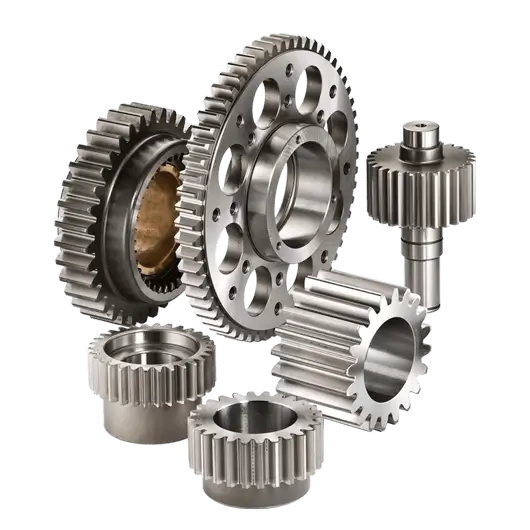
Material selection directly impacts gear performance, durability, and application suitability.
4.1 Common Gear Materials
Alloy Steels: Such as 20CrMnTi and SAE 4140, offering excellent strength, toughness, and fatigue resistance.
Carbon Steel: Cost-effective option for general industrial applications.
Stainless Steel: Provides superior corrosion resistance for medical, aerospace, and marine applications.
Bronze Alloys: Excellent wear resistance and high compressive strength, commonly used in worm gears and bushings.
Plastic and Polymer Materials: Can reduce noise by an additional 6 dBa compared to metal gears, making them suitable for surgical robots and quiet applications.
Titanium Alloys: Lightweight high-strength options for aerospace applications.
Powder Metallurgy Materials: Enable complex shapes and self-lubricating properties.
4.2 Heat Treatment Processes
Heat treatment is essential for achieving the mechanical properties required in precision gears:
Normalizing: Refines grain structure and improves machinability
Tempering: Reduces brittleness after hardening while maintaining strength
Carburizing: Adds carbon to surface layers for enhanced wear resistance and fatigue strength
Nitriding: Diffuses nitrogen into the surface for superior hardness without distortion
Induction Hardening: Localized hardening of tooth surfaces using electromagnetic induction
Carburizing Quenching: Combines carbon addition with rapid cooling for maximum surface hardness
4.3 Surface Engineering and Coatings
Modern gear technology increasingly incorporates advanced surface treatments:
Low-friction coatings: Reduce friction and improve efficiency
Wear-resistant coatings: Extend service life in demanding applications
Surface finish optimization: Roughness directly affects noise generation and wear characteristics
5. Lubrication, Noise Reduction, and Vibration Damping
The core interest of high-precision gear manufacturers is to increase transmission accuracy and decrease noise, vibration, and harshness (NVH).
5.1 Lubrication Fundamentals
Lubrication in gear units reduces friction on interlocking gear surfaces, dampening radioactive noise–. The lubricating film’s capacity to mitigate direct surface interactions and absorb vibratory energy during meshing is critical for noise control. Key considerations include:
Lubricant Viscosity: Increasing viscosity can mitigate vibration in off-line-of-action directions and decrease dynamic transmission error–
Grease vs. Oil: Selection depends on operating speed, temperature, and application requirements
Lubrication Damping Effect: Can be reflected in the analytical phase for gear design, enabling quieter gear systems
5.2 Noise Reduction Strategies
High Precision Ground Helical Gears: Specify high precision, ground helical gears to reduce noise in metal gear systems
Polymer Gear Materials: Can reduce noise by an additional 6 dBa compared to metal alternatives
Progressive Tooth Engagement: Helical and herringbone geometries enable gradual engagement, reducing impact noise
Improved Surface Finish: Smoother surfaces reduce friction-induced noise
Backlash Control: Minimizing backlash reduces rattling and impact noise
5.3 Vibration Damping
Vibration damping is achieved through:
Lubricating film absorption: The lubricant film absorbs vibratory energy during meshing–
Material selection: Polymers and composite materials offer inherent damping properties–
Precision manufacturing: Tighter tolerances reduce excitation forces
6. Accuracy Standards, Backlash, and Transmission Error
6.1 International Accuracy Standards
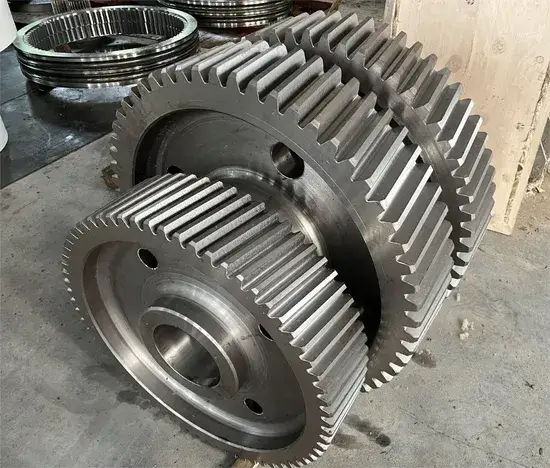
Gear accuracy grades define the tolerances and precision levels of gears based on international standards:
ISO 1328 (Most Common International Standard): Defines 12 accuracy grades from highest to lowest precision:
Grades 0 to 4: Ultra-precision (aerospace, metrology, optics)
Grades 5 to 6: High precision (automotive transmissions, robotics)
Grades 7 to 8: General industrial machinery
Grades 9 to 12: Low precision (agricultural equipment)
AGMA 2000 & AGMA 2015 (US Standard): Uses Q-numbers (Quality Grades) from Q3 to Q15:
Q7-Q9: Common for automotive gears
Q10-Q12: High-precision aerospace and military applications
DIN 3961/3962 (German Standard): Similar to ISO but with additional tolerance classifications
JIS B 1702 (Japanese Standard): Uses Grades 0 to 8 (Grade 0 = highest precision)
6.2 Key Accuracy Parameters
Accuracy grades are determined by measuring:
Tooth Profile Error: Deviation from ideal involute curve
Pitch Error: Variation in tooth spacing
Runout: Eccentricity of gear rotation
Lead Error: Deviation in tooth alignment
Surface Finish: Roughness affects noise and wear
6.3 Backlash and Transmission Error
Backlash is the slight movement between gear teeth before engagement. Lower backlash enables greater positioning accuracy, which is essential in robotics, CNC machinery, and precision motion control applications. Transmission error—the angular error of the gear in one revolution—must not exceed a certain range to ensure the accuracy of transmission movement.
6.4 Application-Specific Grade Selection
Automotive Transmission: ISO 6-7 (AGMA Q8-Q9)
Helicopter Gears: ISO 4-5 (AGMA Q11-Q12)
Conveyor Systems: ISO 8-9
Ultra-Precision Optics and Aerospace: ISO 1-3 (AGMA Q13-Q15)
7. The Critical Role of Bushings in Precision Gear Systems
Within any precision gear system, bushings—also known as plain bearings or sleeve bearings—serve as the essential interface between moving parts. Installed within a housing, a bushing provides a perfectly machined bearing surface for a shaft or pin, absorbing radial loads and facilitating smooth rotation. Without proper bushings, metal-on-metal contact would lead to rapid wear, increased vibration, and eventual catastrophic failure.
7.1 Functions of Bushings in Gear Systems
Radial Load Support: Absorb and distribute radial loads from gear shafts
Friction Reduction: Provide a low-friction bearing surface that minimizes wear
Alignment Maintenance: Ensure proper shaft alignment for optimal gear meshing
Lubrication Retention: Hold lubricant at the bearing interface
Vibration Damping: Absorb vibratory energy and reduce noise transmission
7.2 Bushing Failure Consequences
A bushing failure does not merely stop one machine; it halts an entire production line, triggers unplanned downtime, and drives up cost per part. Properly engineered bushings control friction, disperse loads, hold lubricant, and prevent metal friction. Their flatness, finish, and coating directly decide bearing performance and durability. Precision surface design and high-quality bearing parts greatly lower maintenance costs and extend equipment service life.
7.3 Material Considerations for Gear Bushings
Bronze Alloys: Excellent wear resistance and high compressive strength
Steel and Stainless Steel: Superior corrosion resistance and high-load capacity
Powder Metallurgy Materials: Enable complex shapes and self-lubricating properties
Polymer Plain Bearings: Offer improved damping properties and eliminate contact corrosion
8. Critical Applications Across Industries
Precision gears are indispensable components across a vast spectrum of industries, where they enable reliable, high-performance motion and power transmission.
8.1 Robotics and Industrial Automation
Precision gears are at the heart of many applications in industrial production. Robotic arms require extremely small and lightweight components that provide enormous transmission ratios to achieve precise gripping movements. Industrial robots, collaborative robots (cobots), mobile robots, and automated guided vehicles (AGVs) rely on precision gearboxes to ensure seamless operation with precise movement control.
Market Significance: The robotics sector contributed 35% of global precision gear market revenue in 2025, up from 33.6% in 2021. By 2030, robotics is projected to account for 46.3% of the global precision gear products market. The humanoid robot sector alone grew five-fold by the end of 2025, with global production expanding from under 2,000 units to over 10,000 units.
8.2 Automotive Industry
Precision gears are widely used in transmissions, differentials, and steering systems, offering quiet operation and enhanced load distribution. The surge in electric vehicle (EV) production has led to an increased requirement for high-efficiency gear solutions that enhance power transmission while minimizing energy loss. Precision gears contribute to reduced noise, improved fuel efficiency, and enhanced vehicle reliability.
8.3 Aerospace and Defense
Precision gears are employed in aircraft engines, landing gear mechanisms, and flight control systems. The aerospace industry integrates precision gearboxes in actuation systems, satellite positioning, and flight control mechanisms. Applications span commercial aircraft, helicopters, and military aircraft, each demanding distinct qualification protocols and environmental survivability. Precision gears also serve critical roles in missile guidance systems, naval applications, and space exploration equipment.
8.4 Medical Technology
Surgical robots and surgical microscopy place the highest demands on precision. Precision gears enable high repeatability, low breakaway torque, and sensitive force control. Custom precision gearboxes stabilize and shape every instrument movement, allowing surgeons to access delicate or previously unreachable anatomical regions. These components are critical for robotic-assisted surgery, minimally invasive procedures, and the development of advanced neural implants. Precision gears are also utilized in MRI machines and prosthetic limbs, where precise movement and compact designs are essential.
8.5 Energy and Power Generation
Wind turbines require high-torque gearboxes to efficiently convert kinetic energy into electricity. Precision gears are also essential in natural gas turbines and other power generation equipment. The energy sector’s increasing demand for reliable, efficient power transmission continues to drive innovation in precision gear technology.
8.6 Semiconductor Manufacturing
Precision gearing is critical in processing equipment that grows silicon crystals used in semiconductor manufacturing. The extreme precision required in semiconductor fabrication demands gears with minimal backlash and exceptional accuracy.
8.7 Other Key Industries
Additional applications include optical equipment, marine systems, mining operations, steel rolling mills, construction equipment, defense industries, instrumentation, and actuation systems. Precision gears enable the precise, reliable operation required in these demanding environments
9.Frequently Asked Questions
Q1: What distinguishes precision gears from standard gears?
Precision gears maintain tolerances up to ten times tighter than standard gears. A precision gear typically achieves a tooth profile error of less than 0.005 mm, while a standard gear may have up to 0.05 mm. Precision gears also exhibit higher rigidity, lower backlash, and superior surface finish.
Q2: What are the most common types of precision gears?
The most common types include spur gears, helical gears, double helical gears, herringbone gears, bevel gears, worm gears, planetary gears, cycloidal gears, and Harmonic Drive® gearboxes. Each type offers distinct advantages for specific applications and shaft orientations.
Q3: What industries rely most heavily on precision gears?
Precision gears are critical in robotics and industrial automation (35% of global market revenue), automotive (particularly EVs), aerospace and defense, medical technology, energy and power generation, semiconductor manufacturing, marine systems, and instrumentation.
Q4: What is backlash and why does it matter?
Backlash is the slight movement between gear teeth before engagement. Lower backlash enables greater positioning accuracy, which is essential in robotics, CNC machinery, and precision motion control applications.
Q5: What manufacturing processes produce precision gears?
Key processes include gear hobbing, shaping, shaving, grinding, honing, lapping, broaching, CNC turning, and CNC milling. Precision grinding produces superior surface finishes that enhance performance. Advanced methods include additive manufacturing, powder metallurgy, and precision forging.
Q6: What accuracy standards apply to precision gears?
International standards include ISO 1328 (12 grades, most common), AGMA 2000 & 2015 (Q3-Q15, US standard), DIN 3961/3962 (German standard), and JIS B 1702 (Japanese standard).
Q7: What heat treatment processes are used for precision gears?
Common heat treatment processes include normalizing, tempering, carburizing, nitriding, induction hardening, and carburizing quenching. These processes enhance wear resistance, fatigue strength, and surface hardness.
Q8: What role do bushings play in gear systems?
Bushings provide a machined bearing surface that supports shafts, absorbs radial loads, reduces friction, and prevents metal-on-metal contact. They are essential for preventing wear, reducing vibration, and extending equipment service life.
Q9: What materials are used in precision gear manufacturing?
Common materials include alloy steels (such as 20CrMnTi and SAE 4140), carbon steel, stainless steel for corrosion resistance, bronze alloys, titanium alloys for lightweight high-strength applications, and polymers for noise reduction.
Q10: How does lubrication affect precision gear performance?
Lubrication reduces friction on interlocking gear surfaces, dampens radioactive noise, and absorbs vibratory energy during meshing. Lubricant viscosity affects vibration mitigation and dynamic transmission error.
Q11: What is the market outlook for precision gears?
The global precision gearbox market is projected to reach USD 7.86 billion by 2033, growing at a CAGR of 10.6%. The robotics sector is expected to account for 46.3% of the market by 2030.
Q12: What are the key trends shaping the precision gear industry?
Key trends include Industry 4.0 integration, smart manufacturing with real-time monitoring, sustainable materials and lightweight alloys, data-driven design using AI, digital twins for virtual testing, and emerging applications in humanoid robots and electric vehicles
MYWAY Bushings: Precision Engineered for Demanding Gear Applications
At MYWAY, bushing manufacturing is approached not as a commodity business but as an engineering discipline. With over 20 years of experience, three vertically integrated production bases in Zhejiang province totaling 35,000 m², and IATF 16949 and ISO 9001 certifications, MYWAY delivers precision plain bearings that outperform industry benchmarks.
Uncompromising Manufacturing Precision: MYWAY utilizes state-of-the-art CNC machining centers to manufacture bushings with extraordinarily tight tolerances. For complex geometries—including flanged bushings, split designs, and parts with integrated oil grooves—advanced 5-axis CNC capabilities provide unmatched flexibility and accuracy. This commitment to precision results in components that reduce vibration, improve alignment, and dramatically extend the service life of entire gear systems. The integrated manufacturing process follows a meticulous workflow from sheet sorting through automatic rolling, punch blanking, and precision chamfering operations.
Advanced Material Expertise: MYWAY offers expertise across the full spectrum of high-performance alloys, including bronze alloys with excellent wear resistance and high compressive strength, steel and stainless steel variants with superior corrosion resistance and high-load capacity, and powder metallurgy materials enabling complex shapes and self-lubricating properties. This comprehensive material selection ensures optimal performance in every operating environment.
Comprehensive Product Range: MYWAY manufactures a diverse range of precision bushings, including cylindrical straight sleeves, flanged bushings with integrated axial load support, grooved bushings with lubrication channels, split two-piece designs, and thrust washers for pure axial load applications. Special shaped bushings are also available for applications where standard geometry is insufficient.
Why Choose MYWAY Bushings:
Reduced vibration and improved gear alignment
Extended equipment service life
Lower maintenance costs and reduced unplanned downtime
Engineered solutions for demanding gear applications
Rigorous quality certifications (IATF 16949, ISO 9001)
When precision gears require reliable support, precise alignment, and extended service life, MYWAY bushings deliver the performance and durability that demanding applications demand. For engineers and procurement specialists, selecting MYWAY as a partner is not merely a purchase—it is a strategic investment in reliability and operational excellence.
Contact MYWAY Today
For precision bushing solutions engineered to meet the most demanding gear applications, contact MYWAY. With unparalleled manufacturing precision, comprehensive material expertise, and a commitment to engineering excellence, MYWAY is your trusted partner for reliable, high-performance bushing components. Inquire now to discuss your specific requirements and discover how MYWAY bushings can enhance the performance and longevity of your precision gear systems.
100000+ Types of Bushings – Contact Us for Details