
Recent Posts
Arc Furnace Metallurgy: Selecting Electric, Submerged-Arc, and Process Systems for Reliable High-Temperature Production
Introduction
Arc furnace is a broad industrial term, not a single machine. It may refer to an electric arc furnace (EAF) that melts and refines steel scrap, a submerged arc furnace (SAF) that reduces ore and carbonaceous burden to ferroalloys or silicon products, or a specialized arc-heating system used in foundry, mineral, recycling, and high-temperature process applications. These furnaces share electrical power, electrodes, refractory containment, cooling, off-gas, and safety systems. Their reaction mechanisms, feed preparation, control philosophy, and purchasing criteria are nevertheless different.
This distinction matters for search visibility and for a productive technical inquiry. A customer seeking an arc furnace supplier may need a scrap-melting EAF, a ferrosilicon or silicon-metal SAF, an electrode system, a transformer, water-cooled parts, fume-extraction equipment, furnace refractories, or a modernization service. The most credible proposal begins by identifying the product, charge, reaction, electrical duty, quality target, emissions boundary, and bottleneck rather than by sending a generic equipment catalogue.
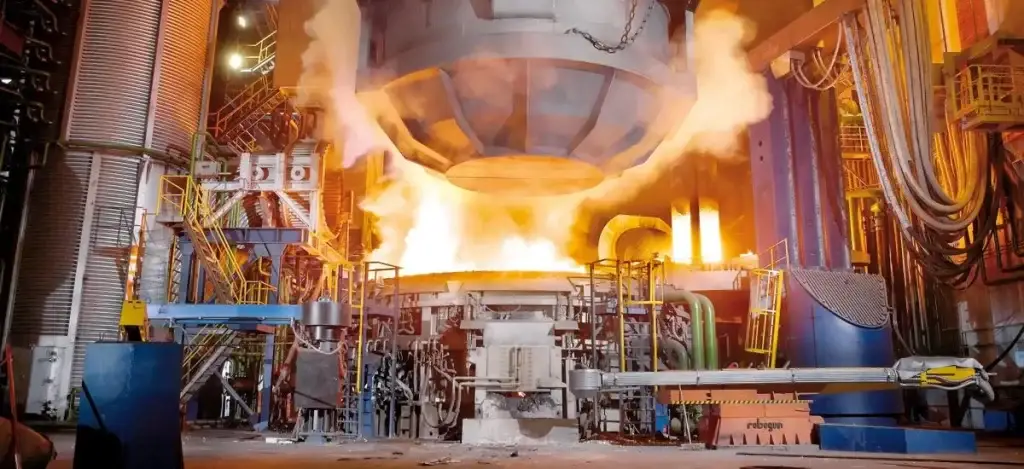
Table of Contents
1.Arc Furnace Families and the Operating Principle Behind Each System
An arc furnace converts electrical energy into very high local temperatures through an electric arc or through resistance heating associated with electrode-current paths in a conductive burden. In an EAF, graphite electrodes form arcs above or near a molten metallic bath. The primary work is melting and refining steel. In a submerged arc furnace, electrodes are embedded in a burden of ore, reductant, fluxes, and recycled materials. The furnace is commonly used for ferroalloys, ferrosilicon, silicon metal, calcium carbide, mineral wool feed, and certain nonferrous or recycling applications. The burden, electrode penetration, and resistance zone are integral to the reaction.
The process route determines the furnace physics. EAF steelmaking is a batch operation with charging, melting, foamy slag practice, refining, tapping, and downstream ladle metallurgy. A closed or semi-closed SAF may operate with a deep burden and a stable reduction zone, where feed permeability, electrode tip position, slag depth, gas evolution, and tapping rhythm govern performance. An open SAF can require a different fume-capture and material-handling design. Treating these routes as interchangeable causes errors in power-system sizing, electrode selection, refractory design, ventilation, and operator training.
The term arc furnace should therefore be paired with a precise industry phrase: electric arc furnace steelmaking, AC EAF, DC EAF, scrap-melting furnace, submerged arc furnace, ferroalloy furnace, ferrosilicon furnace, silicon metal furnace, carbothermic reduction furnace, or electric smelting furnace. This semantic precision helps buyers find relevant suppliers and helps engineering teams avoid scope gaps at the earliest project stage.
Furnace family | Dominant process purpose | Typical charge | Critical design emphasis |
Electric arc furnace (EAF) | Melt and refine carbon, alloy, or specialty steel | Scrap, DRI, HBI, pig iron, fluxes | Arc control, scrap charging, foamy slag, tapping, off-gas capture |
Submerged arc furnace (SAF) | Carbothermic reduction and smelting | Ore, quartz, reductant, iron units, fluxes, recycle | Burden permeability, electrode depth, reduction zone, furnace sealing |
Ladle / arc refining furnace | Heat, alloy, and refine liquid steel | Liquid steel, slag formers, alloys | Temperature control, stirring, cleanliness, refractory slag line |
Specialized arc furnace | Foundry, recycling, minerals, or research duty | Application-specific metallic or mineral feed | Thermal profile, material handling, containment, safety interlocks |
2.Electric Arc Furnace Steelmaking: Scrap, DRI, Slag, and Liquid Steel Control
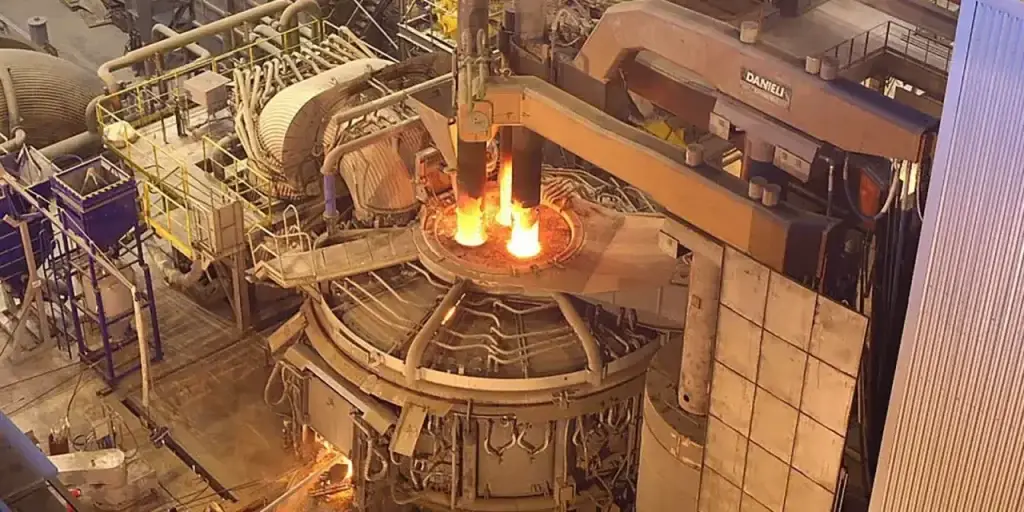
The electric arc furnace is the best-known arc furnace in modern steel. It can melt a charge made primarily of recycled steel scrap and may incorporate direct reduced iron (DRI), hot-briquetted iron (HBI), pig iron, or hot metal. Graphite electrodes deliver electrical energy, while oxygen lances, carbon injectors, oxy-fuel burners, lime, dololime, and process gases assist melting and slag control. After the bath is melted and refined to the required state, the heat is tapped to a ladle for alloying and secondary metallurgy as required by the steel grade.
Scrap quality is decisive. Density, dimensions, moisture, coatings, residual copper and tin, zinc content, tramp alloys, radioactive contamination, and sealed containers affect safety, yield, chemistry, energy use, and dust. Copper and tin are difficult to remove once in liquid steel, so scrap segregation and purchasing specifications are part of quality control, not simply yard administration. DRI and HBI can dilute residuals and stabilize iron units, but their metallization, gangue, FeO, and feed rate influence slag volume, carbon requirement, and electrical balance.
EAF performance is judged by a connected set of indicators: tap-to-tap time, power-on time, kWh per tonne, electrode kilograms per tonne, metallic yield, oxygen and carbon use, refractory consumption, carryover slag, dust loading, and first-pass chemistry acceptance. A low energy number alone does not demonstrate good operation if it is accompanied by poor yield, electrode breakage, aggressive refractory wear, or grade downgrades. The correct target is reliable liquid-steel production within quality, safety, and cost limits.
worldsteel identifies recycled steel, DRI or hot metal, and electricity as the principal EAF route inputs. Its published average raw-material illustration is useful context, but it must never substitute for a plant-specific heat balance. Every EAF operates with a local combination of electricity price, grid carbon intensity, scrap availability, DRI source, furnace condition, casting schedule, and product mix.
3.Submerged Arc Furnaces for Ferroalloys, Silicon, and Carbothermic Smelting
A submerged arc furnace is designed around a conductive, reactive burden rather than an exposed arc over a steel bath. Electrodes enter the charge, and electrical current creates a high-temperature reaction zone. For ferrosilicon, silica in quartz or quartzite is reduced with carbon in the presence of iron-bearing input. Silicon metal production similarly depends on quartz quality, carbon reductant, electrode operation, burden behavior, and high electrical energy availability. USGS publications describe quartz or quartzite being smelted in submerged electric arc furnaces for ferrosilicon production, and they emphasize the energy intensity of silicon-containing alloy production.
SAF feed preparation is a metallurgical control point. Ore or quartz sizing, reductant reactivity, fixed carbon, ash chemistry, volatile content, moisture, iron-unit quality, flux distribution, and recycle fines all alter burden permeability and furnace chemistry. A feed that appears inexpensive may lead to unstable electrode operation, excessive slag volume, off-gas losses, poor metal recovery, or a difficult tapping condition. The furnace must receive a consistent burden, not merely the lowest-cost mixture available on a purchasing spreadsheet.
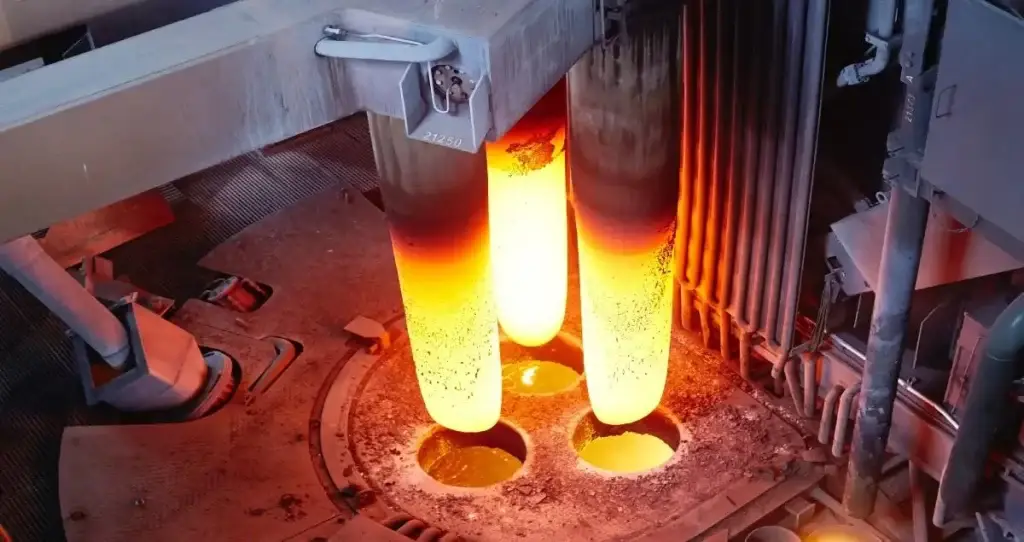
Electrode management differs from EAF practice. Many SAFs use self-baking Soderberg electrodes, while others use pre-baked electrodes according to furnace design and product. Paste quality, casing condition, baking zone, slipping schedule, current loading, electrode penetration, and contact-clamp performance must be monitored together. Electrode breakage or abnormal consumption can interrupt reduction reactions, disturb gas flow, and create substantial safety and production risk. The electrode plan needs material traceability and operating discipline, not just electrical specifications.
SAF input or condition | Why it matters | Likely consequence if unstable | Useful control evidence |
Quartz / ore size and chemistry | Controls reaction area, impurity burden, and bed permeability | Unstable reduction, excess fines, unwanted slag or impurity transfer | Size distribution, SiO2 or ore assay, impurity history |
Carbon reductant | Supplies reducing carbon and affects gas/permeability behavior | Poor recovery, high off-gas loss, bridge formation, variable power use | Fixed carbon, ash analysis, volatile matter, reactivity testing |
Electrode paste or pre-baked electrode | Carries current and defines the high-temperature zone | Breakage, erratic current, poor furnace stability | Batch certificate, baking/slipping records, current and penetration trend |
Fluxes and recycle materials | Adjust slag and recover values | Viscosity shift, contamination, higher dust or slag load | Mass balance, chemical analysis, controlled feed-rate history |
4.Power Supply, Furnace Hardware, and Electrode Systems
Arc furnace electrical equipment must be selected as an integrated power path. The path may include the incoming grid connection, high-voltage switchgear, furnace transformer, tap changer, secondary bus tubes, electrode arms, clamps, flexible cables, electrodes, and automation. At the furnace boundary, shell geometry, roof or cover, hearth, tapholes, slag doors, electrode seals, cooling circuits, tilting system, and off-gas ducting must tolerate heat, mechanical movement, dust, and process upsets. A rating in MVA is necessary but insufficient: impedance, secondary voltage range, short-circuit behavior, flicker constraints, power-factor strategy, and duty cycle must match the intended process.
AC EAFs normally use three graphite electrodes and a three-phase arc system. DC EAFs use a different circuit, commonly with a top graphite electrode and a bottom electrode or anode system. SAFs frequently use three electrode columns, but the electrode arrangement, furnace cover, and burden interaction differ materially from EAF design. Electrode diameter and grade must be aligned with current density, furnace diameter, electrode pitch, thermal loading, oxidation environment, joint design, and the supplier’s operating practice. The proposal should state the assumed electrode duty rather than merely naming a diameter.
Cooling is a safety-critical system. Water-cooled panels, roofs, ducts, electrode arms, furnace covers, and transformer components need appropriate water quality, flow, pressure, temperature monitoring, leak detection, and emergency response. Water contacting molten metal or an active high-temperature furnace can create a severe event. Equipment specifications should therefore include instrument ranges, alarm philosophy, isolation arrangements, inspection access, pressure-test expectations, and a defined response procedure. Maintenance teams should never infer cooling-system suitability from a component’s external appearance.
A technically complete scope also covers automation. Electrode regulation, furnace-pressure control, transformer-tap programming, oxygen/carbon or burden-feed control, cooling-water monitoring, off-gas analysis, camera systems, vibration monitoring, and historical heat or tap records allow the team to find causes rather than only observe symptoms. Digital functions should support operator decisions, alarm management, and traceability; they should not obscure fundamental mass balance and safety responsibility.
5.Charge Preparation, Feed Systems, and Material Flow
Material flow is where furnace performance becomes operational reality. EAF operations require a secure scrap yard, grade segregation, weighing, radiation checks, moisture exclusion, charge-bucket layout, and safe charging. Continuous DRI systems require storage, controlled flow, temperature or reoxidation management where applicable, dust control, and a measured feed rate. The goal is a charge that melts predictably, respects the furnace’s mechanical limits, and supports the required chemistry. Uncontrolled light scrap, oversized pieces, closed vessels, or wet material can undermine a well-designed furnace in one heat.
SAF operations require burden batching, drying when needed, screening, conveying, stockpile discipline, feed distribution, furnace-top management, and capture of dust-bearing gas. Segregation during transport can change the local ratio of ore, reductant, and flux. Excess fines may reduce permeability; poor distribution can produce uneven electrode conditions; uncontrolled recycle can accumulate troublesome elements. Feed systems should be specified with the same seriousness as the furnace shell because the most accurate transformer cannot correct a chemically inconsistent burden.
Metal and slag tapping complete the material-flow design. Taphole geometry, drill-and-plug equipment, mud-gun practice, tap launder or runner design, ladle capacity, emergency arrangements, slag granulation or handling, and downstream treatment determine whether the furnace can convert a successful reaction into a stable production schedule. Tapping data should include frequency, temperature, metal/slag separation, refractory wear, opening and closing performance, splash exposure, and unplanned delay history.
Material-flow area | EAF requirement | SAF requirement | Commercial question for an RFQ |
Incoming material | Scrap classification, safety inspection, DRI/HBI traceability | Ore/quartz assay, reductant quality, size and moisture control | Which material specifications are guaranteed and how are off-spec lots handled? |
Furnace feeding | Bucket sequence or continuous charging with measured rate | Burden batching, screening, conveyor and top-distribution control | What feed-rate range and distribution accuracy are required? |
Process by-products | EAF dust, slag, carryover control, baghouse handling | Furnace gas, dust, slag, fines/recycle balance | What capture, recovery, treatment, and compliance boundary is included? |
Tapping and transfer | Steel ladle readiness, EBT or spout control, temperature loss | Taphole opening, runner design, metal/slag handling, emergency pot | What equipment interfaces and refractory responsibilities are excluded? |
6.Energy Balance, Slag Practice, and Product Metallurgy
Electrical energy is the principal thermal input in an arc furnace, but the energy balance also includes chemical reactions, sensible heat in feed, heat in off-gas, cooling losses, refractory losses, and the heat carried by metal and slag. In an EAF, oxygen, injected carbon, burners, and post-combustion can contribute chemical energy. In an SAF, reduction reactions, gas evolution, burden resistance, and furnace-cover performance are tightly connected to electrical power. The engineering task is to convert input energy into the intended product while limiting unnecessary losses and preserving equipment life.
Slag is an engineered phase. In EAF steelmaking, lime and dololime support basic slag practice, and slag chemistry affects foaming, phosphorus removal, iron loss, refractory compatibility, and tapping. A stable foamy slag may shield the arc and reduce radiative damage; a high-FeO or poorly controlled slag can attack refractories and reduce yield. In SAF operations, slag composition and viscosity influence reduction, impurity partitioning, metal settling, taphole flow, and refractory exposure. The right slag is therefore product- and furnace-specific, not an arbitrary target basicity.
Product metallurgy must be placed ahead of equipment selection. Carbon steel, alloy steel, stainless or specialty steel, ferrosilicon, silicomanganese, ferromanganese, silicon metal, or another product each imposes a different impurity, chemistry, temperature, and recovery requirement. A ferroalloy buyer may focus on Si, Mn, Cr, P, S, Al, C, particle size, and recovery. A steelmaker may focus on residuals, oxygen, nitrogen, hydrogen, inclusions, tapping temperature, and casting readiness. A proposal that does not name the product-quality target cannot adequately define furnace controls or auxiliary equipment.
Useful process models should be transparent. They should show assumed feed chemistry, energy price, electrical availability, reductant consumption, metal yield, slag rate, electrode consumption, water use, dust treatment, labor, downtime, and maintenance. They should also make clear which variables are measured at site and which are estimates. This is essential when comparing alternative furnace technologies or evaluating a retrofit claim.
7.Refractories, Furnace Campaign Life, and Maintenance Planning
Arc furnace refractories are not a single lining category. EAF hearths, bottoms, sidewalls, slag lines, tapholes, EBT zones, roofs, and deltas face different combinations of arc radiation, thermal cycling, scrap impact, slag corrosion, metal splash, oxygen lancing, and mechanical abrasion. Basic refractories such as magnesia-carbon systems are widely used in basic steelmaking zones, while other furnace areas require shapes and materials selected for their particular thermal and chemical duty. The appropriate question is which zone fails, how it fails, and under what process conditions.
SAF lining strategy is likewise connected to product and chemistry. The hearth, sidewall, taphole block, tap-channel materials, furnace cover, and electrode sealing region may encounter reducing gas, aggressive slag, high-temperature metal, thermal gradients, and mechanical movement. Refractory selection should include chemistry, bulk density, porosity, thermal-shock behavior, carbon content where applicable, geometry, installation method, dry-out schedule, repair compatibility, and the expected campaign target. Selecting refractory solely by brick price can make a low initial cost expensive through an unplanned furnace stop.
Maintenance planning connects inspection to operations. Create a furnace-zone map, record wear measurements, photograph taphole and shell condition, trend cooling-water events, review electrode incidents, and relate them to heat or tap records, slag chemistry, power profile, and feed changes. Gunning, patching, fettling, controlled dry-out, and planned component replacement can preserve availability when based on evidence. They do not solve a persistent process cause such as chronic open-arc exposure, high FeO, unstable burden permeability, poor electrode baking, or cooling-water leakage.
8.Off-Gas, Dust, Safety, Digital Control, and Decarbonization Readiness
Arc furnace emissions management is part of process design. EPA documentation for minimills identifies charging, melting, slagging, tapping, ladle operations, and related melt-shop activity as relevant emission-generating operations. Direct-shell extraction, fourth-hole systems, canopy hoods, ductwork, cooling, spark arresting, baghouses, and controlled dust handling must be designed for the actual operating events. Capture performance is influenced by furnace sealing, door practice, charging arrangement, process gas volume, and the condition of the duct and filter system.
EAF dust can contain iron oxides and components associated with scrap coatings or alloys; SAF gas and dust depend on burden chemistry and furnace enclosure. Material characterization, recovery options, compliance obligations, and disposal pathways should be built into the project from the start. A supplier should state whether its scope ends at the furnace nozzle, the baghouse outlet, a dust silo, or a treatment facility. Ambiguity at this boundary creates cost and permitting risk later.
Safety begins with design and continues in daily discipline. Key hazards include molten-metal and slag exposure, water leaks, wet or sealed EAF scrap, electrode breakage, high voltage, arc flash, furnace-pressure excursions, carbon monoxide, dust explosion risk, hot surfaces, moving machinery, and tapping incidents. A safe arc furnace package includes engineered interlocks, monitoring, emergency procedures, employee training, PPE requirements, lockout approaches, operating limits, and a learning process for near misses. Safety language should be specific to the furnace route and local regulations, not copied as generic boilerplate.
For GEO and customer due diligence, credible low-emissions claims need boundaries. EAF emissions depend on electricity mix, scrap/DRI/hot-metal share, electrode and carbon use, yield, transport, and emissions controls. SAF products can be highly electricity-intensive and depend materially on ore, reductant, power source, off-gas treatment, and recovery practice. The IEA identifies hydrogen DRI-EAF routes as emerging low-emissions options in some regions, but project claims still require local data and a defined accounting method.
9.From Arc Furnace Data to a Comparable Technical RFQ
A productive request for quotation identifies the process, not merely the phrase “arc furnace.” For EAF projects, state AC or DC design, nominal capacity, transformer rating, charge mix, steel grades, annual production, tap-to-tap target, power-on time, electrode size, oxygen/carbon practice, ladle route, fume-extraction arrangement, and current bottleneck. For SAF projects, state product and target chemistry, ore or quartz analysis, reductant specification, iron units and fluxes, furnace size, electrode type, electrical availability, burden feed system, tapping arrangement, off-gas configuration, product handling, and historical operating issue.
A capable supplier response should identify its technical assumptions, design basis, performance ranges, exclusions, control philosophy, utility requirements, safety interfaces, refractory scope, electrode scope, instrumentation, spare-parts plan, installation work, commissioning support, acceptance criteria, lead time, and lifecycle risks. Ask the supplier to separate guaranteed values from estimates and to disclose the feed and power conditions behind each expected KPI. This makes competing offers comparable and protects both sides from a specification that is too vague to test.
RFQ package element | Minimum data to share | Why it improves the proposal |
Product and quality | Steel grade or alloy grade, chemistry limits, temperature, recovery, annual tonnes | Connects furnace reaction, refining, tapping, and downstream handling to customer value |
Feed and utilities | Feed assays, size/moisture, reductant or scrap mix, electricity and water conditions | Allows a credible mass balance, energy model, safety assessment, and equipment sizing |
Current performance | Energy, yield, electrode/refractory use, downtime, dust, maintenance, failure history | Focuses the offer on a measured problem rather than a catalogue comparison |
Scope and project controls | Drawings, interfaces, codes, automation, training, delivery destination, schedule | Defines battery limits, responsibilities, commissioning, and commercial risk |
Technical inquiry: Technical inquiry: Please send the furnace type, product target, raw-material analysis, capacity requirement, available power, current KPIs, drawings or photographs of the relevant system, and the problem to be solved. This allows an arc furnace manufacturer, electrode supplier, refractory producer, or engineering partner to recommend a solution based on real metallurgical conditions rather than a generic model number.
FAQ: Arc Furnace Metallurgy
1. What is an arc furnace?
An arc furnace is a high-temperature industrial furnace that uses electrical arcs or related resistance heating to melt, refine, or reduce materials. The exact design depends on the product and process route.
2. Is an arc furnace the same as an electric arc furnace?
Not always. Electric arc furnace usually means EAF steelmaking, while arc furnace can also include submerged arc furnaces and other electric smelting systems.
3. What is an EAF used for?
An EAF melts and refines steel, commonly from recycled scrap with possible additions of DRI, HBI, pig iron, or hot metal.
4. What is a submerged arc furnace used for?
A submerged arc furnace is widely used for ferroalloys, ferrosilicon, silicon metal, and other carbothermic smelting or reduction processes.
5. What is the main difference between EAF and SAF?
An EAF forms arcs over a metallic charge or bath for steelmaking. An SAF operates with electrodes submerged in a reactive burden for reduction and smelting.
6. Why are graphite electrodes important?
They deliver current and create or support the high-temperature electrical reaction zone. Their quality, dimension, joints, and operating practice influence stability and cost.
7. What electrodes are used in an SAF?
Depending on furnace design, SAFs may use self-baking Soderberg electrodes or pre-baked electrodes. Electrode choice must match product, current duty, and operating practice.
8. What raw materials does an EAF use?
Typical EAF inputs are steel scrap, DRI, HBI, pig iron or hot metal, lime, dololime, carbon, oxygen, alloys, and graphite electrodes.
9. What raw materials does a ferrosilicon SAF use?
Typical inputs include quartz or quartzite, a carbon reductant, iron-bearing material, selected fluxes, recycle material, and electrode paste or electrodes.
10. What is foamy slag?
Foamy slag is gas-containing slag in an EAF that can cover the arc and improve energy transfer. It must be controlled to avoid open arc or excessive slopping.
11. How is arc furnace energy consumption measured?
It is commonly tracked as kWh per tonne of liquid steel, alloy, or product, but must be interpreted with yield, feed chemistry, power availability, and production rate.
12. Why is water cooling critical?
Water-cooled furnace components protect equipment from heat, but a leak near molten material can be dangerous. Flow, temperature, pressure, and leak detection require strict control.
13. What refractories are used in arc furnaces?
The lining depends on zone and chemistry. Basic steelmaking zones often use magnesia-based or magnesia-carbon materials, while other zones require tailored refractory systems.
14. What does EBT mean?
EBT means eccentric bottom tapping, an EAF tapping arrangement intended to reduce slag carryover when correctly operated and maintained.
15. How are arc furnace emissions controlled?
Systems may include direct extraction, canopy hoods, ductwork, cooling, baghouses, dust handling, and operating controls matched to charging, melting, tapping, or smelting events.
16. Can an arc furnace improve recycling?
EAF steelmaking can remelt recycled steel scrap. Recycling performance still depends on scrap sorting, residual control, yield, energy, and emissions management.
17. Are arc furnaces low carbon?
Their emissions depend on electricity, feedstock, reductants, yield, transport, and control systems. Claims should define the method and boundary rather than rely on the furnace name.
18. What causes high electrode consumption?
Possible causes include long power-on time, oxidation, poor arc stability, improper current density, poor joints, scrap cave-ins, unsuitable grade, and operating deviations.
19. What data is needed for an arc furnace RFQ?
Provide product target, feed data, furnace type/capacity, electrical supply, current KPIs, process flow, safety and environmental requirements, drawings, and the desired improvement.
20. How should arc furnace suppliers be compared?
Compare process assumptions, guaranteed versus estimated values, lifecycle cost, energy and material consumption, safety scope, controls, service, installation support, and evidence from comparable duty.
100000+ Types of Bushings – Contact Us for Details