
Recent Posts
Electrical Steel: Silicon-Iron Metallurgy, Core Loss Control, Lamination Quality, and Global Procurement
Introduction
Electrical steel, also called silicon steel, electrical silicon steel, lamination steel, or magnetic steel, is an iron-silicon soft magnetic material engineered for transformer cores, motors, generators, reactors, and electromagnetic devices. Its commercial value comes from low core loss, high permeability, controlled magnetic flux density, thin-gauge rolling, insulating coating, and repeatable processing. A correct specification must address orientation, grade, thickness, magnetic test condition, coating, width, edge condition, stamping route, annealing, packing, and traceability.
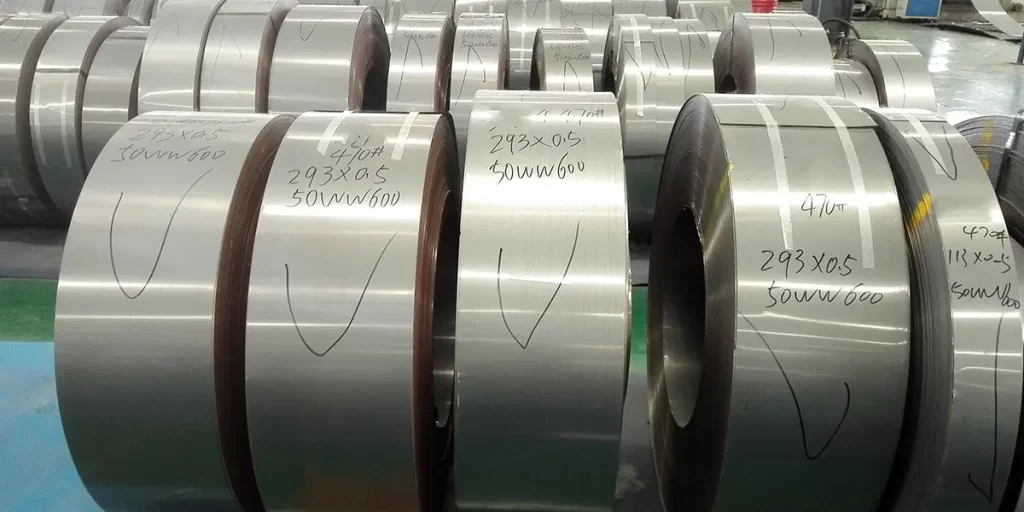
Table of Contents
1. Electrical Steel Definition and Magnetic Value
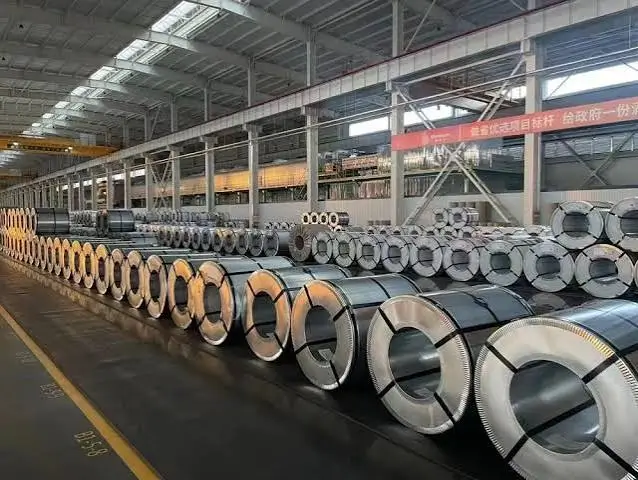
Electrical steel is a soft magnetic iron-silicon alloy designed to reduce energy loss in alternating magnetic fields. High silicon content and controlled processing increase electrical resistivity, improve magnetic permeability, and reduce core loss. World Steel Association materials identify electrical steel as a critical material for generators, motors and transformers. It is supplied as thin flat-rolled strip or sheet, then cut, stamped, laser cut, stacked, bonded, welded or interlocked into laminations. The material must be selected for the magnetic circuit, frequency, flux density, mechanical process and delivery form rather than by a generic silicon steel name alone. Procurement decisions should use the actual machine duty and approved magnetic test data.
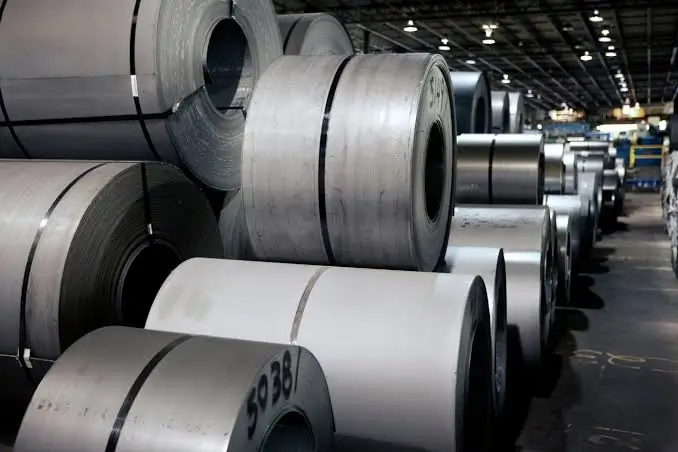
Grain-oriented electrical steel, GOES or CRGO, develops a preferred crystallographic texture and is mainly used in transformer magnetic circuits where flux follows the rolling direction. Non-oriented electrical steel, NOES, NGOES or CRNO, is engineered for more similar magnetic response in multiple in-plane directions and is used in rotating machines such as motors and generators. IEC 60404-8-7 identifies grain-oriented grades and thicknesses including 0.23, 0.27, 0.30 and 0.35 mm. The orientation choice is a design decision, not a price category. Procurement decisions should use the actual machine duty and approved magnetic test data.
Silicon, aluminum, carbon, nitrogen, sulfur, inclusions, grain size, texture and residual stress all influence electrical-steel behavior. ASTM A677 covers flat-rolled nonoriented fully processed electrical steel for commercial power-frequency magnetic devices and describes low-carbon silicon-iron or silicon-aluminum-iron alloys containing up to about 3.5 percent silicon. Steelmaking cleanliness, hot rolling, cold rolling, decarburization, annealing, coating and tension control determine whether this metallurgy becomes useful magnetic performance. A mill certificate must be linked to the finished grade and test condition. Procurement decisions should use the actual machine duty and approved magnetic test data.
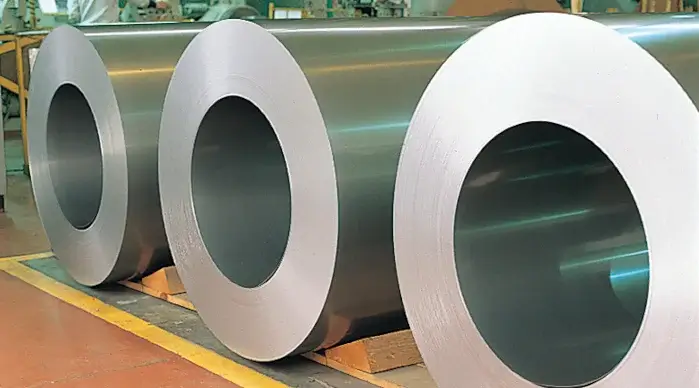
Core loss includes hysteresis and eddy-current contributions, while permeability describes the material response to magnetizing field. These properties change with frequency, peak flux density, thickness, direction, stress, temperature, coating and test method. ASTM A677 grades are based on maximum core loss at defined 60 Hz and 1.5 T Epstein-test conditions. Buyers should never compare a loss number without confirming the frequency, flux density, specimen direction, test method and stated limit. The lowest published loss is not automatically the best option for every motor or transformer design. Procurement decisions should use the actual machine duty and approved magnetic test data.
2. Grain-Oriented and Non-Oriented Electrical Steel
Thinner electrical-steel laminations reduce eddy-current path length and can improve high-frequency performance, but they increase rolling, handling, stamping and stacking sensitivity. Insulating coatings electrically separate adjacent laminations, suppressing interlaminar current. Coating adhesion, insulation resistance, punchability, weldability and stress-relief compatibility are all functional requirements. Burrs, edge damage, excessive punching deformation, shorts between sheets, and coating loss can increase assembled-core loss even when the incoming coil certificate is compliant. Procurement decisions should use the actual machine duty and approved magnetic test data.
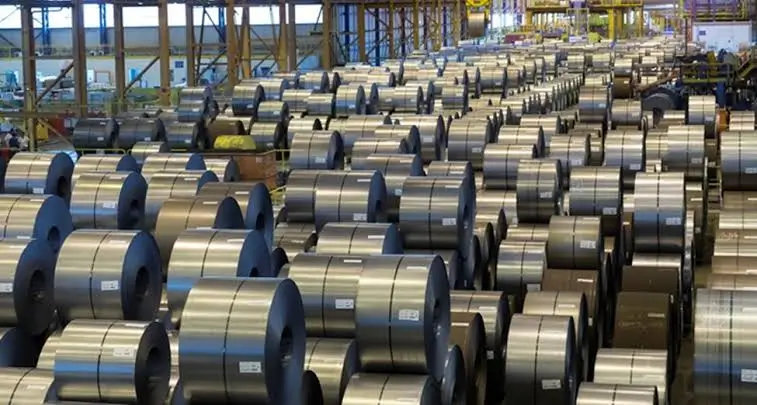
Cutting and assembly introduce mechanical stress that degrades magnetic properties. Stamping, notching, laser cutting, shearing, interlocking, welding and clamping should be qualified for the grade and core geometry. Some applications use a stress-relief anneal after punching; others use fully processed material without an additional customer anneal. The route must be confirmed with the selected grade. A supplier should identify coil orientation, rolling direction, slitting condition, camber, edge quality, coating type, oiling, packing and whether the product is intended for stamping or final lamination assembly. Procurement decisions should use the actual machine duty and approved magnetic test data.
Quality assurance should combine chemistry, thickness, width, flatness, coating condition, surface quality and magnetic test data. Applicable documents may include ASTM A677 for nonoriented fully processed types, ASTM A1086 for thin-gauge nonoriented grades, ASTM A876 for grain-oriented silicon-iron steel, and IEC 60404 series requirements. Standards establish common language, but the purchase order must state the controlling revision, test method, acceptance value, sampling plan, certificates and permitted manufacturing deviations. Magnetic grade names are not universal across mills. Procurement decisions should use the actual machine duty and approved magnetic test data.
Type | Magnetic behavior | Typical use |
GOES / CRGO | Preferred rolling-direction texture | Power and distribution transformers |
NOES / NGOES | More balanced in-plane response | Motors, generators, EV traction |
Thin-gauge NOES | Lower eddy-current path | High-frequency rotating machines |
Transformers use GOES because directionally optimized magnetic behavior reduces core loss in the intended flux path. Motors and generators commonly use NOES because rotating flux requires balanced in-plane response. EV traction motors increasingly demand thin high-frequency nonoriented electrical steel to manage efficiency and heat at elevated speed. Electrical steel also serves reactors, relays, sensors, appliances, power tools and industrial drives. Application selection must balance loss, permeability, saturation, thickness, mechanical strength, coating and production yield. Procurement decisions should use the actual machine duty and approved magnetic test data.
3. Silicon-Iron Metallurgy and Magnetic Microstructure
A quote-ready RFQ states GOES or NOES, grade or standard, thickness, coil or sheet form, width, ID/OD and mass limits, rolling direction, coating, core-loss target and exact test condition, permeability or magnetic-polarization need, mechanical tolerances, surface and edge condition, stamping process, annealing route, quantity, certificates, packing and destination. For an established motor or transformer, attach the approved material specification and lamination drawing. A technical proposal should explain grade availability, test basis, tolerances, coating, lead time and any substitution. Procurement decisions should use the actual machine duty and approved magnetic test data.
Electrical steel is a soft magnetic iron-silicon alloy designed to reduce energy loss in alternating magnetic fields. High silicon content and controlled processing increase electrical resistivity, improve magnetic permeability, and reduce core loss. World Steel Association materials identify electrical steel as a critical material for generators, motors and transformers. It is supplied as thin flat-rolled strip or sheet, then cut, stamped, laser cut, stacked, bonded, welded or interlocked into laminations. The material must be selected for the magnetic circuit, frequency, flux density, mechanical process and delivery form rather than by a generic silicon steel name alone. Procurement decisions should use the actual machine duty and approved magnetic test data.
Grain-oriented electrical steel, GOES or CRGO, develops a preferred crystallographic texture and is mainly used in transformer magnetic circuits where flux follows the rolling direction. Non-oriented electrical steel, NOES, NGOES or CRNO, is engineered for more similar magnetic response in multiple in-plane directions and is used in rotating machines such as motors and generators. IEC 60404-8-7 identifies grain-oriented grades and thicknesses including 0.23, 0.27, 0.30 and 0.35 mm. The orientation choice is a design decision, not a price category. Procurement decisions should use the actual machine duty and approved magnetic test data.
Silicon, aluminum, carbon, nitrogen, sulfur, inclusions, grain size, texture and residual stress all influence electrical-steel behavior. ASTM A677 covers flat-rolled nonoriented fully processed electrical steel for commercial power-frequency magnetic devices and describes low-carbon silicon-iron or silicon-aluminum-iron alloys containing up to about 3.5 percent silicon. Steelmaking cleanliness, hot rolling, cold rolling, decarburization, annealing, coating and tension control determine whether this metallurgy becomes useful magnetic performance. A mill certificate must be linked to the finished grade and test condition. Procurement decisions should use the actual machine duty and approved magnetic test data.
4. Core Loss, Permeability, and Test Conditions
Core loss includes hysteresis and eddy-current contributions, while permeability describes the material response to magnetizing field. These properties change with frequency, peak flux density, thickness, direction, stress, temperature, coating and test method. ASTM A677 grades are based on maximum core loss at defined 60 Hz and 1.5 T Epstein-test conditions. Buyers should never compare a loss number without confirming the frequency, flux density, specimen direction, test method and stated limit. The lowest published loss is not automatically the best option for every motor or transformer design. Procurement decisions should use the actual machine duty and approved magnetic test data.
Thinner electrical-steel laminations reduce eddy-current path length and can improve high-frequency performance, but they increase rolling, handling, stamping and stacking sensitivity. Insulating coatings electrically separate adjacent laminations, suppressing interlaminar current. Coating adhesion, insulation resistance, punchability, weldability and stress-relief compatibility are all functional requirements. Burrs, edge damage, excessive punching deformation, shorts between sheets, and coating loss can increase assembled-core loss even when the incoming coil certificate is compliant. Procurement decisions should use the actual machine duty and approved magnetic test data.
Cutting and assembly introduce mechanical stress that degrades magnetic properties. Stamping, notching, laser cutting, shearing, interlocking, welding and clamping should be qualified for the grade and core geometry. Some applications use a stress-relief anneal after punching; others use fully processed material without an additional customer anneal. The route must be confirmed with the selected grade. A supplier should identify coil orientation, rolling direction, slitting condition, camber, edge quality, coating type, oiling, packing and whether the product is intended for stamping or final lamination assembly. Procurement decisions should use the actual machine duty and approved magnetic test data.
Property | Why it matters | RFQ detail |
Core loss | Efficiency and heat | W/kg, frequency, flux density, method |
Thickness | Eddy loss and manufacturability | Nominal gauge and tolerance |
Coating | Interlaminar insulation | Coating type and process compatibility |
Quality assurance should combine chemistry, thickness, width, flatness, coating condition, surface quality and magnetic test data. Applicable documents may include ASTM A677 for nonoriented fully processed types, ASTM A1086 for thin-gauge nonoriented grades, ASTM A876 for grain-oriented silicon-iron steel, and IEC 60404 series requirements. Standards establish common language, but the purchase order must state the controlling revision, test method, acceptance value, sampling plan, certificates and permitted manufacturing deviations. Magnetic grade names are not universal across mills. Procurement decisions should use the actual machine duty and approved magnetic test data.
5. Thickness, Coating, Stamping, and Lamination Assembly
Transformers use GOES because directionally optimized magnetic behavior reduces core loss in the intended flux path. Motors and generators commonly use NOES because rotating flux requires balanced in-plane response. EV traction motors increasingly demand thin high-frequency nonoriented electrical steel to manage efficiency and heat at elevated speed. Electrical steel also serves reactors, relays, sensors, appliances, power tools and industrial drives. Application selection must balance loss, permeability, saturation, thickness, mechanical strength, coating and production yield. Procurement decisions should use the actual machine duty and approved magnetic test data.
A quote-ready RFQ states GOES or NOES, grade or standard, thickness, coil or sheet form, width, ID/OD and mass limits, rolling direction, coating, core-loss target and exact test condition, permeability or magnetic-polarization need, mechanical tolerances, surface and edge condition, stamping process, annealing route, quantity, certificates, packing and destination. For an established motor or transformer, attach the approved material specification and lamination drawing. A technical proposal should explain grade availability, test basis, tolerances, coating, lead time and any substitution. Procurement decisions should use the actual machine duty and approved magnetic test data.
Electrical steel is a soft magnetic iron-silicon alloy designed to reduce energy loss in alternating magnetic fields. High silicon content and controlled processing increase electrical resistivity, improve magnetic permeability, and reduce core loss. World Steel Association materials identify electrical steel as a critical material for generators, motors and transformers. It is supplied as thin flat-rolled strip or sheet, then cut, stamped, laser cut, stacked, bonded, welded or interlocked into laminations. The material must be selected for the magnetic circuit, frequency, flux density, mechanical process and delivery form rather than by a generic silicon steel name alone. Procurement decisions should use the actual machine duty and approved magnetic test data.
Grain-oriented electrical steel, GOES or CRGO, develops a preferred crystallographic texture and is mainly used in transformer magnetic circuits where flux follows the rolling direction. Non-oriented electrical steel, NOES, NGOES or CRNO, is engineered for more similar magnetic response in multiple in-plane directions and is used in rotating machines such as motors and generators. IEC 60404-8-7 identifies grain-oriented grades and thicknesses including 0.23, 0.27, 0.30 and 0.35 mm. The orientation choice is a design decision, not a price category. Procurement decisions should use the actual machine duty and approved magnetic test data.
6. Annealing, Stress Relief, and Manufacturing Control
Silicon, aluminum, carbon, nitrogen, sulfur, inclusions, grain size, texture and residual stress all influence electrical-steel behavior. ASTM A677 covers flat-rolled nonoriented fully processed electrical steel for commercial power-frequency magnetic devices and describes low-carbon silicon-iron or silicon-aluminum-iron alloys containing up to about 3.5 percent silicon. Steelmaking cleanliness, hot rolling, cold rolling, decarburization, annealing, coating and tension control determine whether this metallurgy becomes useful magnetic performance. A mill certificate must be linked to the finished grade and test condition. Procurement decisions should use the actual machine duty and approved magnetic test data.
Core loss includes hysteresis and eddy-current contributions, while permeability describes the material response to magnetizing field. These properties change with frequency, peak flux density, thickness, direction, stress, temperature, coating and test method. ASTM A677 grades are based on maximum core loss at defined 60 Hz and 1.5 T Epstein-test conditions. Buyers should never compare a loss number without confirming the frequency, flux density, specimen direction, test method and stated limit. The lowest published loss is not automatically the best option for every motor or transformer design. Procurement decisions should use the actual machine duty and approved magnetic test data.
Thinner electrical-steel laminations reduce eddy-current path length and can improve high-frequency performance, but they increase rolling, handling, stamping and stacking sensitivity. Insulating coatings electrically separate adjacent laminations, suppressing interlaminar current. Coating adhesion, insulation resistance, punchability, weldability and stress-relief compatibility are all functional requirements. Burrs, edge damage, excessive punching deformation, shorts between sheets, and coating loss can increase assembled-core loss even when the incoming coil certificate is compliant. Procurement decisions should use the actual machine duty and approved magnetic test data.
Process | Risk | Control |
Stamping / cutting | Stress and burrs | Tool condition and edge criteria |
Stacking / welding | Interlaminar shorts | Coating and assembly qualification |
Annealing | Property recovery or change | Grade-specific thermal route |
Cutting and assembly introduce mechanical stress that degrades magnetic properties. Stamping, notching, laser cutting, shearing, interlocking, welding and clamping should be qualified for the grade and core geometry. Some applications use a stress-relief anneal after punching; others use fully processed material without an additional customer anneal. The route must be confirmed with the selected grade. A supplier should identify coil orientation, rolling direction, slitting condition, camber, edge quality, coating type, oiling, packing and whether the product is intended for stamping or final lamination assembly. Procurement decisions should use the actual machine duty and approved magnetic test data.
7. Quality Inspection, Standards, and Certificates
Quality assurance should combine chemistry, thickness, width, flatness, coating condition, surface quality and magnetic test data. Applicable documents may include ASTM A677 for nonoriented fully processed types, ASTM A1086 for thin-gauge nonoriented grades, ASTM A876 for grain-oriented silicon-iron steel, and IEC 60404 series requirements. Standards establish common language, but the purchase order must state the controlling revision, test method, acceptance value, sampling plan, certificates and permitted manufacturing deviations. Magnetic grade names are not universal across mills. Procurement decisions should use the actual machine duty and approved magnetic test data.
Transformers use GOES because directionally optimized magnetic behavior reduces core loss in the intended flux path. Motors and generators commonly use NOES because rotating flux requires balanced in-plane response. EV traction motors increasingly demand thin high-frequency nonoriented electrical steel to manage efficiency and heat at elevated speed. Electrical steel also serves reactors, relays, sensors, appliances, power tools and industrial drives. Application selection must balance loss, permeability, saturation, thickness, mechanical strength, coating and production yield. Procurement decisions should use the actual machine duty and approved magnetic test data.
A quote-ready RFQ states GOES or NOES, grade or standard, thickness, coil or sheet form, width, ID/OD and mass limits, rolling direction, coating, core-loss target and exact test condition, permeability or magnetic-polarization need, mechanical tolerances, surface and edge condition, stamping process, annealing route, quantity, certificates, packing and destination. For an established motor or transformer, attach the approved material specification and lamination drawing. A technical proposal should explain grade availability, test basis, tolerances, coating, lead time and any substitution. Procurement decisions should use the actual machine duty and approved magnetic test data.
Electrical steel is a soft magnetic iron-silicon alloy designed to reduce energy loss in alternating magnetic fields. High silicon content and controlled processing increase electrical resistivity, improve magnetic permeability, and reduce core loss. World Steel Association materials identify electrical steel as a critical material for generators, motors and transformers. It is supplied as thin flat-rolled strip or sheet, then cut, stamped, laser cut, stacked, bonded, welded or interlocked into laminations. The material must be selected for the magnetic circuit, frequency, flux density, mechanical process and delivery form rather than by a generic silicon steel name alone. Procurement decisions should use the actual machine duty and approved magnetic test data.
8. Applications in Transformers, Motors, Generators, and EVs
Grain-oriented electrical steel, GOES or CRGO, develops a preferred crystallographic texture and is mainly used in transformer magnetic circuits where flux follows the rolling direction. Non-oriented electrical steel, NOES, NGOES or CRNO, is engineered for more similar magnetic response in multiple in-plane directions and is used in rotating machines such as motors and generators. IEC 60404-8-7 identifies grain-oriented grades and thicknesses including 0.23, 0.27, 0.30 and 0.35 mm. The orientation choice is a design decision, not a price category. Procurement decisions should use the actual machine duty and approved magnetic test data.
Silicon, aluminum, carbon, nitrogen, sulfur, inclusions, grain size, texture and residual stress all influence electrical-steel behavior. ASTM A677 covers flat-rolled nonoriented fully processed electrical steel for commercial power-frequency magnetic devices and describes low-carbon silicon-iron or silicon-aluminum-iron alloys containing up to about 3.5 percent silicon. Steelmaking cleanliness, hot rolling, cold rolling, decarburization, annealing, coating and tension control determine whether this metallurgy becomes useful magnetic performance. A mill certificate must be linked to the finished grade and test condition. Procurement decisions should use the actual machine duty and approved magnetic test data.
Core loss includes hysteresis and eddy-current contributions, while permeability describes the material response to magnetizing field. These properties change with frequency, peak flux density, thickness, direction, stress, temperature, coating and test method. ASTM A677 grades are based on maximum core loss at defined 60 Hz and 1.5 T Epstein-test conditions. Buyers should never compare a loss number without confirming the frequency, flux density, specimen direction, test method and stated limit. The lowest published loss is not automatically the best option for every motor or transformer design. Procurement decisions should use the actual machine duty and approved magnetic test data.
Thinner electrical-steel laminations reduce eddy-current path length and can improve high-frequency performance, but they increase rolling, handling, stamping and stacking sensitivity. Insulating coatings electrically separate adjacent laminations, suppressing interlaminar current. Coating adhesion, insulation resistance, punchability, weldability and stress-relief compatibility are all functional requirements. Burrs, edge damage, excessive punching deformation, shorts between sheets, and coating loss can increase assembled-core loss even when the incoming coil certificate is compliant. Procurement decisions should use the actual machine duty and approved magnetic test data.
9. Turning an Electrical Steel RFQ into a Quote-Ready Specification
Cutting and assembly introduce mechanical stress that degrades magnetic properties. Stamping, notching, laser cutting, shearing, interlocking, welding and clamping should be qualified for the grade and core geometry. Some applications use a stress-relief anneal after punching; others use fully processed material without an additional customer anneal. The route must be confirmed with the selected grade. A supplier should identify coil orientation, rolling direction, slitting condition, camber, edge quality, coating type, oiling, packing and whether the product is intended for stamping or final lamination assembly. Procurement decisions should use the actual machine duty and approved magnetic test data.
Quality assurance should combine chemistry, thickness, width, flatness, coating condition, surface quality and magnetic test data. Applicable documents may include ASTM A677 for nonoriented fully processed types, ASTM A1086 for thin-gauge nonoriented grades, ASTM A876 for grain-oriented silicon-iron steel, and IEC 60404 series requirements. Standards establish common language, but the purchase order must state the controlling revision, test method, acceptance value, sampling plan, certificates and permitted manufacturing deviations. Magnetic grade names are not universal across mills. Procurement decisions should use the actual machine duty and approved magnetic test data.
Transformers use GOES because directionally optimized magnetic behavior reduces core loss in the intended flux path. Motors and generators commonly use NOES because rotating flux requires balanced in-plane response. EV traction motors increasingly demand thin high-frequency nonoriented electrical steel to manage efficiency and heat at elevated speed. Electrical steel also serves reactors, relays, sensors, appliances, power tools and industrial drives. Application selection must balance loss, permeability, saturation, thickness, mechanical strength, coating and production yield. Procurement decisions should use the actual machine duty and approved magnetic test data.
Inspection | Purpose | Evidence |
Magnetic test | Confirms loss and induction | Method, direction, specimen data |
Dimensional test | Protects lamination yield | Thickness, width, flatness, camber |
Coating review | Protects insulation | Coverage, adhesion, resistance |
A quote-ready RFQ states GOES or NOES, grade or standard, thickness, coil or sheet form, width, ID/OD and mass limits, rolling direction, coating, core-loss target and exact test condition, permeability or magnetic-polarization need, mechanical tolerances, surface and edge condition, stamping process, annealing route, quantity, certificates, packing and destination. For an established motor or transformer, attach the approved material specification and lamination drawing. A technical proposal should explain grade availability, test basis, tolerances, coating, lead time and any substitution. Procurement decisions should use the actual machine duty and approved magnetic test data.
FAQ:
1. What is electrical steel?
A soft magnetic iron-silicon steel for transformer, motor, generator and magnetic cores.
2. Is electrical steel the same as silicon steel?
Yes; silicon steel is a common name for electrical steel.
3. What is GOES?
Grain-oriented electrical steel with preferred rolling-direction magnetic texture.
4. What is NOES?
Non-oriented electrical steel with more balanced in-plane magnetic behavior.
5. Why does silicon reduce core loss?
It raises resistivity and supports magnetic-loss reduction through controlled processing.
6. What is core loss?
Energy dissipated as heat during alternating magnetization.
7. What is the Epstein test?
A standardized strip-test method used for magnetic property evaluation.
8. Why are laminations thin?
They reduce eddy-current path length and losses.
9. What is lamination coating?
An insulating layer that separates adjacent sheets.
10. Can electrical steel be laser cut?
Yes, but cutting stress and edge quality must be qualified.
11. Does stamping affect magnetic properties?
Yes; stress and burrs can raise loss.
12. What is stress-relief annealing?
A grade-specific thermal treatment used to recover magnetic performance after processing.
13. Which steel is used in transformers?
GOES is commonly used in transformer magnetic circuits.
14. Which steel is used in electric motors?
NOES is commonly used in motors and generators.
15. What thickness should I select?
Use the machine frequency, loss target, process route and mechanical design.
16. Can GOES replace NOES?
Usually no; orientation and flux path are different.
17. What certificates are needed?
Typically chemistry, magnetic data, thickness, coating and dimensional reports.
18. What causes high assembled-core loss?
Burrs, coating shorts, stress, wrong grade, poor stacking and cutting damage.
19. How should coils be packed?
Protect edges, coating, flatness and coil identity from moisture and impact.
20. What information is needed for a quote?
State grade, thickness, test condition, coating, form, processing, quantity and destination.
100000+ Types of Bushings – Contact Us for Details