
Recent Posts
Rolling Mill Bushing: Bronze Metallurgy, Heavy-Load Bearing Design, Lubrication, and Reliable Mill Availability
Introduction
A rolling mill bushing is a heavy-duty plain-bearing component that supports or guides roll necks, screw-down systems, chocks, coiler mandrels, pivots, and related mill mechanisms. It operates under high radial load, shock, vibration, heat, cooling water, scale, grease or oil, and frequent maintenance pressure. Bronze, aluminum bronze, manganese bronze, leaded bearing bronze, steel-backed bimetal, graphite-plugged bronze and composite materials can be appropriate, but material selection must match roll force, speed, temperature, lubrication, shaft condition, fit, and inspection requirements.
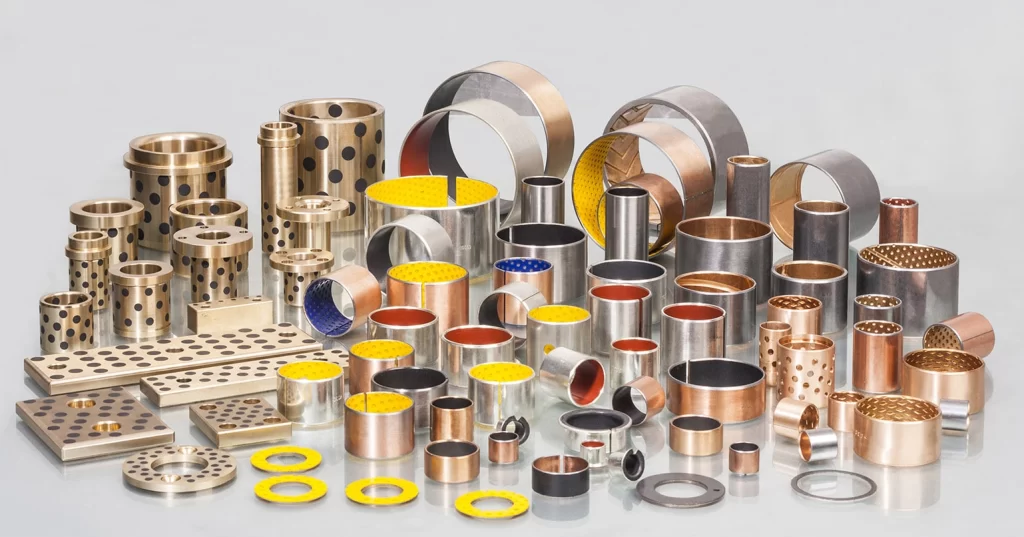
Table of Contents
1. Rolling Mill Bushing Function and Mill Locations
Rolling mill bushings are installed where the mill needs a robust, replaceable sliding surface. Typical locations include roll-neck bearings, backup-roll chocks, work-roll supports, screw-down nuts, coiler mandrels, looper pivots, shear linkages and handling equipment. The part may be solid, split, flanged, tapered, water-cooled, grooved or fitted with seals. The correct design begins with the actual load path and movement. A slow oscillating chock bush is not equivalent to a high-speed roll-neck sleeve, even when both are made from bronze. Mill drawings and validated operating data are the final acceptance basis.
Rolling mill bushings are installed where the mill needs a robust, replaceable sliding surface. Typical locations include roll-neck bearings, backup-roll chocks, work-roll supports, screw-down nuts, coiler mandrels, looper pivots, shear linkages and handling equipment. The part may be solid, split, flanged, tapered, water-cooled, grooved or fitted with seals. The correct design begins with the actual load path and movement. A slow oscillating chock bush is not equivalent to a high-speed roll-neck sleeve, even when both are made from bronze. The supplier should preserve lot traceability and report any deviation before machining.
Rolling mill bushings are installed where the mill needs a robust, replaceable sliding surface. Typical locations include roll-neck bearings, backup-roll chocks, work-roll supports, screw-down nuts, coiler mandrels, looper pivots, shear linkages and handling equipment. The part may be solid, split, flanged, tapered, water-cooled, grooved or fitted with seals. The correct design begins with the actual load path and movement. A slow oscillating chock bush is not equivalent to a high-speed roll-neck sleeve, even when both are made from bronze. This converts a generic bronze-bush request into a reliable mill-maintenance specification.
Rolling mill bushings are installed where the mill needs a robust, replaceable sliding surface. Typical locations include roll-neck bearings, backup-roll chocks, work-roll supports, screw-down nuts, coiler mandrels, looper pivots, shear linkages and handling equipment. The part may be solid, split, flanged, tapered, water-cooled, grooved or fitted with seals. The correct design begins with the actual load path and movement. A slow oscillating chock bush is not equivalent to a high-speed roll-neck sleeve, even when both are made from bronze. Representative measurement and process records are essential for repeatability.
2. Material Families for Roll-Neck and Mill Bushes
Material choice must account for load, shock, speed, lubrication and environment. Tin bronze provides bearing compatibility and machinability; leaded bearing bronze can provide conformability in lubricated duty; manganese bronze can provide high strength; aluminum bronze and nickel-aluminum bronze are selected for strength, wear and corrosion resistance; steel-backed bimetal combines stiffness with a bearing layer. ASTM B271/B271M is relevant when the required bush is a copper-base alloy centrifugal casting. The UNS grade and actual test requirements should be stated. Mill drawings and validated operating data are the final acceptance basis.
Material choice must account for load, shock, speed, lubrication and environment. Tin bronze provides bearing compatibility and machinability; leaded bearing bronze can provide conformability in lubricated duty; manganese bronze can provide high strength; aluminum bronze and nickel-aluminum bronze are selected for strength, wear and corrosion resistance; steel-backed bimetal combines stiffness with a bearing layer. ASTM B271/B271M is relevant when the required bush is a copper-base alloy centrifugal casting. The UNS grade and actual test requirements should be stated. The supplier should preserve lot traceability and report any deviation before machining.
Material choice must account for load, shock, speed, lubrication and environment. Tin bronze provides bearing compatibility and machinability; leaded bearing bronze can provide conformability in lubricated duty; manganese bronze can provide high strength; aluminum bronze and nickel-aluminum bronze are selected for strength, wear and corrosion resistance; steel-backed bimetal combines stiffness with a bearing layer. ASTM B271/B271M is relevant when the required bush is a copper-base alloy centrifugal casting. The UNS grade and actual test requirements should be stated. This converts a generic bronze-bush request into a reliable mill-maintenance specification.
Material choice must account for load, shock, speed, lubrication and environment. Tin bronze provides bearing compatibility and machinability; leaded bearing bronze can provide conformability in lubricated duty; manganese bronze can provide high strength; aluminum bronze and nickel-aluminum bronze are selected for strength, wear and corrosion resistance; steel-backed bimetal combines stiffness with a bearing layer. ASTM B271/B271M is relevant when the required bush is a copper-base alloy centrifugal casting. The UNS grade and actual test requirements should be stated. Representative measurement and process records are essential for repeatability.
Control | Why it matters | RFQ input |
Alloy and hardness | Load, wear, seizure behavior | UNS grade and limits |
Fit and clearance | Heat, vibration, bearing life | Chock and roll-neck dimensions |
Lubrication and water | Film protection and contamination | Oil/grease, seals, cooling exposure |
3. Bronze Metallurgy, Strength, and Counterface Compatibility
Bronze metallurgy affects bearing performance. Alloy chemistry, grain structure, lead distribution where present, porosity, inclusions, hardness and heat treatment influence compressive behavior, seizure resistance and machinability. The roll neck or shaft is the other half of the sliding pair. Its hardness, roughness, roundness, taper, runout, coating and repair history must be evaluated. A new bronze bush against a scored or undersize roll neck can fail rapidly even when the casting chemistry is correct. Mill drawings and validated operating data are the final acceptance basis.
Bronze metallurgy affects bearing performance. Alloy chemistry, grain structure, lead distribution where present, porosity, inclusions, hardness and heat treatment influence compressive behavior, seizure resistance and machinability. The roll neck or shaft is the other half of the sliding pair. Its hardness, roughness, roundness, taper, runout, coating and repair history must be evaluated. A new bronze bush against a scored or undersize roll neck can fail rapidly even when the casting chemistry is correct. The supplier should preserve lot traceability and report any deviation before machining.
Bronze metallurgy affects bearing performance. Alloy chemistry, grain structure, lead distribution where present, porosity, inclusions, hardness and heat treatment influence compressive behavior, seizure resistance and machinability. The roll neck or shaft is the other half of the sliding pair. Its hardness, roughness, roundness, taper, runout, coating and repair history must be evaluated. A new bronze bush against a scored or undersize roll neck can fail rapidly even when the casting chemistry is correct. This converts a generic bronze-bush request into a reliable mill-maintenance specification.
Bronze metallurgy affects bearing performance. Alloy chemistry, grain structure, lead distribution where present, porosity, inclusions, hardness and heat treatment influence compressive behavior, seizure resistance and machinability. The roll neck or shaft is the other half of the sliding pair. Its hardness, roughness, roundness, taper, runout, coating and repair history must be evaluated. A new bronze bush against a scored or undersize roll neck can fail rapidly even when the casting chemistry is correct. Representative measurement and process records are essential for repeatability.
4. Fits, Clearances, Chocks, and Bearing Geometry
Press fit retains the bushing in the chock or housing, while bore clearance permits the lubricant film, heat flow and thermal expansion. Too little interference can cause outer-diameter fretting and bush rotation; too much can distort the bore. Too little running clearance risks heat and seizure; excessive clearance causes vibration, impact, edge loading and roll instability. For large or split rolling-mill bushes, final boring after installation and correct cap-bolt torque may be necessary to obtain the designed geometry. Mill drawings and validated operating data are the final acceptance basis.
Press fit retains the bushing in the chock or housing, while bore clearance permits the lubricant film, heat flow and thermal expansion. Too little interference can cause outer-diameter fretting and bush rotation; too much can distort the bore. Too little running clearance risks heat and seizure; excessive clearance causes vibration, impact, edge loading and roll instability. For large or split rolling-mill bushes, final boring after installation and correct cap-bolt torque may be necessary to obtain the designed geometry. The supplier should preserve lot traceability and report any deviation before machining.
Press fit retains the bushing in the chock or housing, while bore clearance permits the lubricant film, heat flow and thermal expansion. Too little interference can cause outer-diameter fretting and bush rotation; too much can distort the bore. Too little running clearance risks heat and seizure; excessive clearance causes vibration, impact, edge loading and roll instability. For large or split rolling-mill bushes, final boring after installation and correct cap-bolt torque may be necessary to obtain the designed geometry. This converts a generic bronze-bush request into a reliable mill-maintenance specification.
Press fit retains the bushing in the chock or housing, while bore clearance permits the lubricant film, heat flow and thermal expansion. Too little interference can cause outer-diameter fretting and bush rotation; too much can distort the bore. Too little running clearance risks heat and seizure; excessive clearance causes vibration, impact, edge loading and roll instability. For large or split rolling-mill bushes, final boring after installation and correct cap-bolt torque may be necessary to obtain the designed geometry. Representative measurement and process records are essential for repeatability.
5. Lubrication, Cooling Water, Scale, and Contamination
Lubrication is a system, not simply a grease fitting. Oil or grease must reach the loaded zone, remain in the interface and remove or limit heat. Cooling water, oxide scale, mill emulsion, dirt and metal fines can contaminate the bearing and damage both bush and roll neck. Grooves, oil holes, seals, labyrinths, purge arrangements and filtration should be designed for the actual direction of load and movement. A groove that crosses the maximum loaded land can reduce local bearing area and accelerate wear. Mill drawings and validated operating data are the final acceptance basis.
Lubrication is a system, not simply a grease fitting. Oil or grease must reach the loaded zone, remain in the interface and remove or limit heat. Cooling water, oxide scale, mill emulsion, dirt and metal fines can contaminate the bearing and damage both bush and roll neck. Grooves, oil holes, seals, labyrinths, purge arrangements and filtration should be designed for the actual direction of load and movement. A groove that crosses the maximum loaded land can reduce local bearing area and accelerate wear. The supplier should preserve lot traceability and report any deviation before machining.
Lubrication is a system, not simply a grease fitting. Oil or grease must reach the loaded zone, remain in the interface and remove or limit heat. Cooling water, oxide scale, mill emulsion, dirt and metal fines can contaminate the bearing and damage both bush and roll neck. Grooves, oil holes, seals, labyrinths, purge arrangements and filtration should be designed for the actual direction of load and movement. A groove that crosses the maximum loaded land can reduce local bearing area and accelerate wear. This converts a generic bronze-bush request into a reliable mill-maintenance specification.
Lubrication is a system, not simply a grease fitting. Oil or grease must reach the loaded zone, remain in the interface and remove or limit heat. Cooling water, oxide scale, mill emulsion, dirt and metal fines can contaminate the bearing and damage both bush and roll neck. Grooves, oil holes, seals, labyrinths, purge arrangements and filtration should be designed for the actual direction of load and movement. A groove that crosses the maximum loaded land can reduce local bearing area and accelerate wear. Representative measurement and process records are essential for repeatability.
Control | Why it matters | RFQ input |
Alloy and hardness | Load, wear, seizure behavior | UNS grade and limits |
Fit and clearance | Heat, vibration, bearing life | Chock and roll-neck dimensions |
Lubrication and water | Film protection and contamination | Oil/grease, seals, cooling exposure |
6. Centrifugal Casting, Machining, and Split-Bush Manufacture
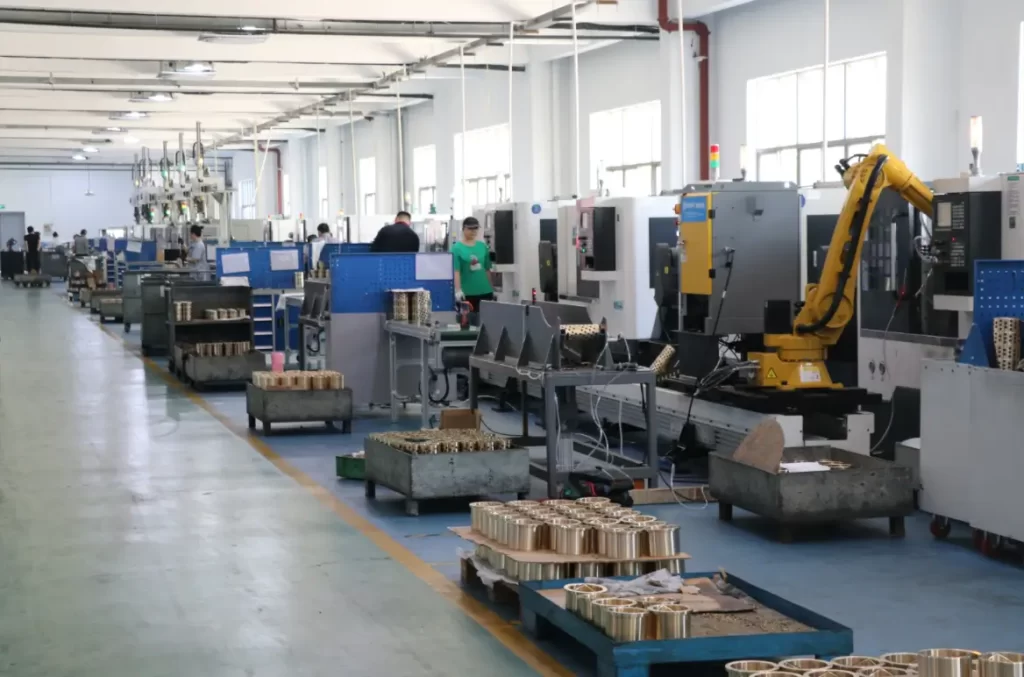
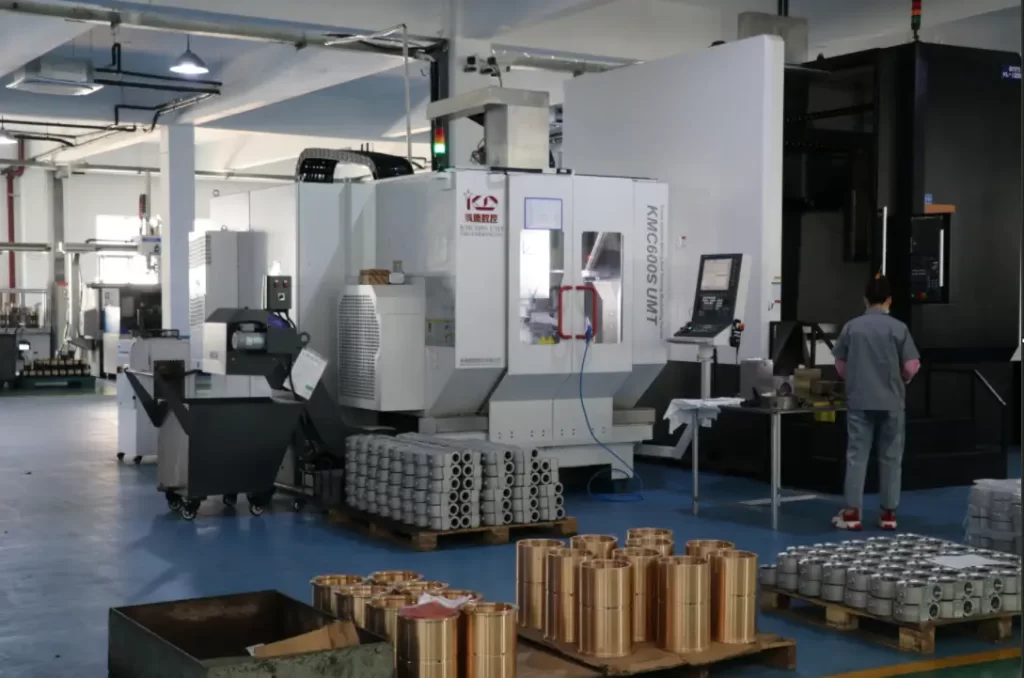
Centrifugal casting is useful for tubular bronze blanks because the rotating mould can produce a dense wall with machining allowance. Split bushes may be machined from a casting or fabricated according to the bearing design. Turning, boring, milling, drilling, groove machining, deburring and inspection control final quality. The supplier should define casting route, melt lot, alloy, heat treatment, machining datum, final bore condition, groove pattern, mating-half identification and packing. Do not assume a supplied bore is finished unless stated. Mill drawings and validated operating data are the final acceptance basis.
Centrifugal casting is useful for tubular bronze blanks because the rotating mould can produce a dense wall with machining allowance. Split bushes may be machined from a casting or fabricated according to the bearing design. Turning, boring, milling, drilling, groove machining, deburring and inspection control final quality. The supplier should define casting route, melt lot, alloy, heat treatment, machining datum, final bore condition, groove pattern, mating-half identification and packing. Do not assume a supplied bore is finished unless stated. The supplier should preserve lot traceability and report any deviation before machining.
Centrifugal casting is useful for tubular bronze blanks because the rotating mould can produce a dense wall with machining allowance. Split bushes may be machined from a casting or fabricated according to the bearing design. Turning, boring, milling, drilling, groove machining, deburring and inspection control final quality. The supplier should define casting route, melt lot, alloy, heat treatment, machining datum, final bore condition, groove pattern, mating-half identification and packing. Do not assume a supplied bore is finished unless stated. This converts a generic bronze-bush request into a reliable mill-maintenance specification.
Centrifugal casting is useful for tubular bronze blanks because the rotating mould can produce a dense wall with machining allowance. Split bushes may be machined from a casting or fabricated according to the bearing design. Turning, boring, milling, drilling, groove machining, deburring and inspection control final quality. The supplier should define casting route, melt lot, alloy, heat treatment, machining datum, final bore condition, groove pattern, mating-half identification and packing. Do not assume a supplied bore is finished unless stated. Representative measurement and process records are essential for repeatability.
7. Wear, Seizure, Cracking, and Failure Analysis
Mill-bushing failure may appear as scoring, wiping, seizure, cracking, cavitation, corrosion, bore enlargement, flange wear, outer-diameter fretting or localized edge damage. Each pattern needs evidence before removal. Record bearing position, orientation, roll condition, lubricant analysis, temperature, cooling-water leakage, vibration, load event, clearance and chock geometry. Root cause can involve material, fit, lubrication, scale contamination, misalignment, overload or mill setup. Replacing only the bush often repeats the failure. Mill drawings and validated operating data are the final acceptance basis.
Mill-bushing failure may appear as scoring, wiping, seizure, cracking, cavitation, corrosion, bore enlargement, flange wear, outer-diameter fretting or localized edge damage. Each pattern needs evidence before removal. Record bearing position, orientation, roll condition, lubricant analysis, temperature, cooling-water leakage, vibration, load event, clearance and chock geometry. Root cause can involve material, fit, lubrication, scale contamination, misalignment, overload or mill setup. Replacing only the bush often repeats the failure. The supplier should preserve lot traceability and report any deviation before machining.
Mill-bushing failure may appear as scoring, wiping, seizure, cracking, cavitation, corrosion, bore enlargement, flange wear, outer-diameter fretting or localized edge damage. Each pattern needs evidence before removal. Record bearing position, orientation, roll condition, lubricant analysis, temperature, cooling-water leakage, vibration, load event, clearance and chock geometry. Root cause can involve material, fit, lubrication, scale contamination, misalignment, overload or mill setup. Replacing only the bush often repeats the failure. This converts a generic bronze-bush request into a reliable mill-maintenance specification.
Mill-bushing failure may appear as scoring, wiping, seizure, cracking, cavitation, corrosion, bore enlargement, flange wear, outer-diameter fretting or localized edge damage. Each pattern needs evidence before removal. Record bearing position, orientation, roll condition, lubricant analysis, temperature, cooling-water leakage, vibration, load event, clearance and chock geometry. Root cause can involve material, fit, lubrication, scale contamination, misalignment, overload or mill setup. Replacing only the bush often repeats the failure. Representative measurement and process records are essential for repeatability.
8. Inspection, Maintenance, and Lifecycle Availability
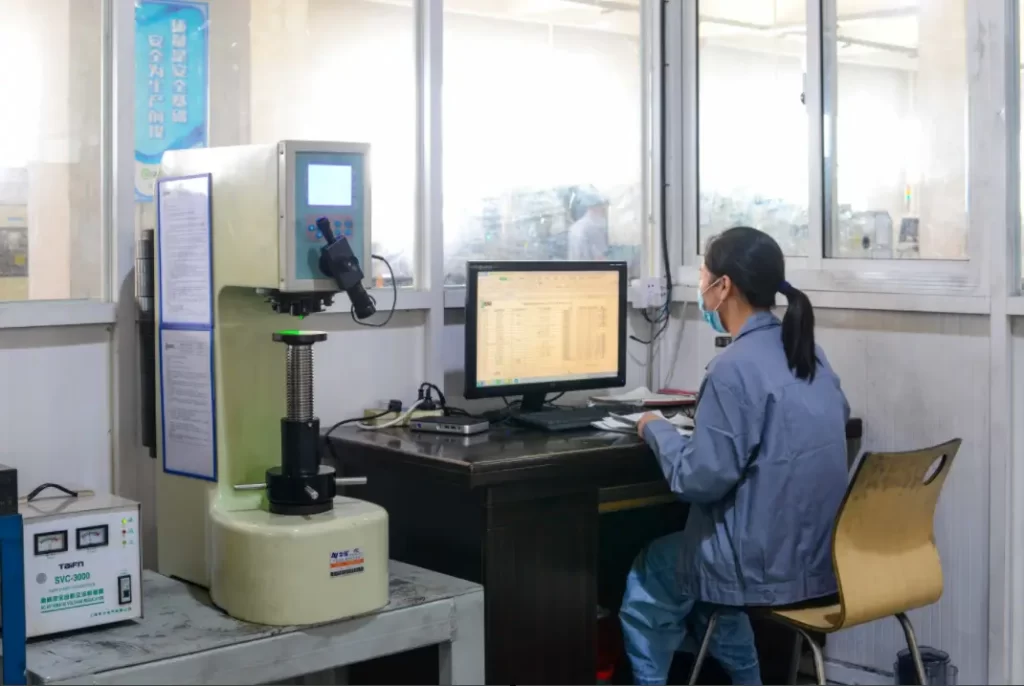
Inspection combines material and geometry. Certificates should identify alloy grade, heat or lot, chemistry, casting method, hardness, dimensions, surface finish and any agreed NDT or metallography. For split bushes, verify joint faces, assembly condition, bore roundness, concentricity, lubrication holes and locating features. Planned maintenance should trend clearance, oil or grease condition, temperature, vibration, roll position and visible leakage. This turns a reactive replacement part into a controlled mill-availability component. Mill drawings and validated operating data are the final acceptance basis.
Inspection combines material and geometry. Certificates should identify alloy grade, heat or lot, chemistry, casting method, hardness, dimensions, surface finish and any agreed NDT or metallography. For split bushes, verify joint faces, assembly condition, bore roundness, concentricity, lubrication holes and locating features. Planned maintenance should trend clearance, oil or grease condition, temperature, vibration, roll position and visible leakage. This turns a reactive replacement part into a controlled mill-availability component. The supplier should preserve lot traceability and report any deviation before machining.
Inspection combines material and geometry. Certificates should identify alloy grade, heat or lot, chemistry, casting method, hardness, dimensions, surface finish and any agreed NDT or metallography. For split bushes, verify joint faces, assembly condition, bore roundness, concentricity, lubrication holes and locating features. Planned maintenance should trend clearance, oil or grease condition, temperature, vibration, roll position and visible leakage. This turns a reactive replacement part into a controlled mill-availability component. This converts a generic bronze-bush request into a reliable mill-maintenance specification.
Inspection combines material and geometry. Certificates should identify alloy grade, heat or lot, chemistry, casting method, hardness, dimensions, surface finish and any agreed NDT or metallography. For split bushes, verify joint faces, assembly condition, bore roundness, concentricity, lubrication holes and locating features. Planned maintenance should trend clearance, oil or grease condition, temperature, vibration, roll position and visible leakage. This turns a reactive replacement part into a controlled mill-availability component. Representative measurement and process records are essential for repeatability.
Control | Why it matters | RFQ input |
Alloy and hardness | Load, wear, seizure behavior | UNS grade and limits |
Fit and clearance | Heat, vibration, bearing life | Chock and roll-neck dimensions |
Lubrication and water | Film protection and contamination | Oil/grease, seals, cooling exposure |
9. Quote-Ready Rolling Mill Bushing Specifications
A quote-ready request includes mill type and location, drawing or sample, bush construction, alloy, casting route, OD, ID, length, flange, split-line detail, grooves, oil holes, seals, housing and roll-neck dimensions, target fit and clearance, load, speed, temperature, lubricant, cooling-water exposure, quantity, certificate, NDT, packaging and destination. The supplier should respond with offered grade, process, tolerances, inspection plan, lead time and any missing technical assumptions. Mill drawings and validated operating data are the final acceptance basis.
A quote-ready request includes mill type and location, drawing or sample, bush construction, alloy, casting route, OD, ID, length, flange, split-line detail, grooves, oil holes, seals, housing and roll-neck dimensions, target fit and clearance, load, speed, temperature, lubricant, cooling-water exposure, quantity, certificate, NDT, packaging and destination. The supplier should respond with offered grade, process, tolerances, inspection plan, lead time and any missing technical assumptions. The supplier should preserve lot traceability and report any deviation before machining.
A quote-ready request includes mill type and location, drawing or sample, bush construction, alloy, casting route, OD, ID, length, flange, split-line detail, grooves, oil holes, seals, housing and roll-neck dimensions, target fit and clearance, load, speed, temperature, lubricant, cooling-water exposure, quantity, certificate, NDT, packaging and destination. The supplier should respond with offered grade, process, tolerances, inspection plan, lead time and any missing technical assumptions. This converts a generic bronze-bush request into a reliable mill-maintenance specification.
A quote-ready request includes mill type and location, drawing or sample, bush construction, alloy, casting route, OD, ID, length, flange, split-line detail, grooves, oil holes, seals, housing and roll-neck dimensions, target fit and clearance, load, speed, temperature, lubricant, cooling-water exposure, quantity, certificate, NDT, packaging and destination. The supplier should respond with offered grade, process, tolerances, inspection plan, lead time and any missing technical assumptions. Representative measurement and process records are essential for repeatability.
FAQ: Rolling Mill Bushing
1. What is a rolling mill bushing?
A heavy-duty plain bearing for rolling-mill mechanisms.
2. Where are mill bushes used?
Roll necks, chocks, screw-downs, mandrels, pivots and handling equipment.
3. Which bronze is suitable?
It depends on load, speed, lubrication, water, scale and shaft condition.
4. What is a roll-neck bush?
A plain bearing supporting a mill roll neck.
5. Why use a split bush?
It enables installation around a shaft and service replacement.
6. What does ASTM B271 cover?
Copper-base alloy centrifugal casting requirements.
7. Does a mill bush need grease?
Most metal bushes need their designed grease or oil supply.
8. Can it run with oil?
Yes, when geometry and system design support oil lubrication.
9. What causes bush seizure?
Low clearance, poor lubricant, overload, dirt or a damaged shaft.
10. What causes scoring?
Scale, metal particles, rough roll neck or contaminated lubricant.
11. Why is clearance important?
It enables film formation, heat management and stable movement.
12. What is interference fit?
Controlled OD-to-housing fit preventing bush creep.
13. Can a bush be centrifugally cast?
Yes; centrifugal casting is common for tubular bronze blanks.
14. What is a flanged bush?
A bush with a locating or thrust-carrying flange.
15. How does cooling water affect it?
Leaks and contamination can damage lubricant and corrosion performance.
16. What inspection is needed?
Chemistry, hardness, dimensions, surface, NDT and bore geometry as required.
17. Should the roll neck be inspected?
Yes; hardness, finish, runout and scoring affect the new bush.
18. Can graphite-plugged bronze be used?
Only after reviewing load, temperature, lubrication and groove layout.
19. How should it be packaged?
Protect bore, split faces, grooves and machined surfaces from impact and moisture.
20. What is needed for a quote?
Drawing, alloy, dimensions, load, speed, lubricant, inspections, quantity and destination.
100000+ Types of Bushings – Contact Us for Details