
Recent Posts
Custom Steel Bushings: The Complete Guide to Choosing, Specifying, and Sourcing High-Performance Wear Parts
Introduction
Custom steel bushings are among the most overlooked yet critical components in heavy machinery. When a standard catalog bushing fails, the downtime cost often dwarfs the part price by a factor of ten or more. This guide walks through what makes a custom steel bushing different from an off-the-shelf one, how to specify the right material and tolerances, and what to look for in a manufacturing partner. We cover the full range—from simple plain bushings to grooved, flanged, and self-lubricating variants—with practical advice drawn from real-world applications in mining, construction, and industrial equipment. Whether you’re an OEM engineer designing a new assembly or a maintenance manager trying to stop repeat failures, this article is meant to be a working reference, not a sales pitch.
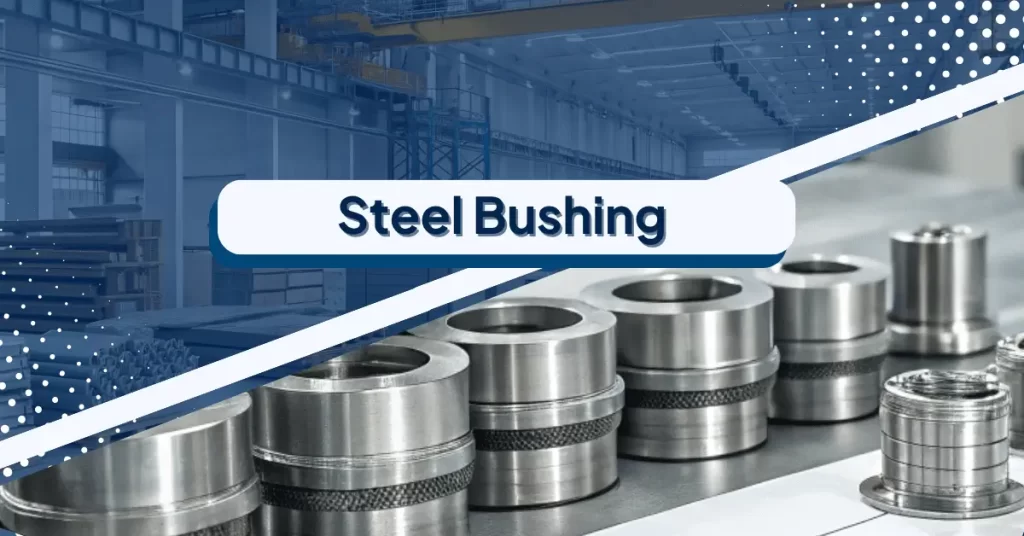
Table of Contents
1. Why Custom Steel Bushings Are Not Just “Standard Parts with Different Dimensions”
Most people outside the bearing world lump bushings and bearings into the same mental category. That’s a mistake. A bushing—sometimes called a sleeve or plain bearing—is a single-piece cylindrical component that reduces friction through sliding contact. A rolling element bearing uses balls or rollers. They solve different problems.
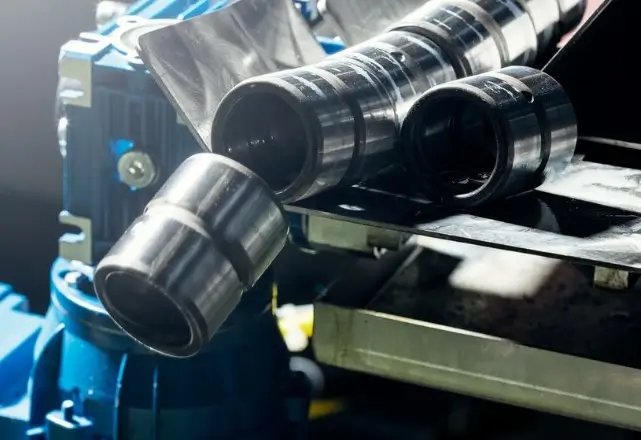
Steel bushings shine in applications where the load is heavy, the speed is low, and the environment is hostile. Think excavator bucket pins, hydraulic cylinder rod eyes, crusher eccentric shafts, and mining truck suspension joints. These are places where shock loads are the norm, dust and grit are constant companions, and a failure means a machine sitting idle.
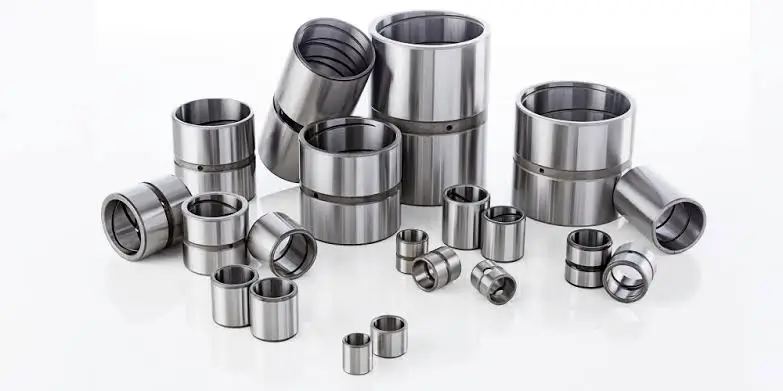
A custom steel bushing differs from a catalog part in several meaningful ways. It’s engineered for a specific fit, load profile, and lubrication strategy. It may include features like:
Internal lubrication grooves in spiral, grid, or honeycomb patterns to distribute grease evenly
A flange for axial positioning and thrust support
Non-standard wall thickness to fit an oversized or worn bore
Specific hardness gradients achieved through controlled heat treatment
Special chamfers to ease installation in tight spaces
The difference matters because a bushing that’s “close enough” often becomes a failure report six months later. The clearance is wrong, the lubrication film breaks down, or the hardness doesn’t match the pin it’s paired with. Custom manufacturing closes those gaps.
It’s worth noting what bushings are not. They’re not interchangeable with rolling bearings. They don’t handle high-speed continuous rotation well. If your application runs above a few hundred RPM under load, you probably need a different solution entirely. But for the slow, brutal, shock-loaded joints that define heavy equipment, a properly specified steel bushing is often the most reliable and cost-effective answer.
2. Materials, Heat Treatment, and What Actually Matters
The material question
Walk through any lineup of steel bushings and you’ll see a handful of material families repeating themselves.
Carbon steels like AISI 1045 (or the Chinese equivalent 45# steel) are the workhorses. They’re machinable, weldable, and respond well to heat treatment. For moderate loads and reasonable lubrication, they’re perfectly adequate.
Alloy steels—4140, 4340, SCM440, and similar grades—step things up. These contain chromium, molybdenum, or nickel to improve hardenability and toughness. When you need a bushing that can take a beating without cracking, alloy steel is usually the answer.
Stainless steels like 304 and 316 enter the picture when corrosion is a concern. Marine environments, food processing, and chemical plants all push toward stainless. The trade-off is lower hardness and higher cost.
Bearing steels and through-hardening grades like SKS93 or SUJ2 are used when maximum wear resistance is the priority. These can reach 60 HRC or higher after heat treatment, but they’re less forgiving of misalignment and shock.
Heat treatment: the part that separates good bushings from bad ones
A steel bushing without proper heat treatment is just a piece of metal with a hole in it. The heat treatment process determines surface hardness, core toughness, and dimensional stability.
Case hardening (carburizing) produces a hard, wear-resistant surface with a softer, tougher core. This is ideal for bushings that see both wear and shock. Through hardening creates uniform hardness throughout the section, which is better for thin-walled bushings that can’t afford a soft core.
The hardness numbers matter, but not in isolation. A 60 HRC bushing paired with a soft pin will wear the pin instead. The goal is a compatible hardness relationship between the bushing and its mating shaft. As a rule of thumb, the bushing should be slightly softer than the pin if you want to protect the more expensive component.
What the specs actually say
Typical custom steel bushing specifications look something like this:
Hardness range: 35–62 HRC depending on material and application
Outer diameter tolerance: ISO u6 or similar for press fits
Inner diameter tolerance: ISO C8 or H7 depending on clearance requirements
Surface finish: 8–32 RMS for sliding surfaces
Concentricity: Often more critical than raw dimensional tolerance
Those last two points deserve emphasis. A bushing that meets its OD and ID print dimensions but has poor concentricity will cause vibration, uneven wear, and premature failure. Good manufacturers measure and control this
3. Types of Custom Steel Bushings and When to Use Each
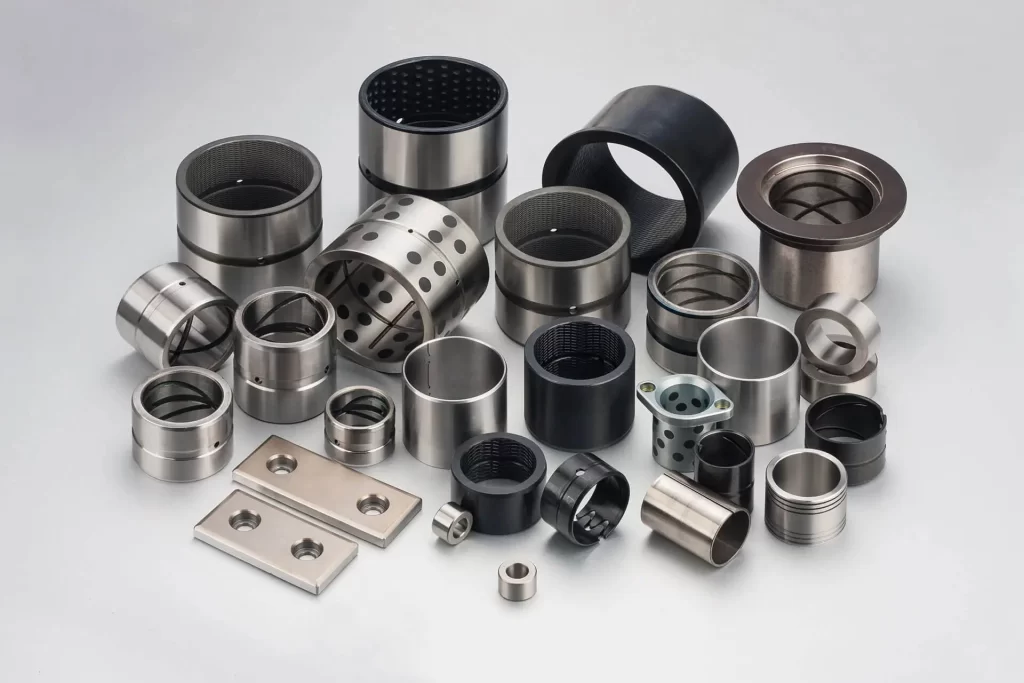
Plain steel bushings
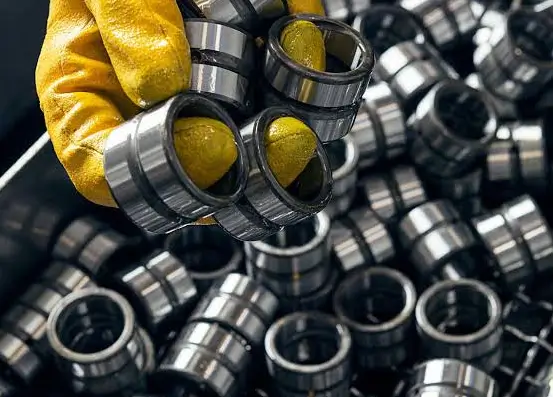
The simplest form. A cylinder with an ID, an OD, and a length. No flange, no grooves, no frills. These are used as spacers, sleeves, and simple wear surfaces in low-to-medium load applications.
The advantage is cost and simplicity. The disadvantage is that lubrication is entirely dependent on the surrounding assembly. If the joint can’t hold grease, a plain bushing will wear quickly.
Flanged bushings
Adding a flange changes the game. The flange provides axial location, prevents the bushing from walking out of its bore, and can carry thrust loads. In excavator boom pivots, flanged bushings are common because the axial forces are real and a plain bushing would migrate.
Flanged bushings are also easier to install and remove. The flange gives you something to press against and something to grab when it’s time to replace.
Grooved bushings
Lubrication grooves are machined into the ID surface in patterns: spiral, straight, grid, honeycomb, or custom. These grooves serve as grease reservoirs, distributing lubricant across the contact surface even under load.
Grooved bushings are essential in applications where re-greasing intervals are long, or where the operating environment is dusty and abrasive. Mining and quarry equipment almost always specifies grooved bushings for this reason.
Self-lubricating bushings
A different category entirely. These use composite materials—typically a steel backing with a sintered bronze interlayer and a PTFE-based sliding surface. The steel provides structural strength, the bronze bonds the sliding layer and transfers heat, and the PTFE creates a low-friction surface that doesn’t need external lubrication.
Self-lubricating bushings are the right choice when:
The joint is difficult or impossible to lubricate
Contamination from grease is unacceptable (food, pharmaceutical, textile)
Maintenance access is limited
You want to eliminate a lubrication point entirely
The trade-off is load capacity. Self-lubricating bushings generally can’t match the static load ratings of solid steel bushings with proper lubrication. But for many applications, the maintenance savings outweigh the reduced capacity.
Spherical and tapered bushings
Spherical bushings allow angular misalignment between the shaft and housing. This is valuable in suspension systems and articulated joints where flexing and misalignment are unavoidable.
Tapered bushings use a conical interface for a locking fit. They’re common in power transmission and pulley applications where you need a secure, releasable connection
4. How to Specify a Custom Steel Bushing Without Regret
Start with the load, not the dimensions
The most common mistake in bushing specification is starting with the bore size and working outward. That’s backwards. Start with the load conditions:
What is the static load?
What is the dynamic load, and how does it vary?
What is the speed of relative motion?
Is the motion continuous rotation or oscillating?
What is the duty cycle?
These answers determine the material, the wall thickness, and the lubrication strategy. Dimensions come later.
Define the fit
Bushing fits are not one-size-fits-all. A press-fit bushing needs a different OD tolerance than one that’s retained with a set screw or adhesive. The housing bore tolerance, the operating temperature, and the materials involved all affect the required fit.
This is where a good manufacturing partner earns their keep. They’ll ask about the mating components and the operating conditions before quoting a tolerance. If a supplier just takes your drawing and doesn’t question anything, that’s a yellow flag.
Don’t neglect surface finish
Surface finish affects both wear life and lubrication retention. Too smooth, and the surface can’t hold a lubricant film. Too rough, and it acts like a file on the mating pin. The sweet spot depends on the application—typically 8–32 RMS for lubricated steel bushings.
Consider the installation method
Will the bushing be pressed in with a hydraulic press? Frozen with liquid nitrogen for a shrink fit? Installed by hand with a light interference? The installation method affects the chamfer design, the wall thickness, and the material’s hardness.
A bushing that’s too hard can crack during press fitting. A bushing that’s too soft can deform. The material specification needs to account for the installation process, not just the operating conditions.
5. Common Failure Modes and How to Prevent Them
Lubrication starvation
The most common cause of bushing failure. Grease channels dry up, maintenance intervals get extended, and the bushing runs metal-on-metal. Grooved bushings and self-lubricating designs mitigate this, but the root cause is usually a maintenance schedule that doesn’t match the application.
Contamination
Dust, grit, and metal particles embed in the bushing surface and act as an abrasive. Seals and proper filtration help, but in environments like mining and quarrying, contamination is a fact of life. Hardened surfaces and grooved designs that can channel contaminants away from the load zone extend life.
Misalignment
If the bushing bore and the shaft aren’t properly aligned, the load concentrates on a small area instead of distributing across the surface. This causes rapid localized wear and often cracking. Spherical bushings address this in applications where misalignment is inherent. In others, it’s a design and assembly issue.
Incorrect hardness match
A bushing that’s too hard wears the pin. A bushing that’s too soft wears itself. Neither is ideal. The right hardness relationship depends on which component you’d rather replace. In many heavy equipment applications, it’s cheaper to replace the bushing than the pin, so the bushing is intentionally made softer.
Installation damage
Hammering a bushing into place with a steel drift can deform the bore or crack the flange. Proper installation tooling—arbor presses, drivers, and temperature-controlled fits—prevents this. It sounds obvious, but field installation practices often ignore it.
6. Sourcing Custom Steel Bushings: What to Look For in a Manufacturer
Engineering support, not just order-taking
The best bushing manufacturers ask questions before they quote. They want to understand the application, the failure history if there is one, and the constraints. They’ll suggest material changes, groove patterns, or tolerance adjustments that you might not have considered.
If a supplier only responds with a price and a lead time, they’re a parts vendor, not a manufacturing partner.
In-house capabilities
Heat treatment, machining, and inspection should be under one roof. When a manufacturer outsources heat treatment, accountability gets fuzzy. If a batch comes back distorted or with inconsistent hardness, who’s responsible? Integrated production keeps quality control tight.
Quality certifications
ISO 9001 is the baseline. IATF 16949 matters if you’re in automotive or heavy vehicle supply chains. These certifications don’t guarantee quality, but they indicate a system exists.
Experience with your industry
A manufacturer who has made bushings for mining equipment understands the environment. They know that a bushing for an underground loader faces different conditions than one for a warehouse forklift. That context shapes their recommendations.
Realistic lead times
Custom bushings aren’t off-the-shelf items. A reasonable lead time for a first article is weeks, not days. If a supplier promises custom bushings in 48 hours, either they’re misunderstanding the request or they’re planning to cut corners.
7. Frequently Asked Questions
What’s the difference between a bushing and a bearing?
A bearing is a broader category that includes both rolling element bearings (balls or rollers) and plain bearings (bushings). A bushing is a specific type of bearing that uses sliding contact rather than rolling elements. All bushings are bearings, but not all bearings are bushings.
Can I use a steel bushing without lubrication?
You can, but wear rates will be high. For unlubricated applications, self-lubricating bushings with PTFE or similar sliding layers are a better choice. Plain steel bushings need some form of lubrication—grease, oil, or a solid lubricant—to achieve reasonable life.
How do I know what clearance to specify?
Clearance depends on the shaft diameter, the operating temperature, the load, and the lubrication method. As a starting point, consult the relevant ISO or SAE standard for plain bearings. For critical applications, a manufacturing engineer can help calculate the right clearance based on your specific conditions.
What’s the maximum load a custom steel bushing can handle?
There’s no single number. It depends on the material, the wall thickness, the length-to-diameter ratio, and the load distribution. A heavy-wall alloy steel bushing in a well-supported housing can handle tens of thousands of pounds of static load. The dynamic load rating is typically lower—often 30–50% of the static rating.
Can you make bushings to my exact drawings?
That’s what “custom” means. A capable manufacturer should be able to work from your drawings and specifications, or from a sample part if drawings aren’t available. They should also be willing to suggest improvements if they see a potential issue.
What information do I need to provide for a quote?
At minimum: dimensions (ID, OD, length, flange details if applicable), material preference or performance requirements, quantity, and any special features like grooves or coatings. If you can share the application details—what the bushing does and what it’s paired with—that helps the manufacturer recommend the right specification.
How long do custom steel bushings last?
That depends entirely on the application. A properly specified and maintained bushing in a clean, well-lubricated joint can last for years. A bushing in an abrasive environment with poor maintenance might fail in months. The goal of custom manufacturing is to match the bushing to the actual conditions, not an idealized version of them.
Why MYWAY for Your Next Custom Steel Bushing Project
After reading this far, you probably have a clearer picture of what makes a custom steel bushing work—and what makes one fail. The difference usually comes down to engineering attention: understanding the load, specifying the right material and hardness, and controlling the details that catalog parts ignore.
MYWAY Bushing has been manufacturing custom and standard bushings for over 20 years, serving OEMs, rebuilders, and maintenance operations across more than 40 countries. Our production is fully integrated, from casting and machining to heat treatment and final inspection, with IATF and ISO certifications backing every order.
What that means for you:
-
Engineered solutions, not catalog guesses. We work from your drawings or samples, and we ask the questions that prevent field failures. If a groove pattern needs adjustment or a tolerance is too tight for the application, we’ll tell you before the parts are made.
-
Full material range. Carbon steel, alloy steel, stainless, bearing steel, and self-lubricating composites. If your application needs it, we can make it.
-
Size range that covers real equipment. IDs from 16 mm to 300 mm, ODs up to 350 mm, and custom dimensions outside those ranges on request.
-
Features that solve problems. Grooved bushings for extended lubrication intervals. Flanged bushings for axial retention. Spherical bushings for misalignment. Self-lubricating bushings for maintenance-free joints.
-
Competitive pricing without cutting corners. We’re a Chinese manufacturer with global logistics experience. Our cost structure is competitive, but our quality control isn’t compromised to get there.
If you’re dealing with a bushing that keeps failing, or you’re designing a new assembly and want to get the wear components right the first time, send us your drawings and application details. We’ll review them and come back with a recommendation—whether that’s a custom steel bushing, a self-lubricating alternative, or something else entirely.
Request a quote or send your drawings to MYWAY Bushing. We’ll respond within one business day with engineering feedback and pricing. No obligation, no pressure—just a conversation about making your equipment run longer.
FAQ: Comprehensive 608 Bearing Guide
What do the different suffixes mean in 608 bearing codes?
Suffixes indicate sealing type: Z (metal shield), ZZ (double shield), RS (rubber seal), 2RS (double rubber seal)
How do I choose between shielded and sealed bearings?
Metal shields (ZZ) offer better speed capability, while rubber seals (2RS) provide superior contamination protection
What are the temperature limits for different 608 bearing types?
Standard steel: -30°C to +120°C
Stainless steel: -30°C to +150°C
High-temperature variants: up to +250°C
How important is the ABEC rating for my application?
ABEC-1 sufficient for most applications; ABEC-3 or higher recommended for precision equipment
What lubrication options are available?
Standard grease, high-temperature grease, oil, or dry lubrication for specific environments
100000+ Types of Bushings – Contact Us for Details