
Recent Posts
Choosing Bushings for Equalizer Bars: A Heavy-Duty Buyer’s Guide to Fit, Material, and Long-Term Performance
Introduction
Equalizer bar bushings are small but vital. They sit at tandem axle suspension pivot points and control walking beam movement under load. Correct bushings absorb road shock, cut vibration, keep axles aligned, and stabilize the suspension. Wrong ones cause clunking, uneven tire wear, side lean, cracked brackets, and downtime. This guide helps fleet managers, maintenance supervisors, parts buyers, and distributors understand center vs end bushings, rubber vs polyurethane vs bronze, key dimensions and hardness, replacement signs, ordering questions, installation, and maintenance. Searching for equalizer bar, walking beam, Hendrickson, trailer, or heavy-duty suspension bushings? This guide helps you ask better questions
Table of Contents
1. What an Equalizer Bar Bushing Actually Does
An equalizer bar—also called a walking beam, equalizer beam, or load-sharing beam—is used in tandem axle suspensions. Its purpose is to let two drive axles share load more evenly. When one axle hits a bump or carries more weight, the equalizer bar pivots so the other axle can help carry the load. This movement improves traction, reduces wheel hop, and protects the chassis from concentrated stress.
But the equalizer bar does not float freely. It is connected to the suspension through bushings. These bushings are the interface between the moving beam and the fixed or semi-fixed mounting points. They allow a controlled amount of rotation, twisting, and articulation. At the same time, they must resist excessive movement that would throw off axle alignment.
A good equalizer bar bushing does four things at once:
It allows controlled pivoting. The beam needs to rotate as the suspension cycles. The bushing provides a compliant pivot point instead of a solid metal-to-metal joint.
It absorbs shock and vibration. Road impacts travel through the tires, axles, and suspension. The bushing acts as a cushion, reducing the shock that reaches the frame and the driver.
It maintains alignment. The bushing keeps the equalizer bar centered and positioned correctly so the axles stay in proper relation to the chassis.
It isolates noise. Rubber and polyurethane bushings reduce the metal-on-metal contact that would otherwise create loud clunking and road noise.
When a bushing wears out, all four functions suffer. The beam may move too much, causing tire scrub and uneven wear. The suspension may clunk over every bump. The axle alignment may shift, leading to dog tracking or irregular tire wear. In severe cases, the equalizer bar can contact the frame or mounting bracket, causing cracks and structural damage.
For fleet managers, the real cost of a cheap bushing is not the purchase price. It is the labor, downtime, tire wear, and secondary damage that follow a premature failure. That is why choosing the right bushing for the application matters more than saving a few dollars per piece.
2. Center Bushings vs. End Bushings: Location Changes Everything
One of the most common ordering mistakes is treating all equalizer bar bushings as the same part. They are not. The center bushing and the end bushings work in different locations, carry different loads, and often use different materials and designs.
Center Bushing
The center bushing is installed at the middle pivot of the equalizer bar. This is where the beam attaches to the frame hanger or suspension crossmember. It is the highest-load pivot in the equalizer bar assembly. Every vertical load, braking force, traction force, and road impact passes through this point.
Center bushings are commonly available in rubber or bronze. Rubber center bushings are the standard choice for many highway and light vocational applications. They do not require greasing, they damp vibration well, and they are relatively forgiving of minor misalignment. Bronze center bushings are used in severe-duty applications where the bushing must carry heavy loads and resist wear under frequent articulation. Bronze bushings are stronger and more heat-resistant, but they require regular lubrication. If they run dry, the bronze and the steel pin can wear quickly.
There is also an important application detail: some suspension designs use a transverse torque rod to control lateral movement. In those configurations, the center bushing may need to provide a certain amount of compliance. In other configurations, a bronze center bushing may be specified for maximum durability. The correct choice depends on the suspension brand, the vehicle’s duty cycle, and the OEM application guide. Do not assume that bronze is always an upgrade. In the wrong application, it can transfer more noise and vibration into the chassis.
End Bushing
The end bushings are installed at the two ends of the equalizer bar. They connect the beam to the control arms, torque rods, or axle brackets, depending on the suspension design. End bushings often use a bar pin design. In some Hendrickson suspensions, for example, the end bushing is pressed into the beam and a bar pin passes through it. There are variations with shims and without shims, and some designs allow the bushing to be rotated after pressing to align the bar pin correctly.
End bushings typically see a combination of radial load, torsional twist, and axial movement. They need to flex as the suspension articulates, but they also need to stay in place. That is why many end bushings include interlocking ribs, flanges, or shoulders that prevent the bushing from walking out of the bore.
Because center and end bushings wear at different rates, it is common to find one pair in good condition while the other is already loose. When you inspect a suspension, check all equalizer bar pivot points. Do not assume that a clunk is coming from the center bushing just because it is the biggest one. A worn end bushing can create just as much noise and movement.
3. Material Selection: Rubber, Polyurethane, and Bronze
Material choice is the heart of equalizer bar bushing selection. Each material has strengths and weaknesses. The best choice depends on the vehicle’s duty cycle, load, road conditions, maintenance practices, and budget.
Rubber Bushings
Rubber is the most common OEM material for equalizer bar bushings. It is inexpensive, quiet, and effective at isolating vibration. Rubber bushings are bonded to metal sleeves, which makes installation straightforward. They do not require lubrication, so they are low-maintenance in normal service.
However, rubber has limits. It degrades over time when exposed to heat, oil, ozone, and sunlight. It also flexes internally with every suspension movement. Over millions of cycles, that flexing causes small cracks that grow into larger tears. Eventually, the rubber loses its elasticity and the bushing becomes loose. In heavy vocational service, rubber bushings may fail well before the rest of the suspension is worn out.
Rubber is a good choice for highway trucks, light vocational vehicles, and applications where low noise and low cost are the priority. It is not the best choice for mining, construction, logging, or other severe-duty operations where the suspension is constantly working.
Polyurethane Bushings
Polyurethane is a step up from rubber in strength and durability. Depending on the formulation, polyurethane can be three to five times stronger than rubber. It resists oil, grease, chemicals, and abrasion much better. It also holds its shape under load, which means it provides more precise suspension control.
When a polyurethane bushing replaces a rubber bushing, drivers often notice that the suspension feels tighter. The equalizer bar moves less under load, axle alignment stays more consistent, and tire wear may improve. Polyurethane bushings also tend to last longer in mixed service, especially where the vehicle sees a combination of highway and rough road use.
The catch is hardness. Polyurethane is available in different durometer ratings, usually measured on the Shore A or Shore D scale. A bushing that is too soft behaves like rubber but may not last much longer. A bushing that is too hard can transfer road shock directly into the frame and mounting brackets. That can cause cracks, loosen fasteners, and damage other suspension components. The goal is not the hardest bushing available. The goal is the right hardness for the load and road conditions.
For most equalizer bar applications, polyurethane bushings in the 80A to 95A range are common. A reputable supplier will ask about your vehicle type, load, and road conditions before recommending a hardness. If a supplier sells you a “one-size-fits-all” polyurethane bushing without asking those questions, be careful.
Bronze Bushings
Bronze bushings are the heavy-duty option. They are usually made from bearing bronze such as C93200 or similar alloys. Bronze has excellent load-carrying capacity, high temperature resistance, and good wear resistance. In severe service—such as mining, quarry, construction, and port operations—bronze center bushings are often the most reliable choice.
Bronze bushings are not maintenance-free. They need lubrication. The grease forms a film between the bronze and the steel pin, preventing metal-to-metal contact. If the grease passages are blocked or the lubrication interval is missed, the bushing can wear rapidly. In some cases, the steel pin wears instead of the bronze, which is even more expensive to repair.
Bronze bushings also transmit more noise and vibration than rubber or polyurethane. That is acceptable in a work truck, but it may not be ideal for a highway tractor where driver comfort matters.
A practical compromise is a hybrid setup: bronze center bushings for maximum load capacity, paired with polyurethane or rubber end bushings for a balance of durability and vibration control. This approach is common in vocational fleets that want longer service life without making the ride unbearable.
4. Size, Hardness, and Fit: The Specs That Cause Returns
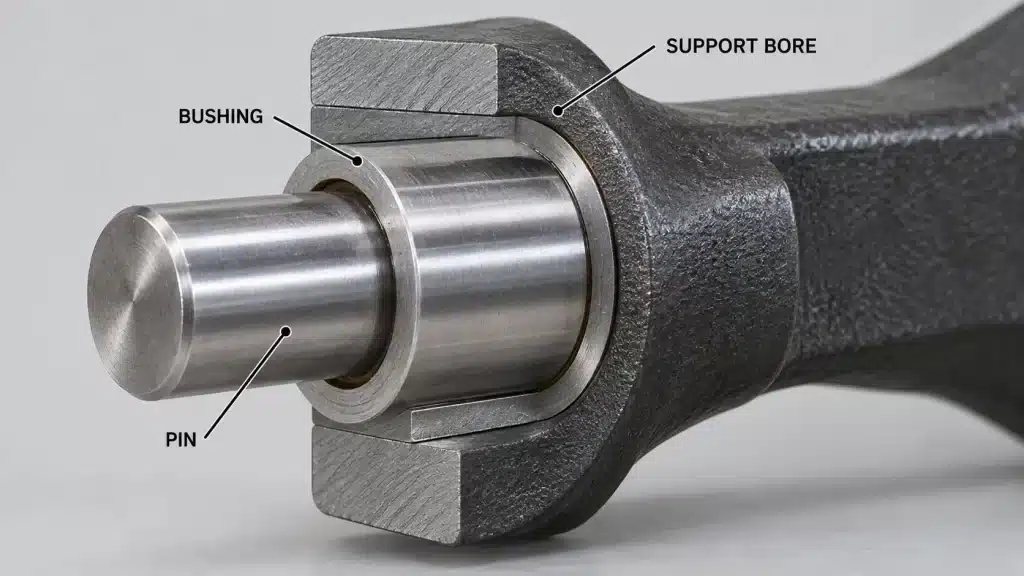
Most bushing returns are not caused by bad materials. They are caused by wrong dimensions, wrong hardness, or wrong fit. Equalizer bar bushings are precision components. A few thousandths of an inch can mean the difference between a proper press fit and a loose or oversized installation.
Critical Dimensions
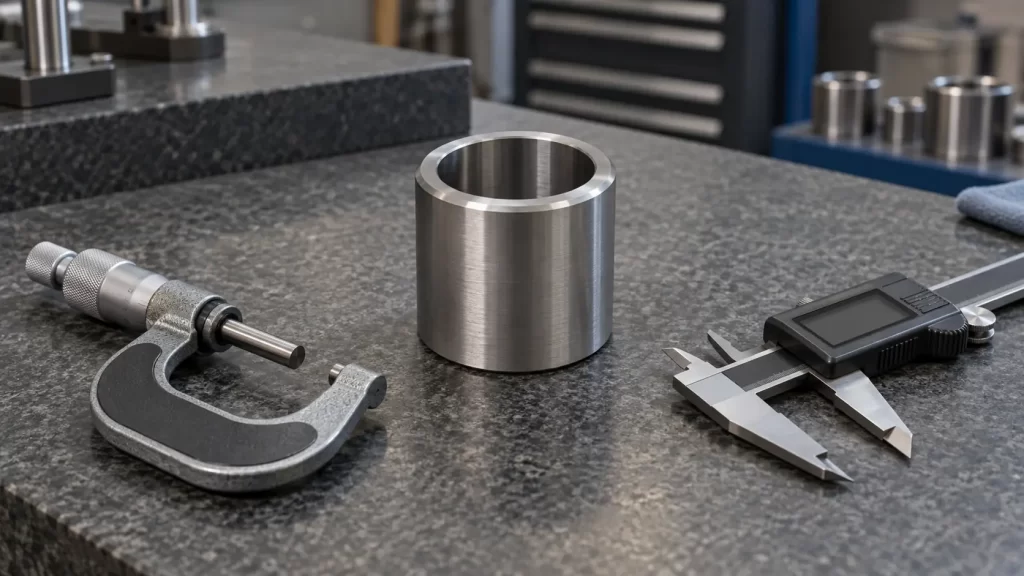
When measuring an equalizer bar bushing, you need more than just the inside and outside diameter. You need:
Inner diameter (ID): The bore that fits over the pin, bar pin, or bolt.
Outer diameter (OD): The surface that presses into the equalizer bar or bracket.
Length: The overall width of the bushing, including any flange or shoulder.
Flange diameter and thickness: If the bushing has a flange, it must match the counterbore or seating surface.
Chamfer or lead-in: This affects how easily the bushing starts into the bore.
Interlocking ribs or shoulders: These features prevent axial movement. If your original bushing has them, the replacement should too.
One common mistake is measuring the outer diameter in the free state and assuming it matches the installed size. Many bushings are designed to be slightly larger than the bore so they create an interference fit. If you measure a used bushing that has already been compressed, you may get a false reading. Always measure a new bushing or refer to the OEM specification.
Hardness and Durometer
For rubber and polyurethane bushings, hardness is a key performance variable. Rubber hardness is usually measured on the Shore A scale. Polyurethane may be measured on Shore A or Shore D, depending on how stiff it is. A 90A polyurethane bushing is not the same as a 90D bushing. The scales are different, and confusing them can lead to a bushing that is far too hard or too soft.
If you are upgrading from rubber to polyurethane, do not simply match the old rubber hardness. Polyurethane behaves differently. A polyurethane bushing at the same durometer may feel much stiffer because of its higher tensile strength and rebound characteristics. Work with a supplier who understands the difference and can recommend a durometer based on your application.
Fit and Retention
Equalizer bar bushings are usually press-fit. That means the outer shell or outer surface is slightly larger than the bore. When pressed in, it creates radial compression that holds the bushing in place. If the fit is too loose, the bushing can spin or walk out. If the fit is too tight, the bushing may buckle, crack, or distort during installation.
Axial retention is just as important. Some bushings rely on a flange or shoulder to keep them from moving sideways. Others use interlocking ribs that grip the bore. If your suspension experiences high side loads—such as during frequent turning or uneven loading—retention features become critical.
5. Signs Your Equalizer Bar Bushings Are Failing
Bushings are wear items, but they rarely fail without warning. The trick is knowing what to look for before the problem becomes a roadside breakdown.
Common Symptoms
Clunking or banging over bumps: This is one of the most common signs. When the bushing wears, the equalizer bar can move more than it should. Metal parts that were once separated by rubber or polyurethane begin to contact each other.
Excessive side lean in turns: The center bushing helps locate the equalizer bar laterally. When it wears, the beam can shift, and the vehicle may lean more than usual.
Uneven or cupped tire wear: Worn bushings allow the axles to move out of alignment. This can cause irregular tire wear patterns, especially on the drive tires.
Dog tracking: If the rear axles are not tracking properly behind the front axle, worn suspension bushings may be the cause.
Steering wander or instability: Loose rear suspension components can affect the entire vehicle’s handling.
Visible cracks or deformation: Inspect the bushing material. Rubber may show cracks, tears, or a swollen appearance. Polyurethane may show cracks, crumbling, or extrusion. Bronze may show wear patterns, scoring, or excessive clearance.
Inspection Tips
A visual inspection is a good start, but it is not enough. Use a pry bar to check for movement. With the vehicle safely lifted and the suspension unloaded, place a pry bar between the equalizer bar and the mounting bracket. Gently apply pressure. If you see more movement than the OEM specification allows, the bushing is likely worn.
Check the metal sleeves and pins as well. A worn bushing often means the pin or sleeve is also worn. If you install a new bushing on a worn pin, the clearance will be too large, and the new bushing will fail quickly.
One counterintuitive tip: if one side of the suspension looks unusually clean around the bushing area, it may actually be the worn side. As the bushing loosens, it can grind away rust and debris, making the area look cleaner than the other side. Do not let a clean appearance fool you.
6. Buying Checklist: Five Questions Before You Order
Whether you are buying one bushing for a repair or stocking hundreds for a fleet, ask these questions before you place the order.
1. Is it a center bushing or an end bushing?
Do not just say “equalizer bar bushing.” Specify the position. Center and end bushings are different parts with different loads and dimensions.
2. What is the suspension brand and model?
Hendrickson, Reyco Granning, Hutchens, Dexter, and other brands use different bushing designs. Even within one brand, there can be multiple variations. Provide the suspension model, serial number, or OEM part number whenever possible.
3. What material and hardness do you need?
Rubber, polyurethane, or bronze? If polyurethane, what durometer? If bronze, what alloy and lubrication method? A good supplier will help you match the material to your duty cycle.
4. How does the bushing mount?
Is it press-fit, bolted, or retained by a bar pin? Does it require shims, washers, or a specific orientation? Does it need to be rotated after installation?
5. What is included in the kit?
Some bushings are sold as complete service kits with bolts, nuts, washers, and seals. Others are sold as bare bushings. If you need a kit, confirm the contents. If you only need the bushing, make sure you are not paying for extra parts you do not need.
Also ask about warranty, return policy, and lead time. For fleet accounts, consistent availability matters as much as price. A supplier who cannot deliver when you need the part is not saving you money.
7. Installation and Maintenance Tips That Double Bushing Life
Even the best bushing can fail early if it is installed incorrectly. These steps apply to most equalizer bar bushing installations.
Clean the Bore
Before installing a new bushing, clean the bore thoroughly. Remove rust, dirt, old rubber, metal shavings, and burrs. A smooth, clean bore allows the bushing to press in evenly. If the bore is damaged, ream or hone it to the correct size before installation.
Use the Right Lubricant
For rubber and polyurethane bushings, a small amount of approved assembly lubricant can help the bushing slide into the bore without tearing. Do not use petroleum-based grease on rubber unless the manufacturer approves it. For bronze bushings, use the specified grease and make sure the grease passages are clear.
Align Before Pressing
Start the bushing straight. If it goes in crooked, stop and reposition it. Forcing a misaligned bushing can damage the outer shell, distort the rubber or polyurethane, or damage the bore. Use a proper press and driver, not a hammer. Impact forces can crack the bushing material or deform the metal sleeve.
Torque to Specification
Bar pin fasteners and mounting bolts have specific torque requirements. Under-torquing can allow movement and premature wear. Over-torquing can crush the bushing or damage the mounting bracket. Always use a calibrated torque wrench and follow the OEM specification.
Lubricate Bronze Bushings on Schedule
Bronze bushings need regular greasing. The interval depends on the application, but in severe service it may be every few thousand miles. Do not skip this step. A dry bronze bushing can wear out in a fraction of its expected life.
Recheck After Service
After the vehicle has been driven for a few hundred miles, recheck the torque on the fasteners and inspect the bushings for movement or unusual wear. This simple step can catch installation problems before they become major repairs.
8. How to Compare Equalizer Bar Bushing Suppliers
Price matters, but it is not the only factor. A cheap bushing that fails in six months is more expensive than a quality bushing that lasts three years. When comparing suppliers, look for these signs of reliability.
Material documentation: A good supplier can provide material certificates, hardness reports, and dimensional inspection data. If they cannot tell you what alloy or durometer they are using, that is a red flag.
Tolerance control: Equalizer bar bushings must fit properly. Ask about dimensional tolerances and inspection methods. Suppliers who use CMM equipment and statistical process control are more likely to deliver consistent parts.
Testing: Look for suppliers who perform durability testing, salt spray testing, and load testing. This is especially important for bronze and polyurethane bushings used in severe service.
Batch traceability: If a problem occurs, you need to know which batch the bushing came from. Traceability helps suppliers and buyers solve issues quickly.
Application support: The best suppliers ask questions. They want to know your vehicle type, load, road conditions, and maintenance practices. They help you choose the right bushing instead of just selling you a part number.
Lead time and inventory: For fleets, downtime is expensive. A supplier with reliable lead times and available inventory is worth more than a supplier with the lowest price but unpredictable delivery.
Custom capability: If you need a custom bushing for an older suspension, a specialized application, or a private-label program, choose a supplier with in-house engineering and manufacturing. This reduces the risk of miscommunication and delays.
FAQ: Equalizer Bar Bushing Questions Fleets Ask Most
Are polyurethane bushings better than rubber bushings?
They are better in some applications and worse in others. Polyurethane is stronger, more oil-resistant, and longer-lasting in mixed and severe service. Rubber is quieter, softer, and usually cheaper. For highway trucks with light loads, rubber may be perfectly adequate. For heavy haul, vocational work, or rough roads, polyurethane is often the better investment.
Can I replace just one equalizer bar bushing?
Technically, yes. But in practice, it is usually better to replace bushings in pairs or sets. Bushings on the same beam wear at similar rates. Replacing only one can create uneven stiffness, which may cause the new bushing to wear faster and affect suspension alignment.
Should I use a bronze center bushing or a rubber center bushing?
It depends on your suspension design and duty cycle. Bronze is better for severe service and high loads, but it requires greasing and may transmit more noise. Rubber is maintenance-free and quieter, but it may not last as long in harsh conditions. Check the OEM application guide and talk to a supplier who understands your specific suspension.
How long do equalizer bar bushings last?
There is no fixed answer. Highway trucks may get 150,000 miles or more from a quality rubber bushing. Severe-service trucks may need polyurethane or bronze bushings replaced much sooner. Road conditions, load, alignment, and maintenance all affect bushing life. Regular inspection is more useful than relying on a mileage number.
How do I identify the correct bushing for my truck or trailer?
Start with the suspension brand and model. Then find the OEM part number on the equalizer bar or in the parts manual. If you cannot find it, measure the old bushing carefully and take photos. A reputable supplier can cross-reference the number or match the dimensions.
Why did my new bushing fail so quickly?
Common causes include wrong dimensions, wrong hardness, improper installation, a worn pin or bore, or a missed lubrication interval. If a new bushing fails early, check the fit, the pin condition, and the installation torque before blaming the bushing itself.
Do I need an alignment after replacing equalizer bar bushings?
It is a good idea. Replacing suspension bushings can change axle alignment. An alignment check after the repair helps protect your tires and ensures the vehicle tracks correctly.
What kind of grease should I use for bronze bushings?
Use the grease specified by the suspension manufacturer or bushing supplier. In general, a high-quality lithium complex or moly-fortified grease is common for bronze suspension bushings. Avoid mixing incompatible greases, and make sure the grease actually reaches the bearing surface.
Can I upgrade from rubber to polyurethane or bronze?
Yes, but the upgrade must be matched to the application. Polyurethane is a common upgrade for longer life and better control. Bronze is an upgrade for extreme load and heat. In some suspensions, however, changing bushing material can affect ride quality, noise, and lateral compliance. Consult a knowledgeable supplier before making the switch.
100000+ Types of Bushings – Contact Us for Details