
Recent Posts
Metallurgical Advancements and Application Engineering of Steel Bushings: A Comprehensive Technical Overview
Introduction
Steel bushings represent a foundational component in mechanical power transmission, motion control, and structural articulation systems across heavy machinery, aerospace, automotive, and industrial equipment sectors. As replaceable wear surfaces, these cylindrical sleeves protect housing bores from fretting, abrasion, and fatigue failure while providing precise dimensional control for rotating or oscillating shaft interfaces. The metallurgical selection, thermal processing, and surface engineering of steel bushings directly determine service life, load-bearing capacity, friction coefficients, and maintenance intervals in demanding operating environments. This technical exposition examines the material science, manufacturing methodologies, performance optimization strategies, and application-specific requirements governing modern steel bushing technology.
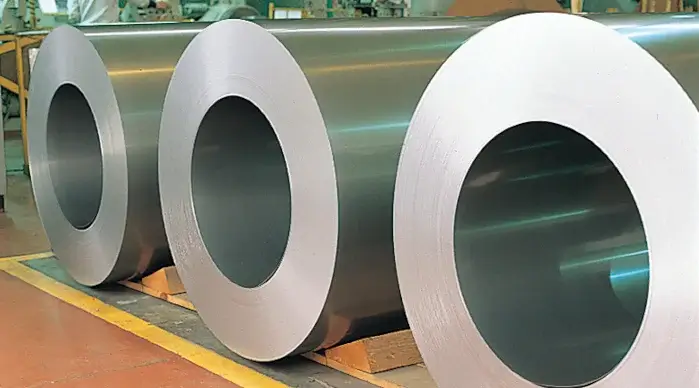
Table of Contents
1. Material Classification and Metallurgical Fundamentals of Steel Bushings
The performance envelope of steel bushings begins with judicious material selection based on service conditions, load profiles, and environmental exposure. Carbon steels spanning SAE 1006 through SAE 1035 grades provide cost-effective solutions for lightly loaded applications where dimensional stability and machinability are primary considerations. These low-carbon variants offer adequate formability for coil-based manufacturing processes but require case hardening to achieve wear-resistant surface characteristics.
Alloy steel grades dominate heavy-duty bushing applications where strength, toughness, and fatigue resistance are paramount. The 20CrMo, 42CrMo, and 20CrMnTi grades exhibit base hardness values of 260–320 HV, achieving apparent surface hardness exceeding 550 HV following QPQ nitriding treatments. These chromium-molybdenum and chromium-manganese-titanium alloys demonstrate superior hardenability, enabling through-hardening in heavier section thicknesses while maintaining core ductility for impact resistance.
Specialized alloy formulations incorporate vanadium and niobium microalloying to refine grain structure and enhance precipitation hardening responses. E470 steel (EN 10297 specification), containing 0.16–0.22% carbon, 1.30–1.70% manganese, 0.08–0.15% vanadium, and controlled sulfur (0.015–0.030%) for improved machinability, delivers exceptional wear resistance in earth-moving equipment applications. The cross-reference designation 20MnV6 (1.0536) provides an equivalent European standard for this high-performance bushing material.
For extreme service conditions involving shock loading, alternating stresses, and contaminated environments, high-carbon chromium bearing steels such as GCr15 and Cr12MnV offer through-hardening capabilities with excellent spalling resistance. These materials achieve hardness levels of 58–62 HRC following conventional quench-and-temper processing, with case-hardened depths of 0.8–1.0 mm in finished components.
Stainless steel grades address corrosion resistance requirements in aerospace, marine, and chemical processing applications. EN 2287 specifications define plain bushings manufactured from corrosion-resisting steel with self-lubricating liners, establishing dimensional and load rating standards for critical flight-control systems. The 2022 update to this standard (DIN EN 2287:2022) incorporates refined design recommendations for shaft and housing interfaces in aerospace structures
2. Manufacturing Methodologies: From Coil Steel to Precision Components
2.1 Coil-Based Forming Processes
The conversion of coil steel into finished bushings presents significant cost advantages over tubular stock methods. Coiled strip material, typically high-strength low-alloy (HSLA) or carbon steel grades SAE 1006–1035, is slit to width and blanked into rectangular sections . These planar blanks undergo forming around mandrel tooling to establish tubular geometry with overlapping edge joints. This methodology eliminates costly pipe procurement and extensive machining operations required for tube-derived components.
2.2 Edge Joint Configurations and Integrity
The joint geometry formed by opposed blank edges critically influences bushing integrity during subsequent heat treatment and service. Traditional butt joints exhibit susceptibility to gap formation during thermal processing as residual stresses relieve through partial unrolling . Advanced overlapping contact surface configurations address this limitation by establishing first and second edge portions oriented at non-perpendicular dihedral angles relative to tangent planes at the exterior surface. This geometry maintains joint overlap even after expansion from heat treatment, preventing migration of vibration-damping materials—such as injected rubber—from exterior surfaces into the interior cavity .
2.3 Machining and Finishing Operations
Precision machining operations transform formed blanks or tube sections into finished bushings with required dimensional tolerances and surface characteristics. Internal bore machining establishes clearance specifications for mating shaft or pin interfaces, with typical inside diameter ranges spanning 20 mm to over 250 mm in heavy-equipment applications . Oil groove configurations—including spiral patterns, ring grooves, diamond-shaped pockets, and circular or elliptical recesses—provide lubrication distribution networks essential for boundary and mixed-film lubrication regimes
3. Heat Treatment and Surface Engineering Strategies
3.1 Quench-and-Temper Processing
Conventional through-hardening by quench-and-temper processing develops martensitic microstructures with optimized combinations of strength, toughness, and wear resistance. Quenching from austenitizing temperatures transforms the steel to martensite, while subsequent tempering at 100–400°C relieves internal stresses and reduces cracking susceptibility, particularly near internal bore surfaces . This tempering step proves critical for components subjected to high hoop stresses during press-fit installation or heavy radial loading during service.
3.2 Case Hardening and Nitriding Technologies
Applications requiring high surface hardness combined with tough, ductile cores benefit from case-hardening processes. QPQ (Quench-Polish-Quench) nitriding treatments produce apparent surface hardness values exceeding 550 HV with nitrided layer depths of 0.2–0.4 mm . The compound layer formed during nitriding provides exceptional seizure resistance and galling protection while maintaining fatigue-life advantages over through-hardened alternatives.
3.3 Selective Induction Tempering
Advanced bushing designs incorporate selective induction tempering to establish hardness gradients tailored to service stress distributions. Induction heating of outer surfaces to 550–650°C tempers and softens the near-surface region to hardness levels of 35–45 HRC, while inner bore regions retain higher hardness (up to 66 HRC) from previous quenching operations . This differential hardening strategy optimizes wear resistance at the bearing contact surface while reducing notch sensitivity and cracking propensity at exposed outer surfaces. Softening depths of 1–15 mm can be achieved through induction frequency and power controls, typically operating at 3–10 kHz for component-specific penetration profiles
4. Surface Coatings and Friction Management
4.1 Self-Lubricating Liners
Aerospace bushings frequently incorporate self-lubricating liners bonded to corrosion-resisting steel substrates, eliminating external lubrication requirements in flight-critical control systems . These polymer-based or composite liners reduce maintenance intervals while ensuring predictable friction coefficients across temperature extremes and vacuum conditions encountered at altitude.
4.2 Molybdenum Disulfide Dry-Film Lubricants
Steel-on-steel spherical bushings, commonly employed in construction and industrial equipment subjected to alternating and shock loads, benefit from phosphate-treated sliding surfaces coated with molybdenum disulfide (MoS₂) dry-film lubricants . This coating system provides excellent wear resistance and low-torque operation while optional polyurethane seals prevent grease leakage and dust contamination.
4.3 Zinc and Phosphate Conversion Coatings
Corrosion protection for carbon steel bushings commonly involves zinc plating with yellow chromate conversion coatings or black zinc phosphate treatments . These sacrificial coatings provide galvanic protection to the steel substrate while improving initial run-in characteristics through controlled surface roughness.
5. Application Domains and Performance Requirements
5.1 Earth-Moving and Construction Equipment
Excavator bucket pivots, boom arm articulations, and hydraulic cylinder eyelets represent demanding bushing applications with extreme loads, abrasive contamination, and limited lubrication accessibility . Hardened steel bushings in 20CrMnTi or E470 grades deliver required wear life while maintaining resistance to cracking under shock loads. Oil pocket configurations—including spiral grooves, diamond-shaped recesses, and annular rings—ensure lubricant retention at critical contact zones .
5.2 Aerospace and Defense Applications
Plain bushings in corrosion-resisting steel with self-lubricating liners conform to EN 2287 and NAS75/NAS77 aerospace standards, serving in control-surface bellcrank pivots and landing gear linkages . These components demand rigorous quality assurance, with certification documentation tracing raw material heat numbers to finished part serialization. Press-fit installation procedures require precision reaming to establish specified interference fits, with torque and lubrication protocols following airframe maintenance manuals .
5.3 Industrial Machinery and Equipment
Agricultural machinery, drilling equipment, and industrial presses utilize steel bushings for pivot points and sliding guides. The E410 and E470 specifications (EN 10305 and EN 10297) provide material standards for these sectors, with chemical composition controls including carbon (0.16–0.22%), manganese (1.30–1.70%), and vanadium (0.08–0.15%) for optimized wear resistance
6. Lubrication Groove Configurations and Design Optimization
The internal bore surface of steel bushings features engineered lubrication distribution networks essential for maintaining hydrodynamic or boundary lubrication films. Common groove configurations include:
Spiral oil grooves: Continuous helical paths that distribute lubricant along the bearing length
Oil rings: Circumferential grooves that create lubricant reservoirs and pressure dams
Diamond-shaped pockets: Cross-hatched patterns that trap lubricant for high-load contacts
Circular and elliptical oil sockets: Discrete recesses that retain lubricant for start-up and shock-load conditions
Linear oil holes: Axial or radial passages that direct lubricant from external sources to bearing surfaces
These geometric features significantly influence load capacity, friction coefficients, and seizure resistance, with optimized groove densities balancing lubricant retention against structural integrity.
7. Dimensional Standards and Quality Assurance
7.1 Metric and Imperial Design Specifications
Steel bushing dimensions span a wide range, with typical bore diameters from 4 mm to 300 mm and housing diameters up to 430 mm . Flanged configurations provide axial retention and increased load-transfer area, while cylindrical sleeves offer geometric simplicity and ease of installation.
7.2 Aerospace and Military Standards
AN (Air Force-Navy), MS (Military Standard), and NAS (National Aerospace Standard) specifications govern aerospace bushing procurement, with detailed dimensional requirements, material certifications, and test procedures . The EN 2287 standard, current as of 2022, establishes characteristic definitions, designation systems, marking requirements, and technical specifications for self-lubricating liner bushings in corrosion-resisting steel .
7.3 Quality Control and Inspection
Mechanical property verification includes hardness testing (HV or HRC scales), nitrided layer depth measurement (0.2–0.4 mm typical), and apparent hardness evaluation . Dimensional inspection using air gauges, coordinate measuring machines, or precision bore gauges ensures compliance with print tolerances. Surface finish measurements, typically Ra ≤ 0.8 μm for bearing surfaces, validate manufacturing process capabilities.
8. Failure Mechanisms and Service Life Optimization
8.1 Wear Mechanisms
Abrasive wear from contaminant particles entering the bushing-pin interface dominates in earth-moving applications, with hard abrasive particles ploughing or cutting the bearing surface. Adhesive wear (galling) occurs under high-load, low-speed conditions with inadequate lubrication, causing material transfer between mating surfaces. Fretting wear at interfaces subjected to micro-motion can produce fatigue crack initiation sites and debris generation.
8.2 Fatigue and Fracture
Cyclic loading of bushing structures, particularly in articulating joints, can lead to fatigue crack initiation at stress concentration points—sharp groove roots, inclusion sites, or surface defects. Through-hardened bushings exhibit reduced fracture toughness, increasing susceptibility to brittle failure under shock or overload conditions . Proper heat treatment selection, including tempering and optional selective softening, mitigates this risk while preserving wear resistance.
8.3 Corrosion and Environmental Degradation
Exposure to moisture, salts, and chemicals accelerates corrosion in unprotected carbon steel bushings, reducing section thickness and creating stress risers. Surface treatments—zinc plating, blackening, phosphate conversion coatings, or stainless steel material selection—provide required corrosion resistance for specific service environments.
Frequently Asked Questions (FAQ)
1. What is a steel bushing?
A steel bushing is a cylindrical sleeve component that serves as a replaceable wear surface in mechanical assemblies, protecting housing bores from wear while providing precise dimensional control for shafts, pins, or rotating elements.
2. Which steel grades are commonly used for bushings?
Common grades include carbon steels SAE 1006–1035, alloy steels 20CrMo, 42CrMo, 20CrMnTi, E470/20MnV6, GCr15, Cr12MnV, and corrosion-resisting stainless steel grades for aerospace applications.
3. What is the difference between through-hardened and case-hardened bushings?
Through-hardened bushings have uniform hardness throughout the section, providing high strength but reduced toughness. Case-hardened bushings have hard wear-resistant surfaces with tougher, more ductile cores for impact resistance.
4. What is QPQ nitriding treatment?
QPQ (Quench-Polish-Quench) nitriding is a surface hardening process that produces high apparent hardness (≥550 HV) with superior seizure resistance and improved fatigue life compared to conventional hardening.
5. What are the typical applications of hardened steel bushings?
Earth-moving machinery, excavators, loaders, drilling equipment, agricultural machinery, hydraulic cylinders, industrial presses, and aerospace control systems.
6. How are steel bushings manufactured from coil stock?
Coiled steel is slit, blanked into rectangular sections, formed around mandrels to create tubular shapes with overlapping edge joints, then machined to final dimensions and heat-treated.
7. What is the purpose of oil grooves in bushings?
Oil grooves distribute lubricant across bearing surfaces, create pressure dams for hydrodynamic film formation, retain lubricant during start-up, and provide debris evacuation paths.
8. What hardness levels can steel bushings achieve?
Through-hardened bushings typically achieve 58–62 HRC. Case-hardened and nitrided bushings can achieve apparent hardness exceeding 550 HV (approximately 52–55 HRC equivalent) with core hardness of 260–320 HV.
9. What is selective induction tempering?
A heat treatment process that uses induction heating to selectively soften outer surfaces of hardened bushings to 35–45 HRC while maintaining higher hardness (up to 66 HRC) at inner bearing surfaces.
10. What aerospace specifications apply to steel bushings?
EN 2287, NAS75, NAS77, AN (Air Force-Navy), and MS (Military Standard) specifications govern aerospace bushings, with dimensional and load rating requirements.
11. What coatings are applied to steel bushings for corrosion protection?
Zinc plating with yellow chromate, black zinc phosphate conversion coatings, blackening/oxidizing treatments, and phosphate coatings—with optional MoS₂ dry-film lubricants for friction reduction.
12. What is the typical bore diameter range for steel bushings?
Standard bushings range from 4 mm to 300 mm bore diameter, with special designs up to 430 mm housing diameter.
13. How do self-lubricating liners work?
Bonded polymer or composite liners (typically PTFE-based) provide low-friction surfaces that eliminate external lubrication requirements, commonly used in aerospace and maintenance-inaccessible applications.
14. What are the primary failure modes of steel bushings?
Abrasive wear from contamination, adhesive wear (galling) from inadequate lubrication, fretting wear from micro-motion, fatigue cracking from cyclic loading, and corrosion degradation.
15. How is bushing hardness measured?
Hardness is typically measured using Rockwell C (HRC) for through-hardened parts, Vickers (HV) for nitrided or case-hardened surfaces, with microhardness testing for layer depth characterization.
16. What is E470 steel?
E470 is a high-strength steel per EN 10297 specification for seamless steel tubes, containing 0.16–0.22% C, 1.30–1.70% Mn, and 0.08–0.15% V, equivalent to 20MnV6 (1.0536).
17. Can steel bushings be welded?
Welding is generally not recommended for hardened or case-hardened bushings due to cracking risks. For special applications, preheating, specific consumables, and post-weld heat treatment may be required.
18. What are flanged steel bushings?
Flanged bushings incorporate an integral annular flange at one end, providing axial retention and increased load transfer area compared to plain cylindrical sleeves.
19. How are steel bushings installed?
Most steel bushings are press-fit into housing bores using arbor presses or hydraulic tools. Aerospace bushings require precision reaming after installation to establish final bore dimensions.
20. What quality documentation is provided with certified bushings?
Material test reports (MTRs) with chemical analysis, mechanical test results, dimensional inspection reports, hardness test records, and for aerospace components, material certification traceable to heat numbers.
100000+ Types of Bushings – Contact Us for Details