
Recent Posts
Brass vs Bronze Bushing: Differences, Properties and Best Applications
Introduction
Copper-based alloys remain the predominant material family for plain bearing and bushing applications across industrial sectors. Within this category, brass and bronze represent the two primary classifications, yet their metallurgical distinctions translate to markedly different performance envelopes in service. This analysis examines the compositional, mechanical, and tribological parameters that differentiate these material classes, providing engineers and procurement specialists with the technical framework necessary for informed alloy selection. The comparative data presented herein addresses the operational considerations of load capacity, wear resistance, lubrication requirements, and cost-effectiveness that define application-specific material decisions.
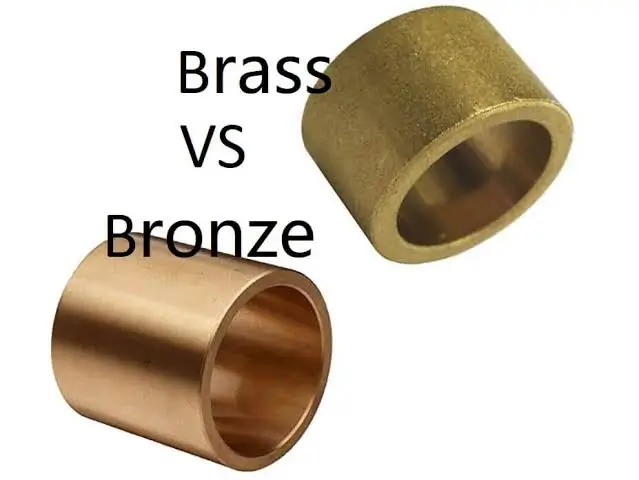
Table of Contents
1. Metallurgical Fundamentals: Compositional Distinctions between Copper-Zinc and Copper-Tin Systems
The foundational distinction between brass and bronze resides in their primary alloying elements. Brass comprises copper combined with zinc as the principal secondary constituent, creating a solid-solution system that exhibits excellent machinability and formability at moderate cost points. The zinc content typically ranges from 5% to 45%, with common bushing grades such as C37700 forging brass optimized for hot working and precision machining.
Bronze, conversely, encompasses the copper-tin alloy family, with tin serving as the primary strengthening element. The bearing bronzes, including C93200 (SAE 660) and CuSn10, derive their superior wear characteristics from the tin content, which promotes the formation of hard intermetallic phases and enhances the alloy’s resistance to adhesive wear. The 90% copper and 10% tin composition is recognized as particularly suitable for bearing applications under corrosive conditions, elevated temperatures, and high loads. Additional bronze categories include aluminum bronze, manganese bronze, and leaded tin bronze, each formulated for specific operational environments
2. Bearing Service Capabilities: Sustained Load and Wear Resistance
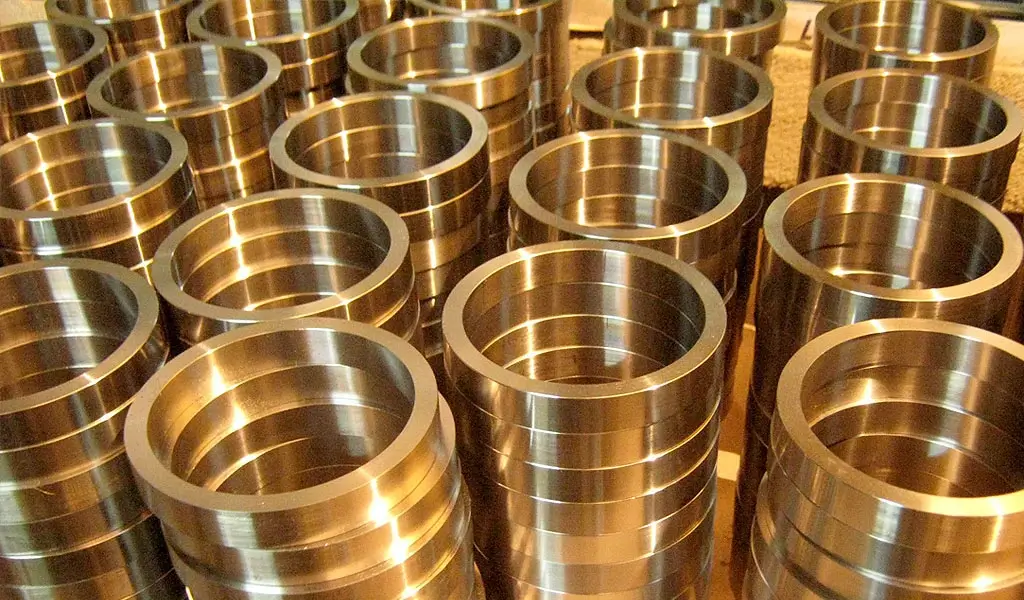
When evaluating materials for continuous rotary or oscillatory service, bronze demonstrates consistent superiority over brass. The bearing bronzes are engineered specifically for wear surfaces, possessing the capacity to embed contaminant particles harmlessly while maintaining smooth operation against steel shafts . Cast C93200 (SAE 660) bronze delivers exceptional performance under sustained radial and thrust loads when external lubrication is available, whereas sintered SAE 841 bronze provides maintenance-free operation through oil impregnation of its porous structure.
The tribological performance differential is supported by academic research comparing CuSn10 bronze and CuZn30 brass under identical test conditions. Studies conducted at 20 N load and 1500 rpm demonstrate that bronze exhibits lower friction coefficients and reduced weight loss compared to brass, particularly under lubricated conditions. The superior performance of bronze is attributable to the tin content, which enhances the alloy’s hardness and resistance to deformation under load. For heavy-duty industrial applications involving high loads or continuous operation, bronze consistently outperforms brass in service life metrics.
3. Machinability and Manufacturing Economics: The Brass Advantage
Brass’s higher zinc content confers exceptional machinability characteristics, making it the preferred material for cost-sensitive applications requiring extensive secondary operations. The leaded brass alloys achieve superior chip formation and reduced tool wear during machining processes, translating to lower production costs for complex geometries. C37700 forging brass, for instance, is specifically designed for hot forging operations with excellent dimensional stability and surface finish.
Bronze, while machinable, presents greater cutting resistance and requires more robust tooling and processing parameters. Leaded tin bronze alloys (such as C937) are formulated to improve machinability while maintaining adequate bearing properties, though they remain less economical than brass for high-volume machining operations. The trade-off between manufacturing cost and service life must be carefully evaluated when selecting materials for specific applications, as the initial cost advantage of brass may be offset by reduced component longevity in demanding service conditions.
4. Self-Lubrication Capabilities: Sintered Bronze vs. Solid Brass
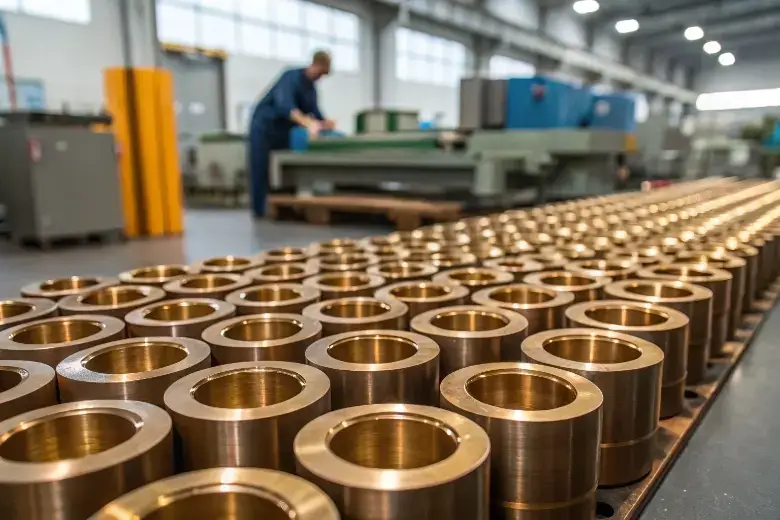
Sintered bronze bushings represent a distinct subcategory that offers self-lubricating performance through a porous bronze matrix impregnated with lubricating oil. These components, manufactured via powder metallurgy, achieve porosity volumes of approximately 28%, with the interconnected pores serving as reservoirs for mineral oil that is released during operation under applied force. Operating temperature ranges from -40°C to +220°C with maximum PV values that support continuous service without external lubrication.
Solid brass bushings lack this self-lubricating capability and require consistent external lubrication to maintain acceptable friction levels and prevent adhesive wear. The maintenance-free operational characteristic of sintered bronze makes it particularly suitable for applications with limited access, restricted space, or where routine lubrication maintenance is impractical. Standard sintered bronze compositions, such as SAE 841, are formulated for self-lubricating service with shaft hardness recommendations of 200-300 HB and surface roughness values of 0.2-0.8 μm R
5. Application-Specific Selection Criteria: Light-Duty vs. Heavy-Duty Service
The application environment ultimately determines the appropriate material selection for bushing components. Brass bushings are optimally employed in light-duty applications characterized by intermittent motion, low speeds, and minimal loads. Common applications include spacers, guides, valve stems, plumbing fixtures, and electrical equipment where dimensional precision and machinability are prioritized over wear resistance. The inherent softness of brass, while limiting its load-bearing capacity, can be advantageous in applications requiring conformability or where the bushing is intended to serve as a sacrificial component.
Bronze bushings are specified for heavy-duty service requiring sustained load capacity, wear resistance, and durability. Applications include automotive engine components, heavy machinery, industrial equipment, and construction machinery where high loads, abrasive conditions, or elevated temperatures are present. Cast bronze bushings provide enhanced strength for demanding environments, while sintered bronze offers self-lubrication for low-maintenance applications. The superior resistance to corrosion and impact of bronze components justifies their premium cost in applications where service life and reliability are critical.
6. Lubrication Requirements and Operational Parameters
Lubrication strategy differs substantially between brass and bronze bushing systems. Brass bushings require consistent external lubrication to prevent adhesive wear and maintain acceptable friction coefficients. The softer brass matrix is more susceptible to galling and seizure under boundary lubrication conditions, necessitating adequate oil or grease supply and regular maintenance intervals.
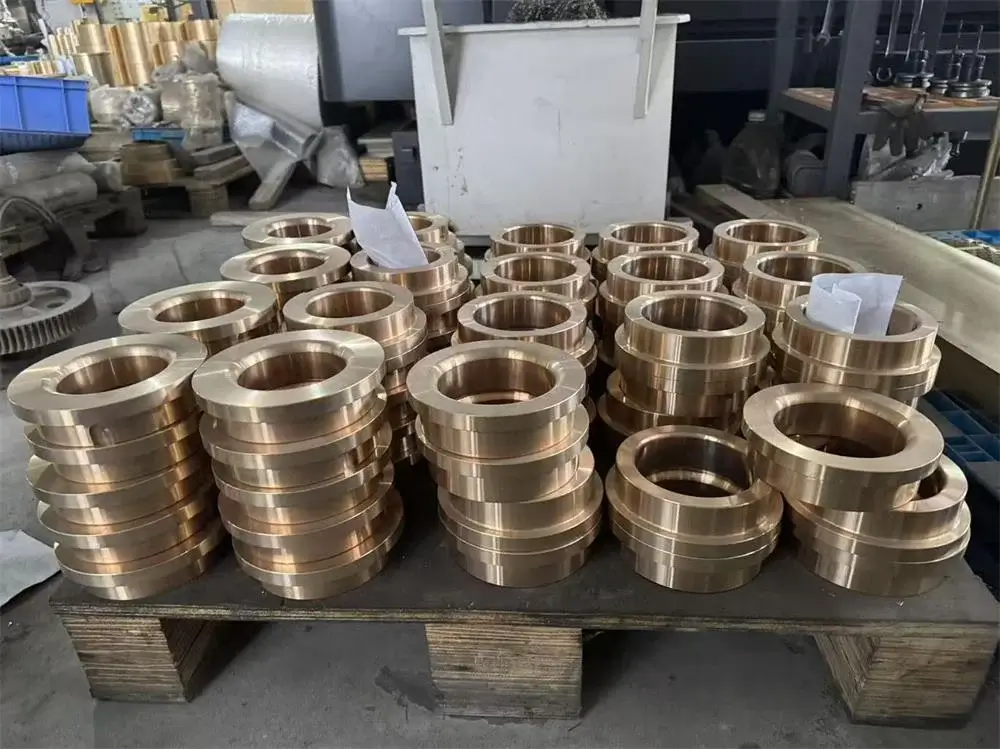
Bronze bushings accommodate a wider range of lubrication conditions depending on alloy formulation and manufacturing method. Cast bronze bushings with axial lubrication grooves (for bore diameters exceeding 14 mm) are designed for oil or grease lubrication, with the lubricant reducing friction, controlling wear, and preventing corrosion. Wrapped bronze bushings featuring diamond-shaped lubrication pockets are resistant to shock loads and vibration while operating in contaminated environments. The maximum permissible sliding velocity for sintered bronze bushings ranges from 0.25 to 5 m/s, with coefficients of friction from 0.05 to 0.10 under greased conditions.
Table 1: Comparative Operating Parameters for Copper-Based Bushing Alloy
| Parameter | Cast Bronze (C93200) | Sintered Bronze (SAE 841) | Brass (C37700) |
|---|---|---|---|
| Load Capacity | High | Medium | Low to Medium |
| Sliding Velocity (m/s) | 0.1-2.0 | 0.25-5.0 | 0.1-1.0 |
| Temperature Range (°C) | -40 to +150 | -40 to +220 | -40 to +150 |
| Lubrication | Required | Self-lubricating | Required |
| Wear Resistance | Excellent | Good | Fair |
| Machinability | Good | Moderate | Excellent |
| Relative Cost | High | Medium | Low |
| Shaft Hardness (HB) | 200-300 | 200-300 | 150-250 |
| Surface Roughness (Ra, μm) | 0.4-0.8 | 0.2-0.8 | 0.4-1.0 |
7. Installation Considerations and Dimensional Tolerances
Proper installation significantly influences bushing performance regardless of material selection. Recommended housing tolerances for bronze bushings typically follow H7 specification, with shaft tolerances ranging from e7 to f8 depending on application requirements. Press-fit installation requires careful attention to housing dimensions, as excessive interference can reduce bushing inner diameter and increase wear, while insufficient interference may permit rotation or migration within the housing.
For sintered bronze bushings, machining or grinding of the sliding surface after installation is contraindicated, as these operations can close surface pores and compromise oil impregnation. Storage and handling considerations include avoiding contact with absorbent materials that may wick lubricating oil from the porous matrix. Brass bushings, being non-porous, do not present these handling constraints but require more precise dimensional control during installation to achieve appropriate shaft clearance and press-fit retention.
8. Economic Considerations: Lifecycle Cost Analysis
The economic evaluation of brass versus bronze bushings must extend beyond initial procurement cost to encompass lifecycle performance metrics. Brass components offer lower material and machining costs, making them attractive for high-volume production where service conditions are non-demanding. However, the reduced wear resistance of brass translates to shorter service intervals and more frequent replacement in applications involving sustained load or continuous operation.
Bronze bushings command a higher initial cost but typically deliver extended service life and reduced maintenance requirements. The self-lubricating capability of sintered bronze bushings eliminates lubrication maintenance costs and reduces downtime for servicing, contributing to favorable lifecycle economics in production environments. For applications involving high-value equipment or where replacement access is constrained, the durability of bronze justifies its premium cost. The material selection decision should therefore be based on the total cost of ownership rather than the acquisition cost alone.
FAQ: Brass vs Bronze Bushing
Q1: What is the primary compositional difference between brass and bronze?
Brass is a copper-zinc alloy, while bronze is a copper-tin alloy. Additional elements such as lead, aluminum, or manganese may be present in both families for specific property enhancements .
Q2: Why are bronze bushings generally preferred over brass for bearing applications?
Bronze offers superior wear resistance, higher load capacity, and better embeddability of contaminants, making it more suitable for sustained bearing service .
Q3: Are there applications where brass bushings are more appropriate than bronze?
Yes, brass is appropriate for light-duty, low-load, intermittent applications where cost reduction and machinability are primary considerations .
Q4: What does “oil-impregnated” or “sintered” bronze mean?
Sintered bronze is manufactured via powder metallurgy, creating a porous structure that is impregnated with lubricating oil, providing self-lubricating, maintenance-free operation .
Q5: Do brass bushings require external lubrication?
Yes, brass bushings require consistent external oil or grease lubrication to maintain acceptable friction and prevent adhesive wear .
Q6: Can bronze bushings run without oil or grease?
Sintered bronze bushings can operate without external lubrication due to their oil-impregnated porous structure. Cast bronze bushings generally require external lubrication .
Q7: What is the recommended shaft hardness for bronze bushings?
The recommended shaft hardness is typically 200-300 HB for sintered bronze bushings and 150-400 HB for wrapped bronze bushings .
Q8: How does the coefficient of friction compare between brass and bronze bushings?
Bronze bushings, particularly sintered varieties, typically exhibit lower coefficients of friction (0.05-0.10) compared to brass in similar lubricated conditions .
Q9: What is the maximum operating temperature for bronze bushings?
Sintered bronze bushings can operate from -40°C to +220°C, while cast bronze and wrapped bronze applications range up to +150°C depending on lubricant selection .
Q10: Can flanged bushings be manufactured in both brass and bronze?
Yes, both materials are available in sleeve and flanged configurations, though bronze flanged bushings are more commonly specified for bearing applications .
Q11: Is it acceptable to machine or grind sintered bronze bushings after installation?
Machining or grinding the sliding surface of sintered bronze bushings is not recommended due to the risk of closing surface pores and compromising oil impregnation .
Q12: What is C93200 (SAE 660) bronze?
C93200 is a cast bearing bronze formulated for high load capacity, excellent wear resistance, and good anti-friction properties, widely used for bushing applications .
Q13: How are wrapped bronze bushings constructed?
Wrapped bronze bushings are manufactured from CuSn8 strip material that is formed and calibrated, featuring diamond-shaped lubrication pockets that release lubricant progressively .
Q14: Do bronze bushings corrode in wet environments?
Bronze offers excellent corrosion resistance, making it suitable for wet environments, with cast bronze being particularly resistant to corrosion .
Q15: What are the advantages of bronze bushings in robotics applications?
Bronze bushings provide precise movement control, reduced friction, quiet operation, and are available with custom tolerances for humanoid robot joints and linkages .
Q16: What are standard housing tolerances for bronze bushings?
Recommended housing tolerance is typically H7, with shaft tolerances ranging from e7 to f8 for different application requirements .
Q17: Can bronze bushings handle shock loads and vibration?
Yes, wrapped bronze bushings are specifically designed to be resistant to shock loads and vibrations, particularly in slow-speed, contaminated environments .
Q18: How does the cost of bronze compare to brass bushings?
Bronze bushings generally command a higher initial cost than brass, but offer extended service life and reduced maintenance, improving lifecycle economics .
Q19: What industries commonly use bronze bushings?
Bronze bushings are utilized in aerospace, automotive, agriculture, construction, energy, food processing, industrial machinery, and steel manufacturing sectors .
Q20: How should bronze bushings be stored before installation?
Sintered bronze bushings should be stored in their original packaging to prevent absorption of lubricating oil by contact with absorbent materials .
100000+ Types of Bushings – Contact Us for Details