
Recent Posts
Metallurgical Characteristics & Industrial Application Analysis of Bronze Bushings for Sliding Bearing Systems
Introduction
Bronze bushings represent the most widely adopted copper-based plain bearing components across global heavy manufacturing. Produced from tin bronze, aluminium bronze, manganese bronze and leaded bronze, these sliding sleeves rely on outstanding anti-friction performance, load-bearing capacity and corrosion resistance to replace rolling bearings in low-speed, high-load operating scenarios. With diversified casting technologies including continuous casting and centrifugal casting, bronze bushings can be manufactured as standard cylindrical sleeves, flanged bushings, thrust washers, graphite embedded self-lubricating bearings and custom machined wear plates.
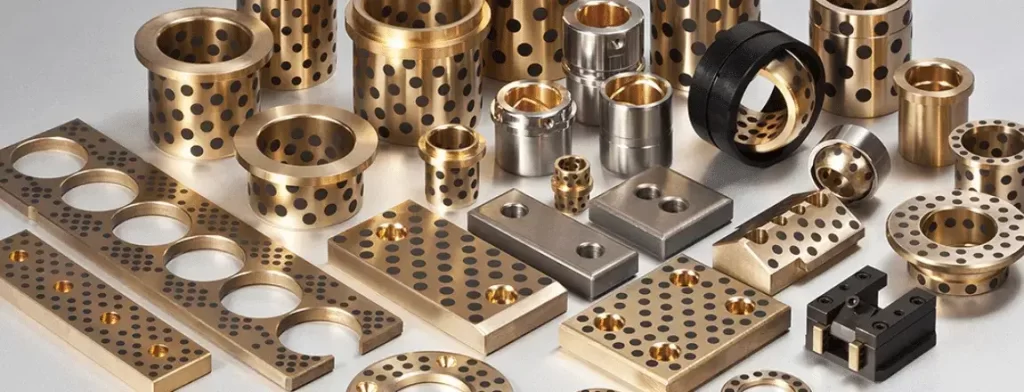
Table of Contents
1. Metallurgical Fundamentals of Bronze Bushing Alloys
- Leaded Tin Bronze (C93200 / SAE660): Universal bearing bronze with balanced friction properties, suitable for general industrial bushings
- Aluminium Bronze (C95400): High tensile strength, excellent corrosion resistance for marine and heavy impact conditions
- Manganese High-Tensile Bronze (C86300): Superior compression resistance, widely used for bridge turntables and heavy load sliding components
- High-strength Leaded Brass: Cost-effective alternative for medium-load low-speed equipment
| UNS Alloy Grade | Standard Specification | Alloy Category | Typical Features |
|---|---|---|---|
| C93200 | ASTM B505 / ASTM B271 / EN 1982 CC483K | Leaded Tin Bronze | Good embeddability, moderate load capacity, universal self-lubricating bushing base material |
| C95400 | ASTM B505 / ASTM B271 / EN 1982 CC333G | Aluminium Bronze | High strength, seawater corrosion resistance, anti-impact |
| C86300 | ASTM B22 / EN 1982 CC762S | Manganese Bronze (High Tensile Brass) | Outstanding compressive strength, heavy static load applications |
| CC493K (CuSn7ZnPb) | EN 1982 | Tin Zinc Lead Bronze | Excellent machinability, medium load general machinery |
| CC482K (CuSn11Pb2-C) | EN 1982 | High Lead Tin Bronze | Enhanced anti-friction, dry running adaptability |
- Moderate surface hardness to avoid scoring mating steel shafts
- Good thermal conductivity to dissipate friction heat and prevent thermal seizure
- Natural corrosion resistance against humidity, weak acid and alkaline working environments
- Alloy composition adjustable to realize oil-lubricated and maintenance-free self-lubricating solutions
2. Core International Standards Governing Bronze Bushings
2.1 ASTM B505 Standard
ASTM B505 defines technical requirements for copper alloy continuous castings. Continuous casting produces semi-finished bronze bars, tubes and profiles with uniform fine grain structure and low porosity. Raw materials made under ASTM B505 are the primary blanks for CNC machined bronze bushings, flanged sleeves and wear plates.
The standard regulates chemical composition range, tensile mechanical indicators, heat traceability, sampling test methods, and accepts both SI and inch-pound unit systems. Most standard-size bronze bushings for general machinery adopt continuous cast bronze conforming to ASTM B505.
2.2 ASTM B271 Standard
2.3 ASTM B22 Standard
2.4 EN 1982 European Standard
3. Mainstream Manufacturing Processes of Bronze Bushings
Continuous Casting + Precision CNC Machining (ASTM B505)
Continuous cast bronze bar/tube blanks are processed via turning, boring and milling into finished bushings. Advantages: stable dimensional tolerance, suitable for mass production of standard cylindrical bronze bushings, flanged bronze sleeves, bronze thrust washers.
Centrifugal Casting + Finish Machining (ASTM B271)
Molten bronze solidifies under centrifugal force to form seamless tubular castings. Internal porosity and shrinkage defects are significantly reduced. This process is dominant for graphite bronze self-lubricating bushings, large-size custom bronze bearing sleeves under heavy load.
4. Classification of Bronze Bushings Based on Structural Form
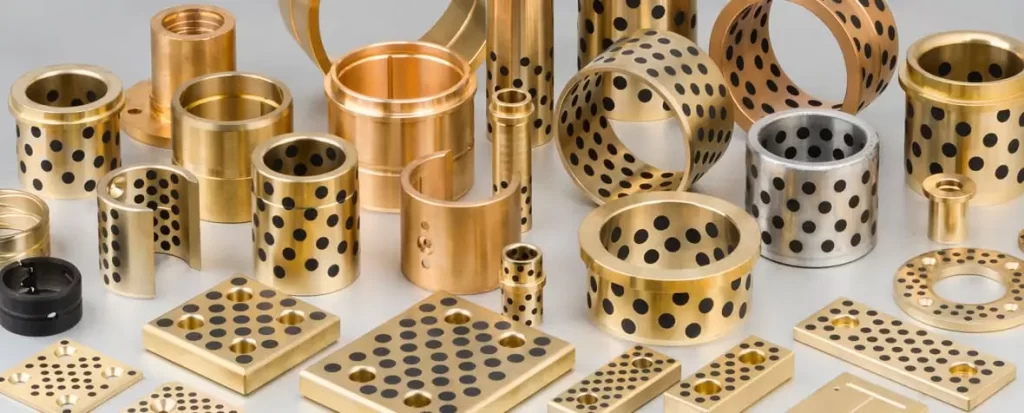
- Cylindrical Bronze Bushing: Basic straight sleeve design for radial load transmission; widely used in gearboxes, conveyor equipment and pump assemblies
- Flanged Bronze Bushing: Integrated flange structure prevents axial separation from mounting plates. Highly recommended for high-load low-speed equipment such as construction machinery, injection moulding machines and hydraulic components
- Thrust Bronze Washer / Bronze Wear Plate: Bear axial thrust load, applied for rotary joints, turntables and clamping mechanisms
- Graphite Embedded Self-Lubricating Bronze Bushing: Solid graphite lubricant inserts distributed on bronze substrate. Realizes dry running performance without continuous oil supply, ideal for maintenance-limited working conditions
- Split Bronze Bushing: Convenient installation and disassembly for equipment overhaul, commonly adopted on large engineering machinery
5. Working Mechanism of Self-Lubricating Bronze Bushings
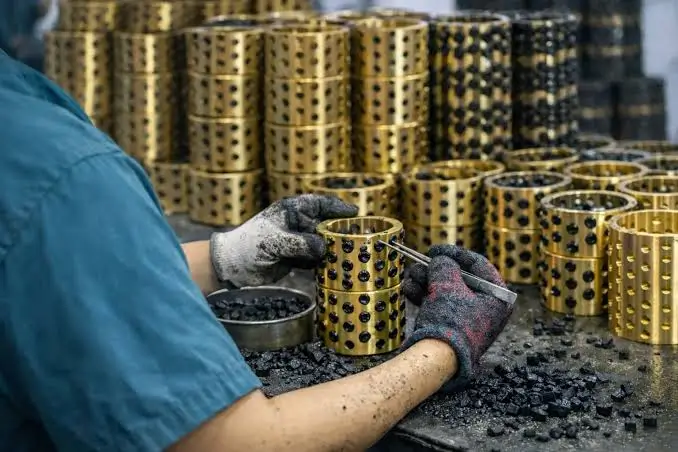
Self-lubricating bronze bushings are the fastest-growing bronze bearing product category in modern industry. The graphite embedded bronze bushing represents the mature mainstream design.
Metallurgical cooperation principle between bronze matrix and graphite:
The bronze alloy matrix provides sufficient mechanical strength to bear external load. During sliding friction, local high temperature triggers graphite precipitation from embedded holes. A stable low-friction transfer film forms between bushing inner surface and mating steel shaft. This film avoids direct metal-to-metal contact and reduces wear rate significantly.
6. Typical Industrial Application Scenarios of Bronze Bushings
- Construction & Engineering Machinery: Excavator hinge points, loader connecting rods, crane sliding assemblies (flanged graphite bronze bushings)
- Automotive Industry: Chassis linkages, suspension joints, gearbox sliding sleeves
- Marine & Offshore Equipment: Aluminium bronze bushings with seawater corrosion resistance
- Injection Mould & Die Casting Machinery: Guide sleeves, wear plates
- Agricultural Machinery: Harvesters, tractor rotary connection components
- Hydraulic & Pneumatic Equipment: Pump body sliding sleeves, valve group wear parts
- Infrastructure Equipment: Bridge turntable bearings, heavy-duty gate hinge components
- Steel & Metallurgical Equipment: High-temperature conveyor sliding bearings
- General Automation Equipment: Conveyors, packaging machinery linear sliding assemblies
7. Key Parameters for Bronze Bushing Model Selection
- Load type and magnitude (radial load, axial thrust, impact load)
- Operating linear speed; bronze bushings perform best under low-speed sliding
- Lubrication condition: continuous oil lubrication or dry self-lubricating operation
- Ambient environment: temperature, humidity, dust, corrosive medium
- Shaft material, surface roughness and hardness of mating shaft
- Dimensional boundary: inner diameter, outer diameter, length, flange size, installation space
- Compliance requirement: ASTM standard for American customers, EN 1982 for European buyers
- Allowable maintenance cycle and expected service life
8. Common Failure Modes & Preventive Measures for Bronze Bushings
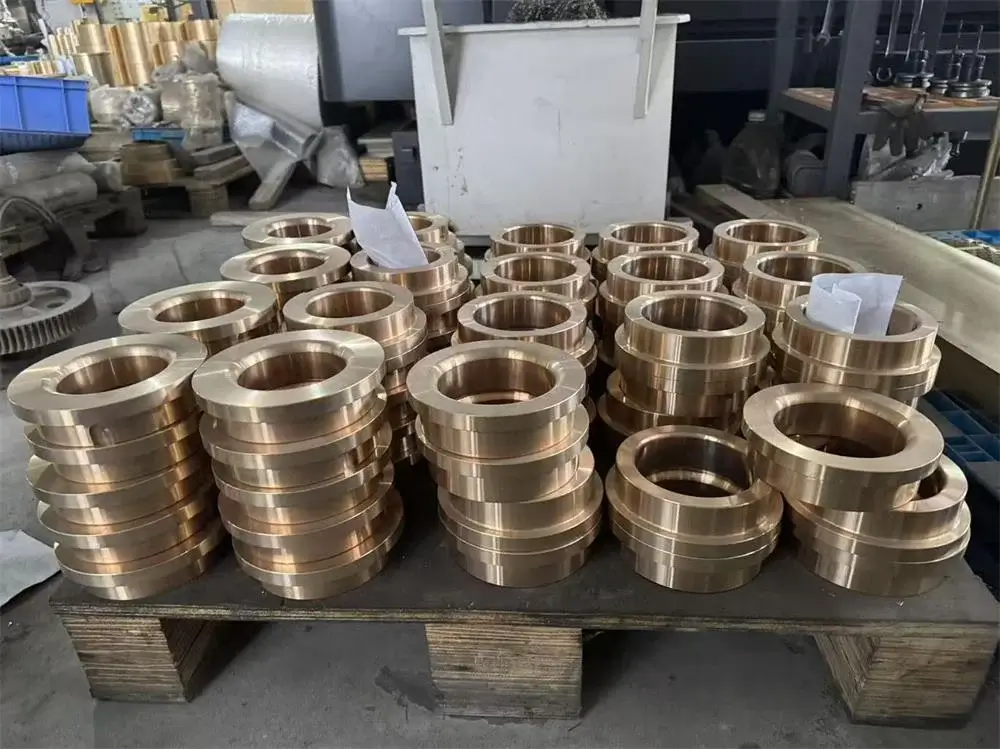
8.1 Common Failures
- Adhesive wear / seizure: Insufficient lubrication, excessive surface pressure
- Abrasive wear: Dust and hard particle pollution entering friction surfaces
- Fatigue cracking: Reciprocating impact load exceeding alloy fatigue limit
- Corrosion degradation: Unsuitable bronze alloy selected for corrosive environments
- Flange fracture: Poor casting metallurgical quality or overloading on flanged bushings
8.2 Preventive Solutions
- Select matched alloy grade according to load and environment (aluminium bronze for corrosion, C93200 for general wear resistance)
- Adopt graphite self-lubricating bronze bushings for dry-running sites
- Source raw materials strictly conforming to ASTM B505, B271 or EN 1982 to avoid inferior porous castings
- Control assembly clearance within recommended tolerance range
- Add dust sealing structures for dusty operating conditions
9. Advantages of Custom Bronze Bushings & Procurement Suggestions
Recommended Supplier: MYWAY Bronze Bushings
 Available alloy grades: C93200 bearing bronze, C95400 aluminium bronze, C86300 manganese bronze, full series EN 1982 bronze alloys
Product range: cylindrical bronze bushings, flanged bronze bushings, graphite self-lubricating bronze bearings, wear plates, bronze nuts, bronze worm gears, custom machined bronze parts
Processing capacity: Standard stock for immediate delivery, custom production based on customer CAD/PDF drawings; support small batch prototype orders and large-volume bulk orders with volume discount
Quality guarantee: Complete chemical composition inspection, mechanical performance testing, material certification; all products follow ASTM B505, ASTM B271, ASTM B22 and EN 1982 standards
Service: Professional metallurgy engineers provide free alloy selection guidance, rapid quotation within working hours, global stable shipping
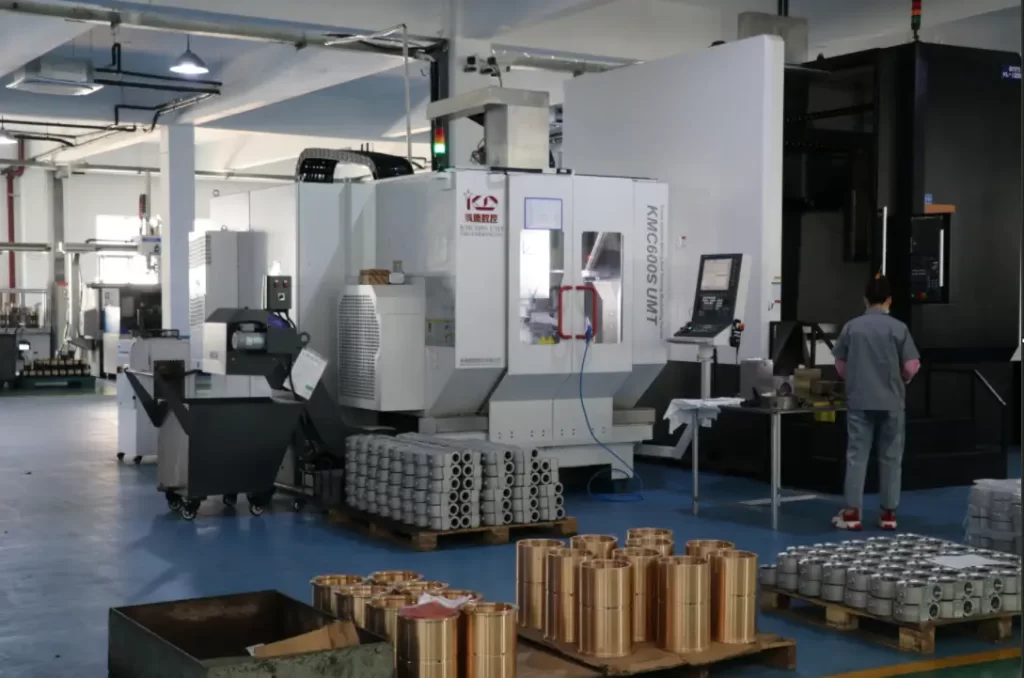
FAQ
Q1: What is the difference between bronze bushing and brass bushing?
A1: Bronze bushing uses copper-tin, copper-aluminium alloy, better wear resistance for sliding bearing. Brass bushing is copper-zinc alloy, mainly used for low-load structural sleeves.
Q2: Which standard should be chosen for centrifugal cast bronze bushings?
A2: Centrifugal cast bronze bushings shall follow ASTM B271; European customers can select materials conforming to EN 1982.
Q3: What is ASTM B505 bronze used for?
A3: ASTM B505 covers continuous cast bronze blanks, mainly processed into standard bronze bushings, wear plates and thrust washers via CNC machining.
Q4: Is C86300 manganese bronze governed by ASTM B22?
A4: Yes, ASTM B22 specifies UNS C86300 manganese bronze castings for heavy-load sliding components and turntable bearings.
Q5: What are self-lubricating graphite bronze bushings?
A5: Bronze matrix embedded with solid graphite plugs, capable of dry running without continuous oil or grease supply.
Q6: Are flanged bronze bushings better than ordinary cylindrical bushings?
A6: Flanged design provides axial positioning, prevents component separation on mounting plates; preferred when thrust load or axial movement risk exists.
Q7: What alloy grade is the universal bearing bronze?
A7: C93200 (SAE660) leaded tin bronze is the most widely used universal bearing bronze alloy.
Q8: Can bronze bushings work permanently without lubrication?
A8: Graphite embedded bronze bushings support long-term dry operation; pure cast bronze bushings still require regular lubricant supplement.
Q9: What maximum speed is suitable for bronze bushings?
A9: Bronze bushings are low-speed sliding bearings; optimal operating linear speed is below 0.8 m/s.
Q10: Can aluminium bronze bushings be used in seawater environment?
A10: Yes, C95400 aluminium bronze features excellent seawater corrosion resistance for marine machinery.
Q11: What is EN 1982 standard?
A11: European unified standard for cast copper alloys, widely required by machinery manufacturers in EU countries.
Q12: Can MYWAY produce bronze bushings according to customer drawings?
A12: Yes, MYWAY accepts fully customized bronze bushings based on customer 2D/3D drawings, special sizes and special graphite layout requirements.
Q13: What is the service life difference between continuous cast and centrifugal cast bronze bushings?
A13: Centrifugal casting achieves denser metallurgical structure, better for heavy impact load; continuous casting suits stable medium-load continuous operation.
Q14: Do bronze bushings need surface plating treatment?
A14: Standard bronze bushings normally do not require plating; plating can be customized if special anti-corrosion demand exists.
Q15: What clearance should be reserved between bronze bushing and shaft?
A15: General recommended fit clearance range is H7/f8, engineers can adjust according to operating temperature and load.
Q16: Are graphite bronze bushings suitable for high-temperature environments?
A16: Adaptable within -40°C ~ +300°C, applicable for high-temperature mould and metallurgical auxiliary equipment.
Q17: What industries commonly adopt flanged graphite bronze bushings?
A17: Construction machinery, injection mould machines, hydraulic equipment, agricultural machinery and automation tooling.
Q18: Does MYWAY offer volume discounts for bulk bronze bushing orders?
A18: Yes, tiered price discounts are available for large-quantity orders; consult sales team for detailed price list.
Q19: Can MYWAY provide material test certificates for bronze bushings?
A19: Yes, chemical composition and mechanical test certification documents can be provided upon request.
Q20: How long is the lead time for custom bronze bushings at MYWAY?
A20: Standard stock items can be shipped within 3–7 days; custom machined bronze bushings require 10–20 working days depending on complexity and order quantity.
100000+ Types of Bushings – Contact Us for Details