
Recent Posts
Wear Plates: Material Performance, Metallurgical Working Conditions & Matched Wear Protection Solutions
Introduction
Severe abrasion, continuous impact, high-temperature erosion and material friction are persistent bottlenecks restricting stable production in metallurgy, mineral processing and heavy industrial manufacturing. Wear plates, also known as abrasion-resistant liners or slide plates, serve as sacrificial protective components installed on equipment contact surfaces to bear abrasive load, buffer impact force and avoid premature failure of expensive main equipment structures. Improper material selection of wear plates will trigger frequent shutdown maintenance, soaring spare parts consumption and increased overall operating costs.
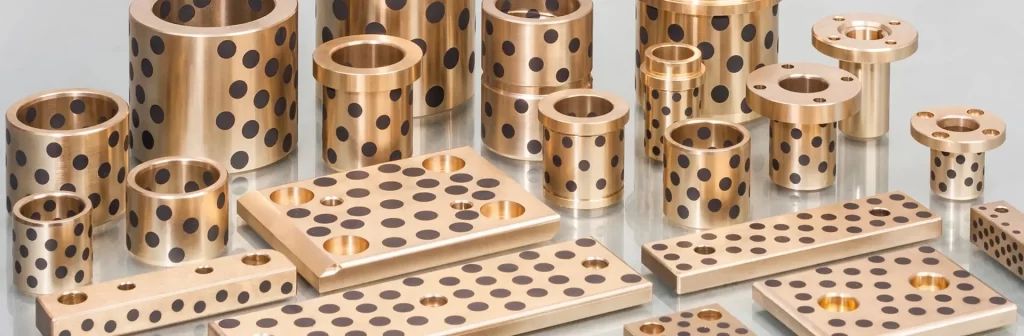
Table of Contents
1. Definition & Core Working Mechanism of Industrial Wear Plates
Wear plate is a general term for flat structural components customized to resist abrasion, impact, erosion and friction. Multiple alias terms widely searched in global industry include wear liner, abrasion resistant plate, slide wear plate, wear strip, composite wear liner, hardfacing plate.
From the perspective of metallurgical tribology, wear mainly falls into abrasive wear, impact wear, thermal fatigue wear and adhesive wear. Wear plates act as a buffer barrier: external load and material friction first act on the surface of wear plates. As replaceable vulnerable parts, they protect the base equipment frame, hopper, chute, roller way and crusher housing.
Two core design ideas exist in industrial wear plates: homogeneous alloy integrated forming and bimetallic composite cladding. Homogeneous wear plates rely on integral alloy composition and heat treatment to obtain hardness and toughness. Composite wear plates adopt metallurgical bonding, using low-carbon steel as the substrate to provide toughness, and high-hardness alloy layer to undertake anti-wear tasks.
2. Main Classification of Wear Plates & Material Performance Comparison
| Wear Plate Type | Typical Material Grade | Hardness Index | Impact Resistance | Max Service Temperature | Main Wear Characteristic |
|---|---|---|---|---|---|
| Quenched & Tempered Abrasion Resistant Steel Plate | AR400, AR500, NM400, NM500 | HB400~530 | Medium-High | ≤350℃ | Balanced abrasion and impact resistance, easy cutting, bending and welding |
| High Manganese Steel Wear Plate | Mn13 / X120Mn12 | Initial HB220~280, work hardening up to HB550 | Excellent | ≤400℃ | Outstanding dynamic impact resistance, hardens under repeated impact load |
| Chromium Carbide Overlay Composite Plate (CCO) | High chromium alloy overlay + mild steel base | HRC58~65 | Low-Medium | ≤500℃ | Superior anti-abrasive performance for fine ore sliding wear |
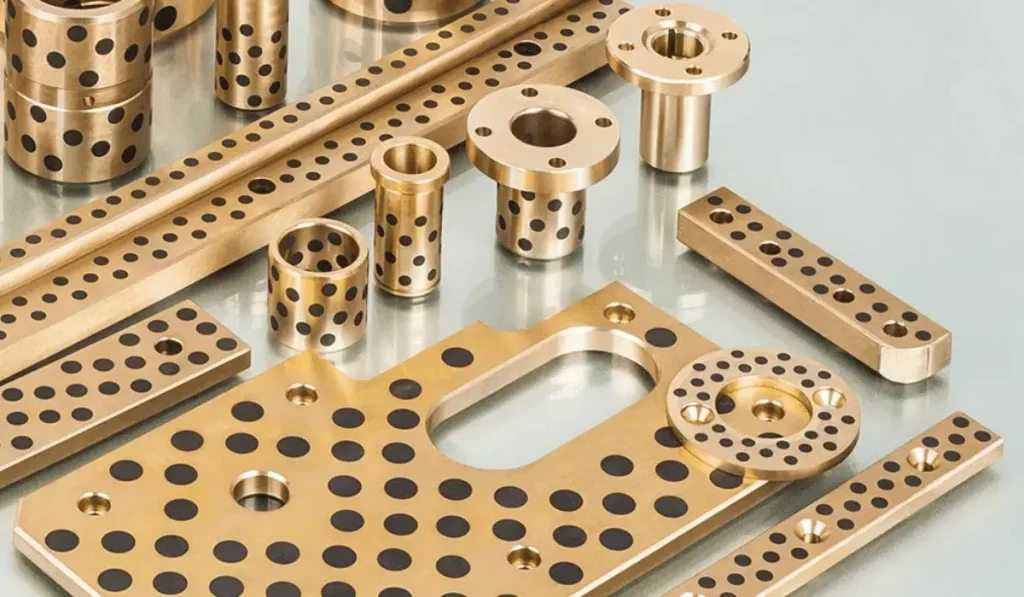
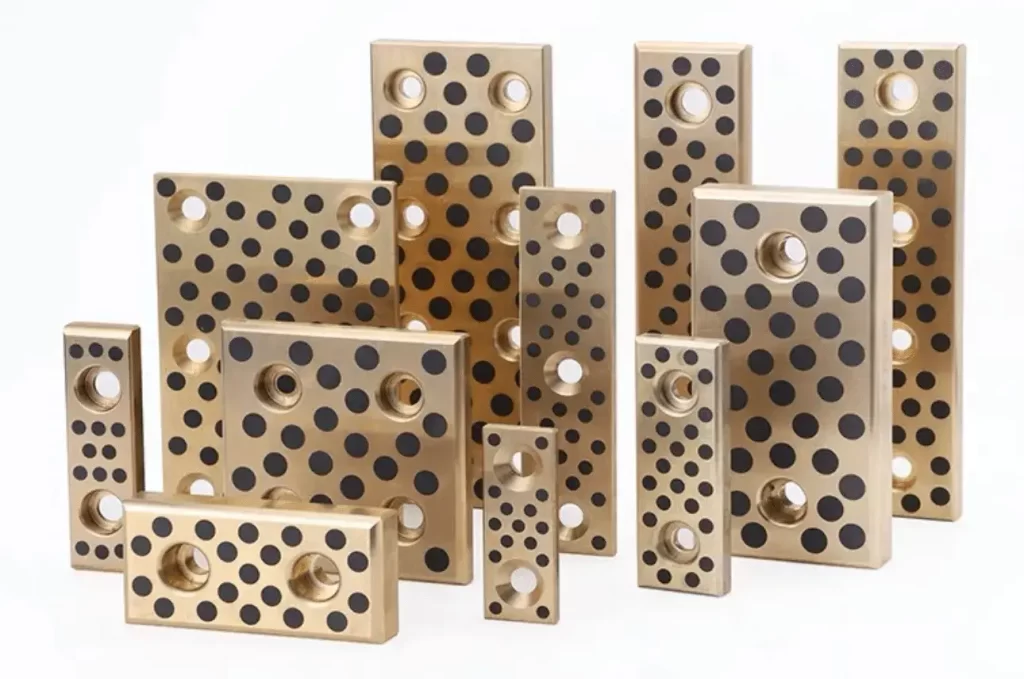
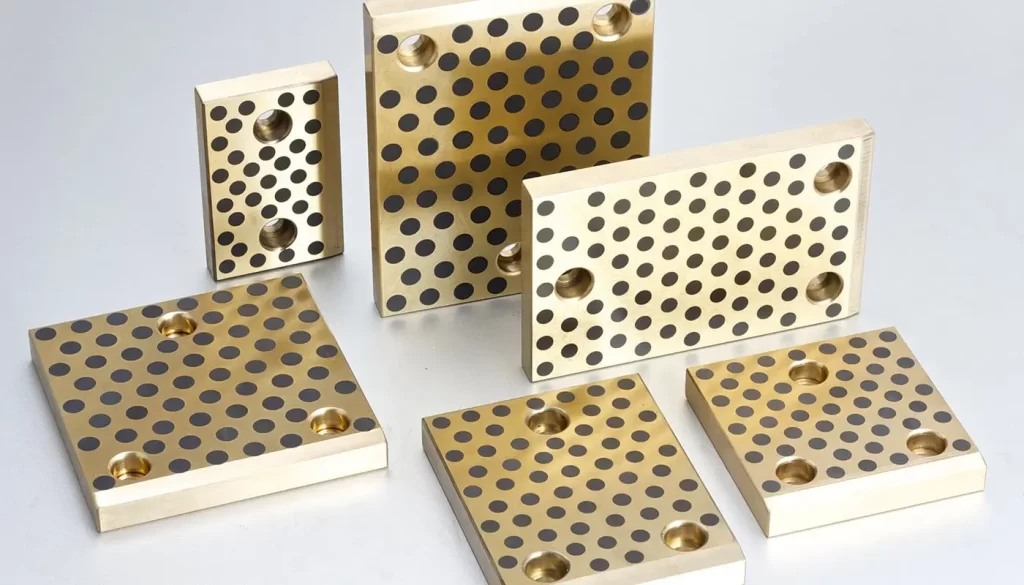
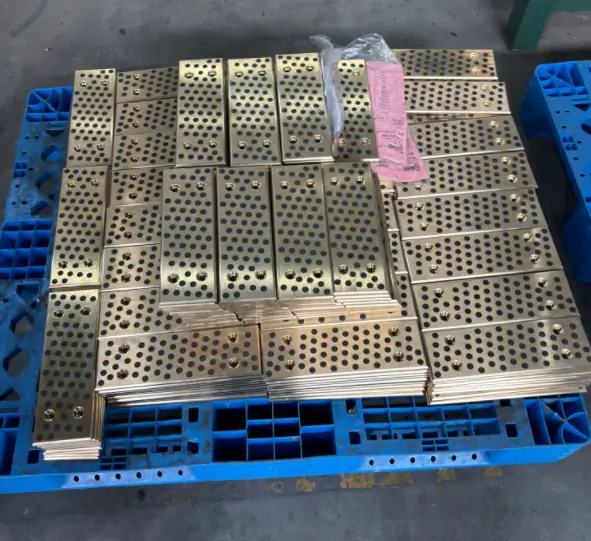
| Bronze Alloy / Self-lubricating Wear Plate | Aluminum bronze, tin bronze, graphite embedded bronze | HB120~220 | Medium | ≤280℃ |
3. Core Functional Value of Wear Plates in Metallurgical Systems
3.1 Sacrificial protection: Prevent direct abrasion of equipment base metal. The replacement cost of wear plates is far lower than repairing or replacing integral metallurgical equipment.
3.2 Vibration and impact buffering: Absorb instantaneous impact generated by bulk ore, molten slag and sintered materials, reduce structural fatigue cracking.
3.3 Friction control: Self-lubricating wear plates effectively lower friction coefficient, reduce equipment driving power consumption.
3.4 High-temperature anti-erosion: Alloy wear plates resist thermal scour from high-temperature raw materials and slow thermal fatigue peeling.
3.5 Modular maintenance: Split-type wear plate design allows partial replacement, avoiding overall disassembly of large metallurgical equipment and shortening downtime.
4. Typical Application Scenarios of Wear Plates in Ferrous Metallurgy
- Sinter plant: Mixer liner, sinter machine grate guard plate, feeding chute wear liner
- Blast furnace system: Charging hopper plate, raw material chute, slag conveying channel wear plate
- Steelmaking workshop: Ladle slag baffle, molten slag transfer chute, vibrating feeder liner
- Steel rolling line: Roller table guard plate, straightener slide plate, rolling mill guide wear plate
5. Wear Plate Application for Non-Ferrous Metallurgy & Mineral Processing
- Crushing system: Jaw crusher liner, cone crusher side guard plate, feeding hopper wear liner
- Conveying system: Ore chute, slurry pipeline transition lining, silo bottom wear plate
- Flotation & leaching workshop: Slag tank liner, agitator wear baffleNon-ferrous metallurgy often selects corrosion-resistant composite wear plates. When sliding friction between metal parts exists, bronze wear plates coordinate with shaft sleeves to form complete friction pairs.
6. Key Factors to Guide Wear Plate Material Selection
Many purchasers only take surface hardness as the selection standard, which easily causes premature plate cracking or excessive cost waste. The four decisive factors must be comprehensively evaluated:
6.1 Wear mechanism: Sliding abrasive wear → CCO plate; heavy repeated impact → high manganese steel; mixed friction between metal components → bronze self-lubricating wear plate
6.2 Working temperature: Long-term temperature above 350℃ avoid ordinary quenched abrasion resistant steel
6.3 Impact load intensity: High impact scenarios prohibit high-hardness brittle CCO plate
6.4 Processing requirement: If on-site bending, welding and cutting are needed, choose AR steel or high manganese steel instead of thick-layer CCO composite plate
7. Common Failure Forms of Wear Plates & Preventive Measures
- Abrasive thinning: Reason: Long-term sliding friction. Solution: Increase plate thickness or adopt higher-grade composite wear plate
- Alloy layer peeling of CCO plate: Reason: Excessive impact load. Solution: Switch to high manganese steel or AR500 plate
- Thermal fatigue crack: Reason: Alternating cold and hot load. Solution: Optimize alloy composition, reserve thermal expansion gap during installation
- Corrosion failure: Reason: Acid-base slurry environment. Solution: Add anti-corrosion alloy coating or select stainless composite wear plates
8. Collaborative Wear Protection: Wear Plate + MYWAY Bushing Integrated Solution
Most metallurgical equipment contains two wear systems: planar sliding friction protected by wear plates, and rotary shaft friction supported by shaft sleeves. Separate procurement of wear plates and bushings from different suppliers leads to mismatched friction pair materials, inconsistent service life and frequent staggered maintenance shutdowns.
MYWAY is a professional manufacturer of wear-resistant metal components with rich experience serving metallurgy, mining and crushing industries. While matching customized wear plates, MYWAY supplies complete series of bronze bushings, self-lubricating composite sleeves, cone crusher bushings and plain bearings.
Advantages of supporting solution:
① Consistent material compatibility: Wear plates and MYWAY bushings are jointly optimized for friction matching, reduce abnormal biting and abrasion;
② Synchronized service cycle: Vulnerable parts achieve similar service life, reduce repeated shutdown replacement;
③ One-stop technical service: Provide working condition analysis, material selection recommendation, customized size processing;
④ Stable supply chain: Standard parts in stock, non-standard castings and machining supported;
⑤ Global logistics support, suitable for overseas metallurgical plant project procurement.
If your metallurgical project needs wear plate sample testing, drawing customization or overall wear part scheme evaluation, please send working condition parameters and equipment drawings to contact MYWAY for detailed quotation.
9. Installation, Processing & Daily Maintenance Specifications of Wear Plates
9.1 Processing: AR steel and high manganese steel can be cut, bent and welded. CCO overlay plate is not suitable for sharp bending to prevent overlay peeling.
9.2 Installation: Reserve expansion gaps for high-temperature working conditions; adopt countersunk bolt fixation or welding fixation according to equipment structure.
9.3 Inspection: Regularly measure residual thickness of wear plates, arrange replacement before thickness reaches safety limit.
9.4 Cleaning: Remove accumulated ore and slag regularly to avoid material accumulation forming secondary abrasive medium.
FAQ:
Q1: What is the difference between wear plate and wear liner?
A1: In the metallurgical industry, the two terms are often interchangeable. Generally, wear plate refers to flat sliding protective parts; wear liner mostly refers to curved lining plates installed inside hoppers, chutes and crushers.
Q2: Which wear plate has the longest service life under sliding abrasive wear?
A2: Chromium carbide overlay CCO composite wear plate delivers the best performance under pure sliding abrasion without heavy impact.
Q3: Can high manganese steel wear plates work continuously under high temperature above 400℃?
A3: Long-term working temperature exceeding 400℃ will cause high manganese steel phase transformation, lose work hardening performance, not recommended.
Q4: Is AR500 wear plate weldable?
A4: Yes. AR400/AR500 quenched abrasion resistant steel can be welded, preheating treatment is suggested for thick plates over 20mm.
Q5: Can CCO wear plates be bent for arc-shaped lining processing?
A5: Only small bending radius is allowed. Severe bending will lead to cracking and peeling of the hard alloy overlay layer.
Q6: What thickness specifications are conventional for metallurgical wear plates?
A6: Common total thickness ranges from 6mm to 50mm. Composite CCO plate: substrate 3–10mm, alloy overlay 3–8mm.
Q7: Does MYWAY provide customized wear plates and matching bushings at the same time?
A7: Yes. MYWAY supports integrated customization of wear plates and various bronze bushings, self-lubricating sleeves for metallurgical equipment.
Q8: Which material should be selected for wear plates under impact + abrasion combined working conditions?
A8: High manganese steel Mn13 or AR500 abrasion resistant steel plate is preferred.
Q9: Are bronze wear plates suitable for ore material direct impact abrasion?
A9: Not suitable. Bronze wear plates are designed for metal-to-metal sliding friction, not for direct impact of hard ore.
Q10: How to calculate the expected service life of wear plates?
A10: It needs to combine ore hardness, impact frequency, material flow rate, operating hours; we can provide life prediction after receiving working condition data.
Q11: Can wear plates be repaired after local abrasion?
A11: Minor wear can be repaired by surfacing welding; if cracks appear, overall replacement is recommended to avoid sudden failure.
Q12: What is the difference between NM500 and AR500 wear plate?
A12: NM series is Chinese standard abrasion resistant steel; AR series is international standard quenched wear resistant steel, similar hardness range, different production standards.
Q13: Can wear plates resist corrosive slurry in hydrometallurgy?
A13: Ordinary carbon-based wear plates cannot resist acid slurry. Custom composite anti-corrosion wear plates need to be adopted.
Q14: What surface hardness can CCO chromium carbide overlay wear plate reach?
A14: Surface hardness stabilizes at HRC 58–65.
Q15: What is the minimum order quantity for MYWAY wear plates and bushings?
A15: Standard bushing models support small batch orders; customized wear plates depend on processing technology, contact sales for details.
Q16: Is pre-installation surface treatment required for wear plates?
A16: Remove rust and oxide scale before installation; anti-rust coating can be applied for long-term storage.
Q17: Can wear plates reduce equipment operation noise?
A17: Properly installed wear plates can buffer impact and effectively lower metal collision noise inside metallurgical equipment.
Q18: Which wear plate matches cone crusher inner friction surface?
A18: Bronze self-lubricating wear plates cooperate with MYWAY crusher bronze bushings to form optimal friction pairs.
Q19: How to avoid bolt loosening of wear plates during long-term operation?
A19: Use lock washers, regularly fasten bolts during routine maintenance, and select thickened wear plates to reduce vibration deformation.
Q20: How to send inquiries to MYWAY for wear protection solutions?
A20: Provide equipment type, working temperature, wear form, required material, size drawing and quantity. Our technical team will feed back material selection plan and quotation quickly.
100000+ Types of Bushings – Contact Us for Details