
Recent Posts
Metallurgical Copper Components: A Complete Guide to Alloy Selection, Applications, and Performance
Introduction
Metallurgical copper components form the backbone of heavy industry, from continuous casting molds in steel mills to high-load bushings in mining equipment. This guide examines the metallurgical principles behind copper alloy selection, compares the performance of bronze versus brass in demanding applications, and explores how modern surface treatment technologies extend component life. We also address the growing role of copper in electrification and renewable energy infrastructure. For engineers and procurement specialists, understanding these factors means the difference between a component that lasts months and one that lasts decades.
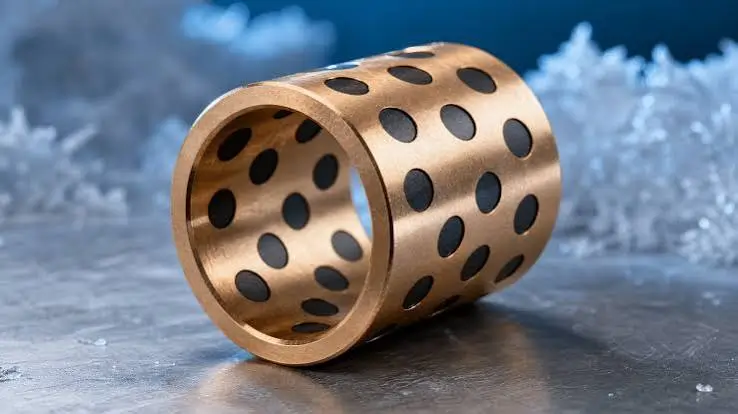
Table of Contents
1. What Makes Copper the Metallurgical Workhorse?
Copper sits in a unique position in the metallurgical hierarchy. It conducts heat and electricity exceptionally well—second only to silver among commercial metals—yet it also possesses an inherent resistance to corrosion that makes it valuable in environments where steel would rapidly deteriorate. When you alloy copper with tin, zinc, aluminum, or nickel, the resulting materials span an extraordinary range of mechanical properties.
The metallurgical appeal of copper alloys stems from their crystal structure. Copper has a face-centered cubic lattice, which provides excellent ductility and toughness even at cryogenic temperatures. This structure also allows for significant solid-solution strengthening when other elements are introduced. Tin, for instance, dissolves into the copper matrix and distorts the lattice, increasing hardness and wear resistance without the brittleness that would accompany a similar addition to iron.
In metallurgical equipment specifically, copper alloys serve functions that few other materials can match. Continuous casting molds require rapid heat extraction to solidify molten steel—copper’s thermal conductivity makes this possible. Blast furnace tuyeres and converter oxygen lance nozzles face both extreme heat and abrasive conditions, where copper alloys with protective surface treatments outperform many alternatives
The global copper busbar market, valued as a bellwether for broader copper component demand, is projected to grow at 6.19% CAGR through 2032, driven largely by transmission infrastructure, urbanization, and electrification. This growth trajectory reflects copper’s expanding role in energy systems, from grid-scale busbars to the intricate conductive components inside electric vehicle battery packs
2. Bronze vs. Brass: The Critical Distinction
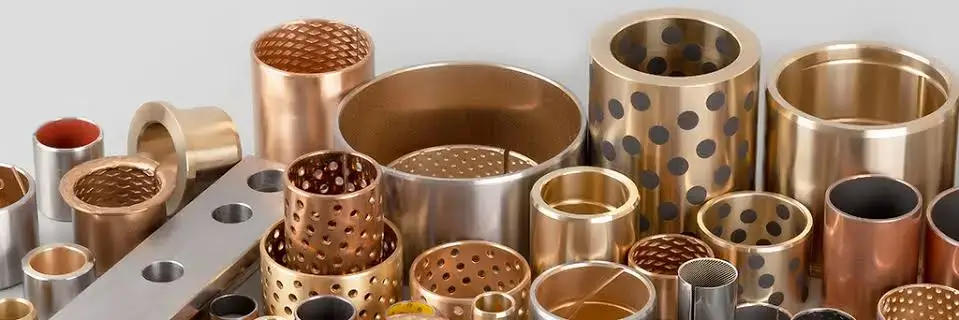
One of the most common specification errors in industrial procurement is treating bronze and brass as interchangeable. They are not. Both are copper-based alloys, but their secondary alloying elements create fundamentally different performance profiles.
Brass is copper alloyed primarily with zinc, typically ranging from 5% to 45% zinc content. The result is a material that machines beautifully, conducts electricity efficiently, and offers good corrosion resistance in indoor or non-aggressive environments. Red brass (85–95% copper) provides better corrosion resistance than yellow brass, while leaded brass (1–3% lead) achieves superior machinability for precision components. The trade-off: brass is softer than bronze and prone to dezincification in saltwater or acidic conditions.
Bronze, by contrast, centers on copper-tin alloys, often with additional elements like phosphorus, aluminum, or silicon. Tin bronze (typically 88% copper, 12% tin) delivers the wear resistance and low friction that make it the default choice for bushings and bearings in heavy machinery. Phosphor bronze adds small amounts of phosphorus for improved fatigue resistance and elasticity. Aluminum bronze brings high strength and chemical corrosion resistance to marine and oil-and-gas applications.
The practical implications of this distinction are significant. A brass bushing installed in a mining crusher will deform and wear rapidly under high loads. The same component in bronze—particularly a wrought phosphor bronze like CuSn8—can withstand surface pressures up to 150 MPa and yield strengths exceeding 600 MPa in hard-rolled tempers. This is not marginal improvement; it is the difference between a service life measured in weeks versus years.
For metallurgical equipment, bronze dominates where friction, impact, and corrosion converge. Brass finds its niche in electrical connectors, valve components, and light-duty applications where machinability and conductivity matter more than raw wear resistance.
3. Key Alloys and Their Industrial Roles
The copper alloy family tree extends far beyond simple bronze and brass. Understanding the specialized grades reveals why metallurgists specify particular formulations for particular failure modes.
Phosphor Bronze (CuSn8 / CW453K) represents the gold standard for heavy-duty bushings and wear plates. The 8% tin content creates a robust solid-solution structure, while trace phosphorus refines grain size and boosts stiffness. This alloy excels in hydraulic cylinders and construction machinery where stick-slip effects would otherwise cause jerky, inconsistent motion. Its fatigue strength surpasses lower-tin bronzes like CuSn5 and CuSn6, making it suitable for millions of load cycles in high-vibration environments.
Aluminum Bronze trades some of phosphor bronze’s friction characteristics for dramatically improved corrosion resistance and strength. In marine and chemical processing applications, aluminum bronze components resist both saltwater and aggressive chemicals that would degrade other copper alloys. The trade-off: aluminum bronze is harder to machine and can be less forgiving in boundary lubrication conditions.
Anti-Galling Copper Alloys represent a specialized category engineered for applications where conventional lubricants cannot be used. Waukesha Metal 126 (WM126), for example, is a proprietary copper-based alloy that resists seizing and material transfer during metal-to-metal contact. Its composition—copper with tin, chromium, aluminum, zinc, and manganese—delivers 50 ksi tensile strength and 150 BHN hardness while preventing the surface damage that would ruin food processing equipment or sanitary machinery.
Copper-Rare Earth Master Alloys serve a different function entirely. These are not structural components but rather precursors for other metallurgical processes. CuNd, CuPr, and Cu-Mischmetal systems provide precise rare-earth additions for magnet manufacturing, grain refinement, and alloy development. The NdFeB permanent magnet industry, for instance, relies on copper as a microstructural stabilizer to improve coercivity and corrosion resistance in EV motors and wind turbines.
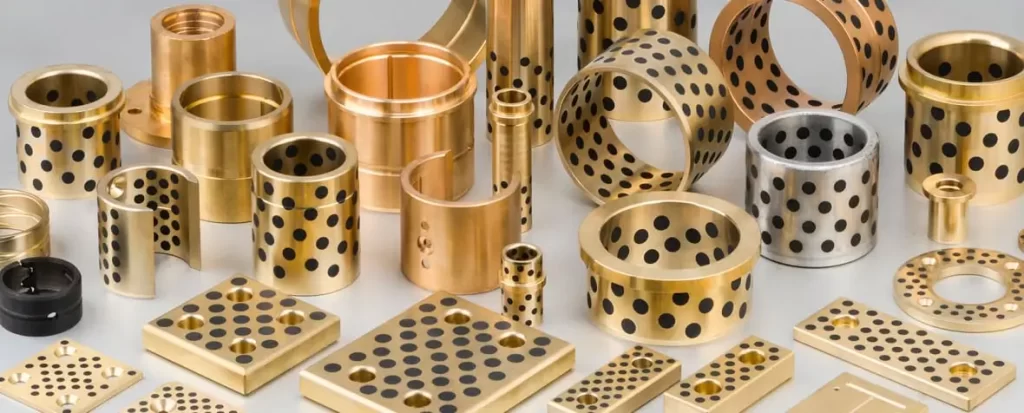
Graphite-Embedded Copper Alloys bridge the gap between cast bronze and fully self-lubricating systems. These materials incorporate solid lubricant particles into a copper alloy matrix, providing emergency lubrication when oil films break down. They perform reliably at temperatures up to 300°C and in reciprocating or oscillating motions where conventional hydrodynamic lubrication cannot form
4. Surface Treatment: Extending Component Life
Even the best copper alloy will eventually fail if surface conditions attack it relentlessly. Metallurgical equipment operates in some of the harshest environments imaginable—molten steel, abrasive slurries, corrosive gases—and copper components must be protected accordingly.
Surface treatment technologies for copper alloys have evolved considerably in recent years. The core challenge is preserving copper’s thermal conductivity while adding wear or corrosion resistance at the surface. The ideal treatment creates a protective layer that bonds metallurgically without acting as a thermal insulator.
Electroplating remains the most established approach, typically applying nickel or chromium layers to copper alloy surfaces. The limitation is that plated layers can suffer from adhesion failures under thermal cycling, and the plating process itself raises environmental concerns.
Thermal Spraying and Cold Spraying offer thicker, more robust coatings. Cold spraying in particular has gained traction because it avoids the oxidation and phase changes that accompany high-temperature processes. Particles are accelerated to supersonic velocities and bond through plastic deformation rather than melting, preserving the coating material’s original microstructure.
Laser Surface Treatment represents the frontier of copper alloy surface engineering. Laser cladding can deposit wear-resistant alloys with minimal dilution and heat-affected zone, while laser surface melting can refine grain structure and redistribute alloying elements for improved surface hardness. The precision of laser processing makes it suitable for complex geometries where traditional coating methods struggle.
Physical Vapor Deposition (PVD) of High-Entropy Alloy Films is an emerging technology with particular promise for metallurgical components. Refractory high-entropy alloys applied via PVD can provide exceptional hardness and thermal stability while maintaining reasonable thermal conductivity. The research is still maturing, but early results suggest these coatings could significantly extend the life of continuous casting molds and other high-temperature copper components.
The practical takeaway for procurement and engineering teams: surface treatment is not an afterthought. It should be specified alongside alloy selection as part of an integrated performance strategy. A phosphor bronze bushing with the wrong surface treatment may fail earlier than a lower-grade alloy with proper protection.
5. Applications and the Electrification Megatrend
Copper components were once primarily associated with traditional heavy industry—steel mills, mining equipment, marine hardware. That association remains valid, but the application landscape is shifting.
Traditional Heavy Industry continues to consume enormous volumes of copper alloys. Cone crusher bushings, cement equipment sleeves, and steel mill components form the core business for many copper foundries. These applications reward durability above all else. A gyratory crusher operating in an iron ore mine cannot afford downtime, and the bronze bushing at its heart must survive years of abrasive, high-impact service.
Marine and Offshore applications exploit copper alloys’ natural resistance to seawater. CuSn8 develops a dense, tin-rich oxide layer that acts as a passive film, protecting against pitting and stress corrosion cracking. Subsea connectors, rudder components, and offshore fasteners all benefit from this property.
The Electrification Wave is creating new demand categories that did not exist a generation ago. Electric vehicles use more than double the copper of internal combustion engine automobiles, and that copper appears in forms ranging from busbars to motor windings to battery interconnects. Sintered copper components produced via press-and-sinter technology offer a pathway to cost-effective conductive parts with tailored density and conductivity.
This shift has implications for alloy selection. Traditional bronze bushings emphasize wear resistance and load capacity. Electrical applications prioritize conductivity, thermal management, and dimensional precision. The metallurgical copper components of the next decade will increasingly need to serve both masters—or at least serve them in different product lines.
6. The MYWAY Advantage in Copper Bushings
Among the crowded field of copper alloy component suppliers, MYWAY has built a reputation for combining metallurgical expertise with manufacturing discipline. The company’s focus on bronze and brass bushings addresses precisely the application categories where alloy selection and quality control matter most.
Material Breadth: MYWAY’s product range spans the critical copper alloy families. Wrapped bronze bushings in CuSn8P offer the high-density, high-load capacity required for agricultural and construction machinery. The company’s bronze and brass portfolio includes tin bronze for general wear applications, phosphor bronze for fatigue resistance, and aluminum bronze for corrosion-critical environments.
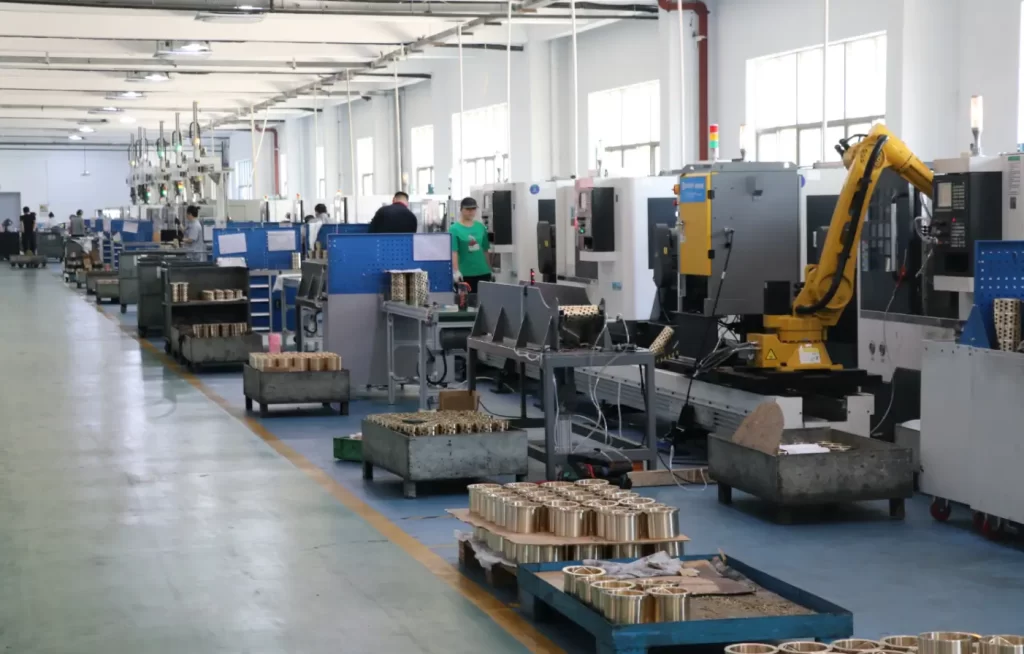
Manufacturing Depth: With over 20 years of experience and IATF/ISO certification, MYWAY delivers from casting through finished machining. This vertical integration matters for two reasons. First, it allows tighter control over material quality—the alloy composition that leaves the furnace is the alloy composition in the finished bushing. Second, it enables custom geometry and surface features like diamond-pattern oil pockets or lubrication grooves that would be expensive or impossible to source from trading companies.
Application Focus: MYWAY’s bushings are engineered for the conditions that destroy inferior components. The wrapped bronze series is specifically designed for applications where conventional cast bronze bushings fail prematurely—high-load, low-speed pivots in excavators, forestry equipment, and construction machinery. The CuSn8 material resists the stick-slip effects that cause jerky motion and accelerated wear.
Quality Consistency: For procurement teams, the most important supplier attribute is not the best sample but the thousandth shipment. MYWAY’s certifications (IATF/ISO) and 20-year track record in 40+ countries speak to manufacturing consistency. Element testing and mechanical properties testing are integrated into production rather than treated as afterthoughts.
The company’s position in the market is straightforward: not the cheapest, not the largest, but reliably capable of delivering specification-compliant copper alloy bushings for applications where failure is not an option. For buyers who have experienced the cost of premature component failure—downtime, collateral damage, emergency replacement—that reliability has tangible value.
FAQ:
Q: How do I choose between cast bronze and wrapped bronze bushings?
Cast bronze bushings are machined from solid castings and offer high load capacity with good machinability for custom features. Wrapped bronze bushings are formed from rolled strip and typically use higher-density alloys like CuSn8P with patterned surfaces for lubrication retention. Wrapped bushings often provide better fatigue strength and dimensional consistency, while cast bushings excel in larger sizes and complex geometries. The choice depends on load direction, speed, lubrication conditions, and whether the application benefits from oil pockets or grooves.
Q: What is the maximum operating temperature for copper alloy bushings?
Standard bronze bushings perform well up to approximately 200°C in continuous operation. Graphite-embedded copper alloys extend this range to 300°C or higher, depending on the specific formulation and lubrication conditions. Above these temperatures, oxidation and softening accelerate wear, and alternative materials or active cooling should be considered. Always verify temperature ratings with the specific alloy datasheet rather than assuming bronze is bronze.
Q: Can copper bushings be used in saltwater environments?
Yes, with proper alloy selection. CuSn8 phosphor bronze and aluminum bronze both exhibit excellent seawater corrosion resistance. Brass should be avoided in saltwater due to dezincification. For submerged or splash-zone applications, aluminum bronze is often preferred for its combination of corrosion resistance and strength. The mating shaft material also matters—stainless steel shafts are commonly paired with bronze bushings in marine applications.
Q: What surface treatments are recommended for copper alloy components in metallurgical equipment?
The appropriate treatment depends on the failure mode. For wear resistance, laser cladding or thermal spraying with hard alloys provides the most durable protection. For corrosion resistance, electroplated nickel or chromium layers remain cost-effective options. For high-temperature applications, PVD-applied high-entropy alloy films show promise but are not yet as widely proven as conventional coatings. In all cases, the treatment should be specified as part of the component design rather than applied as a generic finish.
Q: How does MYWAY ensure alloy composition consistency across production runs?
MYWAY employs in-house element testing and mechanical properties testing as integrated production controls. The company’s IATF/ISO certifications require documented traceability from raw material through finished component. For critical applications, buyers can request material certifications and test reports for each production lot. The 20-year operating history and 40+ country export footprint provide a track record that new entrants cannot replicate.
Q: What is the typical lead time for custom copper bushings?
Lead time varies with complexity, quantity, and current production load. Standard wrapped bronze bushings from MYWAY’s catalog typically ship within weeks. Custom geometry, non-standard alloys, or surface treatments add engineering and setup time. For procurement planning, it is advisable to share forecasts and application requirements early in the process rather than treating the supplier as a catalog-only resource.
100000+ Types of Bushings – Contact Us for Details