
Recent Posts
Copper Castings for Metallurgy: A Comprehensive Guide to Alloy Selection, Performance, and Applications
Introduction
Copper castings occupy a unique position in the metallurgical industry. Their combination of high thermal conductivity, excellent corrosion resistance, and superior wear characteristics makes them indispensable for critical applications ranging from continuous casting molds to heavy-duty bushings in steel mills. This article examines the metallurgical principles behind copper alloy castings, explores the major alloy families used in demanding environments, and provides practical guidance on material selection, manufacturing processes, and quality standards. We also address common challenges in sourcing copper castings and offer insights into the global supply landscape. Whether you are designing components for steel manufacturing, marine systems, or industrial machinery, understanding the behavior of copper casting alloys will help you make informed decisions that balance performance, longevity, and cost.
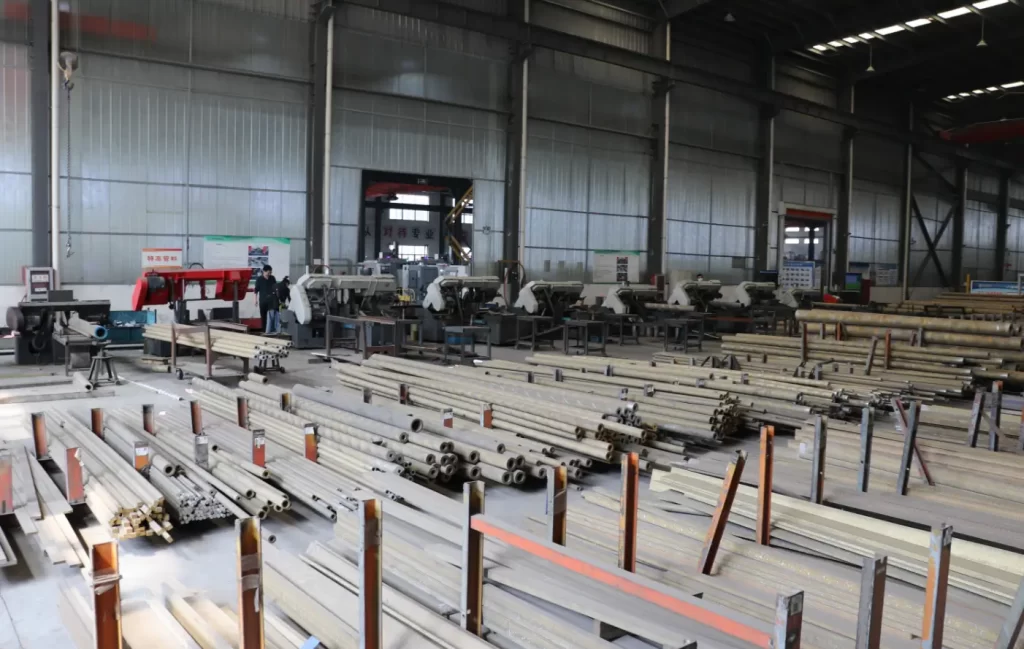
Table of Contents
1. Introduction: Why Copper Castings Matter in Metallurgy
Metallurgy is an industry built on extremes. Temperatures exceed 1,500°C. Loads reach hundreds of tons. Corrosive atmospheres attack materials relentlessly. In this environment, component failure is not merely inconvenient—it can halt production, damage equipment, and create safety hazards.
Copper and its alloys have served metallurgical applications for over a century, and for good reason. Pure copper conducts heat better than any commercial metal except silver, a property that becomes critical when you need to extract heat rapidly from molten steel in a continuous casting mold . Copper alloys also resist corrosion in ways that steel and iron cannot match, particularly in marine and chemical processing environments.
But copper in its pure form is soft. It galls, seizes, and wears quickly under mechanical load. This is where casting alloys come in. By carefully combining copper with elements like tin, aluminum, nickel, chromium, and beryllium, metallurgists create materials that retain copper‘s thermal and electrical advantages while adding the strength and wear resistance that heavy industry demands .
The result is a family of casting alloys that serve as the backbone of metallurgical equipment: continuous casting mold liners, bushing materials for rolling mills, valve components for corrosive fluid handling, and wear plates for high-load machinery. Understanding how these alloys behave—and how to select the right one—is essential for anyone involved in metallurgical equipment design or maintenance.
2. The Metallurgical Advantages of Copper Alloy Castings
2.1 Thermal Conductivity: The Core Advantage
The single most important property of copper in metallurgical applications is thermal conductivity. When molten steel contacts a continuous casting mold, heat must flow through the mold wall and into the cooling water system as rapidly as possible. Slow heat extraction leads to surface defects, uneven solidification, and potential breakout—a catastrophic failure where liquid steel escapes the mold.
Copper‘s thermal conductivity—roughly 400 W/m·K for pure copper—far exceeds that of steel (approximately 50 W/m·K). Even after alloying reduces conductivity to 20-40% of pure copper‘s value, copper alloys still outperform most alternative mold materials by a substantial margin.
2.2 Wear and Galling Resistance
Metallurgical equipment operates under conditions that destroy ordinary bearing materials. High loads, inadequate lubrication, and elevated temperatures create ideal conditions for galling—a form of adhesive wear where metal transfers from one surface to another, creating rough, seized contacts.
Copper-based anti-galling alloys address this problem through their crystal structure and alloying additions. Materials like Waukesha Metal 126 use a copper matrix with chromium, aluminum, and other elements that form hard phases resistant to material transfer. These alloys maintain dimensional stability under repeated loading while resisting the surface damage that leads to premature failure.
2.3 Corrosion Resistance
Metallurgical environments rarely present a single corrosion challenge. Cooling water may contain chlorides. Process fluids can be acidic or alkaline. Atmospheric exposure adds humidity and industrial pollutants. Copper alloys—particularly aluminum bronze, nickel aluminum bronze, and cupronickel—resist all of these threats.
The corrosion resistance of copper alloys stems from the formation of protective oxide layers on the surface. In aluminum bronze, for example, aluminum oxide forms a tenacious barrier that resists both uniform corrosion and localized attack. This property explains why copper alloy castings dominate marine and offshore applications where saltwater exposure is constant
3. Key Copper Casting Alloys for Metallurgical Applications
3.1 Beryllium Copper: Strength Meets Conductivity
Beryllium copper casting alloys, such as BrushCAST 20C (UNS C82500), represent the high-performance end of the copper casting spectrum. With beryllium content around 2%, these alloys achieve tensile strengths of 75,000-85,000 psi while maintaining thermal conductivity comparable to aluminum.
The metallurgical mechanism behind this performance is precipitation hardening. After casting, beryllium copper components are solution treated at approximately 800°C, quenched, then aged at 275-480°C. This heat treatment precipitates fine beryllide particles that impede dislocation movement, dramatically increasing strength without destroying conductivity.
In metallurgical applications, beryllium copper castings serve as resistance welding electrodes, mold components for plastic processing, and high-performance bushings where both strength and heat dissipation are critical.
3.2 Aluminum Bronze: The Workhorse Alloy Family
Aluminum bronze alloys—particularly UNS C95400, C95500, and C99500—dominate metallurgical applications requiring a combination of strength, corrosion resistance, and wear performance. These alloys contain 9-12% aluminum, with iron, nickel, and manganese additions that refine the microstructure and enhance specific properties.
UNS C99500, for example, offers a tensile strength of at least 483 MPa (70,100 psi) with excellent resistance to dealuminification and dezincification. Its applications include mining equipment gears, valve stems, and marine components. In metallurgical plants, aluminum bronze castings appear as pump impellers, valve bodies, and bushings for high-load, low-speed applications.
The key metallurgical feature of aluminum bronze is its complex microstructure. Depending on composition and cooling rate, these alloys can form alpha, beta, and various intermetallic phases. Proper casting practice ensures a microstructure that balances hardness with toughness.
3.3 Tin Bronze and Leaded Tin Bronze: Bearing Specialists
When the application calls for a bearing or bushing rather than a structural component, tin bronze alloys take precedence. UNS C93200 (SAE 660) is the standard general-purpose bearing bronze, containing approximately 7% tin and 7% lead. The lead particles act as a solid lubricant, reducing friction and improving machinability.
For higher-load applications, high-leaded tin bronze UNS C93700 provides enhanced self-lubricating properties. This alloy, also known as SAE 64, excels in high-speed, heavy-pressure bearing applications including steel mill maintenance parts and large ship bearings.
The metallurgical principle behind these alloys is straightforward: a relatively soft copper-tin matrix supports hard intermetallic particles, while dispersed lead provides lubrication. The result is a material that conforms to shaft irregularities, embeds foreign particles, and maintains low friction even under marginal lubrication conditions.
4. Manufacturing Processes for Copper Alloy Castings
4.1 Sand Casting: Flexibility for Complex Geometries
Sand casting remains the most versatile method for producing copper alloy components. The process accommodates a wide range of part sizes—from a few kilograms to several tons—and complex geometries that would be difficult or impossible to machine from wrought stock.
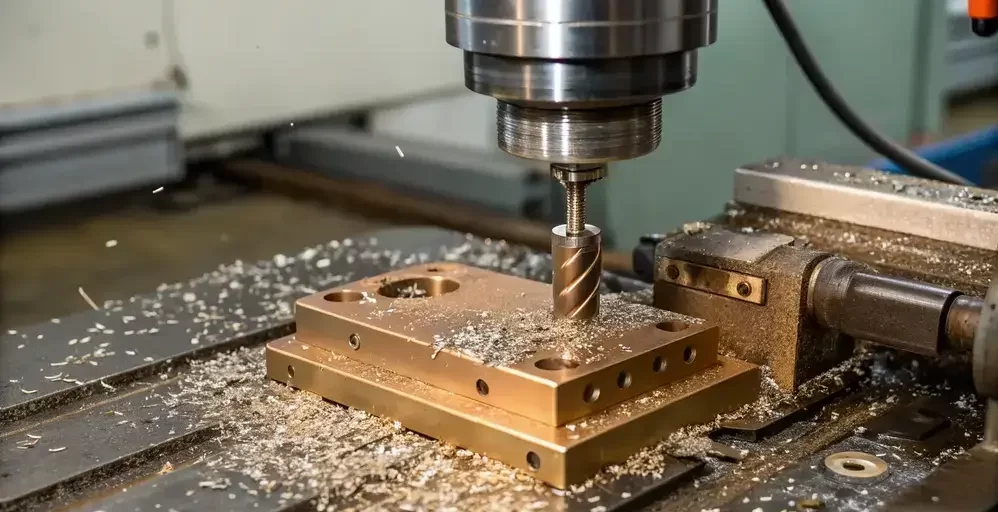
For metallurgical applications, sand casting is often specified when the component design includes internal cooling channels, complex mounting features, or non-standard shapes. The trade-off is surface finish and dimensional tolerance: sand castings typically require machining on critical surfaces.
Modern sand casting operations use chemically bonded sands and computer-controlled molding systems to achieve tolerances and surface finishes that would have been impossible a generation ago. The process is particularly suited to the low-to-medium volume production typical of specialized metallurgical equipment .
4.2 Centrifugal Casting: Dense, Defect-Free Structures
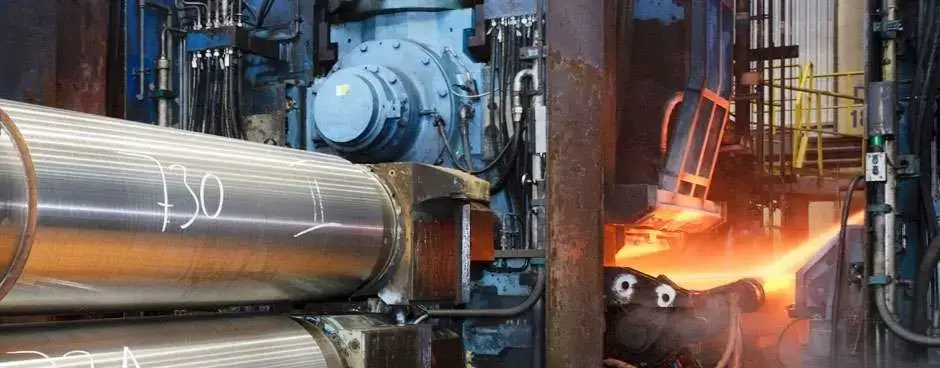
Centrifugal casting produces cylindrical components—bushings, sleeves, mold liners—by pouring molten copper alloy into a rapidly rotating mold. Centrifugal force distributes the metal evenly against the mold wall, creating a dense structure with minimal porosity.
The metallurgical advantage of centrifugal casting is directional solidification. Because heat extraction occurs primarily through the mold wall, solidification progresses from the outside inward, pushing impurities and gas porosity toward the inner surface where they can be machined away. The result is a component with superior mechanical properties and pressure tightness compared to static casting methods.
For metallurgical applications, centrifugal casting is the method of choice for bushing stock, continuous casting mold tubes, and other cylindrical components where concentricity and density are critical.
4.3 Continuous Casting: Consistent Quality at Scale
Continuous casting of copper alloys produces long lengths of bar, tube, or near-net-shape profiles with consistent chemistry and properties. The process involves pouring molten metal through a graphite die while withdrawing the solidifying product at a controlled rate.
Continuous cast bronze bushings—particularly those made from UNS C93200 and C93700—offer advantages over sand cast equivalents: finer grain structure, better dimensional consistency, and freedom from sand inclusion defects. For high-volume applications, continuous casting provides an economical route to quality components
5. Quality Standards and Specifications for Copper Castings
5.1 ASTM Standards: The Global Benchmark
ASTM B824 provides the general requirements common to copper alloy castings, establishing the framework that governs sampling, testing, and conformance assessment. This specification covers mechanical properties (tensile strength, yield strength, hardness, elongation), electrical properties, dimensional requirements, chemical composition, and grain size.
Individual product specifications—such as B505 for continuous cast copper alloy castings or B271 for centrifugal castings—reference B824 for general requirements while specifying the particular chemistry and property requirements for specific alloys. When a conflict exists between the general specification and the product specification, the product specification takes precedence.
For international sourcing, understanding these standards is essential. A supplier claiming to offer “ASTM B505 compliant” material should provide certified test reports documenting conformance to both the general requirements and the specific product specification.
5.2 Key Mechanical Properties to Verify
When specifying copper castings for metallurgical applications, certain properties deserve particular attention:
Tensile Strength: The ability to withstand pulling forces without fracture. For aluminum bronze castings, tensile strength typically ranges from 70,000 to over 100,000 psi depending on alloy and heat treatment .
Yield Strength: The stress at which permanent deformation occurs. This property is critical for load-bearing components where dimensional stability is essential.
Elongation: A measure of ductility. While high strength is desirable, adequate elongation ensures the component can absorb impact and thermal cycling without cracking.
Hardness: Brinell hardness provides a convenient indicator of wear resistance. For bearing bronzes, hardness in the range of 60-80 BHN balances wear resistance with the ability to embed foreign particles.
Grain Size: In cast copper alloys, grain size affects both mechanical properties and machinability. Fine grain structures generally offer better strength and fatigue resistance.
6. Applications of Copper Castings in Metallurgical Operations
6.1 Continuous Casting Molds and Components
The most demanding application for copper castings in metallurgy is the continuous casting mold. This component must extract heat from molten steel at rates approaching 2 MW/m² while withstanding thermal cycling, abrasion from the solidifying shell, and the chemical attack of mold fluxes.
Copper alloys for mold applications prioritize thermal conductivity above all other properties. Chromium copper (Cu-Cr) and chromium-zirconium copper (Cu-Cr-Zr) alloys offer the best combination of conductivity and strength, with thermal conductivities reaching 80% of pure copper while maintaining sufficient hardness to resist wear.
The continuous casting mold market drives significant demand for high-conductivity copper alloy castings. Market analysts segment this sector by alloy system (Cu-Cr-Zr, Cu-Cr, Cu-Ni-Si-Cr), casting method (vacuum, centrifugal, investment), and component size, reflecting the specialized nature of this application.
6.2 Bushings and Bearings for Rolling Mills
Rolling mill equipment operates under conditions that destroy ordinary bearings: high loads, low speeds, water and scale contamination, and limited maintenance access. Copper alloy bushings—particularly leaded tin bronze and aluminum bronze—provide the load capacity and contamination resistance these applications require.
The selection between tin bronze and aluminum bronze depends on the specific operating conditions. Tin bronze bushings (UNS C93200, C93700) offer superior embeddability and conformability, making them forgiving of shaft misalignment and contamination. Aluminum bronze bushings provide higher load capacity and better corrosion resistance, making them suitable for wet environments and higher stress applications .
6.3 Valve and Pump Components
Metallurgical plants circulate enormous volumes of cooling water, process fluids, and slurries. Valves and pumps handling these fluids require materials that resist both corrosion and erosion. Aluminum bronze and nickel aluminum bronze castings serve as valve bodies, seats, stems, and pump impellers in these demanding services.
The corrosion resistance of aluminum bronze in seawater and brackish cooling water is well established. For more aggressive chemical environments, nickel aluminum bronze (UNS C95500, C95800) provides enhanced resistance to chloride pitting and crevice corrosion.
6.4 Wear Plates and Guide Components
Steel mills use copper alloy wear plates and guide components where steel-on-steel contact would cause galling and rapid wear. The anti-galling properties of copper alloys—their tendency to resist material transfer during sliding contact—make them ideal for these applications.
Waukesha Metal 126, a copper-based anti-galling alloy, exemplifies this application. With a nominal composition including chromium, zinc, and manganese, WM126 resists galling even in unlubricated metal-to-metal contact, making it suitable for food processing equipment and other applications where lubrication is undesirable or impossible
7. Sourcing Copper Castings: A Practical Buyer‘s Guide
7.1 Evaluating Supplier Capabilities
Not all foundries are equal. When sourcing copper castings for metallurgical applications, evaluate potential suppliers against these criteria:
Metallurgical Expertise: Does the supplier understand alloy selection, or do they simply cast to a print? A foundry with metallurgical depth can recommend alloy modifications that improve performance or reduce cost.
Melting and Pouring Practice: Copper alloys are sensitive to gas absorption, oxidation, and contamination. Clean melting practice—using properly lined furnaces, controlled atmospheres, and appropriate deoxidation—separates quality foundries from the rest.
Heat Treatment Capability: Many high-performance copper alloys require solution treatment and aging to achieve specified properties. Confirm that the supplier has the furnaces and quench systems needed for your alloy.
Testing and Documentation: Request certified material test reports (CMTRs) documenting chemistry, mechanical properties, and conformance to applicable standards. For critical applications, consider third-party witness testing.
7.2 The Role of Standards Compliance
ASTM compliance provides a common language between buyers and suppliers. A specification such as “ASTM B505, Alloy C93200” communicates specific requirements for chemistry, mechanical properties, and testing that both parties understand.
However, standards compliance alone does not guarantee suitability for a specific application. A casting that meets all the requirements of ASTM B505 may still fail prematurely if the alloy selection was inappropriate for the service conditions or if the casting contains defects not addressed by the standard.
7.3 Lead Times and Inventory Strategy
Copper alloy castings for metallurgical applications often involve custom patterns, specialized alloys, and rigorous testing requirements. Lead times of 8-12 weeks are not unusual for new orders. For critical spare parts, maintaining appropriate inventory or establishing stocking agreements with reliable suppliers prevents costly downtime.
8. Global Market Trends and Future Outlook
8.1 Market Growth and Regional Dynamics
The global market for high-strength, high-conductivity copper alloy castings continues to expand, driven by demand from mechanical manufacturing, aerospace, automotive, electronics, and telecommunications sectors. Market analysts project continued growth through 2032, with the Asia-Pacific region—particularly China, Japan, and Southeast Asia—representing the fastest-growing market.
The copper alloy castings market overall benefits from infrastructure investment, industrial automation, and the ongoing replacement of aging equipment in established industrial economies. In metallurgical applications specifically, demand tracks steel production and the capital investment cycles of heavy industry.
8.2 Material Innovation: High-Performance Alloys
Alloy development continues to push the boundaries of copper casting performance. Research focuses on alloys that maintain high conductivity while achieving greater strength—a fundamental metallurgical trade-off that limits current materials.
Cu-Cr-Zr alloys represent the current state of the art for high-conductivity applications, but researchers are exploring additions of other elements and novel processing routes to improve properties further. For bearing applications, new lead-free alloys are being developed to address environmental and health concerns associated with leaded bronzes.
8.3 The Sustainability Angle
Copper’s recyclability gives it a sustainability advantage that increasingly matters to industrial buyers. Copper alloys can be recycled repeatedly without loss of properties, and the scrap value of end-of-life components provides a return that partially offsets initial material costs.
For metallurgical companies facing pressure to reduce environmental impact, specifying recyclable copper alloy castings supports corporate sustainability goals without compromising performance.
FAQ
Q1: What is the difference between cast bronze and sintered bronze bushings?
A: Cast bronze bushings are produced by melting and pouring bronze into molds, resulting in a dense, non-porous structure. They offer superior mechanical strength and load capacity, making them ideal for heavy-duty applications. Sintered bronze bushings are made by compacting and sintering bronze powder, creating a porous structure that can be impregnated with oil for self-lubricating properties. Sintered bushings work well in high-speed, low-load applications where maintenance access is limited, while cast bushings excel in high-load, low-speed applications requiring maximum strength.
Q2: When should I specify aluminum bronze instead of tin bronze?
A: Choose aluminum bronze (UNS C95400, C95500) when your application involves: (1) seawater or corrosive chemical exposure, (2) higher load requirements exceeding tin bronze‘s capacity, (3) greater mechanical strength and hardness needs, or (4) higher PV limits. Tin bronze (UNS C93200, C93700) remains the better choice for: (1) applications requiring embeddability of contaminants, (2) moderate loads with good lubrication, (3) better machinability and lower cost, or (4) general-purpose industrial applications.
Q3: What is galling, and how do copper alloys prevent it?
A: Galling is a form of adhesive wear that occurs when metal surfaces slide against each other under pressure and material transfers from one surface to the other, creating rough, seized contacts. Copper-based alloys resist galling because their crystal structure and alloying additions reduce the tendency for material transfer. Alloys specifically engineered for anti-galling performance, such as copper-chromium and copper-aluminum compositions, provide excellent resistance even in unlubricated metal-to-metal contact.
Q4: What standards should I reference when specifying copper alloy castings?
A: ASTM B824 provides general requirements for copper alloy castings and should be referenced as the foundational specification. Individual product specifications then apply based on casting method: ASTM B505 for continuous castings, B271 for centrifugal castings, B584 for sand castings, and B148 for aluminum bronze sand castings. Your supplier should provide certification of conformance to both the general and specific standards.
Q5: How do I determine the right bushing alloy for my metallurgical application?
A: Start by defining four key parameters: (1) Load—both continuous and peak loads the bushing must support; (2) Speed—rotational or linear speed at the bearing surface; (3) Environment—temperature range, moisture, chemicals, and contamination; (4) Lubrication—type, method, and reliability of lubrication. With these parameters, a materials engineer can calculate PV values and recommend an appropriate alloy. MYWAY‘s technical team can assist with this analysis—contact us with your application details.
Q6: Can copper alloy castings be repaired or re-machined?
A: Minor machining to adjust dimensions is generally feasible for copper alloy castings, provided the modification does not compromise structural integrity. Welding repairs are possible for some alloys but require proper procedures and post-weld heat treatment to avoid cracking. For critical components, consult the original manufacturer before attempting repairs. In many cases, replacing the component with a new casting is more reliable and cost-effective than repair.
100000+ Types of Bushings – Contact Us for Details